

Hybrid Ubiquitous Coaching With a Novel Combination of Mobile and Holographic Conversational Agents Targeting Adherence to Home Exercises: Four Design and Evaluation Studies
Open accessPublished version of a preprint
The DOI matches its Crossref record; 134 of the 134 references it cites were found in a registry or an index.
Abstract
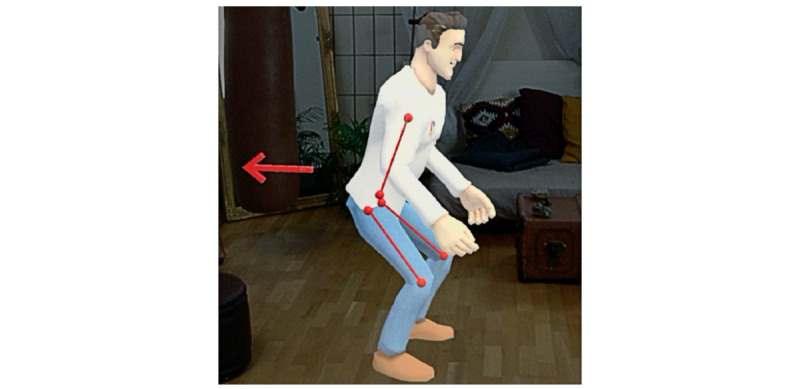
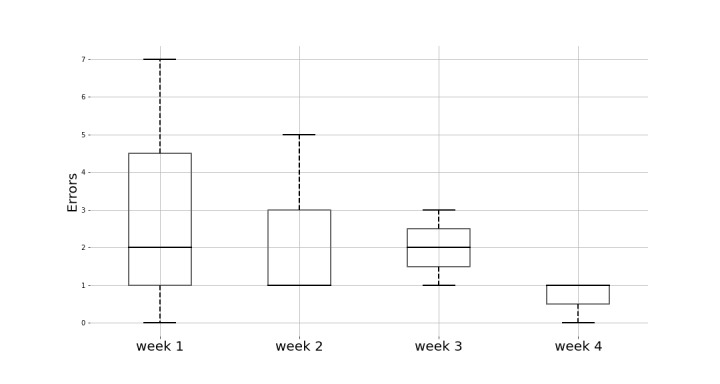
Background: Effective treatments for various conditions such as obesity, cardiac heart diseases, or low back pain require not only personal on-site coaching sessions by health care experts but also a significant amount of home exercises. However, nonadherence to home exercises is still a serious problem as it leads to increased costs due to prolonged treatments. Objective: To improve adherence to home exercises, we propose, implement, and assess the novel coaching concept of hybrid ubiquitous coaching (HUC). In HUC, health care experts are complemented by a conversational agent (CA) that delivers psychoeducation and personalized motivational messages via a smartphone, as well as real-time exercise support, monitoring, and feedback in a hands-free augmented reality environment. Methods: We applied HUC to the field of physiotherapy and conducted 4 design-and-evaluate loops with an interdisciplinary team to assess how HUC is perceived by patients and physiotherapists and whether HUC leads to treatment adherence. A first version of HUC was evaluated by 35 physiotherapy patients in a lab setting to identify patients’ perceptions of HUC. In addition, 11 physiotherapists were interviewed about HUC and assessed whether the CA could help them build up a working alliance with their patients. A second version was then tested by 15 patients in a within-subject experiment to identify the ability of HUC to address adherence and to build a working alliance between the patient and the CA. Finally, a 4-week n-of-1 trial was conducted with 1 patient to show one experience with HUC in depth and thereby potentially reveal real-world benefits and challenges. Results: Patients perceived HUC to be useful, easy to use, and enjoyable, preferred it to state-of-the-art approaches, and expressed their intentions to use it. Moreover, patients built a working alliance with the CA. Physiotherapists saw a relative advantage of HUC compared to current approaches but initially did not see the potential in terms of a working alliance, which changed after seeing the results of HUC in the field. Qualitative feedback from patients indicated that they enjoyed doing the exercise with an augmented reality–based CA and understood better how to do the exercise correctly with HUC. Moreover, physiotherapists highlighted that HUC would be helpful to use in the therapy process. The longitudinal field study resulted in an adherence rate of 92% (11/12 sessions; 330/360 repetitions; 33/36 sets) and a substantial increase in exercise accuracy during the 4 weeks. Conclusions: The overall positive assessments from both patients and health care experts suggest that HUC is a promising tool to be applied in various disorders with a relevant set of home exercises. Future research, however, must implement a variety of exercises and test HUC with patients suffering from different disorders.
Overview
The claims and statistics of this paper haven’t been checked yet.
Free: it reads the open-access text and checks the first 5 claims that cite a source we can check. Create a free account to check every claim.
Integrity signals
Registry
Cites
Statistics
Figures
Verification
Claims the paper makes
The claims and statistics of this paper haven’t been checked yet.
Free: it reads the open-access text and checks the first 5 claims that cite a source we can check. Create a free account to check every claim.
Claims other papers make about this one
Each is checked against this paper’s own text: does it say what the citing paper says it does?
The source backs part of the claim, not all of it — or backs it for a different population, condition or comparison.
In the citing paper
“In addition, virtual reality–based training has been shown to reduce the focus on pain by dividing attention to tasks [25,26] and increase the motivation of movement through progressive achievement [27-29].”
From Virtual Reality–Based Training in Chronic Low Back Pain: Systematic Review and Meta-Analysis of Randomized Controlled Trials (2024) · cites this paper as [27]
Experimental — accuracy not yet measured
Self-check
Percentages, sums and reported differences re-computed from the paper’s own numbers.
The self-check needs the paper’s full text.
Citations
Cites
Perceived usefulness, perceived ease of use, and user acceptance of information technology
Davis, F. D. (1989) · MIS Quarterly · doi:10.2307/249008 · Cited by 68,483
User Acceptance of Information Technology: Toward A Unified View1
Venkatesh, V., Morris, M. G., Davis, G. B., & Davis, F. D. (2003) · MIS Quarterly · doi:10.2307/30036540 · Cited by 45,035
User Acceptance of Computer Technology: A Comparison of Two Theoretical Models
Davis, F. D., Bagozzi, R. P., & Warshaw, P. R. (1989) · Management Science · doi:10.1287/mnsc.35.8.982 · Cited by 25,709 · cited 3×
“To reduce participant burden, and due to the feasibility character of this first study, we used single-item measures for perceived enjoyment [87], perceived ease of use, perceived usefulness [85], and intention to use [83].”
BackgroundMethodSelf-efficacy mechanism in human agency
Bandura, A. (1982) · American Psychologist · doi:10.1037/0003-066x.37.2.122 · Cited by 15,975
Venkatesh, V., Thong, J. Y. L., & Xu, X. (2012) · MIS Quarterly · doi:10.2307/41410412 · Cited by 15,756
Development of NASA-TLX (Task Load Index): Results of Empirical and Theoretical Research
(1988) · Advances in Psychology · doi:10.1016/s0166-4115(08)62386-9 · Cited by 15,003
Mining association rules between sets of items in large databases
Agrawal, R., Imieliński, T., & Swami, A. (1993) · Proceedings of the 1993 ACM SIGMOD international conference on Management of data · doi:10.1145/170035.170072 · Cited by 14,907 · cited 1×
“In doing so, exercise suggestions could be learned, for example, from a basket analysis that considers past exercise programs, patient-related variables (eg, diagnosis and preferences) and past treatment outcomes (eg, reduction in pain) [109,110].”
BackgroundJames, S. L., Abate, D., Abate, K. H., Abay, S. M., Abbafati, C., Abbasi, N., Abbastabar, H., Abd-Allah, F., Abdela, J., Abdelalim, A., et al. (2018) · The Lancet · doi:10.1016/s0140-6736(18)32279-7 · Cited by 13,867
Vos, T., Abajobir, A. A., Abate, K. H., Abbafati, C., Abbas, K. M., Abd-Allah, F., Abdulkader, R. S., Abdulle, A. M., Abebo, T. A., Abera, S. F., et al. (2017) · The Lancet · doi:10.1016/s0140-6736(17)32154-2 · Cited by 13,220
The Computer for the 21st Century
Weiser, M. (1991) · Scientific American · doi:10.1038/scientificamerican0991-94 · Cited by 10,017
Organizational Information Requirements, Media Richness and Structural Design
Daft, R. L., & Lengel, R. H. (1986) · Management Science · doi:10.1287/mnsc.32.5.554 · Cited by 9,868
Moore, G. C., & Benbasat, I. (1991) · Information Systems Research · doi:10.1287/isre.2.3.192 · Cited by 9,150 · cited 1×
“The perceived relative advantage of HUC was adapted from prior work [91].”
MethodAdherence to Long-Term Therapies: Evidence for Action
De Geest, S., & Sabaté, E. (2003) · European Journal of Cardiovascular Nursing · doi:10.1016/s1474-5151(03)00091-4 · Cited by 6,272
The generalizability of the psychoanalytic concept of the working alliance.
Bordin, E. S. (1979) · Psychotherapy: Theory, Research & Practice · doi:10.1037/h0085885 · Cited by 5,238 · cited 1×
“This was especially the case for attachment bonds, which include factors such as mutual trust, acceptance, and empathy [49,106].”
BackgroundDevelopment and validation of the working alliance inventory
Horvath, A. O., & Greenberg, L. S. (1989) · Journal of Counseling Psychology · doi:10.1037//0022-0167.36.2.223 · Cited by 3,520 · cited 2×
“First, HUC employs a CA because they are able to build a working alliance with patients [49,57,68], which is an important relationship quality [69] that is robustly linked to treatment success [59].”
BackgroundQualitative Data Analysis for Health Services Research: Developing Taxonomy, Themes, and Theory
Bradley, E. H., Curry, L. A., & Devers, K. J. (2007) · Health Services Research · doi:10.1111/j.1475-6773.2006.00684.x · Cited by 3,437 · cited 1×
“Thereafter, relevant themes and concepts were extracted following an iterative coding process [90].”
MethodFitzpatrick, K. K., Darcy, A., & Vierhile, M. (2017) · JMIR Mental Health · doi:10.2196/mental.7785 · Cited by 2,730 · cited 1×
“Our review of remote patient monitoring tools and current scientific work (Multimedia Appendix 1 [16,29,39,42-66]) suggests that there is untapped potential in addressing this problem, too.”
BackgroundRelation between working alliance and outcome in psychotherapy: A meta-analysis
Horvath, A. O., & Symonds, B. D. (1991) · Journal of Counseling Psychology · doi:10.1037/0022-0167.38.2.139 · Cited by 2,673
Schwarzer, R. (2008) · Applied Psychology · doi:10.1111/j.1464-0597.2007.00325.x · Cited by 2,569 · cited 1×
“Third, HUC offers real-time feedback about intervention progress and correct exercise execution, which, in turn, is assumed to increase self-efficacy [29], an important construct that helps shape positive attitudes toward therapy adherence and health-promoting behavior [63].”
BackgroundAugmented reality: a class of displays on the reality-virtuality continuum:
Milgram, P., Takemura, H., Utsumi, A., & Kishino, F. (1995) · SPIE Proceedings · doi:10.1117/12.197321 · Cited by 2,367
The One Number You Need to Grow
Rego, L. L., & Morgan, N. A. (2004) · Harvard business review · Cited by 2,049
Embodied Conversational Agents
(2000) · The MIT Press eBooks · doi:10.7551/mitpress/2697.001.0001 · Cited by 1,799
The alliance in adult psychotherapy: A meta-analytic synthesis
Flückiger, C., Del Re, A. C., Wampold, B. E., & Horvath, A. O. (2018) · Psychotherapy · doi:10.1037/pst0000172 · Cited by 1,763 · cited 2×
“First, HUC employs a CA because they are able to build a working alliance with patients [49,57,68], which is an important relationship quality [69] that is robustly linked to treatment success [59].”
BackgroundResultMichie, S., Ashford, S., Sniehotta, F. F., Dombrowski, S. U., Bishop, A., & French, D. P. (2011) · Psychology & Health · doi:10.1080/08870446.2010.540664 · Cited by 1,756 · cited 4×
“The smartphone-based CA reminds the patient to do the home exercises (TAD1), motivates the patient via the smartphone, and emphasizes the benefits of performing the exercise by providing psychoeducational material, for example, about sleep quality and degree of pain (BCTs 2, 13, 15, and 20 [78]).”
BackgroundMethodInfluential(2003) · PubMed · Cited by 1,684
Internet-based cognitive behaviour therapy for symptoms of depression and anxiety: A meta-analysis
SPEK, V., CUIJPERS, P., NYKLÍČEK, I., RIPER, H., KEYZER, J., & POP, V. (2007) · Psychological Medicine · doi:10.1017/s0033291706008944 · Cited by 1,586 · cited 1×
“Our review of remote patient monitoring tools and current scientific work (Multimedia Appendix 1 [16,29,39,42-66]) suggests that there is untapped potential in addressing this problem, too.”
BackgroundConversational agents in healthcare: a systematic review
Laranjo, L., Dunn, A. G., Tong, H. L., Kocaballi, A. B., Chen, J., Bashir, R., Surian, D., Gallego, B., Magrabi, F., Lau, A. Y. S., et al. (2018) · Journal of the American Medical Informatics Association · doi:10.1093/jamia/ocy072 · Cited by 1,388 · cited 1×
“Our review of remote patient monitoring tools and current scientific work (Multimedia Appendix 1 [16,29,39,42-66]) suggests that there is untapped potential in addressing this problem, too.”
BackgroundDesign Research in Information Systems: Theory and Practice
Hevner, A., & Chatterjee, S. (2010) · Integrated Series in Information Systems · doi:10.1007/978-1-4419-5653-8 · Cited by 1,382
Development and validation of a revised short version of the working alliance inventory
Hatcher, R. L., & Gillaspy, J. A. (2006) · Psychotherapy Research · doi:10.1080/10503300500352500 · Cited by 1,355
The challenge of patient adherence.
Martin, L. R., Williams, S. L., Haskard, K. B., & DiMatteo, M. R. (2005) · PubMed Central · Cited by 1,338
The impact of mHealth interventions: systematic review of systematic reviews
Marcolino, M. S., Oliveira, J. A. Q., D'Agostino, M., Ribeiro, A. L., Alkmim, M. B. M., & Novillo-Ortiz, D. (2018) · JMIR mHealth and uHealth · doi:10.2196/mhealth.8873 · Cited by 1,163 · cited 1×
“However, two recent reviews indicate that adherence remains a challenge [40,41].”
BackgroundTsang, A., Von Korff, M., Lee, S., Alonso, J., Karam, E., Angermeyer, M. C., Borges, G. L. G., Bromet, E. J., de Girolamo, G., de Graaf, R., et al. (2008) · The Journal of Pain · doi:10.1016/j.jpain.2008.05.005 · Cited by 1,157
Hamine, S., Gerth-Guyette, E., Faulx, D., Green, B. B., & Ginsburg, A. S. (2015) · Journal of Medical Internet Research · doi:10.2196/jmir.3951 · Cited by 1,149
An introduction to qualitative research, 4th ed.
Flick, U. (2009) · Cited by 1,079
Healthcare in the pocket: Mapping the space of mobile-phone health interventions
Klasnja, P., & Pratt, W. (2012) · Journal of Biomedical Informatics · doi:10.1016/j.jbi.2011.08.017 · Cited by 970
Barriers to treatment adherence in physiotherapy outpatient clinics: A systematic review
Jack, K., McLean, S. M., Moffett, J. K., & Gardiner, E. (2010) · Manual Therapy · doi:10.1016/j.math.2009.12.004 · Cited by 924
Hayden, J. A., van Tulder, M. W., & Tomlinson, G. (2005) · Annals of Internal Medicine · doi:10.7326/0003-4819-142-9-200505030-00014 · Cited by 848
Wizard of Oz Studies in HRI: A Systematic Review and New Reporting Guidelines
Riek, L. (2012) · Journal of Human-Robot Interaction · doi:10.5898/jhri.1.1.riek · Cited by 779
Briggs, A. M., Cross, M. J., Hoy, D. G., Sànchez-Riera, L., Blyth, F. M., Woolf, A. D., & March, L. (2016) · The Gerontologist · doi:10.1093/geront/gnw002 · Cited by 710
Zachariae, R., Lyby, M. S., Ritterband, L. M., & O'Toole, M. S. (2016) · Sleep Medicine Reviews · doi:10.1016/j.smrv.2015.10.004 · Cited by 704 · cited 1×
“Second, HUC relies on a hybrid coaching concept consisting of CA and human physiotherapist teams because digital interventions supported by humans result not only in higher treatment adherence [64,66], but also in better treatment outcomes [70,71].”
Hall, A. M., Ferreira, P. H., Maher, C. G., Latimer, J., & Ferreira, M. L. (2010) · Physical Therapy · doi:10.2522/ptj.20090245 · Cited by 641
Picorelli, A. M. A., Pereira, L. S. M., Pereira, D. S., Felício, D., & Sherrington, C. (2014) · Journal of Physiotherapy · doi:10.1016/j.jphys.2014.06.012 · Cited by 628 · cited 1×
“For example, patients may simply forget to follow the various TADs, and further patient-related factors, such as disability, attitudes, motivation, and beliefs about exercise risks and benefits, can also negatively impact the TADs [14,27-33].”
BackgroundNass, C., Steuer, J., & Tauber, E. R. (1994) · Conference companion on Human factors in computing systems - CHI '94 · doi:10.1145/259963.260288 · Cited by 579
How central is the alliance in psychotherapy? A multilevel longitudinal meta-analysis.
Flückiger, C., Del Re, A. C., Wampold, B. E., Symonds, D., & Horvath, A. O. (2012) · Journal of Counseling Psychology · doi:10.1037/a0025749 · Cited by 576 · cited 1×
“A strong working alliance between health professionals and patients establishes an attachment bond [74], the development of a shared understanding about goals and tasks, and, in return, boosts treatment adherence [69,75].”
BackgroundOpen-ended interview questions and saturation
Weller, S. C., Vickers, B., Bernard, H. R., Blackburn, A. M., Borgatti, S., Gravlee, C. C., & Johnson, J. C. (2018) · PLOS ONE · doi:10.1371/journal.pone.0198606 · Cited by 558
Reducing the global burden of musculoskeletal conditions
Briggs, A. M., Woolf, A. D., Dreinhöfer, K., Homb, N., Hoy, D. G., Kopansky-Giles, D., Åkesson, K., & March, L. (2018) · Bulletin of the World Health Organization · doi:10.2471/blt.17.204891 · Cited by 546
Burden of disability due to musculoskeletal (MSK) disorders
March, L., Smith, E. U. R., Hoy, D. G., Cross, M. J., Sanchez-Riera, L., Blyth, F., Buchbinder, R., Vos, T., & Woolf, A. D. (2014) · Best Practice & Research Clinical Rheumatology · doi:10.1016/j.berh.2014.08.002 · Cited by 537
Establishing the computer-patient working alliance in automated health behavior change interventions
Bickmore, T., Gruber, A., & Picard, R. (2005) · Patient Education and Counseling · doi:10.1016/j.pec.2004.09.008 · Cited by 494 · cited 2×
“First, HUC employs a CA because they are able to build a working alliance with patients [49,57,68], which is an important relationship quality [69] that is robustly linked to treatment success [59].”
BackgroundResultInterventions to improve adherence to exercise for chronic musculoskeletal pain in adults
Jordan, J. L., Holden, M. A., Mason, E. E., & Foster, N. E. (2010) · Cochrane Database of Systematic Reviews · doi:10.1002/14651858.cd005956.pub2 · Cited by 477
The working alliance: Where are we and where should we go?
Castonguay, L. G., Constantino, M. J., & Holtforth, M. G. (2006) · Psychotherapy: Theory, Research, Practice, Training · doi:10.1037/0033-3204.43.3.271 · Cited by 457 · cited 1×
“A strong working alliance between health professionals and patients establishes an attachment bond [74], the development of a shared understanding about goals and tasks, and, in return, boosts treatment adherence [69,75].”
BackgroundFry, J. P., & Neff, R. A. (2009) · Journal of Medical Internet Research · doi:10.2196/jmir.1138 · Cited by 447
Campbell, R., Evans, M., Tucker, M., Quilty, B., Dieppe, P., & Donovan, J. L. (2001) · Journal of Epidemiology and Community Health · doi:10.1136/jech.55.2.132 · Cited by 414
Embodied conversational interface agents
Cassell, J. (2000) · Communications of the ACM · doi:10.1145/332051.332075 · Cited by 393
Beinart, N. A., Goodchild, C. E., Weinman, J. A., Ayis, S., & Godfrey, E. L. (2013) · The Spine Journal · doi:10.1016/j.spinee.2013.08.027 · Cited by 294
Friedrich, M., Gittler, G., Halberstadt, Y., Cermak, T., & Heiller, I. (1998) · Archives of Physical Medicine and Rehabilitation · doi:10.1016/s0003-9993(98)90059-4 · Cited by 292
Experiences of habit formation: A qualitative study
Lally, P., Wardle, J., & Gardner, B. (2011) · Psychology, Health & Medicine · doi:10.1080/13548506.2011.555774 · Cited by 276
Sommers, J., Engelbert, R. H., Dettling-Ihnenfeldt, D., Gosselink, R., Spronk, P. E., Nollet, F., & van der Schaaf, M. (2015) · Clinical Rehabilitation · doi:10.1177/0269215514567156 · Cited by 272
Forming a flossing habit: An exploratory study of the psychological determinants of habit formation
Judah, G., Gardner, B., & Aunger, R. (2013) · British Journal of Health Psychology · doi:10.1111/j.2044-8287.2012.02086.x · Cited by 267
Kamis, A., Koufaris, M., & Stern, T. (2008) · MIS Quarterly · doi:10.2307/25148832 · Cited by 259
Ubiquitous Computing Fundamentals
(2018) · Chapman & Hall/CRC eBooks · doi:10.1201/9781420093612 · Cited by 253
Bickmore, T. W., Pfeifer, L. M., Byron, D., Forsythe, S., Henault, L. E., Jack, B. W., Silliman, R., & Paasche-Orlow, M. K. (2010) · Journal of Health Communication · doi:10.1080/10810730.2010.499991 · Cited by 249 · cited 1×
“Our review of remote patient monitoring tools and current scientific work (Multimedia Appendix 1 [16,29,39,42-66]) suggests that there is untapped potential in addressing this problem, too.”
BackgroundMAINTAINING ENGAGEMENT IN LONG-TERM INTERVENTIONS WITH RELATIONAL AGENTS
Bickmore, T., Schulman, D., & Yin, L. (2010) · Applied Artificial Intelligence · doi:10.1080/08839514.2010.492259 · Cited by 246
Prvu Bettger, J., Green, C. L., Holmes, D. N., Chokshi, A., Mather, R. C., Hoch, B. T., de Leon, A. J., Aluisio, F., Seyler, T. M., Del Gaizo, D. J., et al. (2020) · Journal of Bone and Joint Surgery · doi:10.2106/jbjs.19.00695 · Cited by 242
What Makes Internet Therapy Work?
Andersson, G., Carlbring, P., Berger, T., Almlöv, J., & Cuijpers, P. (2009) · Cognitive Behaviour Therapy · doi:10.1080/16506070902916400 · Cited by 234
Huang, Y., & Xu, X. (2020) · Faculty Opinions – Post-Publication Peer Review of the Biomedical Literature · doi:10.3410/f.731220250.793569875 · Cited by 228
Response to a relational agent by hospital patients with depressive symptoms
Bickmore, T. W., Mitchell, S. E., Jack, B. W., Paasche-Orlow, M. K., Pfeifer, L. M., & O’Donnell, J. (2010) · Interacting with Computers · doi:10.1016/j.intcom.2009.12.001 · Cited by 218 · cited 1×
“Additionally, the intention to continue working with the corresponding exercise instruction was determined based on prior work [96].”
BackgroundDonkin, L., & Glozier, N. (2012) · Journal of Medical Internet Research · doi:10.2196/jmir.2100 · Cited by 212 · cited 1×
“Second, perceived enjoyment was significantly higher than with paper-based instructions, a promising result, since enjoyment is related to engagement in digital health interventions [104], something that is often not taken into consideration [105] and is important for long-term adherence.”
BackgroundHauser-Ulrich, S., Künzli, H., Meier-Peterhans, D., & Kowatsch, T. (2020) · JMIR mHealth and uHealth · doi:10.2196/15806 · Cited by 210 · cited 4×
“First, HUC employs a CA because they are able to build a working alliance with patients [49,57,68], which is an important relationship quality [69] that is robustly linked to treatment success [59].”
BackgroundResultInfluentialSelf-citationSimek, E. M., McPhate, L., & Haines, T. P. (2012) · Preventive Medicine · doi:10.1016/j.ypmed.2012.07.007 · Cited by 209
Interventions for enhancing adherence with physiotherapy: A systematic review
McLean, S. M., Burton, M., Bradley, L., & Littlewood, C. (2010) · Manual Therapy · doi:10.1016/j.math.2010.05.012 · Cited by 204 · cited 1×
“For example, treatment adherence ranges from 60% [18] down to 30% [9,19,20], resulting in increased costs because of prolonged treatment [5,8,21-23].”
BackgroundThe efficacy of e-health in the self-management of chronic low back pain: A meta analysis
Du, S., Liu, W., Cai, S., Hu, Y., & Dong, J. (2020) · International Journal of Nursing Studies · doi:10.1016/j.ijnurstu.2019.103507 · Cited by 198
Chan, D. K., Lonsdale, C., Ho, P. Y., Yung, P. S., & Chan, K. M. (2009) · Archives of Physical Medicine and Rehabilitation · doi:10.1016/j.apmr.2009.05.024 · Cited by 195
Lambert, T. E., Harvey, L. A., Avdalis, C., Chen, L. W., Jeyalingam, S., Pratt, C. A., Tatum, H. J., Bowden, J. L., & Lucas, B. R. (2017) · Journal of Physiotherapy · doi:10.1016/j.jphys.2017.05.015 · Cited by 189
Design Features of Embodied Conversational Agents in eHealth: a Literature Review
ter Stal, S., Kramer, L. L., Tabak, M., op den Akker, H., & Hermens, H. (2020) · International Journal of Human-Computer Studies · doi:10.1016/j.ijhcs.2020.102409 · Cited by 188 · cited 3×
“A personal, empathetic, and humanlike CA can increase a patient’s intention to change behavior and to continue to use the CA [80].”
BackgroundResultThe Two-Period Crossover Trial
Armitage, P., & Hills, M. (1982) · The Statistician · doi:10.2307/2987883 · Cited by 175
Härkäpää, K., Järvikoski, A., Mellin, G., Hurri, H., & Luoma, J. (1991) · Pain · doi:10.1016/0304-3959(91)90031-r · Cited by 174
Adherence to rehabilitation in patients with low back pain
Kolt, G. S., & McEvoy, J. F. (2003) · Manual Therapy · doi:10.1016/s1356-689x(02)00156-x · Cited by 164
Toelle, T. R., Utpadel-Fischler, D. A., Haas, K.-K., & Priebe, J. A. (2019) · npj Digital Medicine · doi:10.1038/s41746-019-0109-x · Cited by 164
Timmers, T., Janssen, L., van der Weegen, W., Das, D., Marijnissen, W.-J., Hannink, G., van der Zwaard, B. C., Plat, A., Thomassen, B., Swen, J.-W., et al. (2019) · JMIR mHealth and uHealth · doi:10.2196/15323 · Cited by 162
Vong, S. K., Cheing, G. L., Chan, F., So, E. M., & Chan, C. C. (2011) · Archives of Physical Medicine and Rehabilitation · doi:10.1016/j.apmr.2010.10.016 · Cited by 160
Medina-Mirapeix, F., Escolar-Reina, P., Gascón-Cánovas, J. J., Montilla-Herrador, J., Jimeno-Serrano, F. J., & Collins, S. M. (2009) · BMC Musculoskeletal Disorders · doi:10.1186/1471-2474-10-155 · Cited by 156
Friedrich, M., Gittler, G., Arendasy, M., & Friedrich, K. M. (2005) · Spine · doi:10.1097/01.brs.0000160844.71551.af · Cited by 147
Smith, M. M., Davis, M. A., Stano, M., & Whedon, J. M. (2013) · Journal of Manipulative and Physiological Therapeutics · doi:10.1016/j.jmpt.2012.12.001 · Cited by 136
How does media richness contribute to customer loyalty to mobile instant messaging?
Tseng, F., Cheng, T. C. E., Li, K., & Teng, C. (2017) · Internet Research · doi:10.1108/intr-06-2016-0181 · Cited by 133
Frost, R., Levati, S., McClurg, D., Brady, M., & Williams, B. (2017) · Archives of Physical Medicine and Rehabilitation · doi:10.1016/j.apmr.2016.08.482 · Cited by 127
Bennell, K. L., Marshall, C. J., Dobson, F., Kasza, J., Lonsdale, C., & Hinman, R. S. (2019) · American Journal of Physical Medicine & Rehabilitation · doi:10.1097/phm.0000000000001204 · Cited by 125
Physio@Home: Exploring Visual Guidance and Feedback Techniques for Physiotherapy Exercises
Tang, R., Yang, X.-D., Bateman, S., Jorge, J., & Tang, A. (2015) · Proceedings of the 33rd Annual ACM Conference on Human Factors in Computing Systems · doi:10.1145/2702123.2702401 · Cited by 122
Malik, K. M., Beckerly, R., & Imani, F. (2018) · Anesthesiology and Pain Medicine · doi:10.5812/aapm.85532 · Cited by 119
Falkenström, F., Hatcher, R. L., Skjulsvik, T., Larsson, M. H., & Holmqvist, R. (2015) · Psychological Assessment · doi:10.1037/pas0000038 · Cited by 117 · cited 2×
“We also assessed the working alliance between the patient and HUC’s AR-based CA with the Session Alliance Inventory [92].”
MethodFriedrich, M., Cermak, T., & Maderbacher, P. (1996) · Physical Therapy · doi:10.1093/ptj/76.10.1082 · Cited by 117
Correia, F. D., Nogueira, A., Magalhães, I., Guimarães, J., Moreira, M., Barradas, I., Teixeira, L., Tulha, J., Seabra, R., Lains, J., et al. (2018) · Scientific Reports · doi:10.1038/s41598-018-29668-0 · Cited by 110
Effects of feedback on self-efficacy, performance, and choice in an athletic task
Escarti, A., & Guzman, J. F. (1999) · Journal of Applied Sport Psychology · doi:10.1080/10413209908402952 · Cited by 105
Predictors of compliance with short-term treatment among patients with back pain
Alexandre, N. M. C., Nordin, M., Hiebert, R., & Campello, M. (2002) · Revista Panamericana de Salud Pública · doi:10.1590/s1020-49892002000800003 · Cited by 103
Incorporating personality in user interface design: A review
Alves, T., Natálio, J., Henriques‐Calado, J., & Gama, S. P. (2019) · Personality and Individual Differences · doi:10.1016/j.paid.2019.109709 · Cited by 102
Recommendations for Improving Adherence to Home-Based Exercise: A Systematic Review
Bachmann, C., Oesch, P., & Bachmann, S. (2018) · Physikalische Medizin, Rehabilitationsmedizin, Kurortmedizin · doi:10.1055/s-0043-120527 · Cited by 101 · cited 1×
“Common treatment adherence dimensions (TADs) [24-26] are the session completion rate (the number of completed vs prescribed exercise sessions, TAD1), the set completion rate (the number of completed vs prescribed sets for each exercise, TAD2), the exercise repetition rate (the number of completed…”
BackgroundExercise therapy compliance in acute low back pain patients
Schneiders, A. G., Zusman, M., & Singer, K. P. (1998) · Manual Therapy · doi:10.1016/s1356-689x(98)80005-2 · Cited by 91
Human–computer interaction: A stable discipline, a nascent science, and the growth of the long tail
Dix, A. (2010) · Interacting with Computers · doi:10.1016/j.intcom.2009.11.007 · Cited by 86
Kramer, J.-N., Künzler, F., Mishra, V., Smith, S. N., Kotz, D., Scholz, U., Fleisch, E., & Kowatsch, T. (2020) · Annals of Behavioral Medicine · doi:10.1093/abm/kaaa002 · Cited by 84 · cited 1×
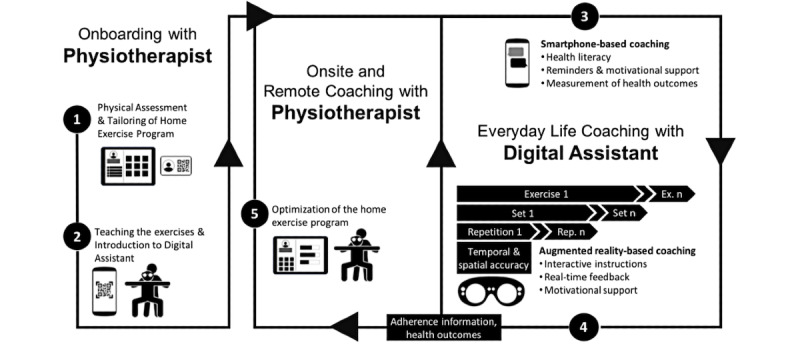
“…the CA as their trusted personal assistant that lives not only in the patient’s pocket/smartphone in the form of a text-based physiotherapy chatbot [48,49,67], but also in the patient’s AR glasses in the form of an embodied, holographic instructor [52,55] (see Figure 1 for an overview of HUC).”
BackgroundSelf-citationTreatment of Low Back Pain with a Digital Multidisciplinary Pain Treatment App: Short-Term Results
Huber, S., Priebe, J. A., Baumann, K.-M., Plidschun, A., Schiessl, C., & Tölle, T. R. (2017) · JMIR Rehabilitation and Assistive Technologies · doi:10.2196/rehab.9032 · Cited by 83
Austin, S., Qu, H., & Shewchuk, R. M. (2011) · Quality of Life Research · doi:10.1007/s11136-011-0046-x · Cited by 80
Lo, W. L. A., Lei, D., Li, L., Huang, D. F., & Tong, K.-F. (2018) · JMIR mHealth and uHealth · doi:10.2196/mhealth.8127 · Cited by 68
Iversen, M. D., Fossel, A. H., & Katz, J. N. (2003) · Archives of Physical Medicine and Rehabilitation · doi:10.1016/s0003-9993(03)00198-9 · Cited by 66
Reilly, K., Lovejoy, B., Williams, R., & Roth, H. (1989) · Journal of Occupational and Environmental Medicine · doi:10.1097/00043764-198906000-00012 · Cited by 63
Schoo, A. M. M., Morris, M. E., & Bui, M. (2004) · Physiotherapy · doi:10.1016/j.physio.2004.09.019 · Cited by 62
de Cock, C., Milne-Ives, M., van Velthoven, M. H., Alturkistani, A., Lam, C., & Meinert, E. (2020) · JMIR Research Protocols · doi:10.2196/16934 · Cited by 62
Seo, D. W., & Lee, J. Y. (2012) · Expert Systems with Applications · doi:10.1016/j.eswa.2012.12.091 · Cited by 61
Chung, B. P. H., Chiang, W. K. H., Lau, H. M.-C., Lau, T. F. O., Lai, C.-L., Sit, C. S. Y., Chan, K. Y., Yeung, C. Y., Lo, T. M., Hui, E., et al. (2020) · Hong Kong Physiotherapy Journal · doi:10.1142/s1013702520500079 · Cited by 58
Weeks, D. L., Brubaker, J., Byrt, J., Davis, M., Hamann, L., & Reagan, J. (2002) · Physiotherapy Theory and Practice · doi:10.1080/09593980290058454 · Cited by 52
Looking the Part: The Effect of Attire and Setting on Perceptions of a Virtual Health Counselor
Parmar, D., Olafsson, S., Utami, D., & Bickmore, T. (2018) · Proceedings of the 18th International Conference on Intelligent Virtual Agents · doi:10.1145/3267851.3267915 · Cited by 50
Miller, J., Litva, A., & Gabbay, M. (2007) · Physiotherapy · doi:10.1016/j.physio.2007.07.009 · Cited by 49
DNAs and DNCTs — Why Do Patients Fail to Begin or to Complete a Course of Physiotherapy Treatment?
Vasey, L. (1990) · Physiotherapy · doi:10.1016/s0031-9406(10)63052-0 · Cited by 47
Matheve, T., Brumagne, S., Demoulin, C., & Timmermans, A. A. A. (2018) · Journal of NeuroEngineering and Rehabilitation · doi:10.1186/s12984-018-0423-6 · Cited by 45
Augmenting Group Medical Visits with Conversational Agents for Stress Management Behavior Change
Shamekhi, A., Bickmore, T., Lessios, A. S., & Gardiner, P. M. (2017) · Lecture notes in computer science · doi:10.1007/978-3-319-55134-0_5 · Cited by 41
Bassett, S. F. (2015) · New Zealand Journal of Physiotherapy · doi:10.15619/nzjp/43.3.05 · Cited by 38
Virtual Humans in Health-Related Interventions: A Meta-Analysis
Ma, T., Sharifi, H., & Chattopadhyay, D. (2019) · Extended Abstracts of the 2019 CHI Conference on Human Factors in Computing Systems · doi:10.1145/3290607.3312853 · Cited by 37
Schreier, M. (2010) · VS Verlag für Sozialwissenschaften eBooks · doi:10.1007/978-3-531-92052-8_16 · Cited by 37
The Impact of an Embodied Agent's Emotional Expressions Over Multiple Interactions
Creed, C., Beale, R., & Cowan, B. (2015) · Interacting with Computers · doi:10.1093/iwc/iwt064 · Cited by 36
Towards personalized allocation of patients to therapists.
Delgadillo, J., Rubel, J., & Barkham, M. (2020) · Journal of Consulting and Clinical Psychology · doi:10.1037/ccp0000507 · Cited by 36
Self-Adapting Chatbot Personalities for Better Peer Support
Yorita, A., Egerton, S. J., Oakman, J., Chan, C. K. Y., & Kubota, N. (2019) · Conference proceedings/Conference proceedings - IEEE International Conference on Systems, Man, and Cybernetics · doi:10.1109/smc.2019.8914583 · Cited by 35
Why, when and how to use augmented reality agents (AuRAs)
Campbell, A. G., Stafford, J. W., Holz, T., & O’Hare, G. M. P. (2013) · Virtual Reality · doi:10.1007/s10055-013-0239-4 · Cited by 34
Physiotherapy exercise programmes: Are instructional exercise sheets effective?
Smith, J. A., Lewis, J. S., & Prichard, D. (2005) · Physiotherapy Theory and Practice · doi:10.1080/09593980590922316 · Cited by 33
Stütz, T., Emsenhuber, G., Huber, D., Domhardt, M., Tiefengrabner, M., Oostingh, G. J., Fötschl, U., Matis, N., & Ginzinger, S. (2017) · JMIR Rehabilitation and Assistive Technologies · doi:10.2196/rehab.7085 · Cited by 32
Chen, R., Rafaeli, E., Ziv-Beiman, S., Bar-Kalifa, E., Solomonov, N., Barber, J., Peri, T., & Atzil-Slonim, D. (2020) · Journal of Consulting and Clinical Psychology · doi:10.1037/ccp0000490 · Cited by 22
The Development of a Clinical Measure of Compliance with Hand Rehabilitation
Codori, A.-M., Nannis, E. D., & Pack, A. D. (1992) · Journal of Hand Therapy · doi:10.1016/s0894-1130(12)80195-5 · Cited by 19
Adapting Mindfulness Training for Military Service Members With Chronic Pain
Brintz, C., Miller, S., Olmsted, K. R., Bartoszek, M. W., Cartwright, J. K., Kizakevich, P. N., Butler, M., Asefnia, N., Buben, A., & Gaylord, S. A. (2019) · Military Medicine · doi:10.1093/milmed/usz312 · Cited by 18
Clark, H. R., Bassett, S. F., & Siegert, R. J. (2018) · Physiotherapy Theory and Practice · doi:10.1080/09593985.2018.1467521 · Cited by 15
Halfon, P., Eggli, Y., Morel, Y., & Taffé, P. (2015) · BMC Health Services Research · doi:10.1186/s12913-015-0686-6 · Cited by 14
Shori, G., Kapoor, G., & Talukdar, P. (2018) · Journal of Physical Therapy Science · doi:10.1589/jpts.30.1232 · Cited by 6
(2011) · International Conference on Rehabilitation Robotics · doi:10.1109/icorr.2011.5975520 · Cited by 4
M-Coaching: Towards the Next Generation of Mobile-Driven Healthcare Support Services
Baños, O., & Nugent, C. (2018) · Computer · doi:10.1109/mc.2018.3191267 · Cited by 2
Malaysian Journal of Computing
(2022) · MALAYSIAN JOURNAL OF COMPUTING · doi:10.24191/mjoc/ · Cited by 2
Micksche, M., Sonnbichler, G., & Isak, K. (2019) · Springer eBooks · doi:10.1007/978-3-662-57982-4_18 · Cited by 1
(2003) · Oxford University Press eBooks · doi:10.1093/gao/9781884446054.article.t005526 · Cited by 1
Davis, M. (2018) · UNP - Nebraska eBooks · doi:10.2307/j.ctt1z27hth.15 · Cited by 1
Research works printed but not linked: 3
- Basset S The assessment of patient adherence to physiotherapy rehabilitation New Zeal J Physiother 2003 31 2 60 66
- Kowatsch T Nißen M Shih, Chen-Hsuan I Rüegger D Volland D Filler A Künzler F Barata F Büchter D Brogle B Heldt K Gindrat P Farpour-Lambert N l’Allemand D Text-based Healthcare Chatbots Supporting Patient and Health Professional Teams: Preliminary Results of a Randomized Controlled Trial on Childhood Obesity 2017 8 Embodied Agents for Behavior Change (PEACH2017) Workshop, co-located with the 17th International Conference on Intelligent Virtual Agents (IVA 2017) August 27, 2017 Stockholm, Sweden 1 10
- Fadhil A Schiavo G Designing for Health Chatbots ArXiv. Preprint posted online on February 24, 2019
Cited by
Jakob, R., Harperink, S., Rudolf, A. M., Fleisch, E., Haug, S., Mair, J. L., Salamanca-Sanabria, A., & Kowatsch, T. (2022) · Journal of Medical Internet Research · doi:10.2196/35371 · Cited by 446
Self-citationProblems and Barriers Related to the Use of Digital Health Applications: Scoping Review
Giebel, G. D., Speckemeier, C., Abels, C., Plescher, F., Börchers, K., Wasem, J., Blase, N., & Neusser, S. (2023) · Journal of Medical Internet Research · doi:10.2196/43808 · Cited by 229
“Some social situations [19,20,24,25,37] or disease-specific contexts [37] were reported as being problematic.”
InfluentialChew, H. S. J. (2022) · JMIR Medical Informatics · doi:10.2196/32578 · Cited by 134
Wutz, M., Hermes, M., Winter, V., & Köberlein-Neu, J. (2023) · Journal of Medical Internet Research · doi:10.2196/46548 · Cited by 99
The Use of Virtual Reality in Back Pain Rehabilitation: A Systematic Review and Meta-Analysis
Bordeleau, M., Stamenkovic, A., Tardif, P.-A., & Thomas, J. (2022) · The Journal of Pain · doi:10.1016/j.jpain.2021.08.001 · Cited by 86
Metadata
- Authors
- Kowatsch, T., Lohse, K.-M., Erb, V., Schittenhelm, L., Galliker, H., Lehner, R., & Huang, E. M.
- Affiliations
- University of St.Gallen (CH)
- ETH Zurich (CH)
- Korea Advanced Institute of Science and Technology (KR)
- Singapore-ETH Centre (SG)
- University of Zurich (CH)
- Corresponding author
- Kowatsch, Tobias
- ORCID
- Venue
- Journal of Medical Internet Research
- Publisher
- JMIR Publications Inc.
- Published
- 2021-02-22
- Volume
- 23
- Issue
- 2
- Pages
- e23612
- ISSN
- 1438-8871 (ISSN-L)
- PMC
- PMC7939948
- OpenAlex
- W3126039345
- Cited by
- 39
- References
- 134
- Citations by year
- 2026: 4 · 2025: 11 · 2024: 7 · 2023: 5 · 2022: 8 · 2021: 4
- FWCI
- 6.74
- Type
- journal article
- Language
- en
- Open access
- gold
- doi.org
- Licence
- cc-by
- Locations
- Journal of Medical Internet Research (publishedVersion, cc-by)
- PubMed Central (publishedVersion, cc-by)
- PubMed (publishedVersion)
- Alexandria (UniSG) (University of St.Gallen) (acceptedVersion)
- Alexandria (UniSG) (University of St.Gallen) (submittedVersion)
- DOAJ (DOAJ: Directory of Open Access Journals) (submittedVersion, cc-by-sa)
- Repository for Publications and Research Data (ETH Zurich) (submittedVersion, cc-by)
- ETH Zürich Research Collection (cc-by)
- Topics
- Health Sciences › Health Professions › General Health Professions › Mobile Health and mHealth Applications
- Social Sciences › Psychology › Social Psychology › Social Robot Interaction and HRI
- Physical Sciences › Computer Science › Computer Vision and Pattern Recognition › Augmented Reality Applications
- Keywords
- home exercise adherence, chatbots, augmented reality, mobile health, physiotherapy, therapeutic relationship, patient-physiotherapist relationship, psychoeducation, motivational messages, exercise feedback, patient acceptance, N-of-1 trials, telemedicine, low back pain, medication adherence
- MeSH terms
- Smartphone, Mentoring, Exercise Therapy, Female, Humans, Male, Research Design, Low Back Pain, Physical Therapists
About these checks
Registry, retraction, Cites and statistics results are computed, not judged, with one exception: a printed reference that no index lists is read once by a model before it counts as a citation error. Claims are extracted by a model and kept only when their quote appears verbatim in the text; each cited source is then checked, with a model’s help, for whether it says what the claim relies on. Those verdicts can be wrong — read the claim’s quote and the cited source before relying on one.
Statistics and arithmetic are recomputed, not judged.
Confidence bands are shown only for fields calibrated on our annotated test set. None is calibrated yet, so no band is shown.
What counts as a claim ›How we measure confidence ›How we check this ›
Are you an author, or do you see a problem with this page? Request a review
Data sources
Bibliographic data: Semantic Scholar, OpenAlex, Crossref.
Contains information from the Semantic Scholar Academic Graph Datasets, made available under the ODC Attribution License (ODC-BY 1.0).
Semantic Scholar’s data is described in: Kinney, R., et al. (2023). The Semantic Scholar Open Data Platform. arXiv:2301.10140.
