

Acceptance and Use of Home-Based Electronic Symptom Self-Reporting Systems in Patients With Cancer: Systematic Review
Open accessPublished version of a preprint
The DOI matches its Crossref record; 67 of the 67 references it cites were found in a registry or an index.
Abstract
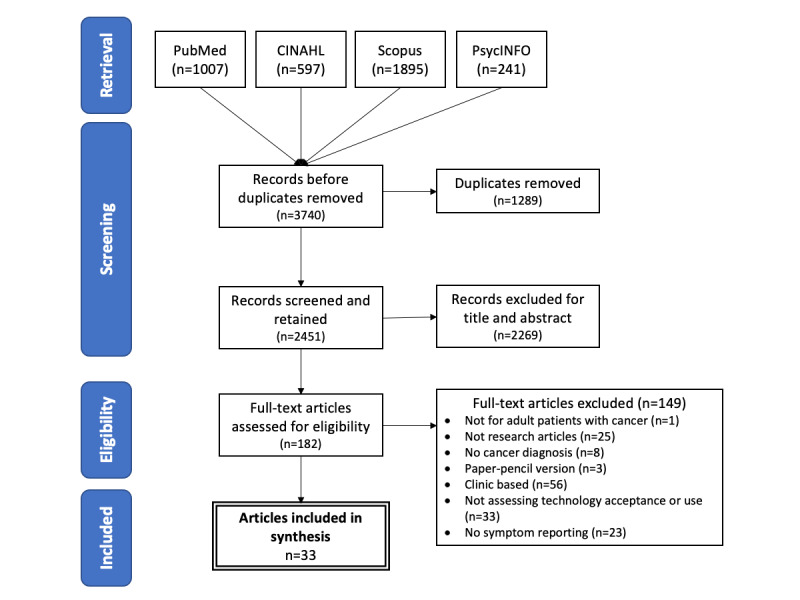
Background: Electronic symptom self-reporting systems (e-SRS) have been shown to improve symptoms and survival in patients with cancer. However, patient engagement in using e-SRS for voluntary symptom self-reporting is less optimal. Multiple factors can potentially affect patients’ acceptance and engagement in using home-based e-SRS. However, such factors have not been fully explored in cancer populations. Objective: The aim of this study is to understand the acceptance and use of home-based e-SRS by patients with cancer and identify associated facilitators and barriers. Methods: PubMed, CINAHL, Scopus, and PsycINFO (January 2010 to March 2020) were searched using a combination of Medical Subject Headings (MeSH) terms and keywords such as symptom self-reporting, electronic/technology, cancer, and their synonyms. Included studies focused on the use of home-based e-SRS by patients with cancer and their families. Studies on patients’ use of e-SRS in clinical settings only were excluded. Of the 3740 papers retrieved, 33 were included in the final review. Factors associated with patient acceptance and use of e-SRS were extracted and synthesized. Results: Most e-SRS were web based (22/33, 66%) or mobile app based (9/33, 27%). The e-SRS initial acceptance, represented by patient enrollment rates, ranged from 40% (22/55) to 100% (100/100). High e-SRS acceptance was rated by 69% (59/85) to 77.6% (337/434) of the patients after they used the system. The e-SRS use, measured by patients’ response rates to questionnaires (ranging from 1596/3521, 45.33% to 92%) or system log-on rates (ranging from 4/12, 33% to 99/100, 99%), declined over time in general patterns. Few studies (n=7) reported e-SRS use beyond 6 months, with the response rates ranging from 62% (40/64) to 85.1% (541/636) and the log-on rates ranging from 63.6% (103/162) to 77% (49/64). The availability of compatible devices and technical support, interactive system features, information accessibility, privacy, questionnaire quality, patient physical/psychosocial status, and age were associated with patient acceptance and use of home-based e-SRS. Conclusions: Acceptance and use of home-based e-SRS by patients with cancer varied significantly across studies, as assessed by a variety of approaches. The lack of access to technology has remained a barrier to e-SRS adoption. Interactive system features and personalized questionnaires may increase patient engagement. More studies are needed to further understand patients’ long-term use of home-based e-SRS behavior patterns to develop personalized interventions to support symptom self-management and self-reporting of patients with cancer for optimal health outcomes.
Overview
The claims and statistics of this paper haven’t been checked yet.
Free: it reads the open-access text and checks the first 5 claims that cite a source we can check. Create a free account to check every claim.
Integrity signals
Registry
Cites
Statistics
Figures
Verification
Claims the paper makes
The claims and statistics of this paper haven’t been checked yet.
Free: it reads the open-access text and checks the first 5 claims that cite a source we can check. Create a free account to check every claim.
Claims other papers make about this one
Each is checked against this paper’s own text: does it say what the citing paper says it does?
The source backs part of the claim, not all of it — or backs it for a different population, condition or comparison.
In the citing paper
“Factors like age, education, possession of smart device(s), the nature of the consultation (routine follow-up versus urgent need for physical examination), and experience with using technology could contribute to the acceptability of telehealth for cancer survivors [17].”
From Applying the Unified Theory of Acceptance and Use of Technology to Identify Factors Associated With Intention to Use Teledelivered Supportive Care Among Recently Diagnosed Breast Cancer Survivors During COVID-19 in Hong Kong: Cross-Sectional Survey (2024) · cites this paper as [17]
Experimental — accuracy not yet measured
Self-check
Percentages, sums and reported differences re-computed from the paper’s own numbers.
The self-check needs the paper’s full text.
Citations
Cites
Perceived usefulness, perceived ease of use, and user acceptance of information technology
Davis, F. D. (1989) · MIS Quarterly · doi:10.2307/249008 · Cited by 68,483 · cited 1×
“According to the widely adopted technology acceptance model, technology acceptance can be directly assessed by the person’s statements regarding her/his behavioral intention to the use of technology [60].”
BackgroundUser Acceptance of Information Technology: Toward A Unified View1
Venkatesh, V., Morris, M. G., Davis, G. B., & Davis, F. D. (2003) · MIS Quarterly · doi:10.2307/30036540 · Cited by 45,035 · cited 5×
“According to the UTAUT model, age, gender, and previous technology experiences potentially moderate the effects of determinants on the actual behavior of technology use [21].”
BackgroundMethodInfluentialUnderstanding Information Systems Continuance: An Expectation-Confirmation Model1
Bhattacherjee, A. (2001) · MIS Quarterly · doi:10.2307/3250921 · Cited by 8,767 · cited 1×
“The literature indicates that patients’ use of e-SRS for symptom self-reporting provides opportunities for clinicians to understand patients’ dynamic needs over time and facilitates productive interactions and interpersonal relationships between patients and clinicians [10,61].”
BackgroundSlim, K., Nini, E., Forestier, D., Kwiatkowski, F., Panis, Y., & Chipponi, J. (2003) · ANZ Journal of Surgery · doi:10.1046/j.1445-2197.2003.02748.x · Cited by 7,603 · cited 1×
“Therefore, this study only adopted the first 8 criteria of MINORS, including whether the study has a clear aim, clear inclusion and exclusion criteria, prospective data collection, appropriate endpoints, unbiased assessment, adequate study period, reasonable proportion of follow-up loss, and prospective sample size ca…”
MethodU.S. Department of Health and Human Services FDA Center for Drug Evaluation and Research, U.S. Department of Health and Human Services FDA Center for Biologics Evaluation and Research, & U.S. Department of Health and Human Services FDA Center for Devices and Radiological Health (2006) · Health and Quality of Life Outcomes · doi:10.1186/1477-7525-4-79 · Cited by 2,856
Confocal Imaging–Guided Laser Ablation of Basal Cell Carcinomas: An Ex Vivo Study
Sierra, H., Cordova, M., Chen, C.-S. J., & Rajadhyaksha, M. (2015) · Journal of Investigative Dermatology · doi:10.1038/jid.2014.371 · Cited by 1,703 · cited 6×
“The most commonly adopted symptom reporting instruments or questionnaires in home-based e-SRS were the National Cancer Institute-Common Terminology Criteria for Adverse Events or patient-reported outcome version of Common Terminology Criteria for Adverse Events (6/33, 19%) [27,28,30,38,46,48] and the European Organisa…”
BackgroundMethodInfluentialSelf-management: Enabling and empowering patients living with cancer as a chronic illness
McCorkle, R., Ercolano, E., Lazenby, M., Schulman-Green, D., Schilling, L. S., Lorig, K., & Wagner, E. H. (2011) · CA: A Cancer Journal for Clinicians · doi:10.3322/caac.20093 · Cited by 950 · cited 2×
“Informed by the chronic care model, patients with cancer and their families are expected to be in partnership with clinicians for joint management of the disease and related consequences to improve the quality of cancer care [10].”
BackgroundPatient compliance with paper and electronic diaries
Stone, A. A., Shiffman, S., Schwartz, J. E., Broderick, J. E., & Hufford, M. R. (2003) · Controlled Clinical Trials · doi:10.1016/s0197-2456(02)00320-3 · Cited by 910 · cited 1×
“For example, one study found that persons using paper diaries for tracking pain reported a high level of fake compliance (90% of patients reported the use of paper diaries for pain tracking, but only 32% actually used), whereas the electronic diaries group demonstrated 99% validated compliance [9].”
The Missing Voice of Patients in Drug-Safety Reporting
Basch, E. (2010) · New England Journal of Medicine · doi:10.1056/nejmp0911494 · Cited by 646 · cited 1×
“The importance of collecting patient-reported symptoms has been increasingly recognized in cancer care because patients with cancer often experience unpredictable subjective symptoms, such as severe nausea, fatigue, or pain, which can lead to unwarranted emergency room visits or hospital admissions [2-4].”
BackgroundO’Connor, S., Hanlon, P., O’Donnell, C. A., Garcia, S., Glanville, J., & Mair, F. S. (2016) · BMC Medical Informatics and Decision Making · doi:10.1186/s12911-016-0359-3 · Cited by 636
Kim, J., & Park, H.-A. (2012) · Journal of Medical Internet Research · doi:10.2196/jmir.2143 · Cited by 475 · cited 2×
“However, to achieve these benefits, patients’ acceptance and voluntary use of home-based e-SRS are essential for establishing long-term benefits of symptom self-reporting [8,20].”
BackgroundGreenlaw, C., & Brown-Welty, S. (2009) · Evaluation Review · doi:10.1177/0193841x09340214 · Cited by 363 · cited 1×
“Home-based e-SRS can be cost-effective because of the low cost of data collection using electronic surveys and timely identification and management of early symptoms before becoming severe [11,13].”
BackgroundElectronic patient‐reported outcome systems in oncology clinical practice
Bennett, A. V., Jensen, R. E., & Basch, E. (2012) · CA: A Cancer Journal for Clinicians · doi:10.3322/caac.21150 · Cited by 353 · cited 1×
“Electronic symptom self-reporting systems (e-SRS) have a variety of advantages compared with paper-and-pencil–based reporting formats, including fewer errors in data entry, less missing data, less burden in data management, faster access to data, increased potential for adopting alerts and notifications, and improved…”
BackgroundReview of Electronic Patient-Reported Outcomes Systems Used in Cancer Clinical Care
Jensen, R. E., Snyder, C. F., Abernethy, A. P., Basch, E., Potosky, A. L., Roberts, A. C., Loeffler, D. R., & Reeve, B. B. (2014) · Journal of Oncology Practice · doi:10.1200/jop.2013.001067 · Cited by 294 · cited 2×
“e-SRS has been shown to improve symptoms and survival in patients with cancer [12,18,19].”
BackgroundCoons, S. J., Eremenco, S., Lundy, J. J., O’Donohoe, P., O’Gorman, H., & Malizia, W. (2015) · The Patient - Patient-Centered Outcomes Research · doi:10.1007/s40271-014-0090-z · Cited by 213
Abraham, N. S., Byrne, C. J., Young, J. M., & Solomon, M. J. (2010) · Journal of Clinical Epidemiology · doi:10.1016/j.jclinepi.2009.04.005 · Cited by 209 · cited 1×
“Studies with a MINORS score of 11 (out of a total score of 16) or less, or a CASP checklist score less than 15 (out of 20) were classified as low-quality studies [25,26].”
MethodMooney, K. H., Beck, S. L., Wong, B., Dunson, W., Wujcik, D., Whisenant, M., & Donaldson, G. (2017) · Cancer Medicine · doi:10.1002/cam4.1002 · Cited by 208 · cited 6×
“The most commonly reported reasons for patients’ reluctance to participate in e-SRS studies were the lack of access to compatible devices (eg, computers, smartphones, or tablets) [31,46,50,51,53,58]; lack of access to the internet [31,46]; or limited experience with computers, smartphones, or the internet [33,37,53,59…”
BackgroundMethodInfluentialWarrington, L., Absolom, K., Conner, M., Kellar, I., Clayton, B., Ayres, M., & Velikova, G. (2019) · Journal of Medical Internet Research · doi:10.2196/10875 · Cited by 190 · cited 3×
“Inconsistent measurement and reporting of e-SRS acceptance and use across studies made the synthesis of findings challenging [19].”
BackgroundNjau, B., Covin, C., Lisasi, E., Damian, D., Mushi, D., Boulle, A., & Mathews, C. (2019) · BMC Public Health · doi:10.1186/s12889-019-7685-1 · Cited by 160 · cited 1×
“Studies with a MINORS score of 11 (out of a total score of 16) or less, or a CASP checklist score less than 15 (out of 20) were classified as low-quality studies [25,26].”
MethodJudson, T. J., Bennett, A. V., Rogak, L. J., Sit, L., Barz, A., Kris, M. G., Hudis, C., Scher, H. I., Sabattini, P., Schrag, D., et al. (2013) · Journal of Clinical Oncology · doi:10.1200/jco.2012.47.6804 · Cited by 149 · cited 10×
“Patients often missed reporting of symptoms because of their illness, and about 7% of the missing data were due to the patients who were too ill to complete the questionnaires [36].”
BackgroundInfluentialBørøsund, E., Cvancarova, M., Moore, S. M., Ekstedt, M., & Ruland, C. M. (2014) · Journal of Medical Internet Research · doi:10.2196/jmir.3348 · Cited by 148
Holch, P., Warrington, L., Bamforth, L., Keding, A., Ziegler, L. E., Absolom, K. L., Hector, C., Harley, C., Johnson, O. A., Hall, G. D., et al. (2017) · Annals of Oncology · doi:10.1093/annonc/mdx317 · Cited by 128 · cited 1×
“Although many studies have collected patient-reported symptoms in clinical settings [14-16], research has found that patients with cancer usually report fewer and/or less severe symptoms during clinical visits than when self-reported in real time from home [17].”
BackgroundMin, Y. H., Lee, J. W., Shin, Y.-W., Jo, M.-W., Sohn, G., Lee, J.-H., Lee, G., Jung, K. H., Sung, J., Ko, B. S., et al. (2014) · Journal of Medical Internet Research · doi:10.2196/jmir.3421 · Cited by 122 · cited 9×
“The second pattern was that the e-SRS use decreased over time throughout the study period [31,47,56].”
BackgroundMethodInfluentialRuland, C. M., Holte, H. H., Roislien, J., Heaven, C., Hamilton, G. A., Kristiansen, J., Sandbaek, H., Kvaloy, S. O., Hasund, L., & Ellison, M. C. (2010) · Journal of the American Medical Informatics Association · doi:10.1136/jamia.2010.005660 · Cited by 121 · cited 1×
“Although many studies have collected patient-reported symptoms in clinical settings [14-16], research has found that patients with cancer usually report fewer and/or less severe symptoms during clinical visits than when self-reported in real time from home [17].”
BackgroundSeow, H., Sussman, J., Martelli-Reid, L., Pond, G., & Bainbridge, D. (2012) · Journal of Oncology Practice · doi:10.1200/jop.2011.000525 · Cited by 121 · cited 1×
“Although many studies have collected patient-reported symptoms in clinical settings [14-16], research has found that patients with cancer usually report fewer and/or less severe symptoms during clinical visits than when self-reported in real time from home [17].”
BackgroundGraetz, I., McKillop, C. N., Stepanski, E., Vidal, G. A., Anderson, J. N., & Schwartzberg, L. S. (2018) · Journal of Cancer Survivorship · doi:10.1007/s11764-018-0682-z · Cited by 106 · cited 5×
“Several studies calculated the response rate using the number of patients who had ever reported their symptoms during certain time frames divided by the total number of all enrolled patients [29-32,36,40,42-44,46,48,50].”
BackgroundInfluentialBasch, E., Rogak, L. J., & Dueck, A. C. (2016) · Clinical Therapeutics · doi:10.1016/j.clinthera.2016.03.011 · Cited by 101 · cited 3×
“There is growing evidence for the use of electronic technology systems to collect patient-reported symptoms [5].”
BackgroundMethod(2020) · PubMed · doi:10.6004/jnccn.2019.7354 · Cited by 99 · cited 7×
“The most commonly reported reasons for patients’ reluctance to participate in e-SRS studies were the lack of access to compatible devices (eg, computers, smartphones, or tablets) [31,46,50,51,53,58]; lack of access to the internet [31,46]; or limited experience with computers, smartphones, or the internet [33,37,53,59…”
BackgroundMethodInfluentialAshley, L., Jones, H., Thomas, J., Newsham, A., Downing, A., Morris, E. J. A., Brown, J. M., Velikova, G., Forman, D., & Wright, P. (2013) · Journal of Medical Internet Research · doi:10.2196/jmir.2764 · Cited by 95 · cited 9×
“The most commonly reported reasons for patients’ reluctance to participate in e-SRS studies were the lack of access to compatible devices (eg, computers, smartphones, or tablets) [31,46,50,51,53,58]; lack of access to the internet [31,46]; or limited experience with computers, smartphones, or the internet [33,37,53,59…”
BackgroundMethodInfluentialHauth, F., Bizu, V., App, R., Lautenbacher, H., Tenev, A., Bitzer, M., Malek, N. P., Zips, D., & Gani, C. (2019) · JMIR mhealth and uhealth · doi:10.2196/12345 · Cited by 88 · cited 5×
“The most commonly adopted symptom reporting instruments or questionnaires in home-based e-SRS were the National Cancer Institute-Common Terminology Criteria for Adverse Events or patient-reported outcome version of Common Terminology Criteria for Adverse Events (6/33, 19%) [27,28,30,38,46,48] and the European Organisa…”
BackgroundMethodInfluentialGarcia, S. F., Wortman, K., Cella, D., Wagner, L. I., Bass, M., Kircher, S., Pearman, T., & Penedo, F. J. (2019) · Cancer · doi:10.1002/cncr.32172 · Cited by 83
Børøsund, E., Cvancarova, M., Ekstedt, M., Moore, S. M., & Ruland, C. M. (2013) · Journal of Medical Internet Research · doi:10.2196/jmir.2285 · Cited by 80 · cited 8×
“Study durations ranged from 1 month to 24 months, of which 7 studies (7/33, 21%) [31-37] followed up with participants for more than 6 months (Multimedia Appendix 2).”
InfluentialDenis, F., Viger, L., Charron, A., Voog, É., Dupuis, O., Pointreau, Y., & Christophe Letellier, A. (2014) · Supportive Care in Cancer · doi:10.1007/s00520-013-2111-1 · Cited by 76 · cited 6×
“In total, 17 web-based e-SRS were reported in 22 studies (22/33, 66%) [27-29,31-49], including 2 studies that integrated web-based platforms with patient portals and electronic health records (EHRs) [41,47].”
BackgroundMethodInfluentialAndikyan, V., Rezk, Y., Einstein, M. H., Gualtiere, G., Leitao, M. M., Sonoda, Y., Abu-Rustum, N. R., Barakat, R. R., Basch, E. M., & Chi, D. S. (2012) · Gynecologic Oncology · doi:10.1016/j.ygyno.2012.07.124 · Cited by 73 · cited 6×
“The most commonly adopted symptom reporting instruments or questionnaires in home-based e-SRS were the National Cancer Institute-Common Terminology Criteria for Adverse Events or patient-reported outcome version of Common Terminology Criteria for Adverse Events (6/33, 19%) [27,28,30,38,46,48] and the European Organisa…”
BackgroundMethodInfluentialBerry, D. L., Blonquist, T. M., Patel, R. A., Halpenny, B., & McReynolds, J. (2015) · Journal of Medical Internet Research · doi:10.2196/jmir.4190 · Cited by 69 · cited 10×
“Evidence regarding the influence of employment status [49,56] and cancer staging [36,41] was mixed.”
BackgroundMethodInfluentialCoolbrandt, A., den Heede, K. V., Vanhove, E., Bom, A. D., Milisen, K., & Wildiers, H. P. M. W. (2010) · European Journal of Oncology Nursing · doi:10.1016/j.ejon.2010.06.010 · Cited by 61 · cited 1×
“Although many studies have collected patient-reported symptoms in clinical settings [14-16], research has found that patients with cancer usually report fewer and/or less severe symptoms during clinical visits than when self-reported in real time from home [17].”
BackgroundSundberg, K. K., Langius‐Eklöf, A., Blomberg, K., Isaksson, A., & Wengström, Y. (2015) · European Journal of Oncology Nursing · doi:10.1016/j.ejon.2015.02.013 · Cited by 60 · cited 3×
“A total of 5 studies (5/33, 15%) required patients to report at least one of the several listed symptoms [40,42,54,57,58].”
BackgroundBroberger, E., Tishelman, C., & von Essén, L. (2005) · Journal of Pain and Symptom Management · doi:10.1016/j.jpainsymman.2004.11.006 · Cited by 55
Cowan, R. A., Suidan, R. S., Andikyan, V., Rezk, Y. A., Einstein, M. H., Chang, K., Carter, J., Zivanovic, O., Jewell, E. J., Abu-Rustum, N. R., et al. (2016) · Gynecologic Oncology · doi:10.1016/j.ygyno.2016.08.335 · Cited by 51 · cited 9×
“The most commonly adopted symptom reporting instruments or questionnaires in home-based e-SRS were the National Cancer Institute-Common Terminology Criteria for Adverse Events or patient-reported outcome version of Common Terminology Criteria for Adverse Events (6/33, 19%) [27,28,30,38,46,48] and the European Organisa…”
BackgroundMethodInfluentialGraetz, I., Anderson, J. N., McKillop, C. N., Stepanski, E. J., Paladino, A. J., & Tillmanns, T. D. (2018) · Gynecologic Oncology · doi:10.1016/j.ygyno.2018.06.007 · Cited by 50 · cited 10×
“For example, 1 study reported an average of 4 patient log-ons during a 30-day study period [42], another study reported an average of 17 log-ons over 34 weeks [36], and an average of 22 log-on days was reported during an average follow-up period of 12.”
BackgroundMethodInfluentialBelarmino, A., Walsh, R. J., Alshak, M. N., Patel, N., Wu, R., & Hu, J. C. (2018) · European Urology Oncology · doi:10.1016/j.euo.2018.08.016 · Cited by 50 · cited 8×
“The most commonly reported reasons for patients’ reluctance to participate in e-SRS studies were the lack of access to compatible devices (eg, computers, smartphones, or tablets) [31,46,50,51,53,58]; lack of access to the internet [31,46]; or limited experience with computers, smartphones, or the internet [33,37,53,59…”
BackgroundInfluentialCaregivers of Older Adults With Cancer
Jayani, R., & Hurria, A. (2012) · Seminars in Oncology Nursing · doi:10.1016/j.soncn.2012.09.004 · Cited by 49 · cited 1×
“It is well known that family caregivers are commonly involved in medication and symptom self-management of patients with cancer, particularly for older adults with cancer [64].”
BackgroundLangius-Eklöf, A., Christiansen, M., Lindström, V., Blomberg, K., Hälleberg Nyman, M., Wengström, Y., & Sundberg, K. (2017) · JMIR Cancer · doi:10.2196/cancer.7599 · Cited by 48 · cited 9×
“Only 1 study provided desktop computers [44], and 3 studies provided mobile devices to participants [52,55,57].”
BackgroundMethodInfluentialFalchook, A. D., Tracton, G., Stravers, L., Fleming, M. E., Snavely, A. C., Noe, J. F., Hayes, D. N., Grilley-Olson, J. E., Weiss, J. M., Reeve, B. B., et al. (2016) · Advances in Radiation Oncology · doi:10.1016/j.adro.2016.02.001 · Cited by 46 · cited 5×
“The most commonly reported reasons for patients’ reluctance to participate in e-SRS studies were the lack of access to compatible devices (eg, computers, smartphones, or tablets) [31,46,50,51,53,58]; lack of access to the internet [31,46]; or limited experience with computers, smartphones, or the internet [33,37,53,59…”
BackgroundInfluentialIivanainen, S., Alanko, T., Peltola, K. J., Konkola, T., Ekström, J., Virtanen, H., & Koivunen, J. P. (2019) · Journal of Cancer Research and Clinical Oncology · doi:10.1007/s00432-018-02835-6 · Cited by 45 · cited 7×
“Study durations ranged from 1 month to 24 months, of which 7 studies (7/33, 21%) [31-37] followed up with participants for more than 6 months (Multimedia Appendix 2).”
BackgroundMethodInfluentialFurlong, E., Darley, A., Fox, P., Buick, A., Kotronoulas, G., Miller, M., Flowerday, A., Miaskowski, C., Patiraki, E., Katsaragakis, S., et al. (2019) · JMIR Cancer · doi:10.2196/10813 · Cited by 44 · cited 10×
“Only 1 study provided desktop computers [44], and 3 studies provided mobile devices to participants [52,55,57].”
BackgroundMethodInfluentialThe Rationale for Collecting Patient-Reported Symptoms during Routine Chemotherapy
Basch, E. (2014) · American Society of Clinical Oncology Educational Book · doi:10.14694/edbook_am.2014.34.161 · Cited by 43 · cited 1×
“Patient-reported symptoms, as patient-reported outcomes, are directly reported by patients without any editing or interpretation by clinicians [1,2].”
BackgroundPatient satisfaction with information on oral anticancer agent use
Boons, C. C. L. M., Timmers, L., van Schoor, N. M., Swart, E. L., Hendrikse, N. H., Janssen, J. J. W. M., & Hugtenburg, J. G. (2017) · Cancer Medicine · doi:10.1002/cam4.1239 · Cited by 43 · cited 1×
“Within the current outpatient oncology model, particularly with the increasing use of oral anticancer treatment at home, patients with cancer have fewer opportunities to directly interact with their health care professionals during office visits, share the concerns of their symptoms experienced, or receive sufficient…”
BackgroundHarris, J., Cheevers, K., & Armes, J. (2018) · Current Opinion in Supportive and Palliative Care · doi:10.1097/spc.0000000000000362 · Cited by 42 · cited 2×
“Home-based e-SRS can be cost-effective because of the low cost of data collection using electronic surveys and timely identification and management of early symptoms before becoming severe [11,13].”
BackgroundZylla, D. M., Gilmore, G., Steele, G. L., Eklund, J. P., Wood, C. M., Stover, A. M., & Shapiro, A. C. (2019) · Supportive Care in Cancer · doi:10.1007/s00520-019-05109-0 · Cited by 42
Gustavell, T., Langius-Eklöf, A., Wengström, Y., Segersvärd, R., & Sundberg, K. (2019) · Cancer Nursing · doi:10.1097/ncc.0000000000000584 · Cited by 40 · cited 8×
“Patients sometimes lost interest in using the system because the symptoms listed in the questionnaires were irrelevant to the symptoms they wanted to report, and the simple grading scale that requires patients to grade the presence or severity of certain symptoms was confusing [31,52,54].”
BackgroundInfluentialInnominato, P. F., Komarzynski, S., Karaboué, A., Ulusakarya, A., Bouchahda, M., Haydar, M., Bossevot, R., Mocquery, M., Plessis, V., & Lévi, F. (2018) · JCO Clinical Cancer Informatics · doi:10.1200/cci.17.00125 · Cited by 39 · cited 4×
“A total of 23 studies quantified patients’ enrollment rates in e-SRS studies and reported a median rate of 68% (range, 22/25-18/18, 40%-100%) [27-30,32-34,39-42,44,46-49,51-53,55,56,58,59].”
BackgroundInfluentialMougalian, S. S., Epstein, L. N., Jhaveri, A. P., Han, G., Abu-Khalaf, M., Hofstatter, E. W., DiGiovanna, M. P., Silber, A. L. M., Adelson, K., Pusztai, L., et al. (2017) · JCO Clinical Cancer Informatics · doi:10.1200/cci.17.00015 · Cited by 37 · cited 6×
“The most commonly reported reasons for patients’ reluctance to participate in e-SRS studies were the lack of access to compatible devices (eg, computers, smartphones, or tablets) [31,46,50,51,53,58]; lack of access to the internet [31,46]; or limited experience with computers, smartphones, or the internet [33,37,53,59…”
BackgroundMethodInfluentialMatthies, L. M., Taran, F., Keilmann, L., Schneeweiß, A., Simoes, E., Hartkopf, A. D., Sokolov, A. N., Walter, C. B., Sickenberger, N., Wallwiener, S., et al. (2018) · Journal of Medical Internet Research · doi:10.2196/10004 · Cited by 37
Warrington, L., Absolom, K., Holch, P., Gibson, A., Clayton, B., & Velikova, G. (2019) · BMJ Open · doi:10.1136/bmjopen-2018-025185 · Cited by 37
Sereika, S., DeVito Dabbs, A., Handler, S., Schlenk, E., & Jiang, Y. (2016) · Applied Clinical Informatics · doi:10.4338/aci-2015-12-ra-0170 · Cited by 36 · cited 1×
“Interestingly, patients’ health status could be either positively or negatively associated with their technology use behavior [20,63].”
BackgroundSelf-citationA Novel Digital Patient-Reported Outcome Platform for Head and Neck Oncology Patients–-A Pilot Study
Peltola, M., Lehikoinen, J. S. J., Sippola, L. T., Saarilahti, K., & Mäkitie, A. A. (2016) · Clinical Medicine Insights Ear Nose and Throat · doi:10.4137/cment.s40219 · Cited by 33 · cited 4×
“A total of 23 studies quantified patients’ enrollment rates in e-SRS studies and reported a median rate of 68% (range, 22/25-18/18, 40%-100%) [27-30,32-34,39-42,44,46-49,51-53,55,56,58,59].”
BackgroundMethodInfluentialBoele, F. W., van Uden-Kraan, C. F., Hilverda, K., Reijneveld, J. C., Cleijne, W., Klein, M., & Verdonck-de Leeuw, I. M. (2016) · Supportive Care in Cancer · doi:10.1007/s00520-016-3112-7 · Cited by 30
Lucas, S., Kim, T.-K., Ghani, K. R., Miller, D. C., Linsell, S. M., Starr, J., Peabody, J. O., Hurley, P., Montie, J. E., & Cher, M. L. (2017) · Urology · doi:10.1016/j.urology.2017.04.058 · Cited by 30
Bae, W. K., Kwon, J., Lee, H. W., Lee, S., Song, E., Shim, H., Ryu, K. H., Song, J.-M., Seo, S., Yang, Y., et al. (2018) · Supportive Care in Cancer · doi:10.1007/s00520-018-4232-z · Cited by 26 · cited 8×
“The most commonly adopted symptom reporting instruments or questionnaires in home-based e-SRS were the National Cancer Institute-Common Terminology Criteria for Adverse Events or patient-reported outcome version of Common Terminology Criteria for Adverse Events (6/33, 19%) [27,28,30,38,46,48] and the European Organisa…”
BackgroundMethodInfluentialReducing Cancer Costs Through Symptom Management and Triage Pathways
Barkley, R., Soobader, M.-J., Wang, J., Blau, S., & Page, R. D. (2019) · Journal of Oncology Practice · doi:10.1200/jop.18.00082 · Cited by 25 · cited 1×
“The importance of collecting patient-reported symptoms has been increasingly recognized in cancer care because patients with cancer often experience unpredictable subjective symptoms, such as severe nausea, fatigue, or pain, which can lead to unwarranted emergency room visits or hospital admissions [2-4].”
BackgroundPatient Use of Electronic Methods to Self-Report Symptoms: An Integrative Literature Review
Carrasco, S., & Symes, L. (2018) · Oncology nursing forum · doi:10.1188/18.onf.399-416 · Cited by 21 · cited 2×
“e-SRS has been shown to improve symptoms and survival in patients with cancer [12,18,19].”
BackgroundMethodBrochmann, N., Zwisler, A., Kjerholt, M., Flachs, E. M., Hasselbalch, H. C., & Andersen, C. L. (2015) · Quality of Life Research · doi:10.1007/s11136-015-1125-1 · Cited by 15 · cited 9×
“Study durations ranged from 1 month to 24 months, of which 7 studies (7/33, 21%) [31-37] followed up with participants for more than 6 months (Multimedia Appendix 2).”
BackgroundInfluentialElectronic patient-reported outcomes: a revolutionary strategy in cancer care
Eid, R., Haddad, F., Kourié, H. R., & Kattan, J. G. (2017) · Future Oncology · doi:10.2217/fon-2017-0345 · Cited by 14 · cited 2×
“However, to achieve these benefits, patients’ acceptance and voluntary use of home-based e-SRS are essential for establishing long-term benefits of symptom self-reporting [8,20].”
BackgroundAhlbrandt, J., Lablans, M., Glocker, K., Stahl-Toyota, S., Maier-Hein, K. H., Maier‐Hein, L., & Ückert, F. (2018) · Oncology · doi:10.1159/000493638 · Cited by 14 · cited 1×
“Electronic symptom self-reporting systems (e-SRS) have a variety of advantages compared with paper-and-pencil–based reporting formats, including fewer errors in data entry, less missing data, less burden in data management, faster access to data, increased potential for adopting alerts and notifications, and improved…”
BackgroundDenis, F., Voog, É., Pointreau, Y., Bourgeois, H. P., Seegers, V., & Dû, K. L. (2018) · Supportive Care in Cancer · doi:10.1007/s00520-018-4505-6 · Cited by 4 · cited 6×
“Several studies calculated the response rate using the number of patients who had ever reported their symptoms during certain time frames divided by the total number of all enrolled patients [29-32,36,40,42-44,46,48,50].”
BackgroundInfluentialCowan, R. A., Suidan, R. S., Andikyan, V., Rezk, Y. S., Einstein, H., Chang, K. K., Zivanovic, O., Gardner, G. J., Sonoda, Y., & Chi, D. S. (2016) · Gynecologic Oncology · doi:10.1016/j.ygyno.2016.04.455 · Cited by 4
Cited by
Digital health and telehealth in cancer care: A scoping review of reviews
Shaffer, K. M., Turner, K. L., Siwik, C., Gonzalez, B. D., Upasani, R., Glazer, J. V., Ferguson, R. J., Joshua, C., & Low, C. A. (2023) · The Lancet Digital Health · doi:10.1016/s2589-7500(23)00049-3 · Cited by 263
Steindal, S. A., Nes, A. A. G., Godskesen, T., Holmen, H., Winger, A., Österlind, J., Dihle, A., & Klarare, A. (2023) · Journal of Medical Internet Research · doi:10.2196/43684 · Cited by 130
“Poor-quality electronic questionnaires, for example, that have an overload or overlap of questions or require reporting of symptoms that patients find irrelevant, may affect patients’ acceptability and use of remote self-reporting [90].”
Woolley, K. E., Bright, D., Ayres, T., Morgan, F. M., Little, K. E., & Davies, A. R. (2023) · Journal of Medical Internet Research · doi:10.2196/44181 · Cited by 79
“For instance, Chambers et al [22] noted that, in 1 primary study [40], individuals with a low to medium level of education were more motivated toward indirect consultation (eg, involving communication with a health professional via email) to reduce uncertainty.”
InfluentialArdito, V., Golubev, G., Ciani, O., & Tarricone, R. (2023) · JMIR Cancer · doi:10.2196/42092 · Cited by 56
Telerehabilitation solutions in patient pathways: An overview of systematic reviews
Nicolas, B., Leblong, É., Fraudet, B., Gallien, P., & Piette, P. (2024) · Digital Health · doi:10.1177/20552076241294110 · Cited by 62
“71”
Metadata
- Authors
- Cho, Y., Zhang, H., Harris, M. R., Gong, Y., Smith, E. L., & Jiang, Y.
- Affiliations
- University of Michigan (US)
- The University of Texas Health Science Center at Houston (US)
- Corresponding author
- Jiang, Yun
- Venue
- Journal of Medical Internet Research
- Publisher
- JMIR Publications Inc.
- Published
- 2021-03-12
- Volume
- 23
- Issue
- 3
- Pages
- e24638
- ISSN
- 1438-8871 (ISSN-L)
- PMC
- PMC7998328
- OpenAlex
- W3134487450
- Cited by
- 53
- References
- 67
- Citations by year
- 2026: 6 · 2025: 10 · 2024: 14 · 2023: 14 · 2022: 8 · 2021: 1
- FWCI
- 1.90
- Type
- journal article
- Language
- en
- Open access
- gold
- doi.org
- Licence
- cc-by
- Locations
- Journal of Medical Internet Research (publishedVersion, cc-by)
- PubMed Central (publishedVersion, cc-by)
- PubMed (publishedVersion)
- DOAJ (DOAJ: Directory of Open Access Journals) (submittedVersion, cc-by-sa)
- Topics
- Health Sciences › Health Professions › General Health Professions › Mobile Health and mHealth Applications
- Health Sciences › Medicine › Oncology › Cancer survivorship and care
- Health Sciences › Medicine › Public Health, Environmental and Occupational Health › Telemedicine and Telehealth Implementation
- Keywords
- cancer patients, patient acceptance, patient engagement, technology acceptance, mobile health apps, response rate, barriers to use, patient education, family caregivers, patient-provider communication, patient-centered care
- MeSH terms
- Self-Management, Electronics, Humans, Neoplasms, Telemedicine, Self Report, Mobile Applications
About these checks
Registry, retraction, Cites and statistics results are computed, not judged, with one exception: a printed reference that no index lists is read once by a model before it counts as a citation error. Claims are extracted by a model and kept only when their quote appears verbatim in the text; each cited source is then checked, with a model’s help, for whether it says what the claim relies on. Those verdicts can be wrong — read the claim’s quote and the cited source before relying on one.
Statistics and arithmetic are recomputed, not judged.
Confidence bands are shown only for fields calibrated on our annotated test set. None is calibrated yet, so no band is shown.
What counts as a claim ›How we measure confidence ›How we check this ›
Are you an author, or do you see a problem with this page? Request a review
Data sources
Bibliographic data: Semantic Scholar, OpenAlex, Crossref.
Contains information from the Semantic Scholar Academic Graph Datasets, made available under the ODC Attribution License (ODC-BY 1.0).
Semantic Scholar’s data is described in: Kinney, R., et al. (2023). The Semantic Scholar Open Data Platform. arXiv:2301.10140.
