

A Machine Learning Sepsis Prediction Algorithm for Intended Intensive Care Unit Use (NAVOY Sepsis): Proof-of-Concept Study
Open accessPublished version of a preprint
The DOI matches its Crossref record; 34 of the 34 references it cites were found in a registry or an index.
Abstract
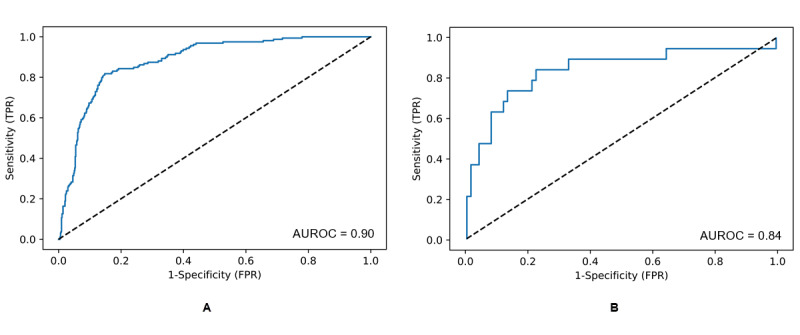
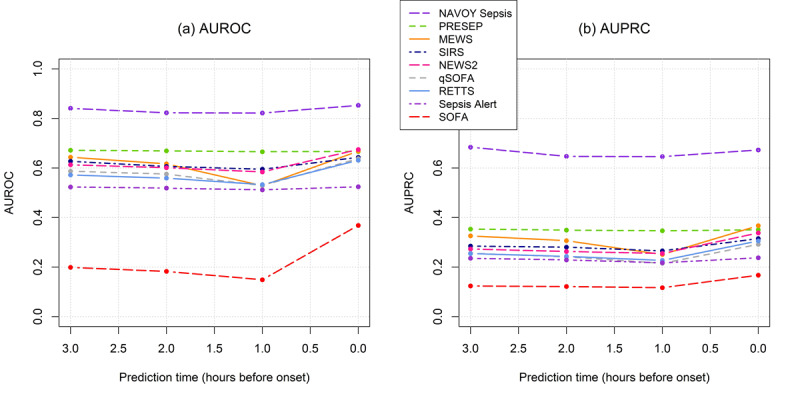
Background: Despite decades of research, sepsis remains a leading cause of mortality and morbidity in intensive care units worldwide. The key to effective management and patient outcome is early detection, for which no prospectively validated machine learning prediction algorithm is currently available for clinical use in Europe. Objective: We aimed to develop a high-performance machine learning sepsis prediction algorithm based on routinely collected intensive care unit data, designed to be implemented in European intensive care units. Methods: The machine learning algorithm was developed using convolutional neural networks, based on Massachusetts Institute of Technology Lab for Computational Physiology MIMIC-III clinical data from intensive care unit patients aged 18 years or older. The model uses 20 variables to produce hourly predictions of onset of sepsis, defined by international Sepsis-3 criteria. Predictive performance was externally validated using hold-out test data. Results: The algorithm—NAVOY Sepsis—uses 4 hours of input and can identify patients with high risk of developing sepsis, with high performance (area under the receiver operating characteristics curve 0.90; area under the precision-recall curve 0.62) for predictions up to 3 hours before sepsis onset. Conclusions: The prediction performance of NAVOY Sepsis was superior to that of existing sepsis early warning scoring systems and comparable with those of other prediction algorithms designed to predict sepsis onset. The algorithm has excellent predictive properties and uses variables that are routinely collected in intensive care units.
Overview
The claims and statistics of this paper haven’t been checked yet.
Free: it reads the open-access text and checks the first 5 claims that cite a source we can check. Create a free account to check every claim.
Integrity signals
Registry
Cites
Statistics
Figures
Verification
Claims the paper makes
The claims and statistics of this paper haven’t been checked yet.
Free: it reads the open-access text and checks the first 5 claims that cite a source we can check. Create a free account to check every claim.
Self-check
Percentages, sums and reported differences re-computed from the paper’s own numbers.
The self-check needs the paper’s full text.
Citations
Cites
ImageNet classification with deep convolutional neural networks
Krizhevsky, A., Sutskever, I., & Hinton, G. E. (2017) · Communications of the ACM · doi:10.1145/3065386 · Cited by 112,155 · cited 1×
“The algorithm was developed using convolutional neural networks [23].”
MethodThe third international consensus definitions for sepsis and septic shock (Sepsis-3).
Singer, M., Deutschman, C. S., Seymour, C. W., Shankar-Hari, M., Annane, D., Bauer, M., Bellomo, R., Bernard, G. R., Chiche, J.-D., Coopersmith, C. M., et al. (2016) · JAMA · doi:10.1001/jama.2016.0287 · Cited by 28,250
Zhou, F., Yu, T., Du, R., Fan, G., Liu, Y., Liu, Z., Xiang, J., Wang, Y., Song, B., Gu, X., et al. (2020) · The Lancet · doi:10.1016/s0140-6736(20)30566-3 · Cited by 27,263 · cited 1×
“During the coronavirus disease 2019 (COVID-19) pandemic, sepsis was the most frequently observed complication among adult inpatients at Jinyintan Hospital and Wuhan Pulmonary Hospital (Wuhan, China) who had been discharged or had died (as of January 31, 2020) [5].”
BackgroundBone, R. C., Balk, R. A., Cerra, F. B., Dellinger, R. P., Fein, A. M., Knaus, W. A., Schein, R. M. H., & Sibbald, W. J. (1992) · Chest · doi:10.1378/chest.101.6.1644 · Cited by 13,198 · cited 1×
“The following scores were included in this study: Systemic Inflammatory Response Syndrome criteria, at least 2 of 4 criteria present [29]; Quick Sepsis-Related Organ Failure Assessment score, at least 2 of 3 criteria present [1]; Sepsis-Related Organ Failure Assessment score, total score ≥2 [1]; Modified Early Warning…”
MethodMIMIC-III, a freely accessible critical care database
Johnson, A. E. W., Pollard, T. J., Shen, L., Lehman, L.-W. H., Feng, M., Ghassemi, M., Moody, B., Szolovits, P., Anthony Celi, L., & Mark, R. G. (2016) · Scientific Data · doi:10.1038/sdata.2016.35 · Cited by 8,141 · cited 1×
“The algorithm for prediction of sepsis was developed based on Massachusetts Institute of Technology Lab for Computational Physiology MIMIC-III Clinical Database [20].”
MethodRudd, K. E., Johnson, S. C., Agesa, K. M., Shackelford, K. A., Tsoi, D., Kievlan, D. R., Colombara, D. V., Ikuta, K. S., Kissoon, N., Finfer, S., et al. (2020) · The Lancet · doi:10.1016/s0140-6736(19)32989-7 · Cited by 7,971 · cited 1×
“Globally, it affects approximately 49 million people every year [4].”
BackgroundKumar, A., Roberts, D., Wood, K. E., Light, B., Parrillo, J. E., Sharma, S., Suppes, R., Feinstein, D., Zanotti, S., Taiberg, L., et al. (2006) · Critical Care Medicine · doi:10.1097/01.ccm.0000217961.75225.e9 · Cited by 6,109 · cited 2×
“Early diagnosis of sepsis has been shown to reduce delays in treatment, increase appropriate care, and reduce mortality [6-9].”
BackgroundSeymour, C. W., Liu, V. X., Iwashyna, T. J., Brunkhorst, F. M., Rea, T. D., Scherag, A., Rubenfeld, G., Kahn, J. M., Shankar-Hari, M., Singer, M., et al. (2016) · JAMA · doi:10.1001/jama.2016.0288 · Cited by 3,939 · cited 1×
“Suspected infection [21] was defined as instances when antibiotics had been prescribed and when body fluid cultures were present in the electronic health record within a specific time window; if a culture is ordered within 24 hours after antibiotics, or antibiotics had been prescribed less than 72 hours after a cultur…”
BackgroundSurviving Sepsis Campaign: International guidelines for management of sepsis and septic shock: 2016.
Rhodes, A., Evans, L. E., Alhazzani, W., Levy, M. M., Antonelli, M., Ferrer, R., Kumar, A., Sevransky, J. E., Sprung, C. L., Nunnally, M. E., et al. (2017) · Critical Care Medicine · doi:10.1097/ccm.0000000000002255 · Cited by 3,652
Time to treatment and mortality during mandated emergency care for sepsis.
Seymour, C. W., Gesten, F., Prescott, H. C., Friedrich, M. E., Iwashyna, T. J., Phillips, G. S., Lemeshow, S., Osborn, T., Terry, K. M., & Levy, M. M. (2017) · New England Journal of Medicine · doi:10.1056/nejmoa1703058 · Cited by 2,225 · cited 2×
“Early diagnosis of sepsis has been shown to reduce delays in treatment, increase appropriate care, and reduce mortality [6-9].”
Background
Research works printed but not linked: 4
- AbadiMBarhamPChenJTensorFlow: a system for large-scale machine learningProceedings of the 12th USENIX Symposium on Operating Systems Design and Implementation (OSDI ’16)201612th USENIX Symposium on Operating Systems Design and Implementation (OSDI ’16)November 2-4Savannah, GA, USA265283
- 2017, Updated Report of a Working Party
- Moor, M, 2019, Proc Mach Learn Res, 106, 2
- Futoma, J, 2017, Proc Mach Learn Res, 68, 243
Cited by
Predicting sepsis onset in ICU using machine learning models: a systematic review and meta-analysis
Yang, Z., Cui, X., & Song, Z. (2023) · BMC Infectious Diseases · doi:10.1186/s12879-023-08614-0 · Cited by 68
Artificial Intelligence in Sepsis Management: An Overview for Clinicians
Bignami, E. G., Berdini, M., Panizzi, M., Domenichetti, T., Bezzi, F., Allai, S., Damiano, T., & Bellini, V. (2025) · Journal of Clinical Medicine · doi:10.3390/jcm14010286 · Cited by 53
“Persson et al. [14] constructed a high-performance MLM for sepsis prediction called NAVOY Sepsis by using convolutional neural networks.”
Persson, I., Macura, A., Becedas, D., & Sjövall, F. (2024) · Journal of Critical Care · doi:10.1016/j.jcrc.2023.154400 · Cited by 51
Self-citationYadgarov, M. Y., Landoni, G., Бондоевич, Б. Л., Polyakov, P. A., Kadantseva, K., Smirnova, A. V., Kuznetsov, I. V., Shemetova, M. M., Yakovlev, A. А., & Likhvantsev, V. V. (2024) · Frontiers in Medicine · doi:10.3389/fmed.2024.1491358 · Cited by 64
Zubair, M., Din, I., Sarwar, N., Boltayevich, E. B., Mаkhmudov, S., & Trabelsi, Z. (2025) · BMC Infectious Diseases · doi:10.1186/s12879-025-11423-2 · Cited by 49
AI Advances in ICU with an Emphasis on Sepsis Prediction: An Overview
Stylianides, C., Nicolaou, A., Sulaiman, W. A., Alexandropoulou, C.-A., Panagiotopoulos, I., Karathanasopoulou, K., Dimitrakopoulos, G., Kleanthous, S., Politi, E., Ntalaperas, D., et al. (2025) · Machine Learning and Knowledge Extraction · doi:10.3390/make7010006 · Cited by 28
“DL models proposed are usually temporal ones, like the Long Short Term Memory (LSTM) [122,127,135,143], the Recurrent Neural Network (RNN) [131,133], the Convolutional Neural Network (CNN) [115,140], the Temporal Convolutional Network (TCN) [118], or combinations of them [132,134].”
InfluentialTransferability and interpretability of the sepsis prediction models in the intensive care unit
Chen, Q., Li, R., Lin, C., Lai, C., Chen, D., Qu, H., Huang, Y., Lu, W., Tang, Y., & Li, L. (2022) · BMC Medical Informatics and Decision Making · doi:10.1186/s12911-022-02090-3 · Cited by 28
“Machine learning has emerged as a promising tool for the early detection of sepsis occurrence based on electronic medical records, laboratory data, and biomedical signals [6–14].”
MethodEricson, O., Hjelmgren, J., Sjövall, F., Söderberg, J., & Persson, I. (2022) · Journal of health economics and outcomes research · doi:10.36469/jheor.2022.33951 · Cited by 39
Self-citationWang, Z., Wang, W., Sun, C., Li, J., Xie, S., Xu, J., Zou, K., Jin, Y., Yan, S., Liao, X., et al. (2025) · npj Digital Medicine · doi:10.1038/s41746-025-01587-1 · Cited by 37
Boussi Rahmouni, H., Hassine, N. B. E. H., Chouchen, M., Ceylan, H. İ., Muntean, R. I., Bragazzi, N. L., & Dergaa, I. (2025) · Healthcare · doi:10.3390/healthcare13202553 · Cited by 25
“Optimization algorithms identify treatment strategies most likely to achieve desired clinical outcomes [76,117].”
Gupta, A., Chauhan, R., Saravanan, G., & Shreekumar, A. (2024) · PLOS Digital Health · doi:10.1371/journal.pdig.0000569 · Cited by 35
Wang, Z., Yue, Q., Wang, F., Zhang, B., & Jianguo, T. (2023) · Frontiers in Immunology · doi:10.3389/fimmu.2023.1151728 · Cited by 20
Kim, Y., Kim, M., Kim, Y., & Choi, M. (2025) · International Journal of Nursing Studies · doi:10.1016/j.ijnurstu.2025.105133 · Cited by 22
Pungitore, S. A., & Subbian, V. (2023) · Journal of Healthcare Informatics Research · doi:10.1007/s41666-023-00143-4 · Cited by 26
A customised down-sampling machine learning approach for sepsis prediction
Wu, Q., Ye, F., Gu, Q., Shao, F., Long, X., Zhan, Z. Z., Zhang, J., He, J., Zhang, Y., & Xiao, Q. (2024) · International Journal of Medical Informatics · doi:10.1016/j.ijmedinf.2024.105365 · Cited by 15
“According to relevant studies [22,27,33], accuracy, sensitivity, specificity and AUC are used to evaluate the model’s performance across different datasets.”
BackgroundMethodHernandez, B., Ming, D. K. Y., Rawson, T. M., Bolton, W., Wilson, R. C., Vasikasin, V., Daniels, J., Rodríguez-Manzano, J., Davies, F., Georgiou, P., et al. (2024) · Artificial Intelligence in Medicine · doi:10.1016/j.artmed.2024.103008 · Cited by 21
Alexandropoulou, C., Panagiotopoulos, I. E., Kleanthous, S., Dimitrakopoulos, G. J., Constantinou, I. P., Politi, E., Ntalaperas, D., Papageorgiou, X. S., Stylianides, C., Ioannides, N., et al. (2023) · IEEE International Conference on eScience · doi:10.1109/e-science58273.2023.10254863 · Cited by 14
Integrated AI Medical Emergency Diagnostics Advising System
Aityan, S. K., Mosaddegh, A., Herrero, R., Inchingolo, F., Nguyen, K. C. D., Balzanelli, M. G., Lazzaro, R., Iacovazzo, N., Cefalo, A., Carriero, L., et al. (2024) · Electronics · doi:10.3390/electronics13224389 · Cited by 18
“Recent AI models have elucidated the main traits and the management of the implications of diagnostic uncertainty in primary care [5].”
Gupta, J., Majumder, A. K., Sengupta, D., Sultana, M., & Bhattacharya, S. D. (2024) · Journal of Intensive Medicine · doi:10.1016/j.jointm.2024.04.006 · Cited by 12
“[ 15 , 16 , 33 , 40 ] EDS was done using subsets of a comprehensive set of the following models – RF, LR, GB, DT, SVM, XGB, CNN, K nearest neighbor (KNN), ANN, NB, generative adversarial network, LSTM, LSTM-RNN, adaptive convolutional neural network, light gradient boosting machine, and NN, [ 15 ,…”
MethodInfluentialPersson, I., Grünwald, A., Morvan, L., Becedas, D., & Arlbrandt, M. (2023) · JMIR Formative Research · doi:10.2196/45979 · Cited by 9
“We have developed a technical platform for real-time predictions, which is currently being tested with our sepsis prediction algorithm, NAVOY Sepsis [36], in the ICU at the Southern General Hospital in Sweden (ClinicalTrials.gov NCT05095220).”
MethodSelf-citationSEPRES: Intensive Care Unit Clinical Data Integration System to Predict Sepsis
Chen, Q., Li, R., Lin, C., Lai, C., Huang, Y., Lu, W., & Li, L. (2022) · Applied Clinical Informatics · doi:10.1055/a-1990-3037 · Cited by 9
“19 , 30 – 32 Our results also con fi rm the feasibility of this Another limitation of our research is the small number of cases in our real-world study (67 cases).”
BackgroundPapapanagiotou, I., Karalis, A., Kokkoris, S., Vrettou, C. S., Kampouropoulou, O., Giannopoulou, V., Golemati, S., Kotanidou, A. N., Papapanagiotou, S., Dimopoulou, I., et al. (2026) · International Journal of Medical Informatics · doi:10.1016/j.ijmedinf.2026.106420 · Cited by 8
Thiboud, P.-E., François, Q., Faure, C., Chaufferin, G., Arribe, B., & Ettahar, N. (2025) · Diagnostics · doi:10.3390/diagnostics15030302 · Cited by 6
Temporal and Spatial Analysis in Early Sepsis Prediction via Causal Disentanglements
Li, Q., Li, D., Nie, W., Jiao, H., Wu, Z., & Liu, A.-A. (2025) · IEEE Transactions on Knowledge and Data Engineering · doi:10.1109/tkde.2025.3569584 · Cited by 13
“To further demonstrate the contribution and novelty of our method, we choose some methods that approximate the parameter magnitude:NAVOY Sepsis [33], DeepAISE [34], WCPH [34], FFNN+WCPH [34], and TCASP [35].”
Zarantonello, F., De Cassai, A., Pettenuzzo, T., Sella, N., Mormando, G., Bolzon, A., Fulvio, G. A., Bertoncello, C. A., & Boscolo, A. (2026) · Korean journal of anesthesiology · doi:10.4097/kja.251142 · Cited by 3
Artificial intelligence in acute and critical care: current challenges and strategic solutions
Gao, T., Fan, T., Leng, W., Yu, S., & Lyu, Q. (2026) · Frontiers in Public Health · doi:10.3389/fpubh.2026.1818726 · Cited by 5
Bezerra, A. D. C., Maciel, N. D. S., da Silva-Filho, L. S., da Silva, A. M., Gois, F. N. B., & da Silva, L. M. S. (2023) · Revista Interfaces Saúde Humanas e Tecnologia · doi:10.16891/2317-434x.v11.e3.a2023.pp3180-3190 · Cited by 4
SEPRES: Sepsis prediction via the clinical data integration system in the ICUPreprint
Chen, Q., Li, R., Lin, C., Lai, C., Huang, Y., Lu, W., & Li, L. (2022) · medRxiv · doi:10.1101/2022.07.06.22277188 · Cited by 3
“According to this, many recent papers defined sepsis by Sequential Organ Failure Assessment (SOFA) and infection instead of SIRS [13-19].”
BackgroundResultJi, X., Huo, H., & Dong, L. (2025) · Journal of Intensive Care Medicine · doi:10.1177/08850666251372499 · Cited by 7
Designing for human-centered AI—Lessons learned from a case study in the clinical domain
Helldin, T., & Norrie, C. (2025) · International Journal of Human-Computer Studies · doi:10.1016/j.ijhcs.2025.103623 · Cited by 4
Căliman-Sturdza, O. A., Gheorghita, R. E., Filip, R., & Lobiuc, A. (2026) · Diagnostics · doi:10.3390/diagnostics16121827 · Cited by 5
Sakri, S. B., Basheer, S., Zain, Z. M., Ismail, N. H. A., Nassar, D., Alohali, M. A., & Alharaki, M. A. (2024) · Computers, materials & continua/Computers, materials & continua (Print) · doi:10.32604/cmc.2024.048051 · Cited by 10
Kaur, N., & Kaur, A. (2024) · International Conference on Intelligent Cyber Physical Systems and Internet of Things (ICoICI) · doi:10.1109/icoici62503.2024.10696647 · Cited by 3
“[11] The NAVOY Sepsis algorithm utilizes .”
Development and Validation of an Early Warning System for Septic Shock in Intensive Care Unit
Li, T., Cheng, Z., Jin, X., Lin, L., Nan, S., Lü, X., & Duan, H. (2023) · International Conference on Big Data and Information Analytics (BigDIA) · doi:10.1109/bigdia60676.2023.10429553 · Cited by 2
Liliopoulos, S. G., Dejaco, A., Dimakopoulos, V. S., & Gkouzionis, I. (2024) · medRxiv · doi:10.1101/2024.02.22.24303211 · Cited by 2
“In a similar vein, Henry et al. analyzed physiological and laboratory data from ICU patients, resulting in the development of TREWScore, a predictive tool capable of anticipating septic shock up to 28 hours in advance (Henry et al. , 2015).”
False positive analysis of machine-learning based sepsis predictionPreprint
Basu, D., Maharjan, J., Allen, A. O., Thapa, R., Attwood, M. M., Hurtado, M., Iqbal, Z., & Hoffman, J. L. (2022) · Research Square · doi:10.21203/rs.3.rs-1746922/v1
Vandana, & Hari, P. B. (2023) · International Conference on Inventive Research in Computing Applications (ICIRCA) · doi:10.1109/icirca57980.2023.10220741 · Cited by 1
“Studies undergone: [17], [16], [18], [19], [7], [8], [14-15].”
LifeGuardAI-Artificial Intelligence for Predicting Mortality Due to Sepsis
Joshi, K., Janardhan, K., Manohar, M., Harshavardhan, L., & Bindu, M. D. H. (2024) · International Journal of Advanced Research in Science Communication and Technology · doi:10.48175/ijarsct-18039
Biosignal-Based Machine Learning Predictors of Sepsis: A Mini-Review
Szumilas, M. (2024) · Acta Physica Polonica A · doi:10.12693/aphyspola.146.388
Guardianseps: Empowering Early Sepsis Detection
Kumar, K. A., Kumar, S. N., Rajan, J. F., Appala, C., Balurgi, S., & Balaiahgari, P. R. (2025) · International Conference on Frontier Technologies and Solutions (ICFTS) · doi:10.1109/icfts62006.2025.11031943
“The European healthcare facilities employ NAVOY Sepsis as a Machine Learning (ML) model that Persson et al. (2021) developed for sepsis prediction [12].”
Mahto, D., Singh, S. K., Kumar, S., Manya, Rashmi, Arya, V., Chui, K. T., & Gupta, B. B. (2025) · Lecture notes in networks and systems · doi:10.1007/978-981-96-4170-3_62
Yang, Z., Cui, X., & Song, Z. (2023) · Figshare · doi:10.6084/m9.figshare.24209058
Yang, Z., Cui, X., & Song, Z. (2023) · Figshare · doi:10.6084/m9.figshare.24209061
Chen, Q., Li, R., Lin, C., Lai, C., Chen, D., Qu, H., Huang, Y., Lu, W., Tang, Y., & Li, L. (2024) · Figshare · doi:10.6084/m9.figshare.26558174
Yang, Z., Cui, X., & Song, Z. (2023) · Figshare · doi:10.6084/m9.figshare.24209064
Terzi, B., & Azizoğlu, F. (2025) · Turkish Journal of Intensive Care · doi:10.63729/tjic.2025.675
“In intensive care units (ICUs), where the most critically ill patients are treated, early diagnosis and prompt intervention are crucial to reducing mortality (6).”
A Systematic Review of Machine Learning Models For Sepsis Prediction: An Appraise-Ai Approach
Wang, T., Li, Q., Wang, Z., Yu, C., Yao, L., Zhou, Z., Yin, J., Liu, Y., Chen, Y., Wei, X., et al. (2026) · Shock · doi:10.1097/shk.0000000000002850
Artificial intelligence for oncology sepsis risk and mortality prediction
Rashid, A., Hafez, W., Zaki, S., & Hashmi, S. (2026) · Elsevier eBooks · doi:10.1016/b978-0-443-45004-4.00016-5
Clinical Sepsis Prediction using Voting Classifier Ensemble Model
Chowdary, B., Kumar, P. S., Balaji, K., Vardhan, S. S., & Sai, P. S. (2025) · International Conference on Sustainable Computing and Smart Systems (ICSCSS) · doi:10.1109/icscss64956.2025.11500871
“Inger Persson et al. [1] introduced NAVOY Sepsis, a neural network-based model developed to forecast sepsis onset using real-time ICU data.”
Jayapradha, J., Guruprasad, S., Balaji, G., & Balaji, P. (2026) · International Conference on Networking and Communications (ICNWC) · doi:10.1109/icnwc68145.2026.11518268
“Statistical distributions of these features were analysed to ensure data consistency and clinical relevance [6],[15].”
Garcés, M. G., García, J. V., Triana, C. J., Montoya, J. C., & Rincón, E. H. H. (2026) · Frontiers in Digital Health · doi:10.3389/fdgth.2026.1794922 · Cited by 1
“Widely used clinical scores such as qSOFA, SIRS, and NEWS provide structured approaches to risk stratification but exhibit important limitations in sensitivity, specificity, and consistency across clinical contexts (5 – 7).”
InfluentialArtificial intelligence in pediatric intensive care units: current applications in sepsis management
Fu, S., Li, F., & Qian, S. (2026) · World Journal of Pediatrics · doi:10.1007/s12519-026-01052-3
“By integrating vital signs, laboratory results, and clinical documentation, these models can often predict sepsis several hours before overt clinical deterioration becomes apparent [17–19].”
DECISION-AWARE TWO-STAGE CLASSIFICATION FOR EARLY SEPSIS PREDICTION IN IMBALANCED ICU DATA
Aslan, A., & DEMİR, E. (2026) · Kahramanmaraş Sütçü İmam Üniversitesi Mühendislik Bilimleri Dergisi · doi:10.17780/ksujes.1898877
He, A., Yang, S., Leiming, X. U., You, C., Li, S., Sun, W., Yu, J., & Zheng, R. (2026) · BMC Infectious Diseases · doi:10.1186/s12879-026-14034-7
“For example, a multicenter study leveraging ML algorithms analyzed electronic health records from sepsis patients across multiple hospitals, developing a prediction model that achieved an AUC of 0.90 for mortality prediction—significantly outper-forming conventional scoring systems [7].”
InfluentialChen, W., & Zhang, L. (2022) · Journal of Artificial Intelligence for Healthcare Systems · doi:10.68159/v282649683
Meyer, L., Schmid, A., & Braun, S. (2022) · Journal of Artificial Intelligence for Healthcare Systems · doi:10.68159/c765515721
Al-Sayed, A., & Khalid, O. (2026) · Journal of Artificial Intelligence for Healthcare Systems · doi:10.68159/w932931125
Interpretable Machine Learning for Early Sepsis Prediction
Stylianides, C., Nicolaou, A., Vavlitou, A., Palazis, L., Kyriacou, E. C., Pattichis, M. S., Pattichis, C. S., & Panayides, A. S. (2026) · Proceedings - IEEE Symposium on Computer-Based Medical Systems · doi:10.1109/cbms69103.2026.00062
“They typically predict sepsis in the next 3 to 12 hours [1], with both deep learning [9] and traditional machine learning models [10] achieving AUC performance ranging from 0.61 to 0.98, often surpassing conventional clinical scoring systems and enabling faster, timelier, and more accurate sepsis…”
InfluentialGafarova, A. M., Ivanenko, E. V., Kapustin, N. A., Kapustina, L. Y., Voloshina, M. V., Tregubova, V. S., Fadeev, I. M., Kobleva, I. A., Khalilov, M. N., Magomedov, G. M., et al. (2026) · Messenger of Anesthesiology and Resuscitation · doi:10.24884/2078-5658-2026-23-5-149-158
Metadata
- Authors
- Persson, I., Östling, A., Arlbrandt, M., Söderberg, J., & Becedas, D.
- Affiliations
- Uppsala University (SE)
- Stockholm South General Hospital (SE)
- Corresponding author
- Persson, Inger
- Venue
- JMIR Formative Research
- Publisher
- JMIR Publications Inc.
- Published
- 2021-09-30
- Volume
- 5
- Issue
- 9
- Pages
- e28000
- ISSN
- 2561-326X (ISSN-L)
- PMC
- PMC8517825
- OpenAlex
- W3193078598
- Cited by
- 58
- References
- 34
- Citations by year
- 2026: 13 · 2025: 14 · 2024: 13 · 2023: 11 · 2022: 7
- FWCI
- 5.58
- Type
- journal article
- Language
- en
- Open access
- gold
- doi.org
- Licence
- cc-by
- Locations
- JMIR Formative Research (publishedVersion, cc-by)
- PubMed Central (publishedVersion, cc-by)
- PubMed (publishedVersion)
- KTH Publication Database DiVA (KTH Royal Institute of Technology) (submittedVersion, other-oa)
- DOAJ (DOAJ: Directory of Open Access Journals) (submittedVersion)
- Funders
- Uppsala Universitet
- Skånes universitetssjukhus
- Topics
- Health Sciences › Medicine › Critical Care and Intensive Care Medicine › Sepsis Diagnosis and Treatment
- Physical Sciences › Computer Science › Artificial Intelligence › Machine Learning in Healthcare
- Health Sciences › Health Professions › Health Information Management › Artificial Intelligence in Healthcare
- Keywords
- sepsis prediction, early sepsis detection, intensive care unit, convolutional neural networks, MIMIC-III, Sepsis-3 criteria, early warning scores, clinical decision support, routinely collected clinical data
About these checks
Registry, retraction, Cites and statistics results are computed, not judged, with one exception: a printed reference that no index lists is read once by a model before it counts as a citation error. Claims are extracted by a model and kept only when their quote appears verbatim in the text; each cited source is then checked, with a model’s help, for whether it says what the claim relies on. Those verdicts can be wrong — read the claim’s quote and the cited source before relying on one.
Statistics and arithmetic are recomputed, not judged.
Confidence bands are shown only for fields calibrated on our annotated test set. None is calibrated yet, so no band is shown.
What counts as a claim ›How we measure confidence ›How we check this ›
Are you an author, or do you see a problem with this page? Request a review
Data sources
Bibliographic data: Semantic Scholar, OpenAlex, Crossref.
Contains information from the Semantic Scholar Academic Graph Datasets, made available under the ODC Attribution License (ODC-BY 1.0).
Semantic Scholar’s data is described in: Kinney, R., et al. (2023). The Semantic Scholar Open Data Platform. arXiv:2301.10140.
