

General Practitioners’ Attitudes Toward Artificial Intelligence–Enabled Systems: Interview Study
Open accessPublished version of a preprint
The DOI matches its Crossref record; 88 of the 88 references it cites were found in a registry or an index.
Abstract
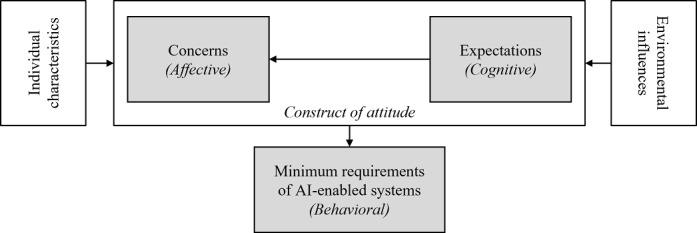
Background: General practitioners (GPs) care for a large number of patients with various diseases in very short timeframes under high uncertainty. Thus, systems enabled by artificial intelligence (AI) are promising and time-saving solutions that may increase the quality of care. Objective: This study aims to understand GPs’ attitudes toward AI-enabled systems in medical diagnosis. Methods: We interviewed 18 GPs from Germany between March 2020 and May 2020 to identify determinants of GPs’ attitudes toward AI-based systems in diagnosis. By analyzing the interview transcripts, we identified 307 open codes, which we then further structured to derive relevant attitude determinants. Results: We merged the open codes into 21 concepts and finally into five categories: concerns, expectations, environmental influences, individual characteristics, and minimum requirements of AI-enabled systems. Concerns included all doubts and fears of the participants regarding AI-enabled systems. Expectations reflected GPs’ thoughts and beliefs about expected benefits and limitations of AI-enabled systems in terms of GP care. Environmental influences included influences resulting from an evolving working environment, key stakeholders’ perspectives and opinions, the available information technology hardware and software resources, and the media environment. Individual characteristics were determinants that describe a physician as a person, including character traits, demographic characteristics, and knowledge. In addition, the interviews also revealed the minimum requirements of AI-enabled systems, which were preconditions that must be met for GPs to contemplate using AI-enabled systems. Moreover, we identified relationships among these categories, which we conflate in our proposed model. Conclusions: This study provides a thorough understanding of the perspective of future users of AI-enabled systems in primary care and lays the foundation for successful market penetration. We contribute to the research stream of analyzing and designing AI-enabled systems and the literature on attitudes toward technology and practice by fostering the understanding of GPs and their attitudes toward such systems. Our findings provide relevant information to technology developers, policymakers, and stakeholder institutions of GP care.
Overview
The claims and statistics of this paper haven’t been checked yet.
Free: it reads the open-access text and checks the first 5 claims that cite a source we can check. Create a free account to check every claim.
Integrity signals
Registry
Cites
Statistics
Figures

Verification
Claims the paper makes
The claims and statistics of this paper haven’t been checked yet.
Free: it reads the open-access text and checks the first 5 claims that cite a source we can check. Create a free account to check every claim.
Claims other papers make about this one
Each is checked against this paper’s own text: does it say what the citing paper says it does?
The source backs part of the claim, not all of it — or backs it for a different population, condition or comparison.
In the citing paper
“In terms of medical decision-making in clinical settings, most studies reported on benefits relating to a better diagnostic quality in either improved sensitivity and specificity or reducing the likelihood of missed diagnoses [31, 33, 38, 44, 46, 52, 55, 60–75].”
From Healthcare professionals’ perspectives on artificial intelligence in patient care: a systematic review of hindering and facilitating factors on different levels (2025) · cites this paper as [52]
Experimental — accuracy not yet measuredThe source backs part of the claim, not all of it — or backs it for a different population, condition or comparison.
In the citing paper
“Furthermore, endorsements from leaders within their fields, academic societies, and trusted experts lend credibility and acceptance to AI technologies [38, 52].”
From Healthcare professionals’ perspectives on artificial intelligence in patient care: a systematic review of hindering and facilitating factors on different levels (2025) · cites this paper as [52]
Experimental — accuracy not yet measuredThe cited source says what the claim attributes to it.
In the citing paper
“Ten studies describe factors relating to AI’s impact on their clinical tasks, such as an overall decreased time spent on repetitive medical and non-medical tasks [30, 40, 46, 52–55] and the possibility to delegate other tasks to AI [47], which in turn could allow them to focus more time and focus on direct interaction with their patients or other perceived critical tasks [45, 56].”
Self-check
Percentages, sums and reported differences re-computed from the paper’s own numbers.
The self-check needs the paper’s full text.
Citations
Cites
The theory of planned behavior
Ajzen, I. (1991) · Organizational Behavior and Human Decision Processes · doi:10.1016/0749-5978(91)90020-t · Cited by 90,587
The Discovery of Grounded Theory: Strategies for Qualitative Research.
Wagner, H. R., Glaser, B. G., & Strauss, A. L. (1968) · Social Forces · doi:10.2307/2575405 · Cited by 46,361
User Acceptance of Information Technology: Toward A Unified View1
Venkatesh, V., Morris, M. G., Davis, G. B., & Davis, F. D. (2003) · MIS Quarterly · doi:10.2307/30036540 · Cited by 45,035
(1975) · PhilPapers (PhilPapers Foundation) · Cited by 36,737
(1980) · Medical Entomology and Zoology · Cited by 25,810
Comparison of convenience sampling and purposive sampling
Etikan, I. (2016) · American Journal of Theoretical and Applied Statistics · doi:10.11648/j.ajtas.20160501.11 · Cited by 11,412 · cited 2×
“We interviewed 18 GPs from Germany between March 2020 and May 2020, selecting them via convenience sampling [69].”
BackgroundMethodHigh-performance medicine: the convergence of human and artificial intelligence
Topol, E. J. (2019) · Nature Medicine · doi:10.1038/s41591-018-0300-7 · Cited by 10,450 · cited 1×
“AI-enabled systems can mitigate cognitive errors resulting from, among others, GPs’ fatigue or distraction [23].”
BackgroundMachine learning: Trends, perspectives, and prospects
Jordan, M. I., & Mitchell, T. M. (2015) · Science · doi:10.1126/science.aaa8415 · Cited by 9,955 · cited 1×
“The technological progress in various fields such as machine learning, robotics, big data analytics, decision support systems (DSSs) as well as the ubiquity and availability of data and the prevalence of information systems (ISs) are opening previously unavailable value creation potentials [2-5].”
BackgroundBasics of Qualitative Research: Techniques and Procedures for Developing Grounded Theory
Wuetherick, B. (2010) · Canadian Journal of University Continuing Education · doi:10.21225/d5g01t · Cited by 8,311
Extrinsic and Intrinsic Motivation to Use Computers in the Workplace 1
Davis, F. D., Bagozzi, R. P., & Warshaw, P. R. (1992) · Journal of Applied Social Psychology · doi:10.1111/j.1559-1816.1992.tb00945.x · Cited by 6,231 · cited 1×
“Furthermore, our findings explicate that the consideration of the affective component of attitude is crucial in the medical context despite being neglected often in well-known theories of behavior and acceptance research [54,82,83].”
Background
Research works printed but not linked: 9
- Russel, S, 2016, Artificial Intelligence: A Modern Approach, 3rd edition
- Pannu, A, 2015, Int J Eng Innov Technol, 4, 79
- Eagly, A, 1993, Psychology of Attitudes
- 1960, Attitude organization and change: An analysis of consistency among attitude components
- Fischer, L, 2014, Grundlagen der Sozialpsychologie, 3rd edition
- Bagozzi, RP, 1979, Advances Consum Res, 6, 295
- 10.1037/0022-3514.37.6.913 · DOI · Paper page
- Ajzen, I, 2005, The Handbook of Attitudes
- Yazdani, S, 2017, J Adv Med Educ Prof, 5, 177
Cited by
Items 101–182 of 182
Scholz, F., Sahakian, T. S., GÜVEN, N., Renkema, M., Shulzhenko, E., Cuijpers, C., Schouten, G., Wouters, E., & de Vries, E. (2026) · The International Journal of Human Resource Management · doi:10.1080/09585192.2026.2711067 · Cited by 3
Forte, C., Grey, E., Jessiman, P., McLeod, H., Salway, R., Rejon, C. S., Harkes, R., Stokes, P., de Vocht, F., Campbell, R. M., et al. (2025) · BMJ Open · doi:10.1136/bmjopen-2024-090492 · Cited by 3
Navigating Human Behavior for the Successful Digital Transformation of the Healthcare Sector
Doctor, E. (2025) · EPub Bayreuth (University of Bayreuth) · doi:10.15495/epub_ubt_00008489 · Cited by 3
Self-citationBenefits of machine learning in operational management systems in the social and healthcare sectors
Huttunen, J. (2024) · LUTPub (LUT University) · Cited by 3
Sides, T., & Ismail, D. K. B. (2024) · Journal of Medical Internet Research · doi:10.2196/43894 · Cited by 2
A Review of AI-Driven Mental Health Interventions in the United States: Gaps and Opportunities
Akintoye, O. S., Maale, F. D., Yusuf, R. A., & Odondi, A. A. (2023) · Journal of Frontiers in Multidisciplinary Research · doi:10.54660/.jfmr.2023.4.1.446-457 · Cited by 2
Implementation first: lessons from the TRICORDER trial in UK primary care
Cinza‐Sanjurjo, S., & González‐Juanatey, J. R. (2026) · The Lancet · doi:10.1016/s0140-6736(25)02584-x · Cited by 2
Artificial intelligence in family medicine: a scoping review
Habibi, A., Kalantarion, M., Khani, H., Heidarzadeh, A., & Mohseni, F. (2024) · Family Medicine & Primary Care Review · doi:10.5114/fmpcr.2024.142012 · Cited by 2
Nikhil, R., Divya, K. V., Mamadapur, M., Patil, H., Shashirekha, B., Pinnam, H. S., & Bansal, P. (2025) · Digital Journal of Clinical Medicine · doi:10.55691/2582-3868.1261 · Cited by 2
Rashid, A. (2022) · British Journal of General Practice · doi:10.3399/bjgp22x721085 · Cited by 2
AI Applications in the New Era of Healthcare and Community Care
Buijs, E. F. M., & Maggioni, E. (2024) · Emerald Group Publishing Limited eBooks · doi:10.1108/978-1-83549-468-420241003 · Cited by 2
LINNDA: Lymphoma identification through neural network detection aid
Naser, P. V., Fischer, M., Maurer, M. C., Jazi, K. K., Ben-Salah, C., Bajwa, A. A., Jakobs, M., Jungk, C., Jungwirth, G., Jesser, J., et al. (2025) · iScience · doi:10.1016/j.isci.2025.114153 · Cited by 1
Chang, J., Velasquez, V. T., & Waddell, A. (2025) · BMJ Digital Health & AI · doi:10.1136/bmjdhai-2025-000078 · Cited by 1
Hille, E. M., Bleher, H., Coppers, B., Engelhardt, S., Eskofier, B. M., Garbe, L., Heckel, M., Liphardt, A., Manlig, A., Rohleder, N., et al. (2026) · Journal of Medical Internet Research · doi:10.2196/75783 · Cited by 1
Irgang, L., Svedberg, P., Nygren, J., & Petersson, L. (2026) · BMJ Open · doi:10.1136/bmjopen-2025-110553 · Cited by 1
Super, I., Bawa, H., & Asan, O. (2026) · JMIR Medical Informatics · doi:10.2196/91652 · Cited by 1
Prat-Carreño, M., Umaña, V., Bermejo, V., & Vallès-Peris, N. (2026) · Atención Primaria · doi:10.1016/j.aprim.2026.103532 · Cited by 1
Exmann, C. J., Hiltunen, A.-M., Haavisto, I., Salminen, A., Messo, M., Nuutinen, M., Hoogendoorn, M., Boorsma, W., Howard, E., Pešić, V., et al. (2026) · Journal of Medical Internet Research · doi:10.2196/85071 · Cited by 1
Paoletti, G., Marchetti, M., Cavaglià, E., Bognanni, A., Passalacqua, G., Heffler, E. M., Bousquet, J. J., Canonica, G. W., Bettoncelli, G., & Lombardi, C. (2026) · npj Primary Care Respiratory Medicine · doi:10.1038/s41533-026-00541-2 · Cited by 1
Ohaiba, M. M., Arifayan, S. O., Oladimeji, A. O., Ogundipe, A. T., Okobi, O. E., & Okobi, E. K. (2026) · Journal of Advances in Medicine and Medical Research · doi:10.9734/jammr/2026/v38i96189 · Cited by 1
Sides, T., Ismail, D. K. B., Farrell, T., & Third, A. (2023) · Preprints.org · doi:10.20944/preprints202311.0995.v1 · Cited by 1
Exploring Trust In Artificial Intelligence Among Primary Care Stakeholders: A Mixed-Methods StudyPreprint
Sides, T., Ismail, D. K. B., Farrell, T., & Third, A. (2024) · Research Square · doi:10.21203/rs.3.rs-4945818/v1 · Cited by 1
From Potential to Practice : Promoting the Adoption of Artificial Intelligence in Medical Diagnosis
Hennrich, J. (2024) · EPub Bayreuth (University of Bayreuth) · doi:10.15495/epub_ubt_00008014 · Cited by 1
Self-citationTekoäly terveydenhuollossa : ammattilaisten käsityksiä
Venho, E. (2025) · Theseus (Ammattikorkeakoulujen) · Cited by 1
Advancements and Challenges in Implementation Science: 2022
(2024) · Frontiers research topics · doi:10.3389/978-2-8325-4583-6
Artificial General Intelligence: Advantages in English Language Learning
Purnama, Y., & Gaspersz, S. (2024) · Scientechno Journal of Science and Technology · doi:10.55849/scientechno.v3i1.1049
The GP’s guide to Artificial Intelligence (AI) in medicine
Outhoff, K., & Trathen, K. (2024) · South African General Practitioner · doi:10.36303/sagp.0954
Tactical Data Group, S., MOSKOWITZ, H. R., Wingert, S., Tactical Data Group, S., Anderson, T., Tactical Data Group, S., Rappaport, S., Saharan, S., Experience Transformation, H., Bayad, J., et al. (2024) · Case Reports and Reviews · doi:10.33425/2693-1516.1044
Zaeid, H. F., Hussein, H. K., & Saihood, A. G. (2025) · Lecture notes in networks and systems · doi:10.1007/978-3-032-09562-6_39
Yan, Y., Zeng, L., Zhang, X., Li, J., Liu, X., Ru, P., Chang, C., & Jiang, X. (2025) · SSRN Electronic Journal · doi:10.2139/ssrn.5164455
Allen, M. R., Webb, S., Mandvi, A., Frieden, M. J., Tai‐Seale, M., & Kallenberg, G. (2024) · Figshare · doi:10.6084/m9.figshare.25097361
Allen, M. R., Webb, S., Mandvi, A., Frieden, M. J., Tai‐Seale, M., & Kallenberg, G. (2024) · Figshare · doi:10.6084/m9.figshare.25097339
Diel, S., Doctor, E., Reith, R., Buck, C., & Eymann, T. (2023) · Figshare · doi:10.6084/m9.figshare.24406777
Self-citationDiel, S., Doctor, E., Reith, R., Buck, C., & Eymann, T. (2024) · Figshare · doi:10.6084/m9.figshare.24406929
Self-citationHennrich, J., Ritz, E., Hofmann, P., & Urbach, N. (2024) · Figshare · doi:10.6084/m9.figshare.25538560
Self-citationCo-creation with Consumers in Retail Design
Berkhout, C., & Quartier, K. (2025) · Document Server@UHasselt (UHasselt)
Tekoäly verkkokehityksessä: Näkökulmia teollisuudesta ja kirjallisuudesta
Pohjalainen, P. (2025) · Aaltodoc (Aalto University)
Sid-Ahmed, S., & Corvellec, J. (2024) · HAL
Martín Carrasco, N. (2025) · UVaDOC UVaDOC University of Valladolid Documentary Repository (University of Valladolid)
Sauro, K. M., Bajgain, B. B., van Rassel, C. R., Har, B., Welsh, R. C., & Lee, J. (2026) · JMIR Cardio · doi:10.2196/81303
Perspectives on innovation of the diagnostic process in general practice: Q-methodological study
Vaes, E. W. P., Sabrkhany, S., van de Pol, A. C., Riphagen, R. E. M., Cals, J., Zwart, D. L. M., & GROOT, E. D. (2026) · BMC Family Practice · doi:10.1186/s12875-026-03200-0
The role of artificial intelligence in general practice: Challenges and potential risks
Stankov, S. (2025) · Medicinski casopis · doi:10.5937/mckg59-56000
AI in Primary Care: Insights from Family Physicians
Callebaut, D., & Trigo, A. (2025) · Health Informatics and Knowledge Management Conference (HIKM) · doi:10.1145/3774816.3774818
Insights into the Integration of AI in Clinical Practice: A Survey of Swiss Physicians (Preprint)Preprint
Owens, E., Ferretti, A., Andreoletti, M., Vayena, E., & Kijewski, S. (2026) · doi:10.2196/preprints.98859
Sides, T. (2026) · Open Research Online (The Open University) · doi:10.21954/ou.ro.00109947
Evaluation of AI tool assisting primary healthcare physicians to diagnostic and treatment tasks
Wang, T., He, J., Wang, Y., Zhang, N., Chen, K. X., & Liang, W. (2026) · Family Medicine and Community Health · doi:10.1136/fmch-2025-003860
Xu, X., Liu, J.-G., Hong, W. C. H., Hao, S., & Shi, X. (2026) · Asia-Pacific Journal of Teacher Education · doi:10.1080/1359866x.2026.2675952
Bag, S. B., Kumari, P., Vashishtha, A., & Madhav, M. (2026) · Advances in computational intelligence and robotics book series · doi:10.4018/979-8-2600-2173-6.ch004
Psychological Contracts and Emotional Labor in the Age of AI: A Moderated Mediation Model
KARAKIŞ, K., & Erdil, O. (2026) · Behavioral Sciences · doi:10.3390/bs16060918
Blashki, G. A., Capon, W., Iorfino, F., & Hickie, I. B. (2026) · Australian Journal of General Practice · doi:10.31128/ajgp-04-25-7628
Punitharajah, R., Davies, J. T., & Ellahi, S. M. (2026) · Advances in computational intelligence and robotics book series · doi:10.4018/979-8-2600-2238-2.ch001
Pérez, C. R. S., & Cabezas, C. D. (2026) · Revista Chilena de Atención Primaria y Salud Familiar · doi:10.5354/2735-7805.2026.84314
Typology of civil engineers’ mental model about artificial intelligence
Feili, A., Shabankareh, M. R., Alipour, S., Entezaralmahdi, S., & Sorooshian, S. (2026) · Frontiers in Artificial Intelligence · doi:10.3389/frai.2026.1812314
AI in the clinic: a scoping review of AI and clinical expertisePreprint
Owens, E., Buchholz, O., Douar, Y., Thapliyal, V., & Blasimme, A. (2026) · Research Square · doi:10.21203/rs.3.rs-10229460/v1
Bogner, E., Thomas, A., Bajgain, B. B., van Rassel, C. R., Sauro, K. M., & Lee, J. (2026) · JMIR Medical Informatics · doi:10.2196/89834
Fuger, J. M., Voggenberger, L., & Zelko, E. (2026) · Journal of Medical Internet Research · doi:10.2196/83343
Super, I., Bawa, H., & Asan, O. (2026) · Proceedings of the International Symposium on Human Factors and Ergonomics in Health Care · doi:10.1177/2327857926151132
Parlangeli, O., Currò, F., Bracci, M., Marchigiani, E., Reina, L., & Palmitesta, P. (2026) · European Conference on Cognitive Ergonomics · doi:10.1145/3822301.3822323
Kuang, S., Fong, Q. W., Roza, J. G. D., Koh, D. H. M., Tan, C. H., Sze, K. P., & Wong, S. (2026) · Journal of Medical Internet Research · doi:10.2196/103006
Yang, M., Park, C., Won, H., Kim, T., Song, H., & Han, J. (2026) · Proceedings of the ACM on Human-Computer Interaction · doi:10.1145/3816903
Perspectives of general practitioners in China on using AI in clinical practice: A qualitative study
Jiang, H., Li, Y., Wang, Y., Shen, W., Wang, B., Lei, H., Lu, Y., Li, X., Liu, Y., & Hao, Y. (2026) · Digital Health · doi:10.1177/20552076261493253
Polat, E. (2026) · Hacettepe Üniversitesi İktisadi ve İdari Bilimler Fakültesi Dergisi · doi:10.17065/huniibf.1756621
Song, Z., 侯东江, Zhang, T., Huang, H., Chen, X., Lu, X., Bai, D., Xie, X., Li, Y., Cao, T., et al. (2026) · npj Digital Medicine · doi:10.1038/s41746-026-03338-2
Aaltonen, P., & Ripatti, T. (2025) · UEF eRepo (University of Eastern Finland)
AI Interview Assessment System
Holambe, S. R. P. D. S. N. (2026) · International Journal of Engineering Research and Science & Technology
Almutairi, A. S. (2024) · Review of Contemporary Philosophy
Assessing AI tool use among New York State clinicians
Galfano, A., Barbosu, M., Aladin, B., Rivera, I., & Dye, T. (2026) · BMC Family Practice · doi:10.1186/s12875-026-03593-y
Use of large language models in German general practice: A cross-sectional surveyPreprint
Ott, H. M., & Bösner, S. (2026) · Research Square · doi:10.21203/rs.3.rs-10995850/v1
Li, Y., Wu, L., Ghansah, F. A., & Chen, H. (2026) · Buildings · doi:10.3390/buildings16214287
Das, D. C., Rony, M. K. K., Bhattacharjee, T., Uddin, A., Zujbe, M. S. A. Z., Dutta, S., Maruf, S. A., Rahman, F., Mortuza, C. G., & JAHAN, N. (2026) · Health & Social Care in the Community · doi:10.1155/hsc/9431386
Al-Abri, K., Saadi, A. A. A., Rashdi, A. Y. A., Nasseri, J. M. A., Mashaykhi, A. K. A., Maqbali, A. O. A., & Alharrasi, S. S. (2026) · Nursing Open · doi:10.1002/nop2.70939
ter Heerdt, Y., Bischoff, E. W. M. A., Yang, J., Timmers, M., Jung, J., & van Linschoten, R. C. A. (2026) · medRxiv · doi:10.64898/2026.10.30.26366911
Guiggi, A., Bayen, S., Wyts, D., Bayen, M., Calafiore, M., & Cauet, C. (2026) · BJGP Open · doi:10.3399/bjgpo.2025.0261
Chen, M., Zhang, B., Cai, Z., Seery, S., Gonzalez, M. J., Ali, N. M., Ren, R., Qiao, Y., Xue, P., & Jiang, Y. (2022) · doi:10.3389/fmed.2022.990604.s002
Metadata
- Authors
- Buck, C., Doctor, E., Hennrich, J., Jöhnk, J., & Eymann, T.
- Affiliations
- Queensland University of Technology (AU)
- Fraunhofer Institute for Applied Information Technology (DE)
- University of Bayreuth (DE)
- Corresponding author
- Buck, Christoph
- Venue
- Journal of Medical Internet Research
- Publisher
- JMIR Publications Inc.
- Published
- 2022-01-27
- Volume
- 24
- Issue
- 1
- Pages
- e28916
- ISSN
- 1438-8871 (ISSN-L)
- PMC
- PMC8832268
- OpenAlex
- W4210457441
- Cited by
- 147
- References
- 88
- Citations by year
- 2026: 38 · 2025: 51 · 2024: 31 · 2023: 22 · 2022: 5
- FWCI
- 8.29
- Type
- journal article
- Language
- en
- Open access
- gold
- doi.org
- Licence
- other-oa
- Locations
- Journal of Medical Internet Research (publishedVersion, other-oa)
- PubMed Central (publishedVersion, cc-by)
- PubMed (publishedVersion)
- EPub Bayreuth (University of Bayreuth) (acceptedVersion, cc-by)
- QUT ePrints (Queensland University of Technology) (submittedVersion, cc-by)
- DOAJ (DOAJ: Directory of Open Access Journals) (submittedVersion)
- ERef Bayreuth (University of Bayreuth) (submittedVersion, cc-by)
- Fraunhofer-Publica (Fraunhofer-Gesellschaft) (submittedVersion)
- Topics
- Health Sciences › Medicine › Health Informatics › Artificial Intelligence in Healthcare and Education
- Health Sciences › Health Professions › Health Information Management › Electronic Health Records Systems
- Health Sciences › Health Professions › Health Information Management › Artificial Intelligence in Healthcare
- Keywords
- general practitioners, attitudes toward AI, primary care, physician attitudes, environmental influences, individual characteristics
- MeSH terms
- Artificial Intelligence, Attitude of Health Personnel, Humans, Primary Health Care, Qualitative Research, General Practitioners
About these checks
Registry, retraction, Cites and statistics results are computed, not judged, with one exception: a printed reference that no index lists is read once by a model before it counts as a citation error. Claims are extracted by a model and kept only when their quote appears verbatim in the text; each cited source is then checked, with a model’s help, for whether it says what the claim relies on. Those verdicts can be wrong — read the claim’s quote and the cited source before relying on one.
Statistics and arithmetic are recomputed, not judged.
Confidence bands are shown only for fields calibrated on our annotated test set. None is calibrated yet, so no band is shown.
What counts as a claim ›How we measure confidence ›How we check this ›
Are you an author, or do you see a problem with this page? Request a review
Data sources
Bibliographic data: Semantic Scholar, OpenAlex, Crossref.
Contains information from the Semantic Scholar Academic Graph Datasets, made available under the ODC Attribution License (ODC-BY 1.0).
Semantic Scholar’s data is described in: Kinney, R., et al. (2023). The Semantic Scholar Open Data Platform. arXiv:2301.10140.
