

General Practitioners’ Attitudes Toward Artificial Intelligence–Enabled Systems: Interview Study
Open accessPublished version of a preprint
The DOI matches its Crossref record; 88 of the 88 references it cites were found in a registry or an index.
Abstract
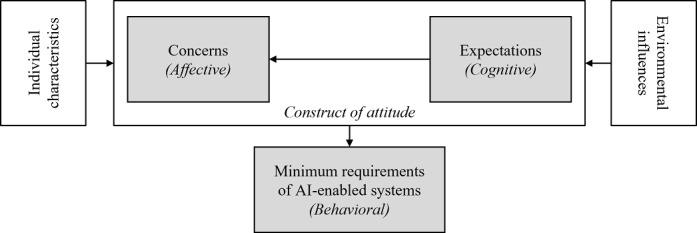
Background: General practitioners (GPs) care for a large number of patients with various diseases in very short timeframes under high uncertainty. Thus, systems enabled by artificial intelligence (AI) are promising and time-saving solutions that may increase the quality of care. Objective: This study aims to understand GPs’ attitudes toward AI-enabled systems in medical diagnosis. Methods: We interviewed 18 GPs from Germany between March 2020 and May 2020 to identify determinants of GPs’ attitudes toward AI-based systems in diagnosis. By analyzing the interview transcripts, we identified 307 open codes, which we then further structured to derive relevant attitude determinants. Results: We merged the open codes into 21 concepts and finally into five categories: concerns, expectations, environmental influences, individual characteristics, and minimum requirements of AI-enabled systems. Concerns included all doubts and fears of the participants regarding AI-enabled systems. Expectations reflected GPs’ thoughts and beliefs about expected benefits and limitations of AI-enabled systems in terms of GP care. Environmental influences included influences resulting from an evolving working environment, key stakeholders’ perspectives and opinions, the available information technology hardware and software resources, and the media environment. Individual characteristics were determinants that describe a physician as a person, including character traits, demographic characteristics, and knowledge. In addition, the interviews also revealed the minimum requirements of AI-enabled systems, which were preconditions that must be met for GPs to contemplate using AI-enabled systems. Moreover, we identified relationships among these categories, which we conflate in our proposed model. Conclusions: This study provides a thorough understanding of the perspective of future users of AI-enabled systems in primary care and lays the foundation for successful market penetration. We contribute to the research stream of analyzing and designing AI-enabled systems and the literature on attitudes toward technology and practice by fostering the understanding of GPs and their attitudes toward such systems. Our findings provide relevant information to technology developers, policymakers, and stakeholder institutions of GP care.
Overview
The claims and statistics of this paper haven’t been checked yet.
Free: it reads the open-access text and checks the first 5 claims that cite a source we can check. Create a free account to check every claim.
Integrity signals
Registry
Cites
Statistics
Figures

Verification
Claims the paper makes
The claims and statistics of this paper haven’t been checked yet.
Free: it reads the open-access text and checks the first 5 claims that cite a source we can check. Create a free account to check every claim.
Claims other papers make about this one
Each is checked against this paper’s own text: does it say what the citing paper says it does?
The source backs part of the claim, not all of it — or backs it for a different population, condition or comparison.
In the citing paper
“In terms of medical decision-making in clinical settings, most studies reported on benefits relating to a better diagnostic quality in either improved sensitivity and specificity or reducing the likelihood of missed diagnoses [31, 33, 38, 44, 46, 52, 55, 60–75].”
From Healthcare professionals’ perspectives on artificial intelligence in patient care: a systematic review of hindering and facilitating factors on different levels (2025) · cites this paper as [52]
Experimental — accuracy not yet measuredThe source backs part of the claim, not all of it — or backs it for a different population, condition or comparison.
In the citing paper
“Furthermore, endorsements from leaders within their fields, academic societies, and trusted experts lend credibility and acceptance to AI technologies [38, 52].”
From Healthcare professionals’ perspectives on artificial intelligence in patient care: a systematic review of hindering and facilitating factors on different levels (2025) · cites this paper as [52]
Experimental — accuracy not yet measuredThe cited source says what the claim attributes to it.
In the citing paper
“Ten studies describe factors relating to AI’s impact on their clinical tasks, such as an overall decreased time spent on repetitive medical and non-medical tasks [30, 40, 46, 52–55] and the possibility to delegate other tasks to AI [47], which in turn could allow them to focus more time and focus on direct interaction with their patients or other perceived critical tasks [45, 56].”
Self-check
Percentages, sums and reported differences re-computed from the paper’s own numbers.
The self-check needs the paper’s full text.
Citations
Cites
The theory of planned behavior
Ajzen, I. (1991) · Organizational Behavior and Human Decision Processes · doi:10.1016/0749-5978(91)90020-t · Cited by 90,587
The Discovery of Grounded Theory: Strategies for Qualitative Research.
Wagner, H. R., Glaser, B. G., & Strauss, A. L. (1968) · Social Forces · doi:10.2307/2575405 · Cited by 46,361
User Acceptance of Information Technology: Toward A Unified View1
Venkatesh, V., Morris, M. G., Davis, G. B., & Davis, F. D. (2003) · MIS Quarterly · doi:10.2307/30036540 · Cited by 45,035
(1975) · PhilPapers (PhilPapers Foundation) · Cited by 36,737
(1980) · Medical Entomology and Zoology · Cited by 25,810
Comparison of convenience sampling and purposive sampling
Etikan, I. (2016) · American Journal of Theoretical and Applied Statistics · doi:10.11648/j.ajtas.20160501.11 · Cited by 11,412 · cited 2×
“We interviewed 18 GPs from Germany between March 2020 and May 2020, selecting them via convenience sampling [69].”
BackgroundMethodHigh-performance medicine: the convergence of human and artificial intelligence
Topol, E. J. (2019) · Nature Medicine · doi:10.1038/s41591-018-0300-7 · Cited by 10,450 · cited 1×
“AI-enabled systems can mitigate cognitive errors resulting from, among others, GPs’ fatigue or distraction [23].”
BackgroundMachine learning: Trends, perspectives, and prospects
Jordan, M. I., & Mitchell, T. M. (2015) · Science · doi:10.1126/science.aaa8415 · Cited by 9,955 · cited 1×
“The technological progress in various fields such as machine learning, robotics, big data analytics, decision support systems (DSSs) as well as the ubiquity and availability of data and the prevalence of information systems (ISs) are opening previously unavailable value creation potentials [2-5].”
BackgroundBasics of Qualitative Research: Techniques and Procedures for Developing Grounded Theory
Wuetherick, B. (2010) · Canadian Journal of University Continuing Education · doi:10.21225/d5g01t · Cited by 8,311
Extrinsic and Intrinsic Motivation to Use Computers in the Workplace 1
Davis, F. D., Bagozzi, R. P., & Warshaw, P. R. (1992) · Journal of Applied Social Psychology · doi:10.1111/j.1559-1816.1992.tb00945.x · Cited by 6,231 · cited 1×
“Furthermore, our findings explicate that the consideration of the affective component of attitude is crucial in the medical context despite being neglected often in well-known theories of behavior and acceptance research [54,82,83].”
Background(1978) · Medical Entomology and Zoology · Cited by 6,077
Artificial intelligence in healthcare: past, present and future
Jiang, F., Jiang, Y., Zhi, H., Dong, Y., Li, H., Ma, S., Wang, Y., Dong, Q., Shen, H., & Wang, Y. (2017) · Stroke and Vascular Neurology · doi:10.1136/svn-2017-000101 · Cited by 4,837
Kallio, H., Pietilä, A., Johnson, M., & Kangasniemi, M. (2016) · Journal of Advanced Nursing · doi:10.1111/jan.13031 · Cited by 4,295
The potential for artificial intelligence in healthcare
Davenport, T., & Kalakota, R. (2019) · Future Healthcare Journal · doi:10.7861/futurehosp.6-2-94 · Cited by 3,800
Predicting the future - big data, machine learning, and clinical medicine
Obermeyer, Z., & Emanuel, E. J. (2016) · New England Journal of Medicine · doi:10.1056/nejmp1606181 · Cited by 3,652
What is AI Literacy? Competencies and Design Considerations
Long, D., & Magerko, B. (2020) · Proceedings of the 2020 CHI Conference on Human Factors in Computing Systems · doi:10.1145/3313831.3376727 · Cited by 3,241 · cited 1×
“Long and Magerko [70] defined AI literacy “as a set of competencies that enables individuals to critically evaluate AI technologies; communicate and collaborate effectively with AI; and use AI as a tool on the web, at home, and in the workplace.””
BackgroundAn overview of clinical decision support systems: Benefits, risks, and strategies for success
Sutton, R. T., Pincock, D., Baumgart, D. C., Sadowski, D. C., Fedorak, R. N., & Kroeker, K. I. (2020) · npj Digital Medicine · doi:10.1038/s41746-020-0221-y · Cited by 3,019 · cited 1×
“This integration of AI technology allows the CDSSs to learn from experience and find patterns in medical data [18].”
BackgroundArtificial intelligence in healthcare
Yu, K.-H., Beam, A. L., & Kohane, I. S. (2018) · Nature Biomedical Engineering · doi:10.1038/s41551-018-0305-z · Cited by 2,817
Unified Theory of Acceptance and Use of Technology: A Synthesis and the Road Ahead
University of Arkansas, Venkatesh, V., Thong, J., Hong Kong University of Science and Technology, Xu, X., & The Hong Kong Polytechnic University (2016) · Journal of the Association for Information Systems · doi:10.17705/1jais.00428 · Cited by 2,513
The qualitative interview in IS research: Examining the craft
Myers, M. D., & Newman, M. (2007) · Information and Organization · doi:10.1016/j.infoandorg.2006.11.001 · Cited by 1,941
Language and meaning: Data collection in qualitative research.
Polkinghorne, D. E. (2005) · Journal of Counseling Psychology · doi:10.1037/0022-0167.52.2.137 · Cited by 1,867
Big data and machine learning algorithms for health-care delivery
Ngiam, K. Y., & Khor, I. W. (2019) · The Lancet Oncology · doi:10.1016/s1470-2045(19)30149-4 · Cited by 1,424
Effect of Clinical Decision-Support Systems: A Systematic Review
Bright, T. J., Wong, A., Dhurjati, R., Bristow, E., Bastian, L., Coeytaux, R. R., Samsa, G., Hasselblad, V., Williams, J. W., Musty, M. D., et al. (2012) · Annals of Internal Medicine · doi:10.7326/0003-4819-157-1-201207030-00450 · Cited by 1,200
Irving, G., Neves, A. L., Dambha-Miller, H., Oishi, A., Tagashira, H., Verho, A., & Holden, J. (2017) · BMJ Open · doi:10.1136/bmjopen-2017-017902 · Cited by 1,083 · cited 1×
“For instance, in Germany, GP care is one of the most frequently used health care services, with >200 consultations per week per physician [73] and an average physician–patient contact time of 7.”
BackgroundA governance model for the application of AI in health care
Reddy, S., Allan, S., Coghlan, S., & Cooper, P. (2020) · Journal of the American Medical Informatics Association · doi:10.1093/jamia/ocz192 · Cited by 979
Attitudes, intentions, and behavior: A test of some key hypotheses
Bagozzi, R. P. (1981) · Journal of Personality and Social Psychology · doi:10.1037/0022-3514.41.4.607 · Cited by 936 · cited 1×
“Extant work describes behavioral intention as the mediator in the relationship between attitude and behavior [46,47].”
BackgroundInterpreting Information Systems in Organizations.
Powell, P., & Walsham, G. (1993) · The Journal of the Operational Research Society · doi:10.2307/2584090 · Cited by 849
Dellermann, D., Ebel, P., Söllner, M., & Leimeister, J. M. (2019) · Business & Information Systems Engineering · doi:10.1007/s12599-019-00595-2 · Cited by 826 · cited 2×
“Considering the potential of AI-enabled systems and their limitations reported in other research streams, we consider hybrid human–AI decision-making a promising scenario to mitigate the weaknesses of each other [36].”
BackgroundArtificial Intelligence and Human Trust in Healthcare: Focus on Clinicians
Asan, O., Bayrak, A. E., & Choudhury, A. (2020) · Journal of Medical Internet Research · doi:10.2196/15154 · Cited by 825
Qualitative Research Methods for Evaluating Computer Information Systems
Kaplan, B., & Maxwell, J. A. (2006) · Health Informatics · doi:10.1007/0-387-30329-4_2 · Cited by 821
Universal intelligence: a definition of machine intelligence
Legg, S., & Hutter, M. (2007) · Minds and Machines · doi:10.1007/s11023-007-9079-x · Cited by 803
(2019) · Cited by 771
Medical students' attitude towards artificial intelligence: a multicentre survey
Pinto dos Santos, D., Giese, D., Brodehl, S., Chon, S. H., Staab, W., Kleinert, R., Maintz, D., & Baeßler, B. (2019) · European Radiology · doi:10.1007/s00330-018-5601-1 · Cited by 754 · cited 1×
“Different quantitative studies have investigated the relationship between attitude and the intention to use AI-enabled systems, for example, regarding medical students [51,52].”
BackgroundClinical decision support systems for the practice of evidence-based medicine
Sim, I., Gorman, P., Greenes, R. A., Haynes, R. B., Kaplan, B., Lehmann, H., & Tang, P. C. (2001) · Journal of the American Medical Informatics Association · doi:10.1136/jamia.2001.0080527 · Cited by 732
Toward understanding the impact of artificial intelligence on labor
Frank, M. R., Autor, D., Bessen, J. E., Brynjolfsson, E., Cebrian, M., Deming, D. J., Feldman, M., Groh, M., Lobo, J., Moro, E., et al. (2019) · Proceedings of the National Academy of Sciences · doi:10.1073/pnas.1900949116 · Cited by 713
Preparing for Interview Research: The Interview Protocol Refinement Framework
Castillo-Montoya, M. (2016) · The Qualitative Report · doi:10.46743/2160-3715/2016.2337 · Cited by 695
Bhattacherjee, A., & Hikmet, N. (2007) · European Journal of Information Systems · doi:10.1057/palgrave.ejis.3000717 · Cited by 651
Consultation length in general practice: cross sectional study in six European countries
Deveugele, M., Derese, A., van den Brink-Muinen, A., Bensing, J., & De Maeseneer, J. (2002) · BMJ · doi:10.1136/bmj.325.7362.472 · Cited by 627 · cited 2×
“For instance, in Germany, primary care is one of the most frequently used health care services, leading to an average physician–patient contact time of 7.6 minutes [26].”
BackgroundInfluentialNelson, J. (2017) · Qualitative Research · doi:10.1177/1468794116679873 · Cited by 598 · cited 1×
“In terms of saturation approaches, this study emphasized the term conceptual depth proposed by Nelson [61], whereby researchers cumulatively judge the sufficiency of depth of understanding, thus allowing for incremental development.”
BackgroundTypes and Origins of Diagnostic Errors in Primary Care Settings
Singh, H., Giardina, T. D., Meyer, A. N. D., Forjuoh, S. N., Reis, M. D., & Thomas, E. J. (2013) · JAMA Internal Medicine · doi:10.1001/jamainternmed.2013.2777 · Cited by 559
Jaspers, M. W. M., Smeulers, M., Vermeulen, H., & Peute, L. W. (2011) · Journal of the American Medical Informatics Association · doi:10.1136/amiajnl-2011-000094 · Cited by 525
Interviewing in qualitative research: The one-to-one interview
Ryan, F., Coughlan, M., & Cronin, P. (2009) · International Journal of Therapy and Rehabilitation · doi:10.12968/ijtr.2009.16.6.42433 · Cited by 524
Designing interviews to generate rich data for information systems research
Schultze, U., & Avital, M. (2011) · Information and Organization · doi:10.1016/j.infoandorg.2010.11.001 · Cited by 522
Sit, C., Srinivasan, R., Amlani, A., Muthuswamy, K., Azam, A., Monzon, L., & Poon, D. S. (2020) · Insights into Imaging · doi:10.1186/s13244-019-0830-7 · Cited by 507
Building the foundation for genomics in precision medicine
Aronson, S. J., & Rehm, H. L. (2015) · Nature · doi:10.1038/nature15816 · Cited by 492
Toward a unified theory of consumer acceptance technology
Kulviwat, S., Bruner II, G. C., Kumar, A., Nasco, S. A., & Clark, T. (2007) · Psychology & Marketing · doi:10.1002/mar.20196 · Cited by 486
Preparing for the future of Artificial Intelligence
Bundy, A. (2017) · AI & SOCIETY · doi:10.1007/s00146-016-0685-0 · Cited by 425
Clinical Decision Support Systems for Improving Diagnostic Accuracy and Achieving Precision Medicine
Castaneda, C., Nalley, K., Mannion, C., Bhattacharyya, P., Blake, P., Pecora, A., Goy, A., & Suh, K. S. (2015) · Journal of Clinical Bioinformatics · doi:10.1186/s13336-015-0019-3 · Cited by 408 · cited 1×
“These systems assist medical professionals in tasks related to medical decision-making [11], such as diagnosis, prescription, or the prevention of medication errors [12,13].”
BackgroundPhysician Confidence in Artificial Intelligence: An Online Mobile Survey
Oh, S., Kim, J. H., Choi, S.-W., Lee, H. J., Hong, J., & Kwon, S. H. (2019) · Journal of Medical Internet Research · doi:10.2196/12422 · Cited by 387
Attitude organization and the attitude-behavior relationship.
Bagozzi, R. P., & Burnkrant, R. E. (1979) · Journal of Personality and Social Psychology · doi:10.1037//0022-3514.37.6.913 · Cited by 363
Blease, C., Kaptchuk, T. J., Bernstein, M. H., Mandl, K. D., Halamka, J. D., & DesRoches, C. M. (2019) · Journal of Medical Internet Research · doi:10.2196/12802 · Cited by 346
Reasons For Physicians Not Adopting Clinical Decision Support Systems: Critical Analysis
Khairat, S., Marc, D., Crosby, W., & Al Sanousi, A. (2018) · JMIR Medical Informatics · doi:10.2196/medinform.8912 · Cited by 335
Barriers for Adopting Electronic Health Records (EHRs) by Physicians
Ajami, S., & BagheriTadi, T. (2013) · Acta Informatica Medica · doi:10.5455/aim.2013.21.129-134 · Cited by 309
Liberati, E. G., Ruggiero, F., Galuppo, L., Gorli, M., González-Lorenzo, M., Maraldi, M., Ruggieri, P., Polo Friz, H., Scaratti, G., Kwag, K. H., et al. (2017) · Implementation Science · doi:10.1186/s13012-017-0644-2 · Cited by 301 · cited 1×
“Furthermore, factors such as the anticipated threat to professional autonomy and legal liabilities from using AI-enabled systems are hindering factors, as known so far [38].”
BackgroundArtificial intelligence as digital agency
Ågerfalk, P. J. (2020) · European Journal of Information Systems · doi:10.1080/0960085x.2020.1721947 · Cited by 217 · cited 1×
“The technological progress in various fields such as machine learning, robotics, big data analytics, decision support systems (DSSs) as well as the ubiquity and availability of data and the prevalence of information systems (ISs) are opening previously unavailable value creation potentials [2-5].”
BackgroundDual-process cognitive interventions to enhance diagnostic reasoning: a systematic review
Lambe, K. A., O'Reilly, G., Kelly, B. D., & Curristan, S. (2016) · BMJ Quality & Safety · doi:10.1136/bmjqs-2015-004417 · Cited by 215 · cited 1×
“Besides the potentially tragic individual consequences, such misdiagnoses also increase the cost of care [29].”
BackgroundPham, B. T., Nguyen, M. D., Bui, K.-T. T., Prakash, I., Chapi, K., & Bui, D. T. (2019) · CATENA · doi:10.1016/j.catena.2018.10.004 · Cited by 205
Medical Informatics: Improving Health Care Through Information
Hersh, W. R. (2002) · JAMA · doi:10.1001/jama.288.16.1955 · Cited by 193
University of Arkansas, U., Schuetz, S., Venkatesh, V., & University of Arkansas, U. (2020) · Journal of the Association for Information Systems · doi:10.17705/1jais.00608 · Cited by 182
Jeng, D. J.-F., & Tzeng, G.-H. (2012) · Computers & Industrial Engineering · doi:10.1016/j.cie.2011.12.016 · Cited by 173
Bryan, C., & Boren, S. (2008) · Journal of Innovation in Health Informatics · doi:10.14236/jhi.v16i2.679 · Cited by 170
Artificial intelligence in engineering
Pham, D. T., & Pham, P. T. N. (1999) · International Journal of Machine Tools and Manufacture · doi:10.1016/s0890-6955(98)00076-5 · Cited by 164
Computer Decision Support as a Source of Interpretation Error: The Case of Electrocardiograms
Tsai, T. L., Fridsma, D. B., & Gatti, G. (2003) · Journal of the American Medical Informatics Association · doi:10.1197/jamia.m1279 · Cited by 161
Evaluating the Organizational Impact of Healthcare Information Systems
Anderson, J. G., & Aydin, C. E. (2005) · Springer eBooks · doi:10.1007/0-387-30329-4 · Cited by 150
Adoption of e-health technology by physicians: a scoping review
de Grood, C., Raissi, A., Kwon, Y., & Santana, M. (2016) · Journal of Multidisciplinary Healthcare · doi:10.2147/jmdh.s103881 · Cited by 139
Bond, R. R., Novotny, T., Andrsova, I., Koc, L., Sisakova, M., Finlay, D., Guldenring, D., McLaughlin, J., Peace, A., McGilligan, V., et al. (2018) · Journal of Electrocardiology · doi:10.1016/j.jelectrocard.2018.08.007 · Cited by 127 · cited 1×
“However, at the same time, the integration of AI technologies can also lead to biases such as automation bias [85].”
BackgroundArtificial intelligence in health care: within touching distance
Lancet, T. (2017) · The Lancet · doi:10.1016/s0140-6736(17)31540-4 · Cited by 126
Louisiana State University, & Hirschheim, R. (2007) · Journal of the Association for Information Systems · doi:10.17705/1jais.00128 · Cited by 116
The enigma of doctor-patient relationship
Gowda, M., Harbishettar, V., Krishna, K. R., & Srinivasa, P. (2019) · Indian Journal of Psychiatry · doi:10.4103/psychiatry.indianjpsychiatry_96_19 · Cited by 109
Nie, J. X., Wang, L., Tracy, C. S., Moineddin, R., & Upshur, R. E. G. (2008) · Journal of Evaluation in Clinical Practice · doi:10.1111/j.1365-2753.2008.00952.x · Cited by 106
Automation bias in electronic prescribing
Lyell, D., Magrabi, F., Raban, M. Z., Pont, L. G., Baysari, M. T., Day, R. O., & Coiera, E. (2017) · BMC Medical Informatics and Decision Making · doi:10.1186/s12911-017-0425-5 · Cited by 103 · cited 1×
“By blindly relying on the AI-enabled systems’suggestions, physicians would no longer critically review them, which can reduce accuracy [86] and increase medical errors [87].”
MethodThe role of AI-based technology in support of the knowledge management value activity cycle
Fowler, A. F. (2000) · The Journal of Strategic Information Systems · doi:10.1016/s0963-8687(00)00041-x · Cited by 100
Models of clinical reasoning with a focus on general practice: A critical review.
Yazdani, S., Hosseinzadeh, M., & Hosseini, F. (2017) · PubMed Central · Cited by 87
Bierhoff, H. (2006) · doi:10.17433/978-3-17-022771-2 · Cited by 77
Extent of diagnostic agreement among medical referrals
Van Such, M., Lohr, R., Beckman, T., & Naessens, J. M. (2017) · Journal of Evaluation in Clinical Practice · doi:10.1111/jep.12747 · Cited by 75 · cited 2×
“Misdiagnosis in this early stage of diseases can have severe impact on medical quality in terms of injuries, avoidable illnesses, hospitalizations, and in 10% of cases, death [27,28].”
BackgroundEHR acceptance among Austrian resident doctors
Steininger, K., & Stiglbauer, B. (2015) · Health Policy and Technology · doi:10.1016/j.hlpt.2015.02.003 · Cited by 63
Nurek, M., Kostopoulou, O., Delaney, B. C., & Esmail, A. (2015) · European Journal of General Practice · doi:10.3109/13814788.2015.1043123 · Cited by 60
Police, R., Foster, T., & Wong, K. (2010) · Journal of Innovation in Health Informatics · doi:10.14236/jhi.v18i4.780 · Cited by 59
Public vs physician views of liability for artificial intelligence in health care
Khullar, D., Casalino, L. P., Qian, Y., Lu, Y., Chang, E., & Aneja, S. (2021) · Journal of the American Medical Informatics Association · doi:10.1093/jamia/ocab055 · Cited by 59
Felmingham, C. M., Adler, N. R., Ge, Z., Morton, R. L., Janda, M., & Mar, V. J. (2021) · American Journal of Clinical Dermatology · doi:10.1007/s40257-020-00574-4 · Cited by 57 · cited 3×
“Whether AI-enabled systems promote or minimize cognitive biases depends on how they are used [84].”
BackgroundConsumer Attitude: Does It Influencing the Intention to Use mHealth?
Hussein, Z., Oon, S. W., & Fikry, A. B. (2017) · Procedia Computer Science · doi:10.1016/j.procs.2017.01.231 · Cited by 51
Natanzon, I., Ose, D., Szecsenyi, J., Campbell, S., Roos, M., & Joos, S. (2010) · BMC Family Practice · doi:10.1186/1471-2296-11-10 · Cited by 35
Nguyen, B. V., Burstein, F., & Fisher, J. (2014) · Information Systems Frontiers · doi:10.1007/s10796-014-9507-4 · Cited by 18
New technologies and general practice
Young, A. J. (2016) · British Journal of General Practice · doi:10.3399/bjgp16x688021 · Cited by 16
Müller, M., Knop, M., Reßing, C., Freude, H., Oschinsky, F. M., Klein, H. C., & Niehaves, B. (2020) · Hawaii International Conference on System Sciences (HICSS) · doi:10.24251/hicss.2020.447 · Cited by 10
The Evolving State of General Practice and GP Education in Germany
Reed, M. S., Lehmann, B., & Herrmann, M. (2017) · Health Care Current Reviews · doi:10.4172/2375-4273.1000203 · Cited by 7
Perceived limitations of telemedicine from a phenomenological perspective
Knop, M., Mueller, M., Freude, H., Reßing, C., & Niehaves, B. (2020) · Bled eConference · doi:10.18690/978-961-286-362-3.9 · Cited by 3
(1998) · Evolution and Human Behavior · doi:10.1016/s1090-5138(98)00033-6 · Cited by 1
Research works printed but not linked: 9
- Russel, S, 2016, Artificial Intelligence: A Modern Approach, 3rd edition
- Pannu, A, 2015, Int J Eng Innov Technol, 4, 79
- Eagly, A, 1993, Psychology of Attitudes
- 1960, Attitude organization and change: An analysis of consistency among attitude components
- Fischer, L, 2014, Grundlagen der Sozialpsychologie, 3rd edition
- Bagozzi, RP, 1979, Advances Consum Res, 6, 295
- 10.1037/0022-3514.37.6.913 · DOI · Paper page
- Ajzen, I, 2005, The Handbook of Attitudes
- Yazdani, S, 2017, J Adv Med Educ Prof, 5, 177
Cited by
Chen, M., Zhang, B., Cai, Z., Seery, S., Gonzalez, M. J., Ali, N. M., Ren, R., Qiao, Y., Xue, P., & Jiang, Y. (2022) · Frontiers in Medicine · doi:10.3389/fmed.2022.990604 · Cited by 258
Bergdahl, J., Latikka, R., Celuch, M., Savolainen, I., Soares Mantere, E., Savela, N., & Oksanen, A. (2023) · Telematics and Informatics · doi:10.1016/j.tele.2023.102013 · Cited by 204
Thirunavukarasu, A. J., Hassan, R., Mahmood, S., Sanghera, R., Barzangi, K., El Mukashfi, M., & Shah, S. (2023) · JMIR Medical Education · doi:10.2196/46599 · Cited by 187
Allen, M. R., Webb, S., Mandvi, A., Frieden, M., Tai-Seale, M., & Kallenberg, G. (2024) · BMC Primary Care · doi:10.1186/s12875-024-02282-y · Cited by 100
“Despite so much on the line, there is limited literature on PCP views toward AI [15, 16].”
BackgroundYousefi, F., Dehnavieh, R., Laberge, M., Gagnon, M.-P., Ghaemi, M. M., Nadali, M., & Azizi, N. (2025) · BMC Primary Care · doi:10.1186/s12875-025-02785-2 · Cited by 70
Metadata
- Authors
- Buck, C., Doctor, E., Hennrich, J., Jöhnk, J., & Eymann, T.
- Affiliations
- Queensland University of Technology (AU)
- Fraunhofer Institute for Applied Information Technology (DE)
- University of Bayreuth (DE)
- Corresponding author
- Buck, Christoph
- Venue
- Journal of Medical Internet Research
- Publisher
- JMIR Publications Inc.
- Published
- 2022-01-27
- Volume
- 24
- Issue
- 1
- Pages
- e28916
- ISSN
- 1438-8871 (ISSN-L)
- PMC
- PMC8832268
- OpenAlex
- W4210457441
- Cited by
- 147
- References
- 88
- Citations by year
- 2026: 38 · 2025: 51 · 2024: 31 · 2023: 22 · 2022: 5
- FWCI
- 8.29
- Type
- journal article
- Language
- en
- Open access
- gold
- doi.org
- Licence
- other-oa
- Locations
- Journal of Medical Internet Research (publishedVersion, other-oa)
- PubMed Central (publishedVersion, cc-by)
- PubMed (publishedVersion)
- EPub Bayreuth (University of Bayreuth) (acceptedVersion, cc-by)
- QUT ePrints (Queensland University of Technology) (submittedVersion, cc-by)
- DOAJ (DOAJ: Directory of Open Access Journals) (submittedVersion)
- ERef Bayreuth (University of Bayreuth) (submittedVersion, cc-by)
- Fraunhofer-Publica (Fraunhofer-Gesellschaft) (submittedVersion)
- Topics
- Health Sciences › Medicine › Health Informatics › Artificial Intelligence in Healthcare and Education
- Health Sciences › Health Professions › Health Information Management › Electronic Health Records Systems
- Health Sciences › Health Professions › Health Information Management › Artificial Intelligence in Healthcare
- Keywords
- general practitioners, attitudes toward AI, primary care, physician attitudes, environmental influences, individual characteristics
- MeSH terms
- Artificial Intelligence, Attitude of Health Personnel, Humans, Primary Health Care, Qualitative Research, General Practitioners
About these checks
Registry, retraction, Cites and statistics results are computed, not judged, with one exception: a printed reference that no index lists is read once by a model before it counts as a citation error. Claims are extracted by a model and kept only when their quote appears verbatim in the text; each cited source is then checked, with a model’s help, for whether it says what the claim relies on. Those verdicts can be wrong — read the claim’s quote and the cited source before relying on one.
Statistics and arithmetic are recomputed, not judged.
Confidence bands are shown only for fields calibrated on our annotated test set. None is calibrated yet, so no band is shown.
What counts as a claim ›How we measure confidence ›How we check this ›
Are you an author, or do you see a problem with this page? Request a review
Data sources
Bibliographic data: Semantic Scholar, OpenAlex, Crossref.
Contains information from the Semantic Scholar Academic Graph Datasets, made available under the ODC Attribution License (ODC-BY 1.0).
Semantic Scholar’s data is described in: Kinney, R., et al. (2023). The Semantic Scholar Open Data Platform. arXiv:2301.10140.
