

Piloting an Innovative Concept of e–Mental Health and mHealth Workshops With Medical Students Using a Participatory Co-design Approach and App Prototyping: Case Study
Open accessPublished version of a preprint
The DOI matches its Crossref record; 64 of the 66 references it cites were found in a registry or an index.
Abstract
BACKGROUND: Medical students show low levels of e-mental health literacy. Moreover, there is a high prevalence of common mental illnesses among medical students. Mobile health (mHealth) apps can be used to maintain and promote medical students' well-being. To date, the potential of mHealth apps for promoting mental health among medical students is largely untapped because they seem to lack familiarity with mHealth. In addition, little is known about medical students' preferences regarding mHealth apps for mental health promotion. There is a need for guidance on how to promote competence-based learning on mHealth apps in medical education. OBJECTIVE: The aim of this case study is to pilot an innovative concept for an educative workshop following a participatory co-design approach and to explore medical students' preferences and ideas for mHealth apps through the design of a hypothetical prototype. METHODS: We conducted a face-to-face co-design workshop within an elective subject with 26 participants enrolled at a medical school in Germany on 5 consecutive days in early March 2020. The aim of the workshop was to apply the knowledge acquired from the lessons on e-mental health and mHealth app development. Activities during the workshop included group work, plenary discussions, storyboarding, developing personas (prototypical users), and designing prototypes of mHealth apps. The workshop was documented in written and digitalized form with the students' permission. RESULTS: The participants' feedback suggests that the co-design workshop was well-received. The medical students presented a variety of ideas for the design of mHealth apps. Among the common themes that all groups highlighted in their prototypes were personalization, data security, and the importance of scientific evaluation. CONCLUSIONS: Overall, this case study indicates the feasibility and acceptance of a participatory design workshop for medical students. The students made suggestions for improvements at future workshops (eg, use of free prototype software, shift to e-learning, and more time for group work). Our results can be (and have already been) used as a starting point for future co-design workshops to promote competence-based collaborative learning on digital health topics in medical education.
Overview
The claims and statistics of this paper haven’t been checked yet.
Free: it reads the open-access text and checks the first 5 claims that cite a source we can check. Create a free account to check every claim.
Integrity signals
Registry
Cites
Statistics
Figures





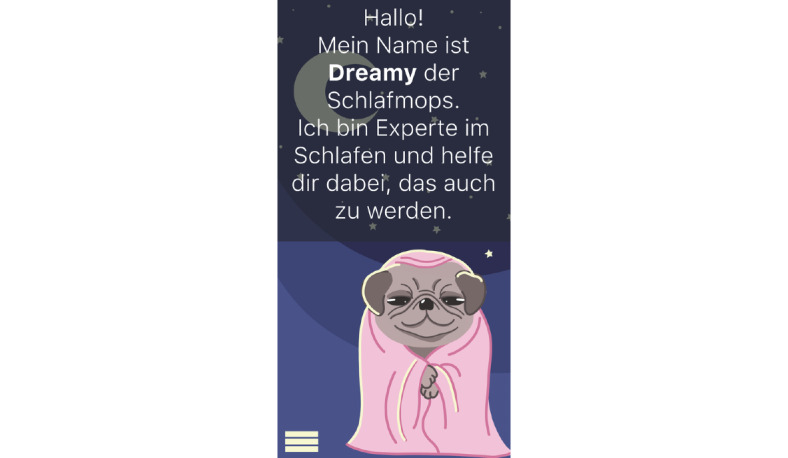
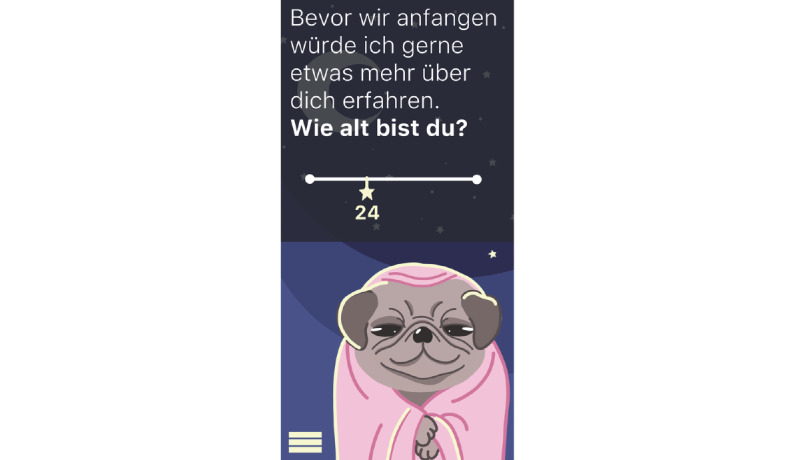
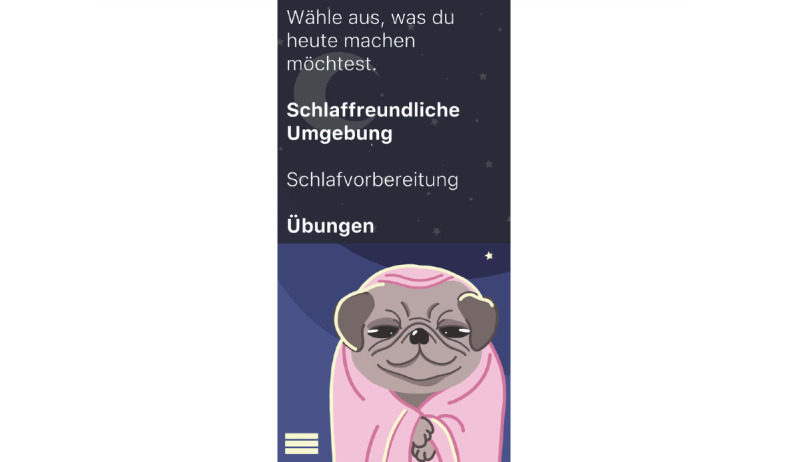
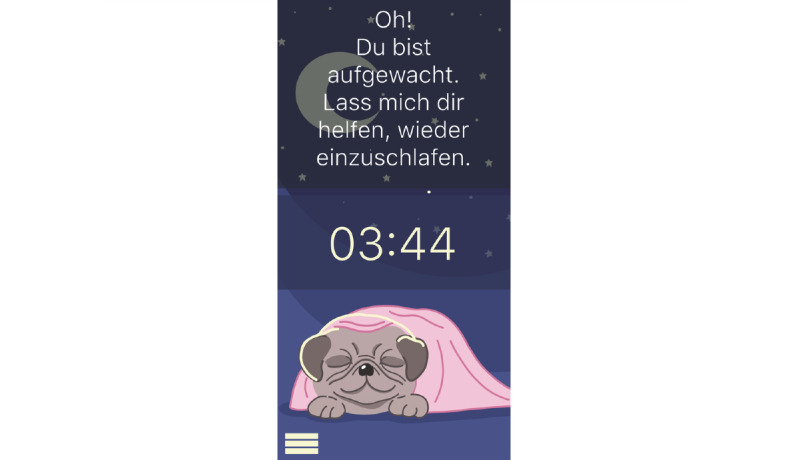

Verification
Claims the paper makes
The claims and statistics of this paper haven’t been checked yet.
Free: it reads the open-access text and checks the first 5 claims that cite a source we can check. Create a free account to check every claim.
Claims other papers make about this one
Each is checked against this paper’s own text: does it say what the citing paper says it does?
The cited source says what the claim attributes to it.
In the citing paper
“This is supported in a study by Dederichs et al. (78) where students emphasized data security and the scientific evaluation of IMIs as relevant topics for mHealth app development.”
From Mental health services for German university students: acceptance of intervention targets and preference for delivery modes (2024) · cites this paper as [78]
The cited source says what the claim attributes to it.
In the citing paper
“Dederichs et al. (78) conducted co-design workshops to identify medical students' preferences and ideas for mobile health apps to increase their acceptance, demonstrating the feasibility and acceptance of such workshops.”
From Mental health services for German university students: acceptance of intervention targets and preference for delivery modes (2024) · cites this paper as [78]
Self-check
Percentages, sums and reported differences re-computed from the paper’s own numbers.
The self-check needs the paper’s full text.
Citations
Cites
User Acceptance of Information Technology: Toward A Unified View1
Venkatesh, V., Morris, M. G., Davis, G. B., & Davis, F. D. (2003) · MIS Quarterly · doi:10.2307/30036540 · Cited by 45,035 · cited 1×
“The model comprises 4 constructs from the original model (effort expectancy, facilitating conditions, performance expectancy, and social influence [34]) as well as 3 additional constructs (habit, hedonic motivation, and price value).”
MethodVenkatesh, V., Thong, J. Y. L., & Xu, X. (2012) · MIS Quarterly · doi:10.2307/41410412 · Cited by 15,756 · cited 3×
“The presentations were analyzed, where possible, based on the extended version of the Unified Theory of Acceptance and Use of Technology, (UTAUT2 [33]) which has been introduced in the workshop.”
BackgroundMethodBundesgesundheitsblatt - Gesundheitsforschung - Gesundheitsschutz
(2013) · Bundesgesundheitsblatt - Gesundheitsforschung - Gesundheitsschutz · doi:10.1007/103.1437-1588 · Cited by 11,796
Rotenstein, L. S., Ramos, M. A., Torre, M., Segal, J. B., Peluso, M. J., Guille, C., Sen, S., & Mata, D. A. (2016) · JAMA · doi:10.1001/jama.2016.17324 · Cited by 2,479 · cited 2×
“high risk for certain mental illnesses [30,50,51], and their lack of help-seeking behavior is of great concern [52].”
BackgroundYardley, L., Morrison, L., Bradbury, K., & Muller, I. (2015) · Journal of Medical Internet Research · doi:10.2196/jmir.4055 · Cited by 1,442 · cited 1×
“• Enable the cocreation of educational content using participatory research approaches (eg, person-based approach [60]).”
BackgroundA systematic review of gamification in e-Health
Sardi, L., Idri, A., & Fernández-Alemán, J. L. (2017) · Journal of Biomedical Informatics · doi:10.1016/j.jbi.2017.05.011 · Cited by 1,015 · cited 1×
“All groups included elements of gamification in their apps, which is in line with the determinant hedonic motivation in the UTAUT2 model [33] and aims to foster user engagement, motivation, and adherence [47].”
BackgroundThe Global Prevalence of Anxiety Among Medical Students: A Meta-Analysis
Tian-Ci Quek, T., Wai-San Tam, W., X. Tran, B., Zhang, M., Zhang, Z., Su-Hui Ho, C., & Chun-Man Ho, R. (2019) · International Journal of Environmental Research and Public Health · doi:10.3390/ijerph16152735 · Cited by 990 · cited 2×
“Participants could choose from among the following 5 predetermined group topics, selected on the basis of their relevance for promoting mental health among medical students [1,30-32]:”
BackgroundTorous, J., Jän Myrick, K., Rauseo-Ricupero, N., & Firth, J. (2020) · JMIR Mental Health · doi:10.2196/18848 · Cited by 946 · cited 1×
“Especially in the face of the ongoing COVID-19 pandemic, digital access to psychological support is more important than ever [9].”
BackgroundMcHugh, R. K., & Barlow, D. H. (2010) · American Psychologist · doi:10.1037/a0018121 · Cited by 909 · cited 1×
“They address several barriers such as fear of stigmatization and provide help independently of time and location [6-8].”
BackgroundLattie, E. G., Adkins, E. C., Winquist, N., Stiles-Shields, C., Wafford, Q. E., & Graham, A. K. (2019) · Journal of Medical Internet Research · doi:10.2196/12869 · Cited by 843 · cited 2×
“Several quality-approved, effective digital mental health interventions for students exist [5,49], but they are not well known or used by medical students.”
BackgroundThe COVID-19 pandemic: the ‘black swan’for mental health care and a turning point for e-health
Wind, T. R., Rijkeboer, M., Andersson, G., & Riper, H. (2020) · Internet Interventions · doi:10.1016/j.invent.2020.100317 · Cited by 782 · cited 1×
“The pandemic was an unexpected driver for the transition of telemedicine into health care, especially the spread of videoconferencing consultations and also e–mental health services [53].”
BackgroundGamification of health professions education: a systematic review
van Gaalen, A. E. J., Brouwer, J., Schönrock-Adema, J., Bouwkamp-Timmer, T., Jaarsma, A. D. C., & Georgiadis, J. R. (2021) · Advances in Health Sciences Education · doi:10.1007/s10459-020-10000-3 · Cited by 625 · cited 1×
“Moreover, gamification might improve the learning process in health education [48].”
BackgroundChew‐Graham, C. A., Rogers, A., & Yassin, N. (2003) · Medical Education · doi:10.1046/j.1365-2923.2003.01627.x · Cited by 580 · cited 1×
“Moreover, they encounter additional hurdles when seeking help, such as fear of stigmatization or disadvantages for their prospective career [2-4].”
BackgroundHarrer, M., Adam, S. H., Baumeister, H., Cuijpers, P., Karyotaki, E., Auerbach, R. P., Kessler, R. C., Bruffaerts, R., Berking, M., & Ebert, D. D. (2019) · International Journal of Methods in Psychiatric Research · doi:10.1002/mpr.1759 · Cited by 445 · cited 3×
“Several quality-approved, effective digital mental health interventions for students exist [5,49], but they are not well known or used by medical students.”
BackgroundEbert, D. D., Van Daele, T., Nordgreen, T., Karekla, M., Compare, A., Zarbo, C., Brugnera, A., Øverland, S., Trebbi, G., Jensen, K. L., et al. (2018) · European Psychologist · doi:10.1027/1016-9040/a000318 · Cited by 437 · cited 1×
“They address several barriers such as fear of stigmatization and provide help independently of time and location [6-8].”
BackgroundMummah, S. A., Robinson, T. N., King, A. C., Gardner, C. D., & Sutton, S. (2016) · Journal of Medical Internet Research · doi:10.2196/jmir.5927 · Cited by 388 · cited 1×
“Expert lecture (building your own mHealth app and insights into a medical student’s back pain app start-up), focus groups part 1 (reported elsewhere [27]), participatory approaches: think-aloud technique, and IDEASc [29] Acceptability and user orientation, co-design and participatory design methods, and strategies and…”
MethodBarriers and facilitators to the implementation of eHealth services: systematic literature analysis
Schreiweis, B., Pobiruchin, M., Strotbaum, V., Suleder, J., Wiesner, M., & Bergh, B. (2019) · Journal of Medical Internet Research · doi:10.2196/14197 · Cited by 354 · cited 1×
“This finding fits into the international literature, where data protection concerns have been identified as a key barrier for the adoption of eHealth across various target groups [42].”
Dyrbye, L. N., Eacker, A., Durning, S. J., Brazeau, C., Moutier, C., Massie, F. S., Satele, D., Sloan, J. A., & Shanafelt, T. D. (2015) · Academic Medicine · doi:10.1097/acm.0000000000000655 · Cited by 339 · cited 3×
“This is interesting to note, considering that stigmatization of mental illness is still prevalent in the medical field, and especially students fear professional disadvantages from the disclosure of a mental health problem [2,45].”
BackgroundAndersson, G., Carlbring, P., Titov, N., & Lindefors, N. (2019) · The Canadian Journal of Psychiatry · doi:10.1177/0706743719839381 · Cited by 324 · cited 1×
“They address several barriers such as fear of stigmatization and provide help independently of time and location [6-8].”
BackgroundFactors Associated With Undertreatment of Medical Student Depression
Tjia, J., Givens, J. L., & Shea, J. A. (2005) · Journal of American College Health · doi:10.3200/jach.53.5.219-224 · Cited by 315 · cited 1×
“Moreover, they encounter additional hurdles when seeking help, such as fear of stigmatization or disadvantages for their prospective career [2-4].”
BackgroundAnalysing the acceptation of online games in mobile devices: An application of UTAUT2
Ramírez-Correa, P., Rondán-Cataluña, F. J., Arenas-Gaitán, J., & Martín-Velicia, F. (2019) · Journal of Retailing and Consumer Services · doi:10.1016/j.jretconser.2019.04.018 · Cited by 266 · cited 1×
“The UTAUT2 model has been used in different contexts such as acceptance of electronic medical records or mobile learning technology [35-39].”
MethodEducation and training to support the use of clinical telehealth: A review of the literature
Edirippulige, S., & Armfield, N. (2017) · Journal of Telemedicine and Telecare · doi:10.1177/1357633x16632968 · Cited by 250 · cited 1×
“Moreover, medical students’ understanding of several aspects concerning mHealth apps (eg, terminology) is limited [17-20].”
BackgroundA systematic review of studies on the prevalence of insomnia in university students
Jiang, X.-L., Zheng, X.-Y., Yang, J., Ye, C.-P., Chen, Y.-Y., Zhang, Z.-G., & Xiao, Z.-J. (2015) · Public Health · doi:10.1016/j.puhe.2015.07.030 · Cited by 248
Association of COVID-19 Pandemic with undergraduate Medical Students’ Perceived Stress and Coping
Abdulghani, H. M., Sattar, K., Ahmad, T., & Akram, A. (2020) · Psychology Research and Behavior Management · doi:10.2147/prbm.s276938 · Cited by 235 · cited 1×
“Moreover, medical students’ understanding of several aspects concerning mHealth apps (eg, terminology) is limited [17-20].”
BackgroundA Digitally Competent Health Workforce: Scoping Review of Educational Frameworks
Nazeha, N., Pavagadhi, D., Kyaw, B. M., Car, J., Jimenez, G., & Tudor Car, L. (2020) · Journal of Medical Internet Research · doi:10.2196/22706 · Cited by 215
Nikolopoulou, K., Gialamas, V., & Lavidas, K. (2020) · Education and Information Technologies · doi:10.1007/s10639-020-10157-9 · Cited by 205
Extending UTAUT2 toward acceptance of mobile learning in the context of higher education
Arain, A. A., Hussain, Z., Rizvi, W. H., & Vighio, M. S. (2019) · Universal Access in the Information Society · doi:10.1007/s10209-019-00685-8 · Cited by 201 · cited 1×
“The UTAUT2 model has been used in different contexts such as acceptance of electronic medical records or mobile learning technology [35-39].”
MethodTavares, J., & Oliveira, T. (2016) · Journal of Medical Internet Research · doi:10.2196/jmir.5069 · Cited by 197 · cited 1×
“The UTAUT2 model has been used in different contexts such as acceptance of electronic medical records or mobile learning technology [35-39].”
MethodThe German Version of the Mobile App Rating Scale (MARS-G): Development and Validation Study
Messner, E.-M., Terhorst, Y., Barke, A., Baumeister, H., Stoyanov, S., Hides, L., Kavanagh, D., Pryss, R., Sander, L., & Probst, T. (2020) · JMIR mHealth and uHealth · doi:10.2196/14479 · Cited by 156 · cited 1×
“Introductory lecture, group work, presentations and plenary discussions on relevant literature, legal aspects, and identification of existing mHealth apps that are safe to use and are also of high quality (MARS-Gb [28]) Introduction, components and types of guidance for mHealtha apps, quality criteria for mHealth apps…”
BackgroundDigitale Lehr- und Lernangebote in der medizinischen Ausbildung: Schon am Ziel oder noch am Anfang?
Kühn, S., Frankenhauser, S., & Tolks, D. (2017) · Bundesgesundheitsblatt - Gesundheitsforschung - Gesundheitsschutz · doi:10.1007/s00103-017-2673-z · Cited by 141
Aungst, T. D., & Patel, R. (2020) · Journal of Medical Education and Curricular Development · doi:10.1177/2382120519901275 · Cited by 135 · cited 1×
“However, education on e–mental health and mHealth is still rare in medical curricula in Germany [22] as well as the rest of the world [23,24].”
BackgroundMental Health Self-Care in Medical Students: a Comprehensive Look at Help-Seeking
Gold, J. A., Johnson, B., Leydon, G., Rohrbaugh, R. M., & Wilkins, K. M. (2014) · Academic Psychiatry · doi:10.1007/s40596-014-0202-z · Cited by 112 · cited 1×
“high risk for certain mental illnesses [30,50,51], and their lack of help-seeking behavior is of great concern [52].”
BackgroundCollege student engagement with mental health apps: analysis of barriers to sustained use
Melcher, J., Camacho, E., Lagan, S., & Torous, J. (2022) · Journal of American College Health · doi:10.1080/07448481.2020.1825225 · Cited by 106 · cited 1×
“Confidentiality was another related topic relevant for medical students, especially because many mental health apps do not fulfill this criterion [43,44].”
BackgroundDigital health training programs for medical students: scoping review
Tudor Car, L., Kyaw, B. M., Nannan Panday, R. S., van der Kleij, R., Chavannes, N., Majeed, A., & Car, J. (2021) · JMIR Medical Education · doi:10.2196/28275 · Cited by 106 · cited 1×
“However, note that there is a lack of randomized controlled trials in the field because workshops within elective subjects pose organizational and ethical challenges for this particular study design [59].”
BackgroundAhmed, M. H., Bogale, A. D., Tilahun, B., Kalayou, M. H., Klein, J., Mengiste, S. A., & Endehabtu, B. F. (2020) · BMC Medical Informatics and Decision Making · doi:10.1186/s12911-020-01222-x · Cited by 103 · cited 1×
“The UTAUT2 model has been used in different contexts such as acceptance of electronic medical records or mobile learning technology [35-39].”
MethodMental health apps in a college setting: openness, usage, and attitudes
Kern, A., Hong, V., Song, J., Lipson, S. K., & Eisenberg, D. (2018) · mHealth · doi:10.21037/mhealth.2018.06.01 · Cited by 95 · cited 1×
“However, the uptake of suitable mHealth apps among college students remains relatively low [10,11].”
BackgroundDesign with and for disaffected teenagers
Mazzone, E., Read, J. C., & Beale, R. (2008) · Proceedings of the 5th Nordic conference on Human-computer interaction: building bridges · doi:10.1145/1463160.1463192 · Cited by 73 · cited 1×
“The small groups ensured that all participants were able to engage in the design process, as suggested in previous research [40,41].”
ResultMayer, G., Gronewold, N., Alvarez, S., Bruns, B., Hilbel, T., & Schultz, J.-H. (2019) · JMIR Mental Health · doi:10.2196/14018 · Cited by 71 · cited 3×
“As future health care providers, medical students will influence digital health care by prescribing mHealth apps to their patients [15].”
BackgroundInfluentialToscos, T., Carpenter, M., Drouin, M., Roebuck, A., Kerrigan, C., & Mirro, M. (2018) · Telemedicine and e-Health · doi:10.1089/tmj.2017.0243 · Cited by 57 · cited 1×
“However, the uptake of suitable mHealth apps among college students remains relatively low [10,11].”
BackgroundExploring medical students' views on digital mental health interventions: A qualitative study
Dederichs, M., Weber, J., Pischke, C. R., Angerer, P., & Apolinário-Hagen, J. (2021) · Internet Interventions · doi:10.1016/j.invent.2021.100398 · Cited by 51 · cited 5×
“It is important that mHealth apps provided for medical students are approved by trustworthy sources such as the students’ university [27].”
BackgroundMethodInfluentialAn exploration of medical student attitudes towards disclosure of mental illness
Fletcher, I. E., Castle, M. S., Scarpa, A., Myers, O., & Lawrence, E. (2020) · Medical Education Online · doi:10.1080/10872981.2020.1727713 · Cited by 50 · cited 1×
“This is interesting to note, considering that stigmatization of mental illness is still prevalent in the medical field, and especially students fear professional disadvantages from the disclosure of a mental health problem [2,45].”
BackgroundSmartphone Apps for College Mental Health: A Concern for Privacy and Quality of Current Offerings
Melcher, J., & Torous, J. (2020) · Psychiatric Services · doi:10.1176/appi.ps.202000098 · Cited by 50 · cited 1×
“Confidentiality was another related topic relevant for medical students, especially because many mental health apps do not fulfill this criterion [43,44].”
BackgroundOverview of digital health teaching courses in medical education in Germany in 2020
Aulenkamp, J., Mikuteit, M., Löffler, T., & Schmidt, J. (2021) · PubMed · doi:10.3205/zma001476 · Cited by 50 · cited 12×
“Finally, the workshop was conducted in Germany where digital health is not yet a mandatory or widespread part of medical education [22].”
BackgroundInfluentialEdirippulige, S., Gong, S., Hathurusinghe, M., Jhetam, S., Kirk, J., Lao, H., Leikvold, A., Ruelcke, J., Yau, N. C., Zhang, Q., et al. (2022) · Journal of Telemedicine and Telecare · doi:10.1177/1357633x20932436 · Cited by 49 · cited 1×
“Moreover, medical students’ understanding of several aspects concerning mHealth apps (eg, terminology) is limited [17-20].”
BackgroundWinterling, J., Wiklander, M., Obol, C. M., Lampic, C., Eriksson, L. E., Pelters, B., & Wettergren, L. (2016) · JMIR Research Protocols · doi:10.2196/resprot.5499 · Cited by 42 · cited 1×
“The small groups ensured that all participants were able to engage in the design process, as suggested in previous research [40,41].”
ResultOspina, J. P. Z., Patiño-Lugo, D. F., Vélez, C. M., Campos-Ortiz, S., Martínez, P. M., Pemberthy-Quintero, S., Pérez-Gutiérrez, A. M., Ramírez, P. A., & Vélez-Marín, V. M. (2021) · Revista Colombiana de Psiquiatría (English ed ) · doi:10.1016/j.rcpeng.2021.04.001 · Cited by 41 · cited 1×
“high risk for certain mental illnesses [30,50,51], and their lack of help-seeking behavior is of great concern [52].”
BackgroundKüchler, A.-M., Albus, P., Ebert, D. D., & Baumeister, H. (2019) · Internet Interventions · doi:10.1016/j.invent.2019.100245 · Cited by 37 · cited 1×
“Participants could choose from among the following 5 predetermined group topics, selected on the basis of their relevance for promoting mental health among medical students [1,30-32]:”
BackgroundCunningham, C. E., Zipursky, R. B., Christensen, B. K., Bieling, P. J., Madsen, V., Rimas, H., Mielko, S., Wilson, F., Furimsky, I., Jeffs, L., et al. (2017) · Journal of American College Health · doi:10.1080/07448481.2017.1322090 · Cited by 35 · cited 1×
“Evidence of acceptance of mHealth apps, including mental health apps, among university students is still limited and inconclusive [5,12,13], especially regarding the subgroup of medical students [14].”
BackgroundAn open trial of internet-based cognitive behavioral therapy for first year medical students
Lattie, E. G., Kashima, K. J., & Duffecy, J. L. (2019) · Internet Interventions · doi:10.1016/j.invent.2019.100279 · Cited by 32 · cited 1×
“Evidence of acceptance of mHealth apps, including mental health apps, among university students is still limited and inconclusive [5,12,13], especially regarding the subgroup of medical students [14].”
BackgroundUnderstanding Medical Students’ Attitudes Toward Learning eHealth: Questionnaire Study
Vossen, K., Rethans, J., van Kuijk, S. M. J., van der Vleuten, C. P. M., & Kubben, P. (2020) · JMIR Medical Education · doi:10.2196/17030 · Cited by 30 · cited 1×
“Thus, basic knowledge on eHealth could be implemented in the standard curriculum, whereas more advanced or in-depth courses could continue to be part of the elective curriculum [64].”
BackgroundMental health in medical students: time to act
Awad, F., Awad, M., Mattick, K. L., & Dieppe, P. A. (2019) · The Clinical Teacher · doi:10.1111/tct.13047 · Cited by 29 · cited 1×
“high risk for certain mental illnesses [30,50,51], and their lack of help-seeking behavior is of great concern [52].”
BackgroundApolinário-Hagen, J., Hennemann, S., Kück, C., Wodner, A., Geibel, D., Riebschläger, M., Zeißler, M., & Breil, B. (2020) · Health Services Insights · doi:10.1177/1178632920911061 · Cited by 26 · cited 1×
“Understanding users’ needs might help to increase the early acceptance and use of mHealth apps [16].”
BackgroundApolinário-Hagen, J., Groenewold, S. D., Fritsche, L., Kemper, J., Krings, L., & Salewski, C. (2017) · Prävention und Gesundheitsförderung · doi:10.1007/s11553-017-0620-3 · Cited by 25
Digital competencies in medical education in Switzerland: an overview of the current situation
Hautz, S. C., Hoffmann, M., Exadaktylos, A. K., Hautz, W. E., & Sauter, T. C. (2020) · PubMed Central · doi:10.3205/zma001355 · Cited by 24 · cited 1×
“The rate of progress in the digitalization of health care has increased, especially since 2020, for instance, in Switzerland [56].”
BackgroundLavergne, J. A., & Kennedy, M. L. (2021) · Current Psychiatry Reports · doi:10.1007/s11920-021-01248-6 · Cited by 21
Behrends, M., Paulmann, V., Koop, C., Foadi, N., Mikuteit, M., & Steffens, S. (2021) · Studies in Health Technology and Informatics · doi:10.3233/shti210307 · Cited by 21
Lessons learned from piloting mHealth informatics practice curriculum into a medical elective
Fernando, J., & Lindley, J. (2018) · Journal of the American Medical Informatics Association · doi:10.1093/jamia/ocx076 · Cited by 20 · cited 2×
“However, education on e–mental health and mHealth is still rare in medical curricula in Germany [22] as well as the rest of the world [23,24].”
BackgroundMasters, K. (2014) · Medical Teacher · doi:10.3109/0142159x.2014.916783 · Cited by 19 · cited 1×
“• Learn how to create apps—easy and intuitive software tools to build initial apps exist (eg, iBuildApp [62]).”
BackgroundHautz, S. C., Hautz, W. E., Keller, N., Feufel, M. A., & Spies, C. (2015) · Europe PMC (PubMed Central) · doi:10.3205/000224 · Cited by 17 · cited 1×
“A next step for German medical schools would be to integrate digital competencies in the NKLM (Nationaler Kompetenzbasierter Lernzielkatalog Medizin or National Competence-Based Learning Goal Catalog for Medicine) accordingly [22,57].”
BackgroundAlpay, L., Doms, R., & Bijwaard, H. (2018) · Health Informatics Journal · doi:10.1177/1460458218796642 · Cited by 17 · cited 1×
“This is in line with the principles of persuasive design, which has also gained importance in the health informatics educational sector in recent years [46].”
ResultWaschkau, A., Goetz, K., & Steinhäuser, J. (2020) · Zeitschrift für Evidenz Fortbildung und Qualität im Gesundheitswesen · doi:10.1016/j.zefq.2020.06.006 · Cited by 11
Digitale Gesundheitsanwendungen (DiGA)
Grahammer, M. (2021) · Arthritis und Rheuma · doi:10.1055/a-1388-3994 · Cited by 8
Torous, J. B., Nakamura, Z. M., Rosen, J. H., Ho, P., Pelic, C. M., Kao, L. E., Kasick, D. P., Witowsky, J., & Meyer, F. L. (2020) · JMIR Medical Education · doi:10.2196/18340 · Cited by 5 · cited 1×
“• Select and use novel educational tools and web-based platforms such as Psy-Q [61].”
Background(2019) · DMW - Deutsche Medizinische Wochenschrift · doi:10.1055/a-0993-0592 · Cited by 1
Cited by
Meng, Q., Yan, Z., Abbas, J., Shankar, A., & Murali, S. (2023) · International Journal of Human-Computer Interaction · doi:10.1080/10447318.2023.2248432 · Cited by 164
“The studies have confirmed that the mediation of PsyResl is worth studying as it could part a bridge for future studies (Dederichs et al., 2022; Klein et al., 2020; Korneeva et al., 2022; Quansah et al., 2022; Tomczyk & Potyra ł a, 2021).”
Ogundiya, O., Rahman, T. J., Valnarov-Boulter, I., & Young, T. (2024) · Journal of Medical Internet Research · doi:10.2196/60312 · Cited by 74
“This concept has been shown to be effective in a recent study involving the co-design of an mHealth app with the learners, in this case, medical students [83].”
Kählke, F., Hasking, P., Küchler, A.-M., & Baumeister, H. (2024) · Frontiers in Digital Health · doi:10.3389/fdgth.2024.1284661 · Cited by 18
Sahan, F., Guthardt, L., Panitz, K., Siegel-Kianer, A., Eichhof, I., Schmitt, B. D., & Apolinario-Hagen, J. (2024) · JMIR Medical Education · doi:10.2196/59454 · Cited by 14
“Even though younger generations are often supposed to be familiar with digitization and the corresponding competencies, research has shown that medical students do not feel adequately prepared for digitization in their course of study [2,3,7,8].”
BackgroundMethodRedmond, C., Farrell, R. M., Cunningham, C., Dineen, A., Foley, S. J., O’Donnell, D., O'Reilly, S. L., Stokes, D., & O’Neill, E. J. (2024) · BMC Medical Education · doi:10.1186/s12909-023-04972-0 · Cited by 18
“…studies undertaken is that co-design in health professional education has great potential to provide a structured approach to collaborative working in creating and refining curriculum which is responsive to the needs and interests of students, educators, practitioners, and patients [28, 29, 33].”
Background
Metadata
- Authors
- Dederichs, M., Nitsch, F. J., & Apolinário-Hagen, J.
- Affiliations
- Heinrich Heine University Düsseldorf (DE)
- Corresponding author
- Dederichs, Melina
- Venue
- JMIR Medical Education
- Publisher
- JMIR Publications Inc.
- Published
- 2022-01-10
- Volume
- 8
- Issue
- 1
- Pages
- e32017
- ISSN
- 2369-3762 (ISSN-L)
- PMC
- PMC8787659
- OpenAlex
- W4206446197
- Cited by
- 16
- References
- 66
- Citations by year
- 2026: 4 · 2025: 1 · 2024: 8 · 2023: 2 · 2022: 1
- FWCI
- 2.65
- Type
- journal article
- Language
- en
- Open access
- gold
- doi.org
- Licence
- cc-by
- Locations
- JMIR Medical Education (publishedVersion, cc-by)
- PubMed Central (publishedVersion, cc-by)
- PubMed (publishedVersion)
- DOAJ (DOAJ: Directory of Open Access Journals) (submittedVersion)
- Topics
- Social Sciences › Psychology › Applied Psychology › Digital Mental Health Interventions
- Health Sciences › Health Professions › General Health Professions › Mobile Health and mHealth Applications
- Social Sciences › Education › Innovations in Medical Education
- Keywords
- e-mental health, mobile health apps, medical students, participatory co-design, mental health literacy, student well-being, mental health promotion, competency-based education, digital health education, personas, data security, personalization
About these checks
Registry, retraction, Cites and statistics results are computed, not judged, with one exception: a printed reference that no index lists is read once by a model before it counts as a citation error. Claims are extracted by a model and kept only when their quote appears verbatim in the text; each cited source is then checked, with a model’s help, for whether it says what the claim relies on. Those verdicts can be wrong — read the claim’s quote and the cited source before relying on one.
Statistics and arithmetic are recomputed, not judged.
Confidence bands are shown only for fields calibrated on our annotated test set. None is calibrated yet, so no band is shown.
What counts as a claim ›How we measure confidence ›How we check this ›
Are you an author, or do you see a problem with this page? Request a review
Data sources
Bibliographic data: Semantic Scholar, OpenAlex, Crossref.
Contains information from the Semantic Scholar Academic Graph Datasets, made available under the ODC Attribution License (ODC-BY 1.0).
Semantic Scholar’s data is described in: Kinney, R., et al. (2023). The Semantic Scholar Open Data Platform. arXiv:2301.10140.
