

Developing a Novel Web-Based Self-Management Support Intervention for Polycystic Ovary Syndrome: Mixed Methods Study With Patients and Health Care Professionals
Open accessPublished version of a preprint
The DOI matches its Crossref record; 159 of the 159 references it cites were found in a registry or an index.
Abstract
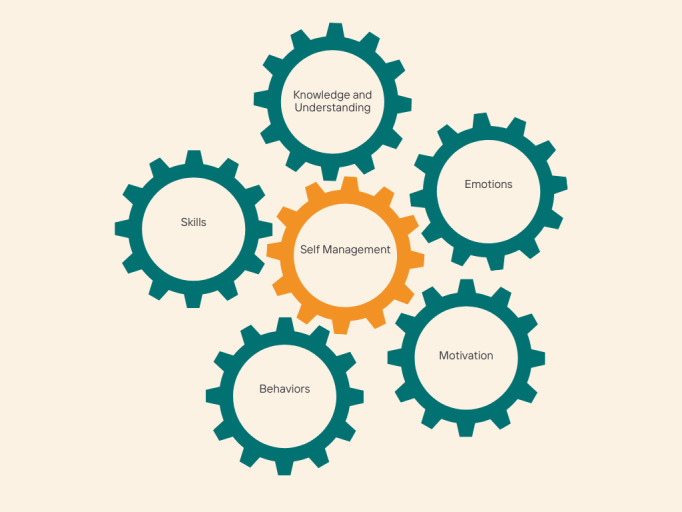
Background: Polycystic ovary syndrome (PCOS) represents a significant global health burden requiring urgent attention. This common chronic endocrine and cardiometabolic condition affects around 1 in 10 women and individuals assigned female at birth, with significant adverse effects on well-being, quality of life, and mental health, as well as serious and complex long-term health consequences. International guidelines for best health care practice recommend the provision of comprehensive cognitive behavioral interventions to support self-management and improve health outcomes for those living with PCOS. Web-based health interventions have the potential to meet this need in an accessible and scalable way. Objective: We aim to identify barriers to self-management and psychological well-being in women with PCOS and adapt a web-based self-management program to provide a prototype digital support intervention for them. Methods: We adapted an existing support program (HOPE) for PCOS using the antecedent target measure approach. We conducted qualitative interviews with 13 adult women living with PCOS, 3 trustees of a patients with PCOS advocacy charity, and 4 endocrinologists to identify “antecedents” (barriers) to self-management and psychological well-being. Framework analysis was used to identify potentially modifiable antecedents to be targeted by the novel intervention. At a national conference, 58 key stakeholders (patients and health professionals) voted for the antecedents they felt were most important to address. We used research evidence and relevant theory to design a prototype for the PCOS intervention. Results: Voting identified 32 potentially modifiable antecedents, relating to knowledge, understanding, emotions, motivation, and behaviors, as priorities to be targeted in the new intervention. A modular, web-based prototype HOPE PCOS intervention was developed to address these, covering six broad topic areas (instilling HOPE for PCOS; managing the stress of PCOS; feeding your mind and body well; body image, intimacy, and close relationships; staying healthy with PCOS; and keeping PCOS in its place). Conclusions: We identified barriers to self-management and psychological well-being in women with PCOS and used these to adapt a web-based self-management program, tailoring it for PCOS, which is a comprehensive group intervention combining education, empowerment, lifestyle management, peer support with cognitive behavioral tools, and goal-setting (to be delivered by peers or codelivered with health care professionals). The modular structure offers flexibility to adapt the program further as new clinical recommendations emerge. The intervention has the potential to be delivered, evaluated for feasibility, and, if effective, integrated into health care services. Self-management interventions are not designed to replace clinical care; rather, they serve as an additional source of support. The HOPE PCOS program conveys this message in its content and activities. Future research should evaluate the prototype intervention using primary outcomes such as measures of psychological well-being, self-management self-efficacy, depression, anxiety, and PCOS-related quality of life. They should also assess the intervention’s acceptability, scalability, and cost-effectiveness.
Overview
The claims and statistics of this paper haven’t been checked yet.
Free: it reads the open-access text and checks the first 5 claims that cite a source we can check. Create a free account to check every claim.
Integrity signals
Registry
Cites
Statistics
Figures
Verification
Claims the paper makes
The claims and statistics of this paper haven’t been checked yet.
Free: it reads the open-access text and checks the first 5 claims that cite a source we can check. Create a free account to check every claim.
Claims other papers make about this one
Each is checked against this paper’s own text: does it say what the citing paper says it does?
The source backs part of the claim, not all of it — or backs it for a different population, condition or comparison.
In the citing paper
“Only one form of digital technology, the website HOPE PCOS, incorporated end user input during the design phase [53].”
From Availability and Use of Digital Technology Among Women With Polycystic Ovary Syndrome: Scoping Review (2025) · cites this paper as [53]
Experimental — accuracy not yet measuredThe cited source says what the claim attributes to it.
In the citing paper
“Using theory and input from end users, 6 modules were created to include health education, self-care, mindfulness, nutrition, communication skills with health care providers, and goal setting. Now called HOPE PCOS, the program offered features to address multiple components of PCOS self-management and was deemed ready for feasibility testing [53].”
From Availability and Use of Digital Technology Among Women With Polycystic Ovary Syndrome: Scoping Review (2025) · cites this paper as [53]
The cited source says what the claim attributes to it.
In the citing paper
“Of the 34 articles, the authors of 1 article (4%) discussed the adaptation of a web-based self-management program based on the identified barriers to self-management and psychological well-being reported from women with PCOS [53].”
From Availability and Use of Digital Technology Among Women With Polycystic Ovary Syndrome: Scoping Review (2025) · cites this paper as [53]
Self-check
Percentages, sums and reported differences re-computed from the paper’s own numbers.
The self-check needs the paper’s full text.
Citations
Cites
Michie, S., van Stralen, M. M., & West, R. (2011) · Implementation Science · doi:10.1186/1748-5908-6-42 · Cited by 13,697
Developing and evaluating complex interventions: the new Medical Research Council guidance
Craig, P., Dieppe, P., Macintyre, S., Michie, S., Nazareth, I., & Petticrew, M. (2008) · BMJ · doi:10.1136/bmj.a1655 · Cited by 10,995
Gale, N. K., Heath, G., Cameron, E., Rashid, S., & Redwood, S. (2013) · BMC Medical Research Methodology · doi:10.1186/1471-2288-13-117 · Cited by 10,865
Guidance on how to develop complex interventions to improve health and healthcare
O"Cathain, A., Croot, L., Duncan, E., Rousseau, N., Sworn, K., Turner, K. M., Yardley, L., & Hoddinott, P. (2019) · BMJ Open · doi:10.1136/bmjopen-2019-029954 · Cited by 1,591
Teede, H., Deeks, A., & Moran, L. (2010) · BMC Medicine · doi:10.1186/1741-7015-8-41 · Cited by 1,565 · cited 1×
“For example, compared with healthy controls, women with PCOS have lower health-related quality of life and higher scores on symptoms of depression and anxiety [5-9], and appear to be at risk for disordered eating [10-14] and unhealthy weight management practices [15].”
Bozdag, G., Mumusoglu, S., Zengin, D., Karabulut, E., & Yildiz, B. O. (2016) · Human Reproduction · doi:10.1093/humrep/dew218 · Cited by 1,526
Intervention Mapping: A Process for Developing Theory and Evidence-Based Health Education Programs
Bartholomew, L. K., Parcel, G. S., & Kok, G. (1998) · Health Education & Behavior · doi:10.1177/109019819802500502 · Cited by 1,102 · cited 1×
“A number of different approaches were considered for adapting the existing HOPE program, including the behavior change wheel [50] and intervention mapping [51].”
MethodTeede, H. J., Tay, C. T., Laven, J. J. E., Dokras, A., Moran, L. J., Piltonen, T. T., Costello, M. F., Boivin, J., Redman, L. M., Boyle, J. A., et al. (2023) · The Journal of Clinical Endocrinology & Metabolism · doi:10.1210/clinem/dgad463 · Cited by 946
Noar, S. M., & Zimmerman, R. S. (2005) · Health Education Research · doi:10.1093/her/cyg113 · Cited by 793
Processes of Self‐Management in Chronic Illness
Schulman‐Green, D., Jaser, S., Martin, F., Alonzo, A., Grey, M., McCorkle, R., Redeker, N. S., Reynolds, N., & Whittemore, R. (2012) · Journal of Nursing Scholarship · doi:10.1111/j.1547-5069.2012.01444.x · Cited by 657
Research works printed but not linked: 9
- Turner, A, 2017, Promoting Self-Management of Chronic Health Conditions: Theories and Practice, 58
- PercyC'Hope for PCOS': co-creation of an online self-management peer support programme for polycystic ovary syndromePoster Presentation2021933rd Annual Conference of the European Health Psychology SocietySeptember 03-07, 2019Dubrovnik, Croatia
- 10.1177/109821400202300409 · doi:10.1177/109821400202300409 · Paper page
- Bazarganipour, F, 2015, Iran J Reprod Med, 13, 61
- Taghavi, SA, 2015, Iran J Reprod Med, 13, 473
- Bazarganipour, F, 2017, Int J Reprod Biomed, 15, 553
- Sadhwani, S, 2016, Eur Health Psychol, 18, 1018
- Javed, H, 2022, Rawal Med J, 47, 400
- Yalom, ID, 2005, Theory and Practice of Group Psychotherapy, 5th Edition
Cited by
Parker, J., Briden, L., & Gersh, F. L. (2025) · Journal of Clinical Medicine · doi:10.3390/jcm14124021 · Cited by 40
Shamanna, P., Maheshwari, A., Keshavamurthy, A., Bhat, S., Kulkarni, A., R, S., K, K., Gupta, M., Thajudeen, M., Kulkarni, R., et al. (2025) · AACE Clinical Case Reports · doi:10.1016/j.aace.2024.11.004 · Cited by 10
Wright, P. J., Burts, C., Harmon, C., & Corbett, C. F. (2025) · JMIR Infodemiology · doi:10.2196/68469 · Cited by 8
“Now called HOPE PCOS, the program offered features to address multiple components of PCOS self-management and was deemed ready for feasibility testing [53].”
InfluentialGoodarzi, F., Mojahed, S., ZareMobini, F., & Sarebanhassanabadi, M. (2025) · Iranian Journal of Nursing and Midwifery Research · doi:10.4103/ijnmr.ijnmr_12_24 · Cited by 2
Khademi, A., aghdam, B. H., & Hajiesmaello, M. (2025) · Nursing and Midwifery Journal · doi:10.61186/unmf.22.11.923
Metadata
- Authors
- Percy, C., Turner, A., & Orr, C.
- Affiliations
- Coventry University (GB)
- Coventry (United Kingdom) (GB)
- Corresponding author
- Percy, Carol
- Venue
- JMIR Formative Research
- Publisher
- JMIR Publications Inc.
- Published
- 2024-03-07
- Volume
- 8
- Pages
- e52427
- ISSN
- 2561-326X (ISSN-L)
- PMC
- PMC10958350
- OpenAlex
- W4392560528
- Cited by
- 12
- References
- 159
- Citations by year
- 2026: 4 · 2025: 7 · 2024: 1
- FWCI
- 4.73
- Type
- journal article
- Language
- en
- Open access
- gold
- doi.org
- Licence
- cc-by
- Locations
- JMIR Formative Research (publishedVersion, cc-by)
- PubMed (publishedVersion)
- Pure (Coventry University) (submittedVersion, cc-by)
- DOAJ (DOAJ: Directory of Open Access Journals) (submittedVersion, cc-by-sa)
- Funders
- Coventry University
- Topics
- Health Sciences › Medicine › Reproductive Medicine › Ovarian function and disorders
- Health Sciences › Health Professions › General Health Professions › Mobile Health and mHealth Applications
- Social Sciences › Psychology › Applied Psychology › Digital Mental Health Interventions
- Keywords
- polycystic ovary syndrome, self-management, online intervention, digital health interventions, psychological well-being, barriers to self-management, cognitive-behavioral intervention, peer support, lifestyle management, body image, stress management, HOPE program, cardiometabolic health, quality of life, goal setting
About these checks
Registry, retraction, Cites and statistics results are computed, not judged, with one exception: a printed reference that no index lists is read once by a model before it counts as a citation error. Claims are extracted by a model and kept only when their quote appears verbatim in the text; each cited source is then checked, with a model’s help, for whether it says what the claim relies on. Those verdicts can be wrong — read the claim’s quote and the cited source before relying on one.
Statistics and arithmetic are recomputed, not judged.
Confidence bands are shown only for fields calibrated on our annotated test set. None is calibrated yet, so no band is shown.
What counts as a claim ›How we measure confidence ›How we check this ›
Are you an author, or do you see a problem with this page? Request a review
Data sources
Bibliographic data: Semantic Scholar, OpenAlex, Crossref.
Contains information from the Semantic Scholar Academic Graph Datasets, made available under the ODC Attribution License (ODC-BY 1.0).
Semantic Scholar’s data is described in: Kinney, R., et al. (2023). The Semantic Scholar Open Data Platform. arXiv:2301.10140.
