

The DOI matches its Crossref record; 23 of the 24 references it cites were found in a registry or an index.
There’s an App for That: Content Analysis of Paid Health and Fitness Apps
Open accessAbstract
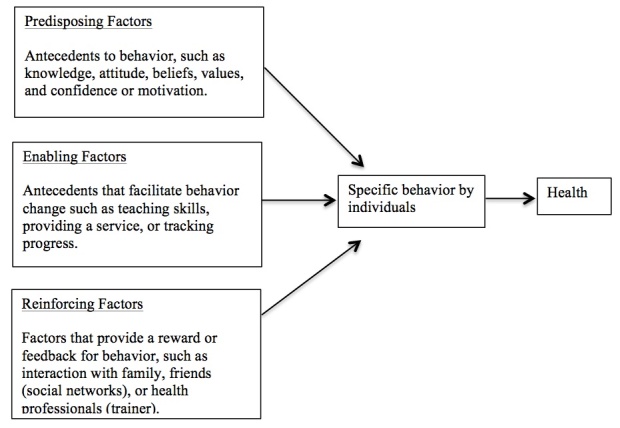
BACKGROUND: The introduction of Apple's iPhone provided a platform for developers to design third-party apps, which greatly expanded the functionality and utility of mobile devices for public health. OBJECTIVE: This study provides an overview of the developers' written descriptions of health and fitness apps and appraises each app's potential for influencing behavior change. METHODS: Data for this study came from a content analysis of health and fitness app descriptions available on iTunes during February 2011. The Health Education Curriculum Analysis Tool (HECAT) and the Precede-Proceed Model (PPM) were used as frameworks to guide the coding of 3336 paid apps. RESULTS: Compared to apps with a cost less than US $0.99, apps exceeding US $0.99 were more likely to be scored as intending to promote health or prevent disease (92.55%, 1925/3336 vs 83.59%, 1411/3336; P<.001), to be credible or trustworthy (91.11%, 1895/3336 vs 86.14%, 1454/3349; P<.001), and more likely to be used personally or recommended to a health care client (72.93%, 1517/2644 vs 66.77%, 1127/2644; P<.001). Apps related to healthy eating, physical activity, and personal health and wellness were more common than apps for substance abuse, mental and emotional health, violence prevention and safety, and sexual and reproductive health. Reinforcing apps were less common than predisposing and enabling apps. Only 1.86% (62/3336) of apps included all 3 factors (ie, predisposing, enabling, and reinforcing). CONCLUSIONS: Development efforts could target public health behaviors for which few apps currently exist. Furthermore, practitioners should be cautious when promoting the use of apps as it appears most provide health-related information (predisposing) or make attempts at enabling behavior, with almost none including all theoretical factors recommended for behavior change.
Overview
The claims and statistics of this paper haven’t been checked yet.
Run the check — free, no account needed. It reads the open-access text and checks the sources it cites.
Integrity signals
Registry
Cites
Statistics
Figures

Verification
Claims the paper makes
The claims and statistics of this paper haven’t been checked yet.
Run the check — free, no account needed. It reads the open-access text and checks the sources it cites.
Claims other papers make about this one
Each is checked against this paper’s own text: does it say what the citing paper says it does?
The source backs part of the claim, not all of it — or backs it for a different population, condition or comparison.
In the citing paper
“Generally, smartphone apps are designed to deliver specific therapeutic activities, such as self-monitoring, facilitating skills acquisition, or to provide information about a particular health condition. 51–53”
From Effectiveness of mobile technologies delivering Ecological Momentary Interventions for stress and anxiety: A systematic review (2016) · cites this paper as [51]
Experimental — accuracy not yet measuredIn the citing paper
“To date, considerable attention has been paid to whether existing, often commercial, apps provide theory and evidence-based BCTs [66-71].”
From Understanding Usage of a Hybrid Website and Smartphone App for Weight Management: A Mixed-Methods Study (2014) · cites this paper as [67]
Self-check
Percentages, sums and reported differences re-computed from the paper’s own numbers.
The self-check needs the paper’s full text.
Citations
Cites
Heron, K. E., & Smyth, J. M. (2010) · British Journal of Health Psychology · doi:10.1348/135910709x466063 · Cited by 1,438
Health promotion planning: An educational and environmental approach
Lusk, S. L. (1992) · Patient Education and Counseling · doi:10.1016/0738-3991(92)90152-9 · Cited by 1,386
Behavior change interventions delivered by mobile telephone short message service
Fjeldsoe, B. S., Marshall, A. L., & Miller, Y. D. (2009) · American Journal of Preventive Medicine · doi:10.1016/j.amepre.2008.09.040 · Cited by 1,213 · cited 3×
“Fjeldsoe et al [4] recognized the need for interventions utilizing mobile devices to be based upon theoretical principles.”
Health behavior models in the age of mobile interventions: are our theories up to the task?
Riley, W. T., Rivera, D. E., Atienza, A. A., Nilsen, W., Allison, S. M., & Mermelstein, R. (2011) · Translational Behavioral Medicine · doi:10.1007/s13142-011-0021-7 · Cited by 978 · cited 2×
“There is growing interest and inquiry in understanding how mobile devices may influence health behavior [10].”
Chomutare, T., Fernandez-Luque, L., Årsand, E., & Hartvigsen, G. (2011) · Journal of Medical Internet Research · doi:10.2196/jmir.1874 · Cited by 451
iPhone Apps for Smoking Cessation
Abroms, L. C., Padmanabhan, N., Thaweethai, L., & Phillips, T. (2011) · American Journal of Preventive Medicine · doi:10.1016/j.amepre.2010.10.032 · Cited by 365
College Smoking-Cessation Using Cell Phone Text Messaging
Obermayer, J. L., Riley, W. T., Asif, O., & Jean-Mary, J. (2004) · Journal of American College Health · doi:10.3200/jach.53.2.71-78 · Cited by 321
MobileMums: A Randomized Controlled Trial of an SMS-Based Physical Activity Intervention
Fjeldsoe, B. S., Miller, Y. D., & Marshall, A. L. (2010) · Annals of Behavioral Medicine · doi:10.1007/s12160-010-9170-z · Cited by 244
Use of technology in children’s dietary assessment
Boushey, C. J., Kerr, D. A., Wright, J., Lutes, K. D., Ebert, D. S., & Delp, E. J. (2009) · European Journal of Clinical Nutrition · doi:10.1038/ejcn.2008.65 · Cited by 231
Litt, M. D., Cooney, N. L., & Morse, P. (1998) · Health Psychology · doi:10.1037/0278-6133.17.1.48 · Cited by 214
Research works printed but not linked: 4
- Fogg, BJ, 2002, Persuasive Technology: Using Computers to Change What We Think and Do
- 2008, Health Education Curriculum Analysis Tool
- 2011, Epidemic: Responding to America's prescription drug abuse crisis
- Intille, SS, 2003, AMIA Annu Symp Proc, 874
Cited by
Sorted by citations
van Dijck, J., Poell, T., & de Waal, M. (2018) · doi:10.1093/oso/9780190889760.001.0001 · Cited by 2,951
Dennison, L., Morrison, L., Conway, G., & Yardley, L. (2013) · Journal of Medical Internet Research · doi:10.2196/jmir.2583 · Cited by 895
Martínez-Pérez, B., de la Torre-Díez, I., & López-Coronado, M. (2013) · Journal of Medical Internet Research · doi:10.2196/jmir.2600 · Cited by 550
Apps to promote physical activity among adults: a review and content analysis
Middelweerd, A., Mollee, J. S., van der Wal, C. N., Brug, J., & te Velde, S. J. (2014) · International Journal of Behavioral Nutrition and Physical Activity · doi:10.1186/s12966-014-0097-9 · Cited by 546
Lyons, E. J., Lewis, Z. H., Mayrsohn, B. G., & Rowland, J. L. (2014) · Journal of Medical Internet Research · doi:10.2196/jmir.3469 · Cited by 547
Metadata
- Authors
- West, J. H., Hall, P. C., Hanson, C. L., Barnes, M. D., Giraud-Carrier, C., & Barrett, J.
- Affiliations
- Brigham Young University (US)
- Corresponding author
- West, Joshua H
- Venue
- Journal of Medical Internet Research
- Publisher
- JMIR Publications Inc.
- Published
- 2012-05-14
- Volume
- 14
- Issue
- 3
- Pages
- e72
- ISSN
- 1438-8871 (ISSN-L)
- PMC
- PMC3799565
- OpenAlex
- W2004006198
- Cited by
- 314
- References
- 24
- Citations by year
- 2026: 1 · 2025: 5 · 2024: 11 · 2023: 13 · 2022: 15 · 2021: 25 · 2020: 24 · 2019: 27 · 2018: 48 · 2017: 36 · 2016: 36 · 2015: 36 · 2014: 19 · 2013: 17 · 2012: 1
- FWCI
- 41.47
- Type
- journal article
- Language
- en
- Open access
- gold
- doi.org
- Licence
- cc-by
- Locations
- Journal of Medical Internet Research (publishedVersion, cc-by)
- Europe PMC (PubMed Central) (publishedVersion, cc-by)
- PubMed Central (publishedVersion, cc-by)
- PubMed (publishedVersion)
- DOAJ (DOAJ: Directory of Open Access Journals) (submittedVersion, cc-by-sa)
- Funders
- Brigham Young University
- Topics
- Health Sciences › Health Professions › General Health Professions › Mobile Health and mHealth Applications
- Social Sciences › Health › Social Media in Health Education
- Health Sciences › Health Professions › Health Information Management › Health, Technology, Consumer Behavior
- Keywords
- health and fitness apps, mobile health, app pricing, behavior change, PRECEDE-PROCEED model, public health promotion, healthy eating, physical activity, substance abuse, mental health, sexual and reproductive health, violence prevention
- MeSH terms
- Costs and Cost Analysis, Humans, Physical Fitness, Software, Cell Phone
About these checks
Registry, retraction, Cites and statistics results are computed, not judged, with one exception: a printed reference that no index lists is read once by a model before it counts as a citation error. Claims are extracted by a model and kept only when their quote appears verbatim in the text; each cited source is then checked, with a model’s help, for whether it says what the claim relies on. Those verdicts can be wrong — read the claim’s quote and the cited source before relying on one.
Statistics and arithmetic are recomputed, not judged.
Confidence bands are shown only for fields calibrated on our annotated test set. None is calibrated yet, so no band is shown.
What counts as a claim ›How we measure confidence ›How we check this ›
Are you an author, or do you see a problem with this page? Request a review
