

Effects of GLP-1 on Forearm Vasodilator Function and Glucose Disposal During Hyperinsulinemia in the Metabolic Syndrome
Open accessThe DOI matches its Crossref record; 28 of the 29 references it cites were found in a registry or an index.
Abstract
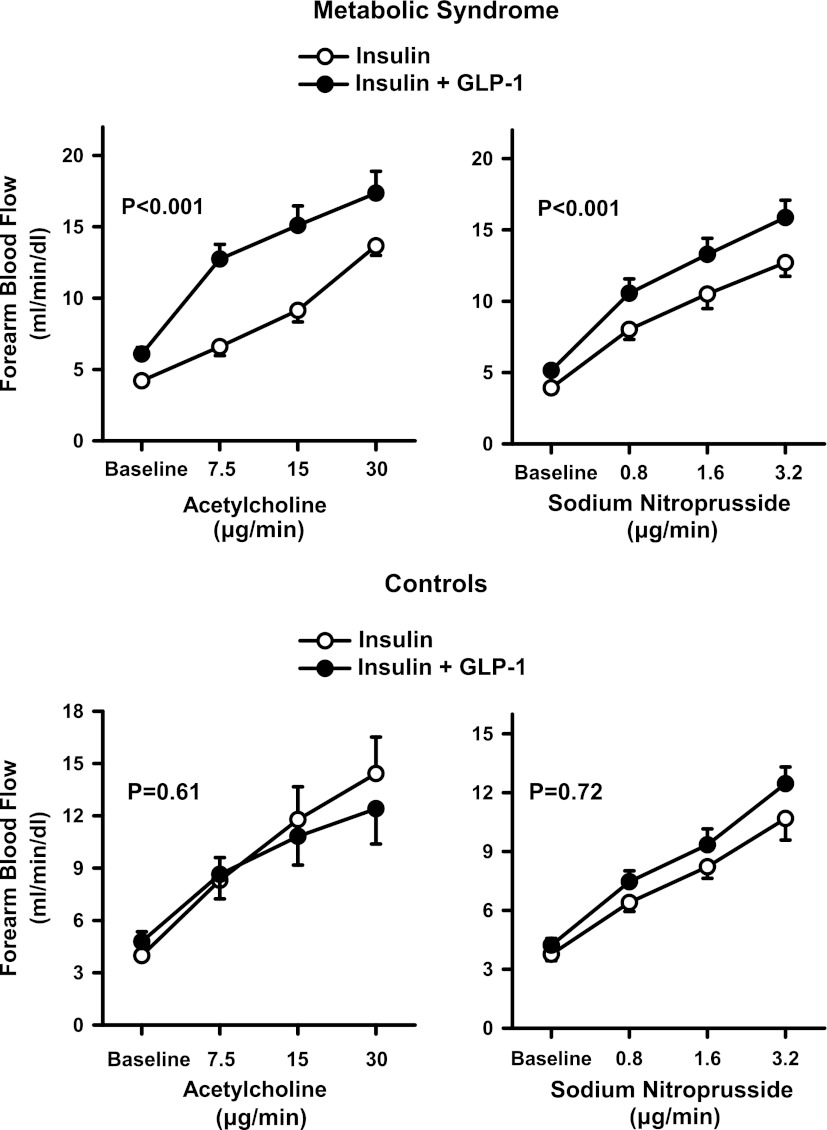
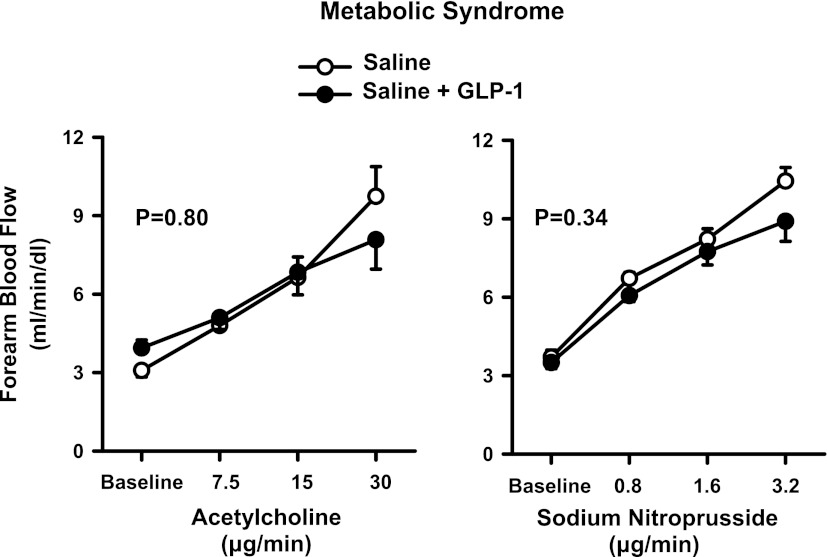
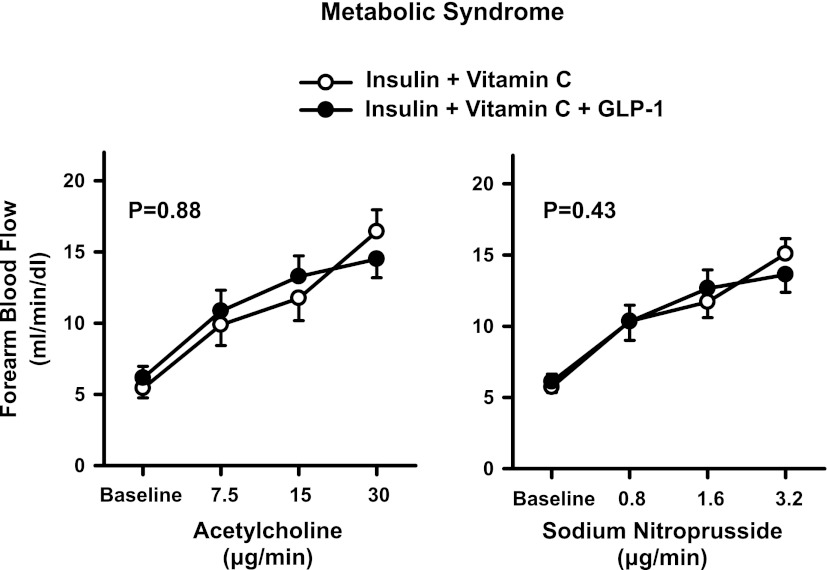
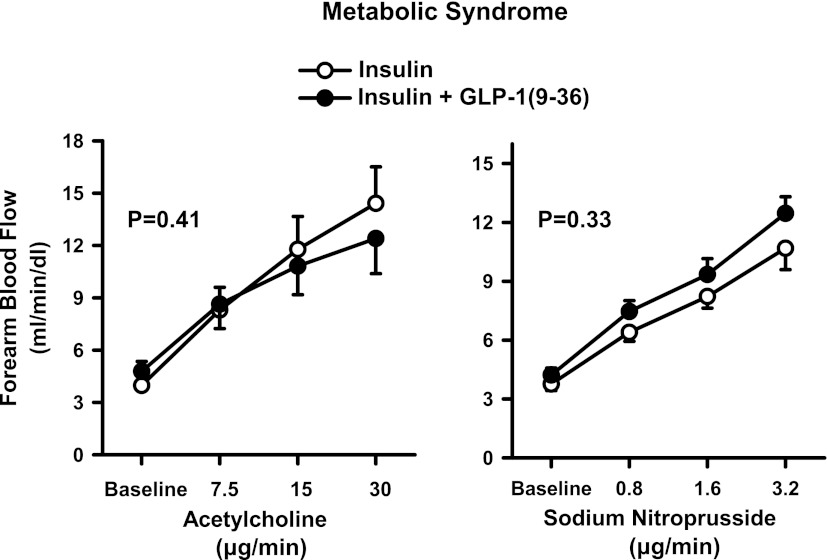
OBJECTIVE: Patients with the metabolic syndrome (MetS) have impaired insulin-induced enhancement of vasodilator responses. The incretin hormone glucagon-like peptide 1 (GLP-1), beyond its effects on blood glucose, has beneficial actions on vascular function. This study, therefore, aimed to assess whether GLP-1 affects insulin-stimulated vasodilator reactivity in patients with the MetS. RESEARCH DESIGN AND METHODS: Forearm blood flow responses to acetylcholine (ACh) and sodium nitroprusside (SNP) were assessed in MetS patients before and after the addition of GLP-1 to an intra-arterial infusion of saline (n = 5) or insulin (n = 5). The possible involvement of oxidative stress in the vascular effects of GLP-1 in this setting was investigated by infusion of vitamin C (n = 5). The receptor specificity of GLP-1 effect during hyperinsulinemia was assessed by infusing its metabolite GLP-1(9-36) (n = 5). The metabolic actions of GLP-1 were also tested by analyzing forearm glucose disposal during hyperinsulinemia (n = 5). RESULTS: In MetS patients, GLP-1 enhanced endothelium-dependent and -independent responses to ACh and SNP, respectively, during hyperinsulinemia (P < 0.001 for both), but not during saline (P > 0.05 for both). No changes in vasodilator reactivity to ACh and SNP were seen after GLP-1 was added to insulin and vitamin C (P > 0.05 for both) and after GLP-1(9-36) was given during hyperinsulinemia (P > 0.05 for both). Also, GLP-1 did not affect forearm glucose extraction and uptake during hyperinsulinemia (P > 0.05 for both). CONCLUSIONS: In patients with the MetS, GLP-1 improves insulin-mediated enhancement of endothelium-dependent and -independent vascular reactivity. This effect may be influenced by vascular oxidative stress and is possibly exerted through a receptor-mediated mechanism.
Overview
The claims and statistics of this paper haven’t been checked yet.
Free: it reads the open-access text and checks the first 5 claims that cite a source we can check. Create a free account to check every claim.
Integrity signals
Registry
Cites
Statistics
Figures
Verification
Claims the paper makes
The claims and statistics of this paper haven’t been checked yet.
Free: it reads the open-access text and checks the first 5 claims that cite a source we can check. Create a free account to check every claim.
Claims other papers make about this one
Each is checked against this paper’s own text: does it say what the citing paper says it does?
The source backs part of the claim, not all of it — or backs it for a different population, condition or comparison.
In the citing paper
“Human studies provide conflicting information about the effect of GLP-1 or stable analogues on endothelial function.212-217”
From The Vasculature in Prediabetes (2018) · cites this paper as [217]
Experimental — accuracy not yet measured
Self-check
Percentages, sums and reported differences re-computed from the paper’s own numbers.
The self-check needs the paper’s full text.
Citations
Cites
Grundy, S. M., Brewer, H. B., Cleeman, J. I., Smith, S. C., & Lenfant, C. (2004) · Circulation · doi:10.1161/01.cir.0000111245.75752.c6 · Cited by 5,982
Obesity and insulin resistance
Kahn, B. B., & Flier, J. S. (2000) · Journal of Clinical Investigation · doi:10.1172/jci10842 · Cited by 3,225
Kim, J.-A., Montagnani, M., Koh, K. K., & Quon, M. J. (2006) · Circulation · doi:10.1161/circulationaha.105.563213 · Cited by 1,652 · cited 8×
“was assessed by infusing its metabolite GLP-1(9-36) (n = 5).”
BackgroundMethodInfluentialZander, M., Madsbad, S., Madsen, J. L., & Holst, J. J. (2002) · The Lancet · doi:10.1016/s0140-6736(02)07952-7 · Cited by 1,297 · cited 8×
“was assessed by infusing its metabolite GLP-1(9-36) (n = 5).”
BackgroundMethodInfluentialBan, K., Noyan-Ashraf, M. H., Hoefer, J., Bolz, S.-S., Drucker, D. J., & Husain, M. (2008) · Circulation · doi:10.1161/circulationaha.107.739938 · Cited by 1,057 · cited 7×
“was assessed by infusing its metabolite GLP-1(9-36) (n = 5).”
BackgroundMethodInfluentialThe role of incretins in glucose homeostasis and diabetes treatment
Kim, W., & Egan, J. M. (2008) · Pharmacological Reviews · doi:10.1124/pr.108.000604 · Cited by 824 · cited 10×
“Effluent venous forearm GLP-1(7-36) plasma levels in patients with MetS receiving intra-arterial infusion of exogenous GLP-1 were 8.”
BackgroundMethodResultInfluentialNyström, T., Gutniak, M. K., Zhang, Q., Zhang, F., Holst, J. J., Ahrén, B., & Sjöholm, Å. (2004) · American Journal of Physiology-Endocrinology and Metabolism · doi:10.1152/ajpendo.00237.2004 · Cited by 680 · cited 8×
“was assessed by infusing its metabolite GLP-1(9-36) (n = 5).”
BackgroundMethodInfluentialJackson, T. S., Xu, A., Vita, J. A., & Keaney, J. F. (1998) · Circulation Research · doi:10.1161/01.res.83.9.916 · Cited by 400 · cited 8×
“was assessed by infusing its metabolite GLP-1(9-36) (n = 5).”
BackgroundMethodInfluentialMeier, J. J., Gallwitz, B., Salmen, S., Goetze, O., Holst, J. J., Schmidt, W. E., & Nauck, M. A. (2003) · The Journal of Clinical Endocrinology & Metabolism · doi:10.1210/jc.2003-030049 · Cited by 369 · cited 8×
“was assessed by infusing its metabolite GLP-1(9-36) (n = 5).”
BackgroundMethodInfluentialOeseburg, H., de Boer, R. A., Buikema, H., van der Harst, P., van Gilst, W. H., & Silljé, H. H. W. (2010) · Arteriosclerosis, Thrombosis, and Vascular Biology · doi:10.1161/atvbaha.110.206425 · Cited by 267 · cited 8×
“was assessed by infusing its metabolite GLP-1(9-36) (n = 5).”
BackgroundMethodInfluential
Cited by
Oxidative Stress in Diabetes: Implications for Vascular and Other Complications
Pitocco, D., Tesauro, M., Alessandro, R., Ghirlanda, G., & Cardillo, C. (2013) · International Journal of Molecular Sciences · doi:10.3390/ijms141121525 · Cited by 401
“In addition, when GLP-1 is given on top of vitamin C it does not further enhance the vasodilator effect of acetylcholine and sodium nitroprusside, thereby suggesting that its effect is influenced by vascular oxidative stress [125].”
BackgroundSelf-citationCardiovascular Actions of Incretin-Based Therapies
Ussher, J. R., & Drucker, D. J. (2014) · Circulation Research · doi:10.1161/circresaha.114.301958 · Cited by 358
Tousoulis, D., Plastiras, A., Siasos, G., Oikonomou, E., Verveniotis, A., Kokkou, E., Maniatis, K., Gouliopoulos, N., Miliou, A., Paraskevopoulos, T., et al. (2014) · Atherosclerosis · doi:10.1016/j.atherosclerosis.2013.10.014 · Cited by 168
The Vasculature in Prediabetes
Wasserman, D. H., Wang, T. J., & Brown, N. J. (2018) · Circulation Research · doi:10.1161/circresaha.118.311912 · Cited by 137
Rizzo, M., Chandalia, M., Patti, A. M., Di Bartolo, V., Rizvi, A. A., Montalto, G., & Abate, N. (2014) · Cardiovascular Diabetology · doi:10.1186/1475-2840-13-49 · Cited by 107
Rogliani, P., Calzetta, L., Capuani, B., Facciolo, F., Cazzola, M., Lauro, D., & Matera, M. G. (2016) · American Journal of Respiratory Cell and Molecular Biology · doi:10.1165/rcmb.2015-0311oc · Cited by 99
Self-citationGLP-1 Agonists and Blood Pressure: A Review of the Evidence
Goud, A., Zhong, J., Peters, M. C., Brook, R. D., & Rajagopalan, S. (2016) · Current Hypertension Reports · doi:10.1007/s11906-015-0621-6 · Cited by 107
Ceriello, A., Novials, A., Canivell, S., La Sala, L., Pujadas, G., Esposito, K., Testa, R., Bucciarelli, L., Rondinelli, M., & Genovese, S. (2014) · Diabetes Care · doi:10.2337/dc13-2618 · Cited by 78
GLP-1 increases microvascular recruitment but not glucose uptake in human and rat skeletal muscle
Sjøberg, K. A., Holst, J. J., Rattigan, S., Richter, E. A., & Kiens, B. (2014) · American Journal of Physiology-Endocrinology and Metabolism · doi:10.1152/ajpendo.00283.2013 · Cited by 69
“Recently, it was shown in type 2 diabetics that a local infusion of insulin with a coinfusion of GLP-1 did not change fractional forearm glucose extraction or forearm glucose uptake compared with infusion of insulin alone despite improved total forearm blood flow (33).”
BackgroundCeriello, A., Novials, A., Ortega, E., Canivell, S., La Sala, L., Pujadas, G., Bucciarelli, L., Rondinelli, M., & Genovese, S. (2013) · Diabetes Care · doi:10.2337/dc13-0750 · Cited by 65
“(23) was focused on only 5 patients with metabolic syndrome (23).”
BackgroundInfluentialTreating Coronary Disease and the Impact of Endothelial Dysfunction
Matsuzawa, Y., Guddeti, R. R., Kwon, T.-G., Lerman, L. O., & Lerman, A. (2015) · Progress in Cardiovascular Diseases · doi:10.1016/j.pcad.2014.10.004 · Cited by 57
Favorable Vascular Actions of Angiotensin-(1–7) in Human Obesity
Schinzari, F., Tesauro, M., Veneziani, A., Mores, N., Di Daniele, N., & Cardillo, C. (2018) · Hypertension · doi:10.1161/hypertensionaha.117.10280 · Cited by 57
Self-citationSchinzari, F., Tesauro, M., & Cardillo, C. (2017) · Journal of Cardiovascular Pharmacology · doi:10.1097/fjc.0000000000000469 · Cited by 48
Self-citationDirect cardiovascular effects of glucagon like peptide-1
Sheikh, A. (2013) · Diabetology & Metabolic Syndrome · doi:10.1186/1758-5996-5-47 · Cited by 45
“Human studies have also pointed towards amelioration of endothelial dysfunction and modulation of vascular reactivity [117].”
BackgroundAbdesselam, I., Pepino, P., Troalen, T., Macia, M., Ancel, P., Masi, B., Fourny, N., Gaborit, B., Giannesini, B., Kober, F., et al. (2015) · Journal of Cardiovascular Magnetic Resonance · doi:10.1186/s12968-015-0198-x · Cited by 43
“A comparable beneficial effect of GLP-1 on vascular function was previously shown in peripheral vessels, when GLP1 administration enhanced insulin mediated forearm blood flow responses to ACh [28, 89].”
BackgroundDevin, J. K., Pretorius, M., Nian, H., Yu, C., Billings, F. T., & Brown, N. J. (2014) · Journal of the American Heart Association · doi:10.1161/jaha.114.001075 · Cited by 36
“GLP-1(9-36), which promotes endothelium-dependent vasodilation independent of the GLP-1 receptor.”
BackgroundMethodInfluentialPetersen, K. E., Rakipovski, G., Raun, K., & Lykkesfeldt, J. (2016) · Current Diabetes Reviews · doi:10.2174/1573399812666150918150608 · Cited by 38
“…cells, oxLDL = oxidized low density lipoprotein, SD = standard deviation, T1D = type 1 diabetes, T2D = type 2 diabetes, 8-iso-PGF2 = 8-iso-prostaglandin F2 . by Tesauro et al. (2013) as well, as healthy obese subjects do not respond to GLP-1 therapy when measuring endothelial vasodilation [175].”
BackgroundRavassa, S., Beaumont, J., Huerta, A., Barba, J., Coma-Canella, I., González, A., López, B., & Díez, J. (2015) · Free Radical Biology and Medicine · doi:10.1016/j.freeradbiomed.2015.01.002 · Cited by 34
Tate, M., Chong, A., Robinson, E., Green, B. D., & Grieve, D. J. (2015) · British Journal of Pharmacology · doi:10.1111/bph.12943 · Cited by 33
“Comparable effects were observed in insulin-resistant patients with obesity-related metabolic syndrome, where acute treatment with GLP-1(736) enhanced insulin-mediated forearm blood flow responses to both ACh and sodium nitroprusside in the absence of changes in forearm glucose extraction/uptake, while GLP1(9-36) did…”
BackgroundBeneficial Effects of Apelin on Vascular Function in Patients With Central Obesity
Schinzari, F., Veneziani, A., Mores, N., Barini, A., Daniele, N. D., Cardillo, C., & Tesauro, M. (2017) · Hypertension · doi:10.1161/hypertensionaha.116.08916 · Cited by 33
Self-citationObesity and kidney disease: Beyond the hyperfiltration
Mascali, A., Franzese, O., Nisticò, S. P., Campia, U., Lauro, D., Cardillo, C., Daniele, N. D., & Tesauro, M. (2016) · International Journal of Immunopathology and Pharmacology · doi:10.1177/0394632016643550 · Cited by 35
Self-citationDo incretins improve endothelial function?
Oyama, J., Higashi, Y., & Node, K. (2014) · Cardiovascular Diabetology · doi:10.1186/1475-2840-13-21 · Cited by 37
“On the other hand, nine studies previously reported that the endothelial function was improved by using GLP-1 and GLP-1-related drugs [37,41-48].”
BackgroundCardiovascular Actions of GLP-1 and Incretin-Based Pharmacotherapy
Avogaro, A., de Kreutzenberg, S. V., & Fadini, G. P. (2014) · Current Diabetes Reports · doi:10.1007/s11892-014-0483-3 · Cited by 31
Widlansky, M. E., Puppala, V. K., Suboc, T. M. B., Malik, M. A., Branum, A., Signorelli, K., Wang, J., Ying, R., Tanner, M. J., & Tyagi, S. (2017) · Vascular Medicine · doi:10.1177/1358863x16681486 · Cited by 30
GLP-1R Agonists and Endothelial Dysfunction: More Than Just Glucose Lowering?
Lovshin, J. A., & Cherney, D. Z. I. (2015) · Diabetes · doi:10.2337/db15-0366 · Cited by 32
“Possible explanations for differing results between GLP-1(7-36), GLP-1R agonists, and DPP-4 inhibitors include 1) differences in study design (T2D vs.”
BackgroundResultAung, M. M., Slade, K., Freeman, L. A. R., Kos, K., Whatmore, J. L., Shore, A. C., & Gooding, K. M. (2019) · Diabetologia · doi:10.1007/s00125-019-4918-x · Cited by 29
Sjøberg, K. A., Rattigan, S., Jeppesen, J. F., Lundsgaard, A., Holst, J. J., & Kiens, B. (2015) · The Journal of Physiology · doi:10.1113/jp270129 · Cited by 28
“Furthermore, it was shown in type 2 diabetics that a local co-infusion of GLP-1 with insulin did not change the fractional forearm glucose extraction nor the glucose uptake compared to insulin infusion alone despite improved total forearm blood flow (Tesauro et al. 2012).”
BackgroundObesity and common pathways of cancer and cardiovascular disease
Formica, V., Morelli, C., Riondino, S., Renzi, N., Nitti, D., Daniele, N. D., Roselli, M., & Tesauro, M. (2020) · Endocrine and Metabolic Science · doi:10.1016/j.endmts.2020.100065 · Cited by 28
Self-citationAssociation of Gut Hormones and Microbiota with Vascular Dysfunction in Obesity
Rovella, V., Rodia, G., Daniele, F. D., Cardillo, C., Campia, U., Noce, A., Candi, E., Della‐Morte, D., & Tesauro, M. (2021) · Nutrients · doi:10.3390/nu13020613 · Cited by 25
“Clinical studies have shown an improvement of insulin mediated endothelium dependent and independent vasodilation in patients with metabolic syndrome [131].”
BackgroundSelf-citationCeriello, A., Novials, A., Ortega, E., Canivell, S., Pujadas, G., Sala, L. L., Bucciarelli, L. G., Rondinelli, M., & Genovese, S. (2013) · Cardiovascular Diabetology · doi:10.1186/1475-2840-12-97 · Cited by 24
Seo, M.-W., Cho, W., & Kim, J. Y. (2023) · Obesity Research & Clinical Practice · doi:10.1016/j.orcp.2023.05.001 · Cited by 23
Muras-Szwedziak, K., Masajtis‐Zagajewska, A., & Nowicki, M. P. (2013) · The Journal of Clinical Endocrinology & Metabolism · doi:10.1210/jc.2013-2418 · Cited by 22
Exendin‐4 enhances radiation response of prostate cancer
He, W., & Li, J. (2018) · The Prostate · doi:10.1002/pros.23687 · Cited by 20
“GLP-1R agonists have been widely used in many indications, such as polycystic ovarian syndrome (PCOS),(4) cardiovascular disease,(5) and obesity.(6) Cancer is a primary cause of death in patients with diabetes mellitus.”
MethodValenzuela-García, L. F., Matsuzawa, Y., Sara, J. D. S., Kwon, T., Lennon, R. J., Lerman, L. O., Ruiz-Salmeron, R. J., & Lerman, A. (2015) · Cardiovascular Diabetology · doi:10.1186/s12933-015-0269-1 · Cited by 19
“Measures could possibly include reduction of glycaemic variability through self-monitored blood glucose, real time continuous glucose monitoring or the use of new drugs like incretins, with proposed but yet unproven glucose-independent beneficial effects on the endothelium and CV outcomes [35–37].”
BackgroundCardiovascular and hemodynamic effects of glucagon-like peptide-1
Goodwill, A. G., Mather, K. J., Conteh, A. M., Sassoon, D. J., Noblet, J. N., & Tune, J. D. (2014) · Reviews in Endocrine and Metabolic Disorders · doi:10.1007/s11154-014-9290-z · Cited by 17
“Metabolic Syndrome), GLP-1 was found to enhance both endothelium dependent and independent insulin mediated forearm vasodilator responses [71].”
Yoshihara, M., Akasaka, H., Ohnishi, H., Miki, T., Furukawa, T., Yuda, S., Saitoh, S., & Miura, T. (2013) · PLoS ONE · doi:10.1371/journal.pone.0067578 · Cited by 17
“[34] recently reported that loss of insulin-mediated enhancement of endothelial-dependent and -independent vasodilation in patients with metabolic syndrome was restored by infusion of GLP-1.”
BackgroundWilson, J. R., Kerman, S. R. J., Hubers, S. A., Yu, C., Nian, H., Grouzmann, E., Eugster, P. J., Mayfield, D., & Brown, N. J. (2019) · Journal of the Endocrine Society · doi:10.1210/js.2019-00185 · Cited by 18
“Increased GLP-1 during sitagliptin may also have enhanced endothelium-dependent vasodilation during hyperinsulinemia following themixedmeal [37].”
BackgroundZhang, W., Ni, C., Sheng, J., Hua, Y., Ma, J., Wang, L., Zhao, Y., & Xing, Y. (2013) · PLoS ONE · doi:10.1371/journal.pone.0079760 · Cited by 17
Oral hypoglycemic agents and the heart failure conundrum: Lessons from and for outcome trials
Kappel, B. A., Marx, N., & Federici, M. (2015) · Nutrition Metabolism and Cardiovascular Diseases · doi:10.1016/j.numecd.2015.06.006 · Cited by 17
“GLP-1 infusion improved endothelial and left ventricular function in patients, and improved left ventricular function in HF patients [53,54].”
BackgroundShen, X., Luo, L., Yang, M., Lin, Y., Li, J., & Yang, L. (2020) · International Journal of Molecular Medicine · doi:10.3892/ijmm.2020.4490 · Cited by 14
Gut Hormones and Endothelial Dysfunction in Patients with Obesity and Diabetes
Iantorno, M., Campia, U., Daniele, N. D., Nisticò, S., Forleo, G., Cardillo, C., & Tesauro, M. (2014) · International Journal of Immunopathology and Pharmacology · doi:10.1177/039463201402700314 · Cited by 16
“This beneficial effect on the vasclature is maintained in patients with metabolic syndrome (20).”
BackgroundSelf-citationIncreased Endothelin-1-Mediated Vasoconstrictor Tone in Human Obesity: Effects of Gut Hormones
Schinzari, F., Tesauro, M., & Cardillo, C. (2018) · Physiological Research · doi:10.33549/physiolres.933821 · Cited by 12
Self-citationCandi, E., Campanelli, M., Sica, G. S., Schinzari, F., Rovella, V., Daniele, N. D., Melino, J., & Tesauro, M. (2021) · Endocrine and Metabolic Science · doi:10.1016/j.endmts.2020.100077 · Cited by 11
Self-citationCeriello, A., Nigris, V. D., Pujadas, G., Sala, L. L., Bonfigli, A. R., Testa, R., Uccellatore, A., & Genovese, S. (2016) · Diabetes Research and Clinical Practice · doi:10.1016/j.diabres.2016.01.019 · Cited by 9
“[24] Tesauro M, Schinzari F, Adamo A, Rovella V, Martini F, Mores N, et al.”
BackgroundResultInfluentialWilson, J. R., Brown, N. J., Nian, H., Yu, C., Bidlingmaier, M., & Devin, J. K. (2018) · Journal of the American Heart Association · doi:10.1161/jaha.117.008000 · Cited by 8
Effects of Transoral Gastroplasty on Glucose Homeostasis in Obese Subjects
Leccesi, L., Panunzi, S., Gaetano, A. D., Familiari, P., Iaconelli, A., Guidone, C., Mazzarella, A., Costamagna, G., & Mingrone, G. (2013) · The Journal of Clinical Endocrinology & Metabolism · doi:10.1210/jc.2012-3857 · Cited by 10
Vasodilator Dysfunction in Human Obesity: Established and Emerging Mechanisms
Schinzari, F., Tesauro, M., & Cardillo, C. (2021) · Journal of Cardiovascular Pharmacology · doi:10.1097/fjc.0000000000001108 · Cited by 5
Self-citationStrăchinariu, R. T. (2015) · Romanian Journal of Diabetes Nutrition and Metabolic Diseases · doi:10.1515/rjdnmd-2015-0008 · Cited by 7
“Some studies showed that endothelial function was improved by using GLP-1 and GLP-1 related drugs [24-26].”
BackgroundVascular failure and recent anti-diabetic drugs
Oyama, J., & Node, K. (2017) · Vascular Failure · doi:10.30548/vascfail.1.1_2 · Cited by 3
“(50) MetS SPG GLP-1 (5) Saline 30min Improved (conditional)”
BackgroundImpact of glucagon-like peptide-1 receptor agonists on hypertension management: a narrative review
Oliveira-Gomes, D. D., Pingili, A., Inglis, S. S., Mandras, S. A., Loro-Ferrer, J. F., & daSilva‐deAbreu, A. (2025) · Current Opinion in Cardiology · doi:10.1097/hco.0000000000001225 · Cited by 2
“Finally, there is evidence that GLP-1 improves endothelial function by reducing oxidative stress and inflammation, leading to decreased vascular remodelling [28 – 31].”
Sotorník, R., Brassard, P., Ménard, J., Gagnon‐Auger, M., Baillargeon, J., & Ardilouze, J. (2025) · Diabetes Obesity and Metabolism · doi:10.1111/dom.16589 · Cited by 1
“30 It was also proven that GLP-1 causes vascular relaxation via both nitric oxide (NO) endothelium-dependent 31 and independent 31 pathways, and that these effects are blocked by Ex9-39.”
Nigris, V. D. (2015) · Dipòsit Digital de la Universitat de Barcelona (Universitat de Barcelona) · Cited by 1
The Effect of Cardiovascular Risk Factors on the Coronary Circulation
Valenzuela-García, L. F., Matsuzawa, Y., & Lerman, A. (2017) · Springer eBooks · doi:10.1007/978-1-4471-5245-3_6
Dépôts de graisse ectopique : étude de leur développement et de leur modulation
Abdesselam, I. (2016) · theses.fr (ABES) · doi:10.70675/1f016024z175cz4b35z8034za3b418cfe9c3 · Cited by 1
Metadata
- Authors
- Tesauro, M., Schinzari, F., Adamo, A., Rovella, V., Martini, F., Mores, N., Barini, A., Pitocco, D., Ghirlanda, G., Lauro, D., Campia, U., & Cardillo, C.
- Affiliations
- University of Rome Tor Vergata (IT)
- Università Cattolica del Sacro Cuore (IT)
- Northwestern University (US)
- Corresponding author
- Cardillo, Carmine
- ORCID
- Venue
- Diabetes Care
- Publisher
- American Diabetes Association
- Published
- 2013-02-13
- Volume
- 36
- Issue
- 3
- Pages
- 683-689
- ISSN
- 0149-5992 (ISSN-L)
- 1935-5548
- PMC
- PMC3579378
- OpenAlex
- W2140632202
- Cited by
- 54
- References
- 29
- Citations by year
- 2025: 2 · 2023: 1 · 2021: 3 · 2020: 2 · 2019: 2 · 2018: 4 · 2017: 6 · 2016: 6 · 2015: 8 · 2014: 10 · 2013: 10
- FWCI
- 7.19
- Type
- journal article
- Language
- en
- Open access
- hybrid
- doi.org
- Licence
- cc-by-nc-nd
- Locations
- Diabetes Care (publishedVersion, cc-by-nc-nd)
- Europe PMC (PubMed Central) (publishedVersion, cc-by-nc-nd)
- PubMed Central (publishedVersion, cc-by-nc-nd)
- PubMed (publishedVersion)
- Cineca Institutional Research Information System (Tor Vergata University) (submittedVersion, other-oa)
- Funders
- Università Cattolica del Sacro Cuore
- Fondazione Roma
- National Institutes of Health (5k12hl083790-03)
- National Heart, Lung, and Blood Institute (K12-HL083790)
- Topics
- Health Sciences › Medicine › Endocrinology, Diabetes and Metabolism › Diabetes Treatment and Management
- Health Sciences › Medicine › Physiology (medical) › Nitric Oxide and Endothelin Effects
- Health Sciences › Medicine › Endocrinology, Diabetes and Metabolism › Diabetes, Cardiovascular Risks, and Lipoproteins
- Keywords
- glucagon-like peptide-1, metabolic syndrome, hyperinsulinemia, forearm blood flow, endothelium-dependent vasodilation, endothelium-independent relaxation, acetylcholine, sodium nitroprusside, glucose disposal, oxidative stress, vitamin C
- MeSH terms
- Acetylcholine, Glucose, Humans, Hyperinsulinism, Nitroprusside, Vasodilation, Oxidative Stress, Metabolic Syndrome, Glucagon-Like Peptide 1
About these checks
Registry, retraction, Cites and statistics results are computed, not judged, with one exception: a printed reference that no index lists is read once by a model before it counts as a citation error. Claims are extracted by a model and kept only when their quote appears verbatim in the text; each cited source is then checked, with a model’s help, for whether it says what the claim relies on. Those verdicts can be wrong — read the claim’s quote and the cited source before relying on one.
Statistics and arithmetic are recomputed, not judged.
Confidence bands are shown only for fields calibrated on our annotated test set. None is calibrated yet, so no band is shown.
What counts as a claim ›How we measure confidence ›How we check this ›
Are you an author, or do you see a problem with this page? Request a review
Data sources
Bibliographic data: Semantic Scholar, OpenAlex, Crossref.
Contains information from the Semantic Scholar Academic Graph Datasets, made available under the ODC Attribution License (ODC-BY 1.0).
Semantic Scholar’s data is described in: Kinney, R., et al. (2023). The Semantic Scholar Open Data Platform. arXiv:2301.10140.
