

The DOI matches its Crossref record; 88 of the 90 references it cites were found in a registry or an index.
Skin pH: From Basic SciencE to Basic Skin Care
Open accessAbstract
The "acid mantle" is a topic not only of historical interest, but also of clinical significance and has recently been linked to vital stratum corneum function. Despite compelling basic science evidence placing skin pH as a key factor in barrier homeostasis, stratum corneum integrity, and antimicrobial defense, application of the acid mantle concept in clinical care is lacking. We review recent basic science investigations into skin pH, discuss skin disorders characterized by aberrant pH, and finally discuss practical application for preservation of the acid mantle. Recognizing factors that alter skin pH and selecting products that preserve the acid mantle is of prime importance in treating dermatologic patients.
Overview
The claims and statistics of this paper haven’t been checked yet.
Run the check — free, no account needed. It reads the open-access text and checks the sources it cites.
Integrity signals
Registry
Cites
Statistics
Figures
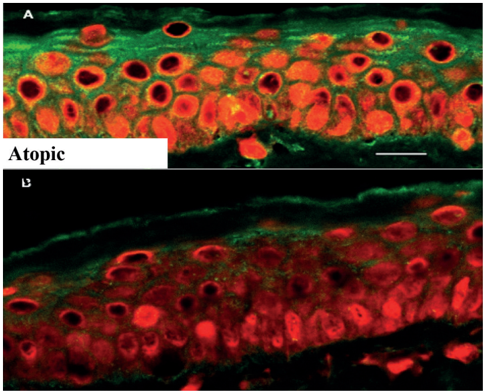
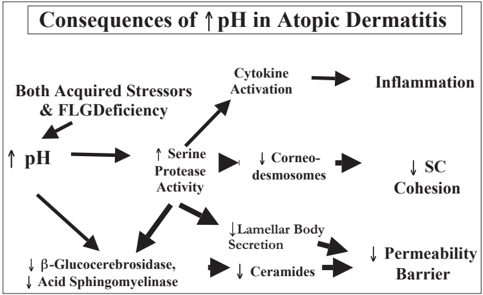
Verification
Claims the paper makes
The claims and statistics of this paper haven’t been checked yet.
Run the check — free, no account needed. It reads the open-access text and checks the sources it cites.
Claims other papers make about this one
Each is checked against this paper’s own text: does it say what the citing paper says it does?
The source backs part of the claim, not all of it — or backs it for a different population, condition or comparison.
In the citing paper
“Patients with AD frequently exhibit dysbiosis, manifested by a decrease in microbial diversity, with a skin environment that favors the growth of S. aureus, associated to an increase in skin pH and antimicrobial component deficiencies.97, 98, 99, 100, 101, 102”
From Update on the pathogenesis of atopic dermatitis. (2024) · cites this paper as [99]
Experimental — accuracy not yet measured
Self-check
Percentages, sums and reported differences re-computed from the paper’s own numbers.
The self-check needs the paper’s full text.
Citations
Cites
Odds, F. C. (1979) · Medical Entomology and Zoology · Cited by 1,297
Imokawa, G., Abe, A., Jin, K., Higaki, Y., Kawashima, M., & Hidano, A. (1991) · Journal of Investigative Dermatology · doi:10.1111/1523-1747.ep12470233 · Cited by 1,041
Structural and Lipid Biochemical Correlates of the Epidermal Permeability Barrier
ELIAS, P. M., & MENON, G. K. (1991) · Advances in Lipid Research · doi:10.1016/b978-0-12-024924-4.50005-5 · Cited by 678
Proteinase-Activated Receptor-2 Mediates Itch: A Novel Pathway for Pruritus in Human Skin
Steinhoff, M., Neisius, U., Ikoma, A., Fartasch, M., Heyer, G., Skov, P. S., Luger, T. A., & Schmelz, M. (2003) · The Journal of Neuroscience · doi:10.1523/jneurosci.23-15-06176.2003 · Cited by 653
Hachem, J.-P., Crumrine, D., Fluhr, J., Brown, B. E., Feingold, K. R., & Elias, P. M. (2003) · Journal of Investigative Dermatology · doi:10.1046/j.1523-1747.2003.12365.x · Cited by 530
Frosch, P. J., & Kligman, A. M. (1979) · Journal of the American Academy of Dermatology · doi:10.1016/s0190-9622(79)70001-6 · Cited by 376
Ananthapadmanabhan, K. P., Moore, D. J., Subramanyan, K., Misra, M., & Meyer, F. (2004) · Dermatologic Therapy · doi:10.1111/j.1396-0296.2004.04s1002.x · Cited by 375
Fluhr, J. W., Kao, J., Ahn, S. K., Feingold, K. R., Elias, P. M., & Jain, M. (2001) · Journal of Investigative Dermatology · doi:10.1046/j.0022-202x.2001.01399.x · Cited by 362
Seidenari, S., & Giusti, G. (1995) · Acta Dermato-Venereologica · doi:10.2340/0001555575429433 · Cited by 344
Hachem, J.-P., Man, M.-Q., Crumrine, D., Uchida, Y., Brown, B. E., Rogiers, V., Roseeuw, D., Feingold, K. R., & Elias, P. M. (2005) · Journal of Investigative Dermatology · doi:10.1111/j.0022-202x.2005.23838.x · Cited by 314
Research works printed but not linked: 12
- [10]10. Yosipovitch G, Maibach HI. Skin surface pH: a protective acid mantle. Cosmet Toiletries 1996; 111: 101-102.
- [17]17. Fluhr JW, Darlenski r, lachmann N, Baudouin C, Msika P, De Belilovsky C, Hachem JP. Infant epidermal skin- physiology: Adaptation after birth. Br J Dermatol 2012; 166: 483-490.
- [18]18. laufer A, Dikstein S. objective measurement and self- assessment of skin-care treatments. Cosmet Toiletries 1996; 111: 91-98.
- [21]21. Braun-Falco o, korting HC. Der normale pH-Wert der Haut. Hautarzt 1986; 37: 126-129.
- [22]22. korting HC, lucacs A, Braun-Falco o. Mikrobielle Flora und Geruch der menschlichen Haut. Hautarzt 1988; 39: 564-568.
- [27]27. Friberg SE. Micelles, microemulsions, liquid crystals, and the structure of stratum corneum lipids. J Soc Cosmet Chem 1990; 41: 155-171.
- [35]35. Ekholm E, Brattsand M, Egelrud T. Stratum corneum tryptic enzyme in normal epidermis: A missing link in the desquamation process? J Invest Dermatol 2000; 114: 56-63.
- [39]39. Schittek B, Hipfel r, Sauer B, Bauer J, kalbacher H, Steva- novic S, et al. Dermicidin: a novel human antibiotic peptide secreted by sweat glands. Nat Immunol 2001; 2: 1133-1137.
- [68]68. Seidenari S, Francomano M, Mantovani l. Baseline biop- hysical parameters in subjects with sensative skin. Contact Dermatitis 1998; 38: 311-315.
- [69]69. Wilhelm kP, Maibach HI. Susceptibility to irritant dermati- tis induced by sodium lauryl sulphate. J Am Acad Dermatol 1990; 23: 123-124.
- [79]79. Simion FA. Human in vivo methods for assessing the irritation potential of cleansing systems. In: MM riger, lD rhein, editors. Surfactants in Cosmetics. Surfactant Science Series, Vol. 68. New York, NY: Marcel Dekker, 1997: 519-532.
- [90]90. Fluhr, JW, Bankova l, Dikstein S. Skin surface pH, me- chanism, measurement, importance. In: Handbook of Non Invasive Methods and the Skin, second edn. Ed. Serup J, Jemec G, Grove l, editors. Taylor & Francis Boca raton 2006: p. 411-420.
Cited by
Proksch, E. (2018) · The Journal of Dermatology · doi:10.1111/1346-8138.14489 · Cited by 590
Yosipovitch, G., & Bernhard, J. D. (2013) · New England Journal of Medicine · doi:10.1056/nejmcp1208814 · Cited by 405
Self-citationSignificance of Skin Barrier Dysfunction in Atopic Dermatitis
Kim, B. E., & Leung, D. Y. M. (2018) · Allergy, Asthma & Immunology Research · doi:10.4168/aair.2018.10.3.207 · Cited by 393
Mediators of Chronic Pruritus in Atopic Dermatitis: Getting the Itch Out?
Mollanazar, N. K., Smith, P. K., & Yosipovitch, G. (2016) · Clinical Reviews in Allergy & Immunology · doi:10.1007/s12016-015-8488-5 · Cited by 353
Self-citationWearable potentiometric ion sensors
Parrilla, M., Cuartero, M., & Crespo, G. A. (2019) · TrAC Trends in Analytical Chemistry · doi:10.1016/j.trac.2018.11.024 · Cited by 334
Metadata
- Authors
- Ali, S., & Yosipovitch, G.
- Affiliations
- Wake Forest University Health Sciences (US)
- ORCID
- Yosipovitch, G
- Venue
- Acta Dermato Venereologica
- Published
- 2013
- Volume
- 93
- Issue
- 3
- Pages
- 261-267
- ISSN
- 0001-5555 (ISSN-L)
- OpenAlex
- W2160068319
- Semantic Scholar
- 8f94686302db22ab5a98a669f24af948bd6b192d
- Cited by
- 690
- References
- 90
- Citations by year
- 2026: 47 · 2025: 69 · 2024: 82 · 2023: 65 · 2022: 77 · 2021: 81 · 2020: 74 · 2019: 50 · 2018: 41 · 2017: 39 · 2016: 28 · 2015: 19 · 2014: 13 · 2013: 4
- FWCI
- 3.52
- Type
- journal article
- Language
- en
- Open access
- gold
- doi.org
- Licence
- cc-by-nc
- Locations
- Acta Dermato Venereologica (publishedVersion, cc-by-nc)
- PubMed (publishedVersion)
- Topics
- Health Sciences › Medicine › Dermatology › Dermatology and Skin Diseases
- Health Sciences › Medicine › Dermatology › Contact Dermatitis and Allergies
- Life Sciences › Pharmacology, Toxicology and Pharmaceutics › Pharmaceutical Science › Advancements in Transdermal Drug Delivery
- Keywords
- skin pH, acid mantle, stratum corneum, skin barrier function, antimicrobial defense, skin diseases, skin care products
- MeSH terms
- Animals, Homeostasis, Humans, Hydrogen-Ion Concentration, Skin, Skin Diseases, Skin Care, Translational Research, Biomedical
About these checks
Registry, retraction, Cites and statistics results are computed, not judged, with one exception: a printed reference that no index lists is read once by a model before it counts as a citation error. Claims are extracted by a model and kept only when their quote appears verbatim in the text; each cited source is then checked, with a model’s help, for whether it says what the claim relies on. Those verdicts can be wrong — read the claim’s quote and the cited source before relying on one.
Statistics and arithmetic are recomputed, not judged.
Confidence bands are shown only for fields calibrated on our annotated test set. None is calibrated yet, so no band is shown.
What counts as a claim ›How we measure confidence ›How we check this ›
Are you an author, or do you see a problem with this page? Request a review
How to cite
Cite CoChat for the checks on this page, and the paper for its own findings.
- This page
- CoChat. (2026). Citation check: Skin pH: From Basic SciencE to Basic Skin Care. https://app.cochat.ai/papers/10.2340/00015555-1531
- The paper
- Ali, S., & Yosipovitch, G. (2013). Skin pH: From Basic SciencE to Basic Skin Care. Acta Dermato Venereologica. https://doi.org/10.2340/00015555-1531
Data sources
Bibliographic data: Semantic Scholar, OpenAlex, Crossref.
Contains information from the Semantic Scholar Academic Graph Datasets, made available under the ODC Attribution License (ODC-BY 1.0).
Semantic Scholar’s data is described in: Kinney, R., et al. (2023). The Semantic Scholar Open Data Platform. arXiv:2301.10140.
