

Effectiveness of antioxidants (vitamin C and E) with and without sunscreens as topical photoprotectants
Open accessThe DOI matches its Crossref record.
Abstract
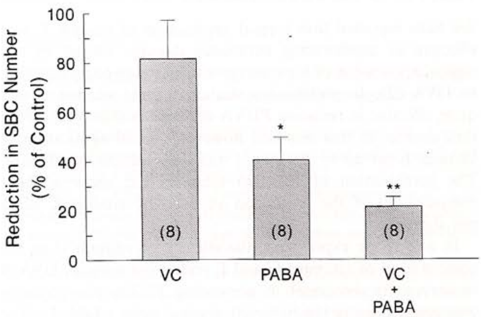
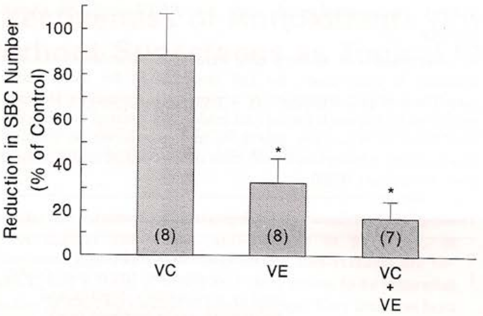
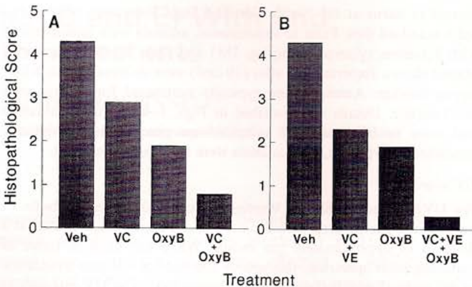
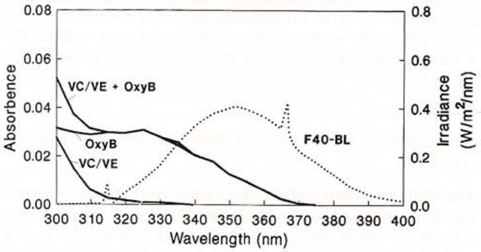
Considerable interest has been recently generated concerning the use of natural compounds, anti-oxidants in particular, in photoprotection. Two of the best known anti-oxidants are vitamins C and E, both of which have been shown to be somewhat effective in different models of photodamage. Very little has been reported, however, on the effectiveness of a combination of the two (known to be biologically the more relevant situation); nor have there been detailed studies on the ability of these antioxidants to augment commercial sunscreen protection against UV damage. We report that (in swine skin) vitamin C is capable of additive protection against acute UVB damage (sunburn cell formation) when combined with a UVB sunscreen. A combination of both vitamins E and C provided very good protection from a UVB insult, the bulk of the protection attributable to vitamin E. However, vitamin C is significantly better than vitamin E at protecting against a UVA-mediated phototoxic insult in this animal model, while the combination is only slightly more effective than vitamin C alone. When vitamin C or a combination of vitamin C and E is formulated with a commercial UVA sunscreen (oxybenzone), an apparently greater than additive protection is noted against the phototoxic damage. These results confirm the utility of anti-oxidants as photoprotectants but suggest the importance of combining the compounds with known sunscreens to maximize photoprotection.
Overview
The claims and statistics of this paper haven’t been checked yet.
Free: it reads the open-access text and checks the first 5 claims that cite a source we can check. Create a free account to check every claim.
Integrity signals
Registry
Cites
Statistics
Figures
Verification
Claims the paper makes
The claims and statistics of this paper haven’t been checked yet.
Free: it reads the open-access text and checks the first 5 claims that cite a source we can check. Create a free account to check every claim.
Claims other papers make about this one
Each is checked against this paper’s own text: does it say what the citing paper says it does?
The source backs part of the claim, not all of it — or backs it for a different population, condition or comparison.
In the citing paper
“Vitamin C is particularly effective at reducing oxidative damage to the skin when it is used in conjunction with vitamin E [21,54,89,91,92].”
From The Roles of Vitamin C in Skin Health. (2017) · cites this paper as [89]
Experimental — accuracy not yet measuredThe source backs part of the claim, not all of it — or backs it for a different population, condition or comparison.
In the citing paper
“The photoprotective efficacy of vitamin C is enhanced by combining it with vitamin E [63].”
From Bioactive Compounds for Skin Health: A Review (2021) · cites this paper as [63]
Experimental — accuracy not yet measuredThe cited source says what the claim attributes to it.
In the citing paper
“It is established that vitamin C limits the damage induced by UV exposure [27,54,89,145,146].”
From The Roles of Vitamin C in Skin Health. (2017) · cites this paper as [89]
Self-check
Percentages, sums and reported differences re-computed from the paper’s own numbers.
The self-check needs the paper’s full text.
Citations
Cites
Still being checked.
Research works printed but not linked: 20
- [1]1. Knowland J, McKensie EA, McHugh PJ, Cridland NA. Sunlightinduced mutagenicity of a common sunscreen ingredient. FEBS Letter 1993; 324: 309–313.
- [2]2. Darr D, Combs S, Dunston S, Manning T, Pinnell SR. Topical vitamin C protects porcine skin from ultraviolet radiation-induced damage. Br J Dermatol 1992; 127: 247–253.
- [3]3. Bissett DL, Chatterjee R, Hannon DP. Photoprotective effect of superoxide-scavenging anti-oxidants against ultraviolet radiationinduced chronic skin damage in the hairless mouse. Photoderm Photoimmunol Photomed 1990; 7: 56–62.
- [4]4. Trevithick JR, Xiong H, Lee S, Shum DT, Sanford SE, Karilick SJ, et al. Topical tocopherol acetate reduces post-UVB sunburnassociated erythema, edema, and skin sensitivity in hairless mice. Arch Biochem Biophys 1992; 296: 575–582.
- [5]5. Roshchupkin DI, Pistsov MY, Potapenko AY. Inhibition of ultraviolet light-induced erythema by antioxidants. Arch Dermatol Res 1979; 266: 91–94.
- [6]6. Werninghaus K, Meydani M, Chawan J, Margolis R, et al. Evaluation of the photoprotective effect of oral vitamin E supplementation. Arch Dermatol 1994; 130: 1257–1261.
- [7]7. Maes D, Marenus K, Smith WP. New advances in photoprotection. Cosmetics and Toiletries 1990; 105: 45–52.
- [8]8. Kagan VE, Witt EH, Goldman R, Scita G, Packer L. Ultraviolet light induced generation of vitamin E radicals and their recycling. A possible photosensitizing effect of vitamin E in the skin. Free Rad Res Comm 1992; 16: 51–64.
- [9]9. Harrison JA, Walker SL, Plastow SR, Batt MD, Hawk JLM, Young AR. Sunscreens with low sun protection factor inhibit ultraviolet B and A photoaging in the skin or the hairless albino mouse. Photodermatol Photoimmunol Photomed 1991; 8: 12-20.
- [10]10. Marenus K, Muizzuddin MS, Kasman K, Colletti BS, Meiselman N, Maes D, et al. The use of anti-oxidants in providing protection from chronic suberythemal UVB exposure. Proc Int Fed Soc Cosmet Chem 1990; 16: 24–34.
- [11]11. Garmyn M, Sohrabuamd N, Roelandts R. Modification of sunburn cell production in 8-MOP sensitized mouse epidermis: a - method for assessing UVA sunscreen efficacy. J Invest Dermatol 1989; 92: 642-645.
- [12]12. Garmyn M, Roelandts R. Evaluating the UVA photoprotection of sunscreens with murine skin edema. J Invest Dermatol 1990; 98: 187-190.
- [14]14. Pathak MA. Sunscreens: Principles of photoprotection. In: Mukhtav H, ed. Pharmacology of the skin. Boca Raton: CRC Press, 1992: 230–248.
- [15]15. Carraro C, Pathak M. Studies on the nature of in vitro and in vivo photosensitization reactions by psoralens and porphyrins. J Invest Dermatol 1988; 90: 267–275.
- [16]16. Beitner H. Immediate pigment darkening reaction. Photodermatology 1988; 5: 96-100.
- [17]17. Honigsmann H, Schuler G, Aberer W, Romani N, Wolff K. Immediate pigment darkening phenomenon. A reevaluation of the mechanism. J Invest Dermatol 1986; 87: 648-652.
- [18]18. Bernhard JD, Pathak M, Kochevar I, Parrish J. Abnormal responses to ultraviolet radiation. In: Fitzpatrick TB, Eisen AZ, Wolff K, Freedburg I, Austin K, eds. Dermatology in general medicine. 3rd edn. NY: McGraw-Hill, 1986: 1481–1506.
- [20]20. Yamauchi M, Prisayanh P, Haque Z, Woodley DE. Collagen cross-linking in sun-exposed and unexposed sites of aged human skin. J Invest Dermatol 1991; 97: 938-941.
- [21]21. Setlow R, Grist E, Thompson K, Woodhead A. Wavelengths effective in induction of malignant melanoma. Proc Natl Acad Sci USA 1993; 90: 6666–6670.
- [22]22. Wolf P, Donawho CK, Kripke ML. Effect of sunscreens on UV radiation-induced enhancement of melanoma growth in mice. J Natl Cancer Inst 1994; 86: 99–105.
Cited by
The Roles of Vitamin C in Skin Health.
Pullar, J., Carr, A., & Vissers, M. (2017) · Nutrients · doi:10.3390/nu9080866 · Cited by 756
“It is established that vitamin C limits the damage induced by UV exposure [27,54,89,145,146].”
BackgroundBitter, P. H. (2000) · Dermatologic Surgery · doi:10.1046/j.1524-4725.2000.00085.x · Cited by 422
Ferulic Acid Stabilizes a Solution of Vitamins C and E and Doubles its Photoprotection of Skin
Lin, F.-H., Lin, J.-Y., Gupta, R. D., Tournas, J. A., Burch, J. A., Angelica Selim, M., Monteiro-Riviere, N. A., Grichnik, J. M., Zielinski, J., & Pinnell, S. R. (2005) · Journal of Investigative Dermatology · doi:10.1111/j.0022-202x.2005.23768.x · Cited by 365
“Since they work by different mechanisms, they should be supplemental (Darr et al, 1996).”
BackgroundSelf-citationUV photoprotection by combination topical antioxidants vitamin C and vitamin E
Lin, J.-Y., Selim, M. A., Shea, C. R., Grichnik, J. M., Omar, M. M., Monteiro-Riviere, N. A., & Pinnell, S. R. (2003) · Journal of the American Academy of Dermatology · doi:10.1067/mjd.2003.425 · Cited by 358
Self-citationKullavanijaya, P., & Lim, H. W. (2005) · Journal of the American Academy of Dermatology · doi:10.1016/j.jaad.2004.07.063 · Cited by 356
Bioactive Compounds for Skin Health: A Review
Michalak, M., Pierzak, M., Kręcisz, B., & Suliga, E. (2021) · Nutrients · doi:10.3390/nu13010203 · Cited by 345
“The photoprotective efficacy of vitamin C is enhanced by combining it with vitamin E [63].”
Backgroundde la Coba, F., Aguilera, J., Figueroa, F. L., de Gálvez, M. V., & Herrera, E. (2009) · Journal of Applied Phycology · doi:10.1007/s10811-008-9345-1 · Cited by 302
“Recently, combinations of UV filters with antioxidant substances have been introduced in order to improve photoprotection efficacy of topical sunscreens (Gensler and Magdaleno 1991), and several studies also clearly demonstrate protective effects of known antioxidants (β-carotene, L-ascorbic acid, α-tocopherol) when t…”
Nusgens, B. V., Colige, A. C., Lambert, C. A., Lapière, C. M., Humbert, P., Rougier, A., Haftek, M., Richard, A., & Creidi, P. (2001) · Journal of Investigative Dermatology · doi:10.1046/j.0022-202x.2001.01362.x · Cited by 262
Humbert, P. G., Haftek, M., Creidi, P., Lapière, C., Nusgens, B., Richard, A., Schmitt, D., Rougier, A., & Zahouani, H. (2003) · Experimental Dermatology · doi:10.1034/j.1600-0625.2003.00008.x · Cited by 255
Hyaluronan in skin: aspects of aging and its pharmacologic modulation
Stern, R., & Maibach, H. I. (2008) · Clinics in Dermatology · doi:10.1016/j.clindermatol.2007.09.013 · Cited by 254
Antioxidants and vitamins in cosmetics
Lupo, M. P. (2001) · Clinics in Dermatology · doi:10.1016/s0738-081x(01)00188-2 · Cited by 233
Vitamin E in human skin: Organ-specific physiology and considerations for its use in dermatology
Thiele, J. J., & Ekanayake-Mudiyanselage, S. (2007) · Molecular Aspects of Medicine · doi:10.1016/j.mam.2007.06.001 · Cited by 218
The use of endogenous antioxidants to improve photoprotection
Steenvoorden, D. P. T., & Beijersbergen van Henegouwen, G. M. J. (1997) · Journal of Photochemistry and Photobiology B Biology · doi:10.1016/s1011-1344(97)00081-x · Cited by 209
Photochemoprevention of skin cancer by botanical agents
F'guyer, S., Afaq, F., & Mukhtar, H. (2003) · Photodermatology, Photoimmunology & Photomedicine · doi:10.1034/j.1600-0781.2003.00019.x · Cited by 205
Fuchs, J., & Kern, H. (1998) · Free Radical Biology and Medicine · doi:10.1016/s0891-5849(98)00132-4 · Cited by 200
A novel sunscreen system based on tocopherol acetate incorporated into solid lipid nanoparticles
Wissing, S. A., & Müller, R. H. (2001) · International Journal of Cosmetic Science · doi:10.1046/j.1467-2494.2001.00087.x · Cited by 182
Flynn, T. C., Petros, J., Clark, R. E., & Viehman, G. E. (2001) · Clinics in Dermatology · doi:10.1016/s0738-081x(01)00199-7 · Cited by 181
Fuchs, J. (1998) · Free Radical Biology and Medicine · doi:10.1016/s0891-5849(98)00161-0 · Cited by 173
Prevention and Treatment of Skin Aging
McCULLOUGH, J. L., & KELLY, K. M. (2006) · Annals of the New York Academy of Sciences · doi:10.1196/annals.1354.044 · Cited by 170
Dreher, Gabard, Schwindt, & Maibach (1998) · British Journal of Dermatology · doi:10.1046/j.1365-2133.1998.02447.x · Cited by 163
Vitamin E: Critical Review of Its Current Use in Cosmetic and Clinical Dermatology
Thiele, J. J., Hsieh, S. N., & Ekanayake‐Mudiyanselage, S. (2005) · Dermatologic Surgery · doi:10.1111/j.1524-4725.2005.31724 · Cited by 156
Fitzpatrick, R. E., & Rostan, E. F. (2002) · Dermatologic Surgery · doi:10.1046/j.1524-4725.2002.01129.x · Cited by 151
Weiss, R. A., Weiss, M. A., & Beasley, K. L. (2002) · Dermatologic Surgery · doi:10.1046/j.1524-4725.2002.02113.x · Cited by 149
Chiu, A., & Kimball, A. B. (2003) · British Journal of Dermatology · doi:10.1046/j.1365-2133.2003.05540.x · Cited by 142
Solar radiation induced skin damage: Review of protective and preventive options
Svobodová, A., & Vostálová, J. (2010) · International Journal of Radiation Biology · doi:10.3109/09553002.2010.501842 · Cited by 129
Colven, R. M., & Pinnell, S. R. (1996) · Clinics in Dermatology · doi:10.1016/0738-081x(95)00158-c · Cited by 138
Self-citationSkin Wrinkling: Can Food Make a Difference?
Purba, M. B., Kouris-Blazos, A., Wattanapenpaiboon, N., Lukito, W., Rothenberg, E. M., Steen, B. C., & Wahlqvist, M. L. (2001) · Journal of the American College of Nutrition · doi:10.1080/07315724.2001.10719017 · Cited by 115
Protective Effects of Topical Antioxidants in Humans
Dreher, F., & Maibach, H. (2000) · Current Problems in Dermatology · doi:10.1159/000060664 · Cited by 118
Lim, H. W., Kohli, I., Ruvolo, E., Kolbe, L., & Hamzavi, I. H. (2021) · Journal of the American Academy of Dermatology · doi:10.1016/j.jaad.2021.12.024 · Cited by 121
Chung, J. H., Hanft, V. N., & Kang, S. (2003) · Journal of the American Academy of Dermatology · doi:10.1067/s0190-9622(03)02127-3 · Cited by 122
Topical beta‐carotene protects against infra‐red‐light–induced free radicals
Darvin, M. E., Fluhr, J. W., Meinke, M. C., Zastrow, L., Sterry, W., & Lademann, J. (2011) · Experimental Dermatology · doi:10.1111/j.1600-0625.2010.01191.x · Cited by 93
Lin, C. B., Babiarz, L., Liebel, F. T., Kizoulis, M. G., Gendimenico, G. J., Seiberg, M., Price, E. R., & Fisher, D. E. (2002) · Journal of Investigative Dermatology · doi:10.1046/j.1523-1747.2002.19615.x · Cited by 108
Elmore, A. (2005) · International Journal of Toxicology · doi:10.1080/10915810590953851 · Cited by 123
Effect of Supplemented and Topically Applied Antioxidant Substances on Human Tissue
Darvin, M., Zastrow, L., Sterry, W., & Lademann, J. (2006) · Skin Pharmacology and Physiology · doi:10.1159/000093979 · Cited by 97
Antioxidant and Antiaging Assays ofHibiscus sabdariffaExtract and Its Compounds
Widowati, W., Rani, A. P., Hamzah, R. A., Arumwardana, S., Afifah, E., Kusuma, H. S. W., Rihibiha, D. D., Nufus, H., & Amalia, A. (2017) · Natural Product Sciences · doi:10.20307/nps.2017.23.3.192 · Cited by 93
Hyaluronic Acid Fillers in Facial Rejuvenation
Lupo, M. P. (2006) · Seminars in Cutaneous Medicine and Surgery · doi:10.1016/j.sder.2006.06.011 · Cited by 98
Photosensitivity, phototesting, and photoprotection in cutaneous lupus erythematosus
Kuhn, A., Ruland, V., & Bonsmann, G. (2010) · Lupus · doi:10.1177/0961203310370344 · Cited by 100
Effect of topical antioxidants on UV-induced erythema formation when administered after exposure
Dreher, F., Denig, N., Gabard, B., Schwindt, D. A., & Maibach, H. I. (1999) · Dermatology · doi:10.1159/000018064 · Cited by 91
Oxidants and Antioxidants in Cutaneous Biology
(2000) · Current Problems in Dermatology · doi:10.1159/isbn.978-3-318-00629-2 · Cited by 89
KLIGMAN, D. E. (2000) · Dermatologic Clinics · doi:10.1016/s0733-8635(05)70211-4 · Cited by 112
Modern approaches to photoprotection
DeBuys, H. V., Levy, S. B., Murray, J. C., Madey, D. L., & Pinnell, S. R. (2000) · Dermatologic Clinics · doi:10.1016/s0733-8635(05)70208-4 · Cited by 80
Self-citationLipid peroxidation: Its effects on the formulation and use of pharmaceutical emulsions
Khanum, R., & Thevanayagam, H. (2017) · Asian Journal of Pharmaceutical Sciences · doi:10.1016/j.ajps.2017.05.003 · Cited by 89
Nanocarriers for skin delivery of cosmetic antioxidants
Montenegro, L. (2014) · Journal of Pharmacy & Pharmacognosy Research · doi:10.56499/jppres14.033_2.4.73 · Cited by 73
Idebenone, green tea, and Coffeeberry® extract: new and innovative antioxidants: Novel antioxidants
Farris, P. (2007) · Dermatologic Therapy · doi:10.1111/j.1529-8019.2007.00146.x · Cited by 73
Aboul-Einien, M. H., Kandil, S. M., Abdou, E. M., Diab, H. M., & Zaki, M. S. (2019) · Journal of Liposome Research · doi:10.1080/08982104.2019.1585448 · Cited by 78
The environment and skin aging
Benedetto, A. V. (1998) · Clinics in Dermatology · doi:10.1016/s0738-081x(97)00193-4 · Cited by 79
Antioxidant defense systems in skin
Thiele, J. J., Dreher, F., & Packer, L. (2002) · Journal of Toxicology: Cutaneous and Ocular Toxicology · doi:10.1081/cus-120004330 · Cited by 65
EHRLICH, M., RAO, J., PABBY, A., & GOLDMAN, M. P. (2006) · Dermatologic Surgery · doi:10.1111/j.1524-4725.2006.32132.x · Cited by 64
Melatonin suppresses reactive oxygen species induced by UV irradiation in leukocytes
Fischer, T. W., Scholz, G., Knöll, B., Hipler, U., & Elsner, P. U. (2004) · Journal of Pineal Research · doi:10.1111/j.1600-079x.2004.00142.x · Cited by 70
Relevance of vitamins C and E in cutaneous photoprotection
Eberlein‐König, B., & Ring, J. (2005) · Journal of Cosmetic Dermatology · doi:10.1111/j.1473-2165.2005.00151.x · Cited by 63
The sunburn cell revisited: an update on mechanistic aspects
Sheehan, J. M., & Young, A. R. (2002) · Photochemical & Photobiological Sciences · doi:10.1039/b108291d · Cited by 70
Mo, S. J., Son, E.-W., Rhee, D. K., & Pyo, S. (2003) · Archives of Pharmacal Research · doi:10.1007/bf02976837 · Cited by 62
Current concepts in the treatment of recurrent aphthous stomatitis.
Altenburg, A., & Zouboulis, C. C. (2008) · PubMed · Cited by 80
A review of UV radiation protection on humans by textiles and clothing
Khan, A., Nazir, A., Rehman, A., Naveed, M., Ashraf, M., Iqbal, K., Basit, A., & Maqsood, H. S. (2020) · International Journal of Clothing Science and Technology · doi:10.1108/ijcst-10-2019-0153 · Cited by 65
Peng, Z., Chen, B., Zheng, Q., Zhu, G., Cao, W., Qin, X., & Zhang, C. (2020) · Marine Drugs · doi:10.3390/md18060288 · Cited by 62
Review of Photorejuvenation: Devices, Cosmeceuticals, or Both?
Rokhsar, C. K., Lee, S., & Fitzpatrick, R. E. (2005) · Dermatologic Surgery · doi:10.1111/j.1524-4725.2005.31923 · Cited by 60
Benefits of Combinations of Vitamin A, C and E Derivatives in the Stability of Cosmetic Formulations
Gianeti, M. D., Gaspar, L. R., Júnior, F. B. D. C., & Campos, P. M. B. G. M. (2012) · Molecules · doi:10.3390/molecules17022219 · Cited by 68
Topical delivery of retinyl ascorbate co-drug
Abdulmajed, K., & Heard, C. M. (2004) · International Journal of Pharmaceutics · doi:10.1016/j.ijpharm.2004.05.008 · Cited by 62
Potential antioxidant mechanism of action for metronidazole: Implications for rosacea management
Miyachi, Y. (2001) · Advances in Therapy · doi:10.1007/bf02850193 · Cited by 57
Main approaches for delivering antioxidant vitamins through the skin to prevent skin ageing
Gašperlin, M., & Gosenca, M. (2011) · Expert Opinion on Drug Delivery · doi:10.1517/17425247.2011.581657 · Cited by 56
Antoniou, C., Kosmadaki, M. G., Stratigos, A., & Katsambas, A. (2010) · American Journal of Clinical Dermatology · doi:10.2165/11530210-000000000-00000 · Cited by 202
Nam, Y. S., Kim, J., Park, J., Shim, J., Lee, J. S., & Han, S. H. (2012) · Colloids and Surfaces B Biointerfaces · doi:10.1016/j.colsurfb.2012.01.016 · Cited by 55
Formulation and stability of ascorbic acid in topical preparations
Sheraz, M. A., Ahmad, I., Vaid, F. M., Ahmed, S., Shaikh, R., & Iqbal, K. (2011) · Systematic Reviews in Pharmacy · doi:10.4103/0975-8453.86296 · Cited by 65
Factors affecting formulation characteristics and stability of ascorbic acid in water‐in‐oil creams
Sheraz, M. A., Khan, M. F., Ahmed, S., Kazi, S. H., Khattak, S., & Ahmad, I. (2014) · International Journal of Cosmetic Science · doi:10.1111/ics.12152 · Cited by 57
Fifty years of research and development of cosmeceuticals: a contemporary review
Lee, C. (2016) · Journal of Cosmetic Dermatology · doi:10.1111/jocd.12261 · Cited by 63
Actinic Keratosis: The Key Event in the Evolution from Photoaged Skin to Squamous Cell Carcinoma
Oppel, T., & Korting, H. C. (2004) · Skin Pharmacology and Physiology · doi:10.1159/000076016 · Cited by 53
Effects of polyphenols on skin damage due to ultraviolet A rays: an experimental study on rats
Sevın, A., Öztaş, P., Senen, D., Han, Ü., Karaman, Ç., Tarimci, N., Kartal, M., & Erdoǧan, B. (2007) · Journal of the European Academy of Dermatology and Venereology · doi:10.1111/j.1468-3083.2006.02045.x · Cited by 50
Nomoto, T., & Iizaka, S. (2020) · Advances in Skin & Wound Care · doi:10.1097/01.asw.0000655492.40898.55 · Cited by 49
Fiume, M. Z. (2002) · International Journal of Toxicology · doi:10.1080/10915810290169819 · Cited by 62
FITZPATRICK, R. E. (1997) · Dermatologic Clinics · doi:10.1016/s0733-8635(05)70452-6 · Cited by 47
Purba, M. B., Kouris-Blazos, A., Wattanapenpaiboon, N., Lukito, W., Rothenberg, E., Steen, B., & Wahlqvist, M. L. (2001) · Age and Ageing · doi:10.1093/ageing/30.3.227 · Cited by 46
Botanicals in skin care products
Allemann, I. B., & Baumann, L. (2009) · International Journal of Dermatology · doi:10.1111/j.1365-4632.2009.04081.x · Cited by 54
ROELANDTS (1998) · Clinical and Experimental Dermatology · doi:10.1046/j.1365-2230.1998.00353.x · Cited by 42
Russo, P. A. J., & Halliday, G. M. (2006) · British Journal of Dermatology · doi:10.1111/j.1365-2133.2006.07339.x · Cited by 43
An Unusual Presentation of Doxycycline-Induced Photosensitivity
Yong, C. K. K., Prendiville, J., Peacock, D., Wong, L. T. K., & Davidson, A. G. F. (2000) · PEDIATRICS · doi:10.1542/peds.106.1.e13 · Cited by 40
Campos, P. M. B. G. M., Gianeti, M. D., Kanashiro, A., Lucisano‐Valim, Y. M., & Gaspar, L. R. (2006) · Photochemistry and Photobiology · doi:10.1562/2005-10-14-ra-715 · Cited by 40
In vitro photostability and photoprotection studies of a novel ‘multi-active' UV-absorber
Venditti, E., Spadoni, T., Tiano, L., Astolfi, P., Greci, L., Littarru, G. P., & Damiani, E. (2008) · Free Radical Biology and Medicine · doi:10.1016/j.freeradbiomed.2008.04.025 · Cited by 43
Free radical scavenging and skin penetration of troxerutin and vitamin derivatives
Kessler, M., Ubeaud-Séquier, G., Walter, T., Sturm, F., & Jung, L. (2002) · Journal of Dermatological Treatment · doi:10.1080/09546630260199505 · Cited by 41
Vitamins and cutaneous wound healing
Sinno, S., Lee, D. S., & Khachemoune, A. (2011) · Journal of Wound Care · doi:10.12968/jowc.2011.20.6.287 · Cited by 41
Zhai, H., Behnam, S., Villarama, C. D., Arens‐Corell, M., Choi, M. J., & Maïbach, H. I. (2005) · Skin Pharmacology and Physiology · doi:10.1159/000088014 · Cited by 37
Photoprotection by Antioxidants against UVB-Radiation-Induced Damage in Pig Skin Organ Culture
Rijnkels, J. M., Moison, R. M. W., Podda, E., & van Henegouwen, G. M. J. B. (2003) · Radiation Research · doi:10.1667/0033-7587(2003)159[0210:pbaaur]2.0.co;2 · Cited by 38
Vitamin E analog modulates UVB-induced signaling pathway activation and enhances cell survival
Péus, D., Meves, A., Pott, M., Beyerle, A., & Pittelkow, M. R. (2001) · Free Radical Biology and Medicine · doi:10.1016/s0891-5849(00)00488-3 · Cited by 39
Oargă, D. P., Cornea‐Cipcigan, M., & Cordea, M. I. (2024) · Frontiers in Pharmacology · doi:10.3389/fphar.2024.1390419 · Cited by 36
The role of topically applied l -ascorbic acid in ex-vivo examination of burn-injured human skin
Pielesz, A., Biniaś, D., Bobiński, R., Sarna, E., Paluch, J., & Waksmańska, W. (2017) · Spectrochimica Acta Part A Molecular and Biomolecular Spectroscopy · doi:10.1016/j.saa.2017.05.055 · Cited by 33
Nocentini, S., Guggiari, M., Rouillard, D., & Surgis, S. (2001) · Photochemistry and Photobiology · doi:10.1562/0031-8655(2001)0730370eeoves2.0.co2 · Cited by 39
Effect of formulation on the topical delivery of alpha-tocopherol.
Rangarajan, M., & Zatz, J. L. (2003) · PubMed · Cited by 41
Oxidative and premature skin ageing
Biesalski, H. K., Berneburg, M., Grune, T., Kerscher, M. J., Krutmann, J., Raab, W., Reimann, J., Reuther, T., Robert, L., & Schwarz, T. (2003) · Experimental Dermatology · doi:10.1111/j.0906-6705.2003.00148.x · Cited by 29
Venditti, E., Brugè, F., Astolfi, P., Kochevar, I. E., & Damiani, E. (2011) · Journal of Dermatological Science · doi:10.1016/j.jdermsci.2011.03.008 · Cited by 31
Yousry, C., Saber, M. M., & Abd-Elsalam, W. H. (2022) · International Journal of Nanomedicine · doi:10.2147/ijn.s363779 · Cited by 29
Potential therapeutic applications of tea in dermatology
Alexis, A. F., Jones, V., A, M., & Stiller, M. J. (1999) · International Journal of Dermatology · doi:10.1046/j.1365-4362.1999.00796.x · Cited by 34
A new biocompatible nanocomposite as a promising constituent of sunscreens
Amin, R., Elfeky, S. A., Verwanger, T., & Krammer, B. E. (2016) · Materials Science and Engineering C · doi:10.1016/j.msec.2016.02.044 · Cited by 27
Aguilera, J. M., de Gálvez, M. V., Sánchez, C., & Herrera‐Ceballos, E. (2012) · Journal of Dermatological Science · doi:10.1016/j.jdermsci.2012.03.010 · Cited by 28
Baron, E. D., Kirkland, E. B., & Domingo, D. S. (2008) · PubMed · Cited by 42
Ramos‐e‐Silva, M., & Carneiro, S. C. D. S. (2001) · Clinics in Dermatology · doi:10.1016/s0738-081x(01)00181-x · Cited by 25
A Review on Latest Trend of Cosmetics-Cosmeceuticals
Wanjari, N., & Waghmare, J. S. (2015) · International journal of pharma research and review · Cited by 40
Pinterest Homemade Sunscreens: A Recipe for Sunburn
Merten, J. W., Roberts, K. J., King, J. L., & McKenzie, L. B. (2019) · Health Communication · doi:10.1080/10410236.2019.1616442 · Cited by 24
Doerner, J., Chalmers, S. A., Friedman, A., & Putterman, C. (2016) · Experimental Dermatology · doi:10.1111/exd.13108 · Cited by 25
Innovative Cosmeceuticals: Sirtuin Activators and Anti-Glycation Compounds
Farris, P. K. (2011) · Seminars in Cutaneous Medicine and Surgery · doi:10.1016/j.sder.2011.05.004 · Cited by 26
Stabilization of Water‐Soluble Antioxidant in Water‐in‐Oil‐in‐Water Double Emulsions
Kim, J., Kang, H., Suh, K., & Oh, S. (2003) · Journal of Dispersion Science and Technology · doi:10.1081/dis-120025551 · Cited by 22
McLean, D. I., & Gallagher, R. P. (1998) · Dermatologic Clinics · doi:10.1016/s0733-8635(05)70004-8 · Cited by 24
Metadata
- Authors
- Darr, D., Dunston, S., Faust, H., & Pinnell, S.
- Affiliations
- North Carolina Biotechnology Center (US)
- Venue
- Acta Dermato Venereologica
- Publisher
- Medical Journals Sweden AB
- Published
- 1996-07-01
- Volume
- 76
- Issue
- 4
- Pages
- 264-268
- ISSN
- 0001-5555 (ISSN-L)
- 1651-2057
- OpenAlex
- W41564834
- Cited by
- 193
- References
- 0
- Citations by year
- 2026: 1 · 2025: 6 · 2024: 3 · 2023: 4 · 2022: 1 · 2021: 4 · 2020: 4 · 2019: 4 · 2017: 4 · 2016: 6 · 2015: 2 · 2014: 4 · 2013: 7 · 2012: 7
- FWCI
- 7.44
- Type
- journal article
- Language
- en
- Open access
- gold
- doi.org
- Licence
- cc-by-nc
- Locations
- Acta Dermato Venereologica (publishedVersion, cc-by-nc)
- PubMed (publishedVersion)
- Topics
- Health Sciences › Medicine › Dermatology › Skin Protection and Aging
- Life Sciences › Biochemistry, Genetics and Molecular Biology › Cell Biology › melanin and skin pigmentation
- Health Sciences › Medicine › Biochemistry (medical) › Antioxidant Activity and Oxidative Stress
- Keywords
- antioxidants, vitamin C, vitamin E, sunscreen, sunburn cells, phototoxicity, benzophenone-3, swine skin
- MeSH terms
- Administration, Cutaneous, Animals, Antioxidants, Ascorbic Acid, Benzophenones, Cellulose, Dermatologic Agents, Disease Models, Animal, Drug Combinations, Drug Synergism, Male, Propylene Glycols, Radiation Protection, Skin, Sunburn, Sunscreening Agents, Swine, Ultraviolet Rays, Pharmaceutical Vehicles, Vitamin E, Skin Aging, Propylene Glycol
About these checks
Registry, retraction, Cites and statistics results are computed, not judged, with one exception: a printed reference that no index lists is read once by a model before it counts as a citation error. Claims are extracted by a model and kept only when their quote appears verbatim in the text; each cited source is then checked, with a model’s help, for whether it says what the claim relies on. Those verdicts can be wrong — read the claim’s quote and the cited source before relying on one.
Statistics and arithmetic are recomputed, not judged.
Confidence bands are shown only for fields calibrated on our annotated test set. None is calibrated yet, so no band is shown.
What counts as a claim ›How we measure confidence ›How we check this ›
Are you an author, or do you see a problem with this page? Request a review
Data sources
Bibliographic data: Semantic Scholar, OpenAlex, Crossref.
Contains information from the Semantic Scholar Academic Graph Datasets, made available under the ODC Attribution License (ODC-BY 1.0).
Semantic Scholar’s data is described in: Kinney, R., et al. (2023). The Semantic Scholar Open Data Platform. arXiv:2301.10140.
