

The DOI matches its Crossref record.
multitemporalidad de los paisajes: un ejemplo del área andina (Cusi Cusi, Puna de Jujuy, Argentina)
Abstract
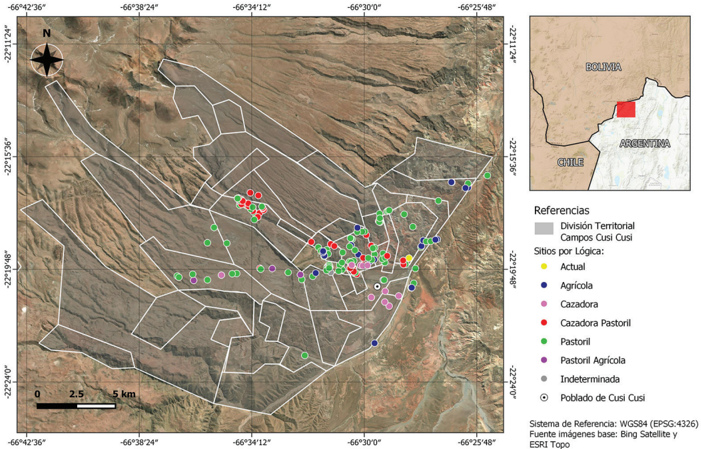
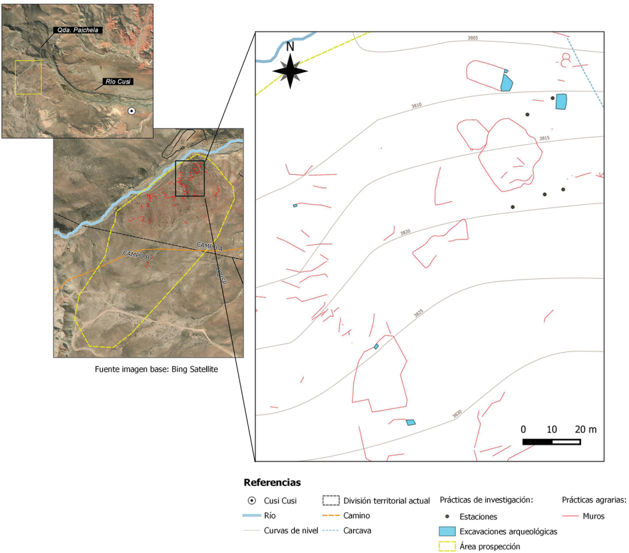
En este trabajo nos preguntamos por las formas de temporalidad que podemos abarcar desde nuestra disciplina; su relación concreta con el paisaje; y los alcances y limitaciones de nuestra lógica científica en ese abordaje. Desde una mirada hermenéutica, dialógica e interdisciplinaria (entre la arqueología y la antropología) proponemos un enfoque y metodología sensible al estudio de paisajes multitemporales. A modo de ejemplo, presentamos y discutimos los resultados obtenidos durante la investigación de la microrregión de Cusi Cusi (Puna de Jujuy, Argentina). Concluimos que, en el proceso de investigación del paisaje local, se evidencian dos perspectivas que, en primera instancia, son el resultado de maneras de habitar diferentes: una científica (una visión cronológica y lineal del tiempo) y una local (una visión donde el pasado, el presente y el futuro son contemporáneos).
Overview
The claims and statistics of this paper haven’t been checked yet.
Run the check — free, no account needed. It reads the open-access text and checks the sources it cites.
Integrity signals
Registry
Cites
Statistics
Figures

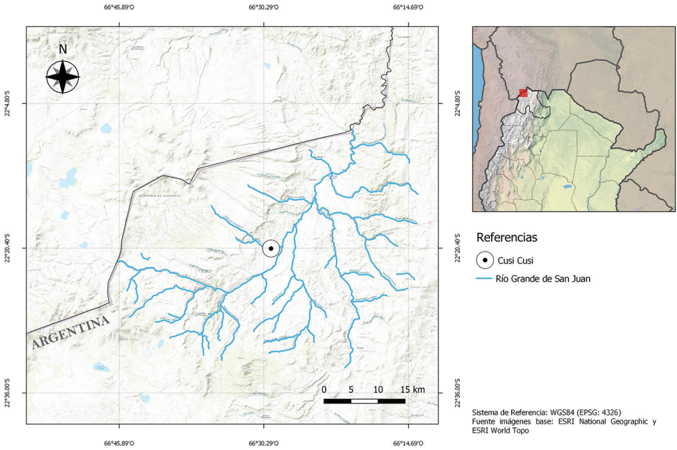

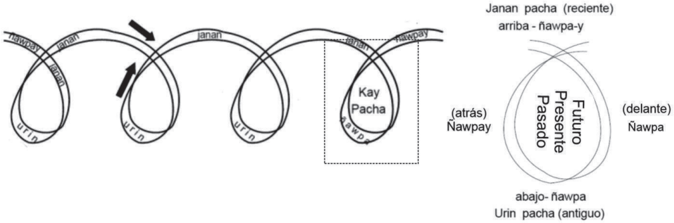
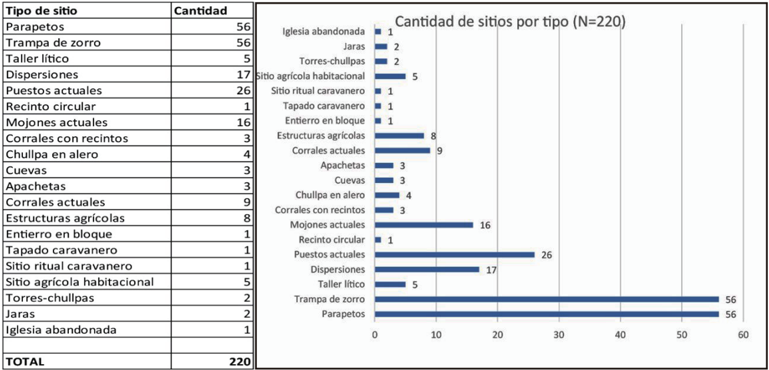
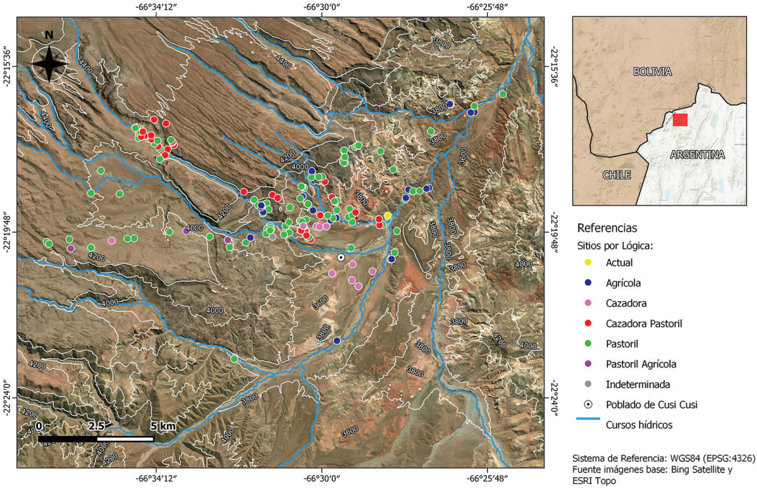
Verification
Claims the paper makes
The claims and statistics of this paper haven’t been checked yet.
Run the check — free, no account needed. It reads the open-access text and checks the sources it cites.
Claims other papers make about this one
Each is checked against this paper’s own text: does it say what the citing paper says it does?
In the citing paper
“This high-altitude area contains long-term human occupation traces including archaeological, historical, and modern features, such as habitational structures, burial structures, agricultural terraces, retaining walls, perimeter walls, and enclosures for herding practices10.”
From Multiscale anthropogenic feature detection in the argentinian andes: satellite machine learning, UAV, and pedestrian survey (2026) · cites this paper as [10]
In the citing paper
“Around the 13th century AD, populations from the Doncellas-Casabindo region settled in the area, creating an agricultural landscape on a scale not seen before in this region10.”
From Multiscale anthropogenic feature detection in the argentinian andes: satellite machine learning, UAV, and pedestrian survey (2026) · cites this paper as [10]
In the citing paper
“Pedestrian survey, combined with community interaction, arguably provides the highest-resolution data, but it significantly limits the spatial range of investigation, particularly in challenging terrain at high altitudes10.”
From Multiscale anthropogenic feature detection in the argentinian andes: satellite machine learning, UAV, and pedestrian survey (2026) · cites this paper as [10]
In the citing paper
“Previous work carried out in the Cusi Cusi region has identified more than 220 archaeological sites with diverse chronologies10.”
From Multiscale anthropogenic feature detection in the argentinian andes: satellite machine learning, UAV, and pedestrian survey (2026) · cites this paper as [10]
In the citing paper
“Beyond confirming patterns previously proposed in the literature, these findings support and add to previous studies done with different methods10,29,31, reinforce previously collected ethnographic data about Indigenous agropastoral practices14, and may contribute to Indigenous land tenure processes under Argentinian constitutional rights and territorial ancestral land rights (Argentine law No. 26”
From Multiscale anthropogenic feature detection in the argentinian andes: satellite machine learning, UAV, and pedestrian survey (2026) · cites this paper as [10]
Self-check
Percentages, sums and reported differences re-computed from the paper’s own numbers.
The self-check needs the paper’s full text.
Citations
Cites
No references could be resolved yet.
Research works printed but not linked: 30
- Coincidiendo con Tantaleán (2019), entendemos que es muy difícil hablar de "una" ontología o forma "andina" de entender el mundo. La región es muy amplia e involucra una gran cantidad de sociedades distribuidas geográfica y temporalmente. Aquí reunimos algunos conceptos que han sido rastreados en fuentes etnográficas, lingüísticas y etnohistóricas desde tiempos prehispánicos hasta la actualidad en los Andes Centrales y Sur, y que manifiestan cierta continuidad regional y temporal. Lejos de pretender reproducir un esquema esencialista, dichos elementos son retomados en este trabajo con fines heurísticos. 3 Según el diccionario quechua de González Holguin (2007[1608]:184), pacha es a la vez "tiempo suelo lugar". REFERENCIAS BIBLIOGRÁFICAS Barrett, J. C. (1999). The Mythical Landscapes of the British Iron Age. En W. Ashmore y B. Knapp (eds.), Archaeologies of Landscape. Contemporary Perspectives: 253-265.
- Bourdieu, P. (1977). Outline of a Theory of Practice. Cambridge University Press.
- Bourdieu, P. (1999). The Logic of Practice. Routledge.
- Bouysse-Cassagne, T. y Harris, O. (1987). Pacha: en torno al pensamiento aymara. En T. Bouysse-Cassagne, O. Harris, T. Platt y V. Cereceda (eds.), Tres reflexiones sobre el pensamiento andino: 11-59.
- Carreras, J. (2017). Fogones, cocinas y fuegueros de Cusi -Cusi (puna de Jujuy). Un análisis de las prácticas domésticas pastoriles vinculadas a las estructuras de combustión. Cuadernos del Instituto Nacional de Antropología y Pensamiento Latinoamericano -Series Especiales, 4(3), 22-30.
- Cruz, P. (2006). Mundos permeables y espacios peligrosos. Consideraciones acerca de punkus y qaqas en el paisaje altoandino de Potosí, Bolivia. Boletín del Museo Chileno de Arte Precolombino, 11(2), 35-50.
- Flores Ochoa, J. A. (1977). Pastores de Alpacas de los Andes. En J. A. Flores Ochoa (ed.), Pastores de Puna. Uywamichiq punarunakuna: 15-49. Instituto de Estudios Peruanos.
- Gerola, I. (2022). Paisajes dinámicos de la cuenca superior del Río Grande de San Juan (Jujuy, Argentina). Una aproximación internodal a la microrregión de Cusi Cusi y sus lógicas de habitar el paisaje. Mundo de Antes, 16(1), 269-303.
- Gnecco, C. (2009). Caminos de la Arqueología: de la violencia epistémica a la relacionalidad. Boletim do Museu Paraense Emílio Goeldi. Ciências Humanas, 4(1), 15-26.
- Göebel, B. (2002). La arquitectura del pastoreo: uso del espacio y sistema de asentamientos en la Puna de Atacama (Susques). Estudios Atacameños, 23, 53-76. http://dx.doi.org/10.4067/S0718-10432002002300005 · DOI
- Hoguin, R. (2014). Secuencia cronológica y tecnología lítica en la Puna Seca y Salada de los Andes Centro- Sur para el Holoceno temprano y medio a través del ejemplo de Susques. Relaciones, 39(2), 333-364.
- Ingold, T. (2000). The Perception of the Environment. Essays on livelihood, dwelling and skill. Routledge.
- Jones, G. y Beck, C. (1992). Chronological Resolution in Distributional Archaeology. En J. Rossignol y L. Wandsnider (eds.), Space Time and Archaeological Landcapes: 167-192. Springer.
- Kusch, R. (1976). Geocultura del hombre americano. Fernando García Cambeiro. Lucas, G. (2005). The Archaeology of Time. Routledge.
- López, G. y Restifo, F. (2017). El sitio Alero Cuevas, Puna de Salta, Argentina: secuencia de cambio en artefactos líticos y resolución cronológica macrorregional durante el Holoceno temprano y medio. Chungara, 49(1), 49-63. http://dx.doi.org/10.4067/S0717-73562017005000005 · DOI
- Lozada Pereira, B. (1999). La visión andina del mundo. En M. L. Soux (ed.), Estudios bolivianos VIII. Informe de Investigación Gestión 1999: 7-63. Instituto de Estudios Bolivianos.
- McTaggart, J. E. (1908). The Unreality of Time. Mind, 17(68), 457-474.
- Pey, L. (2020). Trama y urdimbre: hacia una biografía del sitio agropastoril Huayatayoc (Cusi Cusi, Puna de Jujuy, Argentina). Estudios Atacameños, 65, 313-338. https://doi.org/10.22199/issn.0718-1043-2020-0027 · DOI · Paper page
- Shanks, M. y Tilley. C. (1987). Social Theory and Archaeology. Polity Press/ Blackwell.
- Schiffer, M. (1972) Archaeological Context and Systemic Context. American Antiquity, 37(2), 156-165.
- Tantaleán, H. (2019). Andean ontologies. An introduction to substance. En M.C. Lozada y H. Tantaleán (eds.), Andean ontologies. New archaeological perspectives: 2-48. University Press of Florida.
- Thomas, J. (1996). Time, Culture, and Identity: An interpretive archaeology. Routledge.
- Vaquer, J. M. (2013). El Tiempo de los Ancestros: Temporalidad, Ideología Semiótica y Poder en Cruz Vinto (Norte de Lípez, Bolivia) durante el Periodo de Desarrollos Regionales Tardío (1200-1450 d.C.). Arqueología Sudamericana, 6(1-2), 57-86.
- Vaquer, J. M. (2018). Una descripción fenomenológica del objeto arqueológico. Chungara, 50(4), 623-632. http://dx.doi.org/10.4067/S0717-73562018005001802 · DOI
- Vaquer, J. M. (2019). Lo dicho y lo vivido: relaciones entre el paisaje, la corporalidad y las narrativas en Cusi Cusi (Rinconada, Jujuy) a partir de la experiencia de la enfermedad. Mundo de Antes, 13(2), 89-111.
- Vaquer, J. M. (2021). Lógicas del paisaje y territorio en Cusi Cusi (Jujuy, Argentina): estableciendo nuevos diálogos entre el pasado, el presente y el futuro desde la Arqueología. Estudios Atacameños, 67, 1-22. https:// doi.org/10.22199/issn.0718-1043-2021-0033. · DOI · Paper page
- Vaquer, J. M y Cámera, Y. (2018). Las relaciones entre el paisaje, las narrativas y la praxis arqueológica en Cusi Cusi (Rinconada, Jujuy). Una mirada hermenéutica. Revista del Museo de La Plata, 3(1), 38-56.
- Vaquer, J. M., Gerola, I., Carboni, B. y Bonelli, J. (2014). Cazadores, pastores y agricultores. Lógicas del paisaje en Cusi-Cusi, cuenca superior del Río San Juan Mayo (Jujuy, Argentina). En M. Beierlein de Gutierrez y D. Gutierrez (eds.), Desarrollos Regionales (1000-1500 DC) en el Sur de Bolivia y el Noroeste Argentino: 30-46. La pluma del escribano.
- Vaquer, J. M., Petit de Murat, F. y Di Tullio, M. (2020 b). Prácticas, narrativas y temporalidad en Cusi Cusi (Rinconada, Jujuy): una mirada hermenéutica. Andes, 31(1), 1-36.
- Vaquer, J. M. y Pey, L. (2022). Towards a dialogical archaeology: an Andean perspective on hermeneutics, interpretation and political praxis. Antiquity, 96(385), 179-193. https://doi.org/10.15184/aqy.2021.162. · DOI · Paper page
Cited by
Sorted by citations
Peters, M. J. H., Jambajantsan, A., Freire, V. Z., Pey, L., Vaquer, J. M., & Roberts, P. (2026) · npj Heritage Science · doi:10.1038/s40494-026-02813-z
Self-citation
Metadata
- Authors
- Vaquer, J. M., Pey, M. L., & Gerola, I.
- Venue
- Relaciones
- Publisher
- Universidad Nacional de La Plata
- Published
- 2023-10-05
- Volume
- 48
- Issue
- Especial 2
- Pages
- 070
- ISSN
- 1852-1479
- 0325-2221
- Cited by
- 1
- References
- 0
About these checks
Registry, retraction, Cites and statistics results are computed, not judged, with one exception: a printed reference that no index lists is read once by a model before it counts as a citation error. Claims are extracted by a model and kept only when their quote appears verbatim in the text; each cited source is then checked, with a model’s help, for whether it says what the claim relies on. Those verdicts can be wrong — read the claim’s quote and the cited source before relying on one.
Statistics and arithmetic are recomputed, not judged.
Confidence bands are shown only for fields calibrated on our annotated test set. None is calibrated yet, so no band is shown.
What counts as a claim ›How we measure confidence ›How we check this ›
Are you an author, or do you see a problem with this page? Request a review
