

Feeding Intolerance in Critically Ill Patients with Enteral Nutrition: A Meta-Analysis and Systematic Review
Open accessThe DOI matches its Crossref record; 34 of the 34 references it cites were found in a registry or an index.
Abstract
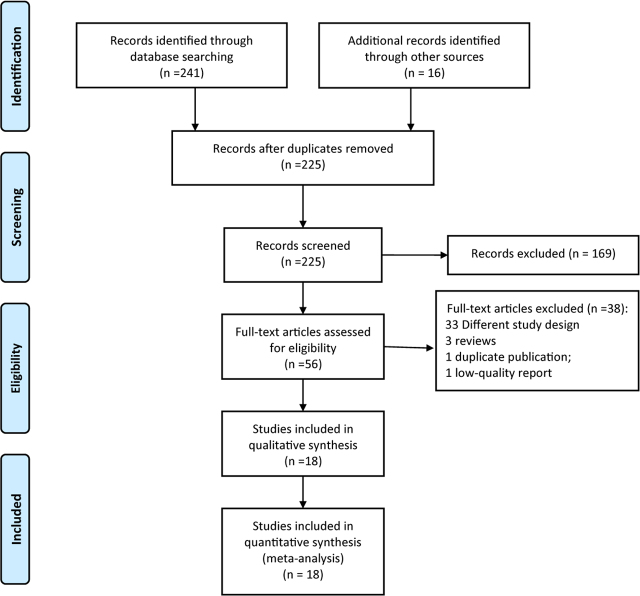
Background: Feeding intolerance is a common yet serious complication in critically ill patients undergoing enteral nutrition. We aimed to conduct a meta-analysis to evaluate the risk factors of feeding intolerance in critically ill patients undergoing enteral nutrition, to provide insights to the clinical enteral nutrition treatment and care. Methods: Two researchers systematically searched PubMed, Medline, Web of Science, Cochrane Library, Chinanews. com, Wanfang and Weipu databases about the studies on the risk factors of feeding intolerance in severe patients with enteral nutrition up to August 15, 2023. Literature screening, data extraction and quality evaluation were carried out independently by two researchers, and Meta analysis was carried out with RevMan 5.3 software and Stata 15.0 software. Results: 18 studies involving 5564 enteral nutrition patients were included. The results of meta-analyses showed that age < 2 years old, age > 60 years old, APACHE II score ≥ 20, Hypokalemia, starting time of enteral nutrition > 72 hours, no dietary fiber, intra-abdominal pressure > 15mmHg, central venous pressure > 10cmH 2 O and mechanical ventilation were the risk factors of feeding intolerance in critically ill patients undergoing EN (all P<0.05). No publication biases were found amongst the included studies. Conclusion: The incidence of feeding intolerance in critically ill patients undergoing enteral nutrition is high, and there are many influencing factors. Clinical medical workers should take effective preventive measures according to the risk and protective factors of patients to reduce the incidence of feeding intolerance and improve the prognosis of patients.
Overview
The claims and statistics of this paper haven’t been checked yet.
Free: it reads the open-access text and checks the first 5 claims that cite a source we can check. Create a free account to check every claim.
Integrity signals
Registry
Cites
Statistics
Figures
Verification
Claims the paper makes
The claims and statistics of this paper haven’t been checked yet.
Free: it reads the open-access text and checks the first 5 claims that cite a source we can check. Create a free account to check every claim.
Claims other papers make about this one
Each is checked against this paper’s own text: does it say what the citing paper says it does?
The source backs part of the claim, not all of it — or backs it for a different population, condition or comparison.
In the citing paper
“Although broad and inconsistent definitions of EFI lead to variability in incidence across studies, it appears to be common, with reported rates ranging from 2% to 75% [7,8].”
From The impact of enteral feeding intolerance on the prognosis of patients with septic shock in South Korea (2025) · cites this paper as [7]
Experimental — accuracy not yet measured
Self-check
Percentages, sums and reported differences re-computed from the paper’s own numbers.
The self-check needs the paper’s full text.
Citations
Cites
Liberati, A., Altman, D. G., Tetzlaff, J., Mulrow, C., Gotzsche, P. C., Ioannidis, J. P. A., Clarke, M., Devereaux, P. J., Kleijnen, J., & Moher, D. (2009) · BMJ · doi:10.1136/bmj.b2700 · Cited by 17,648
Liberati, A., Altman, D. G., Tetzlaff, J., Mulrow, C., Gøtzsche, P. C., Ioannidis, J. P. A., Clarke, M., Devereaux, P. J., Kleijnen, J., & Moher, D. (2009) · Journal of Clinical Epidemiology · doi:10.1016/j.jclinepi.2009.06.006 · Cited by 10,578
McClave, S. A., Taylor, B. E., Martindale, R. G., Warren, M. M., Johnson, D. R., Braunschweig, C., McCarthy, M. S., Davanos, E., Rice, T. W., Cresci, G. A., et al. (2016) · Journal of Parenteral and Enteral Nutrition · doi:10.1177/0148607115621863 · Cited by 3,982
Permissive underfeeding or standard enteral feeding in critically ill adults
Arabi, Y. M., Aldawood, A. S., Haddad, S. H., Al-Dorzi, H. M., Tamim, H. M., Jones, G., Mehta, S., McIntyre, L., Solaiman, O., Sakkijha, M. H., et al. (2015) · New England Journal of Medicine · doi:10.1056/nejmoa1502826 · Cited by 614
Mentec, H., Dupont, H., Bocchetti, M., Cani, P., Ponche, F., & Bleichner, G. (2001) · Critical Care Medicine · doi:10.1097/00003246-200110000-00018 · Cited by 581
Permissive underfeeding or standard enteral feeding in critically ill adults
Aldridge, K. (2015) · Journal of the Intensive Care Society · doi:10.1177/1751143715607732 · Cited by 320
Role of dietary fiber in the recovery of the human gut microbiome and its metabolome
Tanes, C., Bittinger, K., Gao, Y., Friedman, E. S., Nessel, L., Roy Paladhi, U., Chau, L., Panfen, E., Fischbach, M. A., Braun, J., et al. (2021) · Cell Host & Microbe · doi:10.1016/j.chom.2020.12.012 · Cited by 305 · cited 1×
“Some studies [50, 51] have shown that the addition of dietary fiber to enteral nutrition in critically ill patients can reduce inflammatory response, improve immune response and correct intestinal mucosal barrier dysfunction.”
BackgroundGungabissoon, U., Hacquoil, K., Bains, C., Irizarry, M., Dukes, G., Williamson, R., Deane, A. M., & Heyland, D. K. (2015) · Journal of Parenteral and Enteral Nutrition · doi:10.1177/0148607114526450 · Cited by 282
Heyland, D. K., Ortiz, A., Stoppe, C., Patel, J. J., Yeh, D. D., Dukes, G., Chen, Y. J., Almansa, C., & Day, A. G. (2021) · Critical Care Medicine · doi:10.1097/ccm.0000000000004712 · Cited by 201 · cited 1×
“Previous study [52] has reported that the incidence of feeding intolerance in mechanically ventilated patients is as high as 50.8% to 88.9%.”
BackgroundInfluentialA guide to enteral nutrition in intensive care units: 10 expert tips for the daily practice
Preiser, J.-C., Arabi, Y. M., Berger, M. M., Casaer, M., McClave, S., Montejo-González, J. C., Peake, S., Reintam Blaser, A., Van den Berghe, G., van Zanten, A., et al. (2021) · Critical Care · doi:10.1186/s13054-021-03847-4 · Cited by 166 · cited 2×
“Enteral nutrition is preferred in critically ill patients, which is recommended and applied by many clinical guidelines at present [28].”
Background
Cited by
Scarcella, M., Scarpellini, E., Rosa, S. D., Umbrello, M., Petroni, G. M., Monti, R., Fusco, P., ROBERTIS, E. D., Commissari, R., Abenavoli, L., et al. (2025) · Nutrients · doi:10.3390/nu17030497 · Cited by 11
“Conversely, patients intolerant to enteral nutrition formula (e.g., for gastrointestinal intolerance) present with poorer nutrition and clinical outcomes (precisely, increased ICU stay and mortality) [19].”
Gastrointestinal complications in intensive care
Liu, L., Duan, J., He, W., & Waydhas, C. (2025) · Medical Review · doi:10.1515/mr-2025-0039 · Cited by 6
“Its incidence ranges from 29 % to 60 % and is associated with various factors, including patient age, body mass index, disease severity (as assessed by the APACHE II score), renal insu ffi ciency, GI disorders, hypo-albuminemia, sepsis, and mechanical ventilation [95 – 97].”
Risk factors for enteral nutrition feeding intolerance in stroke patients: A scoping review
Solomon, O. M., Gu, Y., & Wei, Y. (2024) · Nursing in Critical Care · doi:10.1111/nicc.13183 · Cited by 4
Park, H.-J., Ahn, Y. H., Lee, H. Y., Lee, S.-M., & Lee, J. (2025) · Acute and Critical Care · doi:10.4266/acc.000700 · Cited by 3
“lead to variability in incidence across studies, it appears to be common, with reported rates ranging from 2% to 75% [7,8].”
The implementation gap in critical care: From nutrition to ventilation
Azamfirei, R. (2025) · The Journal of Critical Care Medicine · doi:10.2478/jccm-2025-0011 · Cited by 3
Jia, S., Yin, Y., Wang, C., Liu, S., & Jiang, Y. (2026) · Frontiers in Nutrition · doi:10.3389/fnut.2026.1767700 · Cited by 2
“It affects approximately 30.5– 65.7% of ICU patients receiving EN and frequently necessitates the interruption of feeding, which may lead to undernutrition and an increased risk of complications (5).”
InfluentialOptimizing Nutrient Uptake in the Critically Ill: Insights into Malabsorption Management
Cobilinschi, C., & Mirea, L. E. (2024) · The Journal of Critical Care Medicine · doi:10.2478/jccm-2024-0012 · Cited by 2
“The combination of reduced tolerance to enteral feeding at the initiation of nutritional support, along with the initiation of nutritional support within 48 hours, has been proven to be responsible for a progressively significant and unmanageable energy deficit [9, 11].”
BackgroundGutiérrez-Arias, R. E., Salinas-Barahona, F., & Pamela, S. (2026) · The Journal of Critical Care Medicine · doi:10.2478/jccm-2026-0002 · Cited by 1
“This situation is attributable to factors such as intolerance to enteral nutrition and the recurrent interruption of nutritional therapy aimed at preventing regurgitation or emesis during diagnostic reasons, such as radiological procedures, and non-invasive ventilation dependency [10–14].”
Wang, M., Shi, H., Chen, Q., Su, B., Dong, X., Shi, H., & Xu, S. (2026) · Supportive Care in Cancer · doi:10.1007/s00520-026-10610-4 · Cited by 1
Tian, P., Fan, M., & Huang, C. (2026) · Frontiers in Nutrition · doi:10.3389/fnut.2026.1859625 · Cited by 1
“These studies support the view that feeding intolerance often reflects systemic critical illness rather than isolated digestive dysfunction, but most evidence is observational and cannot prove that any single factor independently causes intolerance (47, 48).”
Chen, Y., Ma, M., Huang, X., Wan, J., & Huang, H. (2025) · Frontiers in Nutrition · doi:10.3389/fnut.2025.1514980
Luan, X., Lin, Y.-F. F., Ke, L., Xu, J., Xi, M., Xia, Y., & Wang, D. Y. (2025) · Journal of Burn Care & Research · doi:10.1093/jbcr/iraf194
Self-citationMuchintala, R., & Baig, S. M. (2025) · Cureus · doi:10.7759/cureus.96268
“In addition to possible mortality benefits, secondary advantages such as decreased aspiration pneumonia and enhanced enteral feeding tolerance could further justify prospective evaluation [2-4 , 15].”
Ge, W., Fan, X., Wang, S., Li, W., Hu, L., & Ji, G. (2026) · European Spine Journal · doi:10.1007/s00586-025-09687-y
Bourgault, A. M., Simmons, J. S. C., Powers, J., Aguirre, L., & Sole, M. L. (2026) · Critical Care Nurse · doi:10.4037/ccn2026884
Wang, W., Xie, T., Chen, C. J., Chen, F., Yang, D., Wang, P., & Li, Y. (2026) · Frontiers in Medicine · doi:10.3389/fmed.2026.1845342
Wei, Z. T., Liu, C., Zhang, J., & Wang, X. (2026) · Frontiers in Nutrition · doi:10.3389/fnut.2026.1858783
“This study identifies age as a major risk factor for EN intolerance in sepsis patients, consistent with findings from previous studies (29, 30).”
Chen, X., Zou, S., Wang, Y., Li, J., Zong, R., Chen, W., & Fang, Y. (2026) · The Heart Surgery Forum · doi:10.31083/hsf51865
Manyam, U., Sokhal, N., Sokhal, S., Roy, H., Goyal, K., Dube, S. K., & Chitturi, V. (2026) · Journal of Clinical Neuroscience · doi:10.1016/j.jocn.2026.112209
Lu, N., Du, Z. Q., Cai, X. C., Jin, S. H., & Zhang, Y. (2026) · Frontiers in Nutrition · doi:10.3389/fnut.2026.1849390
“…indicators such as abdominal distension, diarrhea, and gastric residual volume (GRV) (19, 32), including the Acute Gastrointestinal Injury (AGI) grading (33) (Table 2) and the enteral nutrition tolerance score (Table 3), is employed to quantitatively evaluate feeding intolerance (FI) (11, 34).”
Tian, L., Xu, S., Xie, X., Wang, M., & Huang, L. (2026) · Frontiers in Gastroenterology · doi:10.3389/fgstr.2026.1902608
“Feeding intolerance affects 30 – 60% of patients (76).”
Zheng, K., Zhang, X., Qu, L., & Wang, R. (2026) · Polish Journal of Microbiology · doi:10.33073/pjm-2026-023
Providing appropriate response-contingent phase-specific nutrition therapy in critical illness
McClave, S. A., Martindale, R. G., & Patel, J. J. (2026) · Current Opinion in Critical Care · doi:10.1097/mcc.0000000000001419
Zhu, Y., Ji, W., Jiang, C., Xu, K., Li, H., Yang, X., & Wang, Y. (2026) · European Journal of Clinical Nutrition · doi:10.1038/s41430-026-01812-4
Deimplementation of Tradition-Based Enteral Feeding Practices to Improve Clinical Outcomes
Bourgault, A. M., & Powers, J. (2026) · Critical Care Nursing Clinics of North America · doi:10.1016/j.cnc.2026.07.003
Pan, Y., Zhang, Q., Sun, H., & Huang, W. (2026) · Nursing in Critical Care · doi:10.1111/nicc.70672
Wang, Q., Jin, K., Chen, Y., Xu, H., Wu, D., Ke, L., 梁凤鸣, Chen, Y., & for the Chinese Critical Care Nutrition Trials Group (CCCNTG) (2026) · Journal of Intensive Care · doi:10.1186/s40560-026-00942-y
“Age-related alterations in gastrointestinal physiology, including impaired motility, altered microbiota, and reduced absorptive capacity, have been proposed as potential contributors to feeding intolerance in older patients [23].”
Wang, H., & Lu, R. (2026) · Frontiers in Nutrition · doi:10.3389/fnut.2026.1917057
“Meanwhile, frailty-related chronic inflammation further impairs the intestinal mucosal barrier, collectively exacerbating the development of ENI (10, 33, 35).”
Zhou, P., Zhang, D., Zhang, P., Shi, J., Liu, X., Jiao, S., Beibei, W., & Xue, X. (2026) · Frontiers in Psychiatry · doi:10.3389/fpsyt.2026.1904251
“Common risk factors for ENI in critically ill patients can be summarized into the following three main categories (12, 18).”
Yang, S., Qiu, X., Xu, S., Chen, J., Chen, L., He, X., & Zhang, X. (2026) · International Journal of Evidence-Based Healthcare · doi:10.1097/xeb.0000000000000667
Metadata
- Authors
- Xu, J., Shi, W., Xie, L., Xu, J., & Bian, L.
- Affiliations
- Second Affiliated Hospital of Nanjing Medical University (CN)
- Corresponding author
- Bian, Lanzheng
- Venue
- The Journal of Critical Care Medicine
- Publisher
- Walter de Gruyter GmbH
- Published
- 2024-01-01
- Volume
- 10
- Issue
- 1
- Pages
- 7-15
- ISSN
- 2393-1809 (ISSN-L)
- 2393-1817
- PMC
- PMC11193960
- OpenAlex
- W4399930888
- Cited by
- 28
- References
- 34
- Citations by year
- 2026: 19 · 2025: 7 · 2024: 2
- FWCI
- 1.64
- Type
- journal article
- Language
- en
- Open access
- hybrid
- doi.org
- Locations
- The Journal of Critical Care Medicine (publishedVersion, cc-by)
- PubMed Central (publishedVersion, cc-by)
- PubMed (publishedVersion)
- DOAJ (DOAJ: Directory of Open Access Journals) (submittedVersion)
- Topics
- Health Sciences › Nursing › Nutrition and Dietetics › Clinical Nutrition and Gastroenterology
- Health Sciences › Medicine › Surgery › Enhanced Recovery After Surgery
- Health Sciences › Medicine › Critical Care and Intensive Care Medicine › Nosocomial Infections in ICU
- Keywords
- feeding intolerance, enteral nutrition, critically ill patients, risk factors, APACHE II score, hypokalemia, mechanical ventilation, intra-abdominal pressure, central venous pressure, age, dietary fiber, timing of enteral feeding initiation
About these checks
Registry, retraction, Cites and statistics results are computed, not judged, with one exception: a printed reference that no index lists is read once by a model before it counts as a citation error. Claims are extracted by a model and kept only when their quote appears verbatim in the text; each cited source is then checked, with a model’s help, for whether it says what the claim relies on. Those verdicts can be wrong — read the claim’s quote and the cited source before relying on one.
Statistics and arithmetic are recomputed, not judged.
Confidence bands are shown only for fields calibrated on our annotated test set. None is calibrated yet, so no band is shown.
What counts as a claim ›How we measure confidence ›How we check this ›
Are you an author, or do you see a problem with this page? Request a review
Data sources
Bibliographic data: Semantic Scholar, OpenAlex, Crossref.
Contains information from the Semantic Scholar Academic Graph Datasets, made available under the ODC Attribution License (ODC-BY 1.0).
Semantic Scholar’s data is described in: Kinney, R., et al. (2023). The Semantic Scholar Open Data Platform. arXiv:2301.10140.
