

Health Impacts of Workplace Heat Exposure: An Epidemiological Review
Open accessThe DOI matches its Crossref record; 77 of the 77 references it cites were found in a registry or an index.
Abstract
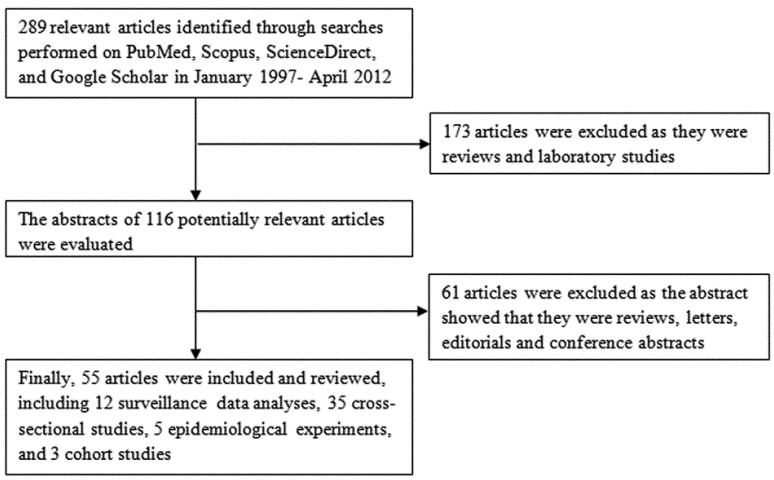
With predicted increasing frequency and intensity of extremely hot weather due to changing climate, workplace heat exposure is presenting an increasing challenge to occupational health and safety. This article aims to review the characteristics of workplace heat exposure in selected relatively high risk occupations, to summarize findings from published studies, and ultimately to provide suggestions for workplace heat exposure reduction, adaptations, and further research directions. All published epidemiological studies in the field of health impacts of workplace heat exposure for the period of January 1997 to April 2012 were reviewed. Finally, 55 original articles were identified. Manual workers who are exposed to extreme heat or work in hot environments may be at risk of heat stress, especially those in low-middle income countries in tropical regions. At risk workers include farmers, construction workers, fire-fighters, miners, soldiers, and manufacturing workers working around process-generated heat. The potential impacts of workplace heat exposure are to some extent underestimated due to the underreporting of heat illnesses. More studies are needed to quantify the extent to which high-risk manual workers are physiologically and psychologically affected by or behaviourally adapt to workplace heat exposure exacerbated by climate change.
Overview
The claims and statistics of this paper haven’t been checked yet.
Free: it reads the open-access text and checks the first 5 claims that cite a source we can check. Create a free account to check every claim.
Integrity signals
Registry
Cites
Statistics
Figures
Verification
Claims the paper makes
The claims and statistics of this paper haven’t been checked yet.
Free: it reads the open-access text and checks the first 5 claims that cite a source we can check. Create a free account to check every claim.
Claims other papers make about this one
Each is checked against this paper’s own text: does it say what the citing paper says it does?
The source backs part of the claim, not all of it — or backs it for a different population, condition or comparison.
In the citing paper
“Construction workers in the southern United States, the Middle East, Asia, Latin America, and Africa are regularly exposed to extremely high temperatures with long working hours, yet may have limited or no access to shade or water [2].”
From Assessing Heat Stress and Health among Construction Workers in a Changing Climate: A Review (2018) · cites this paper as [2]
Experimental — accuracy not yet measuredThe source backs part of the claim, not all of it — or backs it for a different population, condition or comparison.
In the citing paper
“In spite of the availability of a large number of heat stress indices for many decades, practical field studies quantifying the relationship between heat stress indices and occupational illnesses/injuries are lacking.”
From Occupational heat stress assessment and protective strategies in the context of climate change (2018) · cites this paper as Xiang et al. 2014
Experimental — accuracy not yet measuredThe source backs part of the claim, not all of it — or backs it for a different population, condition or comparison.
In the citing paper
“Most of the studies were purely descriptive and used air temperature as the only heat stress parameter (Xiang et al. 2014; Havenith and Fiala 2016).”
From Occupational heat stress assessment and protective strategies in the context of climate change (2018) · cites this paper as Xiang et al. 2014
Experimental — accuracy not yet measuredThe cited source says what the claim attributes to it.
In the citing paper
“Projected increases in extreme heat due to changing climate, along with other factors, are expected to increase the vulnerability of construction workers to heat stress [2].”
From Assessing Heat Stress and Health among Construction Workers in a Changing Climate: A Review (2018) · cites this paper as [2]
Self-check
Percentages, sums and reported differences re-computed from the paper’s own numbers.
The self-check needs the paper’s full text.
Citations
Cites
Cardiovascular function in the heat‐stressed human
Crandall, C. G., & González‐Alonso, J. (2010) · Acta Physiologica · doi:10.1111/j.1748-1716.2010.02119.x · Cited by 315
Health Issues of Migrant and Seasonal Farmworkers
HANSEN, E., & DONOHOE, M. (2003) · Journal of Health Care for the Poor and Underserved · doi:10.1177/1049208903014002001 · Cited by 285
Epidemiology of Hospitalizations and Deaths from Heat Illness in Soldiers
CARTER, R., CHEUVRONT, S. N., WILLIAMS, J. O., KOLKA, M. A., STEPHENSON, L. A., SAWKA, M. N., & AMOROSO, P. J. (2005) · Medicine & Science in Sports & Exercise · doi:10.1249/01.mss.0000174895.19639.ed · Cited by 243
Bi, P., Williams, S., Loughnan, M., Lloyd, G., Hansen, A., Kjellstrom, T., Dear, K., & Saniotis, A. (2011) · Asia Pacific Journal of Public Health · doi:10.1177/1010539510391644 · Cited by 230
Self-citationPreventing Heat-Related Illness Among Agricultural Workers
Jackson, L. L., & Rosenberg, H. R. (2010) · Journal of Agromedicine · doi:10.1080/1059924x.2010.487021 · Cited by 208
Climate Change and Occupational Safety and Health: Establishing a Preliminary Framework
Schulte, P. A., & Chun, H. (2009) · Journal of Occupational and Environmental Hygiene · doi:10.1080/15459620903066008 · Cited by 206
Heat exhaustion in a deep underground metalliferous mine
Donoghue, A. M., Sinclair, M. J., & Bates, G. P. (2000) · Occupational and Environmental Medicine · doi:10.1136/oem.57.3.165 · Cited by 173
Climate Change and Rising Heat: Population Health Implications for Working People in Australia
Hanna, E. G., Kjellstrom, T., Bennett, C., & Dear, K. (2011) · Asia Pacific Journal of Public Health · doi:10.1177/1010539510391457 · Cited by 160
Kjellstrom, T., Gabrysch, S., Lemke, B., & Dear, K. (2009) · Global Health Action · doi:10.3402/gha.v2i0.2082 · Cited by 149
Tawatsupa, B., Lim, L.-Y., Kjellstrom, T., Seubsman, S.-A., Sleigh, A., & The Thai Cohort Study team (2010) · Global Health Action · doi:10.3402/gha.v3i0.5034 · Cited by 143
Research works printed but not linked: 1
- World Health Organization (WHO) (1969) Health factors in workers under conditions of heat stress. WHO Technical Report Series 412, Geneva. 4979147
Cited by
Items 201–300 of 392
Heat and health of occupational workers: a short summary of literature
Sai Venkata Sarath Chandra, N., & Xu, Z. (2024) · Journal of Occupational Health · doi:10.1093/joccuh/uiae018 · Cited by 23
Patel, G. P. T., & Banik, T. (2021) · International Journal of Current Microbiology and Applied Sciences · doi:10.20546/ijcmas.2021.1002.325 · Cited by 16
“Due to occupational heat exposure in a tropical developing country, farmers easily come across heat stress, heat illness, and occupational injury, which may eventually cause death (Xiang et al., 2014; Kjellstrom et al., 2014; Kovats et al., 2018; Hancock et al., 2002).”
BackgroundHeat stroke detection system based in IoT
Antonio, P. O., Ceballos-Hernández, M. R., Vicente, R., Carolina, B., & Barzallo, B. (2017) · IEEE Ecuador Technical Chapters Meeting (ETCM) · doi:10.1109/etcm.2017.8247509 · Cited by 12
“Although it is considered that the persons most vulnerable to heat stroke are children under 5 years of age and older adults [8], the fact is that the people who have suffered the most from this affectation are the economically active population, originated mainly by the conditions of the workplace [9].”
BackgroundClimate Change and Occupational Health: Are There Limits to Our Ability to Adapt?Preprint
Dillender, M. (2019) · SSRN Electronic Journal · doi:10.17848/wp19-299 · Cited by 13
Gelaye, K. A., Debalke, G., Ayele, T. A., Wami, S. D., Wolde, H. F., Sisay, M. M., Fetene, D., & Akalu, T. Y. (2021) · Risk Management and Healthcare Policy · doi:10.2147/rmhp.s323503 · Cited by 13
Revisiting the dynamics of car cabin environment and driver comfort
Alkaabi, K., & Raza, M. (2022) · Frontiers in Built Environment · doi:10.3389/fbuil.2022.1041305 · Cited by 15
“Instead, the focus is almost exclusively on ‘at risk’workers, such as farmers, construction laborers, firefighters, miners, soldiers, and proletarians (Xiang et al., 2014).”
BackgroundImpacts of Climate Change on Work Health and Safety in Australia: A Scoping Literature Review
Wuersch, L., Neher, A., Marino, F. E., Bamberry, L., & Pope, R. (2023) · International Journal of Environmental Research and Public Health · doi:10.3390/ijerph20217004 · Cited by 17
“Extant literature reviews [10,24,26–28] have focused on heat impacts on WHS in Australia.”
BackgroundInfluentialHeat exposure as a cause of injury and illness in mine industry workers
Taggart, S. M., Girard, O., Landers, G. J., & Wallman, K. E. (2024) · Annals of Work Exposures and Health · doi:10.1093/annweh/wxae011 · Cited by 14
“Many of these early symptoms of heat exhaustion may seem “usual” and considered to be of minimal harm to a worker during or after a day of physical work in the heat and more often than not go unreported (Xiang et al. 2014a).”
BackgroundResultInfluentialImpact of heat exposure on health during a warm period in Cyprus
Pantavou, K. G., Giallouros, G., Lykoudis, S. P., Markozannes, G., Constantinou, E., Panagi, A., Economou, M., Georgiou, A. N., Pilavas, A., Theodoridou, M., et al. (2020) · Euro-Mediterranean Journal for Environmental Integration · doi:10.1007/s41207-020-00164-0 · Cited by 11
“Labor in hot conditions has been reported to increase the risk of heat strain and stress (Xiang et al. 2014), since heat-related symptoms are often ignored and individuals continue physical activity beyond their heat exposure limits (Kjellstrom et al.”
BackgroundAssessment of thermal environments: working conditions in the portuguese glass industry
Oliveira, A. V. M., Gaspar, A. R., Raimundo, A. M., & Quintela, D. A. (2017) · Industrial Health · doi:10.2486/indhealth.2017-0048 · Cited by 14
Park, S. J., Jung, M.-S., & Joo, H. S. (2019) · International Journal of Environmental Research and Public Health · doi:10.3390/ijerph16030345 · Cited by 9
“Exposure to high temperatures causes not only direct burns but also febrile illnesses such as heat stroke and heat exhaustion [19], which in turn can reduce work efficiency and increase the likelihood of accidents [20,21].”
BackgroundEstimating the magnitude and risk associated with heat exposure among Ghanaian mining workers
Nunfam, V. F., Adusei‐Asante, K., van Etten, E. J. B., Frimpong, K., & Oosthuizen, J. (2021) · International Journal of Biometeorology · doi:10.1007/s00484-021-02164-3 · Cited by 13
Climate change vulnerability, adaptation assessment, and policy development for occupational health
Butt, M. S., Saleem, J., Ishaq, M., Bukhari, G. M. J., & Faryal, J. (2022) · Avicenna · doi:10.5339/avi.2022.8 · Cited by 10
Quantitative evaluation of attention during sustained heat exposure: An fNIRS study
Zhu, H., Wang, Y., Gao, K., Wang, F., Zhang, F., & Hu, S. (2025) · Building and Environment · doi:10.1016/j.buildenv.2025.113580 · Cited by 14
Permatasari, N., Yovi, E. Y., & Kuncahyo, B. (2023) · Jurnal Sylva Lestari · doi:10.23960/jsl.v12i1.773 · Cited by 16
“Various studies have demonstrated that extreme heat exposure increases the risk of diseases and injuries for workers, particularly those without adequate protection (Xiang et al. 2014).”
BackgroundGuo, X., Weinberger, K. R., Tamburic, L., Peters, C., & McLeod, C. (2024) · Scandinavian Journal of Work Environment & Health · doi:10.5271/sjweh.4179 · Cited by 13
“Healthy worker effect may also play a role in that workers who are more susceptible to heat may self-select to depart from their positions, leaving the fittest workers in the jobs (38 ).”
BackgroundGlobal and regional changes in working-age population exposure to heat extremes under climate change
Chen, X., Li, N., & Jiang, D. (2023) · Journal of Geographical Sciences · doi:10.1007/s11442-023-2157-z · Cited by 10
“Working in a hot environment can elevate the risk of heat-related illness and reduce human performance (Xiang et al ., 2014).”
BackgroundHeat Stress Among Large Kitchen Workers in Hostel
Logeswari, S. (2017) · International Journal of Pure & Applied Bioscience · doi:10.18782/2320-7051.5177 · Cited by 10
Nabi, M. H., Hasan, M., Chowdhury, A. T., Naz, F., & Hossian, M. (2023) · BMC Public Health · doi:10.1186/s12889-023-17165-7 · Cited by 10
“An increase in the duration and intensity of extreme heat events can lead to increased heat-related illnesses and deaths, as shown by Smith et al. and Xiang et al. [56, 57].”
BackgroundMarchiori, R. S., Song, S., & Moon, J. (2024) · Journal of Safety Research · doi:10.1016/j.jsr.2024.11.027 · Cited by 15
Bera, M., & Nag, P. K. (2025) · Theoretical and Applied Climatology · doi:10.1007/s00704-025-05922-0 · Cited by 11
“…can alter their schedules by performing tasks during the cooler times of day, ensuring they stay well-hydrated, and drinking refreshing liquids like lemon water, sugarcane juice, or naturally sweetened beverages (Hanna et al. 2011; Kjellstrom et al. 2016; Moda et al. 2019; Xiang et al. 2014).”
InfluentialSobrecarga térmica em áreas rurais: a influência da intensidade do trabalho
Roscani, R. C., Maia, P. A., & Monteiro, M. I. (2019) · Revista Brasileira de Saúde Ocupacional · doi:10.1590/2317-6369000013818 · Cited by 31
Climate change scenarios in use: Heat stress in Switzerland
Casanueva, A., Kotlarski, S., Liniger, M. A., Schwierz, C., & Fischer, A. M. (2023) · Climate Services · doi:10.1016/j.cliser.2023.100372 · Cited by 13
Extreme Heat Exposure and Occupational Health in a Changing Climate
Vanos, J., Moyce, S. C., Lemke, B., & Kjellstrom, T. E. (2021) · Wiley eBooks · doi:10.1002/9781119413738.ch10 · Cited by 10
Hanse, B., Alam, S. M., Srinivasan, K., Bhattacharjee, M., Sinha, A., Loganathan, S., & Kalita, J. (2024) · International Journal of Biometeorology · doi:10.1007/s00484-024-02765-8 · Cited by 11
“A variety of indices, including the Wet Bulb Globe Thermometer (WBGT), the Universal Thermal Climate Index, the Humidex, and others, are used to measure heat stress (Xiang et al. 2014; Kakamu et al. 2021).”
Butt, M. S., Kuklane, K., Saleem, J., Zakar, R., Bukhari, G. M. J., & Ishaq, M. (2021) · Avicenna · doi:10.5339/avi.2022.5 · Cited by 10
Pourghayoomi, H., Dehghan, H., & Tarrahi, M. J. (2020) · Health Scope · doi:10.5812/jhealthscope.94739 · Cited by 8
Riccò, M., Vezzosi, L., Balzarini, F., Gualerzi, G., Valente, M., & Bragazzi, N. L. (2020) · Acta bio-medica dell'Ateneo parmense/Acta biomedica · doi:10.23750/abm.v91i4.10035 · Cited by 10
““frost days”, “summer days”, “summer days/tropical nights”; (3) days having Tmax < 35° vs.”
An exploratory survey of heat stress management programs in the electric power industry
Καλτσάτου, Α., Notley, S. R., Flouris, A. D., & Kenny, G. P. (2021) · Journal of Occupational and Environmental Hygiene · doi:10.1080/15459624.2021.1954187 · Cited by 8
“It is not surprising, therefore that a study by Xiang et al. (2014), which surveyed 749 workers, found that less than half of the respondents (43.4”
ResultInfluentialDoes climate change transform military medicine and defense medical support?
Robinson, Y., Khorram‐Manesh, A., Arvidsson, N., Sinai, C., & Taube, F. (2023) · Frontiers in Public Health · doi:10.3389/fpubh.2023.1099031 · Cited by 13
“Xiang (32) (Australia) Literature review on military workplace heat exposure risk To review the characteristics of workplace heat exposure in selected high risk occupations and to provide recommendations for exposure reduction, adaptations and future research directions.”
BackgroundProvision of an Empirical Model to Estimate the Adaptive Capacity of Workers at Risk of Heat Stress
Asghari, M., Nassiri, P., Monazzam, M. R., Golbabaei, F., Shamsipour, A., & Arabalibeik, H. (2017) · Health Scope · doi:10.5812/jhealthscope.63162 · Cited by 10
“When there is no cooling system or sufficient ventilation, such indoor workplaces can become very hot during hot days (25, 26).”
BackgroundChoi, B., Choi, H. M., Choi, Y., Kim, I., & Hwang, S. (2022) · Journal of Occupational and Environmental Medicine · doi:10.1097/jom.0000000000002667 · Cited by 6
Hawkins, D., & Ibrahim, M. A. (2023) · Journal of Occupational and Environmental Medicine · doi:10.1097/jom.0000000000002794 · Cited by 9
“Work involving time spent around heat sources such as cooking equipment or certain manufacturing processes also increases the risk of these injuries/illnesses.(27) Therewas a clear association between state average annual temperatures and occupational heat-related injury/illness rates.”
BackgroundComi, M., Becot, F., & Bendixsen, C. G. (2023) · International Journal of Environmental Research and Public Health · doi:10.3390/ijerph20064778 · Cited by 11
“by dynamic changes in temperature and high heat exposure [38,39].”
BackgroundHealth for All Policies: The Co-Benefits of Intersectoral Action
Greer, S. L., Falkenbach, M., Vissapragada, P., Wismar, M., Siciliani, L., Perroud, J., Montás, M. C., Dering, B., Cylus, J., Sørensen, K., et al. (2024) · Cambridge University Press eBooks · doi:10.1017/9781009467766 · Cited by 8
Empirical adaption of Work/Rest schedules to physiological variability in heat response
Oh, J., Chung, F., Koo, C., Castro‐Lacouture, D., & Ashuri, B. (2024) · Safety Science · doi:10.1016/j.ssci.2024.106574 · Cited by 12
Heat exposure and occupational health
Pisaniello, D., & Corleto, R. D. (2022) · Elsevier eBooks · doi:10.1016/b978-0-12-819080-7.00004-5 · Cited by 7
Self-citationLabor activism over searing heat
Huang, Y., & Li, Y. (2023) · Journal of Environmental Economics and Management · doi:10.1016/j.jeem.2023.102888 · Cited by 10
A Lightweight, Low-Cost Liquid-Metal Personal Cooling System for Prolonged Cooling
Rahman, M. A., Elassy, K. S., Roose, L. R., Shiroma, W. A., & Ohta, A. T. (2020) · International Conference on Consumer Electronics · doi:10.1109/icce46568.2020.9043069 · Cited by 7
“When the human body is exposed to high heat, there is discomfort, and heat strain due to increased body temperature may lead to reduced performance, heat-related sicknesses such as hyperthermia, and even death [3].”
BackgroundLee, W., Lee, J., Kim, U., Yoon, J., Choi, W.-J., Ham, S., Chung, E. K., & Kang, S. (2020) · Journal of Occupational and Environmental Medicine · doi:10.1097/jom.0000000000001896 · Cited by 7
Heat stress and heat-related illnesses among male and female refugee agricultural workers in Lebanon
Habib, R. R., Fakih, L., Nakib, G. A., Saad, L., Awada, F., Kanaan, M. F., Awad, Z., Flunker, J. C., Spector, J. T., & Nuwayhid, I. A. (2025) · International Journal of Industrial Ergonomics · doi:10.1016/j.ergon.2025.103836 · Cited by 7
Hall, A., & Horta, A. (2023) · International Journal of Environmental Research and Public Health · doi:10.3390/ijerph20156531 · Cited by 7
Confronting the Health Impacts of Climate Change: A Comprehensive Exploration
Sen, A., & Chatterjee, A. (2024) · World sustainability series · doi:10.1007/978-3-031-60545-1_1 · Cited by 7
Yang, J., Zhao, Y., Guo, T., Zhang, X., Fang, Z., & Wu, P. (2025) · Thermal Science and Engineering Progress · doi:10.1016/j.tsep.2025.103564 · Cited by 10
Hematological parameters in a population of male bakers exposed to high heat work environment
Al-Otaibi, S. T. (2022) · PLoS ONE · doi:10.1371/journal.pone.0274782 · Cited by 10
Strategies to reduce the health impacts of heat exposure
Guo, Y., Zhang, Y., Yu, P., Wu, Y. Y., Wen, B., Yang, Z., Mahendran, R., & Li, S. (2022) · Elsevier eBooks · doi:10.1016/b978-0-12-819080-7.00009-4 · Cited by 9
Occupational Fatigue and Physical Health of Construction Workers in Extreme Hot Weather
Karthick, S., Kermanshachi, S., & Loganathan, K. (2022) · Tran-SET Conference: Transportation Consortium of South-Central States (Tran-SET) · doi:10.1061/9780784484609.028 · Cited by 7
Comparison of women’s heat risk profiles among those working in indoor and outdoor sectors
Shanmugam, R., Latha, P. K., & Venugopal, V. (2023) · Archives of Environmental & Occupational Health · doi:10.1080/19338244.2023.2272733 · Cited by 7
“4 The undercounted number of HRIs and deaths 48,49 among exposed workers in both sectors may obscure the enormous potential danger of heat-related injury and accident.”
BackgroundRascón, D. S., Ferreira, A. D., & da Silva, M. G. (2016) · Renewable and Sustainable Energy Reviews · doi:10.1016/j.rser.2016.06.038 · Cited by 7
Smet, D. D., & Vanneste, M. (2018) · Elsevier eBooks · doi:10.1016/b978-0-08-102428-7.00012-2 · Cited by 6
Spatiotemporal variability in exposure to excessive heat at the sub-urban scale
Shafran-Nathan, R., & Broday, D. M. (2022) · Climatic Change · doi:10.1007/s10584-022-03425-9 · Cited by 7
“Accordingly, short exposures to excessive heat waves have been reported to affect both vulnerable and healthy people (Wolf and McGregor 2013; Xiang et al. 2014; Gubernot et al. 2014) but with more severe health outcomes reported in vulnerable sub-populations, such as the elderly, children, pregnant women, people with…”
BackgroundPourvakhshoori, N., Poursadeghiyan, M., Khankeh, H. R., Harouni, G. G., & Farrokhi, M. (2020) · Journal of Environmental Health Science and Engineering · doi:10.1007/s40201-020-00463-2 · Cited by 8
Heat Stress: The Impact of Ambient Temperature on Occupational Injuries in the USPreprint
Page, L., & Sheppard, S. (2016) · RePEc: Research Papers in Economics · Cited by 10
Yang, H., Li, H., Wang, G., & Cao, D. (2023) · Engineering Construction & Architectural Management · doi:10.1108/ecam-01-2023-0029 · Cited by 5
Okumuş, D. E. (2025) · Sustainable Cities and Society · doi:10.1016/j.scs.2025.106995 · Cited by 8
Nath, A. R. S. B., Sahu, S., & LEE, J. K. W. (2026) · Current Environmental Health Reports · doi:10.1007/s40572-025-00520-8 · Cited by 15
Moohialdin, A., Lamari, F., Miska, M., & Trigunarsyah, B. (2020) · Engineering Construction & Architectural Management · doi:10.1108/ecam-10-2019-0583 · Cited by 5
Sirisawasd, S., Homkham, N., Taptagaporn, S., & Kaewdok, T. (2022) · Journal of UOEH · doi:10.7888/juoeh.44.229 · Cited by 6
Inertia in transformed times: Work health and safety amid climate change
Humphrys, E. (2024) · Journal of Industrial Relations · doi:10.1177/00221856241295497 · Cited by 8
“…extreme heat, has been developed by scholars in epidemiology and medical sciences (Singh et al., 2015; Varghese et al., 2019; Williams et al., 2020; Xiang et al., 2014), exercise science (Carter et al., 2020), and geography and political economy (Carter et al., 2020; Goodman et al., 2023; Humphrys…”
Assessment of the Efficiency of Respiratory Protection Devices Against Lead Oxide Nanoparticles
Kellnerová, E., Binková, K., & Hošková-Mayerová, Š. (2018) · Studies in systems, decision and control · doi:10.1007/978-3-030-00084-4_14 · Cited by 5
Extreme Weather and Climate Events and Occupational Health in Thailand
Langkulsen, U., & Rwodzi, D. T. (2019) · Springer eBooks · doi:10.1007/978-3-030-23773-8_15 · Cited by 5
A Cross Sectional Study of Occupational Hazards among Petrol Pump Attendants of Panjim City in Goa
Naik, A. V. (2020) · International Journal of Preventive Curative & Community Medicine · doi:10.24321/2454.325x.202002 · Cited by 5
Extreme heat at outdoor COVID-19 vaccination sites
Keith, L., Iroz‐Elardo, N., Austof, E., Sami, I., & Arora, M. (2021) · The Journal of Climate Change and Health · doi:10.1016/j.joclim.2021.100043 · Cited by 5
“The impacts of radiant waste heat from operating machinery is also an underestimated contributor to personal heat exposure [20].”
Athauda, R. S., Jayakodi, S., Asmone, A. S., & Conejos, S. (2023) · Sustainability · doi:10.3390/su15108008 · Cited by 8
Wage Differentials between Heat-Exposure Risk and No Heat-Exposure Risk Groups
Kim, D., & Lim, U. (2017) · International Journal of Environmental Research and Public Health · doi:10.3390/ijerph14070685 · Cited by 8
“Climate change makes thermal extreme events like heatwaves more extreme and frequent, and it makes the future working conditions, in particular for occupations like outdoor workers, riskier with respect to the thermal environment [12].”
BackgroundWorkers’ health and safety in the heat: current practice in Australian workplaces
Williams, S. S., Varghese, B. M., Hansen, A. L., Hanson‐Easey, S., Bi, P., & Pisaniello, D. (2020) · Policy and Practice in Health and Safety · doi:10.1080/14773996.2020.1765610 · Cited by 6
Self-citationMoore, D. C., Notley, S. R., Aisbett, B., & Main, L. C. (2025) · Applied Physiology, Nutrition, and Metabolism · doi:10.1139/apnm-2024-0391 · Cited by 6
From building codes to behaviour: Strengthening extreme heat adaptation policy in the United Kingdom
Khosravi, F., Scott, M., Assan, A. A., & Chandler, A. (2026) · Energy Research & Social Science · doi:10.1016/j.erss.2026.104688 · Cited by 4
Hyperthermia during open water swimming: risks, monitoring and mitigation strategies
da Silva, E. R., Zacca, R., Mujika, I., & Diefenthaeler, F. (2025) · European Journal of Applied Physiology · doi:10.1007/s00421-025-05945-5 · Cited by 5
“…pose health risks to the elderly, children, and individuals with chronic illnesses (Gasparrini et al. 2015), as well as construction workers (Xiang et al. 2014), offshore oil platform operators (Kjellstrom et al. 2009), agricultural workers (Spector and Sheffield 2014), firefighters (Smith…”
Novikova, T. A., Abramkina, S. S., & Aleshina, Y. A. (2021) · Sanitarnyj vrač (Sanitary Doctor) · doi:10.33920/med-08-2111-05 · Cited by 4
Raliile, M. T., Haupt, T. C., & Kajimo‐Shakantu, K. (2024) · Journal of Engineering Design and Technology · doi:10.1108/jedt-07-2023-0288 · Cited by 6
Ergonomic Challenges in Designing Personal Cooling Equipment for Ultra-Deep Mining
Ngô, V. T. M., Nadeau, S., Mackowiak, J., & Hallé, S. (2016) · Advances in intelligent systems and computing · doi:10.1007/978-3-319-41983-1_68 · Cited by 4
Scott, J. L., Boggess, B., & Timm, E. (2017) · Journal of Occupational and Environmental Medicine · doi:10.1097/jom.0000000000001203 · Cited by 5
Climate Change and the Health of Urban Populations
Kinney, P. L. (2019) · Oxford University Press eBooks · doi:10.1093/oso/9780190915858.003.0014 · Cited by 4
Ismail, A. R., Jusoh, N., Asri, M. A. M., Zein, R. M., Rahman, I. A., Makhtar, N. K., & Mohamed, D. (2020) · Journal of Physics Conference Series · doi:10.1088/1742-6596/1630/1/012001 · Cited by 4
Gangiah, S. (2021) · HTS Teologiese Studies / Theological Studies · doi:10.4102/hts.v77i2.6823 · Cited by 5
“Owing to under-reporting of heat disorders, the possible effects of occupational thermal experience are misjudged (Xiang et al. 2014).”
BackgroundBuilding energy efficiency and COVID-19 infection risk: Lessons from office room management
Zhang, N., Hu, T., Niu, M., Chang, B., Elisa, N. P., Xue, P., & Ji, Y. (2023) · Building Simulation · doi:10.1007/s12273-023-1054-9 · Cited by 5
“We found that, in addition to atmospheric conditions, the heat produced by lights, office equipment and human bodies also have a big impact on the energy consumption of office buildings, but that these factors are not generally taken into account (Xiang et al. 2014).”
BackgroundEffect of Heat Stress on Farm Workers – A Review
Singh, S., Ahlawat, S., & Sanwal, S. (2018) · International Journal of Current Microbiology and Applied Sciences · doi:10.20546/ijcmas.2018.710.278 · Cited by 4
Seo, J. (2016) · Deep Blue (University of Michigan) · Cited by 6
Beyond Compliance: Uncovering Organizational Barriers to Workplace Safety in Industrial Zones
Le, T.-T., & Nguyen, T. T. H. (2025) · Environmental Health Insights · doi:10.1177/11786302251393858 · Cited by 13
“4 .”
Xing, Y., Xu, R., Xu, Z., Li, Z., Yang, Z., Zhang, Y., Huang, W., Yu, P., Li, S., & Guo, Y. (2026) · Environmental Health · doi:10.1186/s12940-026-01289-5 · Cited by 4
“This pattern may be explained by occupational heat exposure in the working-age population, particularly among outdoor and manual workers, who are more likely to experience acute heat-related conditions such as heat exhaustion or dehydration that require urgent medical care [32].”
Burmistrova, O. V., Perov, S. Y., & Konshina, T. A. (2021) · Hygiene and Sanitation · doi:10.47470/0016-9900-2021-100-3-229-233 · Cited by 3
“Признаками ухудшения теплового со-стояния человека являются увеличение температуры «ядра» тела и «оболочки», теплонакопления в организме, частоты сердечных сокращений и влагопотерь [5–12].”
Urban overheating and its impact on human beings
Santamouris, M. (2024) · Elsevier eBooks · doi:10.1016/b978-0-443-13502-6.00001-4 · Cited by 5
Ragupathy, S., Pranavi, A. S., Latha, P. K., Garg, S. S., & Venugopal, V. (2025) · Human Factors and Ergonomics in Manufacturing & Service Industries · doi:10.1002/hfm.21062 · Cited by 5
“Other research on worker perceptions (Nunfam et al. 2019; Xiang et al. 2014) supports our findings that workers perceive heat as a health and psychological concern.”
Zhang, J., Lou, C., Xie, M., & Gao, J. Q. (2025) · Case Studies in Thermal Engineering · doi:10.1016/j.csite.2025.105948 · Cited by 3
Yeasmin, F., Bach, A. J. E., Palutikof, J. P., Tonmoy, F., Tofail, F., Rahman, M., & Rutherford, S. (2025) · Environmental and Occupational Health Practice · doi:10.1539/eohp.2024-0009 · Cited by 3
Assessment of Heat Stress Impacts on Construction Workers: A South African Exploratory Study
Seema, K., & Aigbavboa, C. O. (2017) · Advances in intelligent systems and computing · doi:10.1007/978-3-319-60825-9_48 · Cited by 3
Heat Exposure and Physiological Changes among Cooks
Anua, S. M., Ismail, M. N., Nordin, M. A. A. M., Naim, F., Hamzah, N. A., & Samad, N. I. A. (2021) · Journal of Energy and Safety Technology (JEST) · doi:10.11113/jest.v4n2.97 · Cited by 3
“In addition to that, climate change, hot weather environments and low ambient humidity can increase the heat stress level [5].”
BackgroundOjha, A., Jebelli, H., Alexander, L. M., & Loeffert, J. R. (2024) · ASCE Construction Research Congress (CRC) · doi:10.1061/9780784485262.021 · Cited by 7
The Relation between Heat strain and hydration status among
Bolghanabadi, S., Pour, M., Mohamadi, A. A., & Tizro, M. (2016) · Journal of Occupational Hygiene Engineering · doi:10.21859/johe-03032 · Cited by 6
Bolghanabadi, S., Mohammadi, A., kohnavard, B., & Delkhosh, M. (2018) · Polish Annals of Medicine · doi:10.29089/2017.17.00040 · Cited by 5
Xiang, J. (2014) · Adelaide Research & Scholarship (AR&S) (University of Adelaide) · Cited by 3
Self-citationMeeting the challenge of climatic heat stress in construction
Li, B., & Andrew, B. (2018) · Industrial Health · doi:10.2486/indhealth.56_400 · Cited by 3
Li, X., Wang, X., Yan, R., Song, Q., Ning, B., Liu, S., & Wang, Q. (2025) · Journal of Thermal Biology · doi:10.1016/j.jtherbio.2025.104130 · Cited by 2
Honjo, K., 原, 政., & Yamato, H. (2025) · Environmental Research Climate · doi:10.1088/2752-5295/add9bb · Cited by 3
“The relationship between industry and heatstroke risk has been highlighted in several studies [51–53], while there is little information on the sex difference in heatstroke risk in people aged 0–14.”
Shahrujjaman, S. M., Sikder, B. B., Zahid, D., & Uddin, S. I. (2025) · The Journal of Climate Change and Health · doi:10.1016/j.joclim.2025.100576 · Cited by 4
“Xiang et al. reported a consistent link between outdoor settings and higher rates of heat-related illnesses [21], while Lundgren et al. emphasized the consequences of poor labor conditions and inadequate access to cooling in their global review [22].”
Werner, L., Carrión, D., & Huguet, N. (2025) · The Journal of Climate Change and Health · doi:10.1016/j.joclim.2025.100600 · Cited by 3
“European nations mandate temperature thresholds for rest and hydration [8]; Middle Eastern countries enforce midday stoppages and temperature caps; and China requires regulated breaks with financial allowances [27].”
Li, Y., Varghese, B. M., Anikeeva, O., Liu, J., & Bi, P. (2026) · Environment International · doi:10.1016/j.envint.2026.110142 · Cited by 6
Self-citationKeivanfard, H., & Mullins-Jaime, C. (2026) · Journal of Safety Research · doi:10.1016/j.jsr.2026.03.010 · Cited by 2
Jaipurkar, R., Ss, M., Banerjee, C., Bobde, S., & Karade, S. K. (2021) · Journal of Marine Medical Society · doi:10.4103/jmms.jmms_165_20 · Cited by 2
Metadata
- Authors
- XIANG, J., BI, P., PISANIELLO, D., & HANSEN, A.
- Affiliations
- The University of Adelaide (AU)
- Corresponding author
- BI, Peng
- Venue
- Industrial Health
- Published
- 2014
- Volume
- 52
- Issue
- 2
- Pages
- 91-101
- ISSN
- 0019-8366 (ISSN-L)
- 1880-8026
- PMC
- PMC4202759
- OpenAlex
- W2149789556
- Cited by
- 393
- References
- 77
- Citations by year
- 2026: 29 · 2025: 35 · 2024: 37 · 2023: 37 · 2022: 44 · 2021: 49 · 2020: 39 · 2019: 32 · 2018: 31 · 2017: 24 · 2016: 19 · 2015: 14 · 2014: 3
- FWCI
- 1.32
- Type
- journal article
- Language
- en
- Open access
- bronze
- doi.org
- Locations
- Industrial Health (publishedVersion)
- Europe PMC (PubMed Central) (publishedVersion, cc-by-nc-nd)
- PubMed Central (publishedVersion, cc-by-nc-nd)
- PubMed (publishedVersion)
- Topics
- Health Sciences › Medicine › Physiology (medical) › Thermoregulation and physiological responses
- Health Sciences › Medicine › Public Health, Environmental and Occupational Health › Occupational Health and Safety in Workplaces
- Physical Sciences › Environmental Science › Health, Toxicology and Mutagenesis › Climate Change and Health Impacts
- Keywords
- heat stress, occupational heat illness, climate change, blue-collar workers, hot environment, heat adaptation, occupational health and safety, farmers, construction workers, firefighters, miners, military personnel, industrial workers
- MeSH terms
- Agriculture, Hot Temperature, Humans, Military Personnel, Mining, Occupational Exposure, Workplace, Heat Stress Disorders, Construction Industry, Firefighters, Manufacturing Industry
About these checks
Registry, retraction, Cites and statistics results are computed, not judged, with one exception: a printed reference that no index lists is read once by a model before it counts as a citation error. Claims are extracted by a model and kept only when their quote appears verbatim in the text; each cited source is then checked, with a model’s help, for whether it says what the claim relies on. Those verdicts can be wrong — read the claim’s quote and the cited source before relying on one.
Statistics and arithmetic are recomputed, not judged.
Confidence bands are shown only for fields calibrated on our annotated test set. None is calibrated yet, so no band is shown.
What counts as a claim ›How we measure confidence ›How we check this ›
Are you an author, or do you see a problem with this page? Request a review
Data sources
Bibliographic data: Semantic Scholar, OpenAlex, Crossref.
Contains information from the Semantic Scholar Academic Graph Datasets, made available under the ODC Attribution License (ODC-BY 1.0).
Semantic Scholar’s data is described in: Kinney, R., et al. (2023). The Semantic Scholar Open Data Platform. arXiv:2301.10140.
