

Health Impacts of Workplace Heat Exposure: An Epidemiological Review
Open accessThe DOI matches its Crossref record; 77 of the 77 references it cites were found in a registry or an index.
Abstract
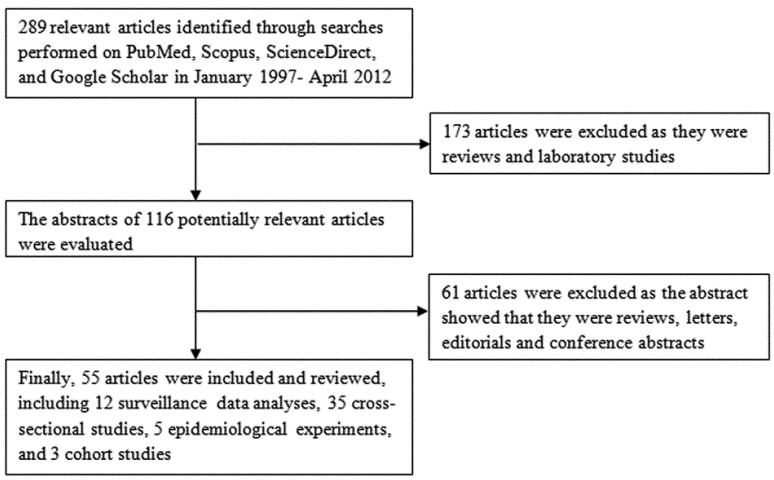
With predicted increasing frequency and intensity of extremely hot weather due to changing climate, workplace heat exposure is presenting an increasing challenge to occupational health and safety. This article aims to review the characteristics of workplace heat exposure in selected relatively high risk occupations, to summarize findings from published studies, and ultimately to provide suggestions for workplace heat exposure reduction, adaptations, and further research directions. All published epidemiological studies in the field of health impacts of workplace heat exposure for the period of January 1997 to April 2012 were reviewed. Finally, 55 original articles were identified. Manual workers who are exposed to extreme heat or work in hot environments may be at risk of heat stress, especially those in low-middle income countries in tropical regions. At risk workers include farmers, construction workers, fire-fighters, miners, soldiers, and manufacturing workers working around process-generated heat. The potential impacts of workplace heat exposure are to some extent underestimated due to the underreporting of heat illnesses. More studies are needed to quantify the extent to which high-risk manual workers are physiologically and psychologically affected by or behaviourally adapt to workplace heat exposure exacerbated by climate change.
Overview
The claims and statistics of this paper haven’t been checked yet.
Free: it reads the open-access text and checks the first 5 claims that cite a source we can check. Create a free account to check every claim.
Integrity signals
Registry
Cites
Statistics
Figures
Verification
Claims the paper makes
The claims and statistics of this paper haven’t been checked yet.
Free: it reads the open-access text and checks the first 5 claims that cite a source we can check. Create a free account to check every claim.
Claims other papers make about this one
Each is checked against this paper’s own text: does it say what the citing paper says it does?
The source backs part of the claim, not all of it — or backs it for a different population, condition or comparison.
In the citing paper
“Construction workers in the southern United States, the Middle East, Asia, Latin America, and Africa are regularly exposed to extremely high temperatures with long working hours, yet may have limited or no access to shade or water [2].”
From Assessing Heat Stress and Health among Construction Workers in a Changing Climate: A Review (2018) · cites this paper as [2]
Experimental — accuracy not yet measuredThe source backs part of the claim, not all of it — or backs it for a different population, condition or comparison.
In the citing paper
“In spite of the availability of a large number of heat stress indices for many decades, practical field studies quantifying the relationship between heat stress indices and occupational illnesses/injuries are lacking.”
From Occupational heat stress assessment and protective strategies in the context of climate change (2018) · cites this paper as Xiang et al. 2014
Experimental — accuracy not yet measuredThe source backs part of the claim, not all of it — or backs it for a different population, condition or comparison.
In the citing paper
“Most of the studies were purely descriptive and used air temperature as the only heat stress parameter (Xiang et al. 2014; Havenith and Fiala 2016).”
From Occupational heat stress assessment and protective strategies in the context of climate change (2018) · cites this paper as Xiang et al. 2014
Experimental — accuracy not yet measuredThe cited source says what the claim attributes to it.
In the citing paper
“Projected increases in extreme heat due to changing climate, along with other factors, are expected to increase the vulnerability of construction workers to heat stress [2].”
From Assessing Heat Stress and Health among Construction Workers in a Changing Climate: A Review (2018) · cites this paper as [2]
Self-check
Percentages, sums and reported differences re-computed from the paper’s own numbers.
The self-check needs the paper’s full text.
Citations
Cites
Cardiovascular function in the heat‐stressed human
Crandall, C. G., & González‐Alonso, J. (2010) · Acta Physiologica · doi:10.1111/j.1748-1716.2010.02119.x · Cited by 315
Health Issues of Migrant and Seasonal Farmworkers
HANSEN, E., & DONOHOE, M. (2003) · Journal of Health Care for the Poor and Underserved · doi:10.1177/1049208903014002001 · Cited by 285
Epidemiology of Hospitalizations and Deaths from Heat Illness in Soldiers
CARTER, R., CHEUVRONT, S. N., WILLIAMS, J. O., KOLKA, M. A., STEPHENSON, L. A., SAWKA, M. N., & AMOROSO, P. J. (2005) · Medicine & Science in Sports & Exercise · doi:10.1249/01.mss.0000174895.19639.ed · Cited by 243
Bi, P., Williams, S., Loughnan, M., Lloyd, G., Hansen, A., Kjellstrom, T., Dear, K., & Saniotis, A. (2011) · Asia Pacific Journal of Public Health · doi:10.1177/1010539510391644 · Cited by 230
Self-citationPreventing Heat-Related Illness Among Agricultural Workers
Jackson, L. L., & Rosenberg, H. R. (2010) · Journal of Agromedicine · doi:10.1080/1059924x.2010.487021 · Cited by 208
Climate Change and Occupational Safety and Health: Establishing a Preliminary Framework
Schulte, P. A., & Chun, H. (2009) · Journal of Occupational and Environmental Hygiene · doi:10.1080/15459620903066008 · Cited by 206
Heat exhaustion in a deep underground metalliferous mine
Donoghue, A. M., Sinclair, M. J., & Bates, G. P. (2000) · Occupational and Environmental Medicine · doi:10.1136/oem.57.3.165 · Cited by 173
Climate Change and Rising Heat: Population Health Implications for Working People in Australia
Hanna, E. G., Kjellstrom, T., Bennett, C., & Dear, K. (2011) · Asia Pacific Journal of Public Health · doi:10.1177/1010539510391457 · Cited by 160
Kjellstrom, T., Gabrysch, S., Lemke, B., & Dear, K. (2009) · Global Health Action · doi:10.3402/gha.v2i0.2082 · Cited by 149
Tawatsupa, B., Lim, L.-Y., Kjellstrom, T., Seubsman, S.-A., Sleigh, A., & The Thai Cohort Study team (2010) · Global Health Action · doi:10.3402/gha.v3i0.5034 · Cited by 143
Research works printed but not linked: 1
- World Health Organization (WHO) (1969) Health factors in workers under conditions of heat stress. WHO Technical Report Series 412, Geneva. 4979147
Cited by
Climate Change, Firm Performance, and Investor Surprises
Pankratz, N., Bauer, R., & Derwall, J. (2023) · Management Science · doi:10.1287/mnsc.2023.4685 · Cited by 615
Cardiovascular response to thermoregulatory challenges
Liu, C., Yavar, Z., & Sun, Q. (2015) · American Journal of Physiology-Heart and Circulatory Physiology · doi:10.1152/ajpheart.00199.2015 · Cited by 363
Climate Change and Adaptation in Global Supply-Chain Networks
Pankratz, N. M. C., & Schiller, C. M. (2024) · The Review of Financial Studies · doi:10.1093/rfs/hhad093 · Cited by 342
EEG-based workers' stress recognition at construction sites
Jebelli, H., Hwang, S., & Lee, S. (2018) · Automation in Construction · doi:10.1016/j.autcon.2018.05.027 · Cited by 339
Choi, B., Hwang, S., & Lee, S. (2017) · Automation in Construction · doi:10.1016/j.autcon.2017.08.005 · Cited by 287
Assessing Heat Stress and Health among Construction Workers in a Changing Climate: A Review
Acharya, P., Boggess, B., & Zhang, K. (2018) · International Journal of Environmental Research and Public Health · doi:10.3390/ijerph15020247 · Cited by 237
“Business Size and Skill Levels According to Xiang et al. (2014) [14] who studied workers’ compensation claims in Adelaide, Australia between 2001 and 2010, business size was found to be inversely associated with daily injury claims of the workers.”
BackgroundInfluentialImpact of Job Stressors and Stress on the Safety Behavior and Accidents of Construction Workers
Leung, M.-Y., Liang, Q., & Olomolaiye, P. (2016) · Journal of Management in Engineering · doi:10.1061/(asce)me.1943-5479.0000373 · Cited by 229
“, extreme temperature, excessive noise, and inappropriate lighting) and almost always involves various job-related hazards such as working with heavy equipment, working at height, and exposure to chemical production (Jones and Saad 2003; Loosemore et al. 2003; Xiang et al. 2014).”
BackgroundOccupational Heat Stress and Kidney Health: From Farms to Factories
Nerbass, F. B., Pecoits-Filho, R., Clark, W. F., Sontrop, J. M., McIntyre, C. W., & Moist, L. (2017) · Kidney International Reports · doi:10.1016/j.ekir.2017.08.012 · Cited by 209
Impacts of climate change and heat stress on farmworkers’ health: a scoping review
El Khayat, M., Halwani, D. A., Hneiny, L., Alameddine, I., Haidar, M. A., & Habib, R. R. (2022) · Frontiers in Public Health · doi:10.3389/fpubh.2022.782811 · Cited by 204
“Furthermore, workers who perform their tasks outdoors are vulnerable to heat stress due to prolonged exposure to solar radiation, while workers in indoor settings can also be exposed to heat exposure from the heat generated from work processes or equipment (16).”
BackgroundOpportunities and Challenges for Personal Heat Exposure Research
Kuras, E. R., Richardson, M. B., Calkins, M. M., Ebi, K. L., Hess, J. J., Kintziger, K. W., Jagger, M. A., Middel, A., Scott, A. A., Spector, J. T., et al. (2017) · Environmental Health Perspectives · doi:10.1289/ehp556 · Cited by 200
“…version of this article is available at https://doi.org/10.1289/EHP556.Commentary health risk assessments that largely aim to inform future adaptation efforts, local- to global-scale climate policy, or both (e.g., Gasparrini et al. 2015; Harlan et al. 2012; Vargo et al. 2016; Xiang et al. 2014).”
BackgroundInfluentialOccupational heat stress assessment and protective strategies in the context of climate change
Gao, C., Kuklane, K., Östergren, P.-O., & Kjellstrom, T. (2018) · International Journal of Biometeorology · doi:10.1007/s00484-017-1352-y · Cited by 198
Are workers at risk of occupational injuries due to heat exposure? A comprehensive literature review
Varghese, B. M., Hansen, A., Bi, P., & Pisaniello, D. (2018) · Safety Science · doi:10.1016/j.ssci.2018.04.027 · Cited by 198
Self-citationArbuthnott, K. G., & Hajat, S. (2017) · Environmental Health · doi:10.1186/s12940-017-0322-5 · Cited by 193
“A review of occupational health impacts of heat exposure, including data from a range of countries, found that manual workers exposed to extreme heat or working in hot environments and especially those in tropical low-middle income countries are at increased risk [58].”
BackgroundTemperature effects on mortality and household adaptation: Evidence from China
Yu, X., Lei, X., & Wang, M. (2019) · Journal of Environmental Economics and Management · doi:10.1016/j.jeem.2019.05.004 · Cited by 177
Jebelli, H., Hwang, S., & Lee, S. (2018) · Journal of Computing in Civil Engineering · doi:10.1061/(asce)cp.1943-5487.0000719 · Cited by 177
Impacts of Climate Change on Outdoor Workers and Their Safety: Some Research Priorities
Moda, H. M., Filho, W. L., & Minhas, A. (2019) · International Journal of Environmental Research and Public Health · doi:10.3390/ijerph16183458 · Cited by 171
“, [45] Systematic review Thematic analysis Review of workplace heat exposure characteristics in high risk occupations Varied: farmers, construction workers, firefighters, miners, soldiers, and manufacturing workers Work related injury, heat exposure and climate change Effect of workplace heat exposure due to climate c…”
BackgroundClimate Change, Firm Performance, and Investor Surprises
Pankratz, N. M. C., Bauer, R., & Derwall, J. (2019) · SSRN Electronic Journal · doi:10.2139/ssrn.3443146 · Cited by 166
Fatima, S. H., Rothmore, P., Giles, L. C., Varghese, B. M., & Bi, P. (2021) · Environment International · doi:10.1016/j.envint.2021.106384 · Cited by 154
Self-citationThermal stress, human performance, and physical employment standards
Cheung, S. S., LEE, J. K. W., & Oksa, J. (2016) · Applied Physiology, Nutrition, and Metabolism · doi:10.1139/apnm-2015-0518 · Cited by 189
“Projections of climate change over the coming century suggest increasing incidences of heat-related mortality in both the general public and in occupational settings (Gubernot et al. 2014; Jay and Kenny 2010; Kjellstrom et al. 2013; Lundgren et al. 2013; Xiang et al. 2014).”
BackgroundOccupational heat stress and economic burden: A review of global evidence
Borg, M., Xiang, J., Anikeeva, O., Pisaniello, D., Hansen, A. L., Zander, K. K., Dear, K. B. G., Sim, M. R., & Bi, P. (2021) · Environmental Research · doi:10.1016/j.envres.2021.110781 · Cited by 184
“…Occupational injury; T average , Average air temperature; T max , Maximum air temperature. ranging from heat rash to life-threatening heat stroke (Xiang et al., 2014a, 2015) and those not directly caused by heat such as bone fractures resulting from injuries sustained while working in the heat…”
Self-citationTemporal trends in human vulnerability to excessive heat
Sheridan, S. C., & Allen, M. J. (2018) · Environmental Research Letters · doi:10.1088/1748-9326/aab214 · Cited by 154
“Broadly, such findings draw attention to the occupational risks associated with heat, and opportunities to address such how these risks have changed over time (Xiang et al 2014, Kjellstrom et al 2016).”
BackgroundLevi, M., Kjellstrom, T., & Baldasseroni, A. (2018) · La Medicina del Lavoro · doi:10.23749/mdl.v109i3.6851 · Cited by 119
“emergency department data (N=7) (32-34, 42-44, 82), workers’ compensation claims (N=6) (2, 13, 37, 89, 99, 101), or hospital discharge records (N=3) (42-44)) and of a standard definition of heat-related illness, generally based on the International Classification of Diseases, Ninth or Tenth Revision, Clinical Modifica…”
Implications of climate variability and change on urban and human health: A review
Orimoloye, I. R., Mazinyo, S. P., Kalumba, A. M., Ekundayo, O. Y., & Nel, W. (2019) · Cities · doi:10.1016/j.cities.2019.01.009 · Cited by 129
Heat‐related deaths among construction workers in the United States
Dong, X. S., West, G. H., Holloway‐Beth, A., Wang, X., & Sokas, R. K. (2019) · American Journal of Industrial Medicine · doi:10.1002/ajim.23024 · Cited by 131
“32-34 In addition to disproportionate risk for heat ‐ related death, construction workers may also be at risk for other adverse effects of climate change.”
BackgroundMorris, N. B., Jay, O., Flouris, A. D., Casanueva, A., Gao, C., Foster, J., Havenith, G., & Nybo, L. (2020) · Environmental Health · doi:10.1186/s12940-020-00641-7 · Cited by 110
“Further, dehydration impairs cognition [98] and this may account for the increased incident rates of work site injuries during periods of hot weather [11].”
BackgroundAsghari, M., Nassiri, P., Monazzam, M. R., Golbabaei, F., Arabalibeik, H., Shamsipour, A., & Allahverdy, A. (2017) · Journal of Environmental Health Science and Engineering · doi:10.1186/s40201-016-0264-9 · Cited by 122
“According to the results of studies conducted in mines of different countries, the WBGT, TWL, and effective temperature indices have been used seperately or in combination with each other, that it is consistent with selected indices in present study [40].”
ResultThe Impact of a 24-h Ultra-Marathon on Circulatory Endotoxin and Cytokine Profile
Gill, S., Hankey, J., Wright, A., Marczak, S., Hemming, K., Allerton, D., Ansley-Robson, P., & Costa, R. (2015) · International Journal of Sports Medicine · doi:10.1055/s-0034-1398535 · Cited by 110
Binazzi, A., Levi, M., Bonafede, M., Bugani, M., Messeri, A., Morabito, M., Marinaccio, A., & Baldasseroni, A. (2019) · American Journal of Industrial Medicine · doi:10.1002/ajim.22946 · Cited by 99
“Temperature extremes may lead to diminished occupational performance capacity and general performance degradation with a consequent increase of accidents and occupational injuries.(13)”
Climate Change and Adaptation in Global Supply-Chain NetworksPreprint
Pankratz, N. M. C., & Schiller, C. (2019) · SSRN Electronic Journal · doi:10.2139/ssrn.3475416 · Cited by 136
Personal assessment of urban heat exposure: a systematic review
Nazarian, N., & LEE, J. K. W. (2021) · Environmental Research Letters · doi:10.1088/1748-9326/abd350 · Cited by 111
Evaluation of the Impact of Ambient Temperatures on Occupational Injuries in Spain
Martínez-Solanas, É., López-Ruiz, M., Wellenius, G. A., Gasparrini, A., Sunyer, J., Benavides, F. G., & Basagaña, X. (2018) · Environmental Health Perspectives · doi:10.1289/ehp2590 · Cited by 123
“…067002-7 126(6) June 2018 with some differences in intensity (Morabito et al. 2006; AdamPoupart et al. 2015), others identified thresholds in which the risk of injury started to decrease after reaching extreme temperatures, possibly due to activation of preventive plans (Xiang et al. 2014b).”
BackgroundMethodResultInfluentialRunkle, J. D., Cui, C., Fuhrmann, C. M., Stevens, S. E., Pinal, J. D., & Sugg, M. M. (2019) · Environment International · doi:10.1016/j.envint.2019.05.026 · Cited by 121
Song, J., Huang, B., Kim, J. S., Wen, J., & Li, R. (2020) · The Science of The Total Environment · doi:10.1016/j.scitotenv.2020.137226 · Cited by 100
Health Risks and Interventions in Exertional Heat Stress
Leyk, D., Hoitz, J., Becker, C., Glitz, K. J., Nestler, K., & Piekarski, C. (2019) · Deutsches Ärzteblatt international · doi:10.3238/arztebl.2019.0537 · Cited by 132
Faria, N. M. X., Fassa, A. G., Meucci, R. D., Fiori, N. S., & Miranda, V. I. A. (2014) · NeuroToxicology · doi:10.1016/j.neuro.2014.05.002 · Cited by 92
“Otherwise, ‘‘adverse long term effects of workplace heat exposure have been reported such as mental health problems’’ (Xiang et al., 2013).”
BackgroundGamble, J. L., Balbus, J. M., Berger, M., Bouye, K. E., Campbell, V., Chief, K., Conlon, K. C., Crimmins, A. R., Flanagan, B. E., Gonzalez-Maddux, C., et al. (2016) · doi:10.7930/j0q81b0t · Cited by 151
Xiang, J., Hansen, A., Pisaniello, D., & Bi, P. (2016) · BMC Public Health · doi:10.1186/s12889-016-3241-4 · Cited by 91
“latter refers to workers engaged in the provision of public utilities), and “mining”, according to the findings of previous studies [2, 3] and relevant literature [13].”
BackgroundResultInfluentialSelf-citationOtte im Kampe, E., Kovats, S., & Hajat, S. (2016) · BMJ Open · doi:10.1136/bmjopen-2015-010399 · Cited by 90
Applications of Microwaves in Medicine
Chiao, J. ‐., Li, C., Lin, J., Caverly, R. H., Hwang, J. C. M., Rosen, H. D., & Rosen, A. (2022) · IEEE Journal of Microwaves · doi:10.1109/jmw.2022.3223301 · Cited by 105
“and mental conditions significantly and acutely, particularly for labor workers, the elderly, and children [465], [466], [467], [468].”
BackgroundTakakura, J., Fujimori, S., Takahashi, K., Hijioka, Y., Hasegawa, T., Honda, Y., & Masui, T. (2017) · Environmental Research Letters · doi:10.1088/1748-9326/aa72cc · Cited by 105
“In particular, workers are vulnerable to hot environments, and thus, effective preventive measures are necessary in the workplace [1].”
BackgroundThe impacts of climate change on occupational heat strain in outdoor workers: A systematic review
Habibi, P., Moradi, G., Dehghan, H., Moradi, A., & Heydari, A. (2021) · Urban Climate · doi:10.1016/j.uclim.2021.100770 · Cited by 102
Assessment of the economic impact of heat-related labor productivity loss: a systematic review
Zhao, M., LEE, J. K. W., Kjellstrom, T. E., & Cai, W. (2021) · Climatic Change · doi:10.1007/s10584-021-03160-7 · Cited by 102
“Outdoor manual workers (including farmers, construction workers, and manufacturing workers) are estimated to face a larger risk of heat stress (Xiang et al. 2014).”
BackgroundEscalating environmental summer heat exposure—a future threat for the European workforce
Casanueva, A., Kotlarski, S., Fischer, A. M., Flouris, A. D., Kjellstrom, T. E., Lemke, B., Nybo, L., Schwierz, C., & Liniger, M. A. (2020) · Regional Environmental Change · doi:10.1007/s10113-020-01625-6 · Cited by 98
Fang, Z., Tang, T., Zheng, Z., Zhou, X., Liu, W., & Zhang, Y. (2021) · Sustainable Cities and Society · doi:10.1016/j.scs.2020.102705 · Cited by 82
Occupational heat exposure among municipal workers
Uejio, C. K., Morano, L. H., Jung, J., Kintziger, K. W., Jagger, M. A., Chalmers, J., & Holmes, T. (2018) · International Archives of Occupational and Environmental Health · doi:10.1007/s00420-018-1318-3 · Cited by 84
An Overview of Occupational Risks From Climate Change
Applebaum, K. M., Graham, J. P., Gray, G. M., LaPuma, P. T., McCormick, S., Northcross, A., & Perry, M. J. (2016) · Current Environmental Health Reports · doi:10.1007/s40572-016-0081-4 · Cited by 104
Nunfam, V. F., Adusei‐Asante, K., van Etten, E. J. B., Oosthuizen, J., & Frimpong, K. (2018) · The Science of The Total Environment · doi:10.1016/j.scitotenv.2018.06.255 · Cited by 86
Does hot weather affect work-related injury? A case-crossover study in Guangzhou, China
Sheng, R., Li, C., Wang, Q., Yang, L., Bao, J., Wang, K., Ma, R., Gao, C., Lin, S., Zhang, Y., et al. (2018) · International Journal of Hygiene and Environmental Health · doi:10.1016/j.ijheh.2018.01.005 · Cited by 91
“Xiang et al. (2014c) found a 1 °C increase in maximum temperature was associated with a 0.2% increase in daily injury claims in Adelaide, Australia, while Adam-Poupart et al. (2015) modeled work-related injury compensations and outdoor temperature revealing a 0.2% increase with each increase of 1…”
BackgroundResultInfluentialSelf-citationMatsumoto, K. (2018) · Journal of Cleaner Production · doi:10.1016/j.jclepro.2018.12.127 · Cited by 86
Climate change and knowledge spillovers for cleaner production: New insights
Aldieri, L., & Vinci, C. P. (2020) · Journal of Cleaner Production · doi:10.1016/j.jclepro.2020.122729 · Cited by 84
Nunfam, V. F., Oosthuizen, J., Adusei‐Asante, K., van Etten, E. J. B., & Frimpong, K. (2018) · The Science of The Total Environment · doi:10.1016/j.scitotenv.2018.11.480 · Cited by 79
Extreme heat and occupational heat illnesses in South Australia, 2001–2010
Xiang, J., Hansen, A. L., Pisaniello, D., & Bi, P. (2015) · Occupational and Environmental Medicine · doi:10.1136/oemed-2014-102706 · Cited by 81
Self-citationEffect of summer outdoor temperatures on work-related injuries in Quebec (Canada)
Adam-Poupart, A., Smargiassi, A., Busque, M.-A., Duguay, P., Fournier, M., Zayed, J., & Labrèche, F. (2015) · Occupational and Environmental Medicine · doi:10.1136/oemed-2014-102428 · Cited by 89
Ma, R., Zhong, S., Morabito, M., Hajat, S., Xu, Z., He, Y., Bao, J., Sheng, R., Li, C., Fu, C., et al. (2019) · The Science of The Total Environment · doi:10.1016/j.scitotenv.2019.02.201 · Cited by 86
An Occupational Heat–Health Warning System for Europe: The HEAT-SHIELD Platform
Morabito, M., Messeri, A., Noti, P. A., Casanueva, A., Crisci, A., Kotlarski, S., Orlandini, S., Schwierz, C., Spirig, C., Kingma, B., et al. (2019) · International Journal of Environmental Research and Public Health · doi:10.3390/ijerph16162890 · Cited by 84
“high levels of physical exertion—such as heavy lifting and manual labor carried out for example by farmers, construction workers, fire-fighters, miners, soldiers, and manufacturing workers operating near artificial heat sources—are particularly affected since individuals tire faster and metabolize heat less effectivel…”
BackgroundA review of construction workforce health challenges and strategies in extreme weather conditions
Karthick, S., Kermanshachi, S., Pamidimukkala, A., & Namian, M. (2022) · International Journal of Occupational Safety and Ergonomics · doi:10.1080/10803548.2022.2082138 · Cited by 88
“Workers who are not used to high temperatures should be acclimatized for a period of 1–2weeks [86], and supervisors should be especially vigilant and protective of workers who perform their jobs at great heights and handle power tools [84].”
BackgroundHeat Stress, Physiological Response, and Heat-Related Symptoms among Thai Sugarcane Workers
Boonruksa, P., Maturachon, T., Kongtip, P., & Woskie, S. (2020) · International Journal of Environmental Research and Public Health · doi:10.3390/ijerph17176363 · Cited by 99
“Previous studies on heat stress in factory workers have focused on steel plants, glass manufacturing, foundries, and automobile industries [1].”
BackgroundInfluentialEpidemiology of exertional heat illnesses in organised sports: A systematic review
Gamage, P., Fortington, L. V., & Finch, C. F. (2020) · Journal of science and medicine in sport · doi:10.1016/j.jsams.2020.02.008 · Cited by 83
Simulation-Based Assessment of Workers’ Muscle Fatigue and Its Impact on Construction Operations
Seo, J., Lee, S. H., & Seo, J. (2016) · Journal of Construction Engineering and Management · doi:10.1061/(asce)co.1943-7862.0001182 · Cited by 80
The inequality labor loss risk from future urban warming and adaptation strategies
He, C., Zhang, Y., Schneider, A. E., Chen, R., Zhang, Y., Ma, W., Kinney, P. L., & Kan, H. (2022) · Nature Communications · doi:10.1038/s41467-022-31145-2 · Cited by 83
Varghese, B. M., Hansen, A. L., Nitschke, M., Nairn, J., Hanson‐Easey, S., Bi, P., & Pisaniello, D. (2018) · International Archives of Occupational and Environmental Health · doi:10.1007/s00420-018-1376-6 · Cited by 68
Self-citationEffect of heat stress on DNA damage: a systematic literature review
Habibi, P., Ostad, S. N., Heydari, A., Aliebrahimi, S., Montazeri, V., Foroushani, A. R., Monazzam, M. R., Ghazi‐Khansari, M., & Golbabaei, F. (2022) · International Journal of Biometeorology · doi:10.1007/s00484-022-02351-w · Cited by 68
Extreme Heat and Occupational Health Risks
Gibb, K., Beckman, S., Vergara, X. P., Heinzerling, A., & Harrison, R. (2024) · Annual Review of Public Health · doi:10.1146/annurev-publhealth-060222-034715 · Cited by 102
Alele, F. O., Malau‐Aduli, B. S., Malau‐Aduli, A. E. O., & Crowe, M. (2020) · BMJ Open · doi:10.1136/bmjopen-2019-031825 · Cited by 78
Classification of Heat‐Related Illness Symptoms Among Florida Farmworkers
Mutic, A. D., Mix, J. M., Elon, L., Mutic, N. J., Economos, J., Flocks, J., Tovar‐Aguilar, A. J., & McCauley, L. A. (2018) · Journal of Nursing Scholarship · doi:10.1111/jnu.12355 · Cited by 65
Al-Bouwarthan, M., Quinn, M., Kriebel, D., & Wegman, D. H. (2020) · International Journal of Environmental Research and Public Health · doi:10.3390/ijerph17113775 · Cited by 76
“Performing work activities during exposure to excessive heat stress has been found to seriously affect the health of workers [5], decrease productivity [6] and increase the risks of occupational injuries [7] and fatalities [8].”
BackgroundClimate Change and Adaptation in Global Supply-Chain Networks
Pankratz, N. M. C., & Schiller, C. M. (2022) · Finance and Economics Discussion Series · doi:10.17016/feds.2022.056 · Cited by 76
Heat exposure impacts on urban health: A meta-analysis
Yang, X., Xu, X.-Y., Wang, Y., Yang, J., & Wu, X. (2024) · The Science of The Total Environment · doi:10.1016/j.scitotenv.2024.174650 · Cited by 78
Varghese, B. M., Barnett, A. G., Hansen, A. L., Bi, P., Hanson‐Easey, S., Heyworth, J. S., Sim, M. R., & Pisaniello, D. (2018) · Environmental Research · doi:10.1016/j.envres.2018.12.024 · Cited by 73
Self-citationWang, Y., Liu, Y., Ye, D., Li, N., Bi, P., Tong, S., Wang, Y., Cheng, Y., Li, Y., & Yao, X. (2020) · Environment International · doi:10.1016/j.envint.2020.105486 · Cited by 67
“…respiratory and cardiovascular system (Basu et al., 2012; Song et al., 2018; Xu et al., 2019), acute renal failure (Bi et al., 2011; Borg et al., 2017, 2019; Kim et al., 2018), schizophrenia (Zhao et al., 2016), mental health (Hansen et al., 2008) and work – - related injuries (Xiang et al., 2014).”
Self-citationLiu, H., Li, J., Li, H., Li, H., Mao, P., & Yuan, J. (2021) · International Journal of Environmental Research and Public Health · doi:10.3390/ijerph18137040 · Cited by 76
“In addition to meeting the most basic living needs, upper-middleincome workers still have the ability to pursue higher level needs, and their attention to the hazards in the construction process will increase accordingly [149].”
BackgroundFeng, J., Gao, K., Khan, H. S., Ulpiani, G., Vasilakopoulou, K., Yun, G. Y., & Santamouris, M. (2023) · Annual Review of Environment and Resources · doi:10.1146/annurev-environ-112321-093021 · Cited by 87
Heat Illness Among North Carolina Latino Farmworkers
Arcury, T. A., Summers, P., Talton, J. W., Chen, H., Sandberg, J. C., Spears Johnson, C. R., & Quandt, S. A. (2015) · Journal of Occupational & Environmental Medicine · doi:10.1097/jom.0000000000000552 · Cited by 60
“H eat exposure, and resulting heat illness, is an important occupational health hazard for workers in manual occupations who are engaged in strenuous work outdoors, including farmworkers.(1,2) Health professionals have noted the importance of addressing heat illness among migrant and seasonal farmworkers.”
BackgroundSong, J., Yu, H., & Lü, Y. (2021) · Sustainable Cities and Society · doi:10.1016/j.scs.2021.103159 · Cited by 63
Women and exertional heat illness: identification of gender specific risk factors.
Kazman, J. B., Purvis, D. L., Heled, Y., Lisman, P. J., Atias, D., Arsdale, S. V., & Deuster, P. A. (2015) · PubMed · Cited by 76
Venugopal, V., Latha, P. K., Shanmugam, R., Krishnamoorthy, M., & Johnson, P. (2020) · Advances in Climate Change Research · doi:10.1016/j.accre.2020.05.009 · Cited by 73
Han, S., Wei, M., Wu, Z., Duan, S., Chen, X., Yang, J., Borg, M., Lin, J., Wu, C., & Xiang, J. (2021) · BMC Public Health · doi:10.1186/s12889-021-12231-4 · Cited by 67
“The positive temperature-illness/ injury association raises the concerns over the increasing occupational health and safety challenge for construction workers in a warming climate [3, 10].”
BackgroundInfluentialSelf-citationXiang, J., Hansen, A. L., Pisaniello, D., & Bi, P. (2015) · PLoS ONE · doi:10.1371/journal.pone.0135040 · Cited by 68
“This may result in a significant reduction in afternoon work time [7, 8], as well as possible increases in heat-related illnesses and injuries [2, 4, 9, 10].”
BackgroundSelf-citationOccupational Exposures and Health Outcomes Among Immigrants in the USA
Moyce, S. C., & Schenker, M. B. (2017) · Current Environmental Health Reports · doi:10.1007/s40572-017-0152-1 · Cited by 64
Varghese, B. M., Barnett, A. G., Hansen, A. L., Bi, P., Nairn, J., Rowett, S., Nitschke, M., Hanson‐Easey, S., Heyworth, J. S., Sim, M. R., et al. (2019) · Journal of Exposure Science & Environmental Epidemiology · doi:10.1038/s41370-019-0138-1 · Cited by 57
“Besides work location, another important effect modifier in the heat-health relationship is the nature of work undertaken which can be strenuous and repetitive in both outdoor and indoor industries (51, 68).”
BackgroundSelf-citationTiming and Predictors of Mild and Severe Heat Illness among New Military Enlistees
Nelson, D. A., Deuster, P. A., O’Connor, F. G., & Kurina, L. M. (2018) · Medicine & Science in Sports & Exercise · doi:10.1249/mss.0000000000001623 · Cited by 56
Lao, J., Hansen, A. L., Nitschke, M., Hanson‐Easey, S., & Pisaniello, D. (2015) · Safety Science · doi:10.1016/j.ssci.2015.09.026 · Cited by 61
“Above this threshold temperature claim numbers declined, likely due to health protection policies in place allowing the cessation of work (Xiang et al., 2014c).”
BackgroundSelf-citationRiccò, M. (2017) · International Journal of Occupational Medicine and Environmental Health · doi:10.13075/ijomeh.1896.01114 · Cited by 66
Venugopal, V., Shanmugam, R., & Latha, P. K. (2021) · Environmental Research Letters · doi:10.1088/1748-9326/ac1469 · Cited by 63
Mental health in mine workers: a literature review
Pizarro, J. M., & Aguayo, F. (2021) · Industrial Health · doi:10.2486/indhealth.2020-0178 · Cited by 75
VanderMolen, K., Kimutis, N., & Hatchett, B. J. (2022) · International Journal of Disaster Risk Reduction · doi:10.1016/j.ijdrr.2022.103288 · Cited by 65
Climate change, health and safety of workers in developing economies: A scoping review
Ansah, E. W., Ankomah-Appiah, E., Amoadu, M., & Sarfo, J. O. (2021) · The Journal of Climate Change and Health · doi:10.1016/j.joclim.2021.100034 · Cited by 75
Morano, L. H., Watkins, S. M., & Kintziger, K. W. (2016) · International Journal of Environmental Research and Public Health · doi:10.3390/ijerph13060551 · Cited by 53
“, 39% of panhandle Hispanics are of Mexican origin), and the vast majority of these individuals are employed in the service or construction/extraction occupations, which are major occupation groups at high risk for HRI [45,94,95] (CPS 2005–2011).”
BackgroundEvaluation of environmental heat stress on physiological parameters
Zamanian, Z., Sedaghat, Z., Hamerezaee, M., & Khajehnasiri, F. (2017) · Journal of Environmental Health Science and Engineering · doi:10.1186/s40201-017-0286-y · Cited by 56
“As, farmers are exposed to outdoor heat extremes for a long time [11].”
BackgroundKakamu, T., Endo, S., Hidaka, T., Masuishi, Y., Kasuga, H., & Fukushima, T. (2021) · Scientific Reports · doi:10.1038/s41598-020-79876-w · Cited by 61
Yasmeen, S., Liu, H., Wu, Y., & Li, B. (2020) · Journal of Building Engineering · doi:10.1016/j.jobe.2020.101281 · Cited by 57
Workplace heat exposure, health protection, and economic impacts: A case study in Canada
Vanos, J., Vecellio, D. J., & Kjellstrom, T. E. (2019) · American Journal of Industrial Medicine · doi:10.1002/ajim.22966 · Cited by 63
Grandi, C., & D’Ovidio, M. C. (2020) · International Journal of Environmental Research and Public Health · doi:10.3390/ijerph17041357 · Cited by 46
Estimating economic losses from perceived heat stress in urban Malaysia
Zander, K. K., & Mathew, S. (2019) · Ecological Economics · doi:10.1016/j.ecolecon.2019.01.023 · Cited by 53
Ill health and distraction at work: Costs and drivers for productivity loss
Białowolski, P., McNeely, E., VanderWeele, T. J., & Węziak‐Białowolska, D. (2020) · PLoS ONE · doi:10.1371/journal.pone.0230562 · Cited by 58
Hesketh, M., Wuellner, S., Robinson, A., Adams, D., Smith, C., & Bonauto, D. (2020) · American Journal of Industrial Medicine · doi:10.1002/ajim.23092 · Cited by 41
Kim, J. H., Jo, B.-W., Jo, J. H., & Kim, D. K. (2020) · Sensors · doi:10.3390/s20195682 · Cited by 50
“Previous studies have found that construction workers in the United States have 13 times the risk of heat-related illness or death compared with other industries, and the increasing frequency of these illnesses presents growing concerns about the occupational safety of workers [8,25].”
BackgroundPetkova, E. P., Morita, H., & Kinney, P. L. (2014) · Current Epidemiology Reports · doi:10.1007/s40471-014-0009-1 · Cited by 50
Godsmark, C. N., Irlam, J., van der Merwe, F., New, M. G., & Rother, H. (2018) · Environment International · doi:10.1016/j.envint.2018.11.035 · Cited by 45
Heat health risk assessment analysing heatstroke patients in Fukuoka City, Japan
Toosty, N. T., Hagishima, A., & Tanaka, K.-I. (2021) · PLoS ONE · doi:10.1371/journal.pone.0253011 · Cited by 46
“Working days have an adverse impact on outdoor workers, such as those involved in agriculture, construction, mining, and manufacturing industries; along with armed forced personnel and firefighters [65].”
Background
Metadata
- Authors
- XIANG, J., BI, P., PISANIELLO, D., & HANSEN, A.
- Affiliations
- The University of Adelaide (AU)
- Corresponding author
- BI, Peng
- Venue
- Industrial Health
- Published
- 2014
- Volume
- 52
- Issue
- 2
- Pages
- 91-101
- ISSN
- 0019-8366 (ISSN-L)
- 1880-8026
- PMC
- PMC4202759
- OpenAlex
- W2149789556
- Cited by
- 393
- References
- 77
- Citations by year
- 2026: 29 · 2025: 35 · 2024: 37 · 2023: 37 · 2022: 44 · 2021: 49 · 2020: 39 · 2019: 32 · 2018: 31 · 2017: 24 · 2016: 19 · 2015: 14 · 2014: 3
- FWCI
- 1.32
- Type
- journal article
- Language
- en
- Open access
- bronze
- doi.org
- Locations
- Industrial Health (publishedVersion)
- Europe PMC (PubMed Central) (publishedVersion, cc-by-nc-nd)
- PubMed Central (publishedVersion, cc-by-nc-nd)
- PubMed (publishedVersion)
- Topics
- Health Sciences › Medicine › Physiology (medical) › Thermoregulation and physiological responses
- Health Sciences › Medicine › Public Health, Environmental and Occupational Health › Occupational Health and Safety in Workplaces
- Physical Sciences › Environmental Science › Health, Toxicology and Mutagenesis › Climate Change and Health Impacts
- Keywords
- heat stress, occupational heat illness, climate change, blue-collar workers, hot environment, heat adaptation, occupational health and safety, farmers, construction workers, firefighters, miners, military personnel, industrial workers
- MeSH terms
- Agriculture, Hot Temperature, Humans, Military Personnel, Mining, Occupational Exposure, Workplace, Heat Stress Disorders, Construction Industry, Firefighters, Manufacturing Industry
About these checks
Registry, retraction, Cites and statistics results are computed, not judged, with one exception: a printed reference that no index lists is read once by a model before it counts as a citation error. Claims are extracted by a model and kept only when their quote appears verbatim in the text; each cited source is then checked, with a model’s help, for whether it says what the claim relies on. Those verdicts can be wrong — read the claim’s quote and the cited source before relying on one.
Statistics and arithmetic are recomputed, not judged.
Confidence bands are shown only for fields calibrated on our annotated test set. None is calibrated yet, so no band is shown.
What counts as a claim ›How we measure confidence ›How we check this ›
Are you an author, or do you see a problem with this page? Request a review
Data sources
Bibliographic data: Semantic Scholar, OpenAlex, Crossref.
Contains information from the Semantic Scholar Academic Graph Datasets, made available under the ODC Attribution License (ODC-BY 1.0).
Semantic Scholar’s data is described in: Kinney, R., et al. (2023). The Semantic Scholar Open Data Platform. arXiv:2301.10140.
