

The DOI matches its Crossref record; 2 of the 2 references it cites were found in a registry or an index.
Body fat percentage is a better marker than body mass index for determining inflammation status in polycystic ovary syndrome
Open accessAbstract
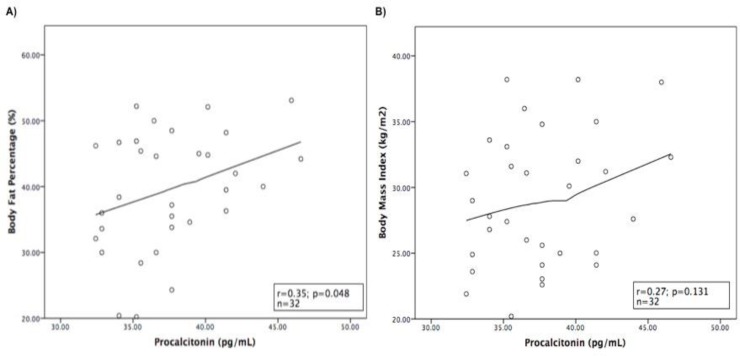
BACKGROUND: Polycystic ovary syndrome (PCOS) is an endocrinopathic disorder most commonly experienced by women of reproductive age, and it is characterized by a low-grade chronic inflammatory condition. Excessive fat deposit has been long considered as an etiological factor in the pathogenesis of this inflammatory condition. Currently, body mass index (BMI) or percentage of body fat is used as a marker to assess the body fat composition of a person. OBJECTIVE: To determine whether BMI or body fat percentage (BFP) can be used as a better marker for measuring inflammation related to body fat accumulation in polycystic ovary syndrome patients. MATERIALS AND METHODS: This study took place at the Center for Reproductive Medicine, Yasmin Clinic, Cipto Mangunkusumo Hospital from January to December 2015. In this cross-sectional study, 32 reproductive age women with PCOS according to the Rotterdam criteria (2003) participated. Women with hyperandrogenism caused by non-classic congenital adrenal hyperplasia, pregnant and lactating women, etc., were excluded. Some variables such as BMI, clinical hyperandrogenism sign, BFP, and inflammatory markers were assessed and statistically analyzed. RESULTS: From a total of 32 subjects of the study, BFP had a significant positive correlation with procalcitonin levels (r=0.35; p=0.048), while BMI did not (r=0.27; p=0.131). CONCLUSION: BFP can be used as a better marker for measuring inflammation related to body fat accumulation in PCOS subjects.
Overview
The claims and statistics of this paper haven’t been checked yet.
Run the check — free, no account needed. It reads the open-access text and checks the sources it cites.
Integrity signals
Registry
Cites
Statistics
Figures
Verification
Claims the paper makes
The claims and statistics of this paper haven’t been checked yet.
Run the check — free, no account needed. It reads the open-access text and checks the sources it cites.
Claims other papers make about this one
Each is checked against this paper’s own text: does it say what the citing paper says it does?
In the citing paper
“In addition, body fat percentage was positively associated with levels of inflammatory biomarkers [23].”
From Adherence to the Mediterranean Diet, Dietary Patterns and Body Composition in Women with Polycystic Ovary Syndrome (PCOS) (2019) · cites this paper as [23]
Self-check
Percentages, sums and reported differences re-computed from the paper’s own numbers.
The self-check needs the paper’s full text.
Citations
Cites
Criteria, Prevalence, and Phenotypes of Polycystic Ovary Syndrome
Lizneva, D., Suturina, L., Walker, W., Brakta, S., Gavrilova-Jordan, L., & Azziz, R. (2016) · Fertility and Sterility · doi:10.1016/j.fertnstert.2016.05.003 · Cited by 1,358
Tremellen, K., & Pearce, K. (2012) · Medical Hypotheses · doi:10.1016/j.mehy.2012.04.016 · Cited by 359
Research works printed but not linked: 13
- 10.2147/CLEP.S37559 · DOI
- 10.1016/j.bpobgyn.2007.07.009 · DOI
- 10.1056/NEJMra041536 · DOI
- 10.3109/09513590903247873 · DOI
- 10.1371/journal.pone.0048643 · DOI
- 10.1155/2014/719050 · DOI
- 10.1016/j.steroids.2011.12.003 · DOI · Paper page
- 10.3343/alm.2014.34.4.263 · DOI
- 10.1016/S0009-8981(02)00101-8 · DOI
- 10.1016/j.jri.2012.10.007 · DOI
- 10.1016/j.tem.2007.07.003 · DOI · Paper page
- 10.1210/jc.2005-1002 · DOI
- 10.1016/j.pcad.2013.10.003 · DOI
Cited by
Barrea, L., Arnone, A., Annunziata, G., Muscogiuri, G., Laudisio, D., Salzano, C., Pugliese, G., Colao, A., & Savastano, S. (2019) · Nutrients · doi:10.3390/nu11102278 · Cited by 306
“In addition, body fat percentage was positively associated with levels of inflammatory biomarkers [23].”
Background
Metadata
- Authors
- Hestiantoro, A., Department of Obstetrics and Gynecology, F. O. M. U. I., Hasani, R. D. K., Department of Obstetrics and Gynecology, F. O. M. U. I., Shadrina, A., Department of Obstetrics and Gynecology, F. O. M. U. I., Situmorang, H., Department of Obstetrics and Gynecology, F. O. M. U. I., Ilma, N., Department of Obstetrics and Gynecology, F. O. M. U. I., Muharam, R., Department of Obstetrics and Gynecology, F. O. M. U. I., Sumapraja, K., Department of Obstetrics and Gynecology, F. O. M. U. I., Wiweko, B., & Department of Obstetrics and Gynecology, F. O. M. U. I.
- Affiliations
- University of Indonesia (ID)
- ORCID
- Venue
- International Journal of Reproductive BioMedicine
- Publisher
- Knowledge E DMCC
- Published
- 2018-10-01
- Volume
- 16
- Issue
- 10
- Pages
- 623-628
- ISSN
- 1680-6433 (ISSN-L)
- 2476-4108
- 2476-3772
- PMC
- PMC6314644
- OpenAlex
- W2905817588
- Cited by
- 14
- References
- 2
- Citations by year
- 2023: 5 · 2022: 4 · 2021: 3 · 2019: 2
- FWCI
- 1.34
- Type
- journal article
- Language
- en
- Open access
- gold
- doi.org
- Licence
- cc-by
- Locations
- International Journal of Reproductive BioMedicine (IJRM) (publishedVersion, cc-by)
- Europe PMC (PubMed Central) (publishedVersion, cc-by)
- PubMed Central (publishedVersion, cc-by)
- PubMed (publishedVersion)
- DOAJ (DOAJ: Directory of Open Access Journals) (submittedVersion, cc-by-sa)
- Topics
- Health Sciences › Medicine › Reproductive Medicine › Ovarian function and disorders
- Health Sciences › Medicine › Endocrinology, Diabetes and Metabolism › Diabetes, Cardiovascular Risks, and Lipoproteins
- Life Sciences › Biochemistry, Genetics and Molecular Biology › Genetics › Genetic and Kidney Cyst Diseases
- Keywords
- polycystic ovary syndrome, body fat percentage, body mass index, inflammation, procalcitonin, body fat accumulation, hyperandrogenism, inflammatory markers, adiposity
About these checks
Registry, retraction, Cites and statistics results are computed, not judged, with one exception: a printed reference that no index lists is read once by a model before it counts as a citation error. Claims are extracted by a model and kept only when their quote appears verbatim in the text; each cited source is then checked, with a model’s help, for whether it says what the claim relies on. Those verdicts can be wrong — read the claim’s quote and the cited source before relying on one.
Statistics and arithmetic are recomputed, not judged.
Confidence bands are shown only for fields calibrated on our annotated test set. None is calibrated yet, so no band is shown.
What counts as a claim ›How we measure confidence ›How we check this ›
Are you an author, or do you see a problem with this page? Request a review
How to cite
Cite CoChat for the checks on this page, and the paper for its own findings.
- This page
- CoChat. (2026). Citation check: Body fat percentage is a better marker than body mass index for determining inflammation status in polycystic ovary syndrome. https://app.cochat.ai/papers/10.29252/ijrm.16.10.623
- The paper
- Hestiantoro, A., Department of Obstetrics and Gynecology, F. O. M. U. I., Hasani, R. D. K., Department of Obstetrics and Gynecology, F. O. M. U. I., Shadrina, A., Department of Obstetrics and Gynecology, F. O. M. U. I., Situmorang, H., Department of Obstetrics and Gynecology, F. O. M. U. I., Ilma, N., Department of Obstetrics and Gynecology, F. O. M. U. I., Muharam, R., Department of Obstetrics and Gynecology, F. O. M. U. I., Sumapraja, K., Department of Obstetrics and Gynecology, F. O. M. U. I., Wiweko, B., & Department of Obstetrics and Gynecology, F. O. M. U. I. (2018). Body fat percentage is a better marker than body mass index for determining inflammation status in polycystic ovary syndrome. International Journal of Reproductive BioMedicine. https://doi.org/10.29252/ijrm.16.10.623
Data sources
Bibliographic data: Semantic Scholar, OpenAlex, Crossref.
Contains information from the Semantic Scholar Academic Graph Datasets, made available under the ODC Attribution License (ODC-BY 1.0).
Semantic Scholar’s data is described in: Kinney, R., et al. (2023). The Semantic Scholar Open Data Platform. arXiv:2301.10140.
