

Effective Dementia Education and Training for the Health and Social Care Workforce: A Systematic Review of the Literature
Open accessThe DOI matches its Crossref record; 108 of the 108 references it cites were found in a registry or an index.
Abstract
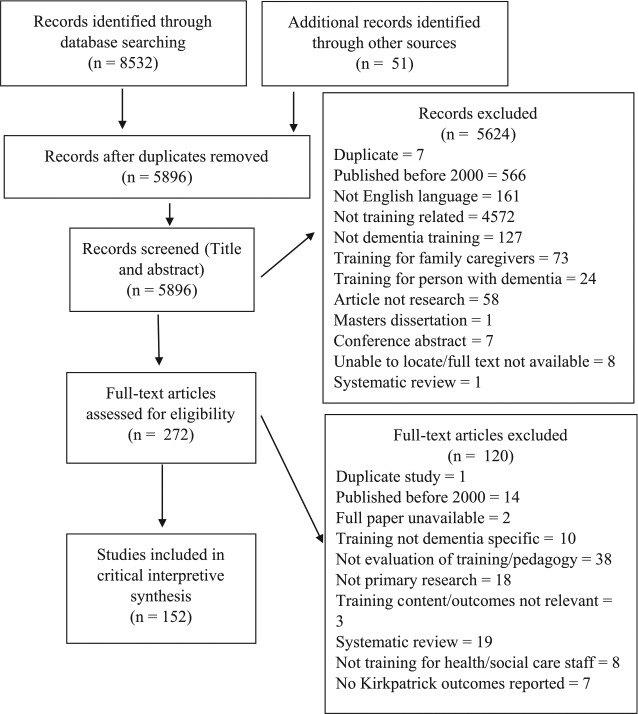
Ensuring an informed and effective dementia workforce is of international concern; however, there remains limited understanding of how this can be achieved. This review aimed to identify features of effective dementia educational programs. Critical interpretive synthesis underpinned by Kirkpatrick’s return on investment model was applied. One hundred and fifty-two papers of variable quality were included. Common features of more efficacious educational programs included the need for educational programs to be relevant to participants’ role and experience, involve active face-to-face participation, underpin practice-based learning with theory, be delivered by an experienced facilitator, have a total duration of at least 8 hours with individual sessions of 90 minutes or more, support application of learning in practice, and provide a structured tool or guideline to guide care practice. Further robust research is required to develop the evidence base; however, the findings of this review have relevance for all working in workforce education.
Overview
The claims and statistics of this paper haven’t been checked yet.
Free: it reads the open-access text and checks the first 5 claims that cite a source we can check. Create a free account to check every claim.
Integrity signals
Registry
Cites
Statistics
Figures
Verification
Claims the paper makes
The claims and statistics of this paper haven’t been checked yet.
Free: it reads the open-access text and checks the first 5 claims that cite a source we can check. Create a free account to check every claim.
Claims other papers make about this one
Each is checked against this paper’s own text: does it say what the citing paper says it does?
The source backs part of the claim, not all of it — or backs it for a different population, condition or comparison.
In the citing paper
“Effective strategies to increase awareness among healthcare professionals include educational programs with an interactive approach that provide tools to support the application of training into practice.39”
From Awareness of dementia risk reduction among current and future healthcare professionals: A survey study (2021) · cites this paper as [39]
Experimental — accuracy not yet measuredThe source backs part of the claim, not all of it — or backs it for a different population, condition or comparison.
In the citing paper
“All studies revealed that these programs improved healthcare workers' attitudes about caring for patients with dementia, as well as their overall knowledge.”
From Awareness of dementia risk factors among healthcare professionals at Hamad Medical Corporation, Qatar: a cross-sectional survey (2024) · cites this paper as [16]
Experimental — accuracy not yet measured
Self-check
Percentages, sums and reported differences re-computed from the paper’s own numbers.
The self-check needs the paper’s full text.
Citations
Cites
Active learning increases student performance in science, engineering, and mathematics
Freeman, S., Eddy, S. L., McDonough, M., Smith, M. K., Okoroafor, N., Jordt, H., & Wenderoth, M. P. (2014) · Proceedings of the National Academy of Sciences · doi:10.1073/pnas.1319030111 · Cited by 9,787 · cited 1×
“…practice, active learning approaches, advocated for in effective learning across the spectrum of educational research (Darling-Hammond et al., 2008; Freeman et al., 2014; Jensen, Kummer, & Godoy, 2014; Mansouri & Lockyer, 2007; Pulsford, Jackson, O’Brien, Yates, & Duxbury, 2013; Zaher &…”
The Adult Learner: The Definitive Classic in Adult Education and Human Resource Development
Knowles, M. S., Holton, E. F., Robinson, P. A., & Caraccioli, C. (2005) · Civil War Book Review · Cited by 2,860
Dixon-Woods, M., Cavers, D., Agarwal, S., Annandale, E., Arthur, A., Harvey, J., Hsu, R., Katbamna, S., Olsen, R., Smith, L., et al. (2006) · BMC Medical Research Methodology · doi:10.1186/1471-2288-6-35 · Cited by 2,289
Dementia: a public health priority
Acosta, D. M., Krishnamoorthy, E. S., Wortmann, M., Prince, M. J., & Saxena, S. (2012) · Cited by 1,955
Benner, P. (1982) · PubMed · Cited by 1,850
Conceptualizing Teacher Professional Learning
Opfer, V. D., & Pedder, D. (2011) · Review of Educational Research · doi:10.3102/0034654311413609 · Cited by 1,814 · cited 1×
“Opfer and Pedder (2011) have argued that teacher education must be conceptualized as a complex system, with various dynamics at the individual (teacher), meso (institutional), and macro (school system) levels at play in influencing under what conditions teachers learn, why, and how.”
The Modern practice of adult education : andragogy versus pedagogy /
Knowles, M. S. (1970) · Bibliothèque et Archives nationales du Québec (Québec government) · Cited by 1,533
Techniques for Evaluating Training Programs
Kirkpatrick, D. L. (1975) · Training and development journal · Cited by 1,234
Taylor, D. C. M., & Hamdy, H. (2013) · Medical Teacher · doi:10.3109/0142159x.2013.828153 · Cited by 1,176
Reframing Professional Development Through Understanding Authentic Professional Learning
Webster-Wright, A. (2009) · Review of Educational Research · doi:10.3102/0034654308330970 · Cited by 1,174 · cited 5×
“This finding mirrors that of the broader professional development literature, which advocates an educational model of ongoing, situated learning within a workplace context, as opposed to a “training” model of discrete sessions, decontextualized from real-world practice (Webster-Wright, 2009).”
Influential
Research works printed but not linked: 17
- Alzheimer’s Society. (2009). Counting the cost: Caring for people with dementia on hospital wards. London, England: Author.
- Caldwell K. Henshaw L. Taylor G. (2005). Developing a framework for critiquing health research. Journal of Health, Social and Environmental Issues, 6(1), 45– 54.
- Care Council for Wales. (2016). Good Work: A dementia learning and development framework for Wales. Cardiff, Wales: Author.
- Cervero R. M. Gaines J. K. (2014). Effectiveness of continuing medical education: Updated synthesis of systematic reviews. Chicago, IL: Accreditation Council for Continuing Medical Education.
- Department of Health. (2009). Living well with dementia: A national dementia strategy. London, England: Author.
- Department of Health. (2012). Prime Minister’s challenge on dementia: Delivering major improvements in dementia care and research by 2015. London, England: Author.
- Department of Health. (2013). Delivering high quality, effective, compassionate care: Developing the right people with the right skills and the right values: A mandate from the Government to Health Education England: April 2013 to March 2015. London, England: Author.
- Department of Health. (2014). Delivering high quality, effective, compassionate care: Developing the right people with the right skills and the right values: A mandate from the Government to Health Education England: April 2014 to March 2015. London, England: Author.
- Department of Health. (2016). Delivering high quality, effective, compassionate care: Developing the right people with the right skills and the right values: A mandate from the Government to Health Education England: April 2016 to March 2017. London, England: Author.
- Kirkpatrick D. L. (1984). Techniques for evaluating training programmes. Training and Development Journal, 32(9), 6– 9.
- Knapp M. Prince M. Albanese E. Banerjee S. Dhanasiri S. Fernandez J. L.... Stewart R. (2007). Dementia UK: Report to the Alzheimer’s Society. London, England: Alzheimer’s Society.
- Mitchell T. D. Richard F. D. Battistoni R. M. Rost-Banik C. Netz R. Zakoske C. (2015). Reflective practice that persists: Connections between reflection in service-learning programs and in current life. Michigan Journal of Community Service Learning, Spring, 49– 63.
- Royal College of Psychiatrists. (2011). Report of the national audit of dementia care in general hospitals. London, England: Healthcare Quality Improvement Partnership.
- Tamkin P. Yarnall J. Kerrin M. (2002). Kirkpatrick and beyond: A review of models of training evaluation. Brighton, England: Institute for Employment Studies.
- Traynor V. Cumming A. Britten N. (2015). Developing an inter-disciplinary cross-setting dementia care competency framework. Wollongong, New South Wales, Australia: University of Wollongong.
- Wilson J. H. (2014). Investing in English skills: The limited English proficient workforce in U.S. metropolitan areas. Washington, DC: Metropolitan Policy Programme at Brookings.
- Zientz J. Rackley A. Chapman S. B. Hopper T. Mahendra N. Kim E. S. Cleary S. (2007). Evidence-based practice recommendations for dementia: Educating caregivers on Alzheimer’s disease and training communication strategies. Journal of Medical Speech-Language Pathology, 15(1), liii– lxiv.
Cited by
Items 101–200 of 326
Jack-Waugh, A. (2023) · Dementia · doi:10.1177/14713012231156004 · Cited by 14
“Such facilitation should occur in a trusting educational relationship and have a structured debriefing process (Surr et al., 2017) that resonates and links with the importance of the educational milieu.”
BackgroundWhat are dementia champions and why do we need them?
Brown, M., Jack-Waugh, A., Sharp, B., Duffy, F. J. R., & MacRae, R. (2017) · Dementia · doi:10.1177/1471301217743413 · Cited by 11
“A recent literature review to identify features of effective dementia educational programmes recognised that these programmes sit with complex systems where a myriad of factors including staff attributes and organisational, environmental and cultural contexts influence practice (Surr & Gates, 2017).”
BackgroundMuirhead, K., Macaden, L., Clarke, C. L., Smyth, K., Polson, R., & O’Malley, C. (2019) · Systematic Reviews · doi:10.1186/s13643-019-1212-4 · Cited by 11
Capstick, A., Dennison, A., Oyebode, J. R., Healy, L., Surr, C., Parveen, S., Sass, C., & Drury, M. (2021) · Health Expectations · doi:10.1111/hex.13332 · Cited by 10
Self-citationÖstlund, L., Bravell, M. E., & Johansson, L. (2022) · Dementia · doi:10.1177/14713012221137472 · Cited by 20
“Staff need continuing education, for example through mentoring, online material or written material, practical exercises, group reflection, supervision, drama exercises, and working with cases (Surr et al., 2017).”
BackgroundHeaton‐Shrestha, C., Ooms, A., Brady, M., Pedley, G., Bacon, I., Strong, S., & Dundas, J. (2023) · Nurse Education in Practice · doi:10.1016/j.nepr.2023.103741 · Cited by 14
Crombie, A., Lingam, S., Pascoe, A., Disler, P., Asaid, A., & Disler, R. (2024) · Australian Journal of Rural Health · doi:10.1111/ajr.13082 · Cited by 10
Abdalrahim, A., ALBashtawy, M., Alkhawaldeh, A., Al-Amer, R. M., Salameh, A. B., ALBashtawy, S., Khait, A. F. A., & ALBashtawy, Z. (2022) · International Journal of Nursing Education Scholarship · doi:10.1515/ijnes-2022-0033 · Cited by 14
Higgins, R., Spacey, A., & Innes, A. (2023) · Radiography · doi:10.1016/j.radi.2023.01.016 · Cited by 10
Yoon, J. M., Trinkoff, A. M., Kim, M., & Kim, E. (2023) · Geriatric Nursing · doi:10.1016/j.gerinurse.2023.03.007 · Cited by 9
Jones, C., Khalil, D., Mander, K., Yeoh, A., & Moro, C. (2022) · Research in Learning Technology · doi:10.25304/rlt.v30.2668 · Cited by 9
Vietnam’s Responses to Dementia – An Assessment of Service Delivery
Kosowicz, L., Tran, K., Brodaty, H., Roughead, E. E., Esterman, A., Hinton, L., Giang, K. B., Kurrle, S. E., Dang, T. H., Crotty, M., et al. (2023) · Dementia · doi:10.1177/14713012231181167 · Cited by 9
“There are many examples of established dementia professional development programs in countries other than Vietnam, as well as published evidence about what characteristics make such programs effective (Surr et al., 2017).”
BackgroundThompson, S., Shukralla, H., Fyfe, K. P., Newman, E., & Fitzgerald, K. W. (2024) · Australian Journal of Rural Health · doi:10.1111/ajr.13090 · Cited by 9
Muralidhar, M., Delray, S., Cooper, C., Zabihi, S., Banerjee, S., Giebel, C. M., Dening, K. H., Birks, Y. F., Kenten, C., & Walpert, M. (2025) · International Journal of Geriatric Psychiatry · doi:10.1002/gps.70119 · Cited by 10
“As with the earlier ‘ What Works ’ review [16], this review did not find high quality evidence that asynchronous, self‐directed learning enhances knowledge or improves attitudes, relative to standard training.”
Dementia education in a primary school classroom: A pedagogical perspective
Ritchie, L., Henderson-Bone, S., Gregory, A., & Jenkins, N. (2023) · Dementia · doi:10.1177/14713012221149760 · Cited by 14
Perspectives of Nursing Home Staff: Application of Dementia Training Approaches
Como, D. H., Lekovitch, C. A., Wong, C. M., Chew, F. M., Bieber, D. C., & Leland, N. E. (2024) · Journal of Applied Gerontology · doi:10.1177/07334648241265195 · Cited by 9
“This aligns with the fi ndings of a systematic review, which found that effective dementia education was bene fi cial, when staff perceived the training to be applicable to their role (Surr et al., 2017).”
Zhao, Y., Liu, L., Ding, Y., & Chan, H. Y. L. (2022) · Nurse Education Today · doi:10.1016/j.nedt.2022.105434 · Cited by 11
Lv, X., Zhao, M., Li, T., Yuan, C., Zhang, H., Pu, C., Li, Z., Zhang, N., Yu, X., & Wang, H. (2021) · Frontiers in Neurology · doi:10.3389/fneur.2021.651826 · Cited by 8
Price, M. L., Surr, C., Gough, B., & Ashley, L. (2022) · Psychology and Health · doi:10.1080/08870446.2022.2157030 · Cited by 13
“One identified feature of effective dementia training programmes includes providing staff with a structured guideline to underpin their care practice (Surr et al., 2017).”
Self-citationSeltmann, H., & Teichmann, B. (2024) · Journal of Alzheimer s Disease · doi:10.3233/jad-231338 · Cited by 10
“The results of this study review also demonstrated that the majority of studies with attitudinal outcomes reported positive improvements in attitudes after dementia training, with 27% of included studies showing no significant changes [40].”
Heward, M., Michèle Board, Spriggs, A., & Murphy, J. L. (2019) · International Psychogeriatrics · doi:10.1017/s1041610218002193 · Cited by 8
McKay, M. H., Pickens, N. D., Medley, A., Cooper, D., & Evetts, C. L. (2020) · The Gerontologist · doi:10.1093/geront/gnaa160 · Cited by 9
Vancampfort, D., Mugisha, J., Kimbowa, S., Lukwata, H., Damme, T. V., & Vandenbulcke, M. (2023) · Pan African Medical Journal · doi:10.11604/pamj.2023.44.165.36470 · Cited by 10
“A previous review [22] of the most common features of efficacious educational dementia care programs for healthcare workforce indicated that educational”
BackgroundCommunity health centers response to the need of dementia care
Suriastini, N. W., Oktarina, D., Sikoki, B., Indriati, S., Umaroh, R., Alfah, D., & Lestari, K. W. (2023) · Journal of Public Health Research · doi:10.1177/22799036231161972 · Cited by 11
Acton, D., Jaydeokar, S., & Jones, S. (2023) · Advances in Mental Health and Intellectual Disabilities · doi:10.1108/amhid-02-2023-0006 · Cited by 9
The fundamentals of a dedicated palliative approach to care for people with dementia
Bolt, S. (2021) · Research Publications (Maastricht University) · doi:10.26481/dis.20210922sb · Cited by 15
Toward the Professionalization of Caregivers: Training and Skills Needed for Long-Term Care
Arroyo, E. A., Prieto, E. B., Cordero, L. F., Marín, M., Franco, L. C. L., Gómez, A. L., Benedetti, F., & Díaz-Veiga, P. (2023) · doi:10.18235/0005055 · Cited by 13
Delray, S., Banerjee, S., Zabihi, S., Walpert, M., Dening, K. H., Kenten, C., Birks, Y. F., Giebel, C. M., Rauf, M. A., Reynolds, S., et al. (2026) · Health & Social Care in the Community · doi:10.1101/2024.08.24.24312532 · Cited by 8
“…and collaborative (8,9), but current provision is inconsistent in quality (5). found most effective programmes comprised 12+ hours of training by experienced facilitators; were tailored to staff needs, included active participation, and underpinned practice-based learning with theory (10).”
BackgroundMorris, P., McCloskey, R. M., Keeping‐Burke, L., & Manley, A. (2021) · JBI Evidence Synthesis · doi:10.11124/jbies-20-00291 · Cited by 11
“Even in baccalaureate programs, there is limited emphasis on ethical practice specifically with people with cognitive impairments.(74) Even when this training is provided later on the job, it rarely addresses the deeper philosophical questions about which nurses need to be reflexive in order to develop critical insigh…”
BackgroundPan, J., Wang, P., & Wang, Y. (2021) · Psychology Health & Medicine · doi:10.1080/13548506.2021.1939890 · Cited by 12
“Being equipped with specialized training, nurses can educate caregivers of such patients (Surr et al., 2017) and can therapeutically specify the communications (Loghmani et al., 2014; Whitlatch & Orsulic-Jeras, 2018).”
BackgroundPiirainen, P., Pesonen, H., Siira, H. J., & Elo, S. (2022) · Nordic journal of nursing research · doi:10.1177/20571585221106066 · Cited by 7
Sinvani, L., Strunk, A., Ardito, S., Gordon, S., Liu, Y., Schantz, E., Arroon, A., Ilyas, A., Gromova, V., Polokowski, A. R., et al. (2023) · Gerontology and Geriatric Medicine · doi:10.1177/23337214231192162 · Cited by 7
“Unlike other hospitalbased time intensive training programs, our program was delivered via 7 weekly 20-min training sessions (Coffey et al., 2014; Surr et al., 2017).”
BackgroundBalsom, A. A., Dube, L., & Gordon, J. L. (2025) · PLoS ONE · doi:10.1371/journal.pone.0318921 · Cited by 6
A Call for Establishing a Public Policy for Mitigating the Effects of Dementia on Modern Workplaces
Braw, Y., Cohen, E., Brender‐Ilan, Y., & Sohlberg, I. (2018) · Economics & Sociology · doi:10.14254/2071-789x.2018/11-1/11 · Cited by 6
“Of note is a recent review by Surr et al. (2017) that stipulates common features of efficacious educational programs for those working with dementia patients (i.e., health and social care workforce).”
BackgroundAttitudes toward people with dementia among communication science and disorders students
Oh, C., & Richard, J. M. (2020) · Gerontology & Geriatrics Education · doi:10.1080/02701960.2020.1842393 · Cited by 6
“class activities (Imalawi, Gregg, & Karimi, 2015), involving active face-to-face participation and practice-based learning (Kaf et al., 2011; Surr et al., 2017).”
BackgroundHeward, M., Michèle Board, Spriggs, A., Emerson, L., & Murphy, J. L. (2020) · Nurse Education Today · doi:10.1016/j.nedt.2020.104694 · Cited by 11
Schneider, J., Γκιόκα, Μ., Papagiannopoulos, S., Μoraitou, D., Metz, B., Tsolaki, M., Kruse, A., & Teichmann, B. (2019) · Zeitschrift für Gerontologie und Geriatrie · doi:10.1007/s00391-019-01625-0 · Cited by 6
Reducing Cognitive Impairment Among Dementia Users Through Mobile Application
Hassan, N. A. M., Baharum, A., Sani, Z. H. A., Chau, K., & Noor, N. A. M. (2021) · Pertanika journal of science & technology · doi:10.47836/pjst.29.2.09 · Cited by 8
“Participants 1, 2 and 3 had very mild severity dementia and participant 4 had mild severity, all of which were considered as early-stages of dementia (Surr et al., 2017).”
BackgroundHeward, M., Michèle Board, Spriggs, A., Blagden, D., & Murphy, J. L. (2021) · BMC Health Services Research · doi:10.1186/s12913-021-06977-1 · Cited by 6
Myrvang, T., & Rokstad, A. M. M. (2022) · Nordisk Sygeplejeforskning · doi:10.18261/nsf.12.2.1 · Cited by 6
Education and training interventions for physiotherapists working in dementia care: a scoping review
O’Sullivan, T., McVeigh, J. G., Timmons, S., & Foley, T. (2022) · Physiotherapy · doi:10.1016/j.physio.2022.11.002 · Cited by 6
Initial evaluation of a university dementia awareness initiative
Parveen, S., Haunch, K. J., Kerry, F., & Oyebode, J. (2018) · The Journal of Mental Health Training Education and Practice · doi:10.1108/jmhtep-11-2017-0063 · Cited by 8
Self-citationWilliams, R., Ockerby, C. M., Rawson, H. A., Redley, B., & Hutchinson, A. M. (2021) · Australian Journal on Ageing · doi:10.1111/ajag.12904 · Cited by 6
Al Hamad, H., & Sathian, B. (2024) · Frontiers in Public Health · doi:10.3389/fpubh.2024.1443525 · Cited by 5
Brown, B., Kang, G., Schwartz, A. E., Rink, A., Gallant, N., Magpantay-Monroe, E. R., Empleo-Frazier, O., Windish, D. M., & Marottoli, R. A. (2023) · Nurse Education in Practice · doi:10.1016/j.nepr.2023.103696 · Cited by 6
Dementia: A call for a paradigm shift in pre-registration nurse education
Tuffour, I., & Ganga, G. (2023) · Cambridge Prisms Global Mental Health · doi:10.1017/gmh.2023.80 · Cited by 6
Catalán, L., & Oliveira, D. (2025) · Aging & Mental Health · doi:10.1080/13607863.2025.2484355 · Cited by 6
Sanatinia, R., Crawford, M., Quirk, A., Hood, C., Gordon, F., Crome, P., Staniszewska, S. H., Zafarani, G., Hammond, S., Burns, A. S., et al. (2020) · Health Services and Delivery Research · doi:10.3310/hsdr08220 · Cited by 6
“In a recent systematic review of effective dementia training programmes, authors highlight (among other factors) the importance of supporting staff in applying taught materials in clinical practice and providing dementia-specific guidelines.(89)”
BackgroundMcKay, M. H., Pickens, N. D., Medley, A., & Evetts, C. L. (2021) · Canadian Journal of Occupational Therapy · doi:10.1177/00084174211048017 · Cited by 6
“Multi-modal training programs, which include applied learning activities and skilled facilitation of teamwork as part of the training itself are needed to improve quality, access, and cost of care (Surr et al., 2017).”
BackgroundThe Effect of Training on Dementia Care among Nurses: A Systematic Review
Mulyani, S., Probosuseno, P., & Nurjannah, I. (2021) · Open Access Macedonian Journal of Medical Sciences · doi:10.3889/oamjms.2021.5969 · Cited by 6
“Thus, dementia training for nurses has emerged as a new trend, especially in developed countries [4], but not in developing countries.”
BackgroundResultZhao, Y., Ding, Y., Liu, L., & Chan, H. Y. L. (2022) · International Journal of Environmental Research and Public Health · doi:10.3390/ijerph192416679 · Cited by 5
“The dose and format of the intervention were consistent with evidence of effective dementia education for the healthcare workforce [50].”
MethodReflections from health systems researchers on nursing practices in dementia care
Ludlow, K., & Braithwaite, J. (2019) · International Journal of Nursing Studies · doi:10.1016/j.ijnurstu.2019.05.002 · Cited by 7
Workforce education and training standards frameworks for dementia
Pit, S., Horstmanshof, L., Moehead, A., Hayes, O., Schache, V., & Parkinson, L. (2022) · doi:10.57022/rxeu9590 · Cited by 5
Is Use of Psychedelic Drugs a Risk or Protective Factor for Late-Life Cognitive Decline?
Fearn, K., & Bhattacharyya, K. K. (2024) · Gerontology and Geriatric Medicine · doi:10.1177/23337214241250108 · Cited by 5
“However, there is a dearth of adequately trained healthcare professionals caring for persons living with dementia (Surr et al., 2017).”
BackgroundReimagining neuroscientific and andragogical principles for dementia care education
Kassie, S. A., & Astell, A. J. (2024) · Gerontology & Geriatrics Education · doi:10.1080/02701960.2024.2346741 · Cited by 6
“…such as care staff characteristics, relevance, practicality, and applicability of educational content, delivery format, and several other factors are documented in review studies (Pit et al., 2024; Rasmussen, Anderssen, Waldorff, & Berg-Beckoff, 2023; Surr et al., 2017; Zhao, Liu, & Chan, 2021).”
InfluentialDementia awareness raising forum: Improving attitudes towards people living with dementia
Read, S. T., Saunders, R., Albrecht, M. A., & Duggan, R. (2024) · Dementia · doi:10.1177/14713012241272852 · Cited by 4
“Small face to face discussion groups with activity based learning has also been shown to be effective in achieving attitudinal change (Surr et al., 2017).”
O’Sullivan, T., Moore, N., McVeigh, J. G., Timmons, S., & Foley, T. (2024) · Dementia · doi:10.1177/14713012241296173 · Cited by 5
“It is uncommon in healthcare educational literature to evaluate this level, with most studies evaluating to Kirkpatrick Level 1 (reaction) and 2 (knowledge, attitudes, and con fi dence) (Elvish et al., 2018; Galvin et al., 2010), as found in a systematic review by Surr et al. (2017).”
A scoping review of dementia education programs to assess for the inclusion of culture
Hulko, W., Mirza, N. A., Christianson, T. M., Nazemi, M., Vicic, A., & Bartle, E. (2024) · Dementia · doi:10.1177/14713012241300592 · Cited by 6
“…most important elements of effective DEPs were found to be content relevant to the learner ’ s setting and role; interactive group work and blended learning; accessible and informative materials; and trainers with strong knowledge of dementia and experience in adult education (Surr et al., 2017).”
InfluentialAtefi, G., Viechtbauer, W., Czaja, S. J., van Knippenberg, R. J. M., den Block, L. V., Geeraerts, J., Verhey, F. R. J., de Vugt, M. E., & Bartels, S. L. (2025) · Journal of Contextual Behavioral Science · doi:10.1016/j.jcbs.2025.100889 · Cited by 6
Howanitz, J., Carney, K. O., Lichtenberg, P. A., Donlan, A., Sugarman, M. A., & Malek, K. (2018) · Topics in Geriatric Rehabilitation · doi:10.1097/tgr.0000000000000172 · Cited by 5
Academic reawakening: Situated experiences of undertaking a post graduate masters course in dementia
Burrow, S., Mairs, H., Bradshaw, T., Pusey, H., & Keady, J. D. (2019) · Nurse Education in Practice · doi:10.1016/j.nepr.2019.102683 · Cited by 4
Living with dementia and caregiving: Psychosocial considerations through the gender lens
Scerri, C., Abela, A., & Scerri, A. (2021) · Elsevier eBooks · doi:10.1016/b978-0-12-819344-0.00002-8 · Cited by 6
Exploring self-experience practices in dementia care: A scoping review
Wittmann, J., Bieber, A., Carroll, J., Forristal, K., Hopper, L., Janssen, N., Meyer, G., Riello, M., de Vugt, M. E., & Bauernschmidt, D. (2024) · PLoS ONE · doi:10.1371/journal.pone.0302929 · Cited by 5
Lee, L. S., Weston, W. W., Hillier, L. M., Archibald, D., & Lee, J. J. (2018) · Gerontology & Geriatrics Education · doi:10.1080/02701960.2018.1484737 · Cited by 5
Research Recommendations to Address Dementia Workforce Development Needs
Weiss, J. O., Tumosa, N., Espinoza, R., Bragg, E. J., Morgan, J. C., Flatt, J. D., McConnell, E. S., & Whiting, G. C. (2021) · OBM Geriatrics · doi:10.21926/obm.geriatr.2101162 · Cited by 5
“dementia greatly depends on the adequacy of the knowledge and skills of the paid and unpaid caregivers that support them [51, 52].”
BackgroundAstell, A. J., Shoaran, S., & Ellis, M. P. (2022) · Frontiers in Communication · doi:10.3389/fcomm.2021.689439 · Cited by 4
Hebditch, M., Banerjee, S., Wright, J. E., & Daley, S. (2021) · Age and Ageing · doi:10.1093/ageing/afab206 · Cited by 7
Gonella, S., Giulio, P. D., Berchialla, P., Bo, M., Cotogni, P., Macchi, G., Campagna, S., & Dimonte, V. (2022) · International Journal of Environmental Research and Public Health · doi:10.3390/ijerph20010725 · Cited by 4
“Lack of structured debriefing processes is often responsible for reduced efficacy of training programs [32].”
BackgroundMethodInfluentialSchwarz, B., Richardson, M., & Camp, K. E. (2023) · Gerontology & Geriatrics Education · doi:10.1080/02701960.2023.2177648 · Cited by 6
“Health professions educators should consider approaches that engage the student in the learning process since these active-learning approaches increase training and education effectiveness (Surr et al., 2017).”
BackgroundResultInfluentialKawabata, J., & Fukuda, H. (2023) · PLoS ONE · doi:10.1371/journal.pone.0282965 · Cited by 7
“Although various approaches to dementia care education have been proposed [18], there is currently no standardized best practice.”
BackgroundPerryman, K. A., Heathcote, L., Forsyth, K., Senior, J., Domone, R., & Shaw, J. J. (2023) · Journal of Forensic Psychiatry and Psychology · doi:10.1080/14789949.2023.2223194 · Cited by 6
“deficiencies within the healthcare workforce (Surr et al., 2017); policy strategies have since addressed such gaps in dementia training provision in the community.”
BackgroundAhmed, F., Morbey, H., Harding, A. J. E., Reeves, D., Swarbrick, C., Davies, L. M., Hann, M., Holland, F., Elvish, R., Leroi, I., et al. (2020) · BMJ Open · doi:10.1136/bmjopen-2019-030739 · Cited by 6
Testing the sensitivity of two dementia knowledge instruments in dementia workforce education
MacRae, R., Gamble, C., Ritchie, L., & Jack-Waugh, A. (2021) · Nurse Education Today · doi:10.1016/j.nedt.2021.105210 · Cited by 4
Facilitating Family Carer Dementia Education: We All Need to Learn
Jack-Waugh, A., Holland, S. A., MacRae, R., Mimnaugh, J., & Tolson, D. (2024) · Healthcare · doi:10.3390/healthcare12202096 · Cited by 4
“Only four studies in a systematic review of 152 dementia workforce education studies reported outcomes associated with positive engagement with family carers [29].”
BackgroundBala, N., Stanoevska, B., Troiani, J. P., Wang, X., Veerhuis, N., Pitts, L., & Traynor, V. (2025) · Australian Journal on Ageing · doi:10.1111/ajag.70031 · Cited by 4
“29 One potential solution is to establish partnerships with bilingual community health-care workers, who can help bridge the gap between mainstream services and CALD families.”
Calvert, S., Chitty, A., Langdon, A., Broome, E., Henshaw, H., Somerset, S., Dening, T., & Heffernan, E. (2025) · PLoS ONE · doi:10.1371/journal.pone.0327248 · Cited by 4
Liu, C., Zheng, H., Li, B., He, S., Hu, R., Li, F., Zheng, Y., Lou, W., & Jiang, B. (2024) · International Journal of Nursing Sciences · doi:10.1016/j.ijnss.2024.08.005 · Cited by 7
Giebel, C. M., Marshall, H., Cannon, J., Donnellan, W. J., Bullen, H. A., Lomas, E., Porritt, B. M., Rees, A., Curran, S., Tetlow, H., et al. (2024) · Dementia · doi:10.1177/14713012241306489 · Cited by 5
“Beyond student training programmes, educational programmes to train the existing workforce about dementia are suggested to involve active face-to-face participation, have a total duration of 8 hours, and provide guidelines to care in practice (Surr et al., 2017).”
Kelly, M. E., Byrne, S., Lacey, R., Lemercier, A., & Hannigan, C. (2025) · Disabilities · doi:10.3390/disabilities5010005 · Cited by 4
Balasundaram, B., Yoon, P. S., Rosario, B. H., Kam, J. W., Tan, L. M. Y., & Varman, S. D. (2019) · Proceedings of Singapore Healthcare · doi:10.1177/2010105819869031 · Cited by 3
Strøm, B. S., Engedal, K., & Rokstad, A. M. M. (2020) · Dementia and Geriatric Cognitive Disorders Extra · doi:10.1159/000505396 · Cited by 4
Occupational adaptation as a social process for dementia care teams
McKay, M. H., Pickens, N. D., Medley, A., Burns, S. P., Chow, J. K., Cooper, D., & Evetts, C. L. (2022) · Scandinavian Journal of Occupational Therapy · doi:10.1080/11038128.2022.2093270 · Cited by 3
“Targeting a team’s adaptive process distinguishes OA training from other trainings, which emphasise individualistic, skills-based approaches delivered via lecture-style classes [21], assuming adaptation will automatically follow.”
BackgroundSlater, P. F., Moore, K., Sharkey, F., & Hasson, F. (2022) · International Journal of Research in Nursing · doi:10.3844/ijrnsp.2022.1.10 · Cited by 3
“The 'empathy and understanding in dementia index' is a single instrument, with established psychometric properties that effectively assesses participants understanding of dementia and its impact on the person, essential traits to provide effective care to PLWD (Surr et al., 2017).”
BackgroundInfluentialThorsen, M. K., & Nielsen, M. L. (2023) · Dementia · doi:10.1177/14713012231177867 · Cited by 3
“…care assistants also identified a lack of ongoing training and supervision as a barrier for improving dementia care within the public welfare system in Denmark (see, for example, Leverton et al., 2021; Scales et al., 2017; Surr et al., 2017 for similar accounts from other geographical settings).”
BackgroundDementia Education for Workforce Excellence: Evaluation of a Novel Bichronous Approach
Macaden, L., & Muirhead, K. (2024) · Healthcare · doi:10.3390/healthcare12050590 · Cited by 4
Latham, I., Brooker, D. J. R., & de Vries, K. (2024) · Journal of Workplace Learning · doi:10.1108/jwl-04-2024-0080 · Cited by 5
Berry, E., Nally, C. S. M., Barbosa, A., Mason, C., & Jones, D. (2024) · Radiography · doi:10.1016/j.radi.2024.09.057 · Cited by 5
Leung, P., Csipke, E., Yates, L., Birt, L., & Orrell, M. W. (2021) · The Journal of Mental Health Training Education and Practice · doi:10.1108/jmhtep-10-2020-0071 · Cited by 3
Behavioral Abnormalities of Gut Microbiota and Progression of Dementia
Zubair, M., Fatima, F., & Husain, F. M. (2022) · Springer eBooks · doi:10.1007/978-981-16-7606-2_11 · Cited by 4
Peacock, S., Bayly, M., Fletcher-Hildebrand, S., Gibson, K. A. V., MacRae, R., Jack-Waugh, A., Haase, K. R., Bally, J. M. G., Duggleby, W., Hall, S., et al. (2022) · Canadian Journal on Aging / La Revue canadienne du vieillissement · doi:10.1017/s0714980822000484 · Cited by 4
“Some of the components of effective dementia education (Surr et al., 2017) were clearly part of identified programmes: 10/16 programmes offered face-to-face courses (three did not specify), 10 included course options that had a total duration of 8 hours (three did not specify), six provided individuals with a structur…”
BackgroundInfluentialGonella, S., Brofferio, L., Stella, L., Sciarrotta, D., Giulio, P. D., & Dimonte, V. (2025) · Nursing Reports · doi:10.3390/nursrep15020060 · Cited by 5
“The experts advise an ideal number of 16–24 learners, especially when experience-based educational methods (i.e., role-play, small group discussion) are adopted [34], and a total training duration of at least 8 h [35].”
Daley, S., Hebditch, M., Towson, G., Feeney, Y., & Banerjee, S. (2025) · BMC Medical Education · doi:10.1186/s12909-025-07218-3 · Cited by 2
“…crucial elements include: ensuring that dementia education is introduced early in the career pathway; encouraging reflection on the lived experiences of dementia such as simulation or direct contact with people with dementia; and avoidance of over-reliance on traditional didactic lectures [10, 11].”
Morris, P., McCloskey, R. M., Durkee-Lloyd, J., & O’Regan, K. M. (2025) · Healthcare · doi:10.3390/healthcare13131562 · Cited by 4
“Continuing professional development programs should also prioritize ethical decision-making in dementia care, to continue enhancing nurses’ capacity for this type of care [53,59,60].”
Therapeutic Lying in Dementia Care: Attitudes and Knowledge Among Social Workers in Spain
Tirado, R. Y., García-Aguña, S., Grela, P. D. G., Gallardo-Peralta, L. P., & Sánchez-Moreno, E. (2025) · Journal of Evidence-Based Social Work · doi:10.1080/26408066.2025.2559278 · Cited by 2
Chui, J. H., Balasubramanian, G. P., Paruchuri, S., & Thamby, S. A. (2022) · Journal of Pharmaceutical Negative Results · doi:10.47750/pnr.2022.13.04.065 · Cited by 2
McKenna, M., BROWN, L. J. E., Muller, C., Vikram, A., & Berry, K. (2023) · International Journal of Older People Nursing · doi:10.1111/opn.12528 · Cited by 2
Comparison of face to face and online delivery of a dementia-specific experiential learning activity
Schwarz, B., Richardson, M. V., Camp, K. E., & Thomas, R. (2024) · Gerontology & Geriatrics Education · doi:10.1080/02701960.2024.2366279 · Cited by 2
“Additionally, F2F participation has been shown to be the most effective delivery method for several education and training interventions (Adewuyi et al., 2022; Foley et al., 2020; Surr et al., 2017; Wood et al., 2016), particularly with acquisition of hands-on skills (Sobana et al., 2023).”
Heward, M., Mitchell, R. J., Murphy, J. M., & Michèle Board (2025) · Nursing Older People · doi:10.7748/nop.2025.e1503 · Cited by 2
Workforce Dementia Training Needs and Preferences for Residential Aged Care
Gulline, H., Bruce, L. J., Woolford, M., Horsman, P., Morawaka, N., Alberti, S., & Ayton, D. (2025) · Journal of the American Medical Directors Association · doi:10.1016/j.jamda.2025.105495 · Cited by 2
Burnand, A., Woodward, A., Kantilal, K., Bhanu, C., Jani, Y. H., Manthorpe, J., Orlu, M., Rait, G., Sajid, M., Samsi, K., et al. (2025) · British Journal of Clinical Pharmacology · doi:10.1002/bcp.70160 · Cited by 2
Metadata
- Authors
- Surr, C. A., Gates, C., Irving, D., Oyebode, J., Smith, S. J., Parveen, S., Drury, M., & Dennison, A.
- Affiliations
- Leeds Beckett University
- University of Bradford (GB)
- Venue
- Review of Educational Research
- Published
- 2017-07-31
- Volume
- 87
- Issue
- 5
- Pages
- 966-1002
- ISSN
- 0034-6543 (ISSN-L)
- 1935-1046
- PMC
- PMC5613811
- OpenAlex
- W2748336417
- Cited by
- 327
- References
- 107
- Citations by year
- 2026: 37 · 2025: 38 · 2024: 28 · 2023: 46 · 2022: 40 · 2021: 47 · 2020: 46 · 2019: 26 · 2018: 17 · 2017: 2
- FWCI
- 4.05
- Type
- journal article
- Language
- en
- Open access
- hybrid
- doi.org
- Licence
- cc-by
- journals.sagepub.com/page/policies/text-and-data-mining-license (tdm)
- Locations
- Review of Educational Research (publishedVersion, cc-by)
- PubMed Central (publishedVersion, cc-by)
- PubMed (publishedVersion)
- Bradford Scholars (University of Bradford) (publishedVersion, other-oa)
- Leeds Beckett Repository (Leeds Beckett University) (acceptedVersion, other-oa)
- White Rose Research Online (University of Leeds, The University of Sheffield, University of York) (acceptedVersion)
- Topics
- Social Sciences › Education › Innovations in Medical Education
- Health Sciences › Medicine › Psychiatry and Mental health › Dementia and Cognitive Impairment Research
- Social Sciences › Psychology › Applied Psychology › Human Resource Development and Performance Evaluation
- Keywords
- dementia education, health and social care professionals, employee training, educational program effectiveness, Kirkpatrick model, hands-on learning, face-to-face training, care guidelines, return on investment
About these checks
Registry, retraction, Cites and statistics results are computed, not judged, with one exception: a printed reference that no index lists is read once by a model before it counts as a citation error. Claims are extracted by a model and kept only when their quote appears verbatim in the text; each cited source is then checked, with a model’s help, for whether it says what the claim relies on. Those verdicts can be wrong — read the claim’s quote and the cited source before relying on one.
Statistics and arithmetic are recomputed, not judged.
Confidence bands are shown only for fields calibrated on our annotated test set. None is calibrated yet, so no band is shown.
What counts as a claim ›How we measure confidence ›How we check this ›
Are you an author, or do you see a problem with this page? Request a review
Data sources
Bibliographic data: Semantic Scholar, OpenAlex, Crossref.
Contains information from the Semantic Scholar Academic Graph Datasets, made available under the ODC Attribution License (ODC-BY 1.0).
Semantic Scholar’s data is described in: Kinney, R., et al. (2023). The Semantic Scholar Open Data Platform. arXiv:2301.10140.
