

Effective Dementia Education and Training for the Health and Social Care Workforce: A Systematic Review of the Literature
Open accessThe DOI matches its Crossref record; 108 of the 108 references it cites were found in a registry or an index.
Abstract
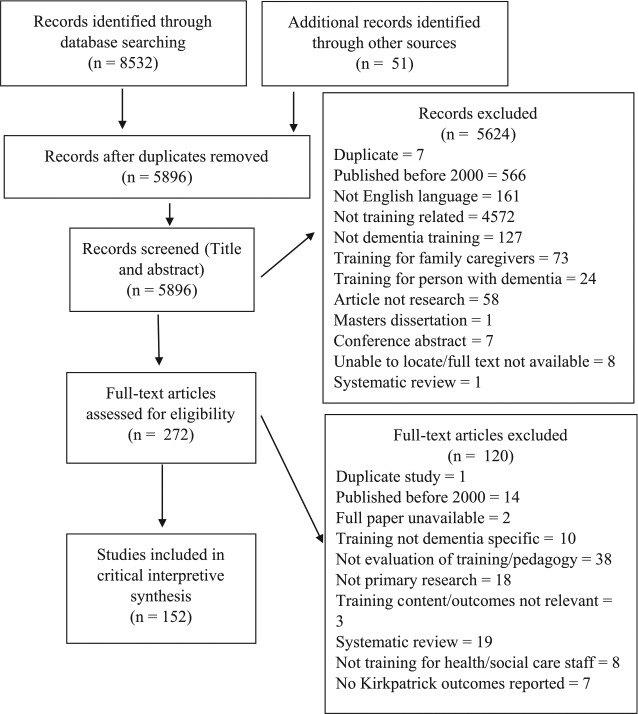
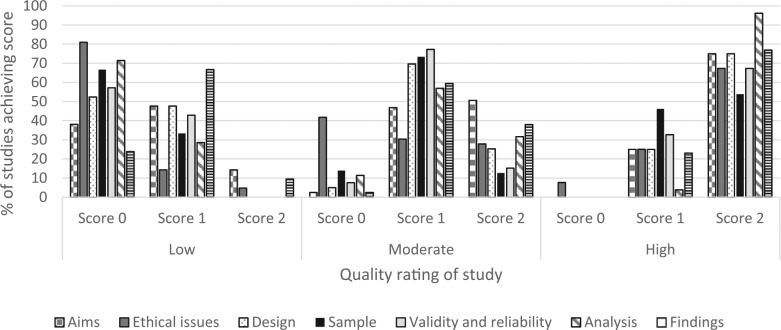
Ensuring an informed and effective dementia workforce is of international concern; however, there remains limited understanding of how this can be achieved. This review aimed to identify features of effective dementia educational programs. Critical interpretive synthesis underpinned by Kirkpatrick’s return on investment model was applied. One hundred and fifty-two papers of variable quality were included. Common features of more efficacious educational programs included the need for educational programs to be relevant to participants’ role and experience, involve active face-to-face participation, underpin practice-based learning with theory, be delivered by an experienced facilitator, have a total duration of at least 8 hours with individual sessions of 90 minutes or more, support application of learning in practice, and provide a structured tool or guideline to guide care practice. Further robust research is required to develop the evidence base; however, the findings of this review have relevance for all working in workforce education.
Overview
The claims and statistics of this paper haven’t been checked yet.
Free: it reads the open-access text and checks the first 5 claims that cite a source we can check. Create a free account to check every claim.
Integrity signals
Registry
Cites
Statistics
Figures
Verification
Claims the paper makes
The claims and statistics of this paper haven’t been checked yet.
Free: it reads the open-access text and checks the first 5 claims that cite a source we can check. Create a free account to check every claim.
Claims other papers make about this one
Each is checked against this paper’s own text: does it say what the citing paper says it does?
The source backs part of the claim, not all of it — or backs it for a different population, condition or comparison.
In the citing paper
“Effective strategies to increase awareness among healthcare professionals include educational programs with an interactive approach that provide tools to support the application of training into practice.39”
From Awareness of dementia risk reduction among current and future healthcare professionals: A survey study (2021) · cites this paper as [39]
Experimental — accuracy not yet measuredThe source backs part of the claim, not all of it — or backs it for a different population, condition or comparison.
In the citing paper
“All studies revealed that these programs improved healthcare workers' attitudes about caring for patients with dementia, as well as their overall knowledge.”
From Awareness of dementia risk factors among healthcare professionals at Hamad Medical Corporation, Qatar: a cross-sectional survey (2024) · cites this paper as [16]
Experimental — accuracy not yet measured
Self-check
Percentages, sums and reported differences re-computed from the paper’s own numbers.
The self-check needs the paper’s full text.
Citations
Cites
Active learning increases student performance in science, engineering, and mathematics
Freeman, S., Eddy, S. L., McDonough, M., Smith, M. K., Okoroafor, N., Jordt, H., & Wenderoth, M. P. (2014) · Proceedings of the National Academy of Sciences · doi:10.1073/pnas.1319030111 · Cited by 9,787 · cited 1×
“…practice, active learning approaches, advocated for in effective learning across the spectrum of educational research (Darling-Hammond et al., 2008; Freeman et al., 2014; Jensen, Kummer, & Godoy, 2014; Mansouri & Lockyer, 2007; Pulsford, Jackson, O’Brien, Yates, & Duxbury, 2013; Zaher &…”
The Adult Learner: The Definitive Classic in Adult Education and Human Resource Development
Knowles, M. S., Holton, E. F., Robinson, P. A., & Caraccioli, C. (2005) · Civil War Book Review · Cited by 2,860
Dixon-Woods, M., Cavers, D., Agarwal, S., Annandale, E., Arthur, A., Harvey, J., Hsu, R., Katbamna, S., Olsen, R., Smith, L., et al. (2006) · BMC Medical Research Methodology · doi:10.1186/1471-2288-6-35 · Cited by 2,289
Dementia: a public health priority
Acosta, D. M., Krishnamoorthy, E. S., Wortmann, M., Prince, M. J., & Saxena, S. (2012) · Cited by 1,955
Benner, P. (1982) · PubMed · Cited by 1,850
Conceptualizing Teacher Professional Learning
Opfer, V. D., & Pedder, D. (2011) · Review of Educational Research · doi:10.3102/0034654311413609 · Cited by 1,814 · cited 1×
“Opfer and Pedder (2011) have argued that teacher education must be conceptualized as a complex system, with various dynamics at the individual (teacher), meso (institutional), and macro (school system) levels at play in influencing under what conditions teachers learn, why, and how.”
The Modern practice of adult education : andragogy versus pedagogy /
Knowles, M. S. (1970) · Bibliothèque et Archives nationales du Québec (Québec government) · Cited by 1,533
Techniques for Evaluating Training Programs
Kirkpatrick, D. L. (1975) · Training and development journal · Cited by 1,234
Taylor, D. C. M., & Hamdy, H. (2013) · Medical Teacher · doi:10.3109/0142159x.2013.828153 · Cited by 1,176
Reframing Professional Development Through Understanding Authentic Professional Learning
Webster-Wright, A. (2009) · Review of Educational Research · doi:10.3102/0034654308330970 · Cited by 1,174 · cited 5×
“This finding mirrors that of the broader professional development literature, which advocates an educational model of ongoing, situated learning within a workplace context, as opposed to a “training” model of discrete sessions, decontextualized from real-world practice (Webster-Wright, 2009).”
Influential
Research works printed but not linked: 17
- Alzheimer’s Society. (2009). Counting the cost: Caring for people with dementia on hospital wards. London, England: Author.
- Caldwell K. Henshaw L. Taylor G. (2005). Developing a framework for critiquing health research. Journal of Health, Social and Environmental Issues, 6(1), 45– 54.
- Care Council for Wales. (2016). Good Work: A dementia learning and development framework for Wales. Cardiff, Wales: Author.
- Cervero R. M. Gaines J. K. (2014). Effectiveness of continuing medical education: Updated synthesis of systematic reviews. Chicago, IL: Accreditation Council for Continuing Medical Education.
- Department of Health. (2009). Living well with dementia: A national dementia strategy. London, England: Author.
- Department of Health. (2012). Prime Minister’s challenge on dementia: Delivering major improvements in dementia care and research by 2015. London, England: Author.
- Department of Health. (2013). Delivering high quality, effective, compassionate care: Developing the right people with the right skills and the right values: A mandate from the Government to Health Education England: April 2013 to March 2015. London, England: Author.
- Department of Health. (2014). Delivering high quality, effective, compassionate care: Developing the right people with the right skills and the right values: A mandate from the Government to Health Education England: April 2014 to March 2015. London, England: Author.
- Department of Health. (2016). Delivering high quality, effective, compassionate care: Developing the right people with the right skills and the right values: A mandate from the Government to Health Education England: April 2016 to March 2017. London, England: Author.
- Kirkpatrick D. L. (1984). Techniques for evaluating training programmes. Training and Development Journal, 32(9), 6– 9.
- Knapp M. Prince M. Albanese E. Banerjee S. Dhanasiri S. Fernandez J. L.... Stewart R. (2007). Dementia UK: Report to the Alzheimer’s Society. London, England: Alzheimer’s Society.
- Mitchell T. D. Richard F. D. Battistoni R. M. Rost-Banik C. Netz R. Zakoske C. (2015). Reflective practice that persists: Connections between reflection in service-learning programs and in current life. Michigan Journal of Community Service Learning, Spring, 49– 63.
- Royal College of Psychiatrists. (2011). Report of the national audit of dementia care in general hospitals. London, England: Healthcare Quality Improvement Partnership.
- Tamkin P. Yarnall J. Kerrin M. (2002). Kirkpatrick and beyond: A review of models of training evaluation. Brighton, England: Institute for Employment Studies.
- Traynor V. Cumming A. Britten N. (2015). Developing an inter-disciplinary cross-setting dementia care competency framework. Wollongong, New South Wales, Australia: University of Wollongong.
- Wilson J. H. (2014). Investing in English skills: The limited English proficient workforce in U.S. metropolitan areas. Washington, DC: Metropolitan Policy Programme at Brookings.
- Zientz J. Rackley A. Chapman S. B. Hopper T. Mahendra N. Kim E. S. Cleary S. (2007). Evidence-based practice recommendations for dementia: Educating caregivers on Alzheimer’s disease and training communication strategies. Journal of Medical Speech-Language Pathology, 15(1), liii– lxiv.
Cited by
Evolution of topics in education research: a systematic review using bibliometric analysis
Huang, C., Yang, C., Wang, S., Wu, W., Su, J., & Liang, C. (2020) · Educational Review · doi:10.1080/00131911.2019.1566212 · Cited by 216
“Most of the review research in education has focused on a specific topic (Gierl, Bulut, Guo, & Zhang, 2017; Joksimović et al., 2018; Merrill, Smith, Cumming, & Daunic, 2017; Snodgrass Rangel, 2018; Surr et al., 2017) or subfield (Arbaugh et al.”
BackgroundSurr, C. A., & Gates, C. (2017) · International Journal of Nursing Studies · doi:10.1016/j.ijnurstu.2017.08.002 · Cited by 107
Self-citationBernstein Sideman, A., Al-Rousan, T., Tsoy, E., Piña Escudero, S. D., Pintado-Caipa, M., Kanjanapong, S., Mbakile-Mahlanza, L., Okada de Oliveira, M., De la Cruz-Puebla, M., Zygouris, S., et al. (2022) · Frontiers in Neurology · doi:10.3389/fneur.2022.769360 · Cited by 102
Help-Seeking in an Academic Context: A Systematic Review
Martín-Arbós, S., Castarlenas, E., & Dueñas, J.-M. (2021) · Sustainability · doi:10.3390/su13084460 · Cited by 84
“[26], who rated the quality of the articles according to the items described, and divided them into three groups according to their total score, i.”
BackgroundSurr, C. A., Parveen, S., Smith, S. J., Drury, M., Sass, C., Burden, S., & Oyebode, J. (2020) · BMC Health Services Research · doi:10.1186/s12913-020-05382-4 · Cited by 70
“This was achieved through a systematic literature review [3], a national audit of 386 dementia training programmes in the UK [16], a survey of staff who had completed dementia training and ten organisational mixed-methods case studies in acute hospitals (n = 3) [17], mental health Trusts (n = 3), care homes (n = 3) [1…”
BackgroundMethodRasmussen, B. M., Andersen, P. T., Waldorff, F. B., & Berg‐Beckhoff, G. (2023) · International Journal of Nursing Studies · doi:10.1016/j.ijnurstu.2023.104469 · Cited by 71
Smith, S. J., Parveen, S., Sass, C., Drury, M., Oyebode, J. R., & Surr, C. (2019) · BMC Health Services Research · doi:10.1186/s12913-019-4510-6 · Cited by 60
Self-citationSurr, C., Holloway, I., Walwyn, R. E. A., Griffiths, A. W., Meads, D. M., Kelley, R., Martin, A., McLellan, V., Ballard, C. G., Fossey, J., et al. (2020) · Health Technology Assessment · doi:10.3310/hta24160 · Cited by 61
Self-citationKeenan, J., Poland, F. M., Manthorpe, J., Hart, C., & Moniz-Cook, E. D. (2018) · Dementia · doi:10.1177/1471301218803195 · Cited by 53
“A recent review of dementia education (Surr et al., 2017) across the workforce concluded that training is most likely to be effectively delivered for dementia care staff if it is: in the form of face-to-face delivery using group-based activities and discussion; tailored to those attending by being…”
BackgroundResultWang, Y., Xiao, L. D., & Huang, R. (2020) · BMC Medical Education · doi:10.1186/s12909-020-02365-1 · Cited by 49
“To provide best-practice dementia care, health professionals also need to engage in shared decision-making to complement their roles and foster client-centred treatment and care [7, 9].”
BackgroundGkioka, M., Schneider, J., Kruse, A., Tsolaki, M., Moraitou, D., & Teichmann, B. (2020) · Journal of Alzheimer s Disease · doi:10.3233/jad-200741 · Cited by 47
“Some of our results correspond with recent reviews, demonstrating specific features of effective dementia training programs, such as trainings relevant to specific roles and duties in the workplace, learning through group activities/interactive approaches, face-to-face learning, and the development and support of in-s…”
ResultWindle, G., Algar-Skaife, K., Caulfield, M., Pickering-Jones, L., Killick, J., Zeilig, H., & Tischler, V. (2019) · Aging & Mental Health · doi:10.1080/13607863.2019.1590310 · Cited by 61
“The programme also supports reflective group discussions, which are increasingly recognised as an important and effective learning format within dementia care training (Law, Patterson, & Muers, 2017; Morris, Horne, McEvoy, & Williamson, 2017; Surr et al., 2017).”
BackgroundComponents of impactful dementia training for general hospital staff: a collective case study
Surr, C., Sass, C., Burnley, N. L., Drury, M., Smith, S. J., Parveen, S., Burden, S., & Oyebode, J. R. (2018) · Aging & Mental Health · doi:10.1080/13607863.2018.1531382 · Cited by 53
“Again, similar to the findings of previous research reported in systematic reviews of the literature (Scerri, et al., 2017; Surr and Gates, 2017), these included face-to-face small group delivery, utilising a blend of knowledge or theoretical content alongside interactive and practical activities,…”
InfluentialSelf-citationBailey, C., Dooley, J., & McCabe, R. (2018) · Dementia · doi:10.1177/1471301218763904 · Cited by 52
Dementia education and training for the general public: A scoping review
Matsumoto, H., Maeda, A., Igarashi, A., Weller, C. D., & Yamamoto‐Mitani, N. (2021) · Gerontology & Geriatrics Education · doi:10.1080/02701960.2021.1999938 · Cited by 53
“Though there are several systematic reviews on dementia education and training for paid caregivers (Moehead, DeSouza, Walsh, & Pit, 2020; Surr et al., 2017) and unpaid caregivers (Egan et al.”
BackgroundE-learning as valuable caregivers’ support for people with dementia – A systematic review
Klímová, B., Vališ, M., Kuča, K., & Masopust, J. (2019) · BMC Health Services Research · doi:10.1186/s12913-019-4641-9 · Cited by 56
Parial, L. L., Lam, S. C., Ho, J. Y. S., Suen, L. K. P., & Leung, A. Y. M. (2021) · Aging & Mental Health · doi:10.1080/13607863.2020.1786801 · Cited by 43
“With promising evidences from previous and ongoing studies, healthcare providers should be educated to support dementia prevention in their local settings by highlighting the relationship between CVRFs and dementia risk to the general public (Surr et al., 2017).”
BackgroundParmar, J., L’Heureux, T., Anderson, S. D., Duggleby, W., Pollard, C., Poole, L. D., Charles, L. A., Sonnenberg, L. K., Leslie, M., McGhan, G. E., et al. (2022) · BMC Health Services Research · doi:10.1186/s12913-022-07689-w · Cited by 60
“We also drew upon best practices in health workforce education [55, 61] to inform education design.”
BackgroundMethodHarwood, R., O’Brien, R., Goldberg, S. E., Allwood, R., Pilnick, A., Beeke, S., Thomson, L., Murray, M., Parry, R. H., Kearney, F. C., et al. (2018) · Health Services and Delivery Research · doi:10.3310/hsdr06410 · Cited by 49
Sezgin, A., Orbay, K., & Orbay, M. (2022) · SAGE Open · doi:10.1177/21582440221141628 · Cited by 54
“…of education focuses more on specific subjects or sub-fields of education (Arbaugh et al., 2016; Dolby & Rahman, 2008; Gierl et al., 2017; Hallinger & Chen, 2015; Huang et al., 2020; Ivanović & Ho, 2019; Joksimović et al., 2018; Merrill et al., 2017; Snodgrass Rangel, 2018; Surr et al., 2017).”
BackgroundParveen, S., Smith, S. J., Sass, C., Oyebode, J. R., Capstick, A., Dennison, A., & Surr, C. (2021) · BMJ Open · doi:10.1136/bmjopen-2020-039939 · Cited by 51
“This study is a survey-based cross-sectional observational study.”
Self-citationLanguage changes in Alzheimer’s disease: A systematic review of verb processing
Williams, E., McAuliffe, M., & Theys, C. (2021) · Brain and Language · doi:10.1016/j.bandl.2021.105041 · Cited by 40
Teichmann, B., Γκιόκα, Μ., Kruse, A., & Tsolaki, M. (2022) · Journal of Alzheimer s Disease · doi:10.3233/jad-215731 · Cited by 51
“Nevertheless, evidence in health care staff suggests that training interventions encompass not only knowledge acquisition but also attitude and confidence [36, 73].”
BackgroundBolt, S., Meijers, J. M. M., van der Steen, J. T., Schols, J. M. G. A., & Zwakhalen, S. M. G. (2020) · Journal of Nursing Scholarship · doi:10.1111/jnu.12542 · Cited by 56
Forsyth, K., Heathcote, L., Senior, J., Malik, B., Meacock, R., Perryman, K. A., Tucker, S., Domone, R., Carr, M., Hayes, H., et al. (2020) · Health Services and Delivery Research · doi:10.3310/hsdr08270 · Cited by 52
“Prisoner status Convicted 69 (99) Remand 1 (1) Previously convicted Yes 27 (39) No 43 (61) Wing location Remand/induction 2 (3) Health care 2 (3) Normal location 24 (34) VPU 41 (59) Drug free 1 (1) Regime Standard 31 (44) Basic 12 (17) Enhanced 26 (37) VPU, vulnerable prisoner unit.”
BackgroundMoehead, A., DeSouza, K., Walsh, K., & Pit, S. (2019) · Journal of Medical Internet Research · doi:10.2196/16808 · Cited by 37
“Delivery of an entire learning experience that goes beyond the module and syllabus design [17,19,24].”
BackgroundInfluentialLeverton, M., Burton, A., Beresford‐Dent, J., Rapaport, P., Manthorpe, J., Mansour, H., Guerra, S., DOWNS, M. G., Samus, Q. M., Dow, B., et al. (2021) · Dementia · doi:10.1177/14713012211023676 · Cited by 45
“More dementia-specific training could improve homecare provision and in turn, it may improve client quality of life, reduce distressing behaviours (Surr et al., 2017) and subsequently may be cost-effective in supporting people with dementia to live at home for longer (Cooper et al., 2017).”
BackgroundAdewuyi, M. F., Morales, K., & Lindsey, A. (2022) · Nurse Education in Practice · doi:10.1016/j.nepr.2022.103351 · Cited by 42
Nichol, A. J., Hall, E. T., Vickery, W., & Hayes, P. R. (2019) · International Sport Coaching Journal · doi:10.1123/iscj.2017-0105 · Cited by 45
Lichtwarck, B., Myhre, J., Selbæk, G., Kirkevold, Ø., Rokstad, A. M. M., Benth, J. Š., & Bergh, S. (2019) · BMC Health Services Research · doi:10.1186/s12913-019-4168-0 · Cited by 37
Dementia care boot camp: interprofessional education for healthcare students
Mastel‐Smith, B., Kimzey, M., Garner, J., Shoair, O. A., Stocks, E. L., & Wallace-Gay, T. D. (2019) · Journal of Interprofessional Care · doi:10.1080/13561820.2019.1696287 · Cited by 37
Muirhead, K., Macaden, L., Smyth, K., Chandler, C., Clarke, C., Polson, R., & O’Malley, C. (2021) · Systematic Reviews · doi:10.1186/s13643-021-01781-8 · Cited by 32
“[27] highlighted this need for interactivity in dementia education involving groups of learners and experienced facilitators.”
BackgroundMethodInfluentialCoffey, A., Hartigan, I., Timmons, S., Buckley, C., Lehane, E. A., O’Loughlin, C., O’Connell, S., & Cornally, N. (2021) · Implementation Science Communications · doi:10.1186/s43058-021-00241-7 · Cited by 41
“While characteristics of PAR are similar to the facilitators of dementia education [20], there is limited research on PAR for dementia palliative care in the long-term care setting or Conclusions: A situational analysis informed by the CFIR framework in conjunction with a participatory action research approach helped…”
BackgroundMethodInfluentialCapacity building for dementia care in community care services: a mixed methods approach
Chan, H. Y. L., Ho, F., Chui, K. C. M., Hui, E. Y. S., Wong, B., Chong, Y. Y., Bowes, A. M., & Kwok, T. C. Y. (2020) · BMC Geriatrics · doi:10.1186/s12877-020-01517-8 · Cited by 35
Γκιόκα, Μ., Tsolaki, M., Papagiannopoulos, S., Teichmann, B., & Μoraitou, D. (2020) · Nursing Open · doi:10.1002/nop2.546 · Cited by 34
“I feel able to interact with a person with dementia when they can communicate well verbally 3.44 (1.00) 0.720 0.823 tools and care strategies must be directly applicable in their workplace (Surr et al., 2017).”
BackgroundInfluentialThe experience of hospital staff in applying the Gentle Persuasive Approaches to dementia care
Hung, L., Son, C., & Hung, R. (2018) · Journal of Psychiatric and Mental Health Nursing · doi:10.1111/jpm.12504 · Cited by 41
Wang, Y., Liu, Y., Tian, J., Jing, M., & Zhang, K. (2020) · International Journal of Nursing Sciences · doi:10.1016/j.ijnss.2020.03.003 · Cited by 35
“Carry out specialized nursing training to deepen the understanding of diseases, increase the care skills of dementia elderly, BPSD coping skills and other more practical content [42], timely incorporate the training content into daily care, in order to maintain the long-term effect of training [43].”
BackgroundZhao, Y., Liu, L., & Chan, H. Y. L. (2021) · Research in Nursing & Health · doi:10.1002/nur.22180 · Cited by 29
Zhu, Z., Xing, W., Liang, Y., Liu, H., & Hu, Y. (2021) · Nurse Education Today · doi:10.1016/j.nedt.2021.105206 · Cited by 30
Choosing the Right Tool for the Job: Screening Tools for Systematic Reviews in Education
Zhang, Q., & Neitzel, A. (2024) · Journal of Research on Educational Effectiveness · doi:10.1080/19345747.2023.2209079 · Cited by 28
“…excluded five studies that reported the use of citation management tools to conduct screening, with one study using Scopus (Schrijvers et al., 2019), three studies using EndNote X7 (Braunack-Mayer et al., 2020; Kyndt et al., 2016; Surr et al., 2017), and one study using Zotero (Sabey et al., 2017).”
Lai, S. H., Tsoi, T., Tang, C. T., Hui, R. J. Y., Tan, K. K., Yeo, Y. W. S., & Kua, E. H. (2019) · BMC Psychiatry · doi:10.1186/s12888-019-2033-7 · Cited by 29
“and training for the health and social care workforce revealed common features of the educational programs that have been found to be more efficacious [33].”
BackgroundSass, C., Burnley, N. L., Drury, M., Oyebode, J. R., & Surr, C. (2019) · BMC Medical Education · doi:10.1186/s12909-019-1833-2 · Cited by 29
Self-citationHorne, M., Youell, J., BROWN, L. J. E., Simpson, P., Dickinson, T., & Wilson, C. B. (2021) · Age and Ageing · doi:10.1093/ageing/afab022 · Cited by 30
“Evidence suggests that the care home workforce are diverse, with differing educational levels, unclear career paths and varied experience in clinical settings [19].”
BackgroundInfluentialA collective case study of the features of impactful dementia training for care home staff
Surr, C., Sass, C., Drury, M., Burnley, N. L., Dennison, A., Burden, S., & Oyebode, J. R. (2019) · BMC Geriatrics · doi:10.1186/s12877-019-1186-z · Cited by 36
“These criteria were developed from the outcomes of the literature review [17].”
BackgroundMethodSelf-citationIslam, M. M., Parkinson, A., Burns, K., Woods, M., & Yen, L. E. (2020) · International Journal of Nursing Studies · doi:10.1016/j.ijnurstu.2020.103550 · Cited by 30
Foley, T., Sheehan, C., Jennings, A., & O’Sullivan, T. (2019) · Physiotherapy · doi:10.1016/j.physio.2019.08.006 · Cited by 26
Knowledge evaluation instruments for dementia caregiver education programs: A scoping review
Resciniti, N. V., Tang, W., Tabassum, M., Pearson, J. L., Spencer, S. M., Lohman, M. C., Ehlers, D. K., Alhasan, D. M., Miller, M. C., Teixeira, A., et al. (2020) · Geriatrics and gerontology international/Geriatrics & gerontology international · doi:10.1111/ggi.13901 · Cited by 25
Zhao, Y., Eccleston, C. E. A., Ding, Y., Ye, S., Liu, L., & Chan, H. Y. L. (2020) · Journal of Clinical Nursing · doi:10.1111/jocn.15533 · Cited by 28
Gwernan‐Jones, R., Lourida, I., Abbott, R. A., Rogers, M., Green, C., Ball, S., Hemsley, A. G., Cheeseman, D., Clare, L., Moore, D. A., et al. (2020) · Health Services and Delivery Research · doi:10.3310/hsdr08430 · Cited by 36
Newbould, L., Samsi, K., & Wilberforce, M. (2022) · Health & Social Care in the Community · doi:10.1111/hsc.13897 · Cited by 24
“…(Bauer et al., 2018; Nguyen et al., 2019; Rapaport et al., 2017; Surr et al., 2017), role play (Nguyen et al., 2019; Rapaport et al., 2017; Surr et al., 2017), analysis of film interactions (Rapaport et al., 2017), demonstrations within the care environment (Bauer et al., 2018) or…”
BackgroundMethodInfluentialΓκιόκα, Μ., Teichmann, B., Μoraitou, D., Papagiannopoulos, S., & Tsolaki, M. (2020) · Brain Sciences · doi:10.3390/brainsci10120976 · Cited by 26
“Duration of the training was also commented on by the participants; however, >8 h of total duration seems to be the most effective duration according to recent literature [48].”
BackgroundHicks, B., Konovalova, I., Myers, K., Falconer, L., & Michèle Board (2021) · Ageing and Society · doi:10.1017/s0144686x21000994 · Cited by 26
“Furthermore, as Surr et al. (2017) have highlighted, health and social care staff welcome dementia educational programmes that provide an opportunity for experiential sessions.”
BackgroundSchneider, J., Schönstein, A., Teschauer, W., Kruse, A., & Teichmann, B. (2020) · Journal of Alzheimer s Disease · doi:10.3233/jad-200268 · Cited by 29
Hoe, J., Trickey, A., & McGraw, C. (2022) · International Journal of Older People Nursing · doi:10.1111/opn.12491 · Cited by 39
Cunningham, N. A., Cowie, J., Watchman, K., & Methven, K. (2019) · Dementia · doi:10.1177/1471301219859781 · Cited by 29
“Task-focused organisations providing solely practical skills-based in-service learning posed the biggest barrier to staff development (Surr et al., 2017).”
BackgroundMethodInfluentialNurses’ perceptions in caring for people with dementia in Dutch acute hospitals
Keuning‐Plantinga, A., Roodbol, P. F., Krijnen, W. P., & Finnema, E. (2020) · Journal of Clinical Nursing · doi:10.1111/jocn.15458 · Cited by 50
“The literature has demonstrated that the gerontological and geriatric content of nursing courses in the Netherlands is insufficient (Bleijenberg, 2012) and that training can be effective (Scerri & Scerri, 2013; Surr et al., 2017, 2018).”
BackgroundGuan, X., Duan, A.-M., Xin, G.-K., Oyebode, J. R., & Liu, Y. (2025) · Frontiers in Psychiatry · doi:10.3389/fpsyt.2024.1523501 · Cited by 24
Self-citationDigital tools for delivery of dementia education for health-care providers: a systematic review
Scerbe, A., O’Connell, M. E., Astell, A. J., Morgan, D., Kosteniuk, J. G., & DesRoches, A. (2019) · Educational Gerontology · doi:10.1080/03601277.2019.1687149 · Cited by 23
“Pleasant and colleagues (2017) used a validated scale (Sense of Competence in Dementia Scale: SCIDS) to assess participant competency, and Irvine and colleagues (2012) used the video situation test with validated measures to assess attitudes toward dementia care and behavioral intentions with regards to behavior chang…”
MethodInfluentialA Decade of Dementia Care Training: Learning Needs of Primary Care Clinicians
Lee, L. S., Hillier, L. M., Patel, T., & Weston, W. W. (2020) · Journal of Continuing Education in the Health Professions · doi:10.1097/ceh.0000000000000288 · Cited by 24
Gaps in the System: Supporting People Living with Dementia
King, M., Peckham, A., Marani, H., Roerig, M., Yung, S., McGrail, K. M., Young, Y., Shaw, J., & Marchildon, G. P. (2023) · Journal of Aging & Social Policy · doi:10.1080/08959420.2023.2226341 · Cited by 25
“While dementia training has demonstrated some positive changes in outcomes for family (i.e., satisfaction with care) and staff (i.e., stress and strain), the efficacy of dementia training on individual outcomes has yet to be established across studies (Muirhead et al., 2021; Surr et al., 2017).”
Saccasan, N., & Scerri, C. (2020) · International Journal of Language & Communication Disorders · doi:10.1111/1460-6984.12574 · Cited by 23
Douglas, J. W., Jung, S. E., Noh, H., Ellis, A. C., & Ferguson, C. C. (2020) · The Gerontologist · doi:10.1093/geront/gnaa145 · Cited by 25
“This is supported in a recent systematic review of training methods for dementia care, where authors noted that training is most likely to be effective when it includes active participation by the learners (Surr et al., 2017).”
BackgroundMorioka, N., Moriwaki, M., Tomio, J., Kashiwagi, M., Fushimi, K., & Ogata, Y. (2019) · International Journal of Nursing Studies · doi:10.1016/j.ijnurstu.2019.103470 · Cited by 20
Sefcik, J. S., Boltz, M. P., Dellapina, M., & Gitlin, L. N. (2022) · Innovation in Aging · doi:10.1093/geroni/igac005 · Cited by 26
The use of formal care for dementia from a professional perspective: a scoping review
Bergmann, S., Peper, J., & Bieber, A. (2022) · BMC Health Services Research · doi:10.1186/s12913-022-08229-2 · Cited by 26
Maintaining and improving mouth care for care home residents: A participatory research project
Griffiths, A. W., Devi, R., Cheetham, B., Heaton, L., Randle, A., Ellwood, A., Douglas, G. V. A., Csikar, J. I., Vinall‐Collier, K. A., Wright, J. M., et al. (2021) · International Journal of Older People Nursing · doi:10.1111/opn.12394 · Cited by 23
Lin, S., Schneider, C., Bristol, A. A., Clancy, M., Sprague, S. A., Aldridge, M. D., Cortes, T., Goldfeld, K. S., Kutner, J. S., Mitchell, S. L., et al. (2020) · The Gerontologist · doi:10.1093/geront/gnaa220 · Cited by 19
“, 2018), few studies have examined how to disseminate this research in an interprofessional manner, and none to our knowledge have been performed in hospice (Brody & Galvin, 2013; Surr et al., 2017).”
BackgroundMuirhead, K., Macaden, L., Smyth, K., Chandler, C., Clarke, C. L., Polson, R., & O’Malley, C. (2022) · Systematic Reviews · doi:10.1186/s13643-021-01866-4 · Cited by 27
“The literature confirmed differences in learning outcomes between practitioner groups which supports recommendations for role relevant dementia education [35].”
BackgroundWalton, H., Spector, A. E., Roberts, A., Williamson, M., Bhatt, J., Tombor, I., & Michie, S. (2020) · BMC Medical Research Methodology · doi:10.1186/s12874-020-01006-x · Cited by 24
“o Interventions containing demonstration may improve delivery of healthcare interventions [52, 56, 57]”
BackgroundInfluentialChan, W. S., & Leung, A. Y. M. (2020) · Journal of Medical Internet Research · doi:10.2196/16772 · Cited by 24
Evaluation of a Training Toolkit to Improve Clinicians' Skills for Dementia Advance Care Planning
Kistler, C. E., Beeber, A., Winzelberg, G. S., Gabriel, S. L., Wretman, C. J., & Hanson, L. C. (2021) · Journal of Palliative Medicine · doi:10.1089/jpm.2020.0638 · Cited by 17
“29,30 34–36 Our intervention contains similar content to the Center to Advance Palliative Care’s ‘‘Best Practices in Dementia Care and Caregiver Support’’ training that is longer in duration, broader, and encompass a wider array of dementia-specific issues, including more symptom management and…”
Harding, A. J. E., Preston, N. J., Doherty, J., Cousins, E. M., Varey, S., McCann, A., Dening, K. H., Finucane, A., Carter, G., Mitchell, G., et al. (2021) · BMC Geriatrics · doi:10.1186/s12877-021-02398-1 · Cited by 17
“In a broader nursing home context, the effectiveness of staff training [8] and quality and accessibility of information resources for family members [9–11] have both been frequently cited as being underdeveloped fields of research and practice.”
BackgroundBackhouse, T., Killett, A., Mioshi, E., & Khondoker, M. R. (2022) · International Journal of Geriatric Psychiatry · doi:10.1002/gps.5857 · Cited by 20
“It may be that dementia training does not cover aspects that would influence the occurrence of refusals of care, that training is not put into effect, or that training is not effective, for example, it did not channel efficacious features such as individual sessions, active participation or learning support.(39) The r…”
ResultAn update on dementia training programmes in home and community care
Goh, A., Gaffy, E., Hallam, B., & Dow, B. (2018) · Current Opinion in Psychiatry · doi:10.1097/yco.0000000000000438 · Cited by 17
Shafiq, S., Parveen, S., & Oyebode, J. R. (2020) · Health & Social Care in the Community · doi:10.1111/hsc.13181 · Cited by 19
Self-citationde Krom, F. J. W., Sivananthan, S., Alkhotany, F., Celen, M., Hol, I. E., Houben, K. J. G., Sivananthan, P., Koekebakker, H., & Deckers, K. (2021) · Journal of Public Health Research · doi:10.4081/jphr.2021.1961 · Cited by 16
Mason, R. L., Doherty, K., Eccleston, C. E. A., Winbolt, M., Long, M., & Robinson, A. J. (2020) · BMJ Open · doi:10.1136/bmjopen-2019-033218 · Cited by 16
Shoesmith, E., Griffiths, A. W., Sass, C., & Charura, D. (2020) · Ageing and Society · doi:10.1017/s0144686x2000135x · Cited by 25
Dementia training for healthcare professionals: A systematic policy and evidence review
Zabihi, S., Delray, S., Muralidhar, M., Banerjee, S., Giebel, C. M., Dening, K. H., Birks, Y. F., Hunter, R. M., Rauf, M. A., Kenten, C., et al. (2025) · International Psychogeriatrics · doi:10.1016/j.inpsyc.2025.100088 · Cited by 15
“These learning strategies reflect professional body recommendations identified in our policy review, for team-based learning, and incorporating lived experience, and the previous review [9].”
InfluentialBuckley, C., Hartigan, I., Coffey, A., Cornally, N., O’Connell, S., O’Loughlin, C., Timmons, S., & Lehane, E. A. (2022) · International Journal of Older People Nursing · doi:10.1111/opn.12460 · Cited by 19
“…workbased learning activities is effective, but further studies should evaluate the role of leadership in implementation projects. such as interactive group work, problem- based learning, an experienced facilitator and the relevance of the intervention to practice are included (Surr et al., 2017).”
BackgroundShen, X., Pai, Y. S., Kiuchi, D., Bao, K., Aoki, T., Meguro, H., Oishi, K., Wang, Z., Wakisaka, S., & Minamizawa, K. (2023) · CHI Conference on Human Factors in Computing Systems · doi:10.1145/3544548.3581009 · Cited by 24
Is therapeutic lying contradictory to person-centred care? Toward understanding the connection
Long, S., Irving, K., & Murphy, C. (2023) · Aging & Mental Health · doi:10.1080/13607863.2023.2202632 · Cited by 19
“In the context of poor training (Surr et al., 2017; Ekoh et al., 2020) and immense stigma (Batsch & Mittelman, 2012; Swaffer, 2014; nguyen & Li, 2020) and clear examples of the extent of ‘othering’ (Doyle & Rubinstein, 2014) facing people with dementia we argue that careful reflection on our…”
BackgroundMoody, E., McDougall, H., Weeks, L. E., Belliveau, A. C., Bilski, P., Macdonald, M., Williams, L., Khanna, I., Jamieson, H., Bradbury, K., et al. (2024) · International Journal of Nursing Studies · doi:10.1016/j.ijnurstu.2024.104838 · Cited by 20
Surr, C., Griffiths, A. W., Kelley, R., Holloway, I., Walwyn, R. E. A., Martin, A., McDermid, J., Chenoweth, L., & Farrin, A. J. (2019) · American Journal of Alzheimer s Disease & Other Dementias® · doi:10.1177/1533317519845725 · Cited by 18
“5 (2-10) 4 (4-6) Mean number of action points per resident where plan completed Mean (SD); missing 2.”
BackgroundInfluentialSelf-citationAicken, C. R. H., Hodgson, L., de Vries, K., Wilkinson, I., Aldridge, Z., & Galvin, K. (2021) · International Journal of Environmental Research and Public Health · doi:10.3390/ijerph18083995 · Cited by 21
“A systematic review [44] that aimed to identify characteristics of effective dementia education and training for health and social care staff across service settings, found that the training/education most likely to be effective included several important features.”
BackgroundEvaluating dementia training for healthcare staff
Garrod, L., Fossey, J., Henshall, C. L., Williamson, S., Coates, A., & Green, H. E. (2019) · The Journal of Mental Health Training Education and Practice · doi:10.1108/jmhtep-10-2018-0062 · Cited by 15
DeSouza, K., Pit, S., & Moehead, A. (2020) · BMC Geriatrics · doi:10.1186/s12877-020-1417-3 · Cited by 15
Timmons, S., OLOUGHLIN, C., Buckley, C., Cornally, N., Hartigan, I., Lehane, E. A., Finn, C., & Coffey, A. (2021) · Nurse Education in Practice · doi:10.1016/j.nepr.2021.103006 · Cited by 23
Kang, B., Pan, W., Karel, M. J., & McConnell, E. S. (2021) · Journal of the American Medical Directors Association · doi:10.1016/j.jamda.2021.03.032 · Cited by 13
Starr, L. T., Washington, K. T., Jabbari, J., Benson, J. J., Oliver, D. P., Demiris, G., & Cagle, J. G. (2023) · American Journal of Hospice and Palliative Medicine® · doi:10.1177/10499091231191114 · Cited by 13
“41,42 Study participants also emphasized their appreciation for the socio-emotional support provided by Ready2Care inter-ventionists, whom they described as caring and empathic, with some expressing sentiments similar to the 1 shared by a HFCG who explained that Ready2Care was “ very good ” because…”
BackgroundDevelopment of Professional Care Program for Nurses in Dementia Wards and Its Educational Effects
Takeuchi, Y., Kato, M., Kitamura, T., Toda, D., Taniguchi, Y., Shogenji, M., & Tsujiguchi, H. (2020) · American Journal of Alzheimer s Disease & Other Dementias® · doi:10.1177/1533317520950925 · Cited by 13
“According to Surr et al.47 effective dementia educational programs should “involve the roles and experiences of participants,” “support theory- and practice-based learning,” and “support practical and adaptive learning.””
BackgroundParveen, S., Farina, N., Shafiq, S., Hughes, L., & Griffiths, A. W. (2018) · Dementia · doi:10.1177/1471301218807559 · Cited by 14
Self-citationSmith, R., Wood, J. H., Jones, F., Turner, S., & Hurley, M. (2018) · Clinical Rehabilitation · doi:10.1177/0269215518815233 · Cited by 16
Mayer, J. F., Green, M. R., White, L. W., & Lemley, T. (2023) · American Journal of Speech-Language Pathology · doi:10.1044/2023_ajslp-22-00410 · Cited by 16
A realist synthesis of dementia education programmes for pre-registration nurses
Conway, A., Harkin, D., & Ryan, A. A. (2024) · Nurse Education Today · doi:10.1016/j.nedt.2024.106393 · Cited by 15
Gerolimatos, L. A., Page, K. S., Balestracci, P., & Hinrichs, K. L. M. (2018) · Geriatric Nursing · doi:10.1016/j.gerinurse.2017.12.012 · Cited by 12
Fossey, J., Garrod, L., Guzmán, A., & Testad, I. (2018) · Dementia · doi:10.1177/1471301218772178 · Cited by 13
Dodd, S., Carter, G., Christie, A., & Mitchell, G. (2022) · BMC Nursing · doi:10.1186/s12912-022-00991-2 · Cited by 16
“It is therefore important that all healthcare professionals, formal caregivers, and healthcare students receive education about dementia which they can readily apply to their practice [14].”
BackgroundHanklang, S., & Sivasan, S. (2020) · Journal of Health Research · doi:10.1108/jhr-07-2019-0160 · Cited by 12
Vassbø, T. K., Bergland, Å., Kirkevold, M., Lindkvist, M., Lood, Q., Sandman, P., Sjögren, K., & Edvardsson, D. (2020) · Nursing Open · doi:10.1002/nop2.565 · Cited by 13
“In addition, the long duration of the intervention was consistent with the idea that cultural change takes time (Moore et al., 2017; Schein, 2010) and with previous findings indicating a relationship between long duration and positive staff outcomes (Surr et al., 2017).”
Result
Metadata
- Authors
- Surr, C. A., Gates, C., Irving, D., Oyebode, J., Smith, S. J., Parveen, S., Drury, M., & Dennison, A.
- Affiliations
- Leeds Beckett University
- University of Bradford (GB)
- Venue
- Review of Educational Research
- Published
- 2017-07-31
- Volume
- 87
- Issue
- 5
- Pages
- 966-1002
- ISSN
- 0034-6543 (ISSN-L)
- 1935-1046
- PMC
- PMC5613811
- OpenAlex
- W2748336417
- Cited by
- 327
- References
- 107
- Citations by year
- 2026: 37 · 2025: 38 · 2024: 28 · 2023: 46 · 2022: 40 · 2021: 47 · 2020: 46 · 2019: 26 · 2018: 17 · 2017: 2
- FWCI
- 4.05
- Type
- journal article
- Language
- en
- Open access
- hybrid
- doi.org
- Licence
- cc-by
- journals.sagepub.com/page/policies/text-and-data-mining-license (tdm)
- Locations
- Review of Educational Research (publishedVersion, cc-by)
- PubMed Central (publishedVersion, cc-by)
- PubMed (publishedVersion)
- Bradford Scholars (University of Bradford) (publishedVersion, other-oa)
- Leeds Beckett Repository (Leeds Beckett University) (acceptedVersion, other-oa)
- White Rose Research Online (University of Leeds, The University of Sheffield, University of York) (acceptedVersion)
- Topics
- Social Sciences › Education › Innovations in Medical Education
- Health Sciences › Medicine › Psychiatry and Mental health › Dementia and Cognitive Impairment Research
- Social Sciences › Psychology › Applied Psychology › Human Resource Development and Performance Evaluation
- Keywords
- dementia education, health and social care professionals, employee training, educational program effectiveness, Kirkpatrick model, hands-on learning, face-to-face training, care guidelines, return on investment
About these checks
Registry, retraction, Cites and statistics results are computed, not judged, with one exception: a printed reference that no index lists is read once by a model before it counts as a citation error. Claims are extracted by a model and kept only when their quote appears verbatim in the text; each cited source is then checked, with a model’s help, for whether it says what the claim relies on. Those verdicts can be wrong — read the claim’s quote and the cited source before relying on one.
Statistics and arithmetic are recomputed, not judged.
Confidence bands are shown only for fields calibrated on our annotated test set. None is calibrated yet, so no band is shown.
What counts as a claim ›How we measure confidence ›How we check this ›
Are you an author, or do you see a problem with this page? Request a review
Data sources
Bibliographic data: Semantic Scholar, OpenAlex, Crossref.
Contains information from the Semantic Scholar Academic Graph Datasets, made available under the ODC Attribution License (ODC-BY 1.0).
Semantic Scholar’s data is described in: Kinney, R., et al. (2023). The Semantic Scholar Open Data Platform. arXiv:2301.10140.
