

Huntington disease: a single-gene degenerative disorder of the striatum
Open accessThe DOI matches its Crossref record; 62 of the 62 references it cites were found in a registry or an index.
Abstract
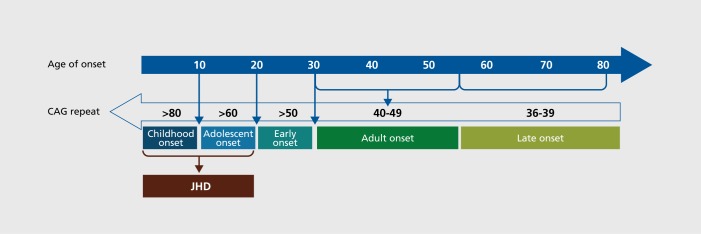
Huntington disease (HD) is an autosomal dominant, neurodegenerative disorder with a primary etiology of striatal pathology. The Huntingtin gene (HTT) has a unique feature of a DNA trinucleotide (triplet) repeat, with repeat length ranging from 10 to 35 in the normal population. Repeat lengths between 36 and 39 cause HD at reduced penetrance (some will get the disease, others won't) and when expanded to 40 or more repeats (mHTT), causes HD at full penetrance (every person with this length or beyond will definitely develop the disease). The symptoms of HD may be motor, cognitive, and psychiatric, and are consistent with the pathophysiology of frontostriatal circuitry malfunction. Expressed ubiquitously and throughout the entire life cycle (development through adulthood), mHTT causes initial dysfunction and eventual death of a specific cell population within the striatum. Although all areas of the brain are eventually affected, the primary pathology of the disease is regionally specific. As a single-gene disorder, HD has the distinction of having the potential of treatment that is aimed directly at the known pathogenic mechanism by gene silencing, providing hope for neuroprotection and ultimately, prevention.
Overview
The claims and statistics of this paper haven’t been checked yet.
Free: it reads the open-access text and checks the first 5 claims that cite a source we can check. Create a free account to check every claim.
Integrity signals
Registry
Cites
Statistics
Figures
Verification
Claims the paper makes
The claims and statistics of this paper haven’t been checked yet.
Free: it reads the open-access text and checks the first 5 claims that cite a source we can check. Create a free account to check every claim.
Claims other papers make about this one
Each is checked against this paper’s own text: does it say what the citing paper says it does?
The cited source says what the claim attributes to it.
In the citing paper
“Unlike AD and PD, HD follows an autosomal dominant inheritance pattern and presents earlier in life, typically between 30 and 50 years [49,50].”
From The Impact of Neurotoxin Proteins Trafficked by Primary Cilia and Extracellular Vesicles in Neurodegenerative Diseases (2025) · cites this paper as [49]
Self-check
Percentages, sums and reported differences re-computed from the paper’s own numbers.
The self-check needs the paper’s full text.
Citations
Cites
Tabrizi, S. J., Langbehn, D. R., Leavitt, B. R., Roos, R. A., Durr, A., Craufurd, D., Kennard, C., Hicks, S. L., Fox, N. C., Scahill, R. I., et al. (2009) · The Lancet Neurology · doi:10.1016/s1474-4422(09)70170-x · Cited by 984
Browne, S. E., Bowling, A. C., Macgarvey, U., Baik, M. J., Berger, S. C., Muquit, M. M. K., Bird, E. D., & Beal, M. F. (1997) · Annals of Neurology · doi:10.1002/ana.410410514 · Cited by 885
Nasir, J., Floresco, S. B., O'Kusky, J. R., Diewert, V. M., Richman, J. M., Zeisler, J., Borowski, A., Marth, J. D., Phillips, A. G., & Hayden, M. R. (1995) · Cell · doi:10.1016/0092-8674(95)90542-1 · Cited by 872
Langbehn, D., Brinkman, R., Falush, D., Paulsen, J., Hayden, M., & on behalf of an International Huntington's Disease Collaborative Group (2004) · Clinical Genetics · doi:10.1111/j.1399-0004.2004.00241.x · Cited by 817
Zeitlin, S., Liu, J.-P., Chapman, D. L., Papaioannou, V. E., & Efstratiadis, A. (1995) · Nature Genetics · doi:10.1038/ng1095-155 · Cited by 802
Huntington disease: Clinical care and evaluation
Shoulson, I., & Fahn, S. (1979) · Neurology · doi:10.1212/wnl.29.1.1 · Cited by 746
Normal huntingtin function: an alternative approach to Huntington's disease
Cattaneo, E., Zuccato, C., & Tartari, M. (2005) · Nature Reviews Neuroscience · doi:10.1038/nrn1806 · Cited by 657
Role of brain-derived neurotrophic factor in Huntington's disease
ZUCCATO, C., & CATTANEO, E. (2007) · Progress in Neurobiology · doi:10.1016/j.pneurobio.2007.01.003 · Cited by 552
The hunt for huntingtin function: interaction partners tell many different stories
Harjes, P., & Wanker, E. E. (2003) · Trends in Biochemical Sciences · doi:10.1016/s0968-0004(03)00168-3 · Cited by 539
Onset and rate of striatal atrophy in preclinical Huntington disease
Aylward, E. H., Sparks, B. F., Field, K. M., Yallapragada, V., Shpritz, B. D., Rosenblatt, A., Brandt, J., Gourley, L. M., Liang, K., Zhou, H., et al. (2004) · Neurology · doi:10.1212/01.wnl.0000132965.14653.d1 · Cited by 408
Research works printed but not linked: 1
- Aylward EH. Sparks BF. Feild KM. et al Onset and rate of striatal atrophy in preclinical Huntington's disease. Neurology. 2004 63 1 66 72 15249612 · DOI · Paper page
Cited by
Items 101–164 of 164
An Update on Parkinson’s Disease and its Neurodegenerative Counterparts
Adam, H., Gopinath, S. C. B., Arshad, M. K. M., Adam, T., Subramanıam, S., & Hashim, U. (2023) · Current Medicinal Chemistry · doi:10.2174/0929867330666230403085733 · Cited by 5
Investigating Neuron Degeneration in Huntington’s Disease Using RNA-Seq Based Transcriptome Study
Sneha, N. P., Dharshini, S. A. P., Taguchi, Y., & Gromiha, M. M. (2023) · Genes · doi:10.3390/genes14091801 · Cited by 4
Treatment of Behavioral Disinhibition in Huntington's Disease With Valproic Acid
Whiting, W. L., Velasco, R., & Stewart, J. T. (2017) · Journal of Clinical Psychopharmacology · doi:10.1097/jcp.0000000000000818 · Cited by 4
“This leads to striatal atrophy, manifesting clinically as choreiform movements, cognitive impairment, and psychiatric changes.(1) The latter is inevitable in HD, often antedating themovement disorder, and may be difficult to treat.”
BackgroundInfluence of the Microbiota Through the Gut-Brain Axis in Neurological Diseases
Guarnotta, V., Mandarino, F. V., Fasulo, E., Maida, M. F., Laterza, L., Sferrazza, S., Raimondo, D., & Sinagra, E. (2024) · Integrated science · doi:10.1007/978-3-031-73061-0_20 · Cited by 3
Bartoszek, A., Aubeeluck, A., Stupple, E. J. N., Bartoszek, A., Kocka, K., & Ślusarska, B. J. (2019) · International Journal of Environmental Research and Public Health · doi:10.3390/ijerph16132323 · Cited by 4
“and visual and spatial functions, problems with organization, planning and multitasking, difficulties with decision-making and with dealing with new situations [7].”
BackgroundGadde, S. G. S., Srinivas, K., Vaka, B., & Vadapalli, S. K. (2023) · International Conference on Bio Signals, Images, and Instrumentation (ICBSII) · doi:10.1109/icbsii58188.2023.10181057 · Cited by 4
“Nopoulos et al [16] discussed about the path etiology of Huntington’s disease.”
BackgroundDatta, N. (2024) · Columbia Undergraduate Science Journal · doi:10.52214/cusj.v17i1.10288 · Cited by 3
Callari, A., & Miniati, M. (2019) · Current Psychiatry Research and Reviews · doi:10.2174/1573400515666190411142109 · Cited by 3
Sorek, M., Oweis, W., Nissim‐Rafinia, M., Maman, M., Simon, S., Hession, C. C., Adiconis, X., Simmons, S., Sanjana, N. E., Shi, X., et al. (2020) · bioRxiv (Cold Spring Harbor Laboratory) · doi:10.1101/2020.12.02.398263 · Cited by 3
Microfluidics for Brain Endothelial-Astrocytic InteractionsPreprint
Sanapathi, J., Vipparthi, P., Sosnik, A., & Kumarasamy, M. (2023) · Preprints.org · doi:10.20944/preprints202306.1121.v1 · Cited by 3
Danna, R., Kondle, S., Amar, O., Mabourakh, M., Chen, G., Fadol, W. B., & Mohieldin, A. M. (2025) · Biology · doi:10.3390/biology14121787 · Cited by 2
“Unlike AD and PD, HD follows an autosomal dominant inheritance pattern and presents earlier in life, typically between 30 and 50 years [49,50].”
Fujiwara, T., Kariya, Y., Kobayashi, K., Matsui, S., & Takada, T. (2025) · npj Systems Biology and Applications · doi:10.1038/s41540-025-00579-x · Cited by 2
RNA G-quadruplexes mediated protein aggregation in neurodegenerative diseases
Guan, T., Zeng, L., Liu, M., Liu, Y., Wu, Y., Mu, Y. G., Tan, E. K., & Zhou, Z. D. (2025) · Ageing Research Reviews · doi:10.1016/j.arr.2025.103006 · Cited by 3
No Evidence of Early Developmental Delay in Juvenile‐Onset Huntington's Disease Patients
Olson, L., Dickens, S., Schultz, J. L., Neema, M., & Nopoulos, P. (2024) · Movement Disorders Clinical Practice · doi:10.1002/mdc3.14287 · Cited by 2
Self-citationHale, H. K., Elias, K. M., Ho, S., & Kwakye, G. F. (2025) · International Journal of Molecular Sciences · doi:10.3390/ijms262110672 · Cited by 2
Srivastava, P., Talwar, M., Yadav, A., Choudhary, A., Mohanty, S., Bharti, S., Narad, P., & Sengupta, A. (2020) · F1000Research · doi:10.12688/f1000research.25713.2 · Cited by 4
Kuijper, E. C., Toonen, L. J. A., Overzier, M., Tsonaka, R., Hettne, K. M., Roos, M., van Roon‐Mom, W., & Mina, E. (2022) · Molecular Neurobiology · doi:10.1007/s12035-021-02680-8 · Cited by 2
Huntington’s Disease: A Neurodegenerative Disorder
Jayasree, R., Yoga Mithra, S., & Ravi, S. (2024) · Springer eBooks · doi:10.1007/978-981-97-1777-4_15 · Cited by 2
HUNTINGTON’S DISEASE: CURRENT ADVANCES AND FUTURE PROSPECTS
N., B. L. J., & Ramanathan, A. (2021) · International Journal of Pharmacy and Pharmaceutical Sciences · doi:10.22159/ijpps.2021v13i12.42979 · Cited by 2
“Metabolic symptoms Weight loss and sleep disturbance [6] Miscellaneous Dysphasia (combination of motor and language difficulties), dysphagia (combination of motor problems, impulsivity, and distractibility) [15-18]”
BackgroundHuntington's disease: the role of dentistry in the multidisciplinary team
Critchley, E., O'Mahony, F., Lemon, E., & Adkins, A. (2022) · Dental Update · doi:10.12968/denu.2022.49.7.577 · Cited by 1
Hutnyan, M., Wilkey, J., & Rosenstein, L. D. (2025) · The Clinical Neuropsychologist · doi:10.1080/13854046.2025.2596799 · Cited by 1
Organelle-orchestrated cGAS-STING signaling and its role in neurodegeneration
Liu, J.-Y., Sheng-ye, L., Ran, L.-X., Qiao, W., Zhang, F. Y., Zhang, K.-S., Liang, X.-X., Liu, M., Yu, Z.-H., Wei, M., et al. (2026) · Pharmacological Research · doi:10.1016/j.phrs.2026.108216 · Cited by 2
Cuturic, M. (2020) · Springer eBooks · doi:10.1007/978-3-030-38606-1_8 · Cited by 2
Immunotherapy in Neurodegenerative Disorders
Kamthe, D., Gosavi, N., & Nikam, V. S. (2020) · Springer eBooks · doi:10.1007/978-981-15-9038-2_5 · Cited by 2
Esfahanian, N., Nelson, M. E., Autenried, R., Pattison, J. S., Callegari, E. A., & Rezvani, K. S. (2021) · Cellular and Molecular Neurobiology · doi:10.1007/s10571-021-01106-2 · Cited by 1
“In vivo studies were carried out in two regions of mouse, striatum and hippocampus, since these two regions particularly are affected in neurodegenerative diseases (Moodley and Chan 2014; Nopoulos 2016).”
BackgroundFactors Influencing Discharges to Hospice for Patients With Late-Stage Huntington’s Disease
Ogilvie, A. C., Carnahan, R. M., Mendizabal, A., Gilbertson‐White, S., Seaman, A. T., Chrischilles, E. A., & Schultz, J. L. (2024) · American Journal of Hospice and Palliative Medicine® · doi:10.1177/10499091241274725 · Cited by 1
An Alternate View of Neuroprotection with Peptides in Alzheimer’s Disease
King, S. P., & Suphioglu, C. (2020) · IntechOpen eBooks · doi:10.5772/intechopen.91065 · Cited by 1
Yetişkin Nörogenez ve Nörodejeneratif Hastalıklarda Büyüme Faktörlerinin Rolü
Toprak, F., Toprak, S. F., & Sözer, S. (2021) · Experimed · doi:10.26650/experimed.2021.831169 · Cited by 2
Zamora, C. A., Muhleman, M., & Castillo, M. (2021) · Springer eBooks · doi:10.1007/978-3-030-82367-2_35 · Cited by 1
Cavanna, A. E. (2018) · Springer eBooks · doi:10.1007/978-3-319-89330-3_8 · Cited by 1
Moreno, R., & Fernánda, M. (2018)
Korpela, S., Sundblom, J., Zetterberg, H., Constantinescu, R., Svenningsson, P., Paucar, M., & Niemelä, V. (2021) · bioRxiv (Cold Spring Harbor Laboratory) · doi:10.1101/2021.09.22.461351
“These changes have shown to be most prominent in capsula interna and 8 striatum [3].”
BackgroundCurrent Trends of Stem Cells in Neurodegenerative Diseases
Tsagkaris, C., Moysidis, D. V., Papazoglou, Α. S., Khan, A., Papadakos, S. P., Louka, A. M., Scordilis, D. M., Shkodina, A. D., Varmpompiti, K., Batiha, G. E., et al. (2022) · Nutritional neurosciences · doi:10.1007/978-981-15-9781-7_14
Maladie de Huntington et syndromes apparentés
Lafoucrière, D., Fraisse, S., Bled, D., Goirand, F., Naour, C. L., Jameau, L., & Goizet, C. (2022) · Elsevier eBooks · doi:10.1016/b978-2-294-76331-1.00032-x
Atención odontológica en un paciente con síndrome raro: enfermedad de Huntington. Reporte de caso
Figueiredo, M. C., Borges, B., Potrich, A. R. V., Gouvêa, D. B., & Liberman, J. (2021) · Odontología · doi:10.29166/odontologia.vol23.n1.2021-e2652
“El tratamiento es sintomático; la Tetrabenazina es la única droga con una indicación licenciada para ser utilizada en pacientes con EH en Reino Unido para tratar movimientos involuntarios 5 .”
BackgroundEvolutionary, Protein–Protein Interaction (PPI), and Domain–Domain Analyses in Huntington’s Disease
Gadde, S. G. S., Pravallika, K., & Srinivas, K. (2023) · Lecture notes in electrical engineering · doi:10.1007/978-981-99-6690-5_2
Huntington's Disease: A Report of an Interesting Case and Literature Review
Sharma, P. K., Aram, A., Polaka, Y., & Pandian, V. (2024) · Cureus · doi:10.7759/cureus.55443 · Cited by 1
“The genetic underpinnings of HD entail the occurrence of a CAG trinucleotide repeat expansion above 35-40 repeats on the huntingtin (HTT) gene located on chromosome 4 [2].”
Age-related disease: Central nervous system
Fossel, M. (2024) · Elsevier eBooks · doi:10.1016/b978-0-443-15500-0.00005-0
Sorek, M., Oweis, W., Nissim‐Rafinia, M., Maman, M., Simon, S., Hession, C. C., Adiconis, X., Simmons, S., Sanjana, N. E., Shi, X., et al. (2021) · Figshare · doi:10.6084/m9.figshare.14168188
Sorek, M., Oweis, W., Nissim‐Rafinia, M., Maman, M., Simon, S., Hession, C. C., Adiconis, X., Simmons, S., Sanjana, N. E., Shi, X., et al. (2021) · Figshare · doi:10.6084/m9.figshare.14168167
Sorek, M., Oweis, W., Nissim‐Rafinia, M., Maman, M., Simon, S., Hession, C. C., Adiconis, X., Simmons, S., Sanjana, N. E., Shi, X., et al. (2021) · Figshare · doi:10.6084/m9.figshare.14168182
Sorek, M., Oweis, W., Nissim‐Rafinia, M., Maman, M., Simon, S., Hession, C. C., Adiconis, X., Simmons, S., Sanjana, N. E., Shi, X., et al. (2021) · Figshare · doi:10.6084/m9.figshare.14168173
MICRO-SATELLITE DNA ASSOCIATE WITH DISEASES AND CANCERS
Rwandzy, H. I. I., Hidayat, H. J., & Sulaiman, S. H. (2024) · Qalaai Zanist Scientific Journal · doi:10.25212/lfu.qzj.9.1.52 · Cited by 2
Tùng, B. T., Trang, V. T. T., & Anh, N. T. V. (2024) · Elsevier eBooks · doi:10.1016/b978-0-443-16013-4.00004-x · Cited by 1
Recent aspects in the molecular genetics of Huntington's disease
Mostafa, O. A. (2024) · Elsevier eBooks · doi:10.1016/b978-0-443-15702-8.00022-1
Zemskaya, N. V., Platonova, E. Y., Ришатовна, П. Н., Shaposhnikov, M. V., & Moskalev, A. (2025) · Proceedings of the Komi Science Centre of the Ural Division of the Russian Academy of Sciences · doi:10.19110/1994-5655-2024-9-84-91 · Cited by 1
Neema, M., Halabi, N. M., Nopoulos, P., Freedberg, M., & the ChANGE-HD investigators, C. (2025) · medRxiv · doi:10.1101/2025.10.22.25338583
Self-citationNoureldeen, M. E., Shahin, N. N., Amin, H. A. A., El-Sawalhi, M. M., & Ghaiad, H. R. (2024) · Figshare · doi:10.6084/m9.figshare.27116013
Sorek, M., Oweis, W., Nissim-Rafinia, M., Maman, M., Simon, S., Hession, C. C., Adiconis, X., Simmons, S., Sanjana, N. E., Shi, X., et al. (2021) · Figshare · doi:10.6084/m9.figshare.14168194
Sorek, M., Oweis, W., Nissim-Rafinia, M., Maman, M., Simon, S., Hession, C. C., Adiconis, X., Simmons, S., Sanjana, N. E., Shi, X., et al. (2021) · Figshare · doi:10.6084/m9.figshare.14168161
Wise, L., Pfanner, M., Duck, E., & Yang, W.-Y. (2026) · SSRN Electronic Journal · doi:10.2139/ssrn.6160530
Abjean, L. (2019) · theses.fr (ABES) · doi:10.70675/f664e003zf93fz467eza6a3z3d953eaffe4e
“Au contraire, la longueur de la queue polyQ aurait moins d’impact sur la progression de la maladie, suggérant un effet précoce du nombre de CAG sur la pathogenèse de la MH (Nopoulos, 2016).”
BackgroundAlzarea, S. I., Alsahli, T. G., Alzarea, A. I., Almutairi, M., Alquraini, A., Zafar, A., & Sayyed, N. (2026) · Molecular Neurobiology · doi:10.1007/s12035-026-05946-1
Nanocarriers mediated DNA repair mechanism against neurological disorders
Bora, S., Jadav, M., Kulhari, H., & Pooja, D. (2026) · Elsevier eBooks · doi:10.1016/b978-0-443-33623-2.00009-x
Progressive Huntington’s disease with neuropsychiatric predominance across fragmented care settings
Tomlinson, G. M., & Gupta, M. (2026) · BMJ Case Reports · doi:10.1136/bcr-2026-273348
Neema, M., Halabi, N. M., Nopoulos, P., Freedberg, M., & the ChANGE-HD investigators, C. (2026) · PLoS ONE · doi:10.1371/journal.pone.0336088
Self-citationSabouri, E., Shahmoradi, T., Keshvari, N. Z., khodaee, P., Saleki, K., & Rezaei, N. (2026) · Reviews in the Neurosciences · doi:10.1515/revneuro-2026-0064
“Huntington ’ s disease (HD) is a rare, autosomal dominant neurodegenerative disorder associated with the accumulation of small, fragmented proteins contributing to neuro-degeneration and subsequent motor impairments and weight loss due to a mutation in the Huntingtin (HTT) gene (Nopoulos 2016).”
van Beek, D., Iyer, A., Ehrhart, F., Evelo, C. T., de Kok, T. M. C. M., Arts, I. C. W., Adriaens, M. E., & Kutmon, M. (2026) · Bioinformatics · doi:10.1093/bioinformatics/btag592
“Huntington’s disease (HD) is a fatal autosomal dominant neuro-degenerative disorder caused by an expansion of CAG repeats in the huntingtin (HTT) gene, with a prevalence of 12 in 1 00 000 people of European descent (Nopoulos 2016).”
Selecting the optimal study design!
Albabtain, M. A., AlRasheed, M. M., Arafat, A. A., Breitinger, H., Breitinger, U., Elsisi, G. H., Gaber, A., Gumaa, M., Hozien, M., Abdelghany, R. M., et al. (2026) · Elsevier eBooks · doi:10.1016/b978-0-443-45595-7.00015-7
Therapeutic Potential of Tea and Its Compounds in the Central Nervous System Disorders
Dragan, J., Koziorowska-Gawron, E., Pietkiewicz, M., & Pokryszko‐Dragan, A. (2026) · Nutrients · doi:10.3390/nu18213512
Metadata
- Authors
- Nopoulos, P. C.
- Affiliations
- Department of Psychiatry, University of Iowa, Iowa City, Iowa, USA
- Venue
- Dialogues in Clinical Neuroscience
- Publisher
- Informa UK Limited
- Published
- 2016-03-31
- Volume
- 18
- Issue
- 1
- Pages
- 91-98
- ISSN
- 1294-8322 (ISSN-L)
- 1958-5969
- PMC
- PMC4826775
- OpenAlex
- W2335810313
- Cited by
- 161
- References
- 61
- Citations by year
- 2026: 12 · 2025: 14 · 2024: 22 · 2023: 21 · 2022: 23 · 2021: 22 · 2020: 21 · 2019: 12 · 2018: 8 · 2017: 6
- FWCI
- 4.86
- Type
- journal article
- Language
- en
- Open access
- diamond
- doi.org
- Licence
- Locations
- Dialogues in Clinical Neuroscience (publishedVersion, cc-by-nc-nd)
- Europe PMC (PubMed Central) (publishedVersion, cc-by-nc-nd)
- PubMed Central (publishedVersion, cc-by-nc-nd)
- PubMed (publishedVersion)
- Topics
- Life Sciences › Neuroscience › Cellular and Molecular Neuroscience › Genetic Neurodegenerative Diseases
- Health Sciences › Medicine › Clinical Neurology › Deep Brain Stimulation and Movement Disorders
- Life Sciences › Neuroscience › Neurology › Neurological diseases and metabolism
- Keywords
- Huntington's disease, huntingtin gene, trinucleotide repeat expansion, striatal degeneration, incomplete penetrance, frontostriatal circuits, neurodegeneration, gene silencing therapy, neuroprotection
- MeSH terms
- Huntingtin Protein, Animals, Corpus Striatum, Humans, Huntington Disease, Genetic Therapy, Neurodegenerative Diseases
About these checks
Registry, retraction, Cites and statistics results are computed, not judged, with one exception: a printed reference that no index lists is read once by a model before it counts as a citation error. Claims are extracted by a model and kept only when their quote appears verbatim in the text; each cited source is then checked, with a model’s help, for whether it says what the claim relies on. Those verdicts can be wrong — read the claim’s quote and the cited source before relying on one.
Statistics and arithmetic are recomputed, not judged.
Confidence bands are shown only for fields calibrated on our annotated test set. None is calibrated yet, so no band is shown.
What counts as a claim ›How we measure confidence ›How we check this ›
Are you an author, or do you see a problem with this page? Request a review
Data sources
Bibliographic data: Semantic Scholar, OpenAlex, Crossref.
Contains information from the Semantic Scholar Academic Graph Datasets, made available under the ODC Attribution License (ODC-BY 1.0).
Semantic Scholar’s data is described in: Kinney, R., et al. (2023). The Semantic Scholar Open Data Platform. arXiv:2301.10140.
