

Metabolic syndrome in psychiatric patients: overview, mechanisms, and implications
Open accessThe DOI matches its Crossref record; 78 of the 78 references it cites were found in a registry or an index.
Abstract
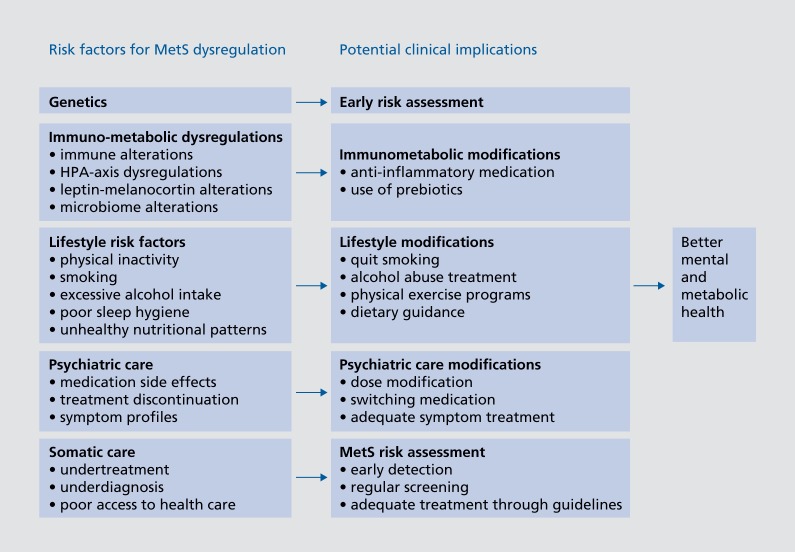
Psychiatric patients have a greater risk of premature mortality, predominantly due to cardiovascular diseases (CVDs). Convincing evidence shows that psychiatric conditions are characterized by an increased risk of metabolic syndrome (MetS), a clustering of cardiovascular risk factors including dyslipidemia, abdominal obesity, hypertension, and hyperglycemia. This increased risk is present for a range of psychiatric conditions, including major depressive disorder (MDD), bipolar disorder (BD), schizophrenia, anxiety disorder, attention-deficit/hyperactivity disorder (ADHD), and posttraumatic stress disorder (PTSD). There is some evidence for a dose-response association with the severity and duration of symptoms and for a bidirectional longitudinal impact between psychiatric disorders and MetS. Associations generally seem stronger with abdominal obesity and dyslipidemia dysregulations than with hypertension. Contributing mechanisms are an unhealthy lifestyle and a poor adherence to medical regimen, which are prevalent among psychiatric patients. Specific psychotropic medications have also shown a profound impact in increasing MetS dysregulations. Finally, pleiotropy in genetic vulnerability and pathophysiological mechanisms, such as those leading to the increased central and peripheral activation of immunometabolic or endocrine systems, plays a role in both MetS and psychiatric disorder development. The excess risk of MetS and its unfavorable somatic health consequences justifies a high priority for future research, prevention, close monitoring, and treatment to reduce MetS in the vulnerable psychiatric patient.
Overview
The claims and statistics of this paper haven’t been checked yet.
Free: it reads the open-access text and checks the first 5 claims that cite a source we can check. Create a free account to check every claim.
Integrity signals
Registry
Cites
Statistics
Figures
Verification
Claims the paper makes
The claims and statistics of this paper haven’t been checked yet.
Free: it reads the open-access text and checks the first 5 claims that cite a source we can check. Create a free account to check every claim.
Claims other papers make about this one
Each is checked against this paper’s own text: does it say what the citing paper says it does?
The source backs part of the claim, not all of it — or backs it for a different population, condition or comparison.
In the citing paper
“Abnormal LDL levels have been reported to be associated with multiple medical commodities in UPD and bipolar disorder, such as metabolic syndrome and vascular disease63,64.”
From Optimizing multi-domain hematologic biomarkers and clinical features for the differential diagnosis of unipolar depression and bipolar depression (2023) · doi:10.1038/s44184-023-00024-z · cites this paper as [63]
Experimental — accuracy not yet measured
Self-check
Percentages, sums and reported differences re-computed from the paper’s own numbers.
The self-check needs the paper’s full text.
Citations
Cites
Human gut microbes associated with obesity
Ley, R. E., Turnbaugh, P. J., Klein, S., & Gordon, J. I. (2006) · Nature · doi:10.1038/4441022a · Cited by 8,785
Eckel, R. H., Alberti, K., Grundy, S. M., & Zimmet, P. Z. (2010) · The Lancet · doi:10.1016/s0140-6736(09)61794-3 · Cited by 6,295
The Metabolic Syndrome and Cardiovascular Risk
Mottillo, S., Filion, K. B., Genest, J., Joseph, L., Pilote, L., Poirier, P., Rinfret, S., Schiffrin, E. L., & Eisenberg, M. J. (2010) · Journal of the American College of Cardiology · doi:10.1016/j.jacc.2010.05.034 · Cited by 3,009
Otte, C., Gold, S. M., Penninx, B. W., Pariante, C. M., Etkin, A., Fava, M., Mohr, D. C., & Schatzberg, A. F. (2016) · Nature Reviews Disease Primers · doi:10.1038/nrdp.2016.65 · Cited by 2,269
Self-citationRisks of all-cause and suicide mortality in mental disorders: a meta-review
Chesney, E., Goodwin, G. M., & Fazel, S. (2014) · World Psychiatry · doi:10.1002/wps.20128 · Cited by 2,115
Vancampfort, D., Stubbs, B., Mitchell, A. J., De Hert, M., Wampers, M., Ward, P. B., Rosenbaum, S., & Correll, C. U. (2015) · World Psychiatry · doi:10.1002/wps.20252 · Cited by 1,271
Mitchell, A. J., Vancampfort, D., Sweers, K., van Winkel, R., Yu, W., & De Hert, M. (2013) · Schizophrenia Bulletin · doi:10.1093/schbul/sbr148 · Cited by 1,082
From gut dysbiosis to altered brain function and mental illness: mechanisms and pathways
Rogers, G. B., Keating, D. J., Young, R. L., Wong, M.-L., Licinio, J., & Wesselingh, S. (2016) · Molecular Psychiatry · doi:10.1038/mp.2016.50 · Cited by 969
Köhler, O., Benros, M. E., Nordentoft, M., Farkouh, M. E., Iyengar, R. L., Mors, O., & Krogh, J. (2014) · JAMA Psychiatry · doi:10.1001/jamapsychiatry.2014.1611 · Cited by 941
Hannestad, J., DellaGioia, N., & Bloch, M. (2011) · Neuropsychopharmacology · doi:10.1038/npp.2011.132 · Cited by 914
Research works printed but not linked: 3
- Newcomer JW., 2007, J Clin Psychiatry., 68, 8
- Vallecillo G., SubstAbus. 2017 August 3. Epub ahead of print. doi:10. 1080/08897077.2017.1363122.
- Sari-Sarraf V., 2015, Int J Gen Med., 8, 203
Cited by
Items 201–300 of 599
Fentie, D., & Yibabie, S. (2023) · BMC Cardiovascular Disorders · doi:10.1186/s12872-023-03327-3 · Cited by 11
Metabolic Syndrome and Adipokines Profile in Bipolar Depression
Bilska, K., Dmitrzak‐Węglarz, M., Osip, P., Pawlak, J., Paszyńska, E., & Permoda-Pachuta, A. (2023) · Nutrients · doi:10.3390/nu15214532 · Cited by 12
“…psychiatric patients to MS include genetic, unhealthy lifestyle (e.g., smoking, excessive alcohol intake, poor sleep hygiene, physical inactivity, and unhealthy nutritional patterns), but also the use of psychotropic medication (antipsychotics, antidepressants, and mood stabilizers) [20–23].”
BackgroundInfluentialDeterminants and outcomes of health-promoting lifestyle among people with schizophrenia
Fan, Y., Zhou, L., Chen, X., Su, J., & Zhong, S. (2024) · BMC Psychiatry · doi:10.1186/s12888-024-05625-2 · Cited by 11
“Among these conditions, metabolic syndrome (MetS), characterized by central obesity, high blood pressure, hyperglycemia, and dyslipidemia, emerges as a worthy-considering physical illness concern for people with schizophrenia [4, 5].”
BackgroundBMI-NECK: A simple assessment of risk of obstructive sleep apnea in schizophrenia
Szaulińska, K., & Wichniak, A. (2020) · Journal of Psychiatric Research · doi:10.1016/j.jpsychires.2020.03.005 · Cited by 13
Introducing sexual dysfunction in mental care
Gombert, M., Ballester, P., Segura, A., & Peiró, A. M. (2020) · Expert Opinion on Drug Safety · doi:10.1080/14740338.2020.1849135 · Cited by 11
“ness that used to present increased risk of some comorbidities as metabolic syndrome (characterized by abdominal obesity, hypertension, dyslipidemia, and hyperglycemia) [42], sleep disorders, neurological or brain disorders like epilepsy or any intellectual disability [43].”
BackgroundSilić, A., Vukojević, J., Peitl, V., Binder, M. D., & Karlović, D. (2021) · Acta Neuropsychiatrica · doi:10.1017/neu.2021.30 · Cited by 13
Eight-year retrospective study of young adults in a diabetes transition clinic
Sritharan, A., Osuagwu, U. L., Ratnaweera, M., & Simmons, D. (2021) · International Journal of Environmental Research and Public Health · doi:10.3390/ijerph182312667 · Cited by 9
“[20] In this study, the smoking rate was significantly higher among people with diabetes who had a mental health condition compared to those without and as shown in one study, the smoking rate may also increase alongside the severity of the mental health condition [21].”
BackgroundGeneral medical conditions and mortality in women with postpartum psychiatric disorders
Johannsen, B. M. W., Laursen, T. M., Bech, B. H., & Munk‐Olsen, T. (2020) · Acta Psychiatrica Scandinavica · doi:10.1111/acps.13232 · Cited by 12
“, schizophrenia and bipolar disorder) with later severe chronic medical conditions (26, 27), especially for cardiovascular diseases, respiratory diseases, and diabetes.”
BackgroundResultYan, C., zhou, Y., Fu, J., Wang, H., & Liu, C. (2024) · Frontiers in Psychiatry · doi:10.3389/fpsyt.2024.1467142 · Cited by 10
Cheon, S. Y., & Song, J. (2025) · Molecular Neurobiology · doi:10.1007/s12035-025-04797-6 · Cited by 12
“Due to potentials of MetS to arise multiple diseases and low quality of life, recently MetS is a key health issue [3–5].”
Prakash, C., Moran, P., & Mahar, R. (2025) · International Journal of Pharmaceutics · doi:10.1016/j.ijpharm.2025.125554 · Cited by 10
Effects of malnutrition on length of stay in patients hospitalized in an acute psychiatric ward
Giménez‐Palomo, A., Gomes‐da‐Costa, S., Borràs, R., Pons-Cabrera, M. T., Cubero, A. D.-M., Arbelo, N., Leyes, P., Forga, M., Mateu-Salat, M., Pereira‐Fernandes, P. M., et al. (2023) · Acta Psychiatrica Scandinavica · doi:10.1111/acps.13598 · Cited by 10
“It is widely known that several psychiatric disorders and pharmacological treatments commonly used in psychiatric clinical practice have an impact on metabolism and medical comorbidities.(23) Moreover, the available evidence indicates that somatic conditions, such as impaired glucose metabolism, may have an impact on…”
BackgroundJohn, U., Rumpf, H., Hanke, M., & Meyer, C. (2023) · Scientific Reports · doi:10.1038/s41598-023-43669-8 · Cited by 10
Brydges, H. T., Onuh, O. C., Friedman, R., Barrett, J., Betensky, R. A., Lu, C. P.-J., Caplan, A. S., Alavi, A., & Chiu, E. S. (2024) · American Journal of Clinical Dermatology · doi:10.1007/s40257-024-00844-5 · Cited by 10
“To address this, subgroup analyses (Black race and female sex) were employed to control for potential confounders [74–77].”
Incidence and risk factors of depression in patients with metabolic syndrome
Zhou, L.-N., Ma, X., & Wang, W. (2024) · World Journal of Psychiatry · doi:10.5498/wjp.v14.i2.245 · Cited by 10
Chu, H., Zhu, H., Ma, J., Jiang, Y., Cui, C., Yan, X., Li, Q., Zhang, X., Chen, D., Li, X., et al. (2024) · Neuropsychiatric Disease and Treatment · doi:10.2147/ndt.s501527 · Cited by 11
Laurent, N., Bellamy, E. L., Hristova, D., & Houston, A. (2025) · Frontiers in Nutrition · doi:10.3389/fnut.2025.1549782 · Cited by 11
Skowrońska, A., Gawlik-Kotelnicka, O., Margulska, A., & Strzelecki, D. (2023) · Metabolites · doi:10.3390/metabo13020182 · Cited by 11
“Moreover, depressive disorders often coexist with somatic diseases, further increasing mortality risks [2,3].”
Bulteau, S., Pierres, M. L., Artarit, P., Forestier, B., Michaud, E., Chaslerie, A., Bonnot, O., & Victorri‐Vigneau, C. (2020) · Expert Opinion on Drug Safety · doi:10.1080/14740338.2021.1851678 · Cited by 11
Efthymiou, D., Zekakos, D. X., Papatriantafyllou, E., Ziagkas, E., Petrelis, A. N., & Vassilopoulou, Ε. (2022) · Frontiers in Psychiatry · doi:10.3389/fpsyt.2022.756600 · Cited by 10
“Patients with schizophrenia present various metabolic and inflammatory disturbances related to both the disease itself and the APs medication used (27), leading to an increased risk of MetS (28).”
BackgroundYin, H., Lu, B., Zeng, K., Li, Y., & Ma, J. (2024) · BMC Psychiatry · doi:10.1186/s12888-024-05848-3 · Cited by 10
“Previous studies have shown a biphasic relationship between depression and metabolism, with an increased risk of HL, hypertension, and hyperglycemia in MDD patients [36, 37].”
BackgroundRatke, I., Torsvik, A., Bartz-Johannessen, C. A., Fathian, F., Joa, I., Reitan, S. K., Løberg, E. ‐., Rettenbacher, M. A., Skrede, S., Steen, V. M., et al. (2025) · Brain Behavior & Immunity - Health · doi:10.1016/j.bbih.2025.100959 · Cited by 11
“Altered immune activity has been associated with positive, negative, and cognitive symptoms of schizophrenia, as well as somatic comorbidity (Upthegrove and Khandaker, 2020; Fineberg and Ellman, 2013; Penninx and Lange, 2018).”
Huang, Z., Huang, Z., Du, Z., Gao, X., Jiang, Y., Zhou, Z., & Zhu, H. (2025) · Gut Microbes · doi:10.1080/19490976.2025.2607817 · Cited by 9
Roh, H. W., Chang, Y. Y., Kim, K. Y., Jeon, S. Y., Wang, S., Kim, E., Bae, J. N., & Ryu, S. (2026) · Psychiatry Investigation · doi:10.30773/pi.2025.0400 · Cited by 12
Panati, D., Sudhakar, T., Puthalapattu, S., & Sayeli, V. K. (2020) · Archives of Mental Health · doi:10.4103/amh.amh_4_20 · Cited by 9
Patel, P. J., Weidenfeller, C., Jones, A. P., Nilsson, J., & Hsu, J. (2020) · Neurology and Therapy · doi:10.1007/s40120-020-00221-4 · Cited by 9
“Individuals with schizophrenia have a significantly higher risk of cardiometabolic complications than the general population (5–8-fold), which is often exacerbated by the effects of antipsychotic therapy, especially treatment with atypical antipsychotics [3, 5].”
BackgroundPasco, J. A., Berk, M., Penninx, B. W. J. H., Hyde, N. K., Holloway‐Kew, K. L., West, E. C., Kotowicz, M. A., Anderson, K. B., O'Neil, A. E., Rufus-Membere, P. G., et al. (2023) · Frontiers in Nutrition · doi:10.3389/fnut.2023.1222019 · Cited by 9
“Together they increase the risk for cardiovascular and metabolic disease (6), partly via shared risk factors such as poor diet and physical inactivity driving common pathophysiological pathways including low-grade inflammation (7, 8).”
BackgroundSelf-citationNOS1AP Gene Variants and Their Role in Metabolic Syndrome: A Study of Patients with Schizophrenia
Mednova, I. A., Pozhidaev, I. V., Владимирович, Т. В., Бочарова, А. В., Paderina, D. Z., Boiko, A. S., Fedorenko, O. Y., Kornetova, E. G., Bokhan, N. A., Степанов, В. А., et al. (2024) · Biomedicines · doi:10.3390/biomedicines12030627 · Cited by 9
“In particular, increased risk of MetS and its components is present in a number of psychiatric disorders, including major depressive disorder, bipolar disorder, schizophrenia, generalized anxiety disorder, attention-deficit/hyperactivity disorder, and post-traumatic stress disorder [5–7].”
BackgroundHu, S., Liu, X., Zhang, Y., & Ma, J. (2024) · Early Intervention in Psychiatry · doi:10.1111/eip.13565 · Cited by 9
“Therefore, the adverse effects of MetS-related disorders on the patient's physical health make its prevention, close monitoring, and treatment a priority to reduce its prevalence among vulnerable psychiatric patients (Penninx & Lange, 2018).”
Inflammatory Hematological Ratios in Adolescents with Mental Disorders: A Scoping Review
Popov, M. Y., Popov, Y. V., Kosterin, D. N., & Lepik, O. V. (2024) · Consortium Psychiatricum · doi:10.17816/cp15514 · Cited by 12
“Although the results of 2 studies included in our review indicate an association between IHRs and self-harm/suicidal behaviors [53, 54], the retrospective cross-sectional design of both studies excludes the possibility of using calculated mental disorders than in the general population [96, 97].”
ResultZhu, J.-H., Li, W., Huo, X.-N., Jin, H., Zhang, C.-H., Yun, J.-D., Gao, L.-G., Cheung, T. C. C., Hall, B. J., Yang, B. Q., et al. (2020) · Psychiatric Quarterly · doi:10.1007/s11126-020-09835-1 · Cited by 9
“Furthermore, due to unhealthy lifestyle and medication-induced side effects, patients with SMI have a higher risk of physical comorbidities [4, 5], which could largely increase treatment difficulty if they contract a COVID-19 infection.”
BackgroundBerto, L. F., Suemoto, C. K., Moreno, A. B., da Fonseca, M. D. J. M., Nunes, M. A., Molina, M. D. C. B., Barreto, S. M., Diniz, M. D. F. H. S., Lotufo, P. A., Benseñor, I. M., et al. (2022) · Journal of the Academy of Consultation-Liaison Psychiatry · doi:10.1016/j.jaclp.2022.06.001 · Cited by 10
Quadackers, D. M. C., Liemburg, E. J., Bos, F. M., Doornbos, B., Risselada, A., PHAMOUS investigators, Bartels‐Velthuis, A. A., Bruggeman, R., Castelein, S., Jörg, F., et al. (2023) · BMC Psychiatry · doi:10.1186/s12888-023-05022-1 · Cited by 10
“Other risk-increasing factors are sympathetic overactivity, genetic polymorphisms interacting with cardiovascular risk factors, inflammation, and platelet dysfunction [12].”
BackgroundTorres, N. G., Ruíz-Veguilla, M., Mas, J. O., Gangoso, A. R., Canal‐Rivero, M., Juncal‐Ruíz, M., Gómez‐Revuelta, M., Ayesa‐Arriola, R., Crespo‐Facorro, B., & Vázquez-Bourgón, J. (2022) · Revista de Psiquiatría y Salud Mental · doi:10.1016/j.rpsm.2022.05.003 · Cited by 13
Integrative Medicine as “Medicine”: A Perspective
Mukhopadhyay, S., Holla, B., Bhargav, H., Ramakrishna, K. K., Chikkanna, U., Varambally, S. S., & Gangadhar, B. N. (2022) · Integrative Medicine Reports · doi:10.1089/imr.2022.0054 · Cited by 10
Brain iron load and neuroaxonal vulnerability in adult attention‐deficit hyperactivity disorder
Berberat, J., Kagerer, S. M., Späni, C. B., Hua, J., Bavato, F., Gruber, P., van Zijl, P. C. M., Perroud, N. A., Li, X., Stämpfli, P., et al. (2025) · Psychiatry and Clinical Neurosciences · doi:10.1111/pcn.13806 · Cited by 8
“6 Adult ADHD is often associated with an increased prevalence of cardiovascular risk factors such as smoking, obesity, diabetes 10,11 and altered lipid pro fi les, 11,12 all of which are well established risk-factors for age-related cognitive decline and Alzheimer ’ s disease.”
Fountoulakis, K. Ν., Karakatsoulis, G. N., Abraham, S., Adorjan, K., Ahmed, H. U., Alarcón, R. D., Arai, K., Salihu, A., Berk, M., Levaj, S., et al. (2025) · Psychiatry Research · doi:10.1016/j.psychres.2025.116459 · Cited by 9
“…the metabolic syndrome is related to depression and antidepressants is in accord with the literature (Gramaglia et al., 2018; Kumar et al., 2013; Penninx and Lange, 2018), however, the finding that non-affective psychosis and antipsychotics are not related is not in accord with the literature…”
Jiang, D., Wang, R., Ma, D., Tang, C. L., Liu, Y., Jian, N., Luo, J., Gong, Q., & Chen, Y. (2025) · Schizophrenia Research · doi:10.1016/j.schres.2025.05.027 · Cited by 8
Big data and psychiatry: advances, constraints and future directions
Stein, D. J., Kessler, R. C., Torous, J. B., Garavan, H., van den Heuvel, O. A., Derks, E. M., Mathews, C., Cuijpers, P. J., Salum, G., Andreassen, O. A., et al. (2026) · World Psychiatry · doi:10.1002/wps.70113 · Cited by 8
“Consistent findings show, for example, that bio markers implicating insulin resistance, mitochondrial dysfunc tion, immune system dysfunction, biological aging, metabolic syn drome, and in some cases cardiovascular disease are increased in individuals with various mental disorders 84,85 .”
Self-citationElectroconvulsive therapy and adiposity-related parameters in treatment-resistant depressed patients
Maier, H. B., Pollak, C., Moschny, N., Toto, S., Schlatt, C., Eberlein, C. K., Sperling, W., Kornhuber, J., Kahl, K. G., Bleich, S., et al. (2022) · Journal of Neural Transmission · doi:10.1007/s00702-022-02475-8 · Cited by 8
Godin, O., Olié, É., Fond, G. B., Aouizerate, B., Aubin, V., Bellivier, F., Belzeaux-R, R., Courtet, P., Dubertret, C., Haffen, É., et al. (2024) · Acta Psychiatrica Scandinavica · doi:10.1111/acps.13655 · Cited by 9
“37 Moreover, depressive or manic relapses might result in harmful behaviors, such as unhealthy diet, physical inactivity (for depression) or substance use (alcohol, tobacco, drugs) that are well-known providers of poor physical health and could in turn lead to MetS/ abnormalities.”
BackgroundEspinoza, R. T., & Antongiorgi, Z. D. (2024) · Journal of Ect · doi:10.1097/yct.0000000000000992 · Cited by 8
Metabolic syndrome and depression: evidence from a cross-sectional study of real-world data in Japan
Sugimoto, K., Yamada, T., Kitazawa, A., & Fukuda, Y. (2024) · Environmental Health and Preventive Medicine · doi:10.1265/ehpm.23-00369 · Cited by 9
“…Penninx and Lange summarized that a multitude of genetic vulnerabilities and pathophysiological mechanisms (causing central and peripheral activation of immuno-metabolic and endocrine systems) have been implicated in the development of MetS and psychiatric disorders such as depression [36].”
BackgroundVincenzo, J. D. D., O’Brien, L., Jacobs, I. A., Jawad, M. Y., Ceban, F., Meshkat, S., Gill, H., Tabassum, A., Phan, L., Badulescu, S., et al. (2023) · Nutrients · doi:10.3390/nu15071686 · Cited by 8
Predictors of Weight Gain and Metabolic Indexes among Men Admitted to Forensic Psychiatric Hospital
Hilton, N. Z., Ham, E., Hill, S., Emmanuel, T., & Thege, B. K. (2021) · International Journal of Forensic Mental Health · doi:10.1080/14999013.2021.1952356 · Cited by 9
Nutrition, Overweight, and Cognition in Euthymic Bipolar Individuals Compared to Healthy Controls
Reininghaus, B., Dalkner, N., Schörkhuber, C., Fleischmann, E., Fellendorf, F. T., Ratzenhofer, M., Maget, A., Platzer, M., Bengesser, S., Tmava‐Berisha, A., et al. (2022) · Nutrients · doi:10.3390/nu14061176 · Cited by 9
“In general, a variety of lifestyle factors including reduced physical activity [19] and nutritional factors [20] as well as prevalence of psychiatric symptoms, intake of psychotropic drugs, common neurobiological pathways [21], and stigmatization [22] lead to the increased prevalence of somatic comorbidities in indivi…”
BackgroundGürbüzer, N., Ceyhun, H. A., Öztürk, N., & Kaşalı, K. (2023) · Journal of Attention Disorders · doi:10.1177/10870547221149198 · Cited by 9
Balagová, L., Graban, J., Puhova, A., & Ježová, D. (2019) · Hormone and Metabolic Research · doi:10.1055/a-0928-0758 · Cited by 8
“As more and more attention is being given to metabolic disturbances in psychiatric disorders [30], the evaluation of the impact of tryptophan deficiency on the effects of exercise on adipose tissue metabolism could be an appropriate model to investigate the mechanisms involved.”
BackgroundPerry, S. W., Licinio, J., & Wong, M. (2019) · Heart and Mind · doi:10.4103/hm.hm_13_19 · Cited by 8
Deenik, J. (2019) · Research Publications (Maastricht University) · doi:10.26481/dis.20190522jd · Cited by 11
Special Issue: The intersection of inflammation and metabolism in neuropsychiatric disorders
Felger, J. C., & Capuron, L. (2020) · Brain Behavior and Immunity · doi:10.1016/j.bbi.2020.12.025 · Cited by 9
Liu, X., Li, Y., Yang, W., Chen, X., Li, F., Chen, N., Yin, H., & Cui, J. (2025) · Journal of Affective Disorders · doi:10.1016/j.jad.2025.02.040 · Cited by 7
Chang, E.-W., Huang, J., Lo, S., Huang, C., Yang, Y., & Kornelius, E. (2025) · Frontiers in Pharmacology · doi:10.3389/fphar.2025.1601118 · Cited by 7
Biological Aging Acceleration in Major Depressive Disorder: A Multi‐Omics Analysis
Diniz, B. S., Zhao, S., Drouard, G., Vuoksimaa, E., Ollikainen, M., Lenze, E. J., Xu, M., Fortinsky, R. H., Kuchel, G. A., Kaprio, J. A., et al. (2025) · Aging Cell · doi:10.1111/acel.70310 · Cited by 8
Yuan, Q., Wang, L., Zhu, X., Wu, Z., He, S., Zhang, H., & Lin, D. (2025) · Journal of Affective Disorders · doi:10.1016/j.jad.2025.121026 · Cited by 9
Li, K., Chen, L., Wang, K., Jiang, X., Ji, Y., Fang, S., & Wei, H. (2023) · BMC Psychiatry · doi:10.1186/s12888-023-04882-x · Cited by 9
Botacin, E. C., Duarte, S. M. B., Stefano, J. T., Barbosa, M. E. D., Pessoa, M. G., & de Oliveira, C. P. M. S. (2024) · Arquivos de Gastroenterologia · doi:10.1590/s0004-2803.24612023-128 · Cited by 8
Machine learning reveals connections between preclinical type 2 diabetes subtypes and brain health
Fan, Y., Yuan, J., Han, F., Somekh, J., Peleg, M., Wu, F. L., Jia, Z., Zhu, Y., & Huang, Z. (2025) · Brain · doi:10.1093/brain/awaf057 · Cited by 7
Outcomes of metabolic syndrome and anxiety levels in light and heavy smokers
Şahin, M., & Yüzügüllü, D. (2025) · PeerJ · doi:10.7717/peerj.19069 · Cited by 7
Guliev, C., Lebedyn, Z., Фролова, А. В., Zozulya, K., Moroz, O., Bandera, S., Babii, S., Stetsko, D., Bondarenko, S., Agamaliyeva, V., et al. (2025) · International Journal of Science and Research Archive · doi:10.30574/ijsra.2025.16.1.2072 · Cited by 7
Kloiber, S. M., Jones, B. D. M., Hodsoll, J. P., Chaudhry, I. B., Khoso, A. B., Husain, M. O., Ortiz, A., Goldstein, B. I., Husain, N., Mulsant, B. H., et al. (2021) · Journal of Affective Disorders · doi:10.1016/j.jad.2021.11.032 · Cited by 7
Fentie, D., Derese, T., Yazie, B., & Getachew, Y. (2021) · Diabetology & Metabolic Syndrome · doi:10.1186/s13098-021-00750-4 · Cited by 9
Zhang, L., Yu, W., Zhu, H., Li, H., & Qiao, J. (2022) · World Journal of Clinical Cases · doi:10.12998/wjcc.v10.i21.7495 · Cited by 7
Gao, Z., Xiu, M., Liu, J., Wu, F., & Zhang, X. (2023) · Schizophrenia · doi:10.1038/s41537-023-00346-z · Cited by 7
Xu, H., Liu, L., Yang, Q., Wang, X., Li, Z., Liu, T., & Zhang, X. (2024) · Journal of Affective Disorders · doi:10.1016/j.jad.2024.01.014 · Cited by 8
Ahmed, H. M., Aziz, K. A., Al-Ammari, A., Galadari, M., Alsaadi, A., Alhassani, A., Marzooqi, F. A., AlAhbabi, M., Alsheryani, H., Bahayan, M., et al. (2024) · International Journal of Psychiatry in Clinical Practice · doi:10.1080/13651501.2024.2310847 · Cited by 7
“…affective disorders is associated with a poorer prognosis compared to those without psychotic symptoms (harrow et al., 2000). similarly, it has been shown that the type of psychiatric diagnosis and the symptom profile of the patient could be a risk factor for developing Mets (Penninx & lange 2018).”
BackgroundMa, K., Zhou, T., Pu, C., Zhang, C., Han, X., Yang, L., & Yu, X. (2024) · Brain Sciences · doi:10.3390/brainsci14040310 · Cited by 7
“Obesity contributes to an elevated risk of cardiometabolic diseases, such as type 2 diabetes mellitus, coronary artery disease, dyslipidemia, and hypertension [5,9,10], which are major factors leading to higher mortality rates and reduced life expectancy in schizophrenia [11].”
BackgroundDai, M., Zhang, Y., Chen, Y., Wang, L., & Tian, Y. (2024) · The International Journal of Psychiatry in Medicine · doi:10.1177/00912174241265559 · Cited by 7
“36 Cytokines can cross the blood-brain barrier through saturable active transport systems or indirectly via microglial activation, resulting in reduced neurogenesis in the brain structures responsible for regulating emotions.”
Michaud, J. M., Price, J. C., Deane, H. V., Concepcion, H. A., Coronella, J. A., DeCourcey, H., & Seggio, J. A. (2020) · Biological Rhythm Research · doi:10.1080/09291016.2020.1842970 · Cited by 7
Tryptophan Metabolism and the Microbiome-Gut-Brain Axis
Clarke, G. A., Villalobos-Manríquez, F., & Marin, D. C. (2021) · Oxford University Press eBooks · doi:10.1093/oxfordhb/9780190931544.013.13 · Cited by 14
Khatibi, N., Setayesh, L., Yarizade, H., Mirzababaei, A., Sajadi, F., & Mirzaei, K. (2021) · Clinical Nutrition ESPEN · doi:10.1016/j.clnesp.2021.05.024 · Cited by 9
Karaś-Głodek, M., Skibińska, M., & Suwalska, A. (2023) · PeerJ · doi:10.7717/peerj.15617 · Cited by 8
Deconstructing depression by machine learning: the POKAL-PSY study
Eder, J., Pfeiffer, L., Wichert, S. P., Keeser, B., Simon, M. S., Popovic, D., Glocker, C., Brunoni, A. R., Schneider, A., Gensichen, J. S., et al. (2023) · European Archives of Psychiatry and Clinical Neuroscience · doi:10.1007/s00406-023-01720-9 · Cited by 7
“…typically focus on somatic symptoms, it is important to note that unipolar depression is associated with a range of comorbidities such as increased cardiovascular risk, adiposity, dyslipidemia, as well as high blood pressure and hyperglycemia, resulting in an increased cardiovascular risk [18].”
BackgroundAlpha-neurexins in health and disease
Chofflet, N., Wang, M., Chofflet, M., & Takahashi, H. (2025) · Frontiers in Molecular Neuroscience · doi:10.3389/fnmol.2025.1716782 · Cited by 6
Abram, S. V., Kyner, J. M., Vu, A., Naeem, Z., Sethi, S., Jacob, M., Fryer, S. L., Mathalon, D. H., & Ford, J. M. (2026) · Schizophrenia Bulletin · doi:10.1093/schbul/sbag082 · Cited by 6
Brouwer, J., Wardenaar, K. J., Liemburg, E. J., Doornbos, B., Mulder, H., & Cath, D. C. (2024) · Journal of Affective Disorders · doi:10.1016/j.jad.2024.03.042 · Cited by 6
Green, G., Lochmannová, A., & Porat-Packer, T. (2025) · Journal of Applied Gerontology · doi:10.1177/07334648251353283 · Cited by 6
“In turn, depression has been linked to an increased risk of developing chronic diseases, possibly due to its impact on health behaviors, immune function, and neuroendocrine processes (Keenan-Miller et al., 2007; Penninx & Lange, 2018).”
Micali, N., Miletta, M. C., Clemmensen, C., Pappaianni, E., Lazeyras, F., Cuenoud, B. M., & Sandi, C. (2025) · Translational Psychiatry · doi:10.1038/s41398-025-03591-1 · Cited by 6
“All together these data indicate that KBs exhibit diverse effects on the brain that might be relevant to psychiatric disorders characterized by dysfunction in energy metabolism [58, 59].”
Willadsen, T. G., Siersma, V., Nicolaisdóttir, D. R., Køster‐Rasmussen, R., Reventlow, S. D., & Rozing, M. P. (2022) · Journal of Multimorbidity and Comorbidity · doi:10.1177/26335565221122025 · Cited by 6
“This could probably be ascribed to several factors such as metabolic side effects of psychotrop medication and unhealthy lifestyle, but also shared genetic factors for the mental health disorders and some somatic conditions.(45) The second finding, that there is excess mortality (ROR > 1) if diagnoses coincide and ROR…”
BackgroundMatera, E., Cristofano, G., Furente, F., Marzulli, L., Tarantini, M., Margari, L., Piarulli, F. M., GIACOMO, A. D., & Petruzzelli, M. G. (2022) · Biomedicines · doi:10.3390/biomedicines11010048 · Cited by 6
“This simultaneous treatment could prevent progression in both difficult-to-treat metabolic pathologies and psychiatric disorders that may respond better to psychotropic drugs [52].”
BackgroundMaimaitituerxun, R., Chen, W., Xiang, J., Xie, Y., Kaminga, A. C., Wu, X. Y., Chen, L., Yang, J., Liu, A., & Dai, W. (2023) · Psychiatric Quarterly · doi:10.1007/s11126-023-10040-z · Cited by 7
Bahrami, G., Mohammadifard, N., Haghighatdoost, F., Emamjomeh, A., Najafi, F., Farshidi, H., Lotfizadeh, M., Kazemi, T., Shafiei, S., Roohafza, H., et al. (2024) · Journal of Affective Disorders · doi:10.1016/j.jad.2024.07.033 · Cited by 6
Venable, K. E., Lee, C. C., & Francis, J. (2024) · Nutrients · doi:10.3390/nu16203539 · Cited by 6
Shen, J., Li, X., Zhong, Y., Zhang, J., Qin, H., Chen, F., & Zhao, X. (2025) · Frontiers in Endocrinology · doi:10.3389/fendo.2025.1551172 · Cited by 6
Reponen, E. J., Tesli, M., Dieset, I., Steen, N. E., Vedal, T. S. J., Szabó, A., Werner, M. C. F., Lunding, S. H., Johansen, I. T., Rødevand, L. N., et al. (2021) · Frontiers in Psychiatry · doi:10.3389/fpsyt.2021.623192 · Cited by 7
Subotnik, K. L., McEwen, S. C., Ventura, J., Turner, L. R., Sturdevant, Y. R., Niess, T. L., Casaus, L. R., Distler, M. G., Zito, M. F., Hellemann, G. S., et al. (2023) · Behavioral Sciences · doi:10.3390/bs13020088 · Cited by 6
“Individuals with psychosis have abnormally high rates of concurrent physical ailments such as cardiovascular disease and symptoms of the metabolic syndrome, which lead to an increased risk of early mortality [20,21].”
BackgroundGallart‐Palau, X., Muntané, G., Martorell, L., Amigó, N., Correig, X., Ribalta, J., Sánchez‐Gistau, V., Labad, J., & Vilella, E. (2023) · Journal of Proteome Research · doi:10.1021/acs.jproteome.2c00847 · Cited by 6
The role of Extracellular Genomic Materials (EGMs) in psychiatric disorders
Kurtulmuş, A., Koçana, C. Ç., Toprak, S. F., & Sözer, S. (2023) · Translational Psychiatry · doi:10.1038/s41398-023-02549-5 · Cited by 6
“Psychiatric disorders such as schizophrenia and bipolar disorder have some peripheral effects and are associated with comorbidities such as metabolic syndrome [128].”
BackgroundEvaluation of Arterial Stiffness in Depression Patients
Emir, B. S., Yıldız, S., Kılıçaslan, A. K., Kılıçarslan, G., Kurt, O., Korkmaz, S., & Atmaca, M. (2023) · ALPHA PSYCHIATRY · doi:10.5152/alphapsychiatry.2023.221099 · Cited by 6
Wei-ming, X., Zhang, H.-F., Feng, Y.-H., Li, S.-J., & Xie, B.-Y. (2024) · World Journal of Clinical Cases · doi:10.12998/wjcc.v12.i14.2359 · Cited by 6
“Common psychiatric disorders, such as bipolar disorder, depressive disorder, or schizophrenia, may be associated with metabolic syndrome or substance abuse[8].”
Mayer, A., Mizdrak, M., Babić, M., Mastelić, T., Glavina, T., Božić, J., & Kurir, T. T. (2021) · Healthcare · doi:10.3390/healthcare9121698 · Cited by 6
“Pleiotropy in genetic vulnerability and pathophysiological mechanisms, such as those leading to the increased central and peripheral activation of immune metabolic or endocrine systems, plays a role in metabolic syndrome and posttraumatic stress disorder development [38].”
BackgroundMetabolic Syndrome in a Population of In-Patients with Schizophrenia in the Western Siberia
Kornetova, E. G., Gerasimova, V. I., Александровна, Г. А., Khamina, V. V., Mednova, I. A., Корнетов, А. Н., & Ivanova, S. А. (2021) · Psikhiatriya · doi:10.30629/2618-6667-2021-19-4-52-60 · Cited by 6
“(2018), бóльшую роль в развитии метаболических расстройств играет суммарный хлорпромазиновый эквивалент, нежели количество назначенных препаратов [21].”
InfluentialWeight-gain independent effect of mirtazapine on fasting plasma lipids in healthy men
Lechner, K., Heel, S., Uhr, M., Dose, T., Holsboer, F., Lucae, S., Schaaf, L., Fulda, S., Kloiber, S. M., & Hennings, J. M. (2023) · Naunyn-Schmiedeberg s Archives of Pharmacology · doi:10.1007/s00210-023-02448-y · Cited by 8
“Of note, in the context of pre-existing metabolic disorders as frequently observed as a comorbidity in psychiatric patients and in the absence of dietary restriction as in this study, (Penninx and Lange 2018) mirtazapine-related changes in lipid metabolism are likely even more pronounced.”
BackgroundFamilial risk for depression and anxiety: What can we learn from siblings?
van Sprang, E. D. (2023) · doi:10.5463/thesis.124 · Cited by 11
Hypothalamic effective connectivity at rest is associated with body weight and energy homeostasis
Voigt, K., Andrews, Z. B., Harding, I. H., Razi, A., & Verdejo‐García, A. (2022) · Network Neuroscience · doi:10.1162/netn_a_00266 · Cited by 5
Chhabria, K., Selvaraj, S., Refuerzo, J., Truong, C., & Cazaban, C. G. (2024) · BMC Pregnancy and Childbirth · doi:10.1186/s12884-024-06542-8 · Cited by 6
“Although the association between mental disorder and MetS as a bidirectional relationship has been demonstrated [17], there is little knowledge of the effect of these conditions on peripartum mental health.”
BackgroundTao, S., Yu, L., Li, J., Wu, J., Yang, D., Huang, X., & Xue, T. (2024) · Frontiers in Psychiatry · doi:10.3389/fpsyt.2024.1495467 · Cited by 6
Metabolic Problems Among People With Treatment-Resistant Schizophrenia are Not Unique to Clozapine
John, A. P., Prajapati, H., & Dragović, M. (2025) · Journal of Clinical Psychopharmacology · doi:10.1097/jcp.0000000000002058 · Cited by 5
“4 – 7 Furthermore, it has been proposed that there are several shared complex genetic factors, neuroendocrine characteristics, and in fl ammatory mechanisms between metabolic syndrome, diabetes, and schizophrenia.”
Finlay, S., Adegboye, O. A., Rudd, D., McDERMOTT, B. M., & Sarnyai, Z. (2025) · Psychological Medicine · doi:10.1017/s0033291725102377 · Cited by 5
“The bidirectional relationship between metabolic dysregulation and mental health disorders has been intensively studied in recent years (Maksyutynska et al., 2024; Penninx & Lange, 2018; Pillinger et al., 2017; Saxena & Marin-Valencia, 2024).”
InfluentialPremature aging in serious mental illness
Diniz, B. S., Fries, G. R., Kuo, C.-L., Xu, M., & Lenze, E. J. (2026) · Neuropsychopharmacology · doi:10.1038/s41386-026-02322-4 · Cited by 5
Metadata
- Authors
- Penninx, B. W. J. H., & Lange, S. M. M.
- Affiliations
- GGZ inGeest (NL)
- Corresponding author
- Penninx, Brenda W. J. H.
- Venue
- Dialogues in Clinical Neuroscience
- Publisher
- Informa UK Limited
- Published
- 2018-03-31
- Volume
- 20
- Issue
- 1
- Pages
- 63-73
- ISSN
- 1294-8322 (ISSN-L)
- 1958-5969
- PMC
- PMC6016046
- OpenAlex
- W2920711593
- Cited by
- 566
- References
- 78
- Citations by year
- 2026: 68 · 2025: 100 · 2024: 106 · 2023: 92 · 2022: 64 · 2021: 72 · 2020: 41 · 2019: 18 · 2018: 3
- FWCI
- 26.66
- Type
- journal article
- Language
- en
- Open access
- diamond
- doi.org
- Licence
- Locations
- Dialogues in Clinical Neuroscience (publishedVersion, cc-by-nc-nd)
- Europe PMC (PubMed Central) (publishedVersion, cc-by-nc-nd)
- PubMed Central (publishedVersion, cc-by-nc-nd)
- PubMed (publishedVersion)
- Pure Amsterdam UMC (publishedVersion)
- Amsterdam UMC (VU Amsterdam) - Institutional Repository (publishedVersion)
- Data Archiving and Networked Services (DANS) (submittedVersion)
- Topics
- Health Sciences › Medicine › Endocrinology, Diabetes and Metabolism › Diabetes, Cardiovascular Risks, and Lipoproteins
- Health Sciences › Medicine › Psychiatry and Mental health › Schizophrenia research and treatment
- Health Sciences › Medicine › Cardiology and Cardiovascular Medicine › Cardiac Health and Mental Health
- Keywords
- metabolic syndrome, mental illness, cardiovascular risk, major depressive disorder, bipolar disorder, schizophrenia, anxiety disorders, attention deficit hyperactivity disorder, post-traumatic stress disorder, abdominal obesity, dyslipidemia, hypertension, hyperglycemia, psychotropic drugs, adverse drug reactions, lifestyle factors, medication adherence, genetic susceptibility, immunometabolism, endocrine system, premature mortality
- MeSH terms
- Mental Disorders, Bipolar Disorder, Major Depressive Disorder, Depressive Disorder, Major, Humans, Psychotropic Drugs, Schizophrenia, Stress Disorders, Post-Traumatic, Metabolic Syndrome, Risk Reduction Behavior
About these checks
Registry, retraction, Cites and statistics results are computed, not judged, with one exception: a printed reference that no index lists is read once by a model before it counts as a citation error. Claims are extracted by a model and kept only when their quote appears verbatim in the text; each cited source is then checked, with a model’s help, for whether it says what the claim relies on. Those verdicts can be wrong — read the claim’s quote and the cited source before relying on one.
Statistics and arithmetic are recomputed, not judged.
Confidence bands are shown only for fields calibrated on our annotated test set. None is calibrated yet, so no band is shown.
What counts as a claim ›How we measure confidence ›How we check this ›
Are you an author, or do you see a problem with this page? Request a review
Data sources
Bibliographic data: Semantic Scholar, OpenAlex, Crossref.
Contains information from the Semantic Scholar Academic Graph Datasets, made available under the ODC Attribution License (ODC-BY 1.0).
Semantic Scholar’s data is described in: Kinney, R., et al. (2023). The Semantic Scholar Open Data Platform. arXiv:2301.10140.
