

Clinical Management of Neuropsychiatric Symptoms of Huntington Disease: Expert-Based Consensus Guidelines on Agitation, Anxiety, Apathy, Psychosis and Sleep Disorders
Open accessThe DOI matches its Crossref record; 37 of the 37 references it cites were found in a registry or an index.
Abstract
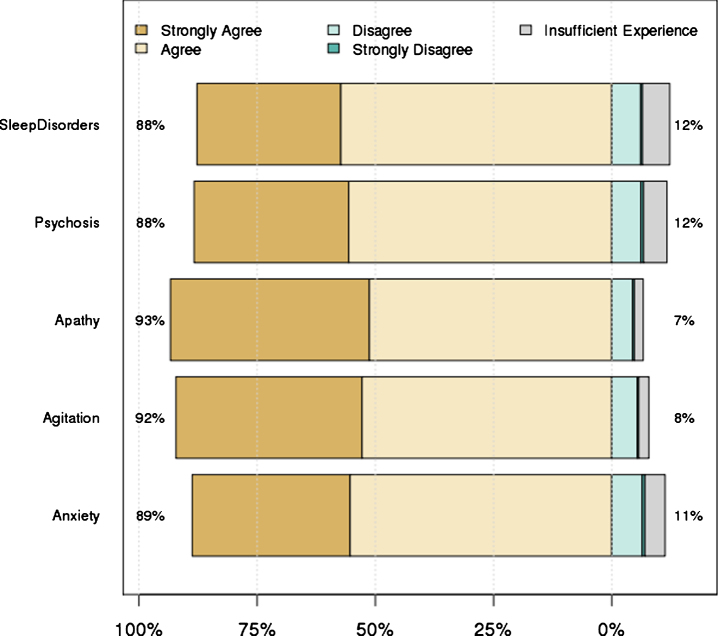
BACKGROUND: In clinical practice, several strategies and pharmacological options are available to treat neuropsychiatric symptoms of Huntington disease (HD). However, there is currently insufficient data for evidence-based guidelines on the management of these common symptoms. OBJECTIVE: We aimed to develop expert-based recommendations regarding the management of agitation, anxiety, apathy, psychosis, and sleep disorders. METHODS: Guideline development was based on a modified Institute of Medicine guideline process that accounted for a lack of evidence base. An international committee of 11 multidisciplinary experts proposed a series of statements regarding the description and management of each symptom. Statement assessment and validation was performed using a web-based survey tool and 84 international HD experts (neurologists and psychiatrists) who assessed the statements and indicated their level of agreement. RESULTS: High-level agreement (≥85% experts strongly agreed or agreed) was reached for 107 of the 110 statements that have been incorporated into the expert-based clinical recommendations presented herein. CONCLUSIONS: Clinical statements to guide the routine management of agitation, anxiety, apathy, psychosis, and sleep disorders in HD have been developed. Although not specifically tested in the HD population, clinical experience has shown that most of the neuropsychiatric symptoms discussed, when considered in isolation are treatable using pharmacologic and non-pharmacologic strategies developed for use in other populations. However, the management of neuropsychiatric symptoms in HD can be complex because neuropsychiatric symptoms often co-exist and treatment decisions should be adapted to cover all symptoms while limiting polypharmacy.
Overview
The claims and statistics of this paper haven’t been checked yet.
Free: it reads the open-access text and checks the first 5 claims that cite a source we can check. Create a free account to check every claim.
Integrity signals
Registry
Cites
Statistics
Figures
Verification
Claims the paper makes
The claims and statistics of this paper haven’t been checked yet.
Free: it reads the open-access text and checks the first 5 claims that cite a source we can check. Create a free account to check every claim.
Claims other papers make about this one
Each is checked against this paper’s own text: does it say what the citing paper says it does?
The cited source says what the claim attributes to it.
In the citing paper
“recent expert guidelines have recommended psychological therapy as the first treatment offered to people experiencing anxiety in early-stage HD [19].”
Self-check
Percentages, sums and reported differences re-computed from the paper’s own numbers.
The self-check needs the paper’s full text.
Citations
Cites
Clinical Practice Guidelines We Can Trust
Committee on Standards for Developing Trustworthy Clinical Practice Guidelines, Board on Health Care Services, & Institute of Medicine (2011) · National Academies Press eBooks · doi:10.17226/13058 · Cited by 3,081 · cited 6×
“Guideline development was based on a modified Institute of Medicine (IOM) guideline process [14] that accounted for a lack of a robust evidence base for these symptoms as they present in HD.”
BackgroundMethodInfluentialPractice Guideline for the Treatment of Patients With Obsessive-Compulsive Disorder
(2008) · APA Practice Guidelines for the Treatment of Psychiatric Disorders: Comprehensive Guidelines and Guideline Watches · doi:10.1176/appi.books.9780890423363.149114 · Cited by 1,028
Levy, M. L., Cummings, J. L., Fairbanks, L. A., Masterman, D., Miller, B. L., Craig, A. H., Paulsen, J. S., & Litvan, I. (1998) · The Journal of Neuropsychiatry and Clinical Neurosciences · doi:10.1176/jnp.10.3.314 · Cited by 678 · cited 1×
“In general, it can be distinguished from depression by the lack of sadness and negative or suicidal thoughts [20].”
BackgroundMiyasaki, J. M., Shannon, K., Voon, V., Ravina, B., Kleiner-Fisman, G., Anderson, K., Shulman, L. M., Gronseth, G., & Weiner, W. J. (2006) · Neurology · doi:10.1212/01.wnl.0000215428.46057.3d · Cited by 487
Self-citationNeuropsychiatric aspects of Huntington’s disease.
Paulsen, J. S. (2001) · Journal of Neurology, Neurosurgery & Psychiatry · doi:10.1136/jnnp.71.3.310 · Cited by 486 · cited 2×
“The neuropsychiatric and behavioral signs and symptoms of HD (henceforth referred to as neuropsychiatric symptoms for ease of reading) encompass the full spectrum of psychiatric illness [4, 5], and most people with HD will experience multiple neuropsychiatric symptoms or disorders during the course of their illness [2…”
BackgroundBehavioral changes in Huntington Disease.
Craufurd, D., Thompson, J. C., & Snowden, J. S. (2001) · PubMed · Cited by 397
Self-citationRate of functional decline in Huntington’s disease
Marder, K., Zhao, H., Myers, R. H., Cudkowicz, M., Kayson, E., Kieburtz, K., Orme, C., Paulsen, J., Penney, J. B., Siemers, E., et al. (2000) · Neurology · doi:10.1212/wnl.54.2.452 · Cited by 362 · cited 1×
“While some studies describe psychotic symptoms in early stages of disease [28], others report a more common occurrence in individuals with advancing stage of disease [29, 30].”
BackgroundNeuropsychiatric symptoms in a European Huntington's disease cohort (REGISTRY)
van Duijn, E., Craufurd, D., Hubers, A. A. M., Giltay, E. J., Bonelli, R., Rickards, H., Anderson, K. E., van Walsem, M. R., van der Mast, R. C., Orth, M., et al. (2014) · Journal of Neurology, Neurosurgery & Psychiatry · doi:10.1136/jnnp-2013-307343 · Cited by 299 · cited 1×
“While some studies describe psychotic symptoms in early stages of disease [28], others report a more common occurrence in individuals with advancing stage of disease [29, 30].”
BackgroundSelf-citationTreatment of patients with substance use disorders, second edition. American Psychiatic Association.
Kleber, H. D., Weiss, R. D., Anton, R. F., George, T. P., Greenfield, S. F., Kosten, T. R., O’Brien, C. P., Rounsaville, B. J., Strain, E. C., Ziedonis, D. M., et al. (2006) · PubMed · Cited by 265
Psychiatric syndromes in Huntington’s disease.
(1983) · American Journal of Psychiatry · doi:10.1176/ajp.140.6.728 · Cited by 255 · cited 1×
“Likewise, although more consistently associated with disease progression [9, 22, 31], the reported prevalence of apathy has ranged from 32% to 76% [1, 2, 9, 32, 33].”
BackgroundNeuropsychiatry of Huntington’s Disease and Other Basal Ganglia Disorders
Rosenblatt, A., & Leroi, I. (2000) · Psychosomatics · doi:10.1016/s0033-3182(00)71170-4 · Cited by 223 · cited 1×
“While some studies describe psychotic symptoms in early stages of disease [28], others report a more common occurrence in individuals with advancing stage of disease [29, 30].”
BackgroundClinical Assessment of Irritability, Aggression, and Apathy in Huntington and Alzheimer Disease
BURNS, A., FOLSTEIN, S., BRANDT, J., & FOLSTEIN, M. (1990) · The Journal of Nervous and Mental Disease · doi:10.1097/00005053-199001000-00004 · Cited by 194 · cited 2×
“Likewise, although more consistently associated with disease progression [9, 22, 31], the reported prevalence of apathy has ranged from 32% to 76% [1, 2, 9, 32, 33].”
BackgroundData Analytics from Enroll‐HD, a Global Clinical Research Platform for Huntington's Disease
Landwehrmeyer, G. B., Fitzer‐Attas, C. J., Giuliano, J. D., Gonçalves, N., Anderson, K. E., Cardoso, F., Ferreira, J. J., Mestre, T. A., Stout, J. C., & Sampaio, C. (2017) · Movement Disorders Clinical Practice · doi:10.1002/mdc3.12388 · Cited by 184 · cited 2×
“While the selection of experts was not systematic, they were drawn from investigators involved in the large Enroll-HD platform which has been specifically designed to support an international and expert approach to HD research [18].”
BackgroundMethodSelf-citationArmstrong, M. J., & Miyasaki, J. M. (2012) · Neurology · doi:10.1212/wnl.0b013e318263c443 · Cited by 180
Behavioural problems in Huntington's disease using the Problem Behaviours Assessment
Kingma, E. M., van Duijn, E., Timman, R., van der Mast, R. C., & Roos, R. A. C. (2008) · General Hospital Psychiatry · doi:10.1016/j.genhosppsych.2007.11.005 · Cited by 177 · cited 3×
“The neuropsychiatric and behavioral signs and symptoms of HD (henceforth referred to as neuropsychiatric symptoms for ease of reading) encompass the full spectrum of psychiatric illness [4, 5], and most people with HD will experience multiple neuropsychiatric symptoms or disorders during the course of their illness [2…”
BackgroundTherapeutic interventions for symptomatic treatment in Huntington's disease
Mestre, T., Ferreira, J., Coelho, M. M., Rosa, M., & Sampaio, C. (2009) · Cochrane Database of Systematic Reviews · doi:10.1002/14651858.cd006456.pub2 · Cited by 170
Pharmacological Management of Huntingtons Disease: An Evidence- Based Review
Bonelli, R., & Wenning, G. (2006) · Current Pharmaceutical Design · doi:10.2174/138161206777698693 · Cited by 156
Behavior in Huntington's Disease: Dissociating Cognition-Based and Mood-Based Changes
Thompson, J. C., Snowden, J. S., Craufurd, D., & Neary, D. (2002) · The Journal of Neuropsychiatry and Clinical Neurosciences · doi:10.1176/jnp.14.1.37 · Cited by 138 · cited 1×
“Apathy may occur before the onset of motor symptoms, and it often increases with advancing clinical stage of disease [9, 21, 22].”
BackgroundSelf-citationUnawareness of Deficits in Huntington's Disease
Sitek, E. J., Thompson, J. C., Craufurd, D., & Snowden, J. S. (2014) · Journal of Huntington s Disease · doi:10.3233/jhd-140109 · Cited by 112 · cited 1×
“For example, it is recommended to obtain information from both the patient and the carer, as it is well known that people with HD may have impaired awareness of their condition [25, 26].”
BackgroundSelf-citationTherapeutic Alliance as a Measurable Psychotherapy Skill
Summers, R. F. (2003) · Academic Psychiatry · doi:10.1176/appi.ap.27.3.160 · Cited by 112 · cited 1×
“Such information can help build the therapeutic alliance, improve understanding and symptom reporting, and optimize a treatment plan [27].”
BackgroundGray, M. A., Egan, G. F., Ando, A., Churchyard, A., Chua, P. M.-L., Stout, J. C., & Georgiou‐Karistianis, N. (2012) · Experimental Neurology · doi:10.1016/j.expneurol.2012.10.020 · Cited by 108 · cited 1×
“These can be related to the underlying progressive neurodegeneration of the brain but can also be a psychological reaction to the knowledge of being a gene expansion carrier and the impairments of the disease [7].”
BackgroundGroves, M., van Duijn, E., Anderson, K., Craufurd, D., Edmondson, M. C., Goodman, N., van Kammen, D. P., & Goodman, L. (2011) · PLoS Currents · doi:10.1371/currents.rrn1259 · Cited by 102 · cited 1×
“We have previously published opinion-based algorithms for the clinical management of chorea [15], irritability [16] and obsessive-compulsive or perseverative behaviors [17].”
MethodSelf-citationBurgunder, J.-M., Guttman, M., Perlman, S., Goodman, N., van Kammen, D. P., & Goodman, L. (2011) · PLoS Currents · doi:10.1371/currents.rrn1260 · Cited by 98 · cited 1×
“We have previously published opinion-based algorithms for the clinical management of chorea [15], irritability [16] and obsessive-compulsive or perseverative behaviors [17].”
MethodSelf-citationNaarding, P., Kremer, H. P. H., & Zitman, F. G. (2001) · European Psychiatry · doi:10.1016/s0924-9338(01)00604-6 · Cited by 96 · cited 1×
“The neuropsychiatric and behavioral signs and symptoms of HD (henceforth referred to as neuropsychiatric symptoms for ease of reading) encompass the full spectrum of psychiatric illness [4, 5], and most people with HD will experience multiple neuropsychiatric symptoms or disorders during the course of their illness [2…”
BackgroundTetrabenazine Treatment for Huntington's Disease-Associated Chorea
Ondo, W. G., Tintner, R., Thomas, M., & Jankovic, J. (2002) · Clinical Neuropharmacology · doi:10.1097/00002826-200211000-00003 · Cited by 89 · cited 1×
“For example, some agents used to treat chorea may worsen apathy, depression, and other psychiatric symptoms [8, 9].”
BackgroundPflanz, S. E., BESSON, J. A. O., Ebmeier, K. P., & Simpson, S. (1991) · Acta Psychiatrica Scandinavica · doi:10.1111/j.1600-0447.1991.tb05511.x · Cited by 89 · cited 1×
“Anxiety in HD may include symptoms of general anxiety, social anxiety, anticipatory anxiety, panic, and post-traumatic stress disorder [19].”
BackgroundThe Many Facets of Unawareness in Huntington Disease
McCusker, E. A., & Loy, C. T. (2014) · Tremor and Other Hyperkinetic Movements · doi:10.5334/tohm.231 · Cited by 87
Self-citationCognitive Impairment Related to Apathy in Early Huntington’s Disease
Baudic, S., Maison, P., Dolbeau, G., Boissé, M.-F., Bartolomeo, P., Dalla Barba, G., Traykov, L., & Bachoud-Lévi, A.-C. (2006) · Dementia and Geriatric Cognitive Disorders · doi:10.1159/000091523 · Cited by 81 · cited 1×
“Likewise, although more consistently associated with disease progression [9, 22, 31], the reported prevalence of apathy has ranged from 32% to 76% [1, 2, 9, 32, 33].”
BackgroundCorrelates of Apathy in Huntington's Disease
van Duijn, E., Reedeker, N., Giltay, E. J., Roos, R. A. C., & van der Mast, R. C. (2010) · Journal of Neuropsychiatry · doi:10.1176/jnp.2010.22.3.287 · Cited by 72
An evidence-based approach in the treatment of Huntington’s disease
Mestre, T., & Ferreira, J. J. (2011) · Parkinsonism & Related Disorders · doi:10.1016/j.parkreldis.2011.10.021 · Cited by 63
Reilmann, R. (2013) · Movement Disorders · doi:10.1002/mds.25500 · Cited by 62 · cited 1×
“This guideline was based on HD trials (and trial endpoints) that have often been designed to answer questions leading to drug approval rather than clinical practice [35].”
MethodFactor analysis of behavioural symptoms in Huntington's disease
Rickards, H. E., de Souza, J., van Walsem, M., van Duijn, E., Simpson, S. A., Squitieri, F., Landwehrmeyer, G. B., & The European Huntington's Disease Network (2010) · Journal of Neurology Neurosurgery & Psychiatry · doi:10.1136/jnnp.2009.181149 · Cited by 59 · cited 1×
“The neuropsychiatric and behavioral signs and symptoms of HD (henceforth referred to as neuropsychiatric symptoms for ease of reading) encompass the full spectrum of psychiatric illness [4, 5], and most people with HD will experience multiple neuropsychiatric symptoms or disorders during the course of their illness [2…”
BackgroundAnderson, K. E., Craufurd, D., Edmondson, M. C., Goodman, N., Groves, M., van Duijn, E., van Kammen, D. P., & Goodman, L. V. (2011) · PLoS Currents · doi:10.1371/currents.rrn1261 · Cited by 57 · cited 1×
“We have previously published opinion-based algorithms for the clinical management of chorea [15], irritability [16] and obsessive-compulsive or perseverative behaviors [17].”
MethodSelf-citationKulisevsky, J., Litvan, I., Berthier, M. L., Pascual‐Sedano, B., Paulsen, J. S., & Cummings, J. L. (2001) · Movement Disorders · doi:10.1002/mds.1225 · Cited by 54 · cited 1×
“Likewise, although more consistently associated with disease progression [9, 22, 31], the reported prevalence of apathy has ranged from 32% to 76% [1, 2, 9, 32, 33].”
BackgroundGelderblom, H., Wüstenberg, T., McLean, T., Mütze, L., Fischer, W., Saft, C., Hoffmann, R., Süssmuth, S., Schlattmann, P., van Duijn, E., et al. (2017) · PLOS ONE · doi:10.1371/journal.pone.0173872 · Cited by 51
Self-citationTherapeutic Strategies for Circadian Rhythm and Sleep Disturbances in Huntington Disease
van Wamelen, D. J., Roos, R. A. C., & Aziz, N. A. (2015) · Neurodegenerative Disease Management · doi:10.2217/nmt.15.45 · Cited by 32
The Many Facets of Unawareness in Huntington Disease
McCusker, E. A., & Loy, C. T. (2014) · PubMed Central · doi:10.7916/d8fj2fd3 · Cited by 31 · cited 1×
“For example, it is recommended to obtain information from both the patient and the carer, as it is well known that people with HD may have impaired awareness of their condition [25, 26].”
BackgroundSelf-citation
Research works printed but not linked: 1
- APA Work Group on Alzheimer’s Disease and other Dementias, Rabins PV, Blacker D, Rovner BW, Rummans T, Schneider LS, et al., American Psychiatric Association practice guideline for the treatment of patients with Alzheimer’s disease and other dementias. Second edition. Am J Psychiatry. 2007; 164: 5– 56. 18340692
Cited by
Rapid Eye Movement Sleep Behavior Disorder and Neurodegenerative Diseases: An Update
Zhang, F., Niu, L., Liu, X., Liu, Y., Li, S., Yu, H., & Le, W. (2020) · Aging and disease · doi:10.14336/ad.2019.0324 · Cited by 94
“Circadian rhythm disruption is also a prominent feature of sleep disorders in HD [95].”
BackgroundDash, D., & Mestre, T. (2020) · Neurotherapeutics · doi:10.1007/s13311-020-00891-w · Cited by 81
Psychological Interventions for People with Huntington’s Disease: A Call to Arms
Zarotti, N., Dale, M., Eccles, F., & Simpson, J. (2020) · Journal of Huntington's Disease · doi:10.3233/jhd-200418 · Cited by 59
“Consistently, further evidence also suggests that premanifest people seem to express interest in engaging with psychological interventions [39], while an international committee of 11 multidisciplinary experts on HD has recently highlighted that psychological interventions should be offered whenever possible to early…”
BackgroundMalla, B., Guō, X., Senger, G., Chasapopoulou, Z., & Yildirim, F. (2021) · Frontiers in Genetics · doi:10.3389/fgene.2021.751033 · Cited by 68
“Althoughmany of the motor and psychiatric features of HD can be symptomatically treated (Mason and Barker, 2009; Anderson et al., 2018), a diseasemodifying treatment to slow or stop the disease progression is still not available for HD patients.”
BackgroundSharma, G., Biswas, S. S., Mishra, J., Navik, U., Kandimalla, R. J. L., Reddy, P. H., Bhatti, G. K., & Bhatti, J. S. (2023) · Life Sciences · doi:10.1016/j.lfs.2023.121882 · Cited by 48
Metadata
- Authors
- Anderson, K. E., van Duijn, E., Craufurd, D., Drazinic, C., Edmondson, M., Goodman, N., van Kammen, D., Loy, C., Priller, J., & Goodman, L. V.
- Affiliations
- Georgetown University (US)
- Department of Psychiatry, Leiden University Medical Centre, Leiden; and Mental Health Care Centre Delfland, Delft, The Netherlands
- Manchester Academic Health Science Centre (GB)
- Florida Department of Children and Families (US)
- HD Reach, Raleigh, NC, USA
- Huntington’s Disease Drug Works, Seattle, WA, USA
- Consultant for CNS drug development, Professor emeritus University of Pittsburgh, Pittsburgh, PA, USA
- The University of Sydney (AU)
- Charité – Universitätsmedizin Berlin (DE)
- Corresponding author
- Anderson, Karen E.
- Venue
- Journal of Huntington's Disease
- Publisher
- SAGE Publications
- Published
- 2018-11-24
- Volume
- 7
- Issue
- 4
- Pages
- 355-366
- ISSN
- 1879-6397 (ISSN-L)
- 1879-6400
- PMC
- PMC6294590
- OpenAlex
- W2884386732
- Cited by
- 108
- References
- 37
- Citations by year
- 2026: 15 · 2025: 19 · 2024: 14 · 2023: 12 · 2022: 20 · 2021: 11 · 2020: 9 · 2019: 8
- FWCI
- 3.16
- Type
- journal article
- Language
- en
- Open access
- hybrid
- doi.org
- Licence
- Locations
- Journal of Huntington s Disease (publishedVersion, cc-by-nc)
- Europe PMC (PubMed Central) (publishedVersion, cc-by-nc)
- PubMed Central (publishedVersion, cc-by-nc)
- PubMed (publishedVersion)
- Edinburgh Research Explorer (University of Edinburgh) (publishedVersion, cc-by)
- Funders
- Medical Research Council (MC_PC_16031)
- Topics
- Life Sciences › Neuroscience › Cellular and Molecular Neuroscience › Genetic Neurodegenerative Diseases
- Health Sciences › Medicine › Clinical Neurology › Deep Brain Stimulation and Movement Disorders
- Health Sciences › Medicine › Clinical Neurology › Parkinson's Disease Mechanisms and Treatments
- Keywords
- Huntington's disease, neuropsychiatric symptoms, agitation, anxiety, apathy, psychosis, sleep disorders, clinical management, pharmacotherapy, non-pharmacological treatment, polypharmacy, expert consensus recommendations
- MeSH terms
- Anxiety, Humans, Huntington Disease, Psychomotor Agitation, Psychotic Disorders, Sleep Wake Disorders, Prevalence, Practice Guidelines as Topic, Disease Management
About these checks
Registry, retraction, Cites and statistics results are computed, not judged, with one exception: a printed reference that no index lists is read once by a model before it counts as a citation error. Claims are extracted by a model and kept only when their quote appears verbatim in the text; each cited source is then checked, with a model’s help, for whether it says what the claim relies on. Those verdicts can be wrong — read the claim’s quote and the cited source before relying on one.
Statistics and arithmetic are recomputed, not judged.
Confidence bands are shown only for fields calibrated on our annotated test set. None is calibrated yet, so no band is shown.
What counts as a claim ›How we measure confidence ›How we check this ›
Are you an author, or do you see a problem with this page? Request a review
Data sources
Bibliographic data: Semantic Scholar, OpenAlex, Crossref.
Contains information from the Semantic Scholar Academic Graph Datasets, made available under the ODC Attribution License (ODC-BY 1.0).
Semantic Scholar’s data is described in: Kinney, R., et al. (2023). The Semantic Scholar Open Data Platform. arXiv:2301.10140.
