

Clinical Management of Neuropsychiatric Symptoms of Huntington Disease: Expert-Based Consensus Guidelines on Agitation, Anxiety, Apathy, Psychosis and Sleep Disorders
Open accessThe DOI matches its Crossref record; 37 of the 37 references it cites were found in a registry or an index.
Abstract
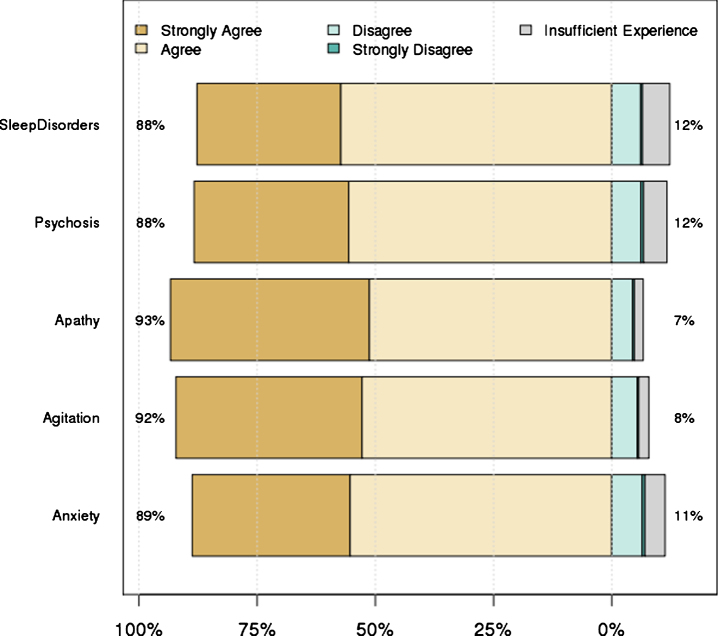
BACKGROUND: In clinical practice, several strategies and pharmacological options are available to treat neuropsychiatric symptoms of Huntington disease (HD). However, there is currently insufficient data for evidence-based guidelines on the management of these common symptoms. OBJECTIVE: We aimed to develop expert-based recommendations regarding the management of agitation, anxiety, apathy, psychosis, and sleep disorders. METHODS: Guideline development was based on a modified Institute of Medicine guideline process that accounted for a lack of evidence base. An international committee of 11 multidisciplinary experts proposed a series of statements regarding the description and management of each symptom. Statement assessment and validation was performed using a web-based survey tool and 84 international HD experts (neurologists and psychiatrists) who assessed the statements and indicated their level of agreement. RESULTS: High-level agreement (≥85% experts strongly agreed or agreed) was reached for 107 of the 110 statements that have been incorporated into the expert-based clinical recommendations presented herein. CONCLUSIONS: Clinical statements to guide the routine management of agitation, anxiety, apathy, psychosis, and sleep disorders in HD have been developed. Although not specifically tested in the HD population, clinical experience has shown that most of the neuropsychiatric symptoms discussed, when considered in isolation are treatable using pharmacologic and non-pharmacologic strategies developed for use in other populations. However, the management of neuropsychiatric symptoms in HD can be complex because neuropsychiatric symptoms often co-exist and treatment decisions should be adapted to cover all symptoms while limiting polypharmacy.
Overview
The claims and statistics of this paper haven’t been checked yet.
Free: it reads the open-access text and checks the first 5 claims that cite a source we can check. Create a free account to check every claim.
Integrity signals
Registry
Cites
Statistics
Figures
Verification
Claims the paper makes
The claims and statistics of this paper haven’t been checked yet.
Free: it reads the open-access text and checks the first 5 claims that cite a source we can check. Create a free account to check every claim.
Claims other papers make about this one
Each is checked against this paper’s own text: does it say what the citing paper says it does?
The cited source says what the claim attributes to it.
In the citing paper
“recent expert guidelines have recommended psychological therapy as the first treatment offered to people experiencing anxiety in early-stage HD [19].”
Self-check
Percentages, sums and reported differences re-computed from the paper’s own numbers.
The self-check needs the paper’s full text.
Citations
Cites
Clinical Practice Guidelines We Can Trust
Committee on Standards for Developing Trustworthy Clinical Practice Guidelines, Board on Health Care Services, & Institute of Medicine (2011) · National Academies Press eBooks · doi:10.17226/13058 · Cited by 3,081 · cited 6×
“Guideline development was based on a modified Institute of Medicine (IOM) guideline process [14] that accounted for a lack of a robust evidence base for these symptoms as they present in HD.”
BackgroundMethodInfluentialPractice Guideline for the Treatment of Patients With Obsessive-Compulsive Disorder
(2008) · APA Practice Guidelines for the Treatment of Psychiatric Disorders: Comprehensive Guidelines and Guideline Watches · doi:10.1176/appi.books.9780890423363.149114 · Cited by 1,028
Levy, M. L., Cummings, J. L., Fairbanks, L. A., Masterman, D., Miller, B. L., Craig, A. H., Paulsen, J. S., & Litvan, I. (1998) · The Journal of Neuropsychiatry and Clinical Neurosciences · doi:10.1176/jnp.10.3.314 · Cited by 678 · cited 1×
“In general, it can be distinguished from depression by the lack of sadness and negative or suicidal thoughts [20].”
BackgroundMiyasaki, J. M., Shannon, K., Voon, V., Ravina, B., Kleiner-Fisman, G., Anderson, K., Shulman, L. M., Gronseth, G., & Weiner, W. J. (2006) · Neurology · doi:10.1212/01.wnl.0000215428.46057.3d · Cited by 487
Self-citationNeuropsychiatric aspects of Huntington’s disease.
Paulsen, J. S. (2001) · Journal of Neurology, Neurosurgery & Psychiatry · doi:10.1136/jnnp.71.3.310 · Cited by 486 · cited 2×
“The neuropsychiatric and behavioral signs and symptoms of HD (henceforth referred to as neuropsychiatric symptoms for ease of reading) encompass the full spectrum of psychiatric illness [4, 5], and most people with HD will experience multiple neuropsychiatric symptoms or disorders during the course of their illness [2…”
BackgroundBehavioral changes in Huntington Disease.
Craufurd, D., Thompson, J. C., & Snowden, J. S. (2001) · PubMed · Cited by 397
Self-citationRate of functional decline in Huntington’s disease
Marder, K., Zhao, H., Myers, R. H., Cudkowicz, M., Kayson, E., Kieburtz, K., Orme, C., Paulsen, J., Penney, J. B., Siemers, E., et al. (2000) · Neurology · doi:10.1212/wnl.54.2.452 · Cited by 362 · cited 1×
“While some studies describe psychotic symptoms in early stages of disease [28], others report a more common occurrence in individuals with advancing stage of disease [29, 30].”
BackgroundNeuropsychiatric symptoms in a European Huntington's disease cohort (REGISTRY)
van Duijn, E., Craufurd, D., Hubers, A. A. M., Giltay, E. J., Bonelli, R., Rickards, H., Anderson, K. E., van Walsem, M. R., van der Mast, R. C., Orth, M., et al. (2014) · Journal of Neurology, Neurosurgery & Psychiatry · doi:10.1136/jnnp-2013-307343 · Cited by 299 · cited 1×
“While some studies describe psychotic symptoms in early stages of disease [28], others report a more common occurrence in individuals with advancing stage of disease [29, 30].”
BackgroundSelf-citationTreatment of patients with substance use disorders, second edition. American Psychiatic Association.
Kleber, H. D., Weiss, R. D., Anton, R. F., George, T. P., Greenfield, S. F., Kosten, T. R., O’Brien, C. P., Rounsaville, B. J., Strain, E. C., Ziedonis, D. M., et al. (2006) · PubMed · Cited by 265
Psychiatric syndromes in Huntington’s disease.
(1983) · American Journal of Psychiatry · doi:10.1176/ajp.140.6.728 · Cited by 255 · cited 1×
“Likewise, although more consistently associated with disease progression [9, 22, 31], the reported prevalence of apathy has ranged from 32% to 76% [1, 2, 9, 32, 33].”
Background
Research works printed but not linked: 1
- APA Work Group on Alzheimer’s Disease and other Dementias, Rabins PV, Blacker D, Rovner BW, Rummans T, Schneider LS, et al., American Psychiatric Association practice guideline for the treatment of patients with Alzheimer’s disease and other dementias. Second edition. Am J Psychiatry. 2007; 164: 5– 56. 18340692
Cited by
Rapid Eye Movement Sleep Behavior Disorder and Neurodegenerative Diseases: An Update
Zhang, F., Niu, L., Liu, X., Liu, Y., Li, S., Yu, H., & Le, W. (2020) · Aging and disease · doi:10.14336/ad.2019.0324 · Cited by 94
“Circadian rhythm disruption is also a prominent feature of sleep disorders in HD [95].”
BackgroundDash, D., & Mestre, T. (2020) · Neurotherapeutics · doi:10.1007/s13311-020-00891-w · Cited by 81
Psychological Interventions for People with Huntington’s Disease: A Call to Arms
Zarotti, N., Dale, M., Eccles, F., & Simpson, J. (2020) · Journal of Huntington's Disease · doi:10.3233/jhd-200418 · Cited by 59
“Consistently, further evidence also suggests that premanifest people seem to express interest in engaging with psychological interventions [39], while an international committee of 11 multidisciplinary experts on HD has recently highlighted that psychological interventions should be offered whenever possible to early…”
BackgroundMalla, B., Guō, X., Senger, G., Chasapopoulou, Z., & Yildirim, F. (2021) · Frontiers in Genetics · doi:10.3389/fgene.2021.751033 · Cited by 68
“Althoughmany of the motor and psychiatric features of HD can be symptomatically treated (Mason and Barker, 2009; Anderson et al., 2018), a diseasemodifying treatment to slow or stop the disease progression is still not available for HD patients.”
BackgroundSharma, G., Biswas, S. S., Mishra, J., Navik, U., Kandimalla, R. J. L., Reddy, P. H., Bhatti, G. K., & Bhatti, J. S. (2023) · Life Sciences · doi:10.1016/j.lfs.2023.121882 · Cited by 48
Clinical Review of Juvenile Huntington’s Disease
Oosterloo, M., on behalf of the Pediatric Huntington Disease Working Group of the European Huntington Disease Network, Touzé, A., Byrne, L. M., Achenbach, J., Aksoy, H., Coleman, A., Lammert, D. B., Nance, M., Nopoulos, P., et al. (2024) · Journal of Huntington s Disease · doi:10.3233/jhd-231523 · Cited by 42
“Irritability and agitation are recommended to be treated with a Selective Serotonin Receptor Inhibitor (SSRI) or atypical antipsychotics [53, 80].”
BackgroundIsaacs, D. A., Gibson, J. S., Stovall, J. G., & Claassen, D. O. (2020) · Journal of Huntington s Disease · doi:10.3233/jhd-200410 · Cited by 42
“There are limited placebo-controlled studies that assess treatments for these symptoms [9, 10], and thus, clinicians must rely on clinical experience and consensus guidelines when taking care of patients [11–13].”
Medical, Surgical, and Genetic Treatment of Huntington Disease
Stahl, C. M., & Feigin, A. (2020) · Neurologic Clinics · doi:10.1016/j.ncl.2020.01.010 · Cited by 43
The Role of Hypothalamic Pathology for Non-Motor Features of Huntington’s Disease
Cheong, R. Y., Gabery, S., & Petersén, Å. (2019) · Journal of Huntington s Disease · doi:10.3233/jhd-190372 · Cited by 39
Munteanu, C., Galaction, A., Turnea, M. A., Blendea, C. D., Rotariu, M., & Poştaru, M. (2024) · Antioxidants · doi:10.3390/antiox13091062 · Cited by 49
“Psychiatric symptoms in diseases like HD and AD are managed with antidepressants, antipsychotics, and mood stabilizers [50–52].”
Saft, C., Burgunder, J., Dose, M., Jung, H. H., Katzenschlager, R., Priller, J., Nguyen, H. P., Reetz, K., Reilmann, R., Seppi, K., et al. (2023) · Neurological Research and Practice · doi:10.1186/s42466-023-00285-1 · Cited by 36
“Individualized cognitive training and structured daily routines are recommended [3, 6].”
BackgroundInfluentialSelf-citationMühlbäck, A., van Walsem, M., Nance, M., Arnesen, A., Page, K., Fisher, A., van Kampen, M., Nuzzi, A., Limpert, R., Fossmo, H. L., et al. (2023) · Orphanet Journal of Rare Diseases · doi:10.1186/s13023-023-02622-8 · Cited by 33
“[24] have produced guidance drawn from Anderson’s (2018) guidelines [21] and hosted by the British Psychological Society (BPS), which can be delivered across professions.”
BackgroundMethodA Touchscreen Motivation Assessment Evaluated in Huntington's Disease Patients and R6/1 Model Mice
Heath, C. J., O’Callaghan, C., Mason, S., Phillips, B. U., Saksida, L. M., Robbins, T. W., Barker, R. A., Bussey, T. J., & Sahakian, B. J. (2019) · Frontiers in Neurology · doi:10.3389/fneur.2019.00858 · Cited by 33
Zarotti, N., Dale, M., Eccles, F. J. R., & Simpson, J. (2022) · Journal of Personalized Medicine · doi:10.3390/jpm12010064 · Cited by 29
“Expert-based international clinical guidelines for treating HD also suggest that non-pharmacological interventions such as psychological therapy should be prioritised for psychological difficulties in pwHD whenever possible [51,52].”
BackgroundSchwartz, A. E., van Walsem, M. R., Brean, A., & Frich, J. C. (2019) · Journal of Huntington s Disease · doi:10.3233/jhd-190370 · Cited by 29
“However, since there is currently no cure or disease-modifying therapy [23], there is a consistent need for long-term, multidisciplinary care through pharmacological [24, 25] and non-pharmacological [26, 27] interventions.”
Different depression: motivational anhedonia governs antidepressant efficacy in Huntington’s disease
McLauchlan, D. J., Lancaster, T. M., Craufurd, D., Linden, D. E. J., & Rosser, A. (2022) · Brain Communications · doi:10.1093/braincomms/fcac278 · Cited by 26
Self-citationPsychotropic medication use in Huntington's disease: A retrospective cohort study
Andriessen, R. L., Oosterloo, M., Hollands, A., Linden, D. E. J., de Greef, B. T. A., & Leentjens, A. F. G. (2022) · Parkinsonism & Related Disorders · doi:10.1016/j.parkreldis.2022.11.004 · Cited by 20
Adrissi, J., Nadkarni, N. A., Gausche, E., & Bega, D. (2019) · Journal of Huntington s Disease · doi:10.3233/jhd-190361 · Cited by 19
“The management of mood symptoms and psychosis in HD is often based on evidence from primary mood disorders [8].”
Connolly, A., Wallman, P., Dzahini, O., Howes, O. D., & Taylor, D. M. (2024) · Psychopharmacology · doi:10.1007/s00213-023-06488-3 · Cited by 20
“It is perhaps relevant to note that VMAT-2 inhibitors are not drugs of choice for psychosis in Huntington’s disease (Anderson et al. 2018).”
BackgroundAndrews, K., Josiah, S. S., & Zhang, J. (2020) · International Journal of Molecular Sciences · doi:10.3390/ijms21239142 · Cited by 18
Anderson, K. E., on behalf of the Huntington Study Group, Griffin, J., Kinel, A., Shaikh, A. R., Olofintuyi, T., Ramirez, S., Steinman, J., Yohrling, G. J., & Kinel, S. (2019) · Journal of Huntington s Disease · doi:10.3233/jhd-190380 · Cited by 14
“Other resources include pragmatic treatment guidelines [10–13], which have been developed for specific symptoms and are designed to be accessible for healthcare providers and HD families alike.”
Self-citationOlmedo‐Saura, G., Bernardi, E., Bojtos, L., Martínez‐Horta, S., Pagonabarraga, J., Kulisevsky, J., & Pérez‐Pérez, J. (2025) · International Journal of Molecular Sciences · doi:10.3390/ijms26136220 · Cited by 25
“Melatonin is a pharmacologic option particularly when there is pattern of circadian rhythm disordered sleep [201].”
InfluentialAchenbach, J., Carsten Saft, C., & Faissner, S. (2021) · Brain Sciences · doi:10.3390/brainsci11040413 · Cited by 13
Nguyen, T. P. P., Bravo, L., Gonzalez‐Alegre, P., & Willis, A. W. (2022) · Journal of Huntington s Disease · doi:10.3233/jhd-210489 · Cited by 12
Management of Agitation in Huntington’s Disease: A Review of the Literature
Rossi, G., & Oh, J. C. (2020) · Cureus · doi:10.7759/cureus.9748 · Cited by 12
Exuzides, A., Reddy, S. R., Chang, E. Y., Ta, J. T., Patel, A. M., Paydar, C., & Yohrling, G. J. (2021) · Journal of Medical Economics · doi:10.1080/13696998.2021.2002579 · Cited by 13
“%) and emergency department (ED) visits (36.1% vs. 26.2%), but fewer mean office visits (10.9 [13.6] vs. 12.8 [13.0]) (all p < .001; Table 3).”
BackgroundInfluentialCheong, R. Y., Tonetto, S., von Hörsten, S., & Petersén, Å. (2020) · Psychoneuroendocrinology · doi:10.1016/j.psyneuen.2020.104773 · Cited by 11
The psychopharmacology of Huntington disease
Petersén, Å., & Weydt, P. (2019) · Handbook of clinical neurology · doi:10.1016/b978-0-444-64012-3.00010-1 · Cited by 12
Cheng, Y., Gu, X., Liu, K., Yang, T., Xiao, Y., Jiang, Q., Huang, J., Lin, J., Wei, Q., Ou, R., et al. (2022) · Journal of Clinical Medicine · doi:10.3390/jcm12010206 · Cited by 14
Lifetime neuropsychiatric symptoms in Huntington's disease: Implications for psychiatric nursing
Gibson, J. S., Isaacs, D. A., Claassen, D. O., & Stovall, J. G. (2021) · Archives of Psychiatric Nursing · doi:10.1016/j.apnu.2021.03.006 · Cited by 9
Schriger, S. H., Nurse, C. N., & O’Hayer, C. V. (2025) · Journal of Huntington s Disease · doi:10.1177/18796397251315162 · Cited by 9
“65 Despite the numerous psychological challenges associated with HD, including the need to face inevitable shortened life expectancy as a result of the disease, the fi eld has tended to take a more neuropsychiatric approach to addressing mental health-related symptoms rather than a psychological…”
Huntington Study Group's Neuropsychology Working Group: Implementing Non‐Motor Diagnostic Criteria
Considine, C. M., Rossetti, M. A., Bene, V. A. D., Anderson, K. M., Anderson, S. A., Celka, A. S., Edmondson, M. C., Sheese, A. L. N., Piccolino, A. L., Teixeira, A. L., et al. (2023) · Movement Disorders Clinical Practice · doi:10.1002/mdc3.13910 · Cited by 8
“32,33 It is also debatable whether psychiatric and behavioral syndromes in HD can be separated into pathology-related syndromes (eg, apathy, irritability) and non-speci fi c syndromes associated with HD (eg, PTSD, depressive Abbreviation: HD, Huntington ’ s disease.”
BackgroundSelf-citationApathy and Impulsivity Co‐Occur in Huntington's Disease
Morris, L., Horne, K., Paermentier, L., Buchanan, C. M., MacAskill, M. R., Myall, D. J., Husain, M., Roxburgh, R. H., Anderson, T., & Heron, C. J. L. (2024) · Brain and Behavior · doi:10.1002/brb3.70061 · Cited by 19
Psychosis in Huntington's disease: a review and comparison with schizophrenia
Badenoch, J., Rickards, H. E., McCutcheon, R. A., & Nair, A. (2025) · Schizophrenia Research · doi:10.1016/j.schres.2025.07.012 · Cited by 7
Bayen, É., de Langavant, L. C., Youssov, K., & Bachoud‐Lévi, A. (2022) · Annals of Physical and Rehabilitation Medicine · doi:10.1016/j.rehab.2022.101703 · Cited by 7
Feleus, S., van Schaijk, M., Roos, R. A. C., & de Bot, S. T. (2022) · Journal of Personalized Medicine · doi:10.3390/jpm12040589 · Cited by 6
“Prescribing tiapride in the evening could not only treat restlessness during the night but may also benefit pre-existing sleeping problems that are common in HD [57,58].”
BackgroundPatel, A. M., Chang, E. Y., Paydar, C., & Reddy, S. R. (2023) · Journal of Medical Economics · doi:10.1080/13696998.2023.2222561 · Cited by 6
Translational Approach using Advanced Therapy Medicinal Products for Huntington's Disease
Mousavi, M. A., Rezaei, M., Pourhamzeh, M., Salari, M., Hossein‐Khannazer, N., Shpichka, A. I., Nabavi, S. M., Timashev, P. S., & Vosough, M. (2024) · Current Clinical Pharmacology · doi:10.2174/0127724328300166240510071548 · Cited by 6
Medication Use and Treatment Indications in Huntington's Disease; Analyses from a Large Cohort
Feleus, S., Skotnicki, L. E. M., Roos, R. A. C., & de Bot, S. T. (2024) · Movement Disorders Clinical Practice · doi:10.1002/mdc3.14230 · Cited by 7
Insights into RNA ‐mediated pathology in new mouse models of Huntington's disease
Woźna, M., Jazurek, M., Przybył, Ł., Wronka, D., Misiorek, J. O., Suszyńska-Zajczyk, J., Figura, G., Ciesiołka, A., Sobieszczańska, P., Zeller, A., et al. (2024) · The FASEB Journal · doi:10.1096/fj.202401465r · Cited by 8
“68 In our study, anxiety-like behavior was precisely assessed by evaluating mouse movement in nonhome cages.”
Psychiatrische Symptome der Huntington-Krankheit
Mühlbäck, A., Hoffmann, R., Pozzi, N. G., Marziniak, M., Brieger, P., Dose, M., & Priller, J. (2024) · Der Nervenarzt · doi:10.1007/s00115-024-01728-z · Cited by 8
Self-citationMoore, K. P. L. (2025) · CONTINUUM Lifelong Learning in Neurology · doi:10.1212/cont.0000000000001597 · Cited by 8
NREM delta power and AD-relevant tauopathy are associated with shared cortical gene networks
Scarpa, J. R., Jiang, P., Gao, V., Vitaterna, M. H., Turek, F. W., & Kasarskis, A. (2021) · Scientific Reports · doi:10.1038/s41598-021-86255-6 · Cited by 4
A Practical Guide for Clinical Approach to Patients With Huntington’s Disease in Korea
Shin, C., Kim, R., Yoo, D., Oh, E., Moon, J., Kim, M., Lee, J., Kim, J., Koh, S., Kim, M., et al. (2024) · Journal of Movement Disorders · doi:10.14802/jmd.24040 · Cited by 5
Antidopaminergic medications in Huntington's disease
Tan, A. M., Geva, M., Goldberg, Y. P., Schuring, H., Sanson, B., Rosser, A., Raymond, L. A., Reilmann, R., Hayden, M. R., & Anderson, K. E. (2025) · Journal of Huntington s Disease · doi:10.1177/18796397241304312 · Cited by 10
“As VMAT2 inhibitors, they are thought to counteract the “ hyper dopaminergic ” state present in HD. 35 Valbenazine, recently approved in the US, is indicated for the treatment of tardive dyskinesia and chorea associated with HD. 45,46 Although tardive dyskinesia is not necessarily a direct symptom…”
Self-citationDale, M., Eccles, F. J. R., Melvin, K., Khan, Z., Jones, L., Zarotti, N., Kiani, R., Johnson, J., Wells, R., & Simpson, J. (2023) · Pilot and Feasibility Studies · doi:10.1186/s40814-023-01364-5 · Cited by 4
“Nonetheless, recent expert guidelines have recommended psychological therapy as the first treatment offered to people experiencing anxiety in early-stage HD [19].”
BackgroundDysfunctions of sleep and the circadian rhythm in Huntington’s disease
Kaczmarska, P., & Rudzińska, M. (2025) · Frontiers in Neurology · doi:10.3389/fneur.2025.1693307 · Cited by 5
“For sedative neuroleptics, olanzapine and quetiapine are recommended due to their more favorable profile in the context of sleep disturbances (74).”
Anderson, J., & Schrift, M. J. (2022) · Seminars in Neurology · doi:10.1055/s-0041-1742144 · Cited by 4
Davis, M., Hill, A. T., Fitzgerald, P. B., Stout, J. C., & Hoy, K. E. (2022) · Neuropsychologia · doi:10.1016/j.neuropsychologia.2022.108426 · Cited by 6
Sleep Disorders in Patients with Choreic Syndromes
Jiménez‐Jiménez, F. J., Alonso‐Navarro, H., García‐Martín, E., & Agúndez, J. A. G. (2023) · Current Neurology and Neuroscience Reports · doi:10.1007/s11910-023-01274-2 · Cited by 4
Fitzgerald, E. S., Manousakis, J. E., Glikmann‐Johnston, Y., Rankin, M., Anderson, C., Stout, J. C., & Jackson, M. L. (2024) · Sleep Medicine · doi:10.1016/j.sleep.2024.08.026 · Cited by 4
Leng, M., Sun, Y., Chang, H., & Wang, Z. (2022) · Journal of Alzheimer s Disease · doi:10.3233/jad-215682 · Cited by 6
“The management of symptoms in dementia can be complex because the symptoms often co-exist and treatment decisions should be adapted to cover the main symptoms in clusters [31, 32].”
Use of clozapine for psychosis and chorea in Huntington's disease systematic narrative review
Wildridge, B., Rozewicz, S., Mohamed, A., James, J., & Connolly, G. (2022) · Progress in Neurology and Psychiatry · doi:10.1002/pnp.750 · Cited by 4
Neurobehavioral Issues in Adult Neurological Conditions
Malarmathi, S., Safeekh, A., & Joshua, A. M. (2022) · Springer eBooks · doi:10.1007/978-981-19-0209-3_15 · Cited by 4
Yildirim, F., Foddis, M., Blumenau, S., Müller, S., Bentele, K., Holtgrewe, M., Kola, V., Beule, D., & Sassi, C. (2021) · Neurobiology of Aging · doi:10.1016/j.neurobiolaging.2021.03.001 · Cited by 6
Davis, L., & Dening, T. (2021) · British Journal of Neuroscience Nursing · doi:10.12968/bjnn.2021.17.2.68 · Cited by 4
Pharmacological Treatment of Neuropsychiatric Symptoms in Huntington's Disease: A Systematic Review
Andriessen, R. L., Oosterloo, M., Molema, J., Daemen, M., Linden, D. E. J., & Leentjens, A. F. G. (2025) · Movement Disorders Clinical Practice · doi:10.1002/mdc3.14343 · Cited by 5
Huntington Hastalığı’nın Nöropsikiyatrik Yönü
Balaban, Ö. D., & Atbaşoğlu, C. (2022) · Psikiyatride Guncel Yaklasimlar - Current Approaches in Psychiatry · doi:10.18863/pgy.952664 · Cited by 3
Coping with Huntington’s Disease in Patients and At-Risk Individuals
Snow, A. L. B., Ciriegio, A. E., Watson, K. H., Baumann, M. G., Pfalzer, A. C., Diehl, S., Duncan, K. B., McDonell, K. E., Claassen, D. O., & Compas, B. E. (2024) · Journal of Huntington s Disease · doi:10.3233/jhd-240027 · Cited by 3
“Such strategies may be built into frameworks advising psychological care in HD (e.g., 34 , 35 ), including inter-weaving coping education into cognitive therapy paradigms to reduce symptoms of depression and anxiety.”
Watson, K. H., Ciriegio, A. E., Pfalzer, A. C., Snow, A. L. B., Diehl, S., McDonell, K. E., Vnencak‐Jones, C. L., Long, J. D., Compas, B. E., & Claassen, D. O. (2025) · Journal of Neuropsychiatry · doi:10.1176/appi.neuropsych.20240104 · Cited by 3
Huntington’s Disease in Hospitalized Patients Infected with SARS-CoV-2 in Brazil: Three-Year Update
Martins, J. P., Sciani, J. M., & Marson, F. A. L. (2025) · Neurodegenerative Diseases · doi:10.1159/000538170 · Cited by 3
“It is suggested that this condition is associated with the progressive neurodegeneration of the brain itself, in addition to psychological factors that may accentuate negative feelings regarding the limitations imposed by the disease [23].”
Tindall, T., Dale, M., Simpson, J., & Gunn, S. (2025) · Psychology and Health · doi:10.1080/08870446.2025.2474010 · Cited by 4
“…therapies offer opportunities for non-pharmacological interventions for emotional difficulties, which have also been recommended in international expert-based clinical guidelines as a priority for supporting people with HD (Anderson et al., 2018; Bachoud-lévi et al., 2019; Zarotti et al., 2020).”
Emergence of Huntington Disease in a Man With a Premorbid Criminal Lifestyle
Hedlund, J., & Masterman, T. (2019) · Frontiers in Psychiatry · doi:10.3389/fpsyt.2019.00477 · Cited by 3
Simpson, J., & Zarotti, N. (2026) · Cortex · doi:10.1016/j.cortex.2026.05.004 · Cited by 3
Primary Palliative Care in Huntington's Disease
Harrison, M. B., Morrissey, D., Dalrymple, W. A., D’Abreu, A., & Daly, F. N. (2022) · Movement Disorders Clinical Practice · doi:10.1002/mdc3.13589 · Cited by 2
Huntington’s Disease: A Nursing Perspective
Samperi, S. V., Kwong, P. D., McGill, T., & Tsui, D. S. (2021) · Australasian Journal of Neuroscience · doi:10.21307/ajon-2021-007 · Cited by 4
“…can be important as it provides a daily activity schedule for people who have cognitive decline, memory impairment, poor perception of time and a lack of initiation that can result in frustration and aggressive outbursts (Anderson et al., 2018; Bourne et al., 2006; Novak & Tabrizi, 2011).”
BackgroundWang, J. E., Simon, N. G., Brownstein, M., Maibach, H. T., Maibach, J., & Anderson, K. E. (2024) · Parkinsonism & Related Disorders · doi:10.1016/j.parkreldis.2024.106087 · Cited by 2
Self-citationPrevalent Nonmotor Symptoms Associated With Huntington Disease
McCusker, E. A., & Loy, C. T. (2021) · Neurology · doi:10.1212/wnl.0000000000011888 · Cited by 2
“and others? Nonmotor symptoms are frequent, often have major impact on HD expansion carriers, and can be treated especially when recognized early.(7) The authors emphasize caution in basing diagnosis of clinical HD on nonmotor features alone; it can be difficult to know whether these symptoms are due to HD clinical on…”
BackgroundSelf-citationPsychiatric Manifestations of Huntington’s Disease Case Report
Kukaj, P., & Corzo, K. (2022) · CNS Spectrums · doi:10.1017/s109285292200058x · Cited by 1
Gibson, J. S., Eberle, J. W., Werntz, A. J., Harrison, M. B., Manning, C. A., Yan, G., & Teachman, B. A. (2025) · Parkinsonism & Related Disorders · doi:10.1016/j.parkreldis.2025.107971 · Cited by 2
Psychosis preceding motor symptoms in Huntington’s disease: A psychiatric inpatient case series
Silva, B., Felgueiras, P., Pessoa, T., Moura, B., & Oliveira, A. (2025) · Brain Disorders · doi:10.1016/j.dscb.2025.100279 · Cited by 1
Early Psychotic Symptoms as Indicators of Huntington’s Disease Onset
Crecan-Suciu, B. D., Huluba, P. I., Hanga, A. M., Verișezan-Roșu, O., & Păunescu, R. L. (2025) · Psychiatry International · doi:10.3390/psychiatryint6040151 · Cited by 1
“Recent studies have shown that cognitive impairment is a core aspect that can exist for years before a diagnosis is made [9].”
van der Zwaan, K. F., Kuijper, L. C. M., van Lonkhuizen, P. J. C., Roos, R. A. C., & de Bot, S. T. (2025) · Psychology and Psychotherapy Theory Research and Practice · doi:10.1111/papt.70034 · Cited by 2
“symptoms (Anderson et al., 2018).”
Anderson, K. E., Tan, A. M., Feigin, A., Reilmann, R., Rosser, A., Raymond, L. A., Kostyk, S. K., Saft, C., Chen, K., Hand, R., et al. (2026) · Neurology · doi:10.1212/wnl.0000000000218627 · Cited by 1
Self-citationAnxiety disorders in neurology practice
Kolomytsev, V. V., Владимировна, Г. Л., & Skvortsov, V. V. (2023) · Vestnik nevrologii psihiatrii i nejrohirurgii (Bulletin of Neurology Psychiatry and Neurosurgery) · doi:10.33920/med-01-2308-04 · Cited by 1
Ravichandran, S., Suhasini, R., Deepa, S. M., Selvaraj, D. B., Andrews, J. F. V., Thiagarajan, V., & Kandasamy, M. (2022) · Journal of Molecular Pathology · doi:10.3390/jmp3040030 · Cited by 1
“These neuropsychiatric symptoms are multifactorial in origin and are known to be associated with sleep disruption resulting from abnormal circadian rhythmicity [67].”
BackgroundDrug Treatment of Psychiatric Symptoms Occurring in the Context of Other Disorders
(2021) · Wiley eBooks · doi:10.1002/9781119870203.mpg010 · Cited by 1
Function of the Endocannabinoid System in Neurodegenerative Diseases and Cancers
Soliman, M., Potlakayala, S. D., Desai, D. H., Weeden, H., Husain, R., Lookfong, N. A., Trite, T., Spagnola, J., Amin, S., & Rudrabhatla, S. L. (2019) · American Journal of Plant Sciences · doi:10.4236/ajps.2019.1010130
“In patients with HD, the Htt gene contains a trinucleotide repeat (cytosine-adenine-guanine, CAG) that is unstable and can vary in length and results in a polyglutamine (polyG) expansion in the N-terminus of Huntington [5] [67].”
BackgroundCurrent views on pathophysiology and intervention in Huntington’s disease
Imad, J. (2020) · NVA (Nasjonalt vitenarkiv) · Cited by 1
Leng, M., Sun, Y., Chang, H., & Wang, Z. (2021) · doi:10.2196/preprints.35011
Neuropsychiatry Presentation in Huntington’s Disease
Zaki, N. M. (2022) · The Malaysian journal of psychiatry · doi:10.4103/mjp.mjp_13_22
Rocha, N. P., Liu, A., Anderson, K., & Furr-Stimming, E. E. (2022) · Oxford University Press eBooks · doi:10.1093/med/9780197574317.003.0015
Self-citationNeuropsychiatrische Störungen bei Chorea Huntington
Wietelmann, D. (2022) · PSYCH up2date · doi:10.1055/a-1851-3700
“[26] Anderson KE, van Duijn E, Craufurd D et al.”
BackgroundInfluentialSleep and other neurologic diseases
Malhotra, R. K., & Ju, Y. S. (2023) · Elsevier eBooks · doi:10.1016/b978-0-323-65403-6.00035-4 · Cited by 1
La enfermedad de Huntington en la Comunitat Valenciana
Páramo‐Rodríguez, L., Moreno-Marro, S., Guardiola-Vilarroig, S., Zurriaga, Ó., & Cavero‐Carbonell, C. (2023) · Revista de Neurología · doi:10.33588/rn.7611.2022088 · Cited by 6
“Otros estudios [27,28] analizaron las diferencias entre sexos en relación con los diferentes trastornos del movimiento que expresaban mujeres y hombres.”
BackgroundAcute psychiatric problems in movement disorders
Urso, D., Vacchiano, V., Rizzo, G., & Logroscino, G. (2023) · International review of movement disorders · doi:10.1016/bs.irmvd.2023.08.002 · Cited by 1
Oppegaard, K. R., Kober, K. M., Harris, C., Shin, J., Morse, L. M., Calvo‐Schimmel, A., Paul, S. M., Cooper, B. A., Conley, Y. P., Hammer, M. J., et al. (2023) · Supportive Care in Cancer · doi:10.1007/s00520-023-08196-2 · Cited by 3
“While the mechanisms that underlie this association are not fully understood, current treatment recommendations focus on the management of co-occurring symptoms (e.g., depression, sleep disturbance) that may contribute to the occurrence of anxiety [55].”
BackgroundCollazo, C. (2022) · Repositorio Institucional de la Universidad de Burgos (University of Burgos) · doi:10.36443/10259/8189 · Cited by 1
Triumbari, E. K. A., Pizzuto, D. A., Bentivoglio, A. R., Piano, C., Annunziata, S., Meduri, G. M., & Giuda, D. D. (2024) · Clinical and Translational Imaging · doi:10.1007/s40336-024-00651-2
“The European HD Network has released several guidelines and clinical recommendations for physical therapy practice and neuropsychiatric symptoms management [66, 67].”
Moon, J., Oh, E., Kim, M., Kim, R., Yoo, D., Shin, C., Lee, J., Kim, J., Koh, S., Kim, M., et al. (2024) · Journal of Movement Disorders · doi:10.14802/jmd.24232
Future prospective of microbiome-gut brain axis for treatment of CNS disorders
Mane, R., Kashid, S., Mazahir, F., & Yadav, A. K. (2025) · Elsevier eBooks · doi:10.1016/b978-0-443-21680-0.00019-5
Antidepressant Treatment in Huntington’s Disease: Regional and Case-Control VariationPreprint
McLauchlan, D. J., Drew, C. J. G., Holmans, P., & Rosser, A. (2025) · medRxiv · doi:10.1101/2025.08.01.25332817 · Cited by 1
“As sleep disorders (in particular insomnia) are common in HD, the recommendations are to prescribe a sedating antidepressant 12,13 such as mirtazapine, phenylpiperazines or tricyclic antidepressants in the presence of significant sleep disturbance.”
InfluentialGupta, G., Siddique, R., Thapa, R., Bhat, A. A., Hussain, M. S., Singh, T. G., Singh, S. K., Gupta, S., Deb, P. K., & Shahwan, M. A. (2025) · Springer eBooks · doi:10.1007/978-981-96-8873-9_1
Oraha, J., Wagner, R., Bergh, S., Lee, N. J., Kirik, D., & Petersén, Å. (2025) · Acta Neuropathologica Communications · doi:10.1186/s40478-025-02201-x
“Psychiatric features including anxiety and apathy, i.e. the lack of goal-directed activity and motivation, are common in HD and FTD/ALS [66, 107–111].”
Fowler, J. A., Scarduzio, M., Pool, C., Mahan, C. D., & Gray, M. (2026) · Disease Models & Mechanisms · doi:10.1242/dmm.052513
“An increase in anxiety has been described clinically in both male and female patients with HD with no sex-specific difference (Anderson et al., 2018).”
Psychosis in Huntington disease: a short update
Jellinger, K. A. (2026) · Journal of Neural Transmission · doi:10.1007/s00702-026-03152-w
“Clozapine may be considered when psychotic symptoms have not adequately responded to other antipsychotics (Anderson et al. 2018).”
The sparse evidence-base for self-injurious behavior in Huntington’s disease: A call to action
Stewart, I., Stone, F., & Gathii, E. (2026) · Journal of Huntington s Disease · doi:10.1177/18796397261453471
Progressive Huntington’s disease with neuropsychiatric predominance across fragmented care settings
Tomlinson, G. M., & Gupta, M. (2026) · BMJ Case Reports · doi:10.1136/bcr-2026-273348
“5 6 11 The temporal association observed in this case cannot, however, be interpreted causally.”
Advances in diffusion MRI in Huntington's disease
Metzler‐Baddeley, C., Puig‐Davi, A., Càmara, E., de Diego‐Balaguer, R., & Sampedro, F. (2026) · Elsevier eBooks · doi:10.1016/b978-0-443-23812-3.00011-4
Metadata
- Authors
- Anderson, K. E., van Duijn, E., Craufurd, D., Drazinic, C., Edmondson, M., Goodman, N., van Kammen, D., Loy, C., Priller, J., & Goodman, L. V.
- Affiliations
- Georgetown University (US)
- Department of Psychiatry, Leiden University Medical Centre, Leiden; and Mental Health Care Centre Delfland, Delft, The Netherlands
- Manchester Academic Health Science Centre (GB)
- Florida Department of Children and Families (US)
- HD Reach, Raleigh, NC, USA
- Huntington’s Disease Drug Works, Seattle, WA, USA
- Consultant for CNS drug development, Professor emeritus University of Pittsburgh, Pittsburgh, PA, USA
- The University of Sydney (AU)
- Charité – Universitätsmedizin Berlin (DE)
- Corresponding author
- Anderson, Karen E.
- Venue
- Journal of Huntington's Disease
- Publisher
- SAGE Publications
- Published
- 2018-11-24
- Volume
- 7
- Issue
- 4
- Pages
- 355-366
- ISSN
- 1879-6397 (ISSN-L)
- 1879-6400
- PMC
- PMC6294590
- OpenAlex
- W2884386732
- Cited by
- 108
- References
- 37
- Citations by year
- 2026: 15 · 2025: 19 · 2024: 14 · 2023: 12 · 2022: 20 · 2021: 11 · 2020: 9 · 2019: 8
- FWCI
- 3.16
- Type
- journal article
- Language
- en
- Open access
- hybrid
- doi.org
- Licence
- Locations
- Journal of Huntington s Disease (publishedVersion, cc-by-nc)
- Europe PMC (PubMed Central) (publishedVersion, cc-by-nc)
- PubMed Central (publishedVersion, cc-by-nc)
- PubMed (publishedVersion)
- Edinburgh Research Explorer (University of Edinburgh) (publishedVersion, cc-by)
- Funders
- Medical Research Council (MC_PC_16031)
- Topics
- Life Sciences › Neuroscience › Cellular and Molecular Neuroscience › Genetic Neurodegenerative Diseases
- Health Sciences › Medicine › Clinical Neurology › Deep Brain Stimulation and Movement Disorders
- Health Sciences › Medicine › Clinical Neurology › Parkinson's Disease Mechanisms and Treatments
- Keywords
- Huntington's disease, neuropsychiatric symptoms, agitation, anxiety, apathy, psychosis, sleep disorders, clinical management, pharmacotherapy, non-pharmacological treatment, polypharmacy, expert consensus recommendations
- MeSH terms
- Anxiety, Humans, Huntington Disease, Psychomotor Agitation, Psychotic Disorders, Sleep Wake Disorders, Prevalence, Practice Guidelines as Topic, Disease Management
About these checks
Registry, retraction, Cites and statistics results are computed, not judged, with one exception: a printed reference that no index lists is read once by a model before it counts as a citation error. Claims are extracted by a model and kept only when their quote appears verbatim in the text; each cited source is then checked, with a model’s help, for whether it says what the claim relies on. Those verdicts can be wrong — read the claim’s quote and the cited source before relying on one.
Statistics and arithmetic are recomputed, not judged.
Confidence bands are shown only for fields calibrated on our annotated test set. None is calibrated yet, so no band is shown.
What counts as a claim ›How we measure confidence ›How we check this ›
Are you an author, or do you see a problem with this page? Request a review
Data sources
Bibliographic data: Semantic Scholar, OpenAlex, Crossref.
Contains information from the Semantic Scholar Academic Graph Datasets, made available under the ODC Attribution License (ODC-BY 1.0).
Semantic Scholar’s data is described in: Kinney, R., et al. (2023). The Semantic Scholar Open Data Platform. arXiv:2301.10140.
