

Psychological Interventions for People with Huntington’s Disease: A Call to Arms
Open accessThe DOI matches its Crossref record; 113 of the 113 references it cites were found in a registry or an index.
Abstract
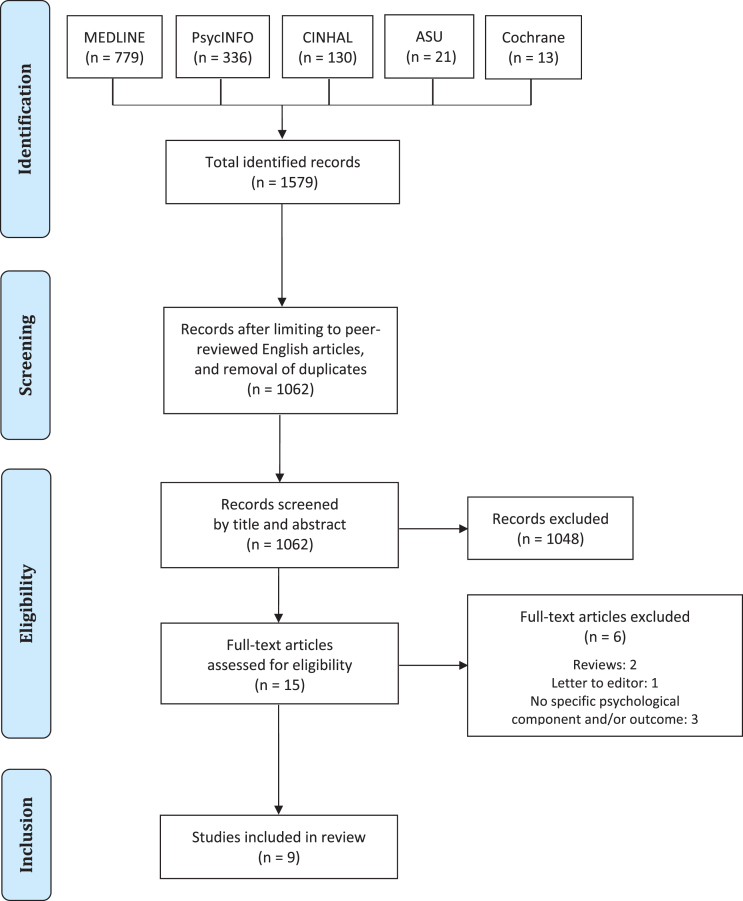
Background: Although Huntington’s disease (HD) can cause a wide range of psychological difficulties, no review has ever been carried out on the range of psychological interventions adopted with this population. Objective: To scope the literature on psychological interventions for psychological difficulties in people affected by HD. Methods: A systematic scoping review was performed across MEDLINE, PsycINFO, CINAHL, Academic Search Ultimate, and Cochrane Library up to 1 March 2020. Results: From an initial return of 1579 citations, a total of nine papers were considered eligible for review. These included a qualitative investigation, three case studies, two case series, two uncontrolled pretest-posttest designs, and only one randomised control trial (RCT). Despite the wide range of psychological difficulties which can be experienced by people affected by the HD gene expansion, the adopted interventions only accounted for five main psychological outcomes (anxiety, apathy, depression, irritability, and coping). Further discussion and suggestions for future research are provided for each outcome. Conclusion: The current literature on psychological interventions in people affected by HD is extremely limited both in terms of methods and addressed clinical outcomes. Consequently, no conclusions can be offered yet as to which psychological therapy may help this population. As further more comprehensive research is urgently needed for this group, the ultimate aim of the present review is to act as a call to arms for HD researchers worldwide to help shed light on the most effective way to translate psychological theory into practice for the benefit of people affected by HD.
Overview
The claims and statistics of this paper haven’t been checked yet.
Free: it reads the open-access text and checks the first 5 claims that cite a source we can check. Create a free account to check every claim.
Integrity signals
Registry
Cites
Statistics
Figures
Verification
Claims the paper makes
The claims and statistics of this paper haven’t been checked yet.
Free: it reads the open-access text and checks the first 5 claims that cite a source we can check. Create a free account to check every claim.
Claims other papers make about this one
Each is checked against this paper’s own text: does it say what the citing paper says it does?
The cited source says what the claim attributes to it.
In the citing paper
“The current evidence around the effectiveness of targeted psychological interventions for people with HD (pwHD) and their effectiveness for different psychological outcomes is limited [18].”
Self-check
Percentages, sums and reported differences re-computed from the paper’s own numbers.
The self-check needs the paper’s full text.
Citations
Cites
The Hospital Anxiety and Depression Scale
Zigmond, A. S., & Snaith, R. P. (1983) · Acta Psychiatrica Scandinavica · doi:10.1111/j.1600-0447.1983.tb09716.x · Cited by 47,139 · cited 1×
“However, the significant findings on depression were based on a 100-point visual analogue scale, while the score comparison with a standardised measure (Hospital Anxiety and Depression Scale, HADS; [69]) showed no significant difference in either group between preand post-intervention.”
MethodAn inventory for measuring depression
BECK, A. T. (1961) · Archives of General Psychiatry · doi:10.1001/archpsyc.1961.01710120031004 · Cited by 38,032
Scoping studies: towards a methodological framework
Arksey, H., & O'Malley, L. (2005) · International Journal of Social Research Methodology · doi:10.1080/1364557032000119616 · Cited by 36,742 · cited 1×
“the use of a systematic and replicable search strategy without specifying a narrowly defined research question, as usually required by traditional systematic reviews [51, 52].”
MethodAn inventory for measuring clinical anxiety: Psychometric properties.
Beck, A. T., Epstein, N., Brown, G., & Steer, R. A. (1988) · Journal of Consulting and Clinical Psychology · doi:10.1037/0022-006x.56.6.893 · Cited by 14,407
Depression and quality of life in older persons: A review
Sivertsen, H., Bjørkløf, G. H., Engedal, K., Selbæk, G., & Helvik, A.-S. (2015) · Dementia and Geriatric Cognitive Disorders · doi:10.1159/000437299 · Cited by 14,152
Guidance for conducting systematic scoping reviews
Peters, M. D. J., Godfrey, C. M., Khalil, H., McInerney, P., Parker, D., & Soares, C. B. (2015) · International Journal of Evidence-Based Healthcare · doi:10.1097/xeb.0000000000000050 · Cited by 7,472 · cited 3×
“Since a formal quality appraisal is not a typical component of a scoping review [50, 53], this was not performed on the identified studies.”
BackgroundMethodScoville, W. B. (1949) · Journal of neurosurgery · doi:10.3171/jns.1949.6.1.0065 · Cited by 7,381
A scoping review of scoping reviews: advancing the approach and enhancing the consistency
Pham, M. T., Rajić, A., Greig, J. D., Sargeant, J. M., Papadopoulos, A., & McEwen, S. A. (2014) · Research Synthesis Methods · doi:10.1002/jrsm.1123 · Cited by 3,078 · cited 2×
“Since a formal quality appraisal is not a typical component of a scoping review [50, 53], this was not performed on the identified studies.”
BackgroundAn inventory for assessing different kinds of hostility.
Buss, A. H., & Durkee, A. (1957) · Journal of Consulting Psychology · doi:10.1037/h0046900 · Cited by 2,575 · cited 1×
“Irritability may be described as a tendency to react excessively to negative stimuli, consisting of an affective component (anger) as well as a behavioural one (aggression) [83, 84].”
BackgroundHuntington's disease: a clinical review
Roos, R. A. (2010) · Orphanet Journal of Rare Diseases · doi:10.1186/1750-1172-5-40 · Cited by 1,037 · cited 4×
“pwHD may also show obsessive-compulsive and perseverative behaviours respectively [21, 24], while delusions and hallucinations are usually rarer [3, 4].”
BackgroundInfluential
Research works printed but not linked: 4
- Folstein S. Huntington’s disease: A disorder of families Maryland: The Johns Hopkins University Press; 1989.
- Tranel D, Paulsen JS, Hoth KF. Anosognosia in Huntington’s disease. In: Prigatano GP, editor. The Study of Anosognosia, New York: Oxford University Press; 2010, p. 147–58.
- Leventhal H, Brissette I, Leventhal E. The common-sense model of self-regulation of health and illness. In: Cameron LD, Leventhal H, eds. The Self-Regulation of Health and Illness Behaviour. London: Routledge, 2003;42–65.
- Mays N, Roberts E, Popay J. Synthesising research evidence. In: Fulop N, Allen P, Clarke A, Black N, eds. Methods for studying the delivery and organisation of health services. London: Routledge; 2001, p. 188–219.
Cited by
Zarotti, N., Eccles, F. J. R., Foley, J. A., Paget, A., Gunn, S., Leroi, I., & Simpson, J. (2021) · Psychology and Psychotherapy Theory Research and Practice · doi:10.1111/papt.12321 · Cited by 73
Self-citationThird wave cognitive behavioural therapies for people with multiple sclerosis: a scoping review
Zarotti, N., Eccles, F., Broyd, A., Longinotti, C., Mobley, A., & Simpson, J. (2023) · Disability and Rehabilitation · doi:10.1080/09638288.2022.2069292 · Cited by 40
Self-citationMühlbäck, A., van Walsem, M., Nance, M., Arnesen, A., Page, K., Fisher, A., van Kampen, M., Nuzzi, A., Limpert, R., Fossmo, H. L., et al. (2023) · Orphanet Journal of Rare Diseases · doi:10.1186/s13023-023-02622-8 · Cited by 33
“[25] call for the development of equal access to more psychologically oriented interventions.”
BackgroundPinto, C., Geraghty, A. W. A., McLoughlin, C., Pagnini, F., Yardley, L., & Dennison, L. (2022) · Health Psychology Review · doi:10.1080/17437199.2022.2073901 · Cited by 39
“In other neurodegenerative diseases (e.g., MND/ALS and Hun-tington ’ s Disease) the literature is sparse and the need for more research on interventions has been emphasised (Gould et al., 2015; Thomas et al., 2006; Zarotti, Dale, et al., 2020; Zarotti, Mayberry, et al., 2020).”
Zarotti, N., Dale, M., Eccles, F. J. R., & Simpson, J. (2022) · Journal of Personalized Medicine · doi:10.3390/jpm12010064 · Cited by 32
“In particular, to date, only one review has been carried out on the topic [47], which identified less than 10 eligible studies, only one of which was a randomised controlled trial (RCT).”
BackgroundSelf-citationExuzides, A., Matos, J., Patel, A. M., Martin, A., Ricker, B., & Bega, D. (2022) · Brain Sciences · doi:10.3390/brainsci12020161 · Cited by 30
“The limited evidence available suggests a role for CBT in the treatment of depression in PD and HD, but little is known about how to manage anxiety, and the available evidence is extremely limited in terms of methodology and outcome assessment [19,20,45].”
BackgroundBannon, S. M., Grunberg, V. A., Manglani, H. R., Lester, E. G., Ritchie, C. S., & Vranceanu, A. (2022) · Journal of the American Geriatrics Society · doi:10.1111/jgs.17801 · Cited by 32
“However, there are no dyadic interventions for HD, and limited individual interventions.(54) One pilot group educational intervention conducted by a nurse and clinical psychologist was associated with improvements in emotional distress and caregiver burden.”
BackgroundThe Lived Experiences of Depression in Huntington’s Disease: A Qualitative Study
Bilal, H., Warren, N., Dahanayake, P., Kelso, W. M., Farrand, S., & Stout, J. C. (2022) · Journal of Huntington s Disease · doi:10.3233/jhd-220537 · Cited by 15
Achenbach, J., & Saft, C. (2021) · Brain Sciences · doi:10.3390/brainsci11121621 · Cited by 17
“These are huge impacts on psychological difficulties, on the one hand, and there is limited knowledge about beneficial individual intervention strategies, on the other, which reflect an urgent need for further research concerning useful targeted psychological therapeutic approaches [14].”
BackgroundCurrent Psychological Approaches in Neurodegenerative Diseases
Kormas, P., & Moutzouri, A. (2022) · Springer eBooks · doi:10.1007/978-3-319-75479-6_10-1 · Cited by 17
Zarotti, N., D’Alessio, B., Scocchia, M., Casella, M., & Squitieri, F. (2024) · NeuroSci · doi:10.3390/neurosci5020007 · Cited by 16
“The manifestations of Huntington’s disease (HD) are often associated with a large number of psychological difficulties [13].”
BackgroundSelf-citationMeaning and purpose in Huntington’s disease: a longitudinal study of its impact on quality of life
Sokol, L. L., Troost, J. P., Kluger, B. M., Applebaum, A. J., Paulsen, J. S., Bega, D., Frank, S., Hauser, J. M., Boileau, N. R., Depp, C. A., et al. (2021) · Annals of Clinical and Translational Neurology · doi:10.1002/acn3.51424 · Cited by 18
“However, there are no evidence-based palliative care models or psychotherapeutic interventions that can ameliorate these distressing symptoms among people with the HD gene mutation.(9,13,14) Work within oncology has suggested that a sense of meaning and purpose may buffer against depression and suicidality.”
BackgroundThe Hold me Tight Program for Couples Facing Huntington’s Disease
Petzke, T. M., Rodríguez‐Girondo, M., & van der Meer, L. B. (2022) · Journal of Huntington s Disease · doi:10.3233/jhd-210516 · Cited by 13
Sleep Quality and Related Clinical Manifestations in Huntington Disease
Maffi, S., Scaricamazza, E., Migliore, S., Casella, M., Ceccarelli, C., & Squitieri, F. (2022) · Journal of Personalized Medicine · doi:10.3390/jpm12060864 · Cited by 12
“Therefore, studies investigating the efficacy of these interventions are highly recommended [36].”
BackgroundDeath Anxiety in Huntington Disease: Longitudinal Heath-Related Quality-of-Life Outcomes
Sokol, L. L., Troost, J. P., Bega, D., Paulsen, J. S., Kluger, B. M., Applebaum, A. J., Frank, S., Nance, M., Anderson, K. E., Perlmutter, J. S., et al. (2023) · Journal of Palliative Medicine · doi:10.1089/jpm.2022.0160 · Cited by 13
Non-Cell Autonomous and Epigenetic Mechanisms of Huntington’s Disease
Kim, C., Yousefian-Jazi, A., Choi, S.-H., Chang, I., Lee, J.-H., & Ryu, H. (2021) · International Journal of Molecular Sciences · doi:10.3390/ijms222212499 · Cited by 15
Zarotti, N., Deane, K. H., Ford, C. E. L., & Simpson, J. (2023) · Disability and Rehabilitation · doi:10.1080/09638288.2023.2169376 · Cited by 11
“These may draw inspiration from psychological models already adopted successfully with PwP [29], as well as other neurodegenerative conditions [78–80].”
BackgroundSelf-citationBilal, H., Harding, I. H., & Stout, J. C. (2023) · Journal of Neurology · doi:10.1007/s00415-023-11982-x · Cited by 12
“Given the scarcity of research on psychosocial interventions for HD [53], the efficacy of different psychological therapies for HD remains unclear.”
Schriger, S. H., Nurse, C. N., & O’Hayer, C. V. (2025) · Journal of Huntington s Disease · doi:10.1177/18796397251315162 · Cited by 9
“There is a paucity of research on psychological interventions for individuals living with HD, 60,61 a de fi cit that has been noted in the literature.”
Maffi, S., Zarotti, N., Scocchia, M., & Squitieri, F. (2025) · Journal of Huntington s Disease · doi:10.1177/18796397251348677 · Cited by 7
“In the absence of global consensus on HD psychological care, 5,52 and until additional evidence is accrued, clinicians may refer to psychological guidance and directions for HD, such as the document recently produced in the UK by the British Psychological Society.”
Self-citationRisk Factors and Interventions for Suicide in Huntington’s Disease—A Systematic Review
Grimaldi, A., Veneziani, I., Culicetto, L., Quartarone, A., & Buono, V. L. (2024) · Journal of Clinical Medicine · doi:10.3390/jcm13123437 · Cited by 19
“A recent literature review [70], supported by guidelines from the British Psychological Society [71], highlighted a concerning lack of data and a scarcity of dedicated psychological services for HD patients.”
BackgroundCurrent Psychological Approaches in Neurodegenerative Diseases
Kormas, P., & Moutzouri, A. (2023) · Springer eBooks · doi:10.1007/978-3-319-75922-7_10 · Cited by 8
Emotion recognition in people with Huntington's disease: A comprehensive systematic review
Zarotti, N., Storey, A., Lloyd, S., Guevara, L. M., Caswell, H. L., Chen, C., & Simpson, J. (2025) · Journal of Huntington s Disease · doi:10.1177/18796397251390252 · Cited by 8
“93,94 Finally, structural and functional neuroimaging studies consistently associated poorer emotion recognition with frontostriatal atrophy, white-matter disruption, and hypoactivation of large cortico-subcortical brain networks in both manifest and, more subtly, premanifest participants.”
Self-citationFeleus, S., van Schaijk, M., Roos, R. A. C., & de Bot, S. T. (2022) · Journal of Personalized Medicine · doi:10.3390/jpm12040589 · Cited by 6
Storey, A., Sheldrick, R., Dulhanty, L., & Zarotti, N. (2025) · Disability and Rehabilitation · doi:10.1080/09638288.2024.2379024 · Cited by 5
Self-citationRevolutionizing Huntington’s Disease Treatment: Breakthroughs in AAV-Mediated Gene Therapy
Gavgani, P. M., & García‐Domínguez, M. (2025) · Cells · doi:10.3390/cells14191514 · Cited by 7
“This approach improves significantly the mental health of patients with HD [125].”
Dale, M., Eccles, F. J. R., Melvin, K., Khan, Z., Jones, L., Zarotti, N., Kiani, R., Johnson, J., Wells, R., & Simpson, J. (2023) · Pilot and Feasibility Studies · doi:10.1186/s40814-023-01364-5 · Cited by 4
“The current evidence around the effectiveness of targeted psychological interventions for people with HD (pwHD) and their effectiveness for different psychological outcomes is limited [18].”
BackgroundSelf-citationVelissaris, S. L., Davis, M., Fisher, F., Gluyas, C., & Stout, J. C. (2023) · Journal of Community Genetics · doi:10.1007/s12687-023-00651-1 · Cited by 10
Aliaghaei, A., & Meftahi, G. H. (2024) · Brain Research Bulletin · doi:10.1016/j.brainresbull.2024.111039 · Cited by 4
“According to Cattaneo et al. (2001), and Walker (2007) studies, HD is brought on by a CAG polyglutamine expansion (greater than 35), which results in mutant Huntingtin protein and neuron damage in the basal ganglion (Zarotti et al., 2020).”
BackgroundWatson, K. H., Ciriegio, A. E., Pfalzer, A. C., Snow, A. L. B., Diehl, S., McDonell, K. E., Vnencak‐Jones, C. L., Long, J. D., Compas, B. E., & Claassen, D. O. (2025) · Journal of Neuropsychiatry · doi:10.1176/appi.neuropsych.20240104 · Cited by 3
Tindall, T., Dale, M., Simpson, J., & Gunn, S. (2025) · Psychology and Health · doi:10.1080/08870446.2025.2474010 · Cited by 4
“…therapies offer opportunities for non-pharmacological interventions for emotional difficulties, which have also been recommended in international expert-based clinical guidelines as a priority for supporting people with HD (Anderson et al., 2018; Bachoud-lévi et al., 2019; Zarotti et al., 2020).”
Self-citationGluyas, C., Mottram, L., Gibb, R., & Stout, J. C. (2022) · Journal of Community Genetics · doi:10.1007/s12687-022-00624-w · Cited by 6
Bhimanwar, A. A., Nikam, A. P., Dhamane, S. P., & Barangule, S. P. (2023) · International Journal of Pharmaceutical Quality Assurance · doi:10.25258/ijpqa.14.4.23 · Cited by 4
Muñoz-Ortega, A. V., Caballero, D. C., & Juárez, L. M. (2025) · Biomedicines · doi:10.3390/biomedicines13102498 · Cited by 4
“However, evidence also indicates that psychological support interventions for HD remain scarce, fragmented, and insufficiently tailored to the complex needs of patients and families, despite their documented demand for such resources [66].”
Simpson, J., & Zarotti, N. (2026) · Cortex · doi:10.1016/j.cortex.2026.05.004 · Cited by 3
Self-citationPharmacology of natural bioactive compounds used for management of Huntington diseases: An overview
Gadade, D. D., Sareen, R., Jain, N., Shah, K., Kumar, V., Modi, A., & Chauhan, N. S. (2024) · Brain Behavior and Immunity Integrative · doi:10.1016/j.bbii.2024.100091 · Cited by 4
Frequency of depression in Huntington's disease: A systematic review and meta-analysis
Zadegan, S. A., Ramirez, F., Park, J. W., Rocha, N. P., Furr-Stimming, E. E., & Teixeira, A. L. (2024) · Journal of Huntington s Disease · doi:10.1177/18796397241301774 · Cited by 13
“149,150 Particularly concerning is the fact that, despite depression being one of the most common mental health issues encountered in HD, there have been no randomized clinical trials to date that speci fi cally assess the ef fi cacy of pharmacological or psychological interventions for treating…”
Striving for a Realistic and Unapologetic View of Huntington’s Disease
Serbin, K. P. (2022) · Journal of Huntington s Disease · doi:10.3233/jhd-220551 · Cited by 2
“I continue to refer to myself as an HD gene expansion carrier, but not as “a person with HD,” a term ever more present in the scientific literature [5].”
BackgroundHuntington disease exacerbates action impulses
Shiino, S., van Wouwe, N. C., Wylie, S. A., Claassen, D. O., & McDonell, K. E. (2023) · Frontiers in Psychology · doi:10.3389/fpsyg.2023.1186465 · Cited by 4
“This is particularly critical given the burden of cognitive and behavioral symptoms in HD and the lack of evidencebased psychological interventions in this population (Zarotti et al., 2020).”
BackgroundCurrent Knowledge and Future Directions in Huntington’s Disease
Rodríguez, A., Morales, E., Herrera, C., Montaño, L., Martínez, K., Meza-Vega, M., Villar, N. D., & Sánchez, X. M. (2022) · Archivos de Neurociencias · doi:10.31157/an.v1iinpress.346 · Cited by 6
“communication between family members (71).”
Neuropsychology and Movement Disorders
Thomas, J. A., & Tröster, A. I. (2024) · Neurologic Clinics · doi:10.1016/j.ncl.2024.05.008 · Cited by 1
Mapping Longitudinal Psychiatric Signatures in Huntington’s Disease
Paepe, A. E. D., Giannoula, A., Garcia‐Gorro, C., Rodríguez‐Dechicha, N., Vaquer, I., Calopa, M., Sanz, F., Furlong, L. I., de Diego‐Balaguer, R., & Càmara, E. (2025) · Archives of Clinical Neuropsychology · doi:10.1093/arclin/acaf011 · Cited by 1
Feragen, K. B., Egedal, S., & Kjoelaas, S. (2025) · Health Psychology and Behavioral Medicine · doi:10.1080/21642850.2025.2465614 · Cited by 1
Gibson, J. S., Eberle, J. W., Werntz, A. J., Harrison, M. B., Manning, C. A., Yan, G., & Teachman, B. A. (2025) · Parkinsonism & Related Disorders · doi:10.1016/j.parkreldis.2025.107971 · Cited by 2
Ulanowski, E. A., Danzl, M. M., Branson, J. L., Patton, A., Thompson, A., Popson, L., & Starr, K. (2025) · Journal of Interprofessional Education & Practice · doi:10.1016/j.xjep.2025.100766 · Cited by 1
The experiences of being a young carer to a parent with Huntington’s disease: a thematic synthesis
Pares, L., Eccles, F. J. R., Dale, M., & Simpson, J. (2026) · Disability and Rehabilitation · doi:10.1080/09638288.2026.2651683 · Cited by 1
“While currently no individual interventions for young carers in HD families are evidence-based [46], one potential intervention is Acceptance and Commitment Therapy.”
Self-citationEmotion regulation across disease stages in Huntington’s disease gene expansion carriers
Poulsen, E., Ásbjörnsdóttir, B., Hjermind, L. E., Nielsen, J. E., & Vogel, A. (2026) · Archives of Clinical Neuropsychology · doi:10.1093/arclin/acag052 · Cited by 1
Metacognitive insight into cognitive performance in Huntington’s disease gene carriers
Hewitt, S., White, A. J., Mason, S., & Barker, R. A. (2022) · BMJ Neurology Open · doi:10.1136/bmjno-2022-000268 · Cited by 1
“30 A recent feasibility study has shown that mindfulness-based cognitive therapy (which exploits metacognition) can be beneficial to individuals with premanifest HD. 31 Our finding that HD gene carriers retain good metacognitive insight (despite deficits in cognitive performance), further indicates…”
Metacognitive insight into cognitive performance in pre and early-stage Huntington’s diseasePreprint
Hewitt, S., White, A. J., Mason, S., & Barker, R. A. (2021) · medRxiv · doi:10.1101/2021.10.25.21265369
“HD causes a wide range of psychological difficulties, but the literature on psychological interventions for people affected by HD is extremely limited (30)A recent feasibility study has shown that mindfulness-based cognitive therapy (which exploits metacognition) can be beneficial to individuals with premanifest HD (3…”
BackgroundNeuropsychiatrische Störungen bei Chorea Huntington
Wietelmann, D. (2022) · PSYCH up2date · doi:10.1055/a-1851-3700
“[5] Zarotti N, Dale M, Eccles F et al.”
BackgroundInfluentialMigliore, S., D’Aurizio, G., Ceccarelli, C., Casella, M., Curcio, G., & Squitieri, F. (2023) · Neurological Sciences · doi:10.1007/s10072-023-06950-2
“Although psychotherapy intervention has been shown to help with both cognition and behavioral issues in HD [9], this type of care for HD is often overlooked [10], with little 1 3 to no investigations currently being carried out on psycho-logically informed interventions in this population [11].”
Wheel and talk: A Progressive Supranuclear Palsy case summary
MacAuley, S., Sinclair-Burton, L., & Marotti, J. (2023) · FPOP Bulletin Psychology of Older People · doi:10.53841/bpsfpop.2023.1.164.60
Dale, M., Melvin, K., Eccles, F. J. R., Bell-Jones, L., Khan, Z., Wells, R., Johnson, J. K., Zarotti, N., & Simpson, J. (2025) · Neuropsychological Rehabilitation · doi:10.1080/09602011.2025.2600422
“…on psychological support and interventions for pwHD is extremely sparse, with no fully powered randomized controlled trials (RCTs) undertaken to date and none aimed at investigating approaches speci fi cally to reduce anxiety in this population (Dale & van Duijn, 2015; Zarotti et al., 2020, 2024).”
Self-citationBrusseau, M., Soudrie, B., Bachoud‐Lévi, A., Bannier, S., Bourdain, F., Jenkins, M., Natella, P.-A., Bombenger, N., & Boiché, J. C. S. (2026) · Journal of Huntington s Disease · doi:10.1177/18796397261422975 · Cited by 1
“57 These results are consistent with our intervention, as the control group bene fi ted speci fi cally from horse mediation and extended psychomotor therapy sessions focusing on emotions and relaxation.”
Stone, F., Gathii, E., & Stewart, I. (2026) · General Hospital Psychiatry · doi:10.1016/j.genhosppsych.2026.03.014
Ciucă, A., Trif, Ș., Samoilă, S., Radu, M., Iruela, F., Lopera, M. R., Vega, C. A., Blanco, R., Júlio, F., Arnesen, A., et al. (2026) · Journal of Community Genetics · doi:10.1007/s12687-026-00923-6
“In this way, our data help fill gaps identified in prior reviews (Zarotti et al. 2020 ), showing consistent benefits across a broader spectrum of individuals and psychological outcomes, while also providing effect-size estimates to quantify the magnitude of these improvements.”
InfluentialBrien, R., Dindo, L. N., Williams, R., Pauli, L., Marsh, B., Collinge, J., Mead, S., & Chan, E. (2026) · Neurotherapeutics · doi:10.1016/j.neurot.2026.e01079
“In HD, attrition rates is often related to ambivalence about engagement and possible avoidance of psychological distress [11].”
Poulsen, E., Ásbjörnsdóttir, B., Hjermind, L. E., Nielsen, J. E., & Vogel, A. (2026) · Journal of Neurology · doi:10.1007/s00415-026-14214-0
“This may be particularly relevant in HD, where evidence for psychological interventions remains very limited, especially for apathy [62].”
Metadata
- Authors
- Zarotti, N., Dale, M., Eccles, F., & Simpson, J.
- Affiliations
- Lancaster University (GB)
- Leicestershire Partnership NHS Trust (GB)
- Corresponding author
- Simpson, Jane
- Venue
- Journal of Huntington's Disease
- Publisher
- SAGE Publications
- Published
- 2020-10-08
- Volume
- 9
- Issue
- 3
- Pages
- 231-243
- ISSN
- 1879-6397 (ISSN-L)
- 1879-6400
- PMC
- PMC7683059
- OpenAlex
- W3061825730
- Cited by
- 59
- References
- 113
- Citations by year
- 2026: 8 · 2025: 12 · 2024: 8 · 2023: 11 · 2022: 15 · 2021: 4 · 2020: 1
- FWCI
- 1.07
- Type
- journal article
- Language
- en
- Open access
- hybrid
- doi.org
- Licence
- Locations
- Journal of Huntington s Disease (publishedVersion, cc-by-nc)
- PubMed Central (publishedVersion, cc-by-nc)
- PubMed (publishedVersion)
- Lancaster EPrints (Lancaster University) (acceptedVersion)
- UEA Digital Repository (University of East Anglia) (acceptedVersion)
- Lancaster EPrints (Lancaster University) (submittedVersion)
- Funders
- British Psychological Society
- Topics
- Life Sciences › Neuroscience › Cellular and Molecular Neuroscience › Genetic Neurodegenerative Diseases
- Social Sciences › Psychology › Clinical Psychology › Obsessive-Compulsive Spectrum Disorders
- Health Sciences › Medicine › Clinical Neurology › Deep Brain Stimulation and Movement Disorders
- Keywords
- Huntington's disease, psychological intervention, psychological difficulties, anxiety, apathy, depression, irritability, coping, psychotherapy, gene family expansion, research gaps
- MeSH terms
- Humans, Huntington Disease, Psychotherapy
About these checks
Registry, retraction, Cites and statistics results are computed, not judged, with one exception: a printed reference that no index lists is read once by a model before it counts as a citation error. Claims are extracted by a model and kept only when their quote appears verbatim in the text; each cited source is then checked, with a model’s help, for whether it says what the claim relies on. Those verdicts can be wrong — read the claim’s quote and the cited source before relying on one.
Statistics and arithmetic are recomputed, not judged.
Confidence bands are shown only for fields calibrated on our annotated test set. None is calibrated yet, so no band is shown.
What counts as a claim ›How we measure confidence ›How we check this ›
Are you an author, or do you see a problem with this page? Request a review
Data sources
Bibliographic data: Semantic Scholar, OpenAlex, Crossref.
Contains information from the Semantic Scholar Academic Graph Datasets, made available under the ODC Attribution License (ODC-BY 1.0).
Semantic Scholar’s data is described in: Kinney, R., et al. (2023). The Semantic Scholar Open Data Platform. arXiv:2301.10140.
