

Psychological Interventions for People with Huntington’s Disease: A Call to Arms
Open accessThe DOI matches its Crossref record; 113 of the 113 references it cites were found in a registry or an index.
Abstract
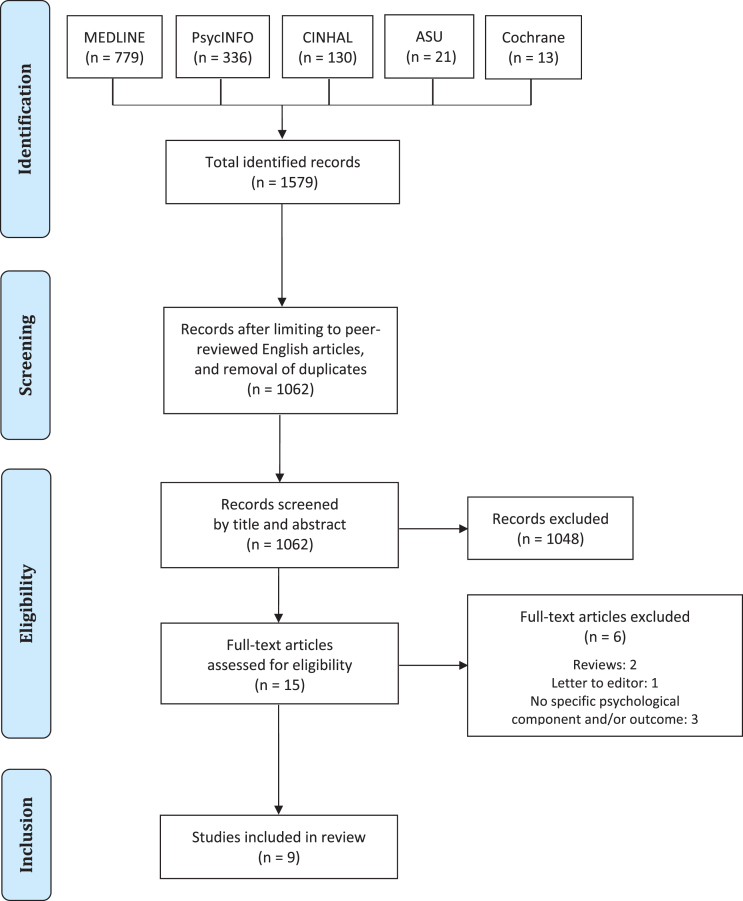
Background: Although Huntington’s disease (HD) can cause a wide range of psychological difficulties, no review has ever been carried out on the range of psychological interventions adopted with this population. Objective: To scope the literature on psychological interventions for psychological difficulties in people affected by HD. Methods: A systematic scoping review was performed across MEDLINE, PsycINFO, CINAHL, Academic Search Ultimate, and Cochrane Library up to 1 March 2020. Results: From an initial return of 1579 citations, a total of nine papers were considered eligible for review. These included a qualitative investigation, three case studies, two case series, two uncontrolled pretest-posttest designs, and only one randomised control trial (RCT). Despite the wide range of psychological difficulties which can be experienced by people affected by the HD gene expansion, the adopted interventions only accounted for five main psychological outcomes (anxiety, apathy, depression, irritability, and coping). Further discussion and suggestions for future research are provided for each outcome. Conclusion: The current literature on psychological interventions in people affected by HD is extremely limited both in terms of methods and addressed clinical outcomes. Consequently, no conclusions can be offered yet as to which psychological therapy may help this population. As further more comprehensive research is urgently needed for this group, the ultimate aim of the present review is to act as a call to arms for HD researchers worldwide to help shed light on the most effective way to translate psychological theory into practice for the benefit of people affected by HD.
Overview
The claims and statistics of this paper haven’t been checked yet.
Free: it reads the open-access text and checks the first 5 claims that cite a source we can check. Create a free account to check every claim.
Integrity signals
Registry
Cites
Statistics
Figures
Verification
Claims the paper makes
The claims and statistics of this paper haven’t been checked yet.
Free: it reads the open-access text and checks the first 5 claims that cite a source we can check. Create a free account to check every claim.
Claims other papers make about this one
Each is checked against this paper’s own text: does it say what the citing paper says it does?
The cited source says what the claim attributes to it.
In the citing paper
“The current evidence around the effectiveness of targeted psychological interventions for people with HD (pwHD) and their effectiveness for different psychological outcomes is limited [18].”
Self-check
Percentages, sums and reported differences re-computed from the paper’s own numbers.
The self-check needs the paper’s full text.
Citations
Cites
The Hospital Anxiety and Depression Scale
Zigmond, A. S., & Snaith, R. P. (1983) · Acta Psychiatrica Scandinavica · doi:10.1111/j.1600-0447.1983.tb09716.x · Cited by 47,139 · cited 1×
“However, the significant findings on depression were based on a 100-point visual analogue scale, while the score comparison with a standardised measure (Hospital Anxiety and Depression Scale, HADS; [69]) showed no significant difference in either group between preand post-intervention.”
MethodAn inventory for measuring depression
BECK, A. T. (1961) · Archives of General Psychiatry · doi:10.1001/archpsyc.1961.01710120031004 · Cited by 38,032
Scoping studies: towards a methodological framework
Arksey, H., & O'Malley, L. (2005) · International Journal of Social Research Methodology · doi:10.1080/1364557032000119616 · Cited by 36,742 · cited 1×
“the use of a systematic and replicable search strategy without specifying a narrowly defined research question, as usually required by traditional systematic reviews [51, 52].”
MethodAn inventory for measuring clinical anxiety: Psychometric properties.
Beck, A. T., Epstein, N., Brown, G., & Steer, R. A. (1988) · Journal of Consulting and Clinical Psychology · doi:10.1037/0022-006x.56.6.893 · Cited by 14,407
Depression and quality of life in older persons: A review
Sivertsen, H., Bjørkløf, G. H., Engedal, K., Selbæk, G., & Helvik, A.-S. (2015) · Dementia and Geriatric Cognitive Disorders · doi:10.1159/000437299 · Cited by 14,152
Guidance for conducting systematic scoping reviews
Peters, M. D. J., Godfrey, C. M., Khalil, H., McInerney, P., Parker, D., & Soares, C. B. (2015) · International Journal of Evidence-Based Healthcare · doi:10.1097/xeb.0000000000000050 · Cited by 7,472 · cited 3×
“Since a formal quality appraisal is not a typical component of a scoping review [50, 53], this was not performed on the identified studies.”
BackgroundMethodScoville, W. B. (1949) · Journal of neurosurgery · doi:10.3171/jns.1949.6.1.0065 · Cited by 7,381
A scoping review of scoping reviews: advancing the approach and enhancing the consistency
Pham, M. T., Rajić, A., Greig, J. D., Sargeant, J. M., Papadopoulos, A., & McEwen, S. A. (2014) · Research Synthesis Methods · doi:10.1002/jrsm.1123 · Cited by 3,078 · cited 2×
“Since a formal quality appraisal is not a typical component of a scoping review [50, 53], this was not performed on the identified studies.”
BackgroundAn inventory for assessing different kinds of hostility.
Buss, A. H., & Durkee, A. (1957) · Journal of Consulting Psychology · doi:10.1037/h0046900 · Cited by 2,575 · cited 1×
“Irritability may be described as a tendency to react excessively to negative stimuli, consisting of an affective component (anger) as well as a behavioural one (aggression) [83, 84].”
BackgroundHuntington's disease: a clinical review
Roos, R. A. (2010) · Orphanet Journal of Rare Diseases · doi:10.1186/1750-1172-5-40 · Cited by 1,037 · cited 4×
“pwHD may also show obsessive-compulsive and perseverative behaviours respectively [21, 24], while delusions and hallucinations are usually rarer [3, 4].”
BackgroundInfluentialHuntington disease: Clinical care and evaluation
Shoulson, I., & Fahn, S. (1979) · Neurology · doi:10.1212/wnl.29.1.1 · Cited by 746
Öst, L.-G., Havnen, A., Hansen, B., & Kvale, G. (2015) · Clinical Psychology Review · doi:10.1016/j.cpr.2015.06.003 · Cited by 655 · cited 1×
“However, based on a rich literature highlighting that both face to face and telephone-delivered CBT are effective at reducing obsessive-compulsive symptoms and perseverative behaviours in the general population [92, 93]—as well as that they are feasible with other motor neurodegenerative diseases like multiple scleros…”
BackgroundGREENE, J. G., SMITH, R., GARDINER, M., & TIMBURY, G. C. (1982) · Age and Ageing · doi:10.1093/ageing/11.2.121 · Cited by 585 · cited 2×
“Psychological outcomes were measured at baseline, post-intervention, and 4-week follow-up with the combined Behaviour and Mood Disturbance Scale (BMD) [70].”
MethodThe common sense model of self-regulation: Meta-analysis and test of a process model.
Hagger, M. S., Koch, S., Chatzisarantis, N. L. D., & Orbell, S. (2017) · Psychological Bulletin · doi:10.1037/bul0000118 · Cited by 579
Meta-Analysis of Nonpharmacological Interventions for Neuropsychiatric Symptoms of Dementia
Brodaty, H., & Arasaratnam, C. (2012) · American Journal of Psychiatry · doi:10.1176/appi.ajp.2012.11101529 · Cited by 479 · cited 1×
“, Lewy body dementia, [99]; MND/ALS, [71]), limited evidence is currently available on the positive effect of multidimensional interventions for dementia combining music therapy with recreational activities such as painting sessions and physical exercises like group ball games [100, 101].”
BackgroundBehavioral changes in Huntington Disease.
Craufurd, D., Thompson, J. C., & Snowden, J. S. (2001) · PubMed · Cited by 397
Psychological consequences of predictive genetic testing: a systematic review
Broadstock, M., Michie, S., & Marteau, T. (2000) · European Journal of Human Genetics · doi:10.1038/sj.ejhg.5200532 · Cited by 376 · cited 1×
“However, research on premanifest people has often reported inconsistent findings, as some show good adjustment after one year [29, 30], while others may develop regret, negative views of their future, and suicidal thoughts [31, 32].”
BackgroundThe nosological position of apathy in clinical practice
Starkstein, S. E., & Leentjens, A. F. G. (2008) · Journal of Neurology, Neurosurgery & Psychiatry · doi:10.1136/jnnp.2007.136895 · Cited by 371 · cited 1×
“The current conceptualisation and assessment of apathy in HD relies heavily on a neuropsychiatric framework, which sees it solely as the result of neurodegeneration [75].”
BackgroundPsychopathology in Verified Huntington's Disease Gene Carriers
van Duijn, E., Kingma, E. M., & van der Mast, R. C. (2007) · Journal of Neuropsychiatry · doi:10.1176/appi.neuropsych.19.4.441 · Cited by 321
Neuropsychiatric symptoms in a European Huntington's disease cohort (REGISTRY)
van Duijn, E., Craufurd, D., Hubers, A. A. M., Giltay, E. J., Bonelli, R., Rickards, H., Anderson, K. E., van Walsem, M. R., van der Mast, R. C., Orth, M., et al. (2014) · Journal of Neurology, Neurosurgery & Psychiatry · doi:10.1136/jnnp-2013-307343 · Cited by 299 · cited 2×
“pwHD may also show obsessive-compulsive and perseverative behaviours respectively [21, 24], while delusions and hallucinations are usually rarer [3, 4].”
BackgroundIllness perceptions and coping in physical health conditions: A meta-analysis
Dempster, M., Howell, D., & McCorry, N. K. (2015) · Journal of Psychosomatic Research · doi:10.1016/j.jpsychores.2015.10.006 · Cited by 275
Novak, M. J. U., & Tabrizi, S. J. (2010) · BMJ · doi:10.1136/bmj.c3109 · Cited by 244
Walker, F. (2007) · Seminars in Neurology · doi:10.1055/s-2007-971176 · Cited by 229
Huang, S., Maingard, J., Kok, H. K., Barras, C. D., Thijs, V., Chandra, R. V., Brooks, D. M., & Asadi, H. (2019) · Frontiers in Neurology · doi:10.3389/fneur.2019.00653 · Cited by 217
Beyond disgust: impaired recognition of negative emotions prior to diagnosis in Huntington's disease
Johnson, S. A., Stout, J. C., Solomon, A. C., Langbehn, D. R., Aylward, E. H., Cruce, C. B., Ross, C. A., Nance, M., Kayson, E., Julian-Baros, E., et al. (2007) · Brain · doi:10.1093/brain/awm107 · Cited by 194
International Guidelines for the Treatment of Huntington's Disease
Bachoud-Lévi, A.-C., Ferreira, J., Massart, R., Youssov, K., Rosser, A., Busse, M., Craufurd, D., Reilmann, R., De Michele, G., Rae, D., et al. (2019) · Frontiers in Neurology · doi:10.3389/fneur.2019.00710 · Cited by 193 · cited 1×
“However, as patients’ understanding of their difficulties has been shown to represent a significant determinant of apathy in people with Parkinson’s disease [76], similar adaptive reasons have also been recently suggested for HD [77].”
BackgroundCaprara, G. V., Cinanni, V., D'Imperio, G., Passerini, S., Renzi, P., & Travaglia, G. (1985) · Personality and Individual Differences · doi:10.1016/0191-8869(85)90077-7 · Cited by 182 · cited 1×
“Irritability may be described as a tendency to react excessively to negative stimuli, consisting of an affective component (anger) as well as a behavioural one (aggression) [83, 84].”
BackgroundMeijer, S. A., Sinnema, G., Bijstra, J. O., Mellenbergh, G. J., & Wolters, W. H. G. (2002) · Social Science & Medicine · doi:10.1016/s0277-9536(01)00127-7 · Cited by 179 · cited 1×
“Despite not representing a symptom like the other psychological outcomes mentioned above, coping is widely recognised as a significant predictor of psychological distress and adjustment in chronic conditions [88, 89], and the successful operationalisation”
BackgroundHarper, P. S., Lim, C., & Craufurd, D. (2000) · Journal of Medical Genetics · doi:10.1136/jmg.37.8.567 · Cited by 163 · cited 1×
“Considering the hereditary nature of the disease, predictive testing represents a particular source of psychological distress in pwHD [26], which reflects on the overall low uptake among at-risk individuals, ranging between 3% and 24% worldwide [27, 28].”
BackgroundLovell, K., Cox, D., Haddock, G., Jones, C., Raines, D., Garvey, R., Roberts, C., & Hadley, S. (2006) · BMJ · doi:10.1136/bmj.38940.355602.80 · Cited by 162 · cited 1×
“However, based on a rich literature highlighting that both face to face and telephone-delivered CBT are effective at reducing obsessive-compulsive symptoms and perseverative behaviours in the general population [92, 93]—as well as that they are feasible with other motor neurodegenerative diseases like multiple scleros…”
BackgroundKipps, C. M., Duggins, A. J., McCusker, E. A., & Calder, A. J. (2007) · Journal of Cognitive Neuroscience · doi:10.1162/jocn.2007.19.7.1206 · Cited by 161
Health‐related quality of life in Huntington's disease: Which factors matter most?
Ho, A. K., Gilbert, A. S., Mason, S. L., Goodman, A. O., & Barker, R. A. (2009) · Movement Disorders · doi:10.1002/mds.22412 · Cited by 150
Biological and clinical manifestations of juvenile Huntington’s disease: A retrospective analysis
Fusilli, C., Migliore, S., Mazza, T., Consoli, F., De Luca, A., Barbagallo, G., Ciammola, A., Gatto, E. M., Cesarini, M., Etcheverry, J. L., et al. (2018) · The Lancet Neurology · doi:10.1016/s1474-4422(18)30294-1 · Cited by 148
Orfei, M. D., Blundo, C., Celia, E., Casini, A. R., Caltagirone, C., Spalletta, G., & Varsi, A. E. (2010) · American Journal of Geriatric Psychiatry · doi:10.1097/jgp.0b013e3181dd1c50 · Cited by 146
The Global Prevalence of Huntington’s Disease: A Systematic Review and Discussion
Baig, S. S., Strong, M., & Quarrell, O. (2016) · Neurodegenerative Disease Management · doi:10.2217/nmt-2016-0008 · Cited by 140 · cited 1×
“7 per 100,000 in North America, Europe, and Australia, and lower figures among Asian countries [1].”
BackgroundInfluence of anosognosia on treatment outcome among dementia patients
Koltai, D. C., Welsh-Bohmer, K. A., & Schmechel, D. E. (2001) · Neuropsychological Rehabilitation · doi:10.1080/09602010042000097 · Cited by 122
A review of cognition in Huntington s disease
Dumas, E., van den Bogaard, S. J. A., Middelkoop, H. A. M., & Roos, R. A. C. (2013) · Frontiers in Bioscience-Scholar · doi:10.2741/s355 · Cited by 122 · cited 2×
“Along with motor difficulties, people with symptomatic HD also face a wide range of cognitive changes, which can affect memory, psychomotor speed, executive functioning and language, and lead to full dementia at later stages [6].”
BackgroundWahlin, T. R. (2006) · Patient Education and Counseling · doi:10.1016/j.pec.2006.08.009 · Cited by 116 · cited 1×
“However, research on premanifest people has often reported inconsistent findings, as some show good adjustment after one year [29, 30], while others may develop regret, negative views of their future, and suicidal thoughts [31, 32].”
BackgroundEmotion recognition in Huntington's disease: A systematic review
Henley, S. M. D., Novak, M. J. U., Frost, C., King, J., Tabrizi, S. J., & Warren, J. D. (2012) · Neuroscience & Biobehavioral Reviews · doi:10.1016/j.neubiorev.2011.06.002 · Cited by 112
Anderson, K. E., van Duijn, E., Craufurd, D., Drazinic, C., Edmondson, M., Goodman, N., van Kammen, D., Loy, C., Priller, J., & Goodman, L. V. (2018) · Journal of Huntington's Disease · doi:10.3233/jhd-180293 · Cited by 108 · cited 1×
“Consistently, further evidence also suggests that premanifest people seem to express interest in engaging with psychological interventions [39], while an international committee of 11 multidisciplinary experts on HD has recently highlighted that psychological interventions should be offered whenever possible to early…”
BackgroundMacht, M. L., Gerlich, C., Ellgring, H., Schradi, M., Bayés, À., Crespo, M., Prats, A., Viemerö, V., Lankinen, A., Bitti, P. E. R., et al. (2006) · Patient Education and Counseling · doi:10.1016/j.pec.2006.08.005 · Cited by 105 · cited 1×
“The program consisted of eight 2-weekly sessions of 90 minutes each based on psychoeducation combined with CBT components and adapted from a manualised intervention already available for people with Parkinson’s disease [67, 68].”
MethodChatterjee, A. (2005) · Journal of Neuropsychiatry · doi:10.1176/appi.neuropsych.17.3.378 · Cited by 101 · cited 1×
“However, anosognosia has also shown to affect psychological manifestations of HD in heterogenous and sometimes selective ways [37, 38], and this lack of generalisation for problems with awareness”
BackgroundHuntington's disease patients have selective problems with insight
Ho, A. K., Robbins, A. O. G., & Barker, R. A. (2006) · Movement Disorders · doi:10.1002/mds.20739 · Cited by 96 · cited 1×
“However, anosognosia has also shown to affect psychological manifestations of HD in heterogenous and sometimes selective ways [37, 38], and this lack of generalisation for problems with awareness”
BackgroundPiira, A., van Walsem, M. R., Mikalsen, G., Nilsen, K. H., Knutsen, S. F., & Frich, J. C. (2013) · PLoS Currents · doi:10.1371/currents.hd.9504af71e0d1f87830c25c394be47027 · Cited by 91 · cited 1×
“[107] Feasibility RCT Physical Activity Self-Management Coaching No specific psychological component and/or outcome Social Interaction [108] Qualitative Social support group No specific psychological component and/or outcome [109] Single case Not specified Letter to editor [110] Uncontrolled pre-post Multidisciplinary…”
BackgroundMilders, M. M., Crawford, J., Lamb, A., & Simpson, S. A. (2003) · Neuropsychologia · doi:10.1016/s0028-3932(03)00079-4 · Cited by 88
Arciniegas, D. B., & Anderson, C. A. (2002) · Current Treatment Options in Neurology · doi:10.1007/s11940-002-0013-5 · Cited by 86 · cited 1×
“Moreover, depression can often be experienced by premanifest people well before a formal diagnosis is reached [81], especially in relation to predictive testing [31], and an increased risk of suicide has been linked to both premanifest [25] and at-risk individuals [82].”
BackgroundAn innovative education programme for people with Parkinson's disease and their carers.
Simons, G., Thompson, S., & Pasqualini, M. C. S. (2006) · Parkinsonism & Related Disorders · doi:10.1016/j.parkreldis.2006.05.003 · Cited by 84
Anxiety in Huntington’s Disease
Dale, M., & van Duijn, E. (2015) · The Journal of Neuropsychiatry and Clinical Neurosciences · doi:10.1176/appi.neuropsych.14100265 · Cited by 83 · cited 1×
“Although anxiety represents one of the most common and debilitating psychological difficulties in pwHD [22], to date no trial studies have been carried out for the psychological management of anxiety in this population.”
BackgroundSelf-citationKaptein, A. A., Scharloo, M., Helder, D. I., Snoei, L., Kempen, G. M. J. V., Weinman, J. A., van Houwelingen, H. C., & Roos, R. A. C. (2007) · Quality of Life Research · doi:10.1007/s11136-007-9194-4 · Cited by 82
DNA analysis of Huntington’s disease
Laccone, F. A., Engel, U., Holinski‐Feder, E., Weigell-Weber, M., Marczinek, K., Nolte, D., Morris-Rosendahl, D. J., Zühlke, C., Fuchs, K., Weirich, H. G., et al. (1999) · Neurology · doi:10.1212/wnl.53.4.801 · Cited by 82
An overview of psychiatric symptoms in Huntington’s disease
Anderson, K. E., & Marder, K. S. (2001) · Current Psychiatry Reports · doi:10.1007/s11920-996-0030-2 · Cited by 81 · cited 1×
“Psychotic experiences such as delusions and hallucinations are rare in pwHD [3, 4, 96], but may still occur at any stage of the disease [97] and cause significant difficulties and concerns in both affected individuals and their relatives [98].”
BackgroundSuicidality in Huntington's disease
Hubers, A. A. M., Reedeker, N., Giltay, E. J., Roos, R. A. C., van Duijn, E., & van der Mast, R. C. (2011) · Journal of Affective Disorders · doi:10.1016/j.jad.2011.10.031 · Cited by 77
Executive functions in premanifest Huntington's disease
You, S. C., Geschwind, M. D., Sha, S. J., Apple, A., Satris, G., Wood, K. A., Johnson, E. T., Gooblar, J., Feuerstein, J. S., Finkbeiner, S., et al. (2014) · Movement Disorders · doi:10.1002/mds.25762 · Cited by 77
An Evidenced-Based Review of Psychological Treatments of Anger and Aggression
Glancy, G., & Saini, M. A. (2005) · Brief Treatment and Crisis Intervention · doi:10.1093/brief-treatment/mhi013 · Cited by 77 · cited 1×
“Inspiration for this may be drawn from the general literature on psychological interventions for people with anger and aggression, which currently identifies cognitive behavioural approaches as the most effective to address these difficulties (for a recent review, see [87]).”
BackgroundMcCabe, M. P., Firth, L., & O’Connor, E. (2009) · Journal of Clinical Psychology in Medical Settings · doi:10.1007/s10880-009-9168-5 · Cited by 76
Non-pharmacological interventions for Lewy body dementia: a systematic review
Connors, M. H., Quinto, L. R., McKeith, I. G., Brodaty, H., Allan, L. M., Bamford, C., Thomas, A. J., Taylor, J., & O'Brien, J. T. (2017) · Psychological Medicine · doi:10.1017/s0033291717003257 · Cited by 75 · cited 1×
“, Lewy body dementia, [99]; MND/ALS, [71]), limited evidence is currently available on the positive effect of multidimensional interventions for dementia combining music therapy with recreational activities such as painting sessions and physical exercises like group ball games [100, 101].”
BackgroundGhielen, I., Rutten, S., Boeschoten, R. E., Houniet-de Gier, M., van Wegen, E. E. H., van den Heuvel, O. A., & Cuijpers, P. (2019) · Journal of Psychosomatic Research · doi:10.1016/j.jpsychores.2019.05.001 · Cited by 74 · cited 1×
“However, based on a rich literature highlighting that both face to face and telephone-delivered CBT are effective at reducing obsessive-compulsive symptoms and perseverative behaviours in the general population [92, 93]—as well as that they are feasible with other motor neurodegenerative diseases like multiple scleros…”
BackgroundBanaszkiewicz, K., Sitek, E. J., Rudzińska, M., Sołtan, W., Sławek, J., & Szczudlik, A. (2012) · Journal of Neural Transmission · doi:10.1007/s00702-012-0787-x · Cited by 73
Piira, A., van Walsem, M. R., Mikalsen, G., Øie, L., Frich, J. C., & Knutsen, S. (2014) · PLoS Currents · doi:10.1371/currents.hd.2c56ceef7f9f8e239a59ecf2d94cddac · Cited by 72
Psychological studies in Huntington's disease: making up the balance
Duisterhof, M., Trijsburg, R. W., Niermeijer, M. F., Roos, R. A. C., & Tibben, A. (2001) · Journal of Medical Genetics · doi:10.1136/jmg.38.12.852 · Cited by 70
Crozier, S., Robertson, N., & Dale, M. (2015) · Journal of Genetic Counseling · doi:10.1007/s10897-014-9755-y · Cited by 68 · cited 1×
“Considering the hereditary nature of the disease, predictive testing represents a particular source of psychological distress in pwHD [26], which reflects on the overall low uptake among at-risk individuals, ranging between 3% and 24% worldwide [27, 28].”
BackgroundSelf-citationLowit, A., & van Teijlingen, E. (2005) · BMC Family Practice · doi:10.1186/1471-2296-6-38 · Cited by 68 · cited 1×
“acterised by avoidance, denial, and isolation [91].”
Depression and Huntington's Disease: Prevalence, Clinical Manifestations, Etiology, and Treatment
Slaughter, J. R., Martens, M. P., & Slaughter, K. A. (2001) · CNS Spectrums · doi:10.1017/s109285290002201x · Cited by 67 · cited 1×
“As with anxiety, depression is among the most commonly observed psychological difficulties in pwHD [3, 4], with over a third of individuals reporting clinical levels of low mood [80].”
BackgroundJordan, C., Sin, J., Fear, N. T., & Chalder, T. (2016) · Clinical Psychology Review · doi:10.1016/j.cpr.2016.06.001 · Cited by 67 · cited 1×
“Despite not representing a symptom like the other psychological outcomes mentioned above, coping is widely recognised as a significant predictor of psychological distress and adjustment in chronic conditions [88, 89], and the successful operationalisation”
BackgroundTay, K., Subramaniam, P., & Oei, T. P. (2019) · Psychogeriatrics · doi:10.1111/psyg.12391 · Cited by 66 · cited 1×
“However, current evidence also shows that cognitive and behavioural techniques may be effective in treating psychological difficulties in people with moderate dementia, especially when carers are actively involved [106], and one of the uncontrolled pretestposttest studies identified by the present review showed positi…”
BackgroundHo, A., Hocaoglu, M., & for the European Huntington's Disease Network Quality of Life Working Group (2011) · Clinical Genetics · doi:10.1111/j.1399-0004.2011.01748.x · Cited by 65
Obsessive and Compulsive Symptoms in Prediagnosed Huntington's Disease
Beglinger, L. J., Paulsen, J. S., Watson, D. B., Wang, C., Duff, K., Langbehn, D. R., Moser, D. J., Paulson, H. L., Alyward, E. H., Carlozzi, N. E., et al. (2008) · The Journal of Clinical Psychiatry · doi:10.4088/jcp.v69n1111 · Cited by 65
Labuschagne, I., Jones, R., Callaghan, J., Whitehead, D. L., Dumas, E. M., Say, M. J., Hart, E. P., Justo, D., Coleman, A., Santos, R. C. D., et al. (2012) · Psychiatry Research · doi:10.1016/j.psychres.2012.09.022 · Cited by 64
Meditation training for people with amyotrophic lateral sclerosis: A randomized clinical trial
Pagnini, F., Marconi, A., Tagliaferri, A., Manzoni, G. M., Gatto, R., Fabiani, V., Gragnano, G., Rossi, G., Volpato, E., Banfi, P., et al. (2017) · European Journal of Neurology · doi:10.1111/ene.13246 · Cited by 63 · cited 1×
“dence involving the same population [72, 73], tailored”
Chen, R., Liu, C., Lin, M., Peng, L., Chen, L., Liu, L., & Chen, L. (2014) · Geriatrics & Gerontology International · doi:10.1111/ggi.12126 · Cited by 62 · cited 1×
“, Lewy body dementia, [99]; MND/ALS, [71]), limited evidence is currently available on the positive effect of multidimensional interventions for dementia combining music therapy with recreational activities such as painting sessions and physical exercises like group ball games [100, 101].”
BackgroundAggression in Huntington's Disease: A Systematic Review of Rates of Aggression and Treatment Methods
Fisher, C. A., Sewell, K., Brown, A., & Churchyard, A. (2014) · Journal of Huntington's Disease · doi:10.3233/jhd-140127 · Cited by 61 · cited 1×
“As more methodologically rigorous studies are needed to explore the concept of aggression [86], the consideration of alternative psychologicallyinformed models is currently warranted more widely to increase our understanding of irritability in pwHD.”
BackgroundOrfei, M. D., Assogna, F., Pellicano, C., Pontieri, F. E., Caltagirone, C., Pierantozzi, M., Stefani, A., & Spalletta, G. (2018) · Parkinsonism & Related Disorders · doi:10.1016/j.parkreldis.2018.04.015 · Cited by 55
The impairment of emotion recognition in Huntington’s disease extends to positive emotions
Robotham, L., Sauter, D. A., Bachoud‐Lévi, A., & Trinkler, I. (2011) · Cortex · doi:10.1016/j.cortex.2011.02.014 · Cited by 54
Cosio, D., Jin, L., Siddique, J., & Mohr, D. C. (2011) · Annals of Behavioral Medicine · doi:10.1007/s12160-010-9236-y · Cited by 48
Attachment in families with Huntington's disease
van der Meer, L. B., Timman, R., Trijsburg, W., Duisterhof, M., Erdman, R. A. M., van Elderen, T., & Tibben, A. (2006) · Patient Education and Counseling · doi:10.1016/j.pec.2005.11.019 · Cited by 48 · cited 1×
“ment styles [102, 103]) for children and younger”
Obsessive-Compulsive and Perseverative Behaviors in Huntington’s Disease
Oosterloo, M., Craufurd, D., Nijsten, J. M. H., & van Duijn, E. (2019) · Journal of Huntington s Disease · doi:10.3233/jhd-180335 · Cited by 48 · cited 2×
“pwHD may also show obsessive-compulsive and perseverative behaviours respectively [21, 24], while delusions and hallucinations are usually rarer [3, 4].”
BackgroundTreatment of Apathy in Huntington’s Disease and Other Movement Disorders
Krishnamoorthy, A. V., & Craufurd, D. (2011) · Current Treatment Options in Neurology · doi:10.1007/s11940-011-0140-y · Cited by 46
Remotivation Therapy and Huntingtonʼs Disease
Sullivan, F. R., Bird, E. D., Alpay, M., & Cha, J.-H. J. (2001) · Journal of Neuroscience Nursing · doi:10.1097/01376517-200106000-00005 · Cited by 45 · cited 3×
“[58] Case series Manifest: 6 Remotivation therapy (RmT) Apathy Reported improvements in interest, awareness, attention span, frustration tolerance, reading ability, oral communication, and overall participation.”
BackgroundInfluentialHagberg, A., Bui, T., & Winnberg, E. (2010) · Journal of Genetic Counseling · doi:10.1007/s10897-010-9329-6 · Cited by 44 · cited 2×
“However, research on premanifest people has often reported inconsistent findings, as some show good adjustment after one year [29, 30], while others may develop regret, negative views of their future, and suicidal thoughts [31, 32].”
BackgroundBusse, M. E., Quinn, L., Drew, C. J. G., Kelson, M. J., Trubey, R., McEwan, K., Jones, C., Townson, J. K., Dawes, H., Edwards, R. T., et al. (2017) · Physical Therapy · doi:10.1093/ptj/pzx031 · Cited by 44 · cited 1×
“[107] Feasibility RCT Physical Activity Self-Management Coaching No specific psychological component and/or outcome Social Interaction [108] Qualitative Social support group No specific psychological component and/or outcome [109] Single case Not specified Letter to editor [110] Uncontrolled pre-post Multidisciplinary…”
The Patient Education Program for Huntington's Disease (PEP-HD)
A'Campo, L. E. I., Spliethoff-Kamminga, N. G. A., & Roos, R. A. C. (2012) · Journal of Huntington's Disease · doi:10.3233/jhd-2012-120002 · Cited by 41 · cited 4×
“[59] Uncontrolled pre-post Manifest: 29 Premanifest: 12 Psychoeducation with CBT components Depression Anxiety Coping Significant improvements for symptomatic pwHD on behavioural problems, anxiety, and specific components of coping.”
BackgroundInfluentialMarconi, A., Gragnano, G., Lunetta, C., Gatto, R., Fabiani, V., Tagliaferri, A., Rossi, G., Sansone, V., & Pagnini, F. (2016) · Psychology, Health & Medicine · doi:10.1080/13548506.2015.1115110 · Cited by 39 · cited 1×
“dence involving the same population [72, 73], tailored”
(2014) · Oxford University Press eBooks · doi:10.1093/med/9780199929146.001.0001 · Cited by 39
Butterfield, L. C., Cimino, C. R., Salazar, R., Sanchez-Ramos, J., Bowers, D., & Okun, M. S. (2017) · Journal of Geriatric Psychiatry and Neurology · doi:10.1177/0891988716673467 · Cited by 38
Zarotti, N., Simpson, J., Fletcher, I. J., Squitieri, F., & Migliore, S. (2018) · Neuropsychologia · doi:10.1016/j.neuropsychologia.2018.02.030 · Cited by 38
Self-citationCognitive behavioral group therapy versus psychoeducational intervention in Parkinson’s disease
Berardelli, I., Bloise, M. C., Bologna, M., Conte, A., Pompili, M., Lamis, D., Pasquini, M., & Fabbrini, G. (2018) · Neuropsychiatric Disease and Treatment · doi:10.2147/ndt.s152221 · Cited by 37 · cited 1×
“, activity scheduling and monitoring), both of which have shown to be effective when adopted with people with Parkinson’s disease [78, 79].”
BackgroundCipriani, A., Furukawa, T. A., Geddes, J. R., Malvini, L., Signoretti, A., McGuire, H., Churchill, R., Nakagawa, A., & Barbui, C. (2008) · The Journal of Clinical Psychiatry · doi:10.4088/jcp.v69n1108 · Cited by 36
Psychological interventions for people with motor neuron disease: a scoping review
Zarotti, N., Mayberry, E., Ovaska-Stafford, N., Eccles, F., & Simpson, J. (2021) · Amyotrophic Lateral Sclerosis and Frontotemporal Degeneration · doi:10.1080/21678421.2020.1788094 · Cited by 36 · cited 2×
“While this appears to be the case of various other primary neurodegenerative conditions (e.g., Lewy body dementia, [99]; MND/ALS, [71]), limited evidence is currently available on the positive effect of multidimensional interventions for dementia combining music therapy with recreational activities such as painting se…”
BackgroundSelf-citationTreatment of Irritability in Huntington’s Disease
van Duijn, E. (2010) · Current Treatment Options in Neurology · doi:10.1007/s11940-010-0088-3 · Cited by 33 · cited 1×
“It represents a common difficulty in pwHD, estimated to affect over 70% of individuals [85].”
BackgroundLeng, T. R., Woodward, M. J., Stokes, M. J., Swan, A. V., Wareing, L. A., & Baker, R. D. (2003) · Clinical Rehabilitation · doi:10.1191/0269215503cr582oa · Cited by 32 · cited 3×
“Alongside a small number of case studies and qualitative or uncontrolled pretestposttest designs, only one small pilot RCT was identified [61].”
BackgroundExperiences of apathy in people with Parkinson’s disease: a qualitative exploration
Simpson, J., McMillan, H., Leroi, I., & Murray, C. D. (2014) · Disability and Rehabilitation · doi:10.3109/09638288.2014.939771 · Cited by 27 · cited 1×
“However, as patients’ understanding of their difficulties has been shown to represent a significant determinant of apathy in people with Parkinson’s disease [76], similar adaptive reasons have also been recently suggested for HD [77].”
BackgroundSelf-citationBlass, D. M., Steinberg, M., Leroi, I., & Lyketsos, C. G. (2001) · American Journal of Psychiatry · doi:10.1176/appi.ajp.158.12.1966 · Cited by 27 · cited 3×
“[54] Single case Manifest: 1 Behaviour support and pharmacological Irritability Reduction of delirium after pharmacological intervention.”
BackgroundValidity of irritability in Huntington's disease: A scoping review
Simpson, J., Dale, M., Theed, R., Gunn, S., Zarotti, N., & Eccles, F. J. R. (2019) · Cortex · doi:10.1016/j.cortex.2019.06.012 · Cited by 27 · cited 1×
“conducted [23], but also the beliefs and perceptions of”
BackgroundSelf-citationZarotti, N., Fletcher, I. J., & Simpson, J. (2018) · Archives of Clinical Neuropsychology · doi:10.1093/arclin/acy085 · Cited by 25
Self-citationStopford, C. L., Ferrer‐Duch, M., Moldovan, R., & MacLeod, R. (2019) · Journal of Community Genetics · doi:10.1007/s12687-019-00416-9 · Cited by 25 · cited 2×
“as one of the qualitative studies identified by the present review showed preliminary positive results for a group genetic counselling session based on narrative therapy [62], similar forms of support may be explored and adapted for individuals at risk of HD not wishing to undergo genetic testing, Finally, more consid…”
BackgroundVisual Working Memory Impairment in Premanifest Gene-Carriers and Early Huntington's Disease
Dumas, E. M., Say, M. J., Jones, R., Labuschagne, I., O’Regan, A., Hart, E. P., van den Bogaard, S. J. A., Queller, S., Justo, D., Coleman, A., et al. (2012) · Journal of Huntington s Disease · doi:10.3233/jhd-2012-120010 · Cited by 24
Huntington's Disease: Prevalence and Psychological Indicators of Pain
Underwood, M., Bonas, S., Dale, M., & REGISTRY Investigators of the European Huntington's Disease Network (2017) · Movement Disorders Clinical Practice · doi:10.1002/mdc3.12376 · Cited by 24
Self-citationDo Attachment Style and Emotion Regulation Strategies Indicate Distress in Predictive Testing?
van der Meer, L. B., van Duijn, E., Giltay, E. J., & Tibben, A. (2015) · Journal of Genetic Counseling · doi:10.1007/s10897-015-9822-z · Cited by 23 · cited 1×
“ment styles [102, 103]) for children and younger”
Cognitive-behavioural therapy with a Huntington’s gene positive patient
Silver, A. (2003) · Patient Education and Counseling · doi:10.1016/s0738-3991(02)00070-8 · Cited by 23 · cited 3×
“[57] Case study Premanifest: 1 CBT Anxiety Depression Decreases in anxiety and depression from moderate to minimal, benefits sustained at 6-month follow-up”
BackgroundFisher, C. A., & Brown, A. (2015) · Neuropsychological Rehabilitation · doi:10.1080/09602011.2015.1091779 · Cited by 22 · cited 4×
“[56] Single case experimental design Manifest: 1 Sensory modulation and behaviour support modification Irritability Sensory modulation and behaviour support associated with a reduction in recorded rates of all types of aggression.”
BackgroundMethodInfluentialChisholm, L. Z., Flavin, K. T., Paulsen, J. S., & Ready, R. E. (2012) · Journal of Health Psychology · doi:10.1177/1359105312444646 · Cited by 21 · cited 1×
“People with positive testing for HD without a formal diagnosis are usually referred to as ‘gene carriers’, ‘presymptomatic’ or ‘premanifest’ individuals [6, 7], while those with family history of the disease who have not undergone genetic testing are usually defined as ‘at-risk’ [8].”
BackgroundTheed, R., Eccles, F. J. R., & Simpson, J. (2018) · Psychology and Psychotherapy: Theory, Research and Practice · doi:10.1111/papt.12157 · Cited by 19 · cited 2×
“many medical and clinical professionals [39].”
BackgroundSelf-citationBrown, A., & Fisher, C. A. (2015) · British Journal of Occupational Therapy · doi:10.1177/0308022615569249 · Cited by 17 · cited 5×
“Promising results showing reduced aggressive behaviour in symptomatic individuals are available from studies using sensory modulation alone [55], or combined with behavioural support based on applied behaviour analysis [54, 56].”
BackgroundInfluentialPatient Education for People with Parkinson's Disease and their Carers: A Manual
Smith, M. C., & Simons, G. (2006) · Cited by 17
Assessment of Depression, Anxiety and Apathy in Prodromal and Early Huntington Disease
Vaccarino, A. L., Sills, T. L., Anderson, K. E., Bachoud‐Lévi, A., Borowsky, B., Craufurd, D., Duff, K., Giuliano, J. D., Groves, M., Guttman, M., et al. (2011) · PLoS Currents · doi:10.1371/currents.rrn1242 · Cited by 15 · cited 1×
“Moreover, depression can often be experienced by premanifest people well before a formal diagnosis is reached [81], especially in relation to predictive testing [31], and an increased risk of suicide has been linked to both premanifest [25] and at-risk individuals [82].”
BackgroundPsychosis with Huntington's disease: role of antipsychotic medications
Ding, J., & Gadit, A. M. (2014) · BMJ Case Reports · doi:10.1136/bcr-2013-202625 · Cited by 14 · cited 1×
“Psychotic experiences such as delusions and hallucinations are rare in pwHD [3, 4, 96], but may still occur at any stage of the disease [97] and cause significant difficulties and concerns in both affected individuals and their relatives [98].”
BackgroundUse of Applied Behavior Analysis in Treating Nursing Home Residents
Lundervold, D. A., & Jackson, T. (1992) · Psychiatric Services · doi:10.1176/ps.43.2.171 · Cited by 11 · cited 1×
“Blass and colleagues [54] reported the adoption of a combination of pharmacological therapy with a behavioural management plan based on applied behaviour analysis [65] to target challenging behaviours in a 32-year-old man with advanced HD.”
BackgroundA Concept Map of What Helps People with HD Live with their Condition
Smith, S., D’Cruz, G., Gray, R. J., Flaherty, H., Ivanecka, A., & Deane, K. H. (2015) · Journal of Huntington s Disease · doi:10.3233/jhd-150161 · Cited by 9
The Leicestershire Huntington's disease support group: a social network analysis
Dipple, H., & Evans, B. (1998) · Health & Social Care in the Community · doi:10.1046/j.1365-2524.1998.00132.x · Cited by 8 · cited 2×
“[107] Feasibility RCT Physical Activity Self-Management Coaching No specific psychological component and/or outcome Social Interaction [108] Qualitative Social support group No specific psychological component and/or outcome [109] Single case Not specified Letter to editor [110] Uncontrolled pre-post Multidisciplinary…”
BackgroundBehavioural Relaxation Training with Huntington's Disease Patients: A Pilot Study
Fecteau, G. W., & Boyne, J. (1987) · Psychological Reports · doi:10.2466/pr0.1987.61.1.151 · Cited by 6
Non-Pharmacological Treatments in a Patient with Dementia Due to Huntington’s Disease
Haw-Ming, L., Chen, S., & Chen, S.-J. (2010) · Journal of Neuropsychiatry · doi:10.1176/jnp.2010.22.2.247.e17 · Cited by 4
Zarotti, N., Simpson, J., Fletcher, I. J., Squitieri, F., & Migliore, S. (2018) · doi:10.1136/jnnp-2018-ehdn.151 · Cited by 2
Self-citationRemotivation-therapy: what is it?
Williams, I. (1979) · PubMed · Cited by 1
Research works printed but not linked: 4
- Folstein S. Huntington’s disease: A disorder of families Maryland: The Johns Hopkins University Press; 1989.
- Tranel D, Paulsen JS, Hoth KF. Anosognosia in Huntington’s disease. In: Prigatano GP, editor. The Study of Anosognosia, New York: Oxford University Press; 2010, p. 147–58.
- Leventhal H, Brissette I, Leventhal E. The common-sense model of self-regulation of health and illness. In: Cameron LD, Leventhal H, eds. The Self-Regulation of Health and Illness Behaviour. London: Routledge, 2003;42–65.
- Mays N, Roberts E, Popay J. Synthesising research evidence. In: Fulop N, Allen P, Clarke A, Black N, eds. Methods for studying the delivery and organisation of health services. London: Routledge; 2001, p. 188–219.
Cited by
Zarotti, N., Eccles, F. J. R., Foley, J. A., Paget, A., Gunn, S., Leroi, I., & Simpson, J. (2021) · Psychology and Psychotherapy Theory Research and Practice · doi:10.1111/papt.12321 · Cited by 73
Self-citationThird wave cognitive behavioural therapies for people with multiple sclerosis: a scoping review
Zarotti, N., Eccles, F., Broyd, A., Longinotti, C., Mobley, A., & Simpson, J. (2023) · Disability and Rehabilitation · doi:10.1080/09638288.2022.2069292 · Cited by 40
Self-citationMühlbäck, A., van Walsem, M., Nance, M., Arnesen, A., Page, K., Fisher, A., van Kampen, M., Nuzzi, A., Limpert, R., Fossmo, H. L., et al. (2023) · Orphanet Journal of Rare Diseases · doi:10.1186/s13023-023-02622-8 · Cited by 33
“[25] call for the development of equal access to more psychologically oriented interventions.”
BackgroundPinto, C., Geraghty, A. W. A., McLoughlin, C., Pagnini, F., Yardley, L., & Dennison, L. (2022) · Health Psychology Review · doi:10.1080/17437199.2022.2073901 · Cited by 39
“In other neurodegenerative diseases (e.g., MND/ALS and Hun-tington ’ s Disease) the literature is sparse and the need for more research on interventions has been emphasised (Gould et al., 2015; Thomas et al., 2006; Zarotti, Dale, et al., 2020; Zarotti, Mayberry, et al., 2020).”
Zarotti, N., Dale, M., Eccles, F. J. R., & Simpson, J. (2022) · Journal of Personalized Medicine · doi:10.3390/jpm12010064 · Cited by 32
“In particular, to date, only one review has been carried out on the topic [47], which identified less than 10 eligible studies, only one of which was a randomised controlled trial (RCT).”
BackgroundSelf-citation
Metadata
- Authors
- Zarotti, N., Dale, M., Eccles, F., & Simpson, J.
- Affiliations
- Lancaster University (GB)
- Leicestershire Partnership NHS Trust (GB)
- Corresponding author
- Simpson, Jane
- Venue
- Journal of Huntington's Disease
- Publisher
- SAGE Publications
- Published
- 2020-10-08
- Volume
- 9
- Issue
- 3
- Pages
- 231-243
- ISSN
- 1879-6397 (ISSN-L)
- 1879-6400
- PMC
- PMC7683059
- OpenAlex
- W3061825730
- Cited by
- 59
- References
- 113
- Citations by year
- 2026: 8 · 2025: 12 · 2024: 8 · 2023: 11 · 2022: 15 · 2021: 4 · 2020: 1
- FWCI
- 1.07
- Type
- journal article
- Language
- en
- Open access
- hybrid
- doi.org
- Licence
- Locations
- Journal of Huntington s Disease (publishedVersion, cc-by-nc)
- PubMed Central (publishedVersion, cc-by-nc)
- PubMed (publishedVersion)
- Lancaster EPrints (Lancaster University) (acceptedVersion)
- UEA Digital Repository (University of East Anglia) (acceptedVersion)
- Lancaster EPrints (Lancaster University) (submittedVersion)
- Funders
- British Psychological Society
- Topics
- Life Sciences › Neuroscience › Cellular and Molecular Neuroscience › Genetic Neurodegenerative Diseases
- Social Sciences › Psychology › Clinical Psychology › Obsessive-Compulsive Spectrum Disorders
- Health Sciences › Medicine › Clinical Neurology › Deep Brain Stimulation and Movement Disorders
- Keywords
- Huntington's disease, psychological intervention, psychological difficulties, anxiety, apathy, depression, irritability, coping, psychotherapy, gene family expansion, research gaps
- MeSH terms
- Humans, Huntington Disease, Psychotherapy
About these checks
Registry, retraction, Cites and statistics results are computed, not judged, with one exception: a printed reference that no index lists is read once by a model before it counts as a citation error. Claims are extracted by a model and kept only when their quote appears verbatim in the text; each cited source is then checked, with a model’s help, for whether it says what the claim relies on. Those verdicts can be wrong — read the claim’s quote and the cited source before relying on one.
Statistics and arithmetic are recomputed, not judged.
Confidence bands are shown only for fields calibrated on our annotated test set. None is calibrated yet, so no band is shown.
What counts as a claim ›How we measure confidence ›How we check this ›
Are you an author, or do you see a problem with this page? Request a review
Data sources
Bibliographic data: Semantic Scholar, OpenAlex, Crossref.
Contains information from the Semantic Scholar Academic Graph Datasets, made available under the ODC Attribution License (ODC-BY 1.0).
Semantic Scholar’s data is described in: Kinney, R., et al. (2023). The Semantic Scholar Open Data Platform. arXiv:2301.10140.
