

The DOI matches its Crossref record; 4 of the 4 references it cites were found in a registry or an index.
Effectiveness of contextual schema therapy for emotion regulation and painful physical symptoms in individuals with social anxiety disorder: Single subject study
Abstract
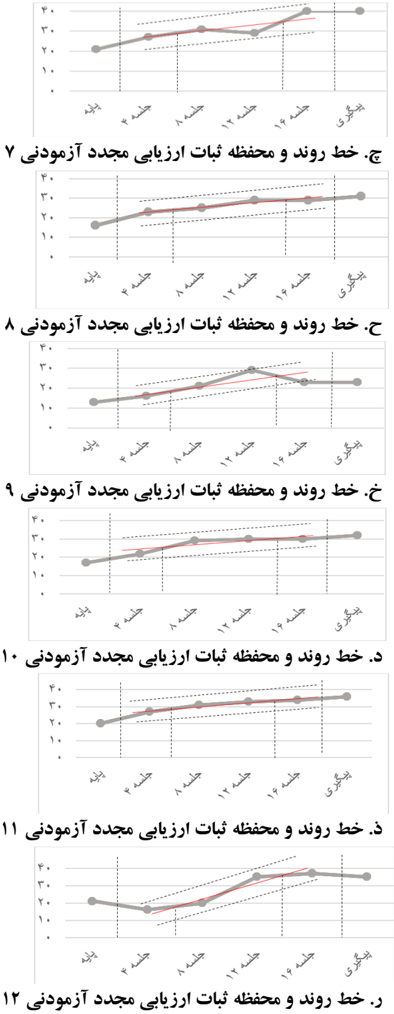
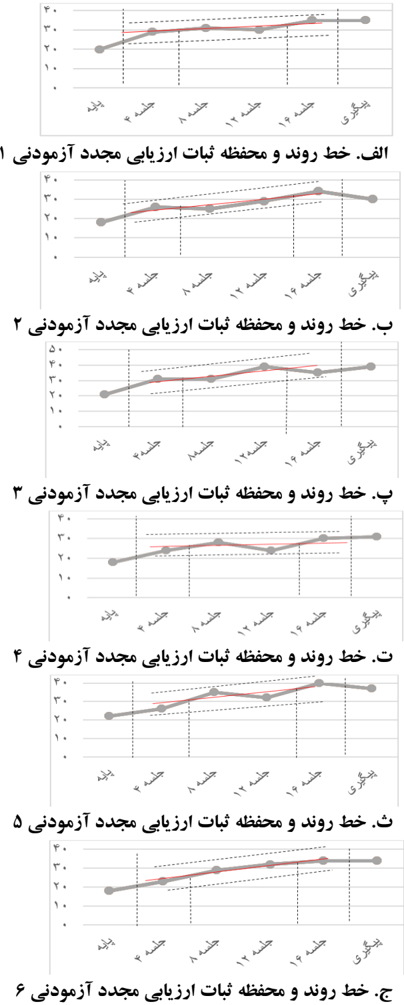
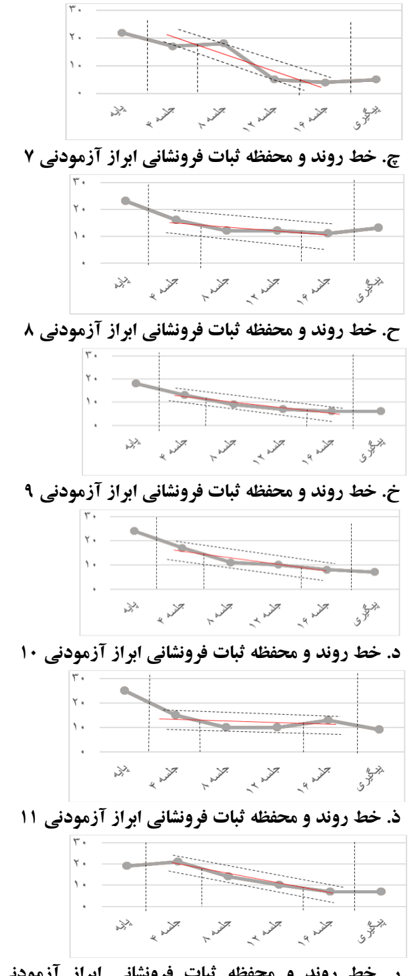
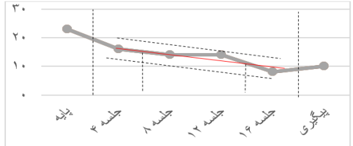
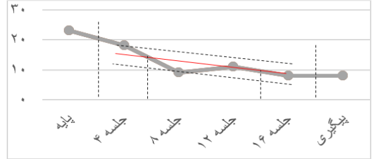
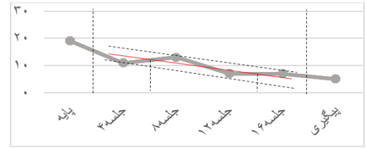
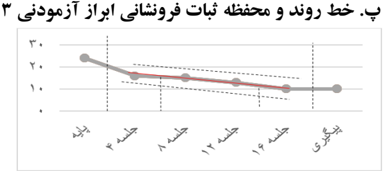
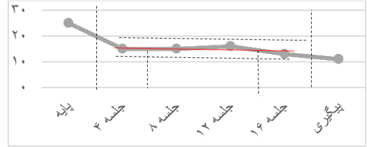
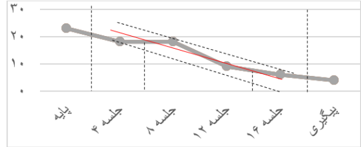
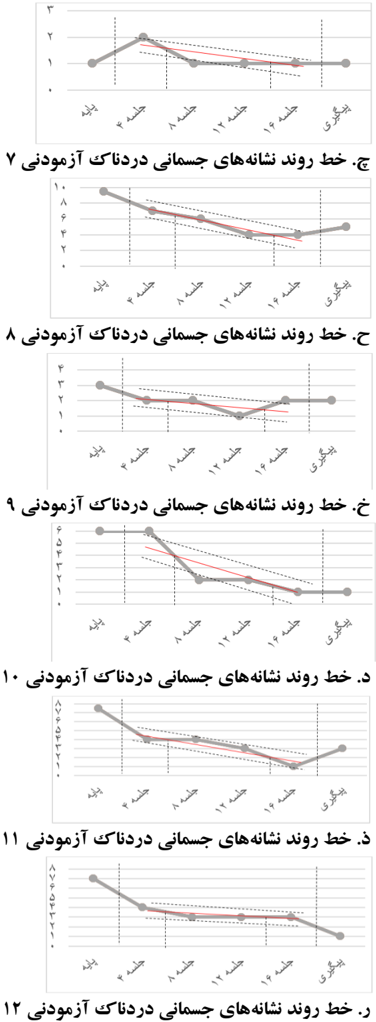
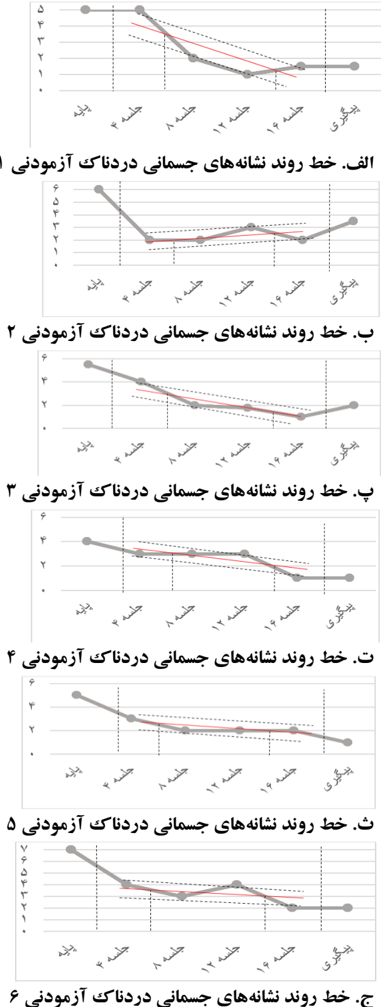
Introduction: Social anxiety disorder is characterized by intense anxiety in social situations where the person is likely to be evaluated by others. Aim: The present study aimed to investigate the effectiveness of contextual schema therapy on emotion regulation and painful physical symptoms in individuals with social anxiety disorder. Method: This study employed an A-B single-subject design. The statistical population included all the people with social anxiety disorder in Mashhad city, in 2021, and 12 people were selected by convenience sampling method. Then, the contextual schema therapy was conducted during 16 sessions of 1 hour once a week for 12 subjects. The Emotion Regulation Questionnaire (2003) and the Visual Analog Scale (1921) were used in this study. The Subjects answered the questionnaires in the baseline phase, at sessions 4, 8, 12 and 16, and at 3-month follow-up. The data were analyzed using visual analysis, improvement percentage, reliable change index, and non-overlapping effect size. Results: The improvement percentage (25%<), the reliable change index (1.96<) and the non-overlapping data (75<) indicated the significant effect of the treatment in increasing the reappraisal subscale of all subjects (except subject 12), reducing the expressive suppression subscale of all subjects and reducing painful physical symptoms of all subjects (except subject 7). The improvement percentage at the follow-up showed that the intervention was effective in increasing the reappraisal, reducing expressive suppression and painful physical symptoms. Conclusion: Based on the findings, contextual schema therapy was effective in improving emotion regulation and reducing painful physical symptoms by modifying the modes and the third wave methods. Therefore, contextual schema therapy can be suggested as a suitable intervention for social anxiety disorder.
Overview
The claims and statistics of this paper haven’t been checked yet.
Run the check — free, no account needed. It reads the open-access text and checks the sources it cites.
Integrity signals
Registry
Cites
Statistics
Figures
Verification
Claims the paper makes
The claims and statistics of this paper haven’t been checked yet.
Run the check — free, no account needed. It reads the open-access text and checks the sources it cites.
Claims other papers make about this one
Each is checked against this paper’s own text: does it say what the citing paper says it does?
In the citing paper
“When the literature is examined, it is seen that intervention studies on fear of negative evaluation are limited both in Turkey and abroad.”
From The Use of Outsider Witness Practice in Narrative Therapy in Group Counseling: A Mixed Method Study (2026) · cites this paper as Emamzamani et al., 2023
Self-check
Percentages, sums and reported differences re-computed from the paper’s own numbers.
The self-check needs the paper’s full text.
Citations
Cites
Gross, J. J., & John, O. P. (2003) · Journal of Personality and Social Psychology · doi:10.1037/0022-3514.85.2.348 · Cited by 11,929
Osório, F. L., Loureiro, S. R., Hallak, J. E. C., Machado‐de‐Sousa, J. P., Ushirohira, J. M., Baes, C. V. W., Apolinario, T. D., Donadon, M. F., Bolsoni, L. M., Guimarães, T., et al. (2019) · Psychiatry and Clinical Neurosciences · doi:10.1111/pcn.12931 · Cited by 348
The Emotion Regulation Questionnaire: Psychometric properties in general community samples
Preece, D. A., Becerra, R., Robinson, K., & Gross, J. J. (2020) · Journal of Personality Assessment · doi:10.1080/00223891.2018.1564319 · Cited by 237
Strachan, L. P., Hyett, M. P., & McEvoy, P. M. (2020) · Current Psychiatry Reports · doi:10.1007/s11920-020-1139-4 · Cited by 40
Research works printed but not linked: 24
- Aderka IM, Hofmann SG, Nickerson A, Hermesh H, Gilboa-Schechtman E, Marom S. (2012). Functional impairment in social anxiety disorder. Journal of anxiety disorders, 26(3), 393-400.
- Alghadir AH, Anwer S, Iqbal A, Iqbal ZA. (2018). Test-retest reliability, validity, and minimum detectable change of visual analog, numerical rating, and verbal rating scales for measurement of osteoarthritic knee pain. Journal of pain research, 11, 851-856.
- American psychiatric association. (2013). Diagnostic and statistical manual of mental disorders (5th Ed.). American Psychiatric Publishing text revision.
- Bikmoradi A, Zafari A, Oshvandi Kh, Mazdeh M, Roshanaei Gh. (2014). Effect of progressive muscle relaxation on severity of pain in patients with multiple sclerosis: A randomized controlled trial. Journal of Hayat, 20(1), 26-37.
- Carleton RN, Afifi TO, Taillieu T, Turner S, El- Gabalawy R, Sareen J, Asmundson GJG. (2018). Anxiety-related psychopathology and chronic pain comorbidity among public safety personnel. Journal of anxiety disorders, 55, 48- 55.
- Dadomo H, Panzeri M, Caponcello D, Carmelita A, Grecucci A. (2018). Schema therapy for emotional dysregulation in personality و هیجان تنظیم بر بافتاری درمانی طرحواره اثربخشی ... شماره دهم، سال شناخت، روانپزشکی و روانشناسی مجله 3 ، 2041 ، 21 - 2 disorders: A review. Current opinion in psychiatry, 31(1), 43-49.
- Dehdashti Lesani M, Makvandi B, Naderi F, Hafezi F. (2019). The Relationships of Alexithymia and Social Intelligence with Quality of Life According to the Moderating Role of Social Anxiety in Women-Headed Household. Women's Health Bulletin, 6(4), 27-35.
- Delgado DA, Lambert BS, Boutris N, McCulloch PC, Robbins AB, Moreno MR, Harris JD. (2018). Validation of digital visual analog scale pain scoring with a traditional paper-based visual analog scale in adults. Journal of the American Academy of Orthopaedic Surgeons, Global research & reviews, 2(3), e088.
- Eres R, Lim MH, Lanham S, Jillard C, Bates G. (2021). Loneliness and emotion regulation: Implications of having social anxiety disorder. Australian Journal of Psychology, 73(1), 46- 56.
- Farokhi H, Ansari Shahidi M, Rezai Jamalloi H, Ebrahimi A, Arabkhradmand J. (2021). The Effect of Schema Therapy on Pain Acceptance, Pain Self-Efficacy, Pain Intensity, Emotion Regulation in Spinal Column Surgery Patients. Journal of Anesthesiology and Pain, 11(4), 19-29. (In Persian)
- Greenberg MJ. (2017). A hybrid ACT and schema therapy protocol for the treatment of depression, Thesis for doctoral degree (Psy.D), Wright Institute, Berkeley, California.
- Gross JJ. (2014). Emotion regulation: Conceptual and empirical foundations. IN: Gross JJ, Editor. Handbook of emotion regulation. 2nd Ed. New York: The Guilford Press, 3-20.
- Haddadi S, Talepasand S, Rahimian Boogar I. (2018). Attention Bias Modification for Social Anxiety Disorder: A Randomized Controlled Trial. Iranian Journal of Psychiatry and Behavioral Science, 12(4), e10298.
- Hasani J. (2016). Persian version of the emotion regulation questionnaire: Factor structure, reliability and validity. International Journal of Behavioral Sciences, 10(3), 108-113.
- Hayes MHS, Patterson DG. (1921). Experimental development of the graphic rating method. Psychological Bulletin, 18, 98-99.
- Hemmati Sabet V, Rohani Shahrestani N, Hemmati Sabet A, Ahmadpanah M. (2016). The Effectiveness of Schema Therapy in Reducing Aggression and Social Anxiety in adolescents of Hamedan city aged 17 to 18 years. Shenakht Journal of Psychology and Psychiatry, 3(2), 82-93. (In Persian)
- Mirbagheri SR, Khosravi S, Akrami M. (2022). Evaluation of the effectiveness of group schema therapy on death anxiety and emotional disturbance in patients with breast cancer in Shiraz. Shenakht Journal of Psychology and Psychiatry, 9(5), 16-28. (In Persian)
- Mohammadkhani P, Forouzan AS, Hooshyari Z, Abasi I. (2020). Psychometric properties of Persian version of structured clinical interview for DSM-5-Research Version (SCID-5-RV): A diagnostic accuracy study. Iranian Journal of Psychiatry and Behavioral Sciences, 14(2), e100930.
- Najjar Kakhki I, Kalhornia Golkar M, Nezhadmohamad Nameghi A, Mohammadi Shirmahaleh F, Valizadeh M. (2023). Comparison of effectiveness of acceptance and commitment -based group therapy and group schema therapy on emotion regulation difficulty and body mass index in obese people with emotional eating. Shenakht Journal of بوگر رحیمیان اسحق همکاران و 21 شماره دهم، سال شناخت، روانپزشکی و روانشناسی مجله 3 ، 2041 ، 21 - 2 Psychology and Psychiatry, 10(1), 75-89.
- O' Day EB, Morrison AS, Goldin PR, Gross JJ, Heimberg RG. (2019). Social anxiety, loneliness, and the moderating role of emotion regulation. Journal of Social and Clinical Psychology, 38(9), 751-773.
- Reichenberger J, Blechert J. (2018). Malaise with praise: A narrative review of 10 years of research on the concept of Fear of Positive Evaluation in social anxiety. Depression and anxiety, 35(12), 1228-1238.
- Rezvani Amin M, Siratinayer M, Abadi A, Moradyan T. (2012). Correlation between visual analogue scale and short form of McGill questionnaire in patients with chronic low back pain. Qom University of Medical Sciences Journal, 6(1), 31-34. (In Persian)
- Rogers AH, Bakhshaie J, Ditre JW, Manning K, Mayorga NA, Viana AG, Zvolensky MJ. (2019). Worry and rumination: explanatory roles in the relation between pain and anxiety and depressive symptoms among college students with pain. Journal of American College Health, 67(3), 275-282.
- Woodgate RL, Tennent P, Barriage S, Legras N. (2020). The lived experience of anxiety and the many facets of pain: A qualitative, arts- based approach. Canadian Journal of Pain, 4(3), 6-18.
Cited by
Sorted by citations
The Use of Outsider Witness Practice in Narrative Therapy in Group Counseling: A Mixed Method Study
Kurtuluş, E., & Düşünceli, B. (2026) · Türk Psikolojik Danışma ve Rehberlik Dergisi · doi:10.17066/tpdrd.1950394
Metadata
- Authors
- PhD Student, D. O. C. P., Emamzamani, Z., Rahimian Boogar, I., Associate Professor, D. O. C. P., Mashhadi, A., & Professor, D. O. P.
- Venue
- Shenakht Journal of Psychology and Psychiatry
- Publisher
- Negah Scientific Publisher
- Published
- 2023-06-11
- Volume
- 10
- Issue
- 3
- Pages
- 1-16
- ISSN
- 2588-6657
- 2476-2962
- Cited by
- 3
- References
- 4
About these checks
Registry, retraction, Cites and statistics results are computed, not judged, with one exception: a printed reference that no index lists is read once by a model before it counts as a citation error. Claims are extracted by a model and kept only when their quote appears verbatim in the text; each cited source is then checked, with a model’s help, for whether it says what the claim relies on. Those verdicts can be wrong — read the claim’s quote and the cited source before relying on one.
Statistics and arithmetic are recomputed, not judged.
Confidence bands are shown only for fields calibrated on our annotated test set. None is calibrated yet, so no band is shown.
What counts as a claim ›How we measure confidence ›How we check this ›
Are you an author, or do you see a problem with this page? Request a review
