

The DOI matches its Crossref record; 29 of the 30 references it cites were found in a registry or an index.
Iron absorption from supplements is greater with alternate day than with consecutive day dosing in iron-deficient anemic women
Open accessAbstract
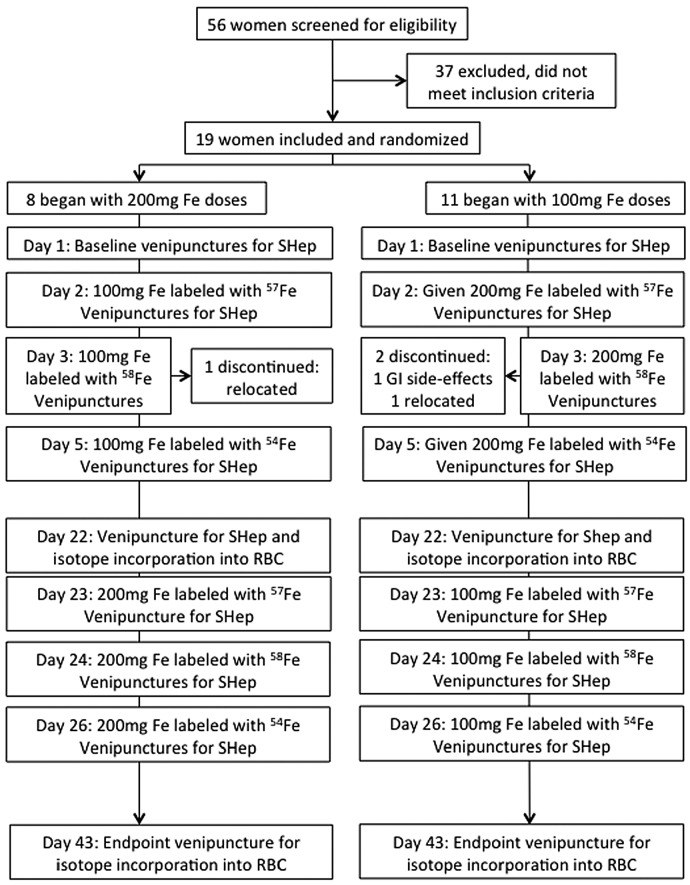
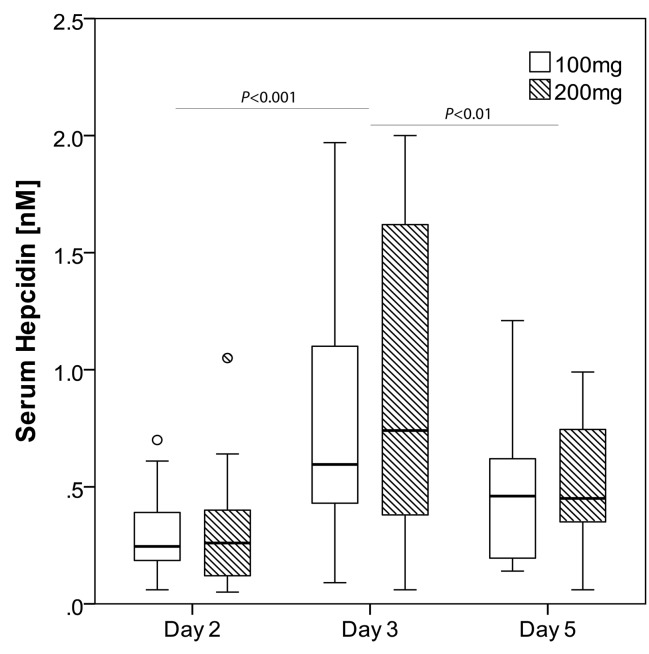
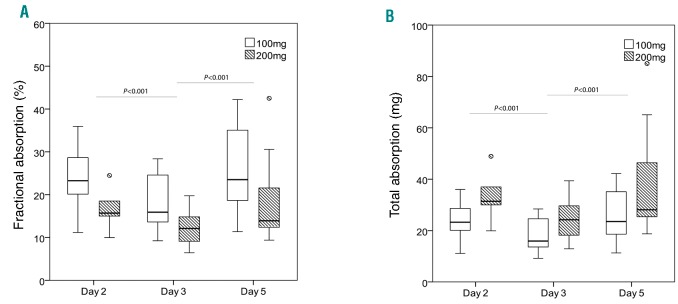
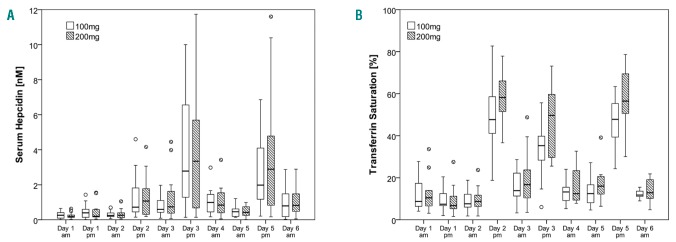
In iron-depleted women without anemia, oral iron supplements induce an increase in serum hepcidin (SHep) that persists for 24 hours, decreasing iron absorption from supplements given later on the same or next day. Consequently, iron absorption from supplements is highest if iron is given on alternate days. Whether this dosing schedule is also beneficial in women with iron-deficiency anemia (IDA) given high-dose iron supplements is uncertain. The primary objective of this study was to assess whether, in women with IDA, alternate-day administration of 100 and 200 mg iron increases iron absorption compared to consecutive-day iron administration. Secondary objectives were to correlate iron absorption with SHep and iron status parameters. We performed a cross-over iron absorption study in women with IDA (n=19; median hemoglobin 11.5 mg/dL; mean serum ferritin 10 mg/L) who received either 100 or 200 mg iron as ferrous sulfate given at 8 AM on days 2, 3 and 5 labeled with stable iron isotopes 57Fe, 58Fe and 54Fe; after a 16-day incorporation period, the other labeled dose was given at 8 AM on days 23, 24 and 26 (days 2, 3 and 5 of the second period). Iron absorption on days 2 and 3 (consecutive) and day 5 (alternate) was assessed by measuring erythrocyte isotope incorporation. For both doses, SHep was higher on day 3 than on day 2 (P
Overview
The claims and statistics of this paper haven’t been checked yet.
Run the check — free, no account needed. It reads the open-access text and checks the sources it cites.
Integrity signals
Registry
Cites
Statistics
Figures
Verification
Claims the paper makes
The claims and statistics of this paper haven’t been checked yet.
Run the check — free, no account needed. It reads the open-access text and checks the sources it cites.
Claims other papers make about this one
Each is checked against this paper’s own text: does it say what the citing paper says it does?
The cited source doesn’t support the claim as written.
In the citing paper
“They found that dosing 48 h apart enhanced iron absorption compared to three daily doses as it allows sufficient time for hepcidin levels to decrease and remove the mucosal block on absorption [34,35].”
From Oral Iron Supplementation—Gastrointestinal Side Effects and the Impact on the Gut Microbiota (2021) · cites this paper as [34]
Checked by a reasoning model — may be wrong.
Experimental — accuracy not yet measuredThe cited source says what the claim attributes to it.
In the citing paper
“Other groups have also confirmed enhanced iron absorption with single dosing once daily or alternate day dosing [33,34,36].”
From Oral Iron Supplementation—Gastrointestinal Side Effects and the Impact on the Gut Microbiota (2021) · cites this paper as [34]
In the citing paper
“The dynamics of the increase in hepcidin levels after oral iron therapy have suggested that alternate-day administration of iron salts is an alternative to daily refracted doses, with the former being a protocol that increases both efficacy and tolerability, at least in women with iron deficiency without or with mild anemia.116,118,119”
From Iron metabolism and iron disorders revisited in the hepcidin era (2020) · cites this paper as [116]
In the citing paper
“By changing iron dosing schedules to reflect the negative feedback mechanisms intrinsic to mammalian iron homeostasis, fractional iron uptake can be maximized. 185 , 186”
From The battle for iron in enteric infections (2020) · cites this paper as [185]
Self-check
Percentages, sums and reported differences re-computed from the paper’s own numbers.
The self-check needs the paper’s full text.
Citations
Cites
A systematic analysis of global anemia burden from 1990 to 2010
Kassebaum, N. J., Jasrasaria, R., Naghavi, M., Wulf, S. K., Johns, N. E., Lozano, R., Regan, M. C., Weatherall, D. J., Chou, D. P., Eisele, T. P., et al. (2013) · Blood · doi:10.1182/blood-2013-06-508325 · Cited by 2,115
Tolkien, Z., Stecher, L., Mander, A. P., Pereira, D. I. A., & Powell, J. J. (2015) · PLOS ONE · doi:10.1371/journal.pone.0117383 · Cited by 833
Jaeggi, T., Kortman, G. A. M., Moretti, D., Chassard, C., Holding, P., Dostal, A., Boekhorst, J., Timmerman, H. M., Swinkels, D. W., Tjalsma, H., et al. (2015) · Gut · doi:10.1136/gutjnl-2014-307720 · Cited by 622
Self-citationUK guidelines on the management of iron deficiency in pregnancy
Pavord, S. R., Myers, B., Robinson, S. E., Allard, S., Strong, J., & Oppenheimer, C. A. (2012) · British Journal of Haematology · doi:10.1111/j.1365-2141.2011.09012.x · Cited by 620
Moretti, D., Goede, J. S., Zeder, C., Jiskra, M., Chatzinakou, V., Tjalsma, H., Melse-Boonstra, A., Brittenham, G., Swinkels, D. W., & Zimmermann, M. B. (2015) · Blood · doi:10.1182/blood-2015-05-642223 · Cited by 547
Self-citationRegulation of the Iron Homeostatic Hormone Hepcidin
Sangkhae, V., & Nemeth, E. (2017) · Advances in Nutrition · doi:10.3945/an.116.013961 · Cited by 454
Diagnosis and Management of Iron-Deficiency Anaemia
COOK, J. (2005) · Best Practice & Research Clinical Haematology · doi:10.1016/j.beha.2004.08.022 · Cited by 452 · cited 1×
“Oral iron supplementation with ferrous sulfate (FeSO4) is recommended to treat ID and iron deficiency anemia (IDA).(3) Because iron absorption from oral supplements tends to be low, current recommendations call for daily provision of high doses of FeSO4, in the range of 60-200 mg, preferably split into 2 or 3 daily do…”
BackgroundStoffel, N. U., Cercamondi, C. I., Brittenham, G., Zeder, C., Geurts-Moespot, A. J., Swinkels, D. W., Moretti, D., & Zimmermann, M. B. (2017) · The Lancet Haematology · doi:10.1016/s2352-3026(17)30182-5 · Cited by 435
Self-citation(1998) · PubMed · Cited by 406
Zoller, H., Weiss, G., Theurl, I., Koch, R. O., Vogel, W., Obrist, P., Pietrangelo, A., Montosi, G., & Haile, D. J. (2001) · Gastroenterology · doi:10.1053/gast.2001.24033 · Cited by 304
Cited by
Sorted by citations
Items 101–200 of 240
Dietary Iron and the Elite Dancer
Attwell, C., Dugan, C., McKay, A. K. A., Nicholas, J., Hopper, L., & Peeling, P. (2022) · Nutrients · doi:10.3390/nu14091936 · Cited by 11
Attwell, C., McKay, A. K. A., Sim, M., Dugan, C., Nicholas, J., Hopper, L., & Peeling, P. (2023) · European Journal of Sport Science · doi:10.1080/17461391.2023.2224285 · Cited by 8
Jongkraijakra, S., Doungngern, T., Sripakdee, W., & Lekhakula, A. (2023) · Annals of Hematology · doi:10.1007/s00277-023-05198-2 · Cited by 8
Heusschen, L., Berendsen, A. A. M., van Bon, A. C., van Laar, J. O. E. H., Krabbendam, I., & Hazebroek, E. J. (2024) · Obesity Surgery · doi:10.1007/s11695-024-07446-4 · Cited by 7
Oral and Intravenous Iron Therapy
Steinbicker, A. U., & Pantopoulos, K. (2025) · Advances in experimental medicine and biology · doi:10.1007/978-3-031-92033-2_24 · Cited by 8
Pharmacological management of anaemia in pregnancy: a review
Shand, A., Austin, K., Nassar, N., & Kidson‐Gerber, G. (2020) · Journal of Pharmacy Practice and Research · doi:10.1002/jppr.1648 · Cited by 7
Hepcidin, incident heart failure, and cardiac dysfunction in older adults: the ARIC study
Aboelsaad, I., Claggett, B. L., Lamberson, V., Dorbala, P., Matsushita, K., Lutsey, P. L., Yu, B., Lennep, B., Farag, Y. M. K., Shah, A. M., et al. (2025) · European Journal of Preventive Cardiology · doi:10.1093/eurjpc/zwaf018 · Cited by 7
Case report: Rapid onset, ischemic-type gastritis after initiating oral iron supplementation
Koch, R. M., Tchernodrinski, S., & Principe, D. R. (2022) · Frontiers in Medicine · doi:10.3389/fmed.2022.1010897 · Cited by 7
Is it time to offer routine screening for iron deficiency in healthy adolescent females?
Revel‐Vilk, S., Ami, T. B., & Constantini, N. (2025) · British Journal of Haematology · doi:10.1111/bjh.20243 · Cited by 6
Dhanush, M., Vinod, K. V., Manivannan, P., Adole, P. S., & Govindan, D. (2024) · Indian Journal of Hematology and Blood Transfusion · doi:10.1007/s12288-024-01816-9 · Cited by 6
Zhang, G. D., Johnstone, D. M., Leahy, M. F., & Olynyk, J. K. (2024) · The Medical Journal of Australia · doi:10.5694/mja2.52429 · Cited by 6
Mogongoa, L. F. (2020) · Journal of Medical Laboratory Science & Technology of South Africa · doi:10.36303/jmlstsa.2020.2.1.38 · Cited by 6
Νikolouzakis, Τ. Κ., Kantidakis, E. E., Crawford, R., Pretorius, R., Zaimakis, O. N., & Chrysos, E. (2026) · Journal of Clinical Medicine · doi:10.3390/jcm15083017 · Cited by 9
Mettananda, S., & Athapathu, A. S. (2023) · Elsevier eBooks · doi:10.1016/b978-0-443-15717-2.00028-7 · Cited by 5
Warnakulasuriya, S. R., Wolff, K., & Stanworth, S. J. (2025) · Anaesthesia · doi:10.1111/anae.16579 · Cited by 4
Pica Syndromes and Iron Deficiency Anemia Treatment: A Mini Review
Mallick, H., & Dalia, S. M. (2025) · Hemato · doi:10.3390/hemato6030026 · Cited by 4
Grover, P., & Sampagar, A. A. (2025) · International Journal of Hematology · doi:10.1007/s12185-025-04048-3 · Cited by 4
Stefan, M. W., Gundermann, D. M., Sharp, M. H., Jennings, B. A., Gheith, R. H., Lowery, R. P., LowDog, T., Ghatak, S. B., Barbosa, J., & Wilson, J. M. (2023) · Nutrients · doi:10.3390/nu15112620 · Cited by 4
Miller, E. M. (2023) · doi:10.1093/oso/9780197665718.001.0001 · Cited by 3
Diagnóstico y tratamiento de la anemia ferropénica en la asistencia primaria de España
Heras, G. L. (2022) · Medicina Clínica Práctica · doi:10.1016/j.mcpsp.2022.100329 · Cited by 8
Iron deficiency anemia in pregnancy: evaluation and management.
Obuchowska, A., Standyło, A., Obuchowska, K., Gorczyca, K., Kimber-Trojnar, Ż., & Leszczyńska‐Gorzelak, B. (2022) · Journal of Education Health and Sport · doi:10.12775/jehs.2022.12.09.021 · Cited by 3
HUBUNGAN ASUPAN FE DENGAN KEJADIAN ANEMIA DEFISIENSI BESI PADA IBU HAMIL DI KABUPATEN SELUMA
MELIYANI, A., SITORUS, R. J., Flora, R., Hasyim, H., ZULKARNAIN, M., Tanjung, R., Sulung, N., Ikhsan, I., & Ermi, N. (2022) · Journal of Nursing and Public Health · doi:10.37676/jnph.v10i2.3201 · Cited by 3
Dugan, C., Simpson, A., Peeling, P., Lim, J., Davies, A., Buissink, P., MacLean, B., Jayasuriya, P. H., & Richards, T. (2023) · Patient Preference and Adherence · doi:10.2147/ppa.s397122 · Cited by 5
Vitic, J., Yakiwchuk, E., & Crawley, A. (2023) · Canadian Family Physician · doi:10.46747/cfp.6902107 · Cited by 2
Jyothi, G. S., Shelatkar, R., Kalavathy, H. R., Vaidya, V. G., Sisode, M., & Ganu, G. P. (2024) · Scientific Reports · doi:10.1038/s41598-024-65878-5 · Cited by 2
Graham, F. J., Masini, G., Lakhal‐Littleton, S., Clark, A. L., Cleland, J. G. F., & Pellicori, P. (2025) · Circulation Journal · doi:10.1253/circj.cj-25-0220 · Cited by 2
Yüksel, M., Aydoğan, M., Doğan, Ö., & Yüksel, M. (2025) · Medicine · doi:10.1097/md.0000000000044084 · Cited by 2
John, N. M., Ashok, B., John, O., Kanagalakshmi, V., Abraham, D., Samuel, P., Sudhakar, Y., Srai, S. K., & Jacob, M. (2025) · Clinical Nutrition · doi:10.1016/j.clnu.2025.11.005 · Cited by 2
Ołdakowska, A. K., Kamiński, K. A., & Ptaszyńska‐Kopczyńska, K. (2026) · International Journal of Molecular Sciences · doi:10.3390/ijms27052333 · Cited by 2
Performance-Based Nutrition for Endurance Training
Liu, S., Hueglin, S., Scaramella, J., & Vitale, K. (2023) · Springer eBooks · doi:10.1007/978-3-031-26600-3_23 · Cited by 3
Zhong, S., Mok, J. H., Li, Z., Sastry, S. K., & Kopec, R. E. (2023) · LWT · doi:10.1016/j.lwt.2023.115365 · Cited by 2
Sustainable practice: Sustainable prescribing of iron replacement therapy
Sergeant, M. D., Do, J., & Hategan, A. (2023) · BMJ · doi:10.1136/bmj-2023-075741 · Cited by 2
Effects of Different Doses of Oral Iron on Hepcidin and Treatment Response in Iron Deficiency Anemia
Beyler, Ö., Demır, C., Demircan, V., & Kaçmaz, M. (2024) · Indian Journal of Hematology and Blood Transfusion · doi:10.1007/s12288-024-01844-5 · Cited by 2
Comparison of efficiency and side effects of daily and alternate-day oral iron
Sendur, I. N., & Malkan, Ü. Y. (2025) · The Egyptian Journal of Internal Medicine · doi:10.1186/s43162-025-00463-4 · Cited by 2
Medical perspectives on pediatric sports medicine–Selective topics
Cabral, M. D., Patel, D. R., Greydanus, D. E., Deleon, J., Hudson, E., & Darweesh, S. (2022) · Disease-a-Month · doi:10.1016/j.disamonth.2022.101327 · Cited by 7
Ullah, N., Qazi, N., Ijaz, B., Darwesh, N. M., Khan, Z., & Ishtiaq, M. (2022) · Pakistan Journal of Medical and Health Sciences · doi:10.53350/pjmhs22164988 · Cited by 2
Iron homeostasis in obesity and metabolic and bariatric surgery: a narrative review
Benotti, P. N., Kaberi‐Otarod, J., Wood, G. C., Gerhard, G. S., Still, C. D., & Bistrian, B. R. (2024) · Surgery for Obesity and Related Diseases · doi:10.1016/j.soard.2024.08.018 · Cited by 3
Iron Deficiency anemia Therapy: Hepcidin, Dosing, Formulations and Adjuvants
Aggarwal, M., & Kar, R. (2025) · Indian Journal of Hematology and Blood Transfusion · doi:10.1007/s12288-025-02018-7 · Cited by 2
Striking the balance with intravenous iron: too much or never enough?
Luber, R. P., Sharma, E., Irving, P. M., & Samaan, M. (2020) · Frontline Gastroenterology · doi:10.1136/flgastro-2020-101695 · Cited by 1
FERALGINE™ a New Oral iron Compound
Talarico, V., Giancotti, L., Mazza, G. A., Marrazzo, S., MINIERO, R., & Bertini, M. (2021) · Biochemistry · doi:10.5772/intechopen.100445 · Cited by 1
Lifestyle Strategies to Boost Total Body Iron
Moore, S. (2022) · American Journal of Lifestyle Medicine · doi:10.1177/15598276221129218 · Cited by 1
Ferritin before hemoglobin: Impact of abnormal uterine bleeding on quality of life
Vela, D., Bernardez, F., Braxs, C., Calaf, J., Calle, E., Carpintero, P., Castañeda, J., & Carmona, F. (2025) · Journal of Endometriosis and Uterine Disorders · doi:10.1016/j.jeud.2024.100098 · Cited by 1
Romani, E., Zullino, S., Speciale, A. R., Villa, P. M., Bonaldo, V., Parisi, F., Lubrano, C., Petraglia, F., Cetin, I., & Mecacci, F. (2025) · Nutrients · doi:10.3390/nu17162670 · Cited by 1
Churchill, D., Ali, H., Sweity, S., Bautista, D., Moussa, M., Devison, L., Icke, J., & Stanworth, S. J. (2025) · BMC Pregnancy and Childbirth · doi:10.1186/s12884-025-07938-w · Cited by 4
Ma, Y., Li, J., Li, Y., Ma, H., & Lv, L. (2026) · Veterinary and Animal Science · doi:10.1016/j.vas.2026.100573 · Cited by 1
Maternal iron homeostasis, disorders and pregnancy outcomes
Zhang, V., Nemeth, E., & Sangkhae, V. (2026) · British Journal of Haematology · doi:10.1111/bjh.70718 · Cited by 1
Obesity and Iron Metabolism: Mechanisms, Status Assessment, and Clinical Implications
Aguree, S., & Meng, X. (2026) · Current Obesity Reports · doi:10.1007/s13679-026-00753-0 · Cited by 1
Iron supplementation in women: impact of frequency on efficacy and tolerability
McDonald, E. M., Moore, A.-R. E., & Ram, F. S. (2022) · British Journal of General Practice · doi:10.3399/bjgp22x719045 · Cited by 1
The diagnostic reasoning involved in interpreting blood results
Milne, L. (2022) · British Journal of Nursing · doi:10.12968/bjon.2022.31.5.280 · Cited by 1
Protein and Iron Bioavailability, Perception, Menstrual Cycle as Adolescent Girls’ Anemia Factors
Poltekkes Kemenkes Denpasar, I., Suarjana, I. M., Nursanyoto, H., & Dewi, N. N. A. (2021) · Journal of Health and Medical Sciences · doi:10.31014/aior.1994.04.02.159 · Cited by 1
Alternative Treatment Modalities for the Active Female with Musculoskeletal Pain
Mizer, A., Rossettie, S. S., & Zumwalt, M. A. (2023) · Springer eBooks · doi:10.1007/978-3-031-15485-0_11 · Cited by 1
Replenishment of iron deficiency in women before the use of assisted reproductive technologies
Solovyeva, A. V., Станиславовна, Е. К., Тенгизовна, К. Л., Aleynikova, E. Y., & Chegus, L. A. (2023) · Meditsinskiy sovet = Medical Council · doi:10.21518/ms2023-324 · Cited by 1
Anaemia in pregnancy: can we improve care?
Ang, Y. X. C., Sugianto, S. R. S., Yen, D. Y. T., Chua, M. S. Q., Ong, K. Z., & Tan, S. Q. (2025) · Singapore Medical Journal · doi:10.4103/singaporemedj.smj-2024-013 · Cited by 1
¿Hay que dar hierro cada día a los pacientes con anemia ferropénica?
Zurita, W. L., & Camps, M. B. (2022) · Actualización en Medicina de Familia · doi:10.55783/amf.181108 · Cited by 1
Gianolio, L., & Russell, R. K. (2025) · Journal of Pediatric Gastroenterology and Nutrition · doi:10.1002/jpn3.70164 · Cited by 1
Une administration inappropriée
Vitic, J., Yakiwchuk, E., & Crawley, A. (2023) · Canadian Family Physician · doi:10.46747/cfp.6902e38 · Cited by 1
A deep dive into future therapies for microcytic anemias and clinical considerations
Rodrigues, F., Coman, T., Fouquet, G., Côté, F., Courtois, G., Maciel, T. T., & Hermine, O. (2023) · Expert Review of Hematology · doi:10.1080/17474086.2023.2206556 · Cited by 1
Eisenmangelanämie bei gastrointestinalen Erkrankungen ist multifaktoriell
Stein, J. M., & Farrag, K. (2020) · Gastro-News · doi:10.1007/s15036-020-1322-9
A retrospective review examining intravenous iron infusion dosing methods
Winckel, K., SULLIVAN, S. T., Vongphakdi, M., & Snoswell, C. L. (2020) · Journal of Pharmacy Practice and Research · doi:10.1002/jppr.1698
Loustau, A., Besson, N., & Bauduer, F. (2021) · Gynécologie Obstétrique Fertilité & Sénologie · doi:10.1016/j.gofs.2021.01.001
Suministro y demanda de sangre durante la pandemia de COVID-19. Una revisión
Gutiérrez-Hernández, R. C., & Madrigal-Anaya, J. D. C. (2021) · Gaceta Médica de México · doi:10.24875/gmm.m21000475 · Cited by 1
Coetzee, M., & Marle, A. V. M. V. (2020) · Journal of Medical Laboratory Science & Technology of South Africa · doi:10.36303/jmlstsa.2020.2.2.56
Eisen bei Eisenmangelanämie besser jeden 2. Tag verabreichen
(2020) · Transfusionsmedizin · doi:10.1055/a-1238-5917
Alternate Day Iron Prophylaxis
Kapoor, S. (2022) · Journal of Public Health and Primary Care · doi:10.4103/jphpc.jphpc_14_22
Maternal Health in Low Resource Settings
Hudgins, S. (2022) · Advances in medical education, research, and ethics (AMERE) book series · doi:10.4018/978-1-7998-8490-3.ch007
Jones, S. (2022) · Palliative Medicine · doi:10.1177/02692163221145730
Authors Reply to Letter to Editor
Neoh, K., Page, A., Chin-Yee, N. J., Doree, C. J., & Bennett, M. (2022) · Palliative Medicine · doi:10.1177/02692163221145729
Nutritional Anemia in the Elderly
Fairweather‐Tait, S. J. (2022) · Nutrition and health · doi:10.1007/978-3-031-14521-6_8
Novel Approaches to Oral Iron Supplementation
Moretti, D., & Stoffel, N. U. (2022) · Nutrition and health · doi:10.1007/978-3-031-14521-6_22
Self-citationEisentherapie bei chronischer Nierenkrankheit: Viel hilft viel oder ist weniger mehr?
Artunç, F. (2023) · Nephrologie aktuell · doi:10.1055/a-1990-9410
Winning by losing? : Nutritional consequences of bariatric surgery
Heusschen, L. (2023) · doi:10.18174/588217
Pica sebagai Manifestasi Anemia Defisiensi Besi: Suatu Laporan Kasus
Murwaningrum, A., Rinaldi, I., & Mustopa, I. (2023) · Jurnal Penyakit Dalam Indonesia · doi:10.7454/jpdi.v10i2.1101
[The efficacy and safety of intravenous sucrose iron therapy for recurrent iron deficiency anemia].
Liu, J. Q., Yang, X., Liu, X., Hu, J., Hu, X., Li, X. X., Zhao, Y., Shi, Y., Zhang, B. H., Yang, W. R., et al. (2023) · PubMed Central · doi:10.3760/cma.j.issn.0253-2727.2023.05.009
Miller, E. M. (2023) · Oxford University Press eBooks · doi:10.1093/oso/9780197665718.003.0003
Miller, E. M. (2023) · Oxford University Press eBooks · doi:10.1093/oso/9780197665718.003.0005
Miller, E. M. (2023) · Oxford University Press eBooks · doi:10.1093/oso/9780197665718.003.0002
Miller, E. M. (2023) · Oxford University Press eBooks · doi:10.1093/oso/9780197665718.002.0005
Miller, E. M. (2023) · Oxford University Press eBooks · doi:10.1093/oso/9780197665718.003.0008
Miller, E. M. (2023) · Oxford University Press eBooks · doi:10.1093/oso/9780197665718.003.0007
Miller, E. M. (2023) · Oxford University Press eBooks · doi:10.1093/oso/9780197665718.003.0006
Miller, E. M. (2023) · Oxford University Press eBooks · doi:10.1093/oso/9780197665718.002.0003
Miller, E. M. (2023) · Oxford University Press eBooks · doi:10.1093/oso/9780197665718.003.0004
Ironing Out Evolutionary and Social Theory
Miller, E. M. (2023) · Oxford University Press eBooks · doi:10.1093/oso/9780197665718.003.0001
Hepcidin and Iron: A Double-Edged Sword
Xiao, D., & Nguyen, T. V. (2023) · The Journal for Nurse Practitioners · doi:10.1016/j.nurpra.2023.104877
Bessere Resorptionsrate bei seltenerer Verabreichung der Eisensupplementierung
Cario, H. (2023) · Monatsschrift Kinderheilkunde · doi:10.1007/s00112-023-01902-8
Advanced bloodless clinical procedures proven in practice
Slipac, J. (2024) · Anesteziologie a intenzivní medicína · doi:10.36290/aim.2023.079
Pharmacological Management of CKD
Corr, M. (2024) · Principles of specialty nursing · doi:10.1007/978-3-031-30320-3_4
Ogbonnaya, F. C., Ukangwa, N. A., Amah G, H., & Oladele, L. O. (2024) · Nigerian Journal of Pure and Applied Sciences · doi:10.48198/njpas/23.b22
(2024) · Hematology and Disorders · doi:10.58489/2836-3582/012 · Cited by 1
Hoz, F. J. E. D. L., & Santiago, L. O. (2024) · Revista Colombiana de Hematología y Oncología · doi:10.51643/22562915.678
Semmelweis Egyetem Iron Board – Vaspótlás-konszenzusdokumentum
Csulak, E., Gellért, B., Hritz, I., Miheller, P., Farkas, P., Kovács, G., Szabo, A. J., Ács, N., Becker, D. J., Sydó, N., et al. (2024) · Orvosi Hetilap · doi:10.1556/650.2024.33078
Treatment of iron deficiency and iron deficiency anaemia in menstruating women
Jepsen, T. M. K., & Ravn, P. (2024) · Ugeskrift for Læger · doi:10.61409/v02240100
O’Toole, F., McAuliffe, F. M., Fitzgerald, J. M., Mealy, G., Petkute, R., Bolger, L., MurphyCruse, A., Soldati, B., Galligan, M. C., & Walsh, J. (2025) · Contemporary Clinical Trials Communications · doi:10.1016/j.conctc.2025.101447
Ferritina antes que hemoglobina. Impacto del sangrado uterino anormal en la calidad de vida
Vela, D., Bernardez, F., Braxs, C., Calaf, J., Calle, E., Carpintero, P., Castañeda, J., & Carmona, F. (2025) · Clínica e Investigación en Ginecología y Obstetricia · doi:10.1016/j.gine.2024.101015
Every‐other‐day iron supplementation in male veterans with iron deficiency anaemia
Mellen, C. K., Nguyen, E. Q., & Rindone, J. P. (2025) · Journal of Pharmacy Practice and Research · doi:10.1002/jppr.1972
Scribner, C. L., Cope, J., Ryan, P. J., Olynyk, J. K., Ryan, J. D., Griffin, J. D., & Berkland, C. J. (2025) · Scientific Reports · doi:10.1038/s41598-025-01421-4
Bates, I., & Olayemi, E. (2025) · Cambridge University Press eBooks · doi:10.1017/9781009052733.076
Diagnostic et prise en charge de la carence en fer chez les femmes
Sholzberg, M., Hillis, C., Crowther, M. A., & Selby, R. (2025) · Canadian Medical Association Journal · doi:10.1503/cmaj.240570-f
Metadata
- Authors
- Stoffel, N. U., Zeder, C., Brittenham, G. M., Moretti, D., & Zimmermann, M. B.
- Affiliations
- ETH Zurich (CH)
- Columbia University (US)
- Corresponding author
- Stoffel, Nicole U.
- Venue
- Haematologica
- Published
- 2019-08-14
- Volume
- 105
- Issue
- 5
- Pages
- 1232-1239
- ISSN
- 0390-6078 (ISSN-L)
- 1592-8721
- PMC
- PMC7193469
- OpenAlex
- W2967031988
- Cited by
- 241
- References
- 30
- Citations by year
- 2026: 38 · 2025: 35 · 2024: 30 · 2023: 53 · 2022: 40 · 2021: 15 · 2020: 28 · 2019: 2
- FWCI
- 15.02
- Type
- journal article
- Language
- en
- Open access
- gold
- doi.org
- Locations
- Haematologica (publishedVersion)
- PubMed Central (publishedVersion, cc-by-nc)
- PubMed (publishedVersion)
- DOAJ (DOAJ: Directory of Open Access Journals) (submittedVersion)
- Topics
- Health Sciences › Medicine › Hematology › Iron Metabolism and Disorders
- Health Sciences › Medicine › Hematology › Erythropoietin and Anemia Treatment
- Health Sciences › Nursing › Nutrition and Dietetics › Trace Elements in Health
- Keywords
- iron absorption, iron deficiency anemia, alternate-day dosing, oral iron supplementation, ferrous sulfate, hepcidin, iron status, erythrocyte iron incorporation, iron stable isotopes, women
- MeSH terms
- Female, Humans, Iron, Switzerland, Cross-Over Studies, Anemia, Iron-Deficiency, Dietary Supplements, Hepcidins
About these checks
Registry, retraction, Cites and statistics results are computed, not judged, with one exception: a printed reference that no index lists is read once by a model before it counts as a citation error. Claims are extracted by a model and kept only when their quote appears verbatim in the text; each cited source is then checked, with a model’s help, for whether it says what the claim relies on. Those verdicts can be wrong — read the claim’s quote and the cited source before relying on one.
Statistics and arithmetic are recomputed, not judged.
Confidence bands are shown only for fields calibrated on our annotated test set. None is calibrated yet, so no band is shown.
What counts as a claim ›How we measure confidence ›How we check this ›
Are you an author, or do you see a problem with this page? Request a review
