

The DOI matches its Crossref record; 4 of the 4 references it cites were found in a registry or an index.
The effect of subcutaneous and sublingual birch pollen immunotherapy on birch pollen–related food allergy: a systematic review
Abstract
Background: Birch pollen–related food allergy (BPFA) is the most common type of food allergy in birch-endemic areas such as Western and Central Europe. Currently, there is no treatment available for BPFA. Due to the cross-reactivity between birch pollen and a range of implicated plant foods, birch pollen allergen immunotherapy (AIT) may be effective in the treatment of BPFA. In this study, we systematically evaluate the effectiveness of birch pollen–specific subcutaneous or sublingual immunotherapy in treating BPFA. Methods: A search was performed in the PubMed, Embase, and Cochrane libraries. Studies were independently screened by two reviewers against predefined eligibility criteria. The outcomes of interest were changes in (1) severity of symptoms during food challenge, (2) eliciting dose (ED), and (3) food allergy quality of life (FA-QoL). The validity of the selected articles was assessed using the revised Cochrane risk of bias tool. We focused on studies with the lowest risk of bias and considered studies with a high risk of bias as supportive. Data were descriptively summarized. Results: Ten studies were selected that included 475 patients in total. Seven studies were categorized into “high risk of bias” and three into “moderate risk of bias.” The three moderate risk of bias studies, with a total of 98 patients, reported on severity of symptoms during challenge and on the ED. All three studies had a control group. Compared to the control group, improvement in severity of symptoms was observed during challenge in two out of the three studies and on the eliciting dose in one out of three. Only one study investigated the effect of birch pollen AIT on FA-QoL, showing that there was no significant difference between patients receiving subcutaneous immunotherapy or a placebo. Of the seven supportive studies, four had a control group and of those, three showed improvement on both severity of symptoms and ED. None of the supportive studies investigated the effect of the therapy on FA-QoL. Conclusion: This systematic review shows that there is not enough evidence to draw firm conclusions about the effect of AIT on BPFA. Future research is warranted that uses robust clinical studies that include long-term effects, QoL, and multiple BPFA-related foods.
Overview
The claims and statistics of this paper haven’t been checked yet.
Run the check — free, no account needed. It reads the open-access text and checks the sources it cites.
Integrity signals
Registry
Cites
Statistics
Figures
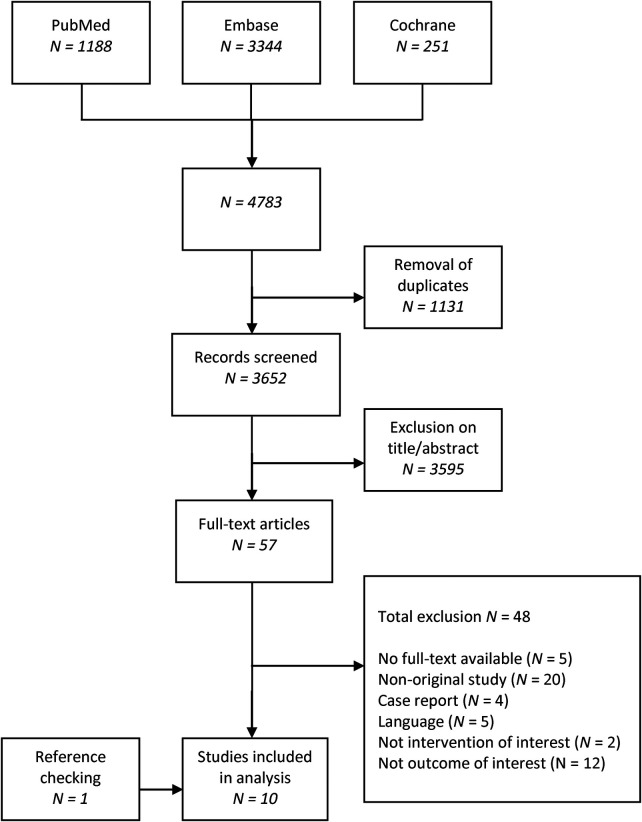
Verification
Claims the paper makes
The claims and statistics of this paper haven’t been checked yet.
Run the check — free, no account needed. It reads the open-access text and checks the sources it cites.
Claims other papers make about this one
Each is checked against this paper’s own text: does it say what the citing paper says it does?
In the citing paper
“Beyond its impact on respiratory symptoms, AIT has also been effective in reducing the severity of oral symptoms caused by crossreactive food allergens, which is particularly beneficial for patients with significant dietary restrictions or persistent symptoms despite avoidance strategies [264].”
From Pollen–Food Allergy Syndrome: Allergens, Clinical Insights, Diagnostic and Therapeutic Challenges (2024) · cites this paper as [264]
In the citing paper
“However, a recent systematic review on SLIT and SCIT in birch pollen-allergic patients has not provided enough evidence to draw firm conclusions about its beneficial effects on birch pollen-related food allergy [264].”
From Pollen–Food Allergy Syndrome: Allergens, Clinical Insights, Diagnostic and Therapeutic Challenges (2024) · cites this paper as [264]
Self-check
Percentages, sums and reported differences re-computed from the paper’s own numbers.
The self-check needs the paper’s full text.
Citations
Cites
RoB 2: a revised tool for assessing risk of bias in randomised trials
Sterne, J. A. C., Savović, J., Page, M. J., Elbers, R. G., Blencowe, N. S., Boutron, I., Cates, C. J., Cheng, H.-Y., Corbett, M. S., Eldridge, S. M., et al. (2019) · BMJ · doi:10.1136/bmj.l4898 · Cited by 34,787
Asero (1998) · Clinical & Experimental Allergy · doi:10.1046/j.1365-2222.1998.00399.x · Cited by 195
How long does the effect of birch pollen injection SIT on apple allergy last?
Asero, R. (2003) · Allergy · doi:10.1034/j.1398-9995.2003.00139.x · Cited by 94
Inuo, C., Kondo, Y., Tanaka, K., Nakajima, Y., Nomura, T., Ando, H., Suzuki, S., Tsuge, I., Yoshikawa, T., & Urisu, A. (2015) · International Archives of Allergy and Immunology · doi:10.1159/000437325 · Cited by 31 · cited 1×
“Furthermore, studies from Japan (32) and Italy (33) reported the positive effects of Japanese cedar pollen – based SCIT and grass pollen SLIT, respectively, on plant food allergy.”
Background
Research works printed but not linked: 30
- Lake, 2017, Climate change and future pollen allergy in Europe, Environ Health Perspect, 125, 385, 10.1289/EHP173 · DOI
- Biedermann, 2019, Birch pollen allergy in Europe, Allergy, 74, 1237, 10.1111/all.13758 · DOI · Paper page
- Matricardi, 2016, EAACI Molecular allergology user’s guide, Pediatr Allergy Immunol, 27, 1, 10.1111/pai.12563 · DOI · Paper page
- Werfel, 2015, Position paper of the EAACI: food allergy due to immunological cross-reactions with common inhalant allergens, Allergy, 70, 1079, 10.1111/all.12666 · DOI · Paper page
- Kleine-Tebbe, 2002, Severe oral allergy syndrome and anaphylactic reactions caused by a bet v 1-related PR-10 protein in soybean, SAM22, J Allergy Clin Immunol, 110, 797, 10.1067/mai.2002.128946 · DOI
- Skypala, 2022, BSACI guideline for the diagnosis and management of pollen food syndrome in the UK, Clin Exp Allergy, 52, 1018, 10.1111/cea.14208 · DOI
- Clayton, 2016, Late breaking poster session LB TPS 10–18, Allergy, 71, 592, 10.1111/all.12979 · DOI
- Boonpiyathad, 2021, Allergic rhinitis: what do we know about allergen-specific immunotherapy?, Front Allergy, 2, 1, 10.3389/falgy.2021.747323 · DOI
- Pavón-Romero, 2022, Allergen immunotherapy: current and future trends, Cells, 11, 1, 10.3390/cells11020212 · DOI
- Treudler, 2017, BASALIT trial: double-blind placebo-controlled allergen immunotherapy with rBet v 1-FV in birch-related soya allergy, Allergy, 72, 1243, 10.1111/all.13112 · DOI
- Van Hoffen, 2011, Effect of birch pollen-specific immunotherapy on birch pollen-related hazelnut allergy, J Allergy Clin Immunol, 127, 100, 10.1016/j.jaci.2010.08.021 · DOI
- Bolhaar, 2004, Efficacy of birch-pollen immunotherapy on cross-reactive food allergy confirmed by skin tests and double-blind food challenges, Clin Exp Allergy, 34, 761, 10.1111/j.1365-2222.2004.1939.x · DOI · Paper page
- Hansen, 2004, Food allergy to apple and specific immunotherapy with birch pollen, Mol Nutr Food Res, 48, 441, 10.1002/mnfr.200400037 · DOI
- Till, 2020, Potential treatment effect of the SQ tree SLIT-tablet on pollen food syndrome caused by apple, Allergy, 75, 2059, 10.1111/all.14242 · DOI
- Bucher, 2004, Effect of tree pollen specific, subcutaneous immunotherapy on the oral allergy syndrome to apple and hazelnut, Allergy, 59, 1272, 10.1111/j.1398-9995.2004.00626.x · DOI
- van der Valk, 2020, The effect of birch pollen immunotherapy on apple and rmal d 1 challenges in adults with apple allergy, Nutrients, 12, 1, 10.3390/nu12020519 · DOI
- Bergmann, 2008, Effect of pollen-specific sublingual immunotherapy on oral allergy syndrome: an observational study, World Allergy Organ J, 1, 79, 10.1097/WOX.0b013e3181752d1c · DOI
- Kinaciyan, 2007, Successful sublingual immunotherapy with birch pollen has limited effects on concomitant food allergy to apple and the immune response to the bet v 1 homolog mal d 1, J Allergy Clin Immunol, 119, 937, 10.1016/j.jaci.2006.11.010 · DOI
- Dodig, 2018, The potential of component-resolved diagnosis in laboratory diagnostics of allergy, Biochem Med (Zagreb), 28, 1, 10.11613/BM.2018.020501 · DOI
- Roberts, 2018, EAACI guidelines on allergen immunotherapy: allergic rhinoconjunctivitis, Allergy, 73, 765, 10.1111/all.13317 · DOI · Paper page
- Penagos, 2018, Duration of allergen immunotherapy for long-term efficacy in allergic rhinoconjunctivitis, Curr Treat Options Allergy, 5, 275, 10.1007/s40521-018-0176-2 · DOI
- McGee, 2020, How to include patient-reported outcome measures in clinical trials, Curr Osteoporos Rep, 18, 480, 10.1007/s11914-020-00611-5 · DOI
- Sim, 2020, Outcomes for clinical trials of food allergy treatments, Ann Allergy Asthma Immunol, 125, 35, 10.1016/j.anai.2020.06.023 · DOI
- Lloyd, 2022, Measuring the impact of food immunotherapy on health-related quality of life in clinical trials, Front Allergy, 3, 1, 10.3389/falgy.2022.941020 · DOI
- Lyons, 2019, Food allergy in adults: substantial variation in prevalence and causative foods across Europe, J Allergy Clin Immunol Pract, 7, 1920, 10.1016/j.jaip.2019.02.044 · DOI · Paper page
- Hoffmann-Sommergruber, 2022, Molecular Allergology User’s Guide 2.0
- Kinaciyan, 2018, Efficacy and safety of 4 months of sublingual immunotherapy with recombinant mal d 1 and bet v 1 in patients with birch pollen–related apple allergy, J Allergy Clin Immunol, 141, 1002, 10.1016/j.jaci.2017.07.036 · DOI
- Kopac, 2012, Continuous apple consumption induces oral tolerance in birch-pollen- associated apple allergy, Allergy, 67, 280, 10.1111/j.1398-9995.2011.02744.x · DOI
- Furci, 2021, Plant food allergy improvement after grass pollen sublingual immunotherapy: a case series, Pathogens, 10, 1, 10.3390/pathogens10111412 · DOI · Paper page
- Jaeschke, 1989, Measurement of health Status ascertaining the minimal clinically important difference, Control Clin Trials, 10, 10.1016/0197-2456(89)90005-6 · DOI · Paper page
Cited by
Sorted by citations
Kato, Y., Morikawa, T., & Fujieda, S. (2025) · Allergology International · doi:10.1016/j.alit.2024.08.007 · Cited by 45
Pollen–Food Allergy Syndrome: Allergens, Clinical Insights, Diagnostic and Therapeutic Challenges
Haidar, L., Bănărescu, C. F., Uța, C., Moldovan, S. I., Zimbru, E.-L., Zimbru, R.-I., Ciurariu, E., Georgescu, M., & Panaitescu, C. (2024) · Applied Sciences · doi:10.3390/app15010066 · Cited by 21
Metadata
- Authors
- Kallen, E. J. J., Welsing, P. M. J., Löwik, J. M., Van Ree, R., Knulst, A. C., & Le, T. M.
- Venue
- Frontiers in Allergy
- Publisher
- Frontiers Media SA
- Published
- 2024-06-06
- Volume
- 5
- ISSN
- 2673-6101
- PMC
- PMC11187334
- Cited by
- 12
- References
- 4
About these checks
Registry, retraction, Cites and statistics results are computed, not judged, with one exception: a printed reference that no index lists is read once by a model before it counts as a citation error. Claims are extracted by a model and kept only when their quote appears verbatim in the text; each cited source is then checked, with a model’s help, for whether it says what the claim relies on. Those verdicts can be wrong — read the claim’s quote and the cited source before relying on one.
Statistics and arithmetic are recomputed, not judged.
Confidence bands are shown only for fields calibrated on our annotated test set. None is calibrated yet, so no band is shown.
What counts as a claim ›How we measure confidence ›How we check this ›
Are you an author, or do you see a problem with this page? Request a review
How to cite
Cite CoChat for the checks on this page, and the paper for its own findings.
- This page
- CoChat. (2026). Citation check: The effect of subcutaneous and sublingual birch pollen immunotherapy on birch pollen–related food allergy: a systematic review. https://app.cochat.ai/papers/10.3389/falgy.2024.1360073
- The paper
- Kallen, E. J. J., Welsing, P. M. J., Löwik, J. M., Van Ree, R., Knulst, A. C., & Le, T. M. (2024). The effect of subcutaneous and sublingual birch pollen immunotherapy on birch pollen–related food allergy: a systematic review. Frontiers in Allergy. https://doi.org/10.3389/falgy.2024.1360073
