

The DOI matches its Crossref record; 6 of the 6 references it cites were found in a registry or an index.
Real or fake? Measuring the impact of protein annotation errors on estimates of domain gain and loss events
Abstract
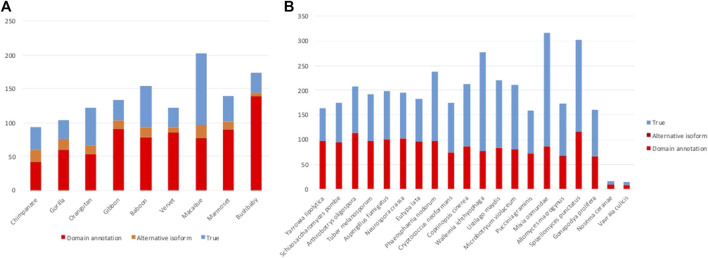
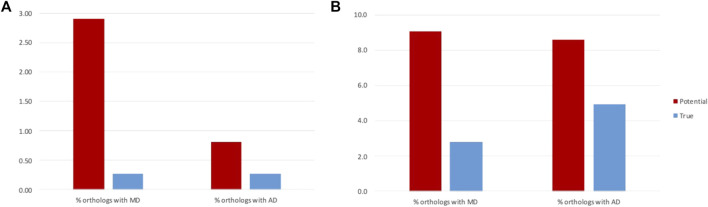
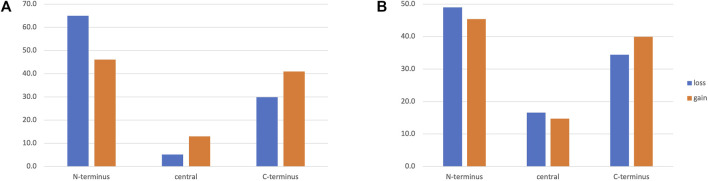
Protein annotation errors can have significant consequences in a wide range of fields, ranging from protein structure and function prediction to biomedical research, drug discovery, and biotechnology. By comparing the domains of different proteins, scientists can identify common domains, classify proteins based on their domain architecture, and highlight proteins that have evolved differently in one or more species or clades. However, genome-wide identification of different protein domain architectures involves a complex error-prone pipeline that includes genome sequencing, prediction of gene exon/intron structures, and inference of protein sequences and domain annotations. Here we developed an automated fact-checking approach to distinguish true domain loss/gain events from false events caused by errors that occur during the annotation process. Using genome-wide ortholog sets and taking advantage of the high-quality human and Saccharomyces cerevisiae genome annotations, we analyzed the domain gain and loss events in the predicted proteomes of 9 non-human primates (NHP) and 20 non-S. cerevisiae fungi (NSF) as annotated in the Uniprot and Interpro databases. Our approach allowed us to quantify the impact of errors on estimates of protein domain gains and losses, and we show that domain losses are over-estimated ten-fold and three-fold in the NHP and NSF proteins respectively. This is in line with previous studies of gene-level losses, where issues with genome sequencing or gene annotation led to genes being falsely inferred as absent. In addition, we show that insistent protein domain annotations are a major factor contributing to the false events. For the first time, to our knowledge, we show that domain gains are also over-estimated by three-fold and two-fold respectively in NHP and NSF proteins. Based on our more accurate estimates, we infer that true domain losses and gains in NHP with respect to humans are observed at similar rates, while domain gains in the more divergent NSF are observed twice as frequently as domain losses with respect to S. cerevisiae. This study highlights the need to critically examine the scientific validity of protein annotations, and represents a significant step toward scalable computational fact-checking methods that may 1 day mitigate the propagation of wrong information in protein databases.
Overview
The claims and statistics of this paper haven’t been checked yet.
Run the check — free, no account needed. It reads the open-access text and checks the sources it cites.
Integrity signals
Registry
Cites
Statistics
Figures
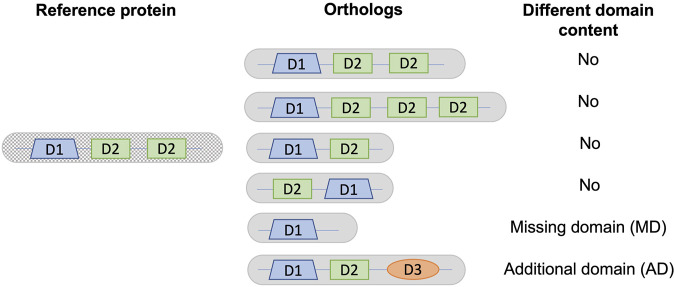
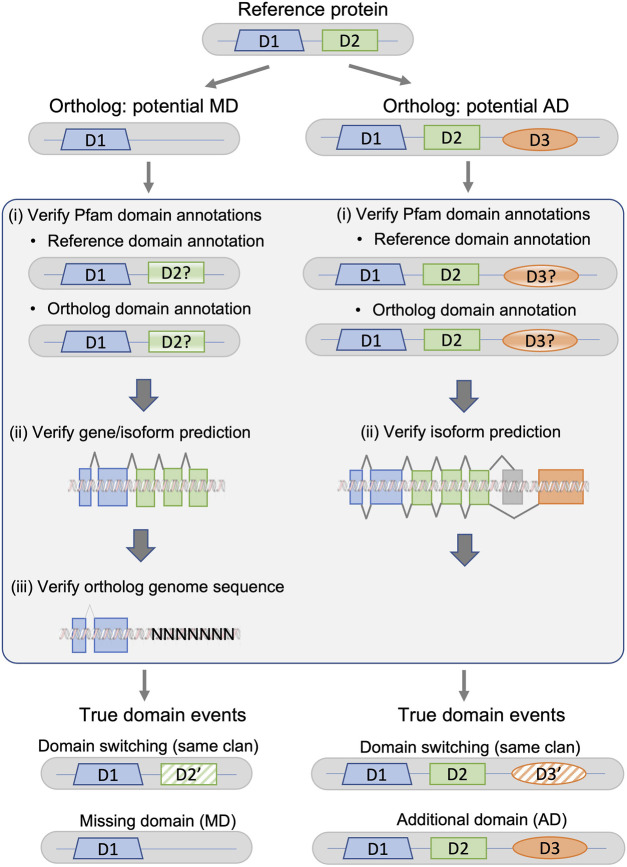
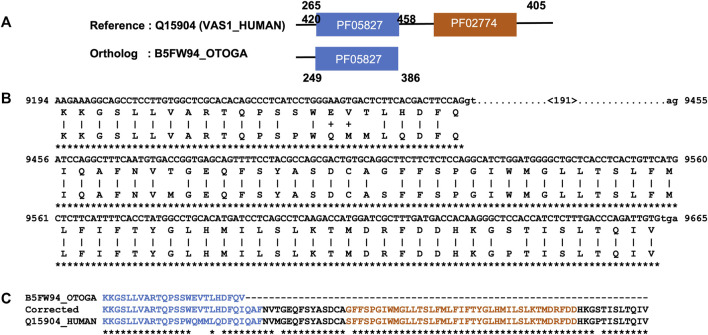
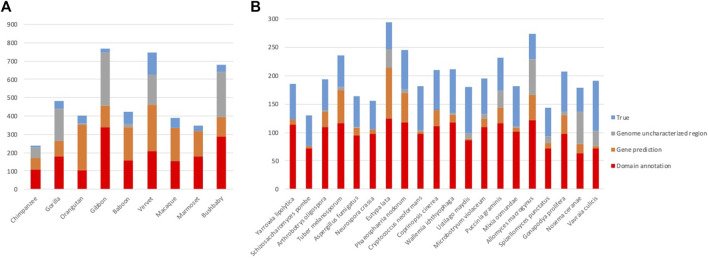
Verification
Claims the paper makes
The claims and statistics of this paper haven’t been checked yet.
Run the check — free, no account needed. It reads the open-access text and checks the sources it cites.
Claims other papers make about this one
Each is checked against this paper’s own text: does it say what the citing paper says it does?
In the citing paper
“In non-human primates, annotation errors led to the detection of up to 10 times the actual number of domain loss events and up to three times the actual number of domain gain events (Kress et al. 2023).”
From Annotation matters: the effect of structural gene annotation on orthology inference (2025) · cites this paper as Kress et al. 2023
Self-check
Percentages, sums and reported differences re-computed from the paper’s own numbers.
The self-check needs the paper’s full text.
Citations
Cites
UniProt: the Universal Protein Knowledgebase in 2023
The UniProt Consortium, Bateman, A., Martin, M.-J., Orchard, S., Magrane, M., Ahmad, S., Alpi, E., Bowler-Barnett, E. H., Britto, R., Bye-A-Jee, H., et al. (2023) · Nucleic Acids Research · doi:10.1093/nar/gkac1052 · Cited by 7,210
Manni, M., Berkeley, M. R., Seppey, M., Simão, F. A., & Zdobnov, E. M. (2021) · Molecular Biology and Evolution · doi:10.1093/molbev/msab199 · Cited by 6,187
Functional and evolutionary implications of gene orthology
Gabaldón, T., & Koonin, E. V. (2013) · Nature Reviews Genetics · doi:10.1038/nrg3456 · Cited by 643
Tørresen, O. K., Star, B., Mier, P., Andrade-Navarro, M. A., Bateman, A., Jarnot, P., Gruca, A., Grynberg, M., Kajava, A. V., Promponas, V. J., et al. (2019) · Nucleic Acids Research · doi:10.1093/nar/gkz841 · Cited by 347
Using deep learning to annotate the protein universe
Bileschi, M. L., Belanger, D., Bryant, D. H., Sanderson, T., Carter, B., Sculley, D., Bateman, A., DePristo, M. A., & Colwell, L. J. (2022) · Nature Biotechnology · doi:10.1038/s41587-021-01179-w · Cited by 332 · cited 1×
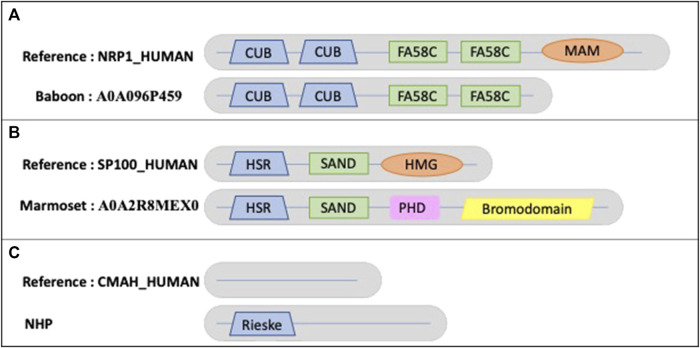
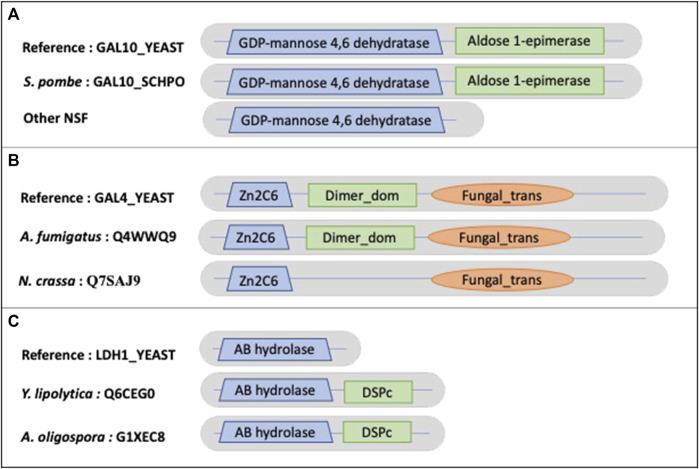
“This domain is also identi fi ed by a new Deep Learning method (Bileschi et al., 2022) that was trained on Pfam data and annotated as a Pfam-N (N for Network) domain in Interpro.”
MethodSteinegger, M., & Salzberg, S. L. (2020) · Genome Biology · doi:10.1186/s13059-020-02023-1 · Cited by 246
Research works printed but not linked: 48
- Altenhoff, 2020, The Quest for Orthologs benchmark service and consensus calls in 2020, Nucleic Acids Res., 48, W538, 10.1093/nar/gkaa308 · DOI
- Bányai, 2016, Putative extremely high rate of proteome innovation in lancelets might be explained by high rate of gene prediction errors, Sci. Rep., 6, 30700, 10.1038/srep30700 · DOI
- Barrera, 2014, Analysis of the protein domain and domain architecture content in fungi and its application in the search of new antifungal targets, PLoS Comput. Biol., 10, e1003733, 10.1371/journal.pcbi.1003733 · DOI
- Berbee, 2017, Early diverging fungi: Diversity and impact at the dawn of terrestrial life, Annu. Rev. Microbiol., 71, 41, 10.1146/annurev-micro-030117-020324 · DOI
- Blum, 2021, The InterPro protein families and domains database: 20 years on, Nucleic Acids Res., 49, D344, 10.1093/nar/gkaa977 · DOI · Paper page
- Buljan, 2009, The evolution of protein domain families, Biochem. Soc. Trans., 37, 751, 10.1042/bst0370751 · DOI
- Cheng, 2018, 10KP: A phylodiverse genome sequencing plan, Gigascience, 7, 1, 10.1093/gigascience/giy013 · DOI · Paper page
- Deutekom, 2019, Measuring the impact of gene prediction on gene loss estimates in Eukaryotes by quantifying falsely inferred absences, PLoS Comput. Biol., 15, e1007301, 10.1371/journal.pcbi.1007301 · DOI
- Dohmen, 2020, The modular nature of protein evolution: Domain rearrangement rates across eukaryotic life, BMC Evol. Biol., 20, 30, 10.1186/s12862-020-1591-0 · DOI
- Dornburg, 2022, Placing human gene families into their evolutionary context, Hum. Genomics, 16, 56, 10.1186/s40246-022-00429-5 · DOI
- Forslund, 2011, Domain architecture conservation in orthologs, BMC Bioinforma., 12, 326, 10.1186/1471-2105-12-326 · DOI
- Forslund, 2018, Gearing up to handle the mosaic nature of life in the quest for orthologs, Bioinformatics, 34, 323, 10.1093/bioinformatics/btx542 · DOI
- Forslund, 2012, Evolution of protein domain architectures, Methods Mol. Biol., 856, 187, 10.1007/978-1-61779-585-5_8 · DOI
- Goudey, 2022, Propagation, detection and correction of errors using the sequence database network, Brief. Bioinform, 23, bbac416, 10.1093/bib/bbac416 · DOI
- Hittinger, 2004, Parallel inactivation of multiple GAL pathway genes and ecological diversification in yeasts, Proc. Natl. Acad. Sci. U. S. A., 101, 14144, 10.1073/pnas.0404319101 · DOI
- Jain, 2019, The evolutionary traceability of a protein, Genome Biol. Evol., 11, 531, 10.1093/gbe/evz008 · DOI
- Kuznetsov, 2021, NCBI genome Workbench: Desktop software for comparative genomics, visualization, and GenBank data submission, Methods Mol. Biol., 2231, 261, 10.1007/978-1-0716-1036-7_16 · DOI · Paper page
- Lewin, 2018, Earth BioGenome project: Sequencing life for the future of life, Proc. Natl. Acad. Sci. U. S. A., 115, 4325, 10.1073/pnas.1720115115 · DOI · Paper page
- Li, 2021, A genome-scale phylogeny of the kingdom Fungi, Curr. Biol., 31, 1653, 10.1016/j.cub.2021.01.074 · DOI
- Lin, 2006, An initial strategy for comparing proteins at the domain architecture level, Bioinformatics, 22, 2081, 10.1093/bioinformatics/btl366 · DOI
- Martin, 2022, Ensembl 2023, Nucleic Acids Res., 1, D933, 10.1093/nar/gkac958 · DOI
- Martin, 2012, Primates, Curr. Biol., 22, R785, 10.1016/j.cub.2012.07.015 · DOI
- Meyer, 2020, Understanding the causes of errors in eukaryotic protein-coding gene prediction: A case study of primate proteomes, BMC Bioinforma., 21, 513, 10.1186/s12859-020-03855-1 · DOI
- Mistry, 2021, Pfam: The protein families database in 2021, Nucleic Acids Res., 49, D412, 10.1093/nar/gkaa913 · DOI · Paper page
- Moore, 2012, The dynamics and evolutionary potential of domain loss and emergence, Mol. Biol. Evol., 29, 787, 10.1093/molbev/msr250 · DOI
- Nagy, 2011, Reassessing domain architecture evolution of metazoan proteins: Major impact of gene prediction errors, Genes. (Basel)., 2, 449, 10.3390/genes2030449 · DOI · Paper page
- Naranjo-Ortiz, 2019, Fungal evolution: Major ecological adaptations and evolutionary transitions, Biol. Rev. Camb Philos. Soc., 94, 1443, 10.1111/brv.12510 · DOI
- Nevers, 2020, Orthology: Promises and challenges, 10.1007/978-3-030-57246-4_9 · DOI
- Nevers, 2022, The Quest for Orthologs orthology benchmark service in 2022, Nucleic Acids Res., 50, W623, 10.1093/nar/gkac330 · DOI · Paper page
- Nevers, 2019, OrthoInspector 3.0: Open portal for comparative genomics, Nucleic Acids Res., 47, D411, 10.1093/nar/gky1068 · DOI
- Peisajovich, 2010, Rapid diversification of cell signaling phenotypes by modular domain recombination, Science, 328, 368, 10.1126/science.1182376 · DOI
- Persson, 2019, Domainoid: Domain-oriented orthology inference, BMC Bioinforma., 20, 523, 10.1186/s12859-019-3137-2 · DOI
- Przytycka, 2006, Graph theoretical insights into evolution of multidomain proteins, J. Comput. Biol., 13, 351, 10.1089/cmb.2006.13.351 · DOI
- Rembeza, 2021, Experimental and computational investigation of enzyme functional annotations uncovers misannotation in the EC 1.1.3.15 enzyme class, PLoS Comput. Biol., 17, e1009522, 10.1371/journal.pcbi.1009446 · DOI
- Rogers, 2014, Comparative primate genomics: Emerging patterns of genome content and dynamics, Nat. Rev. Genet., 15, 347, 10.1038/nrg3707 · DOI
- Schikora-Tamarit, 2022, Using genomics to understand the mechanisms of virulence and drug resistance in fungal pathogens, Biochem. Soc. Trans., 50, 1259, 10.1042/bst20211123 · DOI
- Schmidt, 2022, Modeling genetic diseases in nonhuman primates through embryonic and germline modification: Considerations and challenges, Sci. Transl. Med., 14, eabf4879, 10.1126/scitranslmed.abf4879 · DOI
- Schnoes, 2009, Annotation error in public databases: Misannotation of molecular function in enzyme superfamilies, PLoS Comput. Biol., 5, e1000605, 10.1371/journal.pcbi.1000605 · DOI
- Sjolander, 2011, Ortholog identification in the presence of domain architecture rearrangement, Brief. Bioinform, 12, 413, 10.1093/bib/bbr036 · DOI
- Stamboulian, 2020, The ortholog conjecture revisited: The value of orthologs and paralogs in function prediction, Bioinformatics, 36, i219, 10.1093/bioinformatics/btaa468 · DOI
- Syamaladevi, 2013, An alignment-free domain architecture similarity search (ADASS) algorithm for inferring homology between multi-domain proteins, Bioinformation, 9, 491, 10.6026/97320630009491 · DOI
- Wang, 2020, Structures of a complete human V-ATPase reveal mechanisms of its assembly, Mol. Cell., 80, 501, 10.1016/j.molcel.2020.09.029 · DOI
- Wang, 2021, Protein domain identification methods and online resources, Comput. Struct. Biotechnol. J., 19, 1145, 10.1016/j.csbj.2021.01.041 · DOI
- Weirather, 2017, Comprehensive comparison of pacific biosciences and oxford nanopore technologies and their applications to transcriptome analysis, F1000Res., 6, 100, 10.12688/f1000research.10571.1 · DOI
- Weisman, 2022, Mixing genome annotation methods in a comparative analysis inflates the apparent number of lineage-specific genes, Curr. Biol., 32, 2632, 10.1016/j.cub.2022.04.085 · DOI · Paper page
- Wu, 2022, Reconstruction of gene innovation associated with major evolutionary transitions in the kingdom Fungi, BMC Biol., 20, 144, 10.1186/s12915-022-01346-8 · DOI
- Wu, 2022, Initiation of the primate genome project, Zool. Res., 43, 147, 10.24272/j.issn.2095-8137.2022.001 · DOI
- Yu, 2019, Grammar of protein domain architectures, Proc. Natl. Acad. Sci. U. S. A., 116, 3636, 10.1073/pnas.1814684116 · DOI
Cited by
Sorted by citations
Annotation matters: the effect of structural gene annotation on orthology inference
Prieto-Baños, S., Nevers, Y., Altenhoff, A., Warwick Vesztrocy, A., Dessimoz, C., & Glover, N. M. (2025) · Bioinformatics · doi:10.1093/bioinformatics/btaf365 · Cited by 19
Metadata
- Authors
- Kress, A., Poch, O., Lecompte, O., & Thompson, J. D.
- Venue
- Frontiers in Bioinformatics
- Publisher
- Frontiers Media SA
- Published
- 2023-04-20
- Volume
- 3
- ISSN
- 2673-7647
- PMC
- PMC10158824
- Cited by
- 21
- References
- 6
About these checks
Registry, retraction, Cites and statistics results are computed, not judged, with one exception: a printed reference that no index lists is read once by a model before it counts as a citation error. Claims are extracted by a model and kept only when their quote appears verbatim in the text; each cited source is then checked, with a model’s help, for whether it says what the claim relies on. Those verdicts can be wrong — read the claim’s quote and the cited source before relying on one.
Statistics and arithmetic are recomputed, not judged.
Confidence bands are shown only for fields calibrated on our annotated test set. None is calibrated yet, so no band is shown.
What counts as a claim ›How we measure confidence ›How we check this ›
Are you an author, or do you see a problem with this page? Request a review
