

The DOI matches its Crossref record; 88 of the 88 references it cites were found in a registry or an index.
Metabolic Interplay between Peroxisomes and Other Subcellular Organelles Including Mitochondria and the Endoplasmic Reticulum
Open accessAbstract
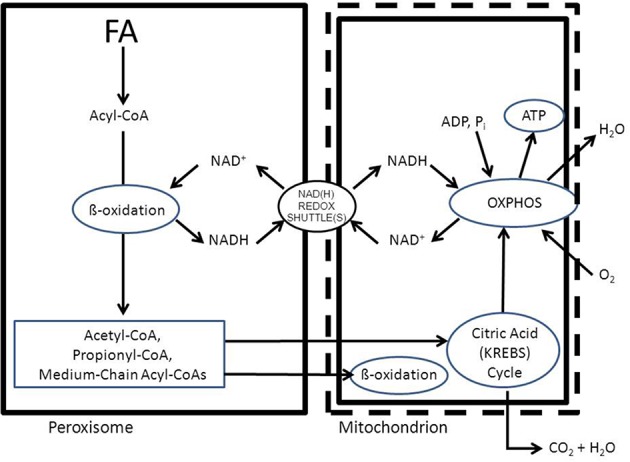
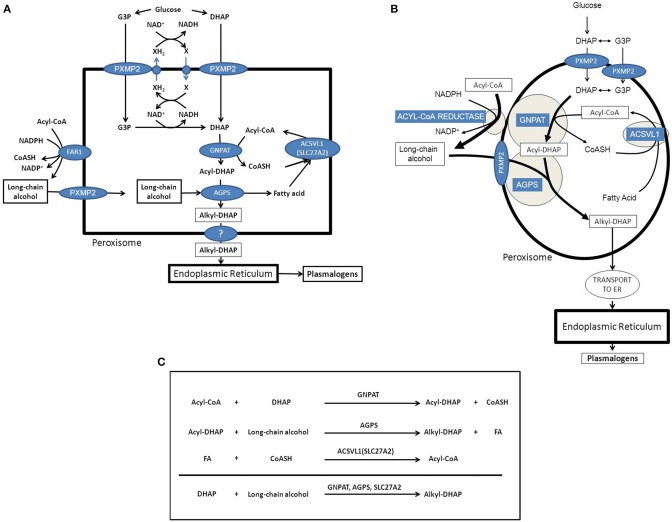
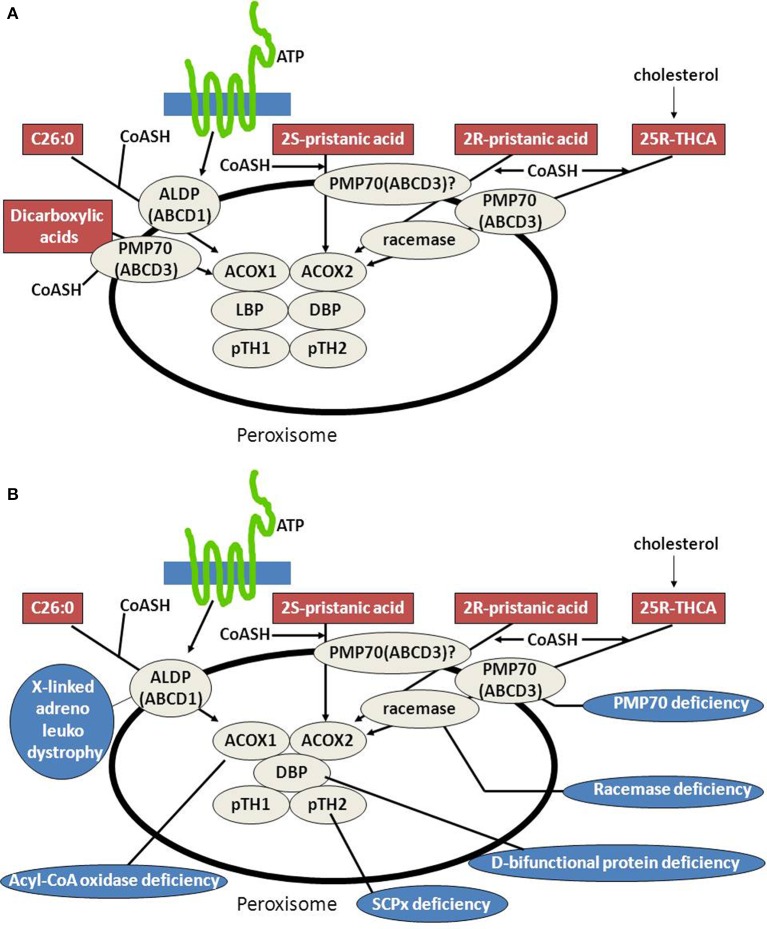
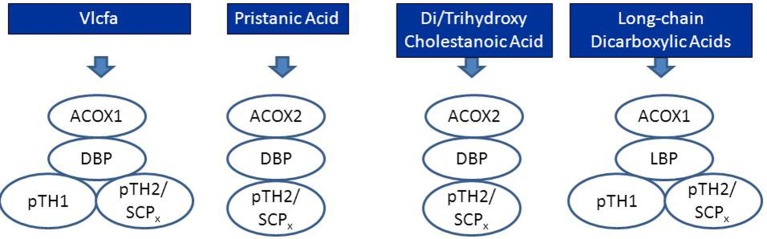
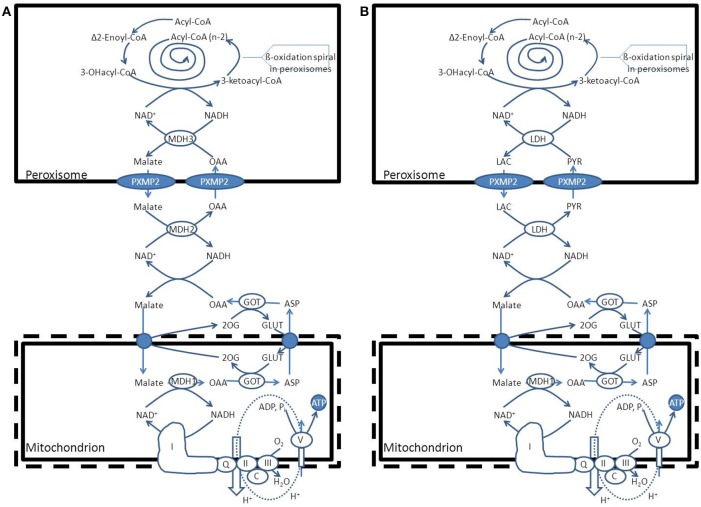
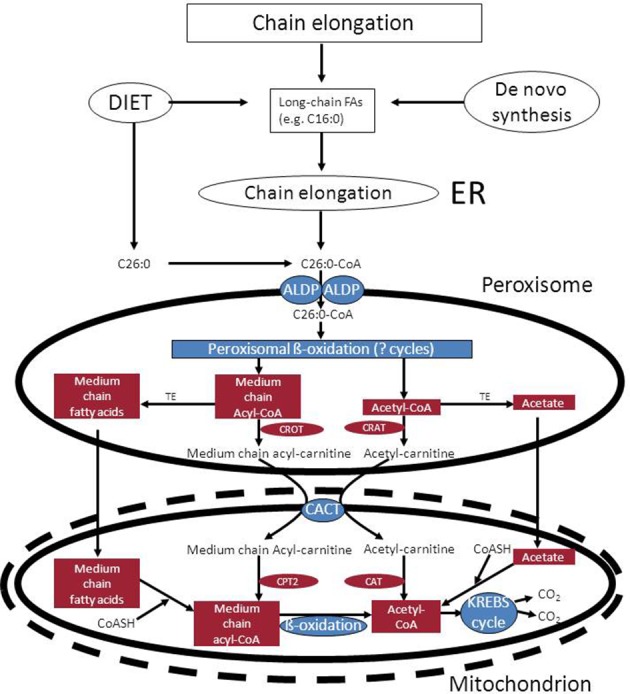
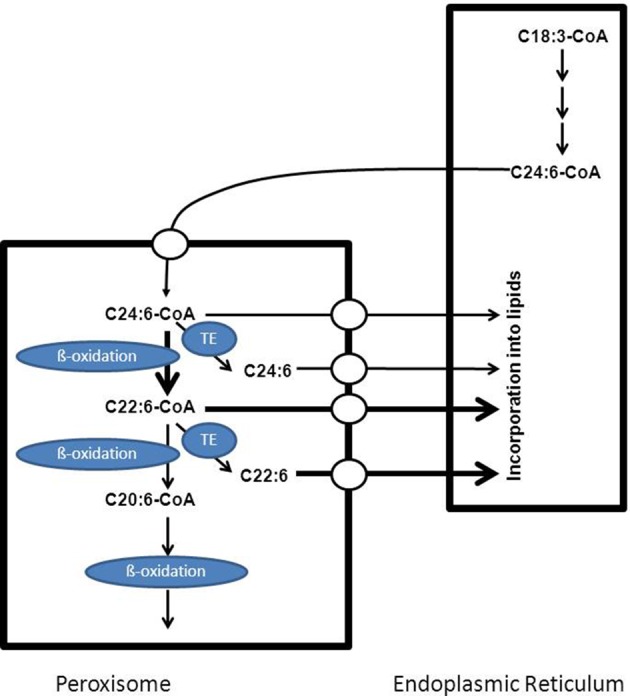
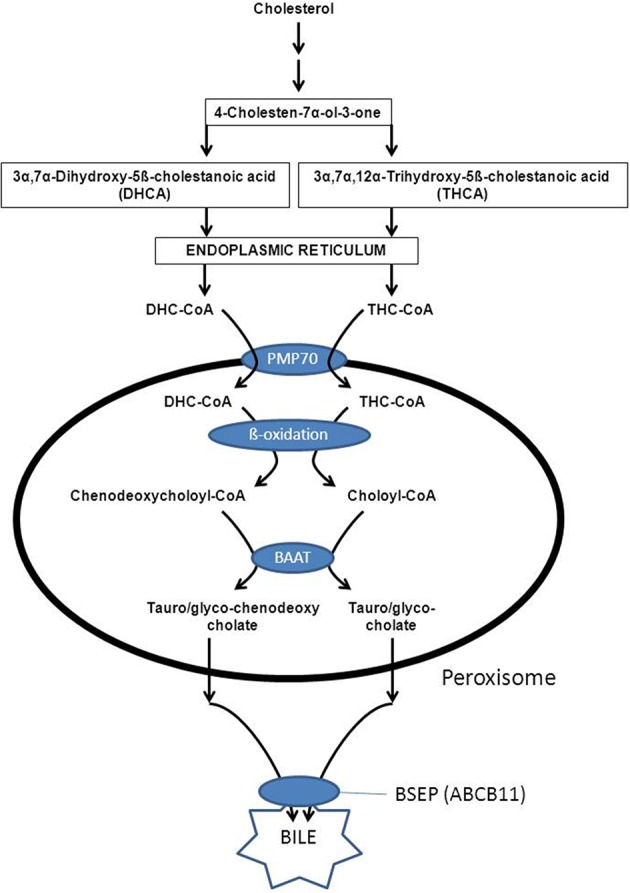
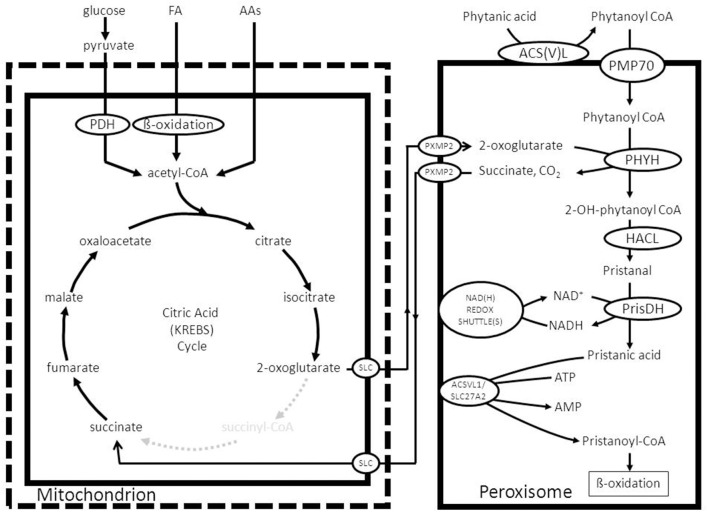
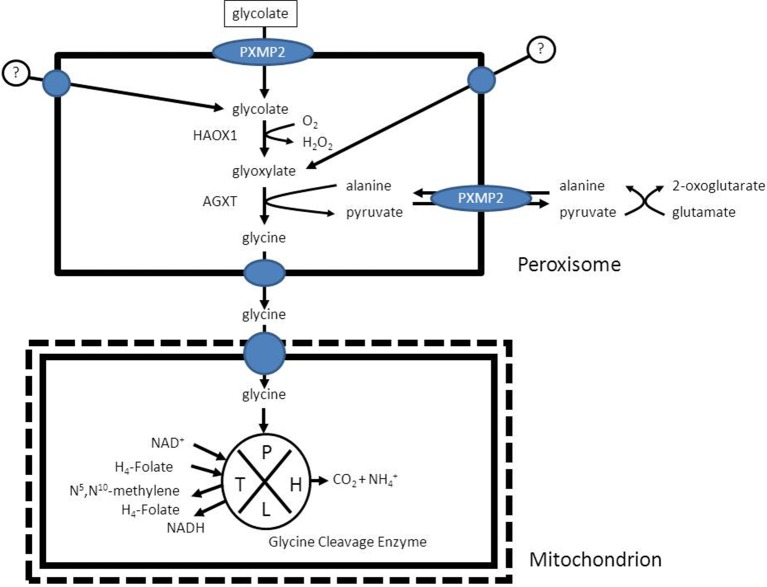
Peroxisomes are unique subcellular organelles which play an indispensable role in several key metabolic pathways which include: (1.) etherphospholipid biosynthesis; (2.) fatty acid beta-oxidation; (3.) bile acid synthesis; (4.) docosahexaenoic acid (DHA) synthesis; (5.) fatty acid alpha-oxidation; (6.) glyoxylate metabolism; (7.) amino acid degradation, and (8.) ROS/RNS metabolism. The importance of peroxisomes for human health and development is exemplified by the existence of a large number of inborn errors of peroxisome metabolism in which there is an impairment in one or more of the metabolic functions of peroxisomes. Although the clinical signs and symptoms of affected patients differ depending upon the enzyme which is deficient and the extent of the deficiency, the disorders involved are usually (very) severe diseases with neurological dysfunction and early death in many of them. With respect to the role of peroxisomes in metabolism it is clear that peroxisomes are dependent on the functional interplay with other subcellular organelles to sustain their role in metabolism. Indeed, whereas mitochondria can oxidize fatty acids all the way to CO2 and H2O, peroxisomes are only able to chain-shorten fatty acids and the end products of peroxisomal beta-oxidation need to be shuttled to mitochondria for full oxidation to CO2 and H2O. Furthermore, NADH is generated during beta-oxidation in peroxisomes and beta-oxidation can only continue if peroxisomes are equipped with a mechanism to reoxidize NADH back to NAD(+), which is now known to be mediated by specific NAD(H)-redox shuttles. In this paper we describe the current state of knowledge about the functional interplay between peroxisomes and other subcellular compartments notably the mitochondria and endoplasmic reticulum for each of the metabolic pathways in which peroxisomes are involved.
Overview
The claims and statistics of this paper haven’t been checked yet.
Run the check — free, no account needed. It reads the open-access text and checks the sources it cites.
Integrity signals
Registry
Cites
Statistics
Figures
Verification
Claims the paper makes
The claims and statistics of this paper haven’t been checked yet.
Run the check — free, no account needed. It reads the open-access text and checks the sources it cites.
Claims other papers make about this one
Each is checked against this paper’s own text: does it say what the citing paper says it does?
The cited source says what the claim attributes to it.
In the citing paper
“All of these metabolites must be transferred into mitochondria for full β-oxidation into CO2 and H2O because peroxisomes lack a Krebs’ cycle [162].”
From Revisiting the Pathogenesis of X-Linked Adrenoleukodystrophy (2025) · cites this paper as [162]
Self-check
Percentages, sums and reported differences re-computed from the paper’s own numbers.
The self-check needs the paper’s full text.
Citations
Cites
The Enzymes, Regulation, and Genetics of Bile Acid Synthesis
Russell, D. W. (2003) · Annual Review of Biochemistry · doi:10.1146/annurev.biochem.72.121801.161712 · Cited by 2,069
Functions of plasmalogen lipids in health and disease
Braverman, N. E., & Moser, A. B. (2012) · Biochimica et Biophysica Acta (BBA) - Molecular Basis of Disease · doi:10.1016/j.bbadis.2012.05.008 · Cited by 1,082
Biochemistry of mammalian peroxisomes revisited
Wanders, R. J. A., & Waterham, H. R. (2006) · Annual Review of Biochemistry · doi:10.1146/annurev.biochem.74.082803.133329 · Cited by 995
Self-citationPeroxisomes and oxidative stress
Schrader, M., & Fahimi, H. D. (2006) · Biochimica et Biophysica Acta (BBA) - Molecular Cell Research · doi:10.1016/j.bbamcr.2006.09.006 · Cited by 838
The Biochemistry of n-3 Polyunsaturated Fatty Acids
Jump, D. Β. (2002) · Journal of Biological Chemistry · doi:10.1074/jbc.r100062200 · Cited by 654
Role of peroxisomes in ros/rns-metabolism: Implications for human disease
Fransen, M., Nordgren, M., Wang, B., & Apanasets, O. (2012) · Biochimica et Biophysica Acta (BBA) - Molecular Basis of Disease · doi:10.1016/j.bbadis.2011.12.001 · Cited by 644
Krebs, H. A. (1935) · Biochemical Journal · doi:10.1042/bj0291951 · Cited by 571
Functions and biosynthesis of plasmalogens in health and disease
Brites, P., Waterham, H. R., & Wanders, R. J. A. (2004) · Biochimica et Biophysica Acta (BBA) - Molecular and Cell Biology of Lipids · doi:10.1016/j.bbalip.2003.12.010 · Cited by 430
Self-citationGlycine cleavage system: reaction mechanism, physiological significance, and hyperglycinemia
Kikuchi, G., Motokawa, Y., Yoshida, T., & Hiraga, K. (2008) · Proceedings of the Japan Academy Series B · doi:10.2183/pjab.84.246 · Cited by 381
Peroxisomal alanine:glyoxylate aminotransferase deficiency in primary hyperoxaluria type I
Danpure, C. J., & Jennings, P. R. (1986) · FEBS Letters · doi:10.1016/0014-5793(86)80563-4 · Cited by 349
Research works printed but not linked: 1
- Novikoff, 1964, The endoplasmatic reticulum in the golgi zone and its relation to microbodies, golgi apparatus and autophagic vacuoles in rat livers, J. Microsc., 3, 187
Cited by
Sorted by citations
Selective autophagy of intracellular organelles: Recent research advances
Li, W., He, P., Huang, Y., Li, Y.-F., Lu, J., Li, M., Kurihara, H., Luo, Z., Meng, T., Onishi, M., et al. (2020) · Theranostics · doi:10.7150/thno.49860 · Cited by 523
“Peroxisomes are involved in redox balance, lipid metabolism and bile acid synthesis [282, 283].”
BackgroundCrosstalk Between Mammalian Autophagy and the Ubiquitin-Proteasome System
Kocatürk, N. M., & Gözüaçık, D. (2018) · Frontiers in Cell and Developmental Biology · doi:10.3389/fcell.2018.00128 · Cited by 442
Dietary Restriction and AMPK Increase Lifespan via Mitochondrial Network and Peroxisome Remodeling
Weir, H. J., Yao, P., Huynh, F. K., Escoubas, C. C., Goncalves, R. L., Burkewitz, K., Laboy, R., Hirschey, M. D., & Mair, W. B. (2017) · Cell Metabolism · doi:10.1016/j.cmet.2017.09.024 · Cited by 372
“Functional interplay exists between mitochondria and peroxisomes in the regulation of FAO, and oxidation of very long- and long-chain fatty acids takes place in peroxisomes (Wanders et al., 2016).”
The Peroxisome-Mitochondria Connection: How and Why?
Fransen, M., Lismont, C., & Walton, P. (2017) · International Journal of Molecular Sciences · doi:10.3390/ijms18061126 · Cited by 351
“Peroxisomes and mitochondria contain distinct sets of enzymes for each β-oxidation reaction step, and as such it is no surprise that both organelles have largely different substrate specificities [26,88].”
BackgroundInfluentialL-Carnitine and Acylcarnitines: Mitochondrial Biomarkers for Precision Medicine
McCann, M. R., la Rosa, M. V. G. D., Rosania, G. R., & Stringer, K. A. (2021) · Metabolites · doi:10.3390/metabo11010051 · Cited by 328
“Peroxisomes utilize the carnitine shuttle to transport the end-products (acetyl-CoA, propionyl-CoA, and medium-chain acyl-CoA) into the mitochondria for complete oxidation via the TCA cycle [7,37].”
Background
Metadata
- Authors
- Wanders, R. J. A., Waterham, H. R., & Ferdinandusse, S.
- Affiliations
- Amsterdam UMC Location University of Amsterdam (NL)
- Corresponding author
- Wanders, Ronald J. A.
- Venue
- Frontiers in Cell and Developmental Biology
- Publisher
- Frontiers Media SA
- Published
- 2016-01-28
- Volume
- 3
- Pages
- 83-83
- ISSN
- 2296-634X (ISSN-L)
- PMC
- PMC4729952
- OpenAlex
- W2262335045
- Cited by
- 366
- References
- 88
- Citations by year
- 2026: 25 · 2025: 36 · 2024: 43 · 2023: 31 · 2022: 56 · 2021: 39 · 2020: 50 · 2019: 30 · 2018: 29 · 2017: 24 · 2016: 2
- FWCI
- 2.91
- Type
- journal article
- Language
- en
- Open access
- gold
- doi.org
- Licence
- cc-by
- Locations
- Frontiers in Cell and Developmental Biology (publishedVersion, cc-by)
- PubMed Central (publishedVersion, cc-by)
- PubMed (publishedVersion)
- Pure Amsterdam UMC (acceptedVersion, other-oa)
- Data Archiving and Networked Services (DANS) (submittedVersion, other-oa)
- DOAJ (DOAJ: Directory of Open Access Journals) (submittedVersion)
- Funders
- European Commission (316723)
- Hersenstichting (F2012(1)-102)
- Topics
- Life Sciences › Biochemistry, Genetics and Molecular Biology › Clinical Biochemistry › Metabolism and Genetic Disorders
- Life Sciences › Biochemistry, Genetics and Molecular Biology › Biochemistry › Lipid metabolism and biosynthesis
- Life Sciences › Biochemistry, Genetics and Molecular Biology › Cell Biology › Autophagy in Disease and Therapy
- Keywords
- peroxisomes, fatty acid beta-oxidation, NADH reoxidation, bile acid synthesis, glyoxylate metabolism, amino acid catabolism
About these checks
Registry, retraction, Cites and statistics results are computed, not judged, with one exception: a printed reference that no index lists is read once by a model before it counts as a citation error. Claims are extracted by a model and kept only when their quote appears verbatim in the text; each cited source is then checked, with a model’s help, for whether it says what the claim relies on. Those verdicts can be wrong — read the claim’s quote and the cited source before relying on one.
Statistics and arithmetic are recomputed, not judged.
Confidence bands are shown only for fields calibrated on our annotated test set. None is calibrated yet, so no band is shown.
What counts as a claim ›How we measure confidence ›How we check this ›
Are you an author, or do you see a problem with this page? Request a review
