

Tanshinone IIA inhibits cardiomyocyte pyroptosis through TLR4/NF-κB p65 pathway after acute myocardial infarction
Open accessThe DOI matches its Crossref record; 62 of the 62 references it cites were found in a registry or an index.
Abstract
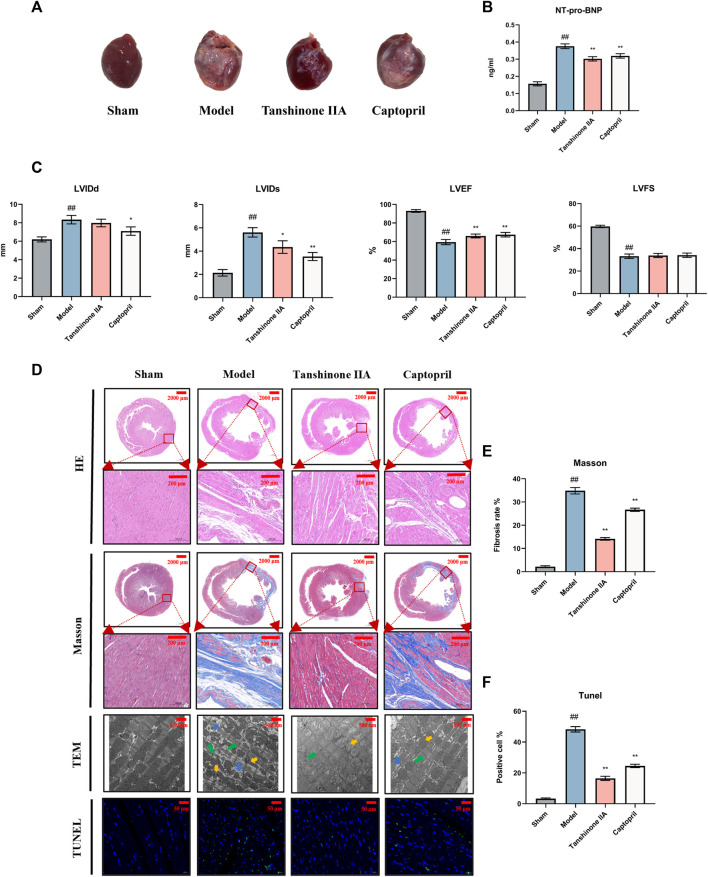
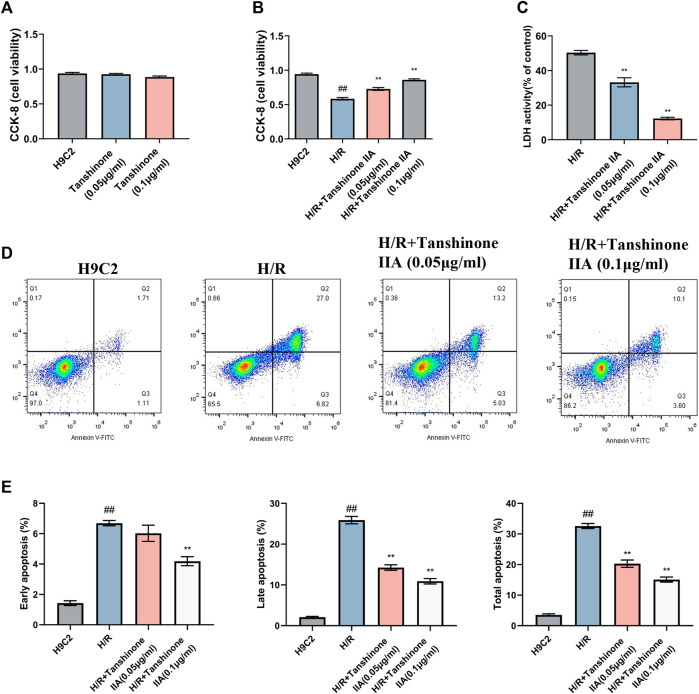
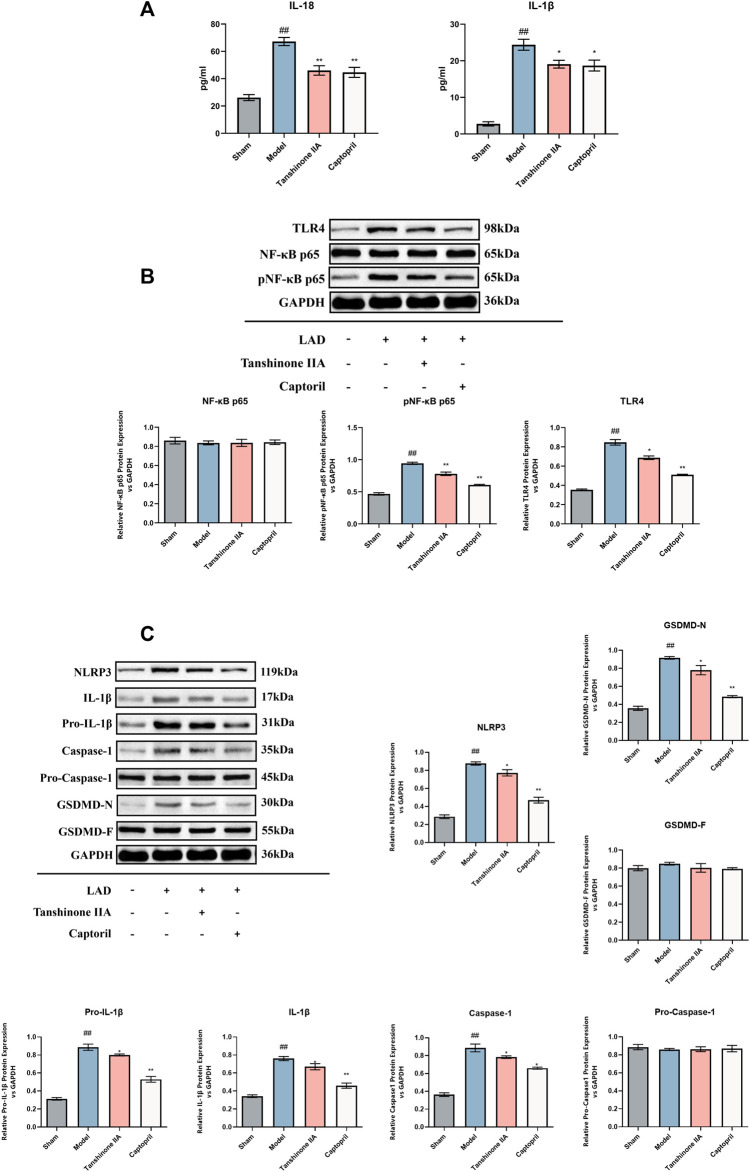
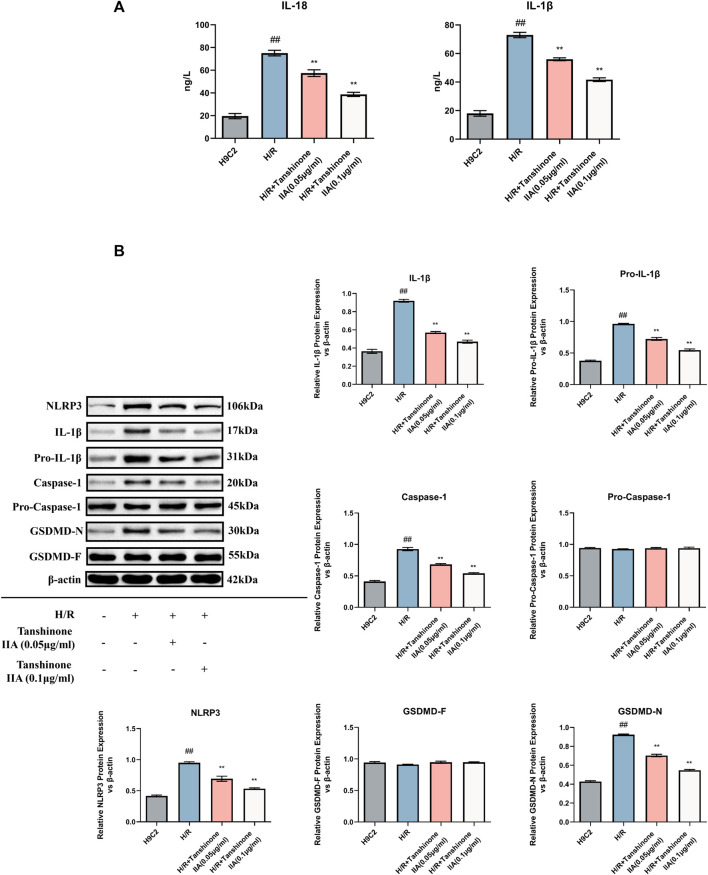
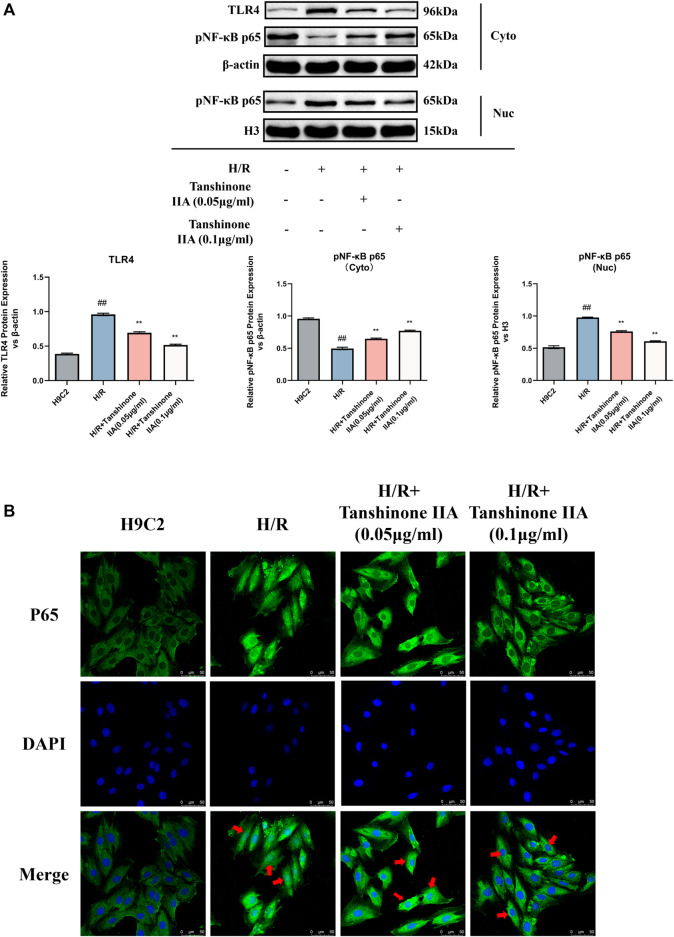
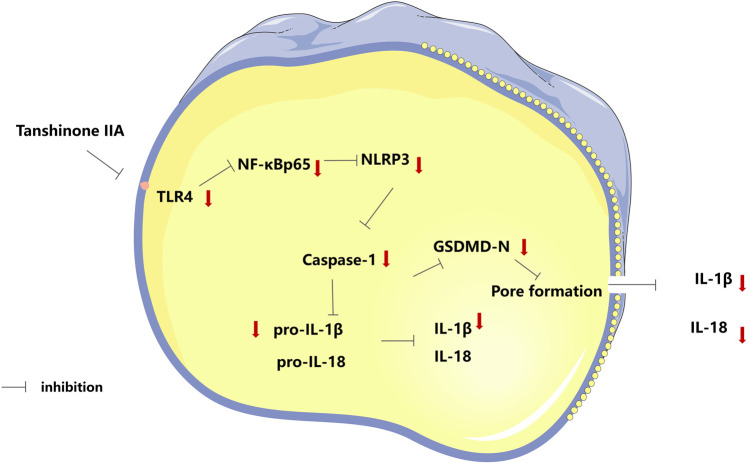
Background: Tanshinone IIA, derived from Radix Salviae Miltiorrhizae ( Salvia miltiorrhiza Bunge ), constitutes a significant component of this traditional Chinese medicine. Numerous studies have reported positive outcomes regarding its influence on cardiac function. However, a comprehensive comprehension of the intricate mechanisms responsible for its cardioprotective effects is still lacking. Methods: A rat model of heart failure (HF) induced by acute myocardial infarction (AMI) was established via ligation of the left anterior descending coronary artery. Rats received oral administration of tanshinone IIA (1.5 mg/kg) and captopril (10 mg/kg) for 8 weeks. Cardiac function was assessed through various evaluations. Histological changes in myocardial tissue were observed using staining techniques, including Hematoxylin and Eosin (HE), Masson, and transmission electron microscopy. Tunel staining was used to detect cell apoptosis. Serum levels of NT-pro-BNP, IL-1β, and IL-18 were quantified using enzyme-linked immunosorbent assay (ELISA). Expression levels of TLR4, NF-κB p65, and pyroptosis-related proteins were determined via western blotting (WB). H9C2 cardiomyocytes underwent hypoxia-reoxygenation (H/R) to simulate ischemia-reperfusion (I/R) injury, and cell viability and apoptosis were assessed post treatment with different tanshinone IIA concentrations (0.05 μg/ml, 0.1 μg/ml). ELISA measured IL-1β, IL-18, and LDH expression in the cell supernatant, while WB analysis evaluated TLR4, NF-κB p65, and pyroptosis-related protein levels. NF-κB p65 protein nuclear translocation was observed using laser confocal microscopy. Results: Tanshinone IIA treatment exhibited enhanced cardiac function, mitigated histological cardiac tissue damage, lowered serum levels of NT-pro-BNP, IL-1β, and IL-18, and suppressed myocardial cell apoptosis. Moreover, tanshinone IIA downregulated the expression of TLR4, NF-κB p65, IL-1β, pro-IL-1β, NLRP3, Caspase-1, and GSDMD-N pyroptosis-related proteins in myocardial tissue. Additionally, it bolstered H/R H9C2 cardiomyocyte viability, curbed cardiomyocyte apoptosis, and reduced the levels of TLR4, NF-κB p65, IL-1β, pro-IL-1β, NLRP3, Caspase-1, and GSDMD-N pyroptosis-related proteins in H/R H9C2 cells. Furthermore, it hindered NF-κB p65 protein nuclear translocation. Conclusion: These findings indicate that tanshinone IIA enhances cardiac function and alleviates myocardial injury in HF rats following AMI. Moreover, tanshinone IIA demonstrates potential suppression of cardiomyocyte pyroptosis. These effects likely arise from the inhibition of the TLR4/NF-κB p65 signaling pathway, presenting a promising therapeutic target.
Overview
The claims and statistics of this paper haven’t been checked yet.
Free: it reads the open-access text and checks the first 5 claims that cite a source we can check. Create a free account to check every claim.
Integrity signals
Registry
Cites
Statistics
Figures
Verification
Claims the paper makes
The claims and statistics of this paper haven’t been checked yet.
Free: it reads the open-access text and checks the first 5 claims that cite a source we can check. Create a free account to check every claim.
Claims other papers make about this one
Each is checked against this paper’s own text: does it say what the citing paper says it does?
The source backs part of the claim, not all of it — or backs it for a different population, condition or comparison.
In the citing paper
“where p65 phosphorylation is a critical step in activation [59,60]”
From Picroside II suppresses chondrocyte pyroptosis through MAPK/NF-κB/NLRP3 signaling pathway alleviates osteoarthritis (2024) · cites this paper as [60]
Experimental — accuracy not yet measuredThe check wasn’t confident either way, so it gives no verdict — never disputed.
In the citing paper
“P-II has demonstrated the ability to suppress LPS-induced inflammation by targeting the NF-κB signaling pathway”
From Picroside II suppresses chondrocyte pyroptosis through MAPK/NF-κB/NLRP3 signaling pathway alleviates osteoarthritis (2024) · cites this paper as [60]
Experimental — accuracy not yet measured
Self-check
Percentages, sums and reported differences re-computed from the paper’s own numbers.
The self-check needs the paper’s full text.
Citations
Cites
1 retracted
Tanshinone IIA improves hypoxic ischemic encephalopathy through TLR‑4‑mediated NF‑κB signal pathway
Fang, C., Xie, L., Liu, C., Fu, C., Ye, W., Liu, H., & Zhang, B. (2018) · Molecular Medicine Reports · doi:10.3892/mmr.2018.9227 · Cited by 30
RetractedNF-κB signaling in inflammation
Liu, T., Zhang, L., Joo, D., & Sun, S.-C. (2017) · Signal Transduction and Targeted Therapy · doi:10.1038/sigtrans.2017.23 · Cited by 8,791
Inflammasome-activated gasdermin D causes pyroptosis by forming membrane pores
Liu, X., Zhang, Z., Ruan, J., Pan, Y., Magupalli, V. G., Wu, H., & Lieberman, J. (2016) · Nature · doi:10.1038/nature18629 · Cited by 3,202
Self-citationPyroptosis: Mechanisms and Diseases
Yu, P., Zhang, X., Liu, N., Tang, L., Peng, C., & Chen, X. (2021) · Signal Transduction and Targeted Therapy · doi:10.1038/s41392-021-00507-5 · Cited by 2,353
Groenewegen, A., Rutten, F. H., Mosterd, A., & Hoes, A. W. (2020) · European Journal of Heart Failure · doi:10.1002/ejhf.1858 · Cited by 2,043
Gasdermin D pore structure reveals preferential release of mature interleukin-1
Xia, S., Zhang, Z., Magupalli, V. G., Pablo, J. L., Dong, Y., Vora, S. M., Wang, L., Fu, T.-M., Jacobson, M. P., Greka, A., et al. (2021) · Nature · doi:10.1038/s41586-021-03478-3 · Cited by 642
Self-citationJones, N. R., Roalfe, A. K., Adoki, I., Hobbs, F. D. R., & Taylor, C. J. (2019) · European Journal of Heart Failure · doi:10.1002/ejhf.1594 · Cited by 618
Heart Failure After Myocardial Infarction: Incidence and Predictors
Jenča, D., Melenovský, V., Stehlik, J., Staněk, V., Kettner, J., Kautzner, J., Adámková, V., & Wohlfahrt, P. (2021) · ESC Heart Failure · doi:10.1002/ehf2.13144 · Cited by 605
Caspase-1 initiates apoptosis in the absence of gasdermin D
Tsuchiya, K., Nakajima, S., Hosojima, S., Thi Nguyen, D., Hattori, T., Manh Le, T., Hori, O., Mahib, M. R., Yamaguchi, Y., Miura, M., et al. (2019) · Nature Communications · doi:10.1038/s41467-019-09753-2 · Cited by 495
Global epidemiology and future trends of heart failure
Lippi, G., & Sanchis-Gomar, F. (2020) · AME Medical Journal · doi:10.21037/amj.2020.03.03 · Cited by 492
Salvia miltiorrhiza: Traditional medicinal uses, chemistry, and pharmacology
SU, C.-Y., MING, Q.-L., RAHMAN, K., HAN, T., & QIN, L.-P. (2015) · Chinese Journal of Natural Medicines · doi:10.1016/s1875-5364(15)30002-9 · Cited by 412
Caspase-1 Activation of IL-1β and IL-18 Are Essential for Shigella flexneri–Induced Inflammation
Sansonetti, P. J., Phalipon, A., Arondel, J., Thirumalai, K., Banerjee, S., Akira, S., Takeda, K., & Zychlinsky, A. (2000) · Immunity · doi:10.1016/s1074-7613(00)80209-5 · Cited by 399
TLR4 Cross-Talk With NLRP3 Inflammasome and Complement Signaling Pathways in Alzheimer's Disease
Yang, J., Wise, L., & Fukuchi, K.-I. (2020) · Frontiers in Immunology · doi:10.3389/fimmu.2020.00724 · Cited by 387
Inflammasome, pyroptosis, and cytokines in myocardial ischemia-reperfusion injury
Toldo, S., Mauro, A. G., Cutter, Z., & Abbate, A. (2018) · American Journal of Physiology-Heart and Circulatory Physiology · doi:10.1152/ajpheart.00158.2018 · Cited by 369
Cardiovascular actions and therapeutic potential of tanshinone IIA
Gao, S., Liu, Z., Li, H., Little, P. J., Liu, P., & Xu, S. (2012) · Atherosclerosis · doi:10.1016/j.atherosclerosis.2011.06.041 · Cited by 359
Pharmacological Activity and Mechanism of Tanshinone IIA in Related Diseases
Guo, R., Li, L., Su, J., Li, S., Duncan, S. E., Liu, Z., & Fan, G. (2020) · Drug Design, Development and Therapy · doi:10.2147/dddt.s266911 · Cited by 306
Role of Pyroptosis in Cardiovascular Diseases and its Therapeutic Implications
Zeng, C., Wang, R., & Tan, H. (2019) · International Journal of Biological Sciences · doi:10.7150/ijbs.33568 · Cited by 283
Guidelines for evaluating myocardial cell death
Mishra, P. K., Adameova, A., Hill, J. A., Baines, C. P., Kang, P. M., Downey, J. M., Narula, J., Takahashi, M., Abbate, A., Piristine, H. C., et al. (2019) · American Journal of Physiology-Heart and Circulatory Physiology · doi:10.1152/ajpheart.00259.2019 · Cited by 236
Prospective therapeutic potential of Tanshinone IIA: An updated overview
Ansari, M. A., Khan, F. B., Safdari, H. A., Almatroudi, A., Alzohairy, M. A., Safdari, M., Amirizadeh, M., Rehman, S., Equbal, M. J., & Hoque, M. (2021) · Pharmacological Research · doi:10.1016/j.phrs.2020.105364 · Cited by 179
Zhang, X., Wang, Q., Wang, X., Chen, X., Shao, M., Zhang, Q., Guo, D., Wu, Y., Li, C., Wang, W., et al. (2019) · Biomedicine & Pharmacotherapy · doi:10.1016/j.biopha.2019.108599 · Cited by 170
Tanshinone IIA: A phytochemical as a promising drug candidate for neurodegenerative diseases
Subedi, L., & Gaire, B. P. (2021) · Pharmacological Research · doi:10.1016/j.phrs.2021.105661 · Cited by 134
Tanshinone IIA: A Review of its Anticancer Effects
Fang, Z.-Y., Zhang, M., Liu, J., Zhao, X. B., Zhang, Y., & Fang, L. (2021) · Frontiers in Pharmacology · doi:10.3389/fphar.2020.611087 · Cited by 129
Wang, N., Zhang, X., Ma, Z., Niu, J., Ma, S.-H., Wenjie, W., & Chen, J. (2019) · Biomedicine & Pharmacotherapy · doi:10.1016/j.biopha.2019.109729 · Cited by 127
TLR4 signaling and macrophage inflammatory responses are dampened by GIV/Girdin
Swanson, L., Katkar, G. D., Tam, J. S., Pranadinata, R. F., Chareddy, Y. S., Coates, J., Anandachar, M. S., Castillo, V., Olson, J., Nizet, V., et al. (2020) · Proceedings of the National Academy of Sciences · doi:10.1073/pnas.2011667117 · Cited by 126
Prevalence of heart failure in Australia: a systematic review
Sahle, B. W., Owen, A. J., Mutowo, M. P., Krum, H., & Reid, C. M. (2016) · BMC Cardiovascular Disorders · doi:10.1186/s12872-016-0208-4 · Cited by 123
Atheroprotective Effects and Molecular Targets of Tanshinones Derived From Herbal Medicine Danshen
Fang, J., Little, P. J., & Xu, S. (2018) · Medicinal Research Reviews · doi:10.1002/med.21438 · Cited by 121
Improving Quality of Life in Heart Failure
Freedland, K. E., Rich, M. W., & Carney, R. M. (2021) · Current Cardiology Reports · doi:10.1007/s11886-021-01588-y · Cited by 120
Jung, I., Kim, H., Moon, S., Lee, H., & Kim, B. (2020) · Antioxidants · doi:10.3390/antiox9090857 · Cited by 114
Shan, H., Li, X., Pan, Z., Li, Z., Cai, B., Zhang, Y., Xu, C., Chu, W., Qiao, G., Li, B., et al. (2009) · British Journal of Pharmacology · doi:10.1111/j.1476-5381.2009.00377.x · Cited by 108
Li, W., Wang, K., Liu, Y., Wu, H., He, Y., Li, C., Wang, Q., Su, X., Yan, S., Su, W., et al. (2022) · Frontiers in Immunology · doi:10.3389/fimmu.2022.912933 · Cited by 106
Self-citationLiu, C., Yao, Q., Hu, T., Cai, Z., Xie, Q., Zhao, J., Yuan, Y., Ni, J., & Wu, Q. (2022) · Molecular Therapy — Nucleic Acids · doi:10.1016/j.omtn.2022.09.019 · Cited by 100
Li, S., Yang, K., Cao, W., Guo, R., Liu, Z., Zhang, J., Fan, A., Huang, Y., Ma, C., Li, L., et al. (2023) · Journal of Controlled Release · doi:10.1016/j.jconrel.2023.04.014 · Cited by 97
El‐Sisi, A. E., Sokar, S. S., Shebl, A. M., Mohamed, D. Z., & Abu-Risha, S. E.-S. (2020) · Toxicology and Applied Pharmacology · doi:10.1016/j.taap.2020.115340 · Cited by 91
Zhang, Y., Liu, W., Zhong, Y., Li, Q., Wu, M., Yang, L., Liu, X., & Zou, L. (2021) · Oxidative Medicine and Cellular Longevity · doi:10.1155/2021/1806344 · Cited by 77
Li, M., Gao, F., Zhao, Q., Zuo, H., Liu, W., & Li, W. (2020) · Cell Death and Disease · doi:10.1038/s41419-020-2579-9 · Cited by 75
Ye, B., Shi, X., Xu, J., Dai, S., Xu, J., Fan, X., Han, B., & Han, J. (2022) · Translational research · doi:10.1016/j.trsl.2022.05.001 · Cited by 73
Luan, F., Rao, Z., Peng, L., Lei, Z., Zeng, J., Peng, X., Yang, R., Liu, R., & Zeng, N. (2022) · Phytomedicine · doi:10.1016/j.phymed.2022.154047 · Cited by 72
Chen, Z., Gao, X., Jiao, Y., Qiu, Y. L., Wang, A., Yu, M., Che, F., Li, S., Liu, J. L., Li, J., et al. (2019) · Frontiers in Pharmacology · doi:10.3389/fphar.2019.00850 · Cited by 71
Liu, Q., Zhuang, Y., Song, X., Niu, Q., Sun, Q., Li, X., Li, N., Liu, B., Huang, F., & Qiu, Z. (2020) · Acta Pharmacologica Sinica · doi:10.1038/s41401-020-00535-x · Cited by 70
Lu, T.-C., Wu, Y., Chen, W., & Hung, Y. (2022) · Oxidative Medicine and Cellular Longevity · doi:10.1155/2022/2811789 · Cited by 68
Jin, X., Dong, X., Sun, Y., Liu, Z., Liu, L., & Gu, H. (2022) · Oxidative Medicine and Cellular Longevity · doi:10.1155/2022/3711371 · Cited by 66
Xu, L., He, D., Wu, Y., Shen, L., Wang, Y., & Xu, Y. (2022) · Phytomedicine · doi:10.1016/j.phymed.2022.154471 · Cited by 64
Zhao, P., Wang, J., He, L., Ma, H., Zhang, X., Zhu, X., Dolence, E. K., Ren, J., & Li, J. (2009) · Journal of Cellular and Molecular Medicine · doi:10.1111/j.1582-4934.2009.00798.x · Cited by 62
Fan, G., Zhu, Y., Guo, H., Wang, X., Wang, H., & Gao, X. (2011) · Journal of Cardiovascular Pharmacology · doi:10.1097/fjc.0b013e31820a0da1 · Cited by 57
Liu, B., Yan-hui, D., Cong, L., Jia, X., & Ge, Y. (2016) · Evidence-based Complementary and Alternative Medicine · doi:10.1155/2016/9781715 · Cited by 54
Yang, Z., Li, Q., Wang, X., Jiang, X., Zhao, D., Lin, X., He, F., & Tang, L. (2018) · Proceedings of the National Academy of Sciences · doi:10.1073/pnas.1804094115 · Cited by 46
Current knowledge of pyroptosis in heart diseases
Gao, Y., Shi, H., Dong, Z., Zhang, F., Sun, A., & Ge, J. (2022) · Journal of Molecular and Cellular Cardiology · doi:10.1016/j.yjmcc.2022.07.005 · Cited by 46
Joshi, S., Kundu, S., Priya, V. V., Kulhari, U., Mugale, M. N., & Sahu, B. D. (2023) · Life Sciences · doi:10.1016/j.lfs.2023.121743 · Cited by 45
Establishment and characterization of a radiation‐induced dermatitis rat model
Sheng, X., Zhou, Y., Wang, H., Shen, Y., Liao, Q., Zhen, R., Deng, F., Xie, L., Yao, C., Mao, H., et al. (2019) · Journal of Cellular and Molecular Medicine · doi:10.1111/jcmm.14174 · Cited by 37
Gao, W.-Y., Chen, P., Hsu, H., Lin, C.-Y., Wu, M., & Yen, J.-H. (2021) · Biomedicines · doi:10.3390/biomedicines9030326 · Cited by 36
Tanshinone IIA prevents platelet activation and down-regulates CD36 and MKK4/JNK2 signaling pathway
Wang, H., Zhong, L., Mi, S., Song, N., Zhang, W., & Zhong, M. (2020) · BMC Cardiovascular Disorders · doi:10.1186/s12872-019-01289-z · Cited by 36
Zhou, J., Zhang, F., Lin, H., Quan, M., Yang, Y., Lv, Y., He, Z., & Qian, Y. (2020) · Medical Science Monitor · doi:10.12659/msm.926254 · Cited by 29
Meng, Z., Si, C., Teng, S., Yu, X.-H., & Li, H. (2019) · International Journal of Molecular Medicine · doi:10.3892/ijmm.2019.4100 · Cited by 29
Wang, X., & Wu, C. W. (2022) · Microvascular Research · doi:10.1016/j.mvr.2022.104399 · Cited by 28
Zhu, P.-C., Shen, J., Qian, R.-Y., Xu, J., Liu, C., Hu, W., Zhang, Y., & Lv, L.-C. (2023) · Frontiers in Pharmacology · doi:10.3389/fphar.2023.1165212 · Cited by 27
Tanshinone IIA alleviates cardiac hypertrophy through m6A modification of galectin-3
Zhang, M., Chen, Y., Chen, H., Shen, Y., Pang, L., Wu, W., & Yu, Z. (2022) · Bioengineered · doi:10.1080/21655979.2022.2031388 · Cited by 26
Qi, H., Chen, Z., Qin, Y., Wang, X., Zhang, Z., & Li, Y. (2022) · Oncology Letters · doi:10.3892/ol.2022.13304 · Cited by 25
Wang, J., He, X., Chen, W., Zhang, N., Guo, J., Liu, J., Zhang, L., Sun, H., Jia, L., & Yang, G. (2019) · Coronary Artery Disease · doi:10.1097/mca.0000000000000835 · Cited by 24
Yan, Q., Mao, Z., Hong, J., Gao, K., Niimi, M., Mitsui, T., & Yao, J. Q. (2021) · Antioxidants · doi:10.3390/antiox10071007 · Cited by 22
Yan, N., Xiao, C., Wang, X., Xu, Z., & Yang, J. (2022) · Journal of Food Biochemistry · doi:10.1111/jfbc.14078 · Cited by 22
Wang, G., Ma, L., Wang, B., Gao, F., Li, J., Cai, H., Wang, J., Zhang, T., Guo, H., Xie, P., et al. (2022) · Mediators of Inflammation · doi:10.1155/2022/1478181 · Cited by 20
Decreased vasodilatory effect of Tanshinone ⅡA Sodium Sulfonate on mesenteric artery in hypertension
Zhou, Y., Liu, X., Zhang, X., Wen, J., Cheng, J., Li, P., Wang, N., Zhou, X., Xia, D., Yang, Q., et al. (2019) · European Journal of Pharmacology · doi:10.1016/j.ejphar.2019.04.049 · Cited by 20
Cited by
Pyroptosis in health and disease: mechanisms, regulation and clinical perspective
Liu, Y., Pan, R., Ouyang, Y., Gu, W., Xiao, T., Yang, H., Tang, L., Wang, H., Xiang, B., & Chen, P. (2024) · Signal Transduction and Targeted Therapy · doi:10.1038/s41392-024-01958-2 · Cited by 337
Zhu, L., Liu, Y., Wang, K., & Wang, N. (2024) · Ageing Research Reviews · doi:10.1016/j.arr.2024.102629 · Cited by 97
Programmed death of cardiomyocytes in cardiovascular disease and new therapeutic approaches
Cai, K., Jiang, H., Zou, Y., Song, C., Cao, K., Chen, S., Wu, Y., Zhang, Z., Geng, D., Zhang, N., et al. (2024) · Pharmacological Research · doi:10.1016/j.phrs.2024.107281 · Cited by 82
Chen, C., Wang, J., Zhang, S., Zhu, X., Hu, J., Liu, C., & Liu, L. (2024) · Redox Biology · doi:10.1016/j.redox.2024.103321 · Cited by 56
Chen, M., Wang, R., Liao, L., Liao, L., Sun, X., Wu, H., Lan, Q., Deng, Z., Liu, P., Xu, T., et al. (2024) · Phytomedicine · doi:10.1016/j.phymed.2024.156225 · Cited by 37
Self-citation
Metadata
- Authors
- Chai, R., Ye, Z., Xue, W., Shi, S., Wei, Y., Hu, Y., & Wu, H.
- Affiliations
- China Academy of Chinese Medical Sciences (CN)
- Corresponding author
- Wei, Yi
- Hu, Yuanhui
- Venue
- Frontiers in Cell and Developmental Biology
- Publisher
- Frontiers Media SA
- Published
- 2023-09-12
- Volume
- 11
- Pages
- 1252942-1252942
- ISSN
- 2296-634X (ISSN-L)
- PMC
- PMC10520722
- OpenAlex
- W4386688043
- Semantic Scholar
- 0d3c5b55c1a4b776fdbbd9b78c3de5832b06b06c
- Cited by
- 85
- References
- 62
- Citations by year
- 2026: 31 · 2025: 35 · 2024: 18 · 2023: 1
- FWCI
- 25.99
- Type
- journal article
- Language
- en
- Open access
- gold
- doi.org
- Licence
- Locations
- Frontiers in Cell and Developmental Biology (publishedVersion, cc-by)
- PubMed Central (publishedVersion, cc-by)
- PubMed (publishedVersion)
- DOAJ (DOAJ: Directory of Open Access Journals) (submittedVersion, cc-by-sa)
- Funders
- National Natural Science Foundation of China (82074409, 81904189)
- China Academy of Chinese Medical Sciences
- Topics
- Health Sciences › Medicine › Complementary and alternative medicine › Traditional Chinese Medicine Analysis
- Health Sciences › Medicine › Cardiology and Cardiovascular Medicine › Cardiac Ischemia and Reperfusion
- Life Sciences › Biochemistry, Genetics and Molecular Biology › Molecular Biology › Inflammasome and immune disorders
- Keywords
- tanshinone IIA, Salvia miltiorrhiza, acute myocardial infarction, pyroptosis, cardiomyocytes, ischemia-reperfusion injury, NLRP3 inflammasome, caspase-1, GSDMD-N, IL-1β, IL-18, cardioprotection
About these checks
Registry, retraction, Cites and statistics results are computed, not judged, with one exception: a printed reference that no index lists is read once by a model before it counts as a citation error. Claims are extracted by a model and kept only when their quote appears verbatim in the text; each cited source is then checked, with a model’s help, for whether it says what the claim relies on. Those verdicts can be wrong — read the claim’s quote and the cited source before relying on one.
Statistics and arithmetic are recomputed, not judged.
Confidence bands are shown only for fields calibrated on our annotated test set. None is calibrated yet, so no band is shown.
What counts as a claim ›How we measure confidence ›How we check this ›
Are you an author, or do you see a problem with this page? Request a review
Data sources
Bibliographic data: Semantic Scholar, OpenAlex, Crossref.
Contains information from the Semantic Scholar Academic Graph Datasets, made available under the ODC Attribution License (ODC-BY 1.0).
Semantic Scholar’s data is described in: Kinney, R., et al. (2023). The Semantic Scholar Open Data Platform. arXiv:2301.10140.
