

The DOI matches its Crossref record; 132 of the 133 references it cites were found in a registry or an index.
Drought Response in Wheat: Key Genes and Regulatory Mechanisms Controlling Root System Architecture and Transpiration Efficiency
Open accessAbstract
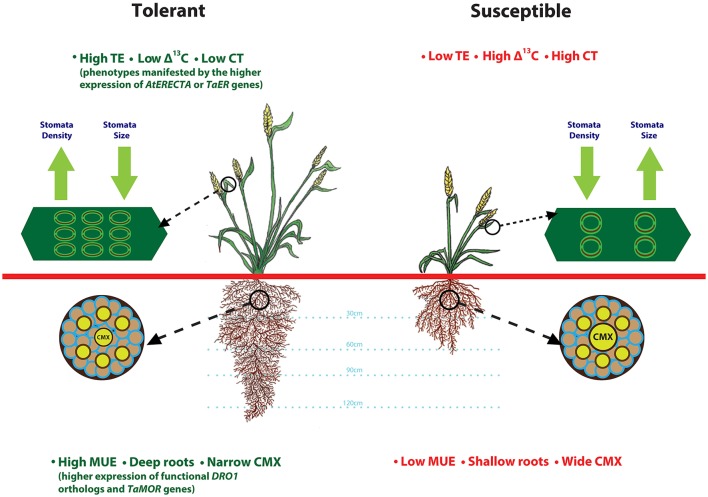
Abiotic stresses such as drought, heat, salinity and flooding threaten global food security. Crop genetic improvement with increased resilience to abiotic stresses is a critical component of crop breeding strategies. Wheat is an important cereal crop and a staple food source globally. Enhanced drought tolerance in wheat is critical for sustainable food production and global food security. Recent advances in drought tolerance research have uncovered many key genes and transcription regulators governing morpho-physiological traits. Genes controlling root architecture and stomatal development play an important role in soil moisture extraction and its retention, and therefore have been targets of molecular breeding strategies for improving drought tolerance. In this systematic review, we have summarized evidence of beneficial contributions of root and stomatal traits to plant adaptation to drought stress. Specifically, we discuss a few key genes such as DRO1 in rice and ERECTA in Arabidopsis and rice that were identified to be the enhancers of drought tolerance via regulation of root traits and transpiration efficiency. Additionally, we highlight several transcription factor families, such as ERF (ethylene response factors), DREB (dehydration responsive element binding), ZFP (zinc finger proteins), WRKY and MYB that were identified to be both positive and negative regulators of drought responses in wheat, rice, maize and/or Arabidopsis. The overall aim of this review was to provide an overview of candidate genes that have been tested as regulators of drought response in plants. The lack of a reference genome sequence for wheat and nontransgenic approaches for manipulation of gene functions in the past had impeded high-resolution interrogation of functional elements, including genes and QTLs, and their application in cultivar improvement. The recent developments in wheat genomics and reverse genetics, including the availability of a gold-standard reference genome sequence and advent genome editing technologies, are expected to aid in deciphering of the functional roles of genes and regulatory networks underlying adaptive phenological traits, and utilizing the outcomes of such studies in developing drought tolerance cultivars.
Overview
The claims and statistics of this paper haven’t been checked yet.
Run the check — free, no account needed. It reads the open-access text and checks the sources it cites.
Integrity signals
Registry
Cites
Statistics
Figures
Verification
Claims the paper makes
The claims and statistics of this paper haven’t been checked yet.
Run the check — free, no account needed. It reads the open-access text and checks the sources it cites.
Claims other papers make about this one
Each is checked against this paper’s own text: does it say what the citing paper says it does?
The source backs part of the claim, not all of it — or backs it for a different population, condition or comparison.
In the citing paper
“A notable example is the ERECTA gene family, which plays a critical role in drought tolerance by influencing root system architecture and transpiration efficiency in both Arabidopsis thaliana and economically important crops like Oryza sativa (Kulkarni et al., 2017; Wen J. et al., 2019).”
From Emerging applications of gene editing technologies for the development of climate-resilient crops (2025) · cites this paper as Kulkarni et al., 2017
Experimental — accuracy not yet measured
Self-check
Percentages, sums and reported differences re-computed from the paper’s own numbers.
The self-check needs the paper’s full text.
Citations
Cites
The role of stomata in sensing and driving environmental change
Hetherington, A. M., & Woodward, F. I. (2003) · Nature · doi:10.1038/nature01843 · Cited by 2,468
Shiferaw, B. A., Prasanna, B. M., Hellin, J., & Bänziger, M. (2011) · Food Security · doi:10.1007/s12571-011-0140-5 · Cited by 1,676
Uga, Y., Sugimoto, K., Ogawa, S., Rane, J., Ishitani, M., Hara, N., Kitomi, Y., Inukai, Y., Ono, K., Kanno, N., et al. (2013) · Nature Genetics · doi:10.1038/ng.2725 · Cited by 1,663
Self-citationA chromosome-based draft sequence of the hexaploid bread wheat ( Triticum aestivum ) genome
The International Wheat Genome Sequencing Consortium (IWGSC), Mayer, K. F. X., Rogers, J., Doležel, J., Pozniak, C., Eversole, K., Feuillet, C., Gill, B., Friebe, B., Lukaszewski, A. J., et al. (2014) · Science · doi:10.1126/science.1251788 · Cited by 1,583
Shiferaw, B. A., Smale, M., Braun, H., Duveiller, E., Reynolds, M. P., & Muricho, G. (2013) · Food Security · doi:10.1007/s12571-013-0263-y · Cited by 1,467
A Critical Evaluation of Traits for Improving Crop Yields in Water-Limited Environments
Ludlow, M. M., & Muchow, R. C. (1990) · Advances in agronomy · doi:10.1016/s0065-2113(08)60477-0 · Cited by 1,318
Breeding for high water-use efficiency
Condon, A. G. (2004) · Journal of Experimental Botany · doi:10.1093/jxb/erh277 · Cited by 1,218
Tuning gene expression to changing environments: from rapid responses to evolutionary adaptation
López-Maury, L., Marguerat, S., & Bähler, J. (2008) · Nature Reviews Genetics · doi:10.1038/nrg2398 · Cited by 1,061
Licausi, F., Ohme‐Takagi, M., & Pierdomenico Perata, A. (2013) · New Phytologist · doi:10.1111/nph.12291 · Cited by 1,022
NINJA connects the co-repressor TOPLESS to jasmonate signalling
Pauwels, L., Barbero, G. F., Geerinck, J., Tilleman, S., Grunewald, W., Pérez, A. C., Chico, J. M., Bossche, R. V., Sewell, J. A., Gil, E., et al. (2010) · Nature · doi:10.1038/nature08854 · Cited by 1,022
Cited by
Sorted by citations
Xie, Z., Nolan, T. M., Jiang, H., & Yin, Y. (2019) · Frontiers in Plant Science · doi:10.3389/fpls.2019.00228 · Cited by 763
Heat and Drought Stresses in Crops and Approaches for Their Mitigation
Lamaoui, M., Jemo, M., Datla, R. S. S., & Bekkaoui, F. (2018) · Frontiers in Chemistry · doi:10.3389/fchem.2018.00026 · Cited by 752
Plant Transcription Factors Involved in Drought and Associated Stresses
Hrmová, M., & Hussain, S. S. (2021) · International Journal of Molecular Sciences · doi:10.3390/ijms22115662 · Cited by 249
Kou, X., Han, W., & Kang, J. (2022) · Frontiers in Plant Science · doi:10.3389/fpls.2022.1085409 · Cited by 223
MdMYB88 and MdMYB124 Enhance Drought Tolerance by Modulating Root Vessels and Cell Walls in Apple
Geng, D., Chen, P., Shen, X., Zhang, Y., Li, X., Jiang, L., Xie, Y., Niu, C., Zhang, J., Huang, X., et al. (2018) · PLANT PHYSIOLOGY · doi:10.1104/pp.18.00502 · Cited by 208
Root system architecture in cereals: progress, challenges and perspective
Maqbool, S., Hassan, M. A., Xia, X., York, L. M., Rasheed, A., & He, Z. (2022) · The Plant Journal · doi:10.1111/tpj.15669 · Cited by 220
Is Silicon a Panacea for Alleviating Drought and Salt Stress in Crops?
Thorne, S. J., Hartley, S. E., & Maathuis, F. J. M. (2020) · Frontiers in Plant Science · doi:10.3389/fpls.2020.01221 · Cited by 198
Shaping the root system architecture in plants for adaptation to drought stress
Ranjan, A., Sinha, R., Singla-Pareek, S. L., Pareek, A., & Singh, A. K. (2022) · Physiologia Plantarum · doi:10.1111/ppl.13651 · Cited by 181
Genetic Improvement of Wheat for Drought Tolerance: Progress, Challenges and Opportunities
Bapela, T., Shimelis, H., Tsilo, T. J., & Mathew, I. (2022) · Plants · doi:10.3390/plants11101331 · Cited by 211
Genetic dissection of drought and heat‐responsive agronomic traits in wheat
Li, L., Mao, X., Wang, J., Chang, X., Reynolds, M. P., & Jing, R. (2019) · Plant Cell & Environment · doi:10.1111/pce.13577 · Cited by 173
Addressing Research Bottlenecks to Crop Productivity
Reynolds, M. P., Atkin, O. K., Bennett, M. J., Cooper, M., Dodd, I. C., Foulkes, J. M., Frohberg, C., Hammer, G., Henderson, I. R., Huang, B., et al. (2021) · Trends in Plant Science · doi:10.1016/j.tplants.2021.03.011 · Cited by 177
Understanding role of roots in plant response to drought: Way forward to climate‐resilient crops
Kalra, A., Goel, S., & Elias, A. A. (2023) · The Plant Genome · doi:10.1002/tpg2.20395 · Cited by 149
Camaille, M., Fabre, N., Clément, C., & Barka, E. A. (2021) · Microorganisms · doi:10.3390/microorganisms9040687 · Cited by 149
Alleviation of drought and salt stress in vegetables: crop responses and mitigation strategies
Khalid, M. F., Huda, S., Yong, M., Li, L., Li, L., Chen, Z., & Ahmed, T. A.-F. (2022) · Plant Growth Regulation · doi:10.1007/s10725-022-00905-x · Cited by 125
Stress responsive gene regulation in relation to hydrogen sulfide in plants under abiotic stress
Pandey, A. K., & Gautam, A. (2020) · Physiologia Plantarum · doi:10.1111/ppl.13064 · Cited by 118
Recognizing the hidden half in wheat: root system attributes associated with drought tolerance
Li, C., Li, L., Reynolds, M. P., Wang, J., Chang, X., Mao, X., & Jing, R. (2021) · Journal of Experimental Botany · doi:10.1093/jxb/erab124 · Cited by 114
Xiong, R., Liu, S., Considine, M. J., Siddique, K. H. M., Lam, H., & Chen, Y. (2020) · Physiologia Plantarum · doi:10.1111/ppl.13201 · Cited by 111
Phenotypic variability in bread wheat root systems at the early vegetative stage
Chen, Y., Palta, J. A., Prasad, P. V. V., & Siddique, K. H. M. (2020) · BMC Plant Biology · doi:10.1186/s12870-020-02390-8 · Cited by 101
Hone, H., Mann, R. C., Yang, G., Kaur, J. P., Tannenbaum, I., Li, T., SPANGENBERG, G. C., & Sawbridge, T. (2021) · Scientific Reports · doi:10.1038/s41598-021-91351-8 · Cited by 101
Barley with improved drought tolerance: Challenges and perspectives
Elakhdar, A., Solanki, S., Kubo, T., Abed, A., El-Akhdar, I., Khedr, R., Hamwieh, A., Capo-chichi, L. J. A., Abdelsattar, M., Franckowiak, J. D., et al. (2022) · Environmental and Experimental Botany · doi:10.1016/j.envexpbot.2022.104965 · Cited by 131
Engineering drought tolerance in plants through CRISPR/Cas genome editing
Joshi, R. K., Bharat, S. S., & Mishra, R. (2020) · 3 Biotech · doi:10.1007/s13205-020-02390-3 · Cited by 99
Lou, L., Li, X., Chen, J., Li, Y., Tang, Y., & Lv, J. (2018) · PLoS ONE · doi:10.1371/journal.pone.0194625 · Cited by 92
Zhao, Y., Ma, R., Xu, D., Bi, H., Xia, Z., & Peng, H. (2019) · Frontiers in Plant Science · doi:10.3389/fpls.2019.01286 · Cited by 73
Haddad, N. E., Choukri, H., Ghanem, M. E., Smouni, A., Mentag, R., Rajendran, K., Hejjaoui, K., Maalouf, F., & Kumar, S. (2021) · Plants · doi:10.3390/plants11010095 · Cited by 73
Rane, J., Singh, A. K., Tiwari, M., Prasad, P. V. V., & Jagadish, S. V. K. (2022) · Frontiers in Plant Science · doi:10.3389/fpls.2021.778270 · Cited by 72
Grzesiak, M. T., Hordyńska, N., Maksymowicz, A., Grzesiak, S., & Szechyńska‐Hebda, M. (2019) · Plants · doi:10.3390/plants8120584 · Cited by 69
Liu, H., Mullan, D. J., Zhang, C., Zhao, S., Li, X., Zhang, A., Lu, Z., Wang, Y., & Yan, G. (2020) · Planta · doi:10.1007/s00425-020-03466-3 · Cited by 68
Vuković, R., Čamagajevac, I. Š., Vuković, A., Šunić, K., Begović, L., Mlinarić, S., Sekulić, R., Sabo, N., & Španić, V. (2022) · Antioxidants · doi:10.3390/antiox11040693 · Cited by 73
Lehnert, H., Serfling, A., Friedt, W., & Ordon, F. (2018) · Frontiers in Plant Science · doi:10.3389/fpls.2018.01728 · Cited by 64
Muhammad, F., Raza, M. A. S., Iqbal, R., Zulfiqar, F., Aslam, M. U., Yong, J. W. H., Altaf, M. A., Zulfiqar, B., Amin, J., & Ibrahim, M. A. (2022) · Biology · doi:10.3390/biology11111564 · Cited by 65
Morgil, H., Tardu, M., Cevahir, G., & Kavaklı, İ. H. (2019) · Functional & Integrative Genomics · doi:10.1007/s10142-019-00675-2 · Cited by 63
George, T., Bulgarelli, D., Carminati, A., Chen, Y., Jones, D. L., Kuzyakov, Y. V., Schnepf, A., Wissuwa, M., & Roose, T. (2024) · Plant and Soil · doi:10.1007/s11104-024-06626-6 · Cited by 70
Rice SnRK protein kinase OsSAPK8 acts as a positive regulator in abiotic stress responses
Zhong, R., Wang, Y., Gai, R., Xi, D., Mao, C., & Ming, F. (2019) · Plant Science · doi:10.1016/j.plantsci.2019.110373 · Cited by 58
Zaki, H. E. M., & Radwan, K. S. A. (2022) · Chemical and Biological Technologies in Agriculture · doi:10.1186/s40538-021-00266-z · Cited by 58
Oyiga, B. C., Palczak, J., Wojciechowski, T., Lynch, J. P., Naz, A. A., Léon, J., & Ballvora, A. (2019) · Plant Cell & Environment · doi:10.1111/pce.13683 · Cited by 61
Pedrero-Méndez, A., Insuasti, H. C., Neagu, T., Illescas, M., Rubio, M. B., Monte, E., & Hermosa, R. (2021) · Journal of Fungi · doi:10.3390/jof7121087 · Cited by 57
Guo, H., Ayalew, H., Seethepalli, A., Dhakal, K., Griffiths, M., Ma, X., & York, L. M. (2021) · New Phytologist · doi:10.1111/nph.17329 · Cited by 53
Wyrzykowska, A., Bielewicz, D., Plewka, P., Sołtys‐Kalina, D., Wasilewicz‐Flis, I., Marczewski, W., Jarmołowski, A., & Szweykowska-Kulińska, Z. (2022) · Physiologia Plantarum · doi:10.1111/ppl.13775 · Cited by 51
Chu, C., Wang, S., Paetzold, L., Wang, Z., Hui, K., Rudd, J. C., Xue, Q., Ibrahim, A. M. H., Metz, R. P., Johnson, C. D., et al. (2021) · Scientific Reports · doi:10.1038/s41598-021-83372-0 · Cited by 48
Illescas, M., Morán-Diez, M. E., de Alba, Á. E. M., Hermosa, R., & Monte, E. (2022) · International Journal of Molecular Sciences · doi:10.3390/ijms23126782 · Cited by 48
Transgenic solutions to increase yield and stability in wheat: shining hope or flash in the pan?
Araus, J. L., Serret, M. D., & Lopes, M. S. (2019) · Journal of Experimental Botany · doi:10.1093/jxb/erz077 · Cited by 46
Emerging applications of gene editing technologies for the development of climate-resilient crops
Chavhan, R. L., Jaybhaye, S. G., Hinge, V. R., Deshmukh, A. S., Shaikh, U. S., Jadhav, P. K., Kadam, U. S., & Hong, J. C. (2025) · Frontiers in Genome Editing · doi:10.3389/fgeed.2025.1524767 · Cited by 55
Transcription factors – Insights into abiotic and biotic stress resilience and crop improvement
Bhoite, R. N., Onyemaobi, O., Halder, T., Shankar, M., & Sharma, D. L. (2025) · Current Plant Biology · doi:10.1016/j.cpb.2025.100434 · Cited by 43
Akbari, S. I., Prismantoro, D., Permadi, N., Rossiana, N., Miranti, M., Mispan, M. S., Mohamed, Z., & Doni, F. (2024) · Microbiological Research · doi:10.1016/j.micres.2024.127665 · Cited by 42
Elucidating the Drought Responsiveness in Wheat Genotypes
Pandey, A., Khobra, R., Mamrutha, H. M., Wadhwa, Z., Krishnappa, G., Singh, G. P., & Singh, G. P. (2022) · Sustainability · doi:10.3390/su14073957 · Cited by 41
Ye, G., Ma, Y., Feng, Z., & Zhang, X. (2018) · PLoS ONE · doi:10.1371/journal.pone.0202213 · Cited by 41
Gui, Y.-W., Sheteiwy, M. S. A., Zhu, S., Zhu, L., Batool, A., Jia, T., & Xiong, Y. (2020) · Plant Signaling & Behavior · doi:10.1080/15592324.2020.1839710 · Cited by 40
Rufo, R., Salvi, S., Royo, C., & Soriano, J. M. (2020) · Agronomy · doi:10.3390/agronomy10050613 · Cited by 40
Mathew, I., & Shimelis, H. (2022) · Plant Breeding · doi:10.1111/pbr.13049 · Cited by 43
Li, Z., Yang, J., Cai, X., Zeng, X., Zou, J., & Xing, W. (2024) · Plant Stress · doi:10.1016/j.stress.2024.100674 · Cited by 42
Guo, X., Lv, L., Zhao, A., Zhao, W., Liu, Y., Li, Z., Li, H., & Chen, X. (2025) · BMC Plant Biology · doi:10.1186/s12870-025-06603-w · Cited by 39
Plant Tolerance to Drought Stress with Emphasis on Wheat
Adel, S., & Carels, N. (2023) · Plants · doi:10.3390/plants12112170 · Cited by 40
Buffagni, V., Vurro, F., Janni, M., Gullì, M., Keller, A. A., & Marmiroli, N. (2020) · Frontiers in Plant Science · doi:10.3389/fpls.2020.00891 · Cited by 37
Todorova, D., Sergiev, I., Katerova, Z., Shopova, E., Dimitrova, L., & Brankova, L. (2021) · Plants · doi:10.3390/plants10040733 · Cited by 36
Li, J., Liu, X., Chang, S., Chu, W., Lin, J., Zhou, H., Hu, Z., Zhang, M., Xin, M., Yao, Y., et al. (2024) · Science Advances · doi:10.1126/sciadv.adk4027 · Cited by 35
Approaches and determinants to sustainably improve crop production
Gojon, A., Nussaume, L., Luu, D., Murchie, E. H., Baekelandt, A., Saltenis, V. L. R., Cohan, J., Desnos, T., Inzé, D., Ferguson, J. N., et al. (2022) · Food and Energy Security · doi:10.1002/fes3.369 · Cited by 35
Rasool, F., Khan, M. R., Schneider, M. C., Uzair, M., Aqeel, M., Ajmal, W., Léon, J., & Naz, A. A. (2022) · Plant Physiology and Biochemistry · doi:10.1016/j.plaphy.2022.02.025 · Cited by 34
Broccanello, C., Bellin, D., DalCorso, G., Furini, A., & Taranto, F. (2023) · Frontiers in Plant Science · doi:10.3389/fpls.2023.1101271 · Cited by 37
Li, Y., Sun, A., Wu, Q. J., Zou, X., Chen, F., Cai, R., Xie, H., Zhang, M., & Guo, X. (2021) · BMC Plant Biology · doi:10.1186/s12870-021-03016-3 · Cited by 34
Chaichi, M., Sanjarian, F., Razavi, K., & González-Hernández, J. L. (2019) · PLoS ONE · doi:10.1371/journal.pone.0212671 · Cited by 34
Silicon improves root system and canopy physiology in wheat under drought stress
Ashfaq, W., Brodie, G. I., Fuentes, S., Pang, A., & Gupta, S. (2023) · Plant and Soil · doi:10.1007/s11104-023-06202-4 · Cited by 32
Reddy, S. S., Saini, D. K., Singh, G., Sharma, S., Mishra, V. K., & Joshi, A. K. (2023) · Frontiers in Plant Science · doi:10.3389/fpls.2023.1166439 · Cited by 29
OsSCL30 overexpression reduces the tolerance of rice seedlings to low temperature, drought and salt
Zhang, J., Sun, Y., Zhou, Z., Zhang, Y., Yang, Y., Zan, X., Li, X., Wan, J., Gao, X., Chen, R., et al. (2022) · Scientific Reports · doi:10.1038/s41598-022-12438-4 · Cited by 28
Rakkammal, K., Maharajan, T., Shriram, R. N., Ram, P. S. J., Ceasar, S. A., & Ramesh, M. (2023) · South African Journal of Botany · doi:10.1016/j.sajb.2023.01.053 · Cited by 27
Schierenbeck, M., Alqudah, A. M., Thabet, S. G., Lohwasser, U., Simón, M. R., & Börner, A. (2023) · Frontiers in Plant Science · doi:10.3389/fpls.2023.1061845 · Cited by 31
Lv, S., Feng, K., Peng, S., Wang, J., Zhang, Y., Bian, J., & Nie, X. (2018) · Agronomy · doi:10.3390/agronomy8110247 · Cited by 26
Mia, M. S., Liu, H., Wang, X., Zhang, C., & Yan, G. (2020) · Scientific Reports · doi:10.1038/s41598-020-61680-1 · Cited by 26
Nawaz, M., Liao, L., Azeem, F., Shabbir, S., Zohaib, A., Ashraf, U., Yang, H., & Wang, Z. (2021) · BMC Plant Biology · doi:10.1186/s12870-021-02844-7 · Cited by 26
Duvnjak, J., Lončarić, A., Brkljačić, L., Šamec, D., Šarčević, H., Salopek‐Sondi, B., & Španić, V. (2023) · Plants · doi:10.3390/plants12030418 · Cited by 29
Drought in acid soil increases aluminum toxicity especially of the Al-sensitive wheat
Siecińska, J., Wiącek, D., Przysucha, B., & Nosalewicz, A. (2019) · Environmental and Experimental Botany · doi:10.1016/j.envexpbot.2019.06.007 · Cited by 25
Malambane, G., Madumane, K., Sewelo, L. T., & Batlang, U. (2023) · Frontiers in Plant Science · doi:10.3389/fpls.2022.1074395 · Cited by 25
Enhancing crop resilience: Understanding the role of drought priming in wheat stress response
Wang, X., Ge, J., He, M., Li, Q., Cai, J., Zhou, Q., Zhong, Y., Wollenweber, B., & Jiang, D. (2023) · Field Crops Research · doi:10.1016/j.fcr.2023.109083 · Cited by 26
El-Hendawy, S., Mohammed, N. A., & Al-Suhaibani, N. (2024) · Plants · doi:10.3390/plants13111490 · Cited by 25
Thanmalagan, R. R., Jayaprakash, A., Roy, A. D., Annamalai, A., & Lakshmi, P. T. V. (2021) · Plant Gene · doi:10.1016/j.plgene.2021.100345 · Cited by 24
Li, L., Hassan, M. A., Song, J., Xie, Y., Rasheed, A., Yang, S., Li, H., Liu, P., Xia, X., He, Z., et al. (2023) · Crop Science · doi:10.1002/csc2.21086 · Cited by 24
Exploring the Genotype-Dependent Toolbox of Wheat under Drought Stress
Vassileva, V., Georgieva, M. S., Zehirov, G., & Dimitrova, A. (2023) · Agriculture · doi:10.3390/agriculture13091823 · Cited by 23
Su, Z., Powell, J. J., Gao, S., Zhou, M., & Liu, C. (2021) · BMC Plant Biology · doi:10.1186/s12870-020-02818-1 · Cited by 22
Nouraei, S., Mia, M. S., Liu, H., Turner, N. C., & Yan, G. (2022) · Frontiers in Plant Science · doi:10.3389/fpls.2022.857829 · Cited by 22
Cellular mechanisms of drought tolerance in wheat
Ali, M., Gul, A., Hasan, H., Gul, S., Fareed, A., Nadeem, M., Siddique, R., Jan, S. U., & Jamil, M. A. (2020) · Elsevier eBooks · doi:10.1016/b978-0-12-819527-7.00009-1 · Cited by 22
Identification and characterization of multiple abiotic stress tolerance genes in wheat
Kumar, R., Mamrutha, H. M., Kaur, A., Bhusal, N., Pandey, A., Kumar, S., V, Mishra, C. N., Singh, G. P., & Singh, G. P. (2020) · Molecular Biology Reports · doi:10.1007/s11033-020-05906-5 · Cited by 22
Schumacher, C., Thümecke, S., Schilling, F., Köhl, K. I., Kopka, J., Sprenger, H., Hincha, D. K., Walther, D., Seddig, S., Peters, R., et al. (2021) · International Journal of Molecular Sciences · doi:10.3390/ijms22116123 · Cited by 21
Amalova, A., Абугалиева, С., Babkenov, A., Babkenova, S., & Turuspekov, Y. (2021) · PeerJ · doi:10.7717/peerj.11857 · Cited by 21
Overexpression of TaSIM provides increased drought stress tolerance in transgenic Arabidopsis
Yu, Y., Bi, C., Qing, W., & Ni, Z. (2019) · Biochemical and Biophysical Research Communications · doi:10.1016/j.bbrc.2019.03.007 · Cited by 21
Some Mechanisms Modulating the Root Growth of Various Wheat Species under Osmotic-Stress Conditions
Terletskaya, N. V., Lee, T. E., Altayeva, N. A., Kudrina, N. O., Blavachinskaya, I. V., & Erezhetova, U. (2020) · Plants · doi:10.3390/plants9111545 · Cited by 20
Antoniuk, V., Manevski, K., Sørensen, K. K., Larsen, R., Sandholt, I., Zhang, X., & Andersen, M. N. (2021) · Remote Sensing · doi:10.3390/rs13152998 · Cited by 20
Abbas, A., Yu, H., Li, X., Cui, H., Chen, J., & Huang, P. C. (2021) · International Journal of Molecular Sciences · doi:10.3390/ijms222011017 · Cited by 21
Characteristics and Regulating Roles of Wheat TaHsfA2-13 in Abiotic Stresses
Meng, X., Zhao, B., Li, M., Liu, R., Ren, Q., Li, G., & Guo, X. (2022) · Frontiers in Plant Science · doi:10.3389/fpls.2022.922561 · Cited by 20
Ahmed, S. F., Ahmed, J. U., Hasan, M., & Mohi-Ud-Din, M. (2023) · Heliyon · doi:10.1016/j.heliyon.2023.e21629 · Cited by 21
Kiriziy, D. A., & Стасик, О. О. (2022) · Fiziologia rastenij i genetika · doi:10.15407/frg2022.02.095 · Cited by 27
Drought Stress Tolerance and Photosynthetic Activity of Alloplasmic Lines T. dicoccum x T. aestivum
Terletskaya, N. V., Shcherban, A. B., Nesterov, M. A., Perfil’ev, R. N., Salina, E. A., Altayeva, N. A., & Blavachinskaya, I. V. (2020) · International Journal of Molecular Sciences · doi:10.3390/ijms21093356 · Cited by 20
Breaking Yield Ceiling in Wheat: Progress and Future Prospects
Pal, N., Saini, D. K., & Kumar, S. (2022) · IntechOpen eBooks · doi:10.5772/intechopen.102919 · Cited by 19
Al-Ashkar, I. M., Sallam, M., Ibrahim, A. A., Ghazy, A. I., Al-Suhaibani, N., Romdhane, W. B., & Al-Doss, A. (2023) · Plants · doi:10.3390/plants12203540 · Cited by 19
Aljeddani, G. S., Hamouda, R. A., Abdelsattar, A. M., & Heikal, Y. M. (2024) · International Journal of Molecular Sciences · doi:10.3390/ijms252010954 · Cited by 18
Alok, A., Kaur, J., & Tiwari, S. (2020) · Biotechnology Letters · doi:10.1007/s10529-020-02967-1 · Cited by 18
Pertinent Water-Saving Management Strategies for Sustainable Turfgrass in the Desert U.S. Southwest
Serba, D. D., Hejl, R. W., Burayu, W., Umeda, K., Bushman, B. S., & Williams, C. F. (2022) · Sustainability · doi:10.3390/su141912722 · Cited by 18
Sallam, A., Awadalla, R. A., Elshamy, M. M., Börner, A., & Heikal, Y. M. (2024) · Computational and Structural Biotechnology Journal · doi:10.1016/j.csbj.2024.01.020 · Cited by 17
Breeding for water-use efficiency in wheat: progress, challenges and prospects
Hafeez, A., Ali, S., Javed, M. A., Iqbal, R., Khan, M. N., Çığ, F., Sabagh, A. E., Abujamel, T. S., Harakeh, S., Erċışlı, S., et al. (2024) · Molecular Biology Reports · doi:10.1007/s11033-024-09345-4 · Cited by 20
Wong, G. R., Mazumdar, P., Lau, S.-E., & Harikrishna, J. A. (2018) · Journal of Plant Physiology · doi:10.1016/j.jplph.2018.09.018 · Cited by 17
Rustamova, S. M., Shrestha, A., Naz, A. A., & Huseynova, I. M. (2020) · Plant Gene · doi:10.1016/j.plgene.2020.100266 · Cited by 16
(2024) · Trends in Biotechnology and Plant Sciences · doi:10.62460/tbps/2023.010 · Cited by 22
Metadata
- Authors
- Kulkarni, M., Soolanayakanahally, R., Ogawa, S., Uga, Y., Selvaraj, M. G., & Kagale, S.
- Affiliations
- National Research Council Canada (CA)
- Agriculture and Agri-Food Canada (CA)
- The University of Tokyo (JP)
- National Agriculture and Food Research Organization (JP)
- International Center for Tropical Agriculture (CO)
- Corresponding author
- Kagale, Sateesh
- ORCID
- Venue
- Frontiers in Chemistry
- Publisher
- Frontiers Media SA
- Published
- 2017-12-05
- Volume
- 5
- Pages
- 106-106
- ISSN
- 2296-2646 (ISSN-L)
- PMC
- PMC5723305
- OpenAlex
- W2774114587
- Cited by
- 230
- References
- 133
- Citations by year
- 2026: 16 · 2025: 27 · 2024: 33 · 2023: 31 · 2022: 35 · 2021: 36 · 2020: 28 · 2019: 15 · 2018: 9
- FWCI
- 1.48
- Type
- journal article
- Language
- en
- Open access
- gold
- doi.org
- Licence
- cc-by
- Locations
- Frontiers in Chemistry (publishedVersion, cc-by)
- Europe PMC (PubMed Central) (publishedVersion, cc-by)
- PubMed Central (publishedVersion, cc-by)
- PubMed (publishedVersion)
- CGSPace A Repository of Agricultural Research Outputs (Consultative Group for International Agricultural Research) (submittedVersion, other-oa)
- DOAJ (DOAJ: Directory of Open Access Journals) (submittedVersion)
- Funders
- Agriculture and Agri-Food Canada
- National Research Council Canada
- Topics
- Life Sciences › Agricultural and Biological Sciences › Plant Science › Plant Stress Responses and Tolerance
- Life Sciences › Agricultural and Biological Sciences › Plant Science › Plant Molecular Biology Research
- Life Sciences › Agricultural and Biological Sciences › Plant Science › Genetics and Plant Breeding
- Keywords
- wheat, drought tolerance, root architecture, transpiration efficiency, stomatal development, DRO1, ERECTA, transcription factors, ERF, DREB, WRKY, MYB, zinc finger proteins, abiotic stress, candidate genes, genome editing, wheat genomics, quantitative trait loci, food security
About these checks
Registry, retraction, Cites and statistics results are computed, not judged, with one exception: a printed reference that no index lists is read once by a model before it counts as a citation error. Claims are extracted by a model and kept only when their quote appears verbatim in the text; each cited source is then checked, with a model’s help, for whether it says what the claim relies on. Those verdicts can be wrong — read the claim’s quote and the cited source before relying on one.
Statistics and arithmetic are recomputed, not judged.
Confidence bands are shown only for fields calibrated on our annotated test set. None is calibrated yet, so no band is shown.
What counts as a claim ›How we measure confidence ›How we check this ›
Are you an author, or do you see a problem with this page? Request a review
