

The DOI matches its Crossref record; 3 of the 3 references it cites were found in a registry or an index.
Schistosoma japonicum-derived peptide SJMHE1 ameliorates allergic symptoms and responses in mice with allergic rhinitis
Abstract
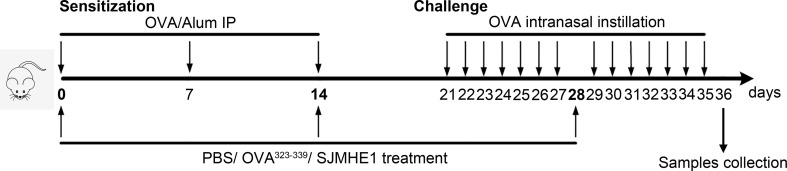
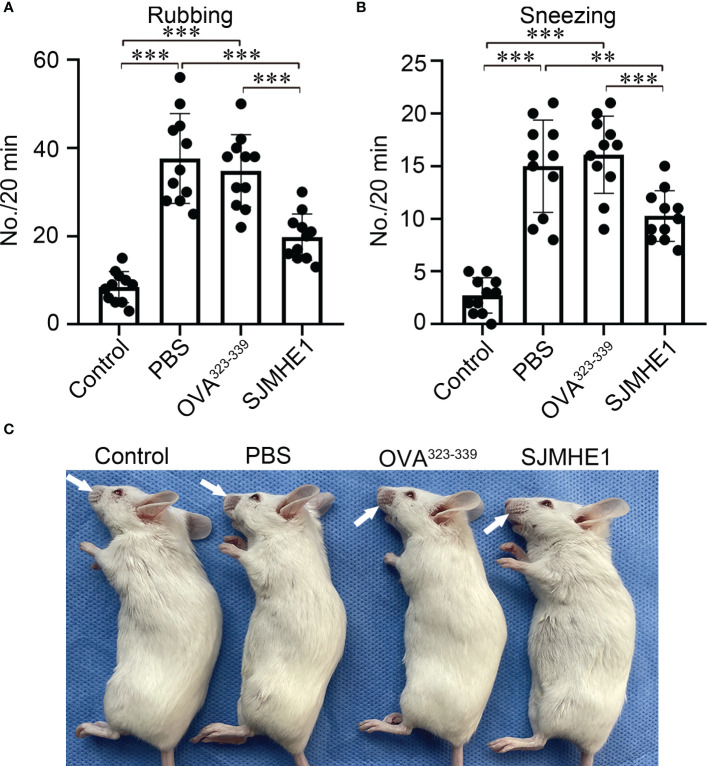
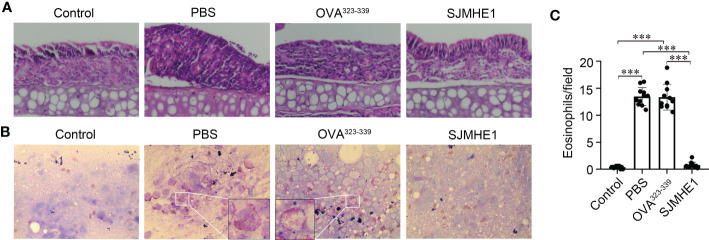
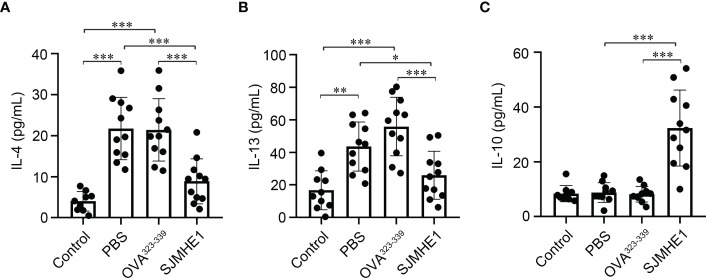
Helminth derived excretory/secretory molecules have shown efficacy in the treatment of allergic asthma in mice, but their roles in allergic rhinitis (AR) are little known. In this study, we aimed to determine the intervention effect of SJMHE1, a Schistosoma japonicum derived small molecular peptide, on ovalbumin (OVA)-induced AR mice and investigate its possible mechanism. AR was induced in BALB/c mice, following which the mice were treated with phosphate-buffered saline (PBS), OVA 323-339 and SJMHE1 respectively. SJMHE1 treatment improved clinical symptoms (rubbing and sneezing), suppressed infiltrates of inflammatory cells and eosinophils in nasal mucosa, modulated the production of type-2 (IL-4 and IL-13) and anti-inflammatory (IL-10) cytokines in the nasal lavage fluids (NLF), spleen, and serum. To investigate the underlying mechanism, fluorescein isothiocyanate (FITC)-labeled SJMHE1 was subcutaneously injected into AR mice, and we found that the FITC-SJMHE1 could accumulate in spleen, but not in nasal mucosa. FITC-SJMHE1 mainly bound to CD19 positive cells (B cells), and the SJMHE1 treatment significantly increased the proportion of regulatory B cells (Bregs) and B10 cells, along with the enhancement of PR domain containing protein 1 (Prdm1) protein levels. SJMHE1 may alleviate AR by upregulating Bregs, and has great potential as a new avenue for the AR treatment.
Overview
The claims and statistics of this paper haven’t been checked yet.
Run the check — free, no account needed. It reads the open-access text and checks the sources it cites.
Integrity signals
Registry
Cites
Statistics
Figures
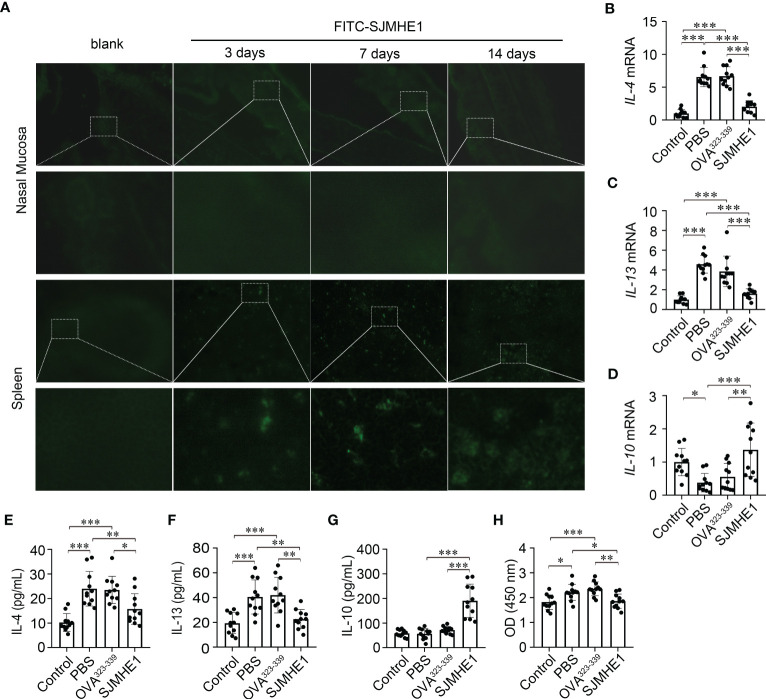
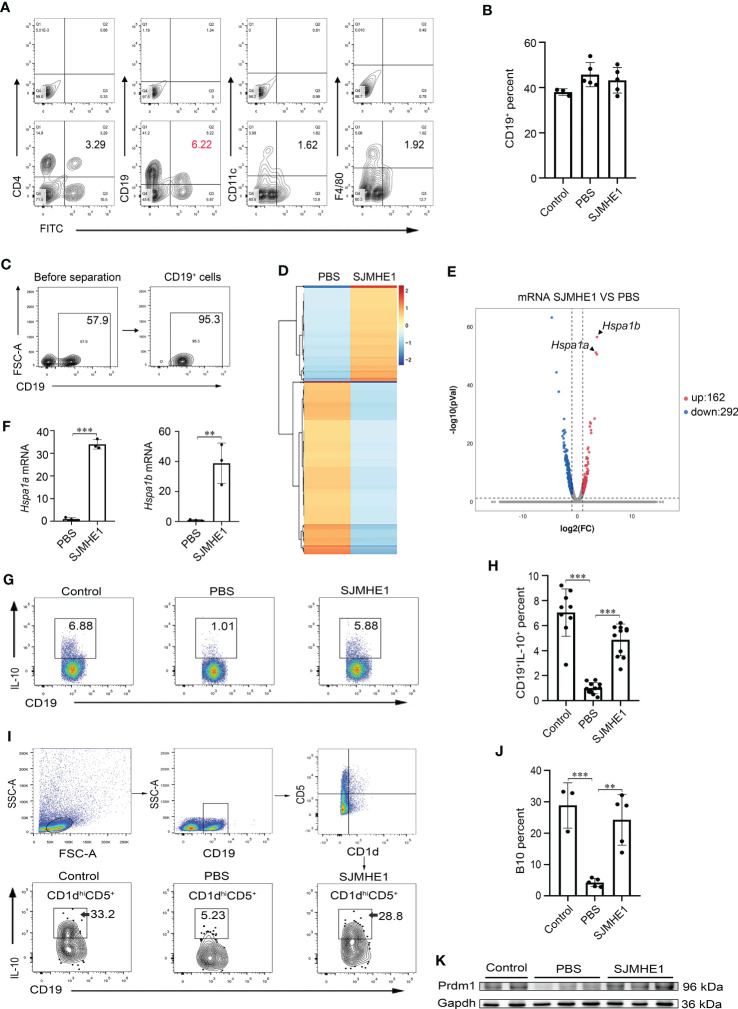
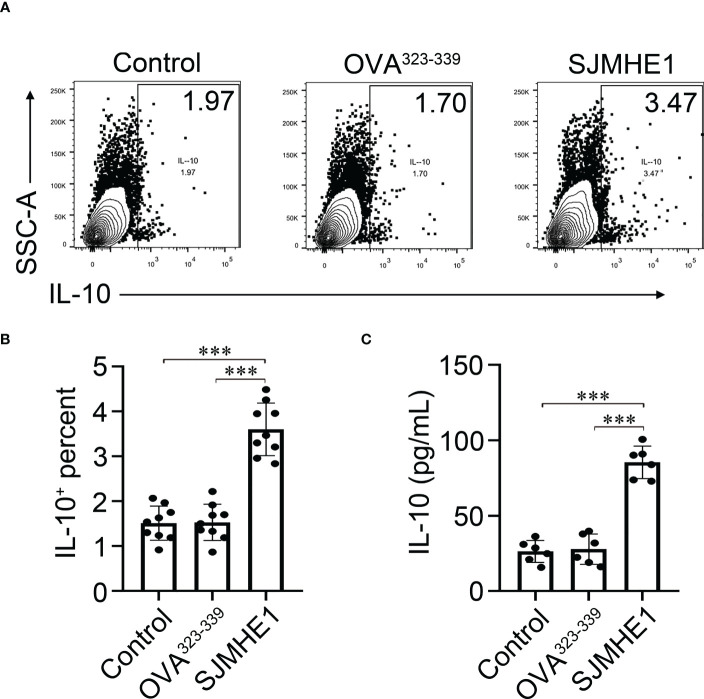
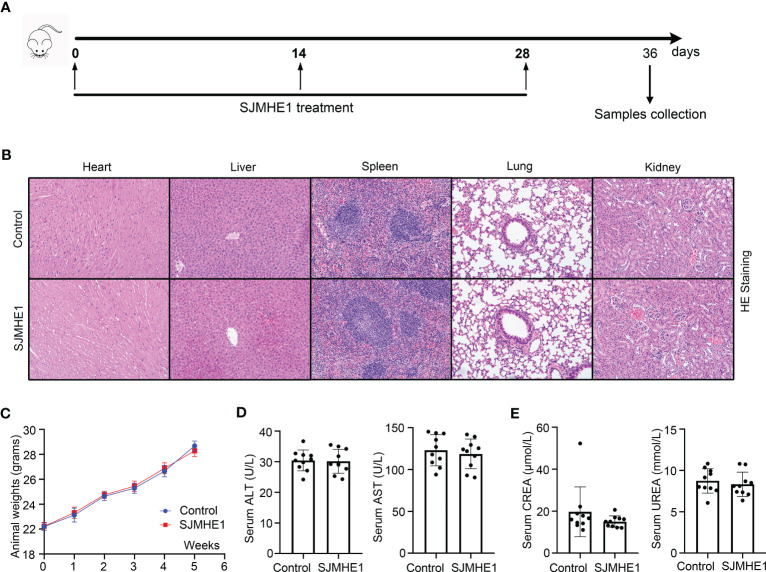
Verification
Claims the paper makes
The claims and statistics of this paper haven’t been checked yet.
Run the check — free, no account needed. It reads the open-access text and checks the sources it cites.
Claims other papers make about this one
Each is checked against this paper’s own text: does it say what the citing paper says it does?
In the citing paper
“Animal studies have shown that this peptide inhibits airway inflammation, reduces immune cell infiltration into the lungs, and shifts the Th2 lymphocyte population toward Th1 and regulatory T cells”
From Parasites and allergies: a complex bidirectional relationship from evolutionary origins to modern therapeutics (2026) · cites this paper as Gao et al. 2023
Self-check
Percentages, sums and reported differences re-computed from the paper’s own numbers.
The self-check needs the paper’s full text.
Citations
Cites
HpARI protein secreted by a helminth parasite suppresses interleukin-33
Osbourn, M., Soares, D. C., Vacca, F., Cohen, E. S., Scott, I. C., Gregory, W. F., Smyth, D. J., Toivakka, M., Kemter, A. M., le Bihan, T., et al. (2017) · Immunity · doi:10.1016/j.immuni.2017.09.015 · Cited by 178
Hookworm recombinant protein promotes regulatory T cell responses that suppress experimental asthma
Navarro, S., Pickering, D. A., Ferreira, I. B., Jones, L., Ryan, S., Troy, S., Leech, A., Hotez, P. J., Zhan, B., Laha, T., et al. (2016) · Science Translational Medicine · doi:10.1126/scitranslmed.aaf8807 · Cited by 139
Global issues in allergy and immunology: Parasitic infections and allergy
Cruz, A. A., Cooper, P. J., Figueiredo, C. A., Alcantara-Neves, N. M., Rodrigues, L. C., & Barreto, M. L. (2017) · Journal of Allergy and Clinical Immunology · doi:10.1016/j.jaci.2017.09.005 · Cited by 82
Research works printed but not linked: 40
- Amu, 2010, Regulatory b cells prevent and reverse allergic airway inflammation via FoxP3-positive T regulatory cells in a murine model, J. Allergy Clin. Immunol., 125, 1114, 10.1016/j.jaci.2010.01.018 · DOI
- Bohnacker, 2020, What can parasites tell us about the pathogenesis and treatment of asthma and allergic diseases, Front. Immunol., 11, 10.3389/fimmu.2020.02106 · DOI · Paper page
- Bousquet, 2020, Allergic rhinitis, Nat. Rev. Dis. Primers, 6, 95, 10.1038/s41572-020-00227-0 · DOI
- Braza, 2014, Regulatory functions of b cells in allergic diseases, Allergy, 69, 1454, 10.1111/all.12490 · DOI
- Brozek, 2017, Allergic rhinitis and its impact on asthma (ARIA) guidelines-2016 revision, J. Allergy Clin. Immunol., 140, 950, 10.1016/j.jaci.2017.03.050 · DOI
- Coltherd, 2016, The parasitic worm-derived immunomodulator, ES-62 and its drug-like small molecule analogues exhibit therapeutic potential in a model of chronic asthma, Sci. Rep., 6, 10.1038/srep19224 · DOI
- Dong, 2014, Decreased expression of microRNA-21 correlates with the imbalance of Th17 and treg cells in patients with rheumatoid arthritis, J. Cell Mol. Med., 18, 2213, 10.1111/jcmm.12353 · DOI
- Dong, 2021, Hypoxic hUCMSC-derived extracellular vesicles attenuate allergic airway inflammation and airway remodeling in chronic asthma mice, Stem Cell Res. Ther., 12, 4, 10.1186/s13287-020-02072-0 · DOI
- Eifan, 2016, Pathogenesis of rhinitis, Clin. Exp. Allergy, 46, 1139, 10.1111/cea.12780 · DOI · Paper page
- Fan, 2022, Roles of regulatory b cells in the pathogenesis of allergic rhinitis, Allergol Immunopathol. (Madr), 50, 7, 10.15586/aei.v50i5.615 · DOI
- Fang, 2021, Inhibition of TRPA1 reduces airway inflammation and hyperresponsiveness in mice with allergic rhinitis, FASEB J., 35, 10.1096/fj.201902627R · DOI
- Greiner, 2011, Allergic rhinitis, Lancet, 378, 2112, 10.1016/S0140-6736(11)60130-X · DOI
- Harnett, 2010, Helminth-derived immunomodulators: can understanding the worm produce the pill, Nat. Rev. Immunol., 10, 278, 10.1038/nri2730 · DOI
- Kim, 2016, Regulatory b cells and T follicular helper cells are reduced in allergic rhinitis, J. Allergy Clin. Immunol., 138, 1192, 10.1016/j.jaci.2016.03.017 · DOI
- Kosaka, 2011, IL-10 controls Th2-type cytokine production and eosinophil infiltration in a mouse model of allergic airway inflammation, Immunobiology, 216, 811, 10.1016/j.imbio.2010.12.003 · DOI
- Li, 2021, SJMHE1 peptide from schistosoma japonicum inhibits asthma in mice by regulating Th17/Treg cell balance via miR-155, J. Inflammation Res., 14, 5305, 10.2147/JIR.S334636 · DOI
- Li, 2022, Helminth-induced CD9(+) b-cell subset alleviates obesity-associated inflammation via IL-10 production, Int. J. Parasitol., 52, 111, 10.1016/j.ijpara.2021.08.009 · DOI
- Lothstein, 2021, Mining helminths for novel therapeutics, Trends Mol. Med., 27, 345, 10.1016/j.molmed.2020.12.010 · DOI
- Meng, 2019, Recent developments and highlights in allergic rhinitis, Allergy, 74, 2320, 10.1111/all.14067 · DOI
- Okada, 2010, The 'hygiene hypothesis' for autoimmune and allergic diseases: an update, Clin. Exp. Immunol., 160, 1, 10.1111/j.1365-2249.2010.04139.x · DOI
- Pipkorn, 1988, Methods for obtaining specimens from the nasal mucosa for morphological and biochemical analysis, Eur. Respir. J., 1, 856, 10.1183/09031936.93.01090856 · DOI
- Ren, 2016, Novel T-cell epitopes on schistosoma japonicum SjP40 protein and their preventive effect on allergic asthma in mice, Eur. J. Immunol., 46, 1203, 10.1002/eji.201545775 · DOI
- Rosser, 2015, Regulatory b cells: origin, phenotype, and function, Immunity, 42, 607, 10.1016/j.immuni.2015.04.005 · DOI · Paper page
- Rzepecka, 2014, Small molecule analogues of the immunomodulatory parasitic helminth product ES-62 have anti-allergy properties, Int. J. Parasitol., 44, 669, 10.1016/j.ijpara.2014.05.001 · DOI · Paper page
- Schroder, 2003, Heat shock protein 70 genotypes HSPA1B and HSPA1L influence cytokine concentrations and interfere with outcome after major injury, Crit. Care Med., 31, 73, 10.1097/00003246-200301000-00011 · DOI
- Shan, 2021, Schistosoma japonicum peptide SJMHE1 inhibits acute and chronic colitis induced by dextran sulfate sodium in mice, Parasit Vectors, 14, 455, 10.1186/s13071-021-04977-y · DOI
- Stanic, 2015, IL-10-overexpressing b cells regulate innate and adaptive immune responses, J. Allergy Clin. Immunol., 135, 771, 10.1016/j.jaci.2014.07.041 · DOI
- Suzuki, 2020, Intranasal administration of regulatory dendritic cells is useful for the induction of nasal mucosal tolerance in a mice model of allergic rhinitis, World Allergy Organ J., 13, 10.1016/j.waojou.2020.100447 · DOI
- van der Vlugt, 2012, Schistosomes induce regulatory features in human and mouse CD1d(hi) b cells: inhibition of allergic inflammation by IL-10 and regulatory T cells, PLoS One, 7, 10.1371/journal.pone.0030883 · DOI
- van der Vlugt, 2014, Interleukin 10 (IL-10)-producing CD1dhi regulatory b cells from schistosoma haematobium-infected individuals induce IL-10-positive T cells and suppress effector T-cell cytokines, J. Infect. Dis., 210, 1207, 10.1093/infdis/jiu257 · DOI
- Wang, 2021, HSP70, a novel regulatory molecule in b cell-mediated suppression of autoimmune diseases, J. Mol. Biol., 433, 166634, 10.1016/j.jmb.2020.08.019 · DOI
- Wang, 2019, Changes among TGF-beta1(+) breg cells and helper T cell subsets in a murine model of allergic rhinitis with prolonged OVA challenge, Int. Immunopharmacol, 69, 347, 10.1016/j.intimp.2019.01.009 · DOI
- Wang, 2017, Inhibition of cytokine response to TLR stimulation and alleviation of collagen-induced arthritis in mice by schistosoma japonicum peptide SJMHE1, J. Cell Mol. Med., 21, 475, 10.1111/jcmm.12991 · DOI
- Wang, 2020, The blockade of PD-1/PD-L1 pathway promotes the apoptosis of CD19(+) CD25(+) bregs and suppresses the secretion of IL-10 in patients with allergic rhinitis, Scand. J. Immunol., 91, 10.1111/sji.12836 · DOI
- Wang, 2019, Blimp-1 contributes to the development and function of regulatory b cells, Front. Immunol., 10, 10.3389/fimmu.2019.01909 · DOI
- Wang, 2016, Schistosoma japonicum HSP60-derived peptide SJMHE1 suppresses delayed-type hypersensitivity in a murine model, Parasit Vectors, 9, 147, 10.1186/s13071-016-1434-4 · DOI
- Wang, 2009, CD4+CD25+ treg induction by an HSP60-derived peptide SJMHE1 from schistosoma japonicum is TLR2 dependent, Eur. J. Immunol., 39, 3052, 10.1002/eji.200939335 · DOI
- Xie, 2021, Induction of the IL-10-producing regulatory b cell phenotype following trichinella spiralis infection, Mol. Immunol., 133, 86, 10.1016/j.molimm.2021.02.012 · DOI
- Yang, 2012, IL-10-producing regulatory B10 cells ameliorate collagen-induced arthritis via suppressing Th17 cell generation, Am. J. Pathol., 180, 2375, 10.1016/j.ajpath.2012.03.010 · DOI
- Zhang, 2019, Schistosoma japonicum peptide SJMHE1 suppresses airway inflammation of allergic asthma in mice, J. Cell Mol. Med., 23, 7819, 10.1111/jcmm.14661 · DOI
Cited by
Sorted by citations
Packi, K., Świerczewski, D., Klimczak, S., Ochab, D., Gałęziewska, J., Gromek, P., Kruczkowska, W., Płuciennik, E., Kałuzińska-Kołat, Ż., & Kołat, D. (2026) · Antonie van Leeuwenhoek · doi:10.1007/s10482-026-02425-4
Metadata
- Authors
- Gao, X., Mao, C., Zheng, T., Xu, X., Luo, X., Zhang, S., Liu, J., Wang, X., Chen, X., & Dong, L.
- Venue
- Frontiers in Cellular and Infection Microbiology
- Publisher
- Frontiers Media SA
- Published
- 2023-06-06
- Volume
- 13
- ISSN
- 2235-2988
- PMC
- PMC10279851
- Cited by
- 10
- References
- 3
- Funders
- National Natural Science Foundation of China
About these checks
Registry, retraction, Cites and statistics results are computed, not judged, with one exception: a printed reference that no index lists is read once by a model before it counts as a citation error. Claims are extracted by a model and kept only when their quote appears verbatim in the text; each cited source is then checked, with a model’s help, for whether it says what the claim relies on. Those verdicts can be wrong — read the claim’s quote and the cited source before relying on one.
Statistics and arithmetic are recomputed, not judged.
Confidence bands are shown only for fields calibrated on our annotated test set. None is calibrated yet, so no band is shown.
What counts as a claim ›How we measure confidence ›How we check this ›
Are you an author, or do you see a problem with this page? Request a review
