

The DOI matches its Crossref record; 58 of the 58 references it cites were found in a registry or an index.
A chatbot for mental health support: exploring the impact of Emohaa on reducing mental distress in China
Open accessAbstract
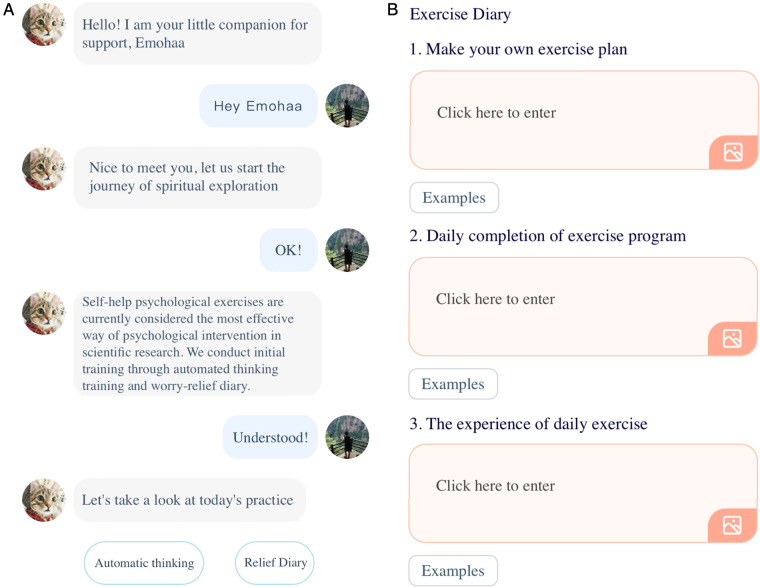
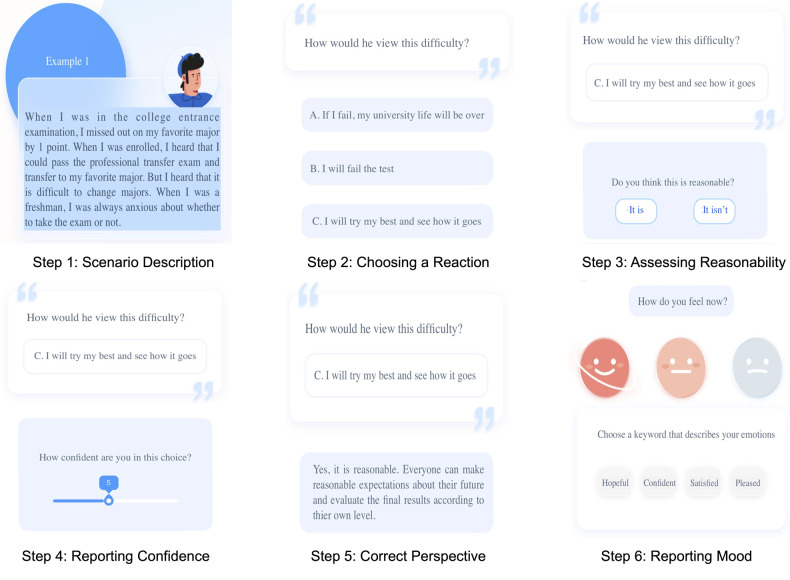
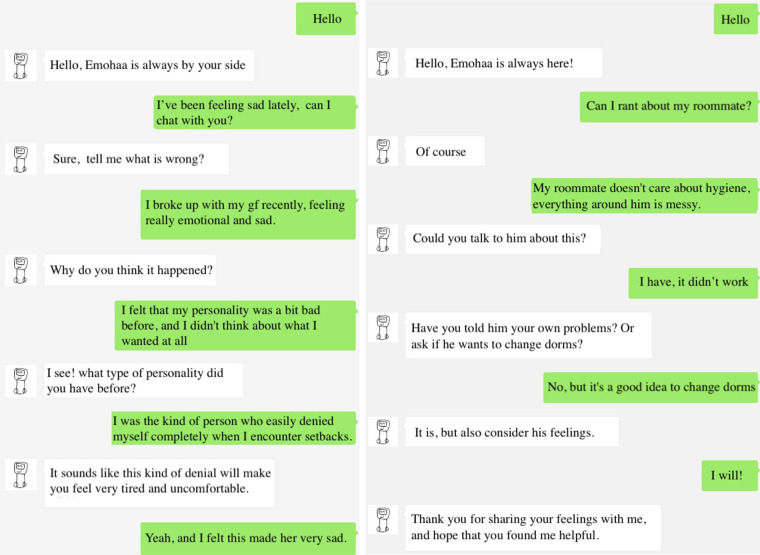
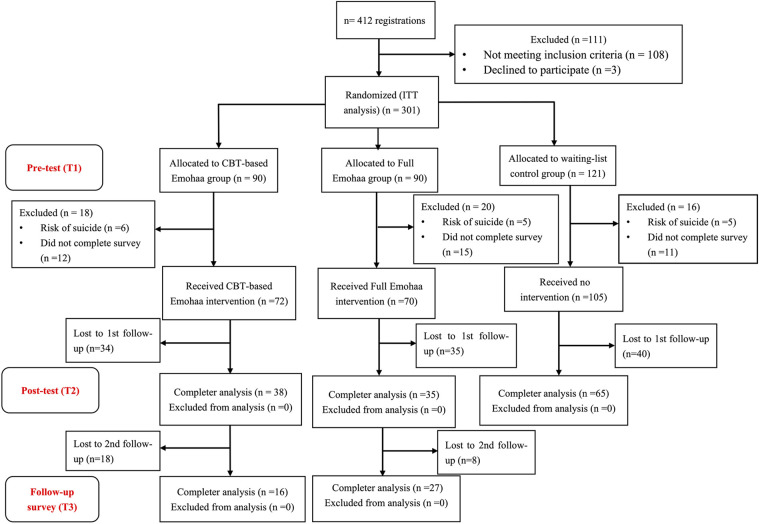
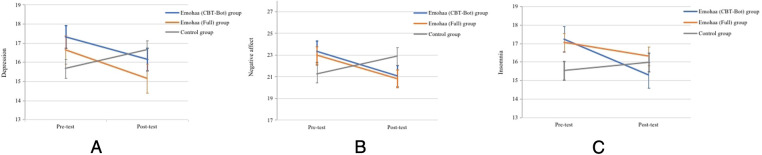
Introduction The growing demand for mental health support has highlighted the importance of conversational agents as human supporters worldwide and in China. These agents could increase availability and reduce the relative costs of mental health support. The provided support can be divided into two main types: cognitive and emotional. Existing work on this topic mainly focuses on constructing agents that adopt Cognitive Behavioral Therapy (CBT) principles. Such agents operate based on pre-defined templates and exercises to provide cognitive support. However, research on emotional support using such agents is limited. In addition, most of the constructed agents operate in English, highlighting the importance of conducting such studies in China. To this end, we introduce Emohaa, a conversational agent that provides cognitive support through CBT-Bot exercises and guided conversations. It also emotionally supports users through ES-Bot, enabling them to vent their emotional problems. In this study, we analyze the effectiveness of Emohaa in reducing symptoms of mental distress. Methods and Results Following the RCT design, the current study randomly assigned participants into three groups: Emohaa (CBT-Bot), Emohaa (Full), and control. With both Intention-To-Treat ( N = 247 ) and PerProtocol ( N = 134 ) analyses, the results demonstrated that compared to the control group, participants who used two types of Emohaa experienced considerably more significant improvements in symptoms of mental distress, including depression ( F [ 2 , 244 ] = 6.26 , p = 0.002 ), negative affect ( F [ 2 , 244 ] = 6.09 , p = 0.003 ), and insomnia ( F [ 2 , 244 ] = 3.69 , p = 0.026 ). Discussion Based on the obtained results and participants’ satisfaction with the platform, we concluded that Emohaa is a practical and effective tool for reducing mental distress.
Overview
The claims and statistics of this paper haven’t been checked yet.
Run the check — free, no account needed. It reads the open-access text and checks the sources it cites.
Integrity signals
Registry
Cites
Statistics
Figures
Verification
Claims the paper makes
The claims and statistics of this paper haven’t been checked yet.
Run the check — free, no account needed. It reads the open-access text and checks the sources it cites.
Claims other papers make about this one
Each is checked against this paper’s own text: does it say what the citing paper says it does?
The cited source says what the claim attributes to it.
In the citing paper
“For example, Jeong [99] reported 0.30 SD for depression, McFadyen et al [61] reported 0.26 SD for anxiety, Sabour [64] reported 0.33 SD for depression.”
From Generative AI Mental Health Chatbots as Therapeutic Tools: Systematic Review and Meta-Analysis of Their Role in Reducing Mental Health Issues (2025) · cites this paper as [64]
Self-check
Percentages, sums and reported differences re-computed from the paper’s own numbers.
The self-check needs the paper’s full text.
Citations
Cites
Statistical Power Analysis for the Behavioral Sciences
Muller, K. E., & Cohen, J. (1989) · Technometrics · doi:10.2307/1270020 · Cited by 99,603
Development and validation of brief measures of positive and negative affect: The PANAS scales.
Watson, D., Clark, L. A., & Tellegen, A. (1988) · Journal of Personality and Social Psychology · doi:10.1037/0022-3514.54.6.1063 · Cited by 32,433
A Brief Measure for Assessing Generalized Anxiety Disorder: The GAD-7
Spitzer, R. L., Kroenke, K., Williams, J. B. W., & Löwe, B. (2006) · Archives of Internal Medicine · doi:10.1001/archinte.166.10.1092 · Cited by 31,765
RoBERTa: A Robustly Optimized BERT Pretraining Approach
Liu, Y., Ott, M., Goyal, N., Du, J., Joshi, M., Chen, D., Levy, O., Lewis, M., Zettlemoyer, L., & Stoyanov, V. (2019) · arXiv · doi:10.48550/arxiv.1907.11692 · Cited by 16,515
Back-translation for cross-cultural research.
Brislin, R. W. (1970) · Journal of Cross-Cultural Psychology · doi:10.1177/135910457000100301 · Cited by 14,091
Statistical Analysis with Missing Data
Little, R. J. A., & Rubin, D. B. (2002) · Wiley Series in Probability and Statistics · doi:10.1002/9781119013563 · Cited by 8,473
The PHQ-9: A New Depression Diagnostic and Severity Measure
Kroenke, K., & Spitzer, R. L. (2002) · Psychiatric Annals · doi:10.3928/0048-5713-20020901-06 · Cited by 5,898 · cited 10×
“Compared to the control group, there was a significant decrease in depression and anxiety of the participants who used Emohaa, as measured by the PHQ-9 and the GAD-7 questionnaires, respectively.”
MethodInfluentialFitzpatrick, K. K., Darcy, A., & Vierhile, M. (2017) · JMIR Mental Health · doi:10.2196/mental.7785 · Cited by 2,730 · cited 4×
“PHQ-9 Participants’ depressionwasmeasuredwith the Patient Health Questionnaire (PHQ-9) (Kroenke and Spitzer, 2002), the most widely used measure in psychological depression trials (Fitzpatrick et al., 2017; von Glischinski et al., 2021).”
BackgroundMethodInfluentialPrevalence of mental disorders in China: a cross-sectional epidemiological study
Huang, Y., Wang, Y., Wang, H., Liu, Z., Yu, X., Yan, J., Yu, Y., Kou, C., Xu, X., Lu, J., et al. (2019) · The Lancet Psychiatry · doi:10.1016/s2215-0366(18)30511-x · Cited by 2,335
(1993) · Medical Entomology and Zoology · Cited by 2,324
Cited by
Sorted by citations
Li, H., Zhang, R., Lee, Y.-C., Kraut, R. E., & Mohr, D. C. (2023) · npj Digital Medicine · doi:10.1038/s41746-023-00979-5 · Cited by 598
“In contrast, generative CAs, such as ChatGPT and Replika, leverage machine learning algorithms to learn and auto-generate responses based on a large amount of training data 71 .”
BackgroundMethodInfluentialEnhancing mental health with Artificial Intelligence: Current trends and future prospects
Olawade, D. B., Wada, O. Z., Odetayo, A., David-Olawade, A. C., Asaolu, F. T., & Eberhardt, J. (2024) · Journal of Medicine Surgery and Public Health · doi:10.1016/j.glmedi.2024.100099 · Cited by 667
Roles, Users, Benefits, and Limitations of Chatbots in Health Care: Rapid Review (Preprint)
Laymouna, M., Ma, Y., Lessard, D., Schuster, T., Engler, K., & Lebouché, B. (2024) · doi:10.2196/preprints.56930 · Cited by 302
Roles, Users, Benefits, and Limitations of Chatbots in Health Care: Rapid Review
Laymouna, M., Ma, Y., Lessard, D., Schuster, T., Engler, K., & Lebouché, B. (2024) · Journal of Medical Internet Research · doi:10.2196/56930 · Cited by 305
Chakraborty, C., Bhattacharya, M., Pal, S., & Lee, S. (2023) · Current Research in Biotechnology · doi:10.1016/j.crbiot.2023.100164 · Cited by 311
González, P. C., He, A., Lam, E. K. M., Ng, I. M. C., Li, M. W., Hou, R., Chan, J. N.-M., Sahni, Y., Viñas‐Guasch, N., Miller, T., et al. (2025) · Psychological Medicine · doi:10.1017/s0033291724003295 · Cited by 255
Zhong, W., Luo, J., & Zhang, H. (2024) · Journal of Affective Disorders · doi:10.1016/j.jad.2024.04.057 · Cited by 224
Chakraborty, C., Pal, S., Bhattacharya, M., Dash, S., & Lee, S. (2023) · Frontiers in Artificial Intelligence · doi:10.3389/frai.2023.1237704 · Cited by 178
Kolding, S., Lundin, R. M., Hansen, L., & Østergaard, S. D. (2024) · Acta Neuropsychiatrica · doi:10.1017/neu.2024.50 · Cited by 97
Zhang, Q., Zhang, R., Xiong, Y., Sui, Y., Tong, C., & Lin, F.-H. (2025) · Journal of Medical Internet Research · doi:10.2196/78238 · Cited by 56
“Most studies used a single AI chatbot, including ChatGPT (various versions, n=5), Replika (n=4), Limbic care (n=2), and one study each for Elomia [63], Philobot [58], MyAI [62], Virtual Coach Angela [57], Reading Bot [30], Emohaa [64], Amanda [29], XiaoE [54], and Therabot [55].”
InfluentialFeng, X., Tian, L., Ho, G. W. K., Yorke, J., & Hui, V. (2025) · Journal of Medical Internet Research · doi:10.2196/79850 · Cited by 51
Transforming healthcare with chatbots: Uses and applications—A scoping review
Barreda, M., Cantarero, D., Coca, D., Delgado, A., Lanza‐León, P., Lera, J., Montalbán, R., & Pérez, F. (2025) · Digital Health · doi:10.1177/20552076251319174 · Cited by 58
Moylan, K., & Doherty, K. (2025) · Journal of Medical Internet Research · doi:10.2196/67114 · Cited by 46
Chou, Y.-H., Lin, C., Lee, S., Chien, Y.-W. C., & Cheng, L. (2023) · Clinical Interventions in Aging · doi:10.2147/cia.s410396 · Cited by 41
AI as your ally: The effects of AI‐assisted venting on negative affect and perceived social support
Hu, M., Chua, X. C. W., Diong, S. F., Kasturiratna, K. T. A. S., Majeed, N. M., & Hartanto, A. (2024) · Applied Psychology Health and Well-Being · doi:10.1111/aphw.12621 · Cited by 54
Villarreal‐Zegarra, D., Reátegui-Rivera, C. M., García-Serna, J., Quispe-Callo, G., Lázaro-Cruz, G., Centeno-Terrazas, G., Gálvez-Arévalo, R. A., Escobar-Agreda, S., Rodríguez, A. D., & Finkelstein, J. (2024) · JMIR Mental Health · doi:10.2196/59560 · Cited by 39
Talking Mental Health: a Battle of Wits Between Humans and AI
Lopes, E., Jain, G., Carlbring, P., & Pareek, S. (2023) · Journal of Technology in Behavioral Science · doi:10.1007/s41347-023-00359-6 · Cited by 31
Algumaei, A. H., Yaacob, N. M., Doheir, M., Al-Andoli, M. N., & Algumaei, M. Y. (2025) · Symmetry · doi:10.3390/sym17071082 · Cited by 40
Luo, X., Zhang, A., Li, Y., Zhang, Z., Ying, F., Lin, R., Yang, Q., Wang, J., & Huang, G. (2024) · International Journal of Mental Health Nursing · doi:10.1111/inm.13384 · Cited by 26
Liu, Z., Zou, W., & Lin, C. (2025) · Patient Education and Counseling · doi:10.1016/j.pec.2025.109271 · Cited by 32
A review on the efficacy of artificial intelligence for managing anxiety disorders
Das, K. P., & Gavade, P. (2024) · Frontiers in Artificial Intelligence · doi:10.3389/frai.2024.1435895 · Cited by 25
Systematic review and meta analysis of chatbots in the management of depressive and anxiety symptoms
Sohn, J.-S., Ha, B., Park, S., Kim, J.-J., Lee, E., Oh, H., Lee, S., & Kim, E. (2026) · npj Digital Medicine · doi:10.1038/s41746-026-02566-w · Cited by 21
Can Artificial Intelligence Chatbots Improve Mental Health?: A Scoping Review
Gallegos, C., Kausler, R., Alderden, J., Davis, M., & Wang, L. (2024) · CIN: Computers, Informatics, Nursing · doi:10.1097/cin.0000000000001155 · Cited by 18
Chen, T. H., Chu, G., Pan, R.-H., & Ma, W. (2025) · Expert Review of Medical Devices · doi:10.1080/17434440.2025.2466742 · Cited by 16
Therapy and Emotional Support through a Chatbot
Andrade-Arenas, L., Yactayo-Arias, C., & Pucuhuayla-Revatta, F. (2024) · International Journal of Online and Biomedical Engineering (iJOE) · doi:10.3991/ijoe.v20i02.45377 · Cited by 15
Votintseva, A., Johnson, R., & Villa, I. (2024) · Lecture notes in computer science · doi:10.1007/978-3-031-60405-8_26 · Cited by 13
Kuhail, M. A., Al-Shamaileh, O., Farooq, S., Shahin, H., Abdelzaher, F., & Thomas, J. (2025) · Human Behavior and Emerging Technologies · doi:10.1155/hbe2/9942295 · Cited by 11
Exploring the Role of Mobile Apps for Insomnia in Depression: Systematic Review
Chiu, Y.-H., Lee, Y.-F., Lin, H., & Cheng, L. (2024) · Journal of Medical Internet Research · doi:10.2196/51110 · Cited by 14
Mental Healthcare Chatbot Based on Custom Diagnosis Documents Using a Quantized Large Language Model
Kumar, A., Sharma, S., Gupta, S., & Kumar, D. (2024) · International Conference on Reliability, Infocom Technologies and Optimization (Trends and Future Directions) (ICRITO) · doi:10.1109/icrito61523.2024.10522371 · Cited by 10
Task-Adaptive Tokenization: Enhancing Long-Form Text Generation Efficacy in Mental Health and Beyond
Liu, S., Deng, N., Sabour, S., Jia, Y., Huang, M., & Mihalcea, R. F. (2023) · Conference on Empirical Methods in Natural Language Processing (EMNLP) · doi:10.18653/v1/2023.emnlp-main.944 · Cited by 17
Self-citationOlisaeloka, L., Richardson, C. G., Wang, A. Y., Munthali, R. J., & Vigo, D. (2026) · Healthcare · doi:10.3390/healthcare14101395 · Cited by 15
Irfan, S., Dhivya, G., Raghavendran, N., Babu, M. C., Jasperline, T., & Saravanakumar, R. (2025) · International Conference on Data Science, Agents & Artificial Intelligence (ICDSAAI) · doi:10.1109/icdsaai65575.2025.11011535 · Cited by 8
Yang, M., Yang, Z., Ning, Z., Shen, H., Mao, C., Ma, C., & Hu, B. (2025) · IEEE Internet of Things Journal · doi:10.1109/jiot.2025.3575085 · Cited by 8
Ye, X., Shan, X., Tu, Y., & Zhang, Y. (2025) · CIN Computers Informatics Nursing · doi:10.1097/cin.0000000000001349 · Cited by 7
Self-citationYokotani, K., Ito, M., Ihara, N., & Shigeeda, Y. (2025) · Computers in Human Behavior Reports · doi:10.1016/j.chbr.2025.100770 · Cited by 8
Gong, B., Yao, N., Xie, H., Huang, C., Tomoko, K., Berenbaum, H., & Mu, W. (2026) · Journal of Medical Internet Research · doi:10.2196/82677 · Cited by 18
Chen, T., Shen, Y., Chen, X., & Zhang, L. (2024) · ACM Transactions on Asian and Low-Resource Language Information Processing · doi:10.1145/3676962 · Cited by 7
Chen, L. Y., Yang, L.-C., Lin, F.-Y., & Lin, Y.-H. P. (2025) · Archives of Psychiatric Nursing · doi:10.1016/j.apnu.2025.151916 · Cited by 10
Xu, Y., Yang, H., Zhou, J., Xiang, J., Xu, H., Pokay, Y. H., Mao, H., Cai, X., Wu, Y., & Wang, D. B. (2023) · JMIR Formative Research · doi:10.2196/46494 · Cited by 11
Chiu, Y.-H., Lee, Y.-F., Lin, H., & Cheng, L. (2025) · Health Informatics Journal · doi:10.1177/14604582251396428 · Cited by 6
Leung, W. K. C., Lam, S. C., Chan, B. C. L., Chow, J. N. L., Wong, Y. Y. Y., Ng, F., Yip, C. C. K., & Chan, A. C. K. (2026) · BMJ Health & Care Informatics · doi:10.1136/bmjhci-2025-101479 · Cited by 7
Artificial Intelligence Revolution: Shaping the Future of Millennials
Waleed, M., Eman, Bashir, F., & Nasim, I. (2023) · Pakistan Journal of Humanities and Social Sciences · doi:10.52131/pjhss.2023.1104.0689 · Cited by 7
Agrawal, R. N., Monteiro, K., Narasimhamurti, N. S., Sharma, S., Suryawanshi, A., Bariya, A., Narvekar, S., Bagnoli, L., Saxena, M., Magoun, L., et al. (2025) · JMIR Formative Research · doi:10.2196/73563 · Cited by 4
Komorebi: Enhancing Mental Wellness with Sentiment Analysis and Cognitive Behavior Therapy
Lee, P. U., & Sood, K. (2024) · International Conference on Electrical, Computer, Communications and Mechatronics Engineering (ICECCME) · doi:10.1109/iceccme62383.2024.10797013 · Cited by 4
Stress Relief And Anxiety Therapy Using AI
Ruthi Shankari, S., Vaisali, S., Pavithra, R. H., & Shiny, A. (2024) · International Conference on Power, Energy, Control and Transmission Systems (ICPECTS) · doi:10.1109/icpects62210.2024.10780170 · Cited by 3
Artificial intelligence-based psychotherapy: focusing on common psychotherapeutic factors
Giotakos, O. (2025) · Frontiers in Psychiatry · doi:10.3389/fpsyt.2025.1710715 · Cited by 7
Jamieson, J., Akahori, W., & Yamashita, N. (2025) · CHI Conference on Human Factors in Computing Systems · doi:10.1145/3706598.3713684 · Cited by 3
Son, N. K., Sangaiah, A. K., Paramarthika, L. K. M., Rajendran, V., Bian, G., & Alenazi, M. J. F. (2025) · IEEE Transactions on Computational Social Systems · doi:10.1109/tcss.2025.3572596 · Cited by 3
Data Security and Privacy Considerations in Mental Health Settings
Wu, L. (2025) · Advances in medical technologies and clinical practice book series · doi:10.4018/979-8-3693-3112-5.ch011 · Cited by 2
Chatting Towards Inclusivity: A Digital Approach to Inclusion Action Plans and Leader Development
Singh, V., Rivin, J. M., Wagoner, H. P. V., Keplinger, K., & Barbuto, J. (2025) · Human Resource Management · doi:10.1002/hrm.70039 · Cited by 3
Investigating the use of AI in psychological counseling: systematic review
Li, B., Paracha, S., Limniou, M., & Zhang, X. (2025) · Mental Health and Digital Technologies · doi:10.1108/mhdt-04-2025-0027 · Cited by 4
Huang, T., Li, S., Wang, Y., & Liu, W. (2026) · Journal of Medical Internet Research · doi:10.2196/88697 · Cited by 2
LeMiNo – Let Me Know how to Negotiate: Virtual Simulator for Negotiation Training
Votintseva, A., & Johnson, R. (2024) · International Conference on Smart Computing, IoT and Machine Learning (SIML) · doi:10.1109/siml61815.2024.10578255 · Cited by 2
Multilingual Conversational AI Framework for Empowering Maternal and Child Healthcare in Zimbabwe
Guvava, B. T., & Dube, S. S. (2024) · Zimbabwe Conference of Information and Communication Technologies (ZCICT) · doi:10.1109/zcict63770.2024.10958335 · Cited by 1
Zhang, Y. (2025) · Current Psychology · doi:10.1007/s12144-025-08015-3 · Cited by 2
Self-citationTherapeutic Chatbot for Suicidal Risk Teens Using Large Language Models
Romero-Florida, J., Nolasco-Morales, A., Aures-García, A., Bravo-Obando, M., & Landeo, A. E. B. (2025) · IEEE International Conference on Electronics, Electrical Engineering and Computing (INTERCON) · doi:10.1109/intercon67304.2025.11244711 · Cited by 1
Syakurah, R. A., Hermawan, L., Meilinda, M., Stiawan, D., Rizqie, M. Q., & Rusli, N. T. (2025) · Proceeding of the Electrical Engineering Computer Science and Informatics · doi:10.1109/eecsi67060.2025.11290231 · Cited by 2
Dai, G., Zhao, H., & Yu, H. (2025) · International Conference on Educational Knowledge and Informatization (EKI) · doi:10.1145/3765325.3765351 · Cited by 1
SoulCare: A Privacy-Focused, Locally-Run AI Chatbot for Supporting Mental Health
Ryan, J., Joy, E., Suganthi Evangeline, C., & Jenice Aroma, R. (2026) · Lecture notes in networks and systems · doi:10.1007/978-981-96-9275-0_35 · Cited by 1
Tulbure, B. T., Spătaru, B., Rusu, A., Faur, D., Precupaș, D., Trancă, L. M., Popa, S. N., & Spătaru, A. (2026) · JMIR Formative Research · doi:10.2196/84296 · Cited by 1
Designing AI for distress: an iterative case study of a hierarchical agent for psychosocial support
Patturajan, V., Ravikumar, D., Narayanan, S., Krishnamurthy, V., & Santhosh, S. (2026) · Frontiers in Artificial Intelligence · doi:10.3389/frai.2026.1772215 · Cited by 1
Human preferences are susceptible to covertly misaligned AI advice
Sabour, S., Liu, J. M., Liu, S., Yao, C. Z., Cui, S., Zhang, W., Zhang, X., Cao, Y., Bhat, A., Guan, J., et al. (2026) · Proceedings of the National Academy of Sciences · doi:10.1073/pnas.2600684123 · Cited by 2
Self-citationA interação homem-máquina na psicoterapia
Melo, S. A. N., de Aguiar, C. L., da Cunha, L. K. S., & Brustolin, J. C. R. (2024) · Prometeica - Revista de Filosofía y Ciencias · doi:10.34024/prometeica.2024.29.16268 · Cited by 1
On, Y., Kim, T., & Kim, N. (2024) · 신경정신의학 · doi:10.4306/jknpa.2024.63.3.151 · Cited by 1
Agrawal, R. N., Monteiro, K., Narasimhamurti, N. S., Sharma, S., Suryawanshi, A., Bariya, A., Narvekar, S., Bagnoli, L., Saxena, M., Magoun, L., et al. (2024) · Research Square · doi:10.21203/rs.3.rs-5426475/v1 · Cited by 1
Chatbot Deteksi Awal Gangguan Kecemasan Menggunakan Dialogflow
Hidayat, R. R., Fikry, M., & Yusra, Y. (2023) · JTT (Jurnal Teknologi Terpadu) · doi:10.32487/jtt.v11i2.1867
Wang, Q. (2023) · International Conference on Smart Generation Computing, Communication and Networking (SMART GENCON) · doi:10.1109/smartgencon60755.2023.10442364
Prometeica, R. (2024) · Prometeica - Revista de Filosofía y Ciencias · doi:10.34024/prometeica.2024.29.15900
Nandurkar, D. A., Yuhaniz, S. S., & Sahu, M. (2024) · Research Square · doi:10.21203/rs.3.rs-4151976/v1
RetractedVillarreal‐Zegarra, D., García-Serna, J., Quispe-Callo, G., Lázaro-Cruz, G., Centeno-Terrazas, G., Gálvez-Arévalo, R. A., Escobar-Agreda, S., Rodríguez, A. D., Reátegui-Rivera, C. M., & Finkelstein, J. (2024) · doi:10.2196/preprints.59560
Scherer, J. N., Oliveira, G. R., Machado, F. M. R., Gomes, C. F., & Ornell, F. R. (2024) · Journal of Psychoactive Drugs · doi:10.1080/02791072.2024.2421921
Cognitive Behavioral Therapy (CBT) and Machine Learning (ML)
Walia, Y., & Gupta, R. K. (2025) · Advances in psychology, mental health, and behavioral studies (APMHBS) book series · doi:10.4018/979-8-3693-9341-3.ch001
A Hybrid-Multimodal Mental Health Chatbot for Psychological Counselling
Gounder, K. K., Tripathy, B. K., & Wagh, D. A. (2025) · Learning and analytics in intelligent systems · doi:10.1007/978-3-031-82706-8_23
Economic Transformation: Reframing Mental Health Governance Beyond Workforce Metrics
Noguera, J. J. M. (2025) · SpringerBriefs in public health · doi:10.1007/978-3-031-94763-6_2
Chatbots in Mental Healthcare: Developments and Challenges
Shi, Q. (2025) · IEEE China Conference on System Simulation Technology and its Applications (CCSSTA) · doi:10.1109/ieeeconf65522.2025.11137008 · Cited by 1
Optimizing LLMs for Personalized Emotional Support with Future Cues and Response Diversity
Song, J., Zan, H., Liu, H., Li, Y., Kong, L., Cheng, X., Zhang, K., & Peng, M. (2025) · Lecture notes in computer science · doi:10.1007/978-981-95-3352-7_44
EmpowerMind: Accessible Mental Health Support App for Adolescents and PwDs
Saravanan, S., Murugan, D., Bhuyan, A., Somvanshi, B., & Akash, P. (2025) · International Conference on New Frontiers in Communication, Automation, Management and Security (ICCAMS) · doi:10.1109/iccams65118.2025.11234602
Tobias, F. L., & da Silva, A. P. C. (2025) · Brazilian Symposium on Multimedia and the Web · doi:10.5753/webmedia.2025.15908 · Cited by 2
Utami, M. S. M., Kwok, W. H., Kotz, J., Walker, R., Wang, G., & Marriott, R. (2025) · Annual International Conference of the IEEE Engineering in Medicine and Biology Society (EMBC) · doi:10.1109/embc58623.2025.11254329
Takizawa, Y. (2025) · AI & Society · doi:10.1007/s00146-025-02776-y
Votintseva, A., Wright, J., & Johnson, R. (2026) · Lecture notes in computer science · doi:10.1007/978-3-032-13187-4_17
Aldaweesh, S., Alelsheikh, G., Alhamed, F., Kleek, M. G. V., & Shadbolt, N. (2026) · CHI Conference on Human Factors in Computing Systems · doi:10.1145/3772318.3791060 · Cited by 2
Makni, T., Baghdadi, A., & Chaouali, R. (2026) · Lecture notes of the Institute for Computer Sciences, Social Informatics and Telecommunications Engineering · doi:10.1007/978-3-032-16635-7_3 · Cited by 1
Pesjak, K., & Mulej, L. (2026) · Health Problems of Civilization · doi:10.29316/hpc/221670
MIND EASE+: AI based Mental Health Support System
Sivabalan, K. N., Sajin, S., P, S. S., Vasanth Kumar, K., & Vignesh, S. (2026) · International Conference on Smart Electronic Devices and Intelligent Systems (ICSEDIS) · doi:10.1109/icsedis68157.2026.11517969
Yip, W. L. T., Yang, Y. Y., Wang, Z. L., & Stückler, D. (2026) · npj Digital Medicine · doi:10.1038/s41746-026-02744-w
Azeem, O., Zhang, Y., & Haidong, Z. (2026) · Computers in Human Behavior Artificial Humans · doi:10.1016/j.chbah.2026.100322
Self-citationUse and Efficacy of Conversational AI in Health Management: An Integrative Review
Wang, Z., & Kamarudin, S. (2026) · Journal of Health Communication · doi:10.1080/10810730.2026.2682496
Ji, X., & Yang, Y. (2026) · Health Policy and Technology · doi:10.1016/j.hlpt.2026.101275
Scoping Review: Intervention Methods in Conversational Agent-Based Cognitive Behavioral Therapy
Striegl, J., Butz, N., & Loitsch, C. (2026) · Lecture notes in computer science · doi:10.1007/978-3-032-29842-3_16
Choi, J., & Toma, C. L. (2026) · Communication Research · doi:10.1177/00936502261466012 · Cited by 1
Human–AI interaction data governance and personal health management: Analysis of the literature
Liu, X., & Shankar, K. (2026) · Data & Policy · doi:10.1017/dap.2026.10080
Chen, L.-T., Hsu, H., Lou, M., Wu, C.-Y., Lin, C.-H., & Lin, Y.-H. (2026) · International Journal of Qualitative Studies on Health and Well-Being · doi:10.1080/17482631.2026.2697390
Creation of Cognitive Behavioral Chatbots for Mental Health
Joshi, M., Pushpa, J., Sharon, M., & Dash, M. (2026) · Wiley eBooks · doi:10.1002/9781394392872.ch13
Li, B., Huang, Y., & Zhang, R. (2026) · Psychology and Marketing · doi:10.1002/mar.70252
Wu, Q., Shi-zhu, L., Yan, Y., Liu, L., & Peng, X. (2026) · Frontiers in Psychology · doi:10.3389/fpsyg.2026.1863595
Wang, Q., Zhong, J., Qi, K., Bao, H., Wang, Y., Guo, S., & Chen, A. (2026) · Psychiatry Research · doi:10.1016/j.psychres.2026.117459
Mental Health: Ethics and the Role and Limits of Artificial Intelligence
Castellví, P. (2026) · Springer eBooks · doi:10.1007/978-3-032-22853-6_2
Metadata
- Authors
- Sabour, S., Zhang, W., Xiao, X., Zhang, Y., Zheng, Y., Wen, J., Zhao, J., & Huang, M.
- Affiliations
- State Key Laboratory of Intelligent Technology and Systems (CN)
- Beijing Normal University (CN)
- Tsinghua University (CN)
- Corresponding author
- Sabour, Sahand
- Huang, Minlie
- Venue
- Frontiers in Digital Health
- Publisher
- Frontiers Media SA
- Published
- 2023-05-04
- Volume
- 5
- Pages
- 1133987-1133987
- ISSN
- 2673-253X (ISSN-L)
- PMC
- PMC10193040
- OpenAlex
- W4377565325
- Cited by
- 102
- References
- 44
- Citations by year
- 2026: 31 · 2025: 36 · 2024: 25 · 2023: 10
- FWCI
- 26.33
- Type
- journal article
- Language
- en
- Open access
- gold
- doi.org
- Licence
- Locations
- Frontiers in Digital Health (publishedVersion, cc-by)
- PubMed Central (publishedVersion, cc-by)
- PubMed (publishedVersion)
- DOAJ (DOAJ: Directory of Open Access Journals) (submittedVersion, cc-by-sa)
- Topics
- Social Sciences › Psychology › Applied Psychology › Digital Mental Health Interventions
- Social Sciences › Psychology › Social Psychology › Social Robot Interaction and HRI
- Physical Sciences › Computer Science › Artificial Intelligence › Emotion and Mood Recognition
- Keywords
- chatbots, mental health support, cognitive behavioral therapy, depression, negative affect, insomnia, emotional support, psychological distress, China
About these checks
Registry, retraction, Cites and statistics results are computed, not judged, with one exception: a printed reference that no index lists is read once by a model before it counts as a citation error. Claims are extracted by a model and kept only when their quote appears verbatim in the text; each cited source is then checked, with a model’s help, for whether it says what the claim relies on. Those verdicts can be wrong — read the claim’s quote and the cited source before relying on one.
Statistics and arithmetic are recomputed, not judged.
Confidence bands are shown only for fields calibrated on our annotated test set. None is calibrated yet, so no band is shown.
What counts as a claim ›How we measure confidence ›How we check this ›
Are you an author, or do you see a problem with this page? Request a review
