

The DOI matches its Crossref record; 108 of the 111 references it cites were found in a registry or an index.
Oxytocin, Feeding, and Satiety
Open accessAbstract
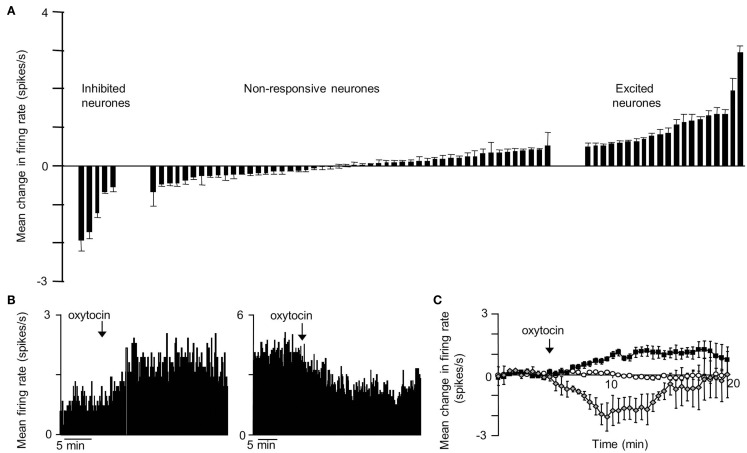
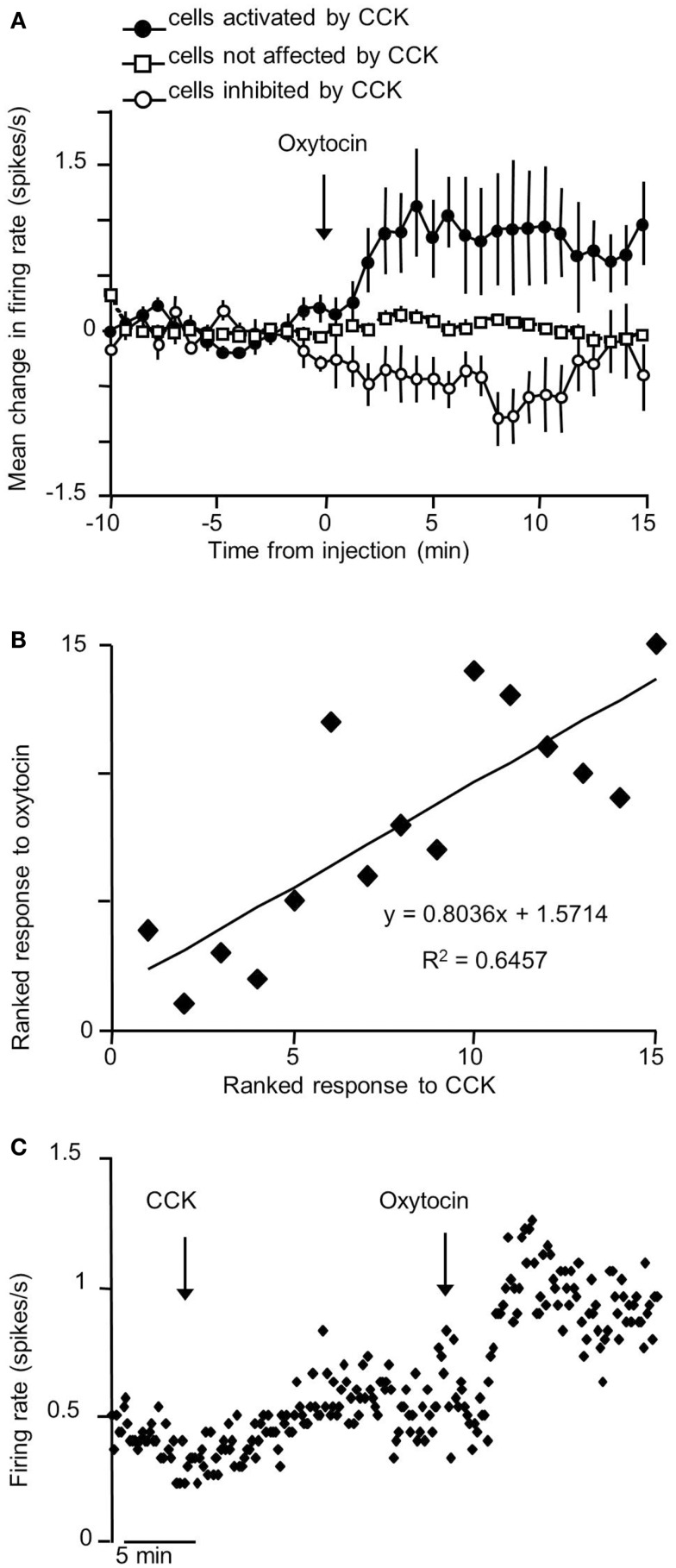
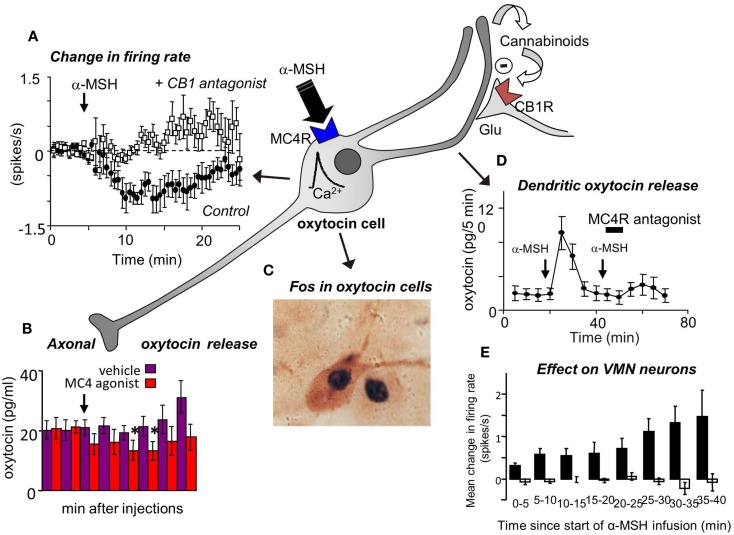
Oxytocin neurons have a physiological role in food intake and energy balance. Central administration of oxytocin is powerfully anorexigenic, reducing food intake and meal duration. The central mechanisms underlying this effect of oxytocin have become better understood in the past few years. Parvocellular neurons of the paraventricular nucleus project to the caudal brainstem to regulate feeding via autonomic functions including the gastrointestinal vago-vagal reflex. In contrast, magnocellular neurons of the supraoptic and paraventricular nuclei release oxytocin from their dendrites to diffuse to distant hypothalamic targets involved in satiety. The ventromedial hypothalamus, for example, expresses a high density of oxytocin receptors but does not contain detectable oxytocin nerve fibers. Magnocellular neurons represent targets for the anorexigenic neuropeptide α-melanocyte stimulating hormone. In addition to homeostatic control, oxytocin may also have a role in reward-related feeding. Evidence suggests that oxytocin can selectively suppress sugar intake and that it may have a role in limiting the intake of palatable food by inhibiting the reward pathway.
Overview
The claims and statistics of this paper haven’t been checked yet.
Run the check — free, no account needed. It reads the open-access text and checks the sources it cites.
Integrity signals
Registry
Cites
Statistics
Figures
Verification
Claims the paper makes
The claims and statistics of this paper haven’t been checked yet.
Run the check — free, no account needed. It reads the open-access text and checks the sources it cites.
Claims other papers make about this one
Each is checked against this paper’s own text: does it say what the citing paper says it does?
In the citing paper
“Axonal release of oxytocin from the PVN may also have effects on hedonic food consumption via dopaminergic mesolimbic neurons in the ventral tegmental area (VTA)(25, 26, 27).”
From Oxytocin reduces caloric intake in men (2015) · cites this paper as [25]
In the citing paper
“Oxytocin is also released by dendrites of magnocellular neurons of the PVN and SON, and may reduce food intake in part via diffusion to the ventromedial nucleus, a satiety-regulating brain region rich in oxytocin receptors(25).”
From Oxytocin reduces caloric intake in men (2015) · cites this paper as [25]
In the citing paper
“Additionally, it is known that vagal nerve fibers project to the PVN (Sabatier et al., 2013; Uvnas-Moberg et al., 2014), a brain region where oxytocin is produced”
From Mechanisms underlying microbial-mediated changes in social behavior in mouse models of autism spectrum disorder (2019) · cites this paper as Sabatier et al., 2013
Self-check
Percentages, sums and reported differences re-computed from the paper’s own numbers.
The self-check needs the paper’s full text.
Citations
Cites
Herman, J. P., Figueiredo, H., Mueller, N. K., Ulrich-Lai, Y., Ostrander, M. M., Choi, D. C., & Cullinan, W. E. (2003) · Frontiers in Neuroendocrinology · doi:10.1016/j.yfrne.2003.07.001 · Cited by 1,586
Swanson, L. W., & Kuypers, H. G. J. M. (1980) · Journal of Comparative Neurology · doi:10.1002/cne.901940306 · Cited by 1,413
Direct hypothalamo-autonomic connections
Saper, C. B., Loewy, A. D., Swanson, L. W., & Cowan, W. M. (1976) · Brain Research · doi:10.1016/0006-8993(76)90738-1 · Cited by 1,199
Deconstruction of a neural circuit for hunger
Atasoy, D., Betley, J. N., Su, H. H., & Sternson, S. M. (2012) · Nature · doi:10.1038/nature11270 · Cited by 969
Dendritic peptide release and peptide-dependent behaviours
Ludwig, M., & Leng, G. (2006) · Nature Reviews Neuroscience · doi:10.1038/nrn1845 · Cited by 945
Self-citationLeptin Receptor Immunoreactivity in Chemically Defined Target Neurons of the Hypothalamus
Håkansson, M., Brown, H., Ghilardi, N., Skoda, R. C., & Meister, B. (1998) · Journal of Neuroscience · doi:10.1523/jneurosci.18-01-00559.1998 · Cited by 741
Oxytocin is required for nursing but is not essential for parturition or reproductive behavior.
Nishimori, K., Young, L. J., Guo, Q., Wang, Z., Insel, T. R., & Matzuk, M. M. (1996) · Proceedings of the National Academy of Sciences · doi:10.1073/pnas.93.21.11699 · Cited by 734
Neuroendocrine control of food intake
Valassi, E., Scacchi, M., & Cavagnini, F. (2008) · Nutrition Metabolism and Cardiovascular Diseases · doi:10.1016/j.numecd.2007.06.004 · Cited by 649
Gastrointestinal hormones and food intake
Strader, A. D., & Woods, S. C. (2005) · Gastroenterology · doi:10.1053/j.gastro.2004.10.043 · Cited by 461
Farooqi, I. S., & O’Rahilly, S. (2005) · Annual Review of Medicine · doi:10.1146/annurev.med.56.062904.144924 · Cited by 452
Cited by
Sorted by citations
Microbial reconstitution reverses maternal diet-induced social and synaptic deficits in offspring
Buffington, S. A., Di Prisco, G. V., Auchtung, T. A., Ajami, N. J., Petrosino, J. F., & Costa-Mattioli, M. (2016) · Cell · doi:10.1016/j.cell.2016.06.001 · Cited by 1,163
The oxytocin receptor: from intracellular signaling to behavior
Jurek, B., & Neumann, I. D. (2018) · Physiological Reviews · doi:10.1152/physrev.00031.2017 · Cited by 999
Sgritta, M., Dooling, S. W., Buffington, S. A., Momin, E. N., Francis, M. B., Britton, R. A., & Costa-Mattioli, M. (2019) · Neuron · doi:10.1016/j.neuron.2018.11.018 · Cited by 865
Intranasal Oxytocin: Myths and Delusions
Leng, G., & Ludwig, M. (2016) · Biological Psychiatry · doi:10.1016/j.biopsych.2015.05.003 · Cited by 616
Self-citationOxytocin reduces caloric intake in men
Lawson, E. A., Marengi, D. A., DeSanti, R. L., Holmes, T. M., Schoenfeld, D. A., & Tolley, C. J. (2015) · Obesity · doi:10.1002/oby.21069 · Cited by 208
Metadata
- Authors
- Sabatier, N., Leng, G., & Menzies, J.
- Affiliations
- University of Edinburgh (GB)
- Corresponding author
- Menzies, John
- Venue
- Frontiers in Endocrinology
- Publisher
- Frontiers Media SA
- Published
- 2013
- Volume
- 4
- Pages
- 35-35
- ISSN
- 1664-2392 (ISSN-L)
- PMC
- PMC3603288
- OpenAlex
- W2131330949
- Cited by
- 149
- References
- 108
- Citations by year
- 2026: 4 · 2025: 6 · 2024: 6 · 2023: 8 · 2022: 13 · 2021: 17 · 2020: 9 · 2019: 17 · 2018: 15 · 2017: 15 · 2016: 15 · 2015: 16 · 2014: 7 · 2013: 1
- FWCI
- 7.02
- Type
- journal article
- Language
- en
- Open access
- gold
- doi.org
- Licence
- cc-by
- Locations
- Frontiers in Endocrinology (publishedVersion, cc-by)
- Europe PMC (PubMed Central) (publishedVersion, cc-by)
- PubMed Central (publishedVersion, cc-by)
- PubMed (publishedVersion)
- DOAJ (DOAJ: Directory of Open Access Journals) (submittedVersion, cc-by-sa)
- Edinburgh Research Explorer (University of Edinburgh) (submittedVersion, cc-by)
- Funders
- Medical Research Scotland
- Biotechnology and Biological Sciences Research Council (BB/E015123/1)
- FP7 Food, Agriculture and Fisheries, Biotechnology (266408, 245009)
- Topics
- Life Sciences › Neuroscience › Endocrine and Autonomic Systems › Regulation of Appetite and Obesity
- Life Sciences › Neuroscience › Endocrine and Autonomic Systems › Neuroendocrine regulation and behavior
- Life Sciences › Neuroscience › Cellular and Molecular Neuroscience › Neuropeptides and Animal Physiology
- Keywords
- oxytocin, feeding behavior, satiety, anorectic effect, paraventricular nucleus, supraoptic nucleus, magnocellular neurons, parvocellular neurons, ventromedial hypothalamus, oxytocin receptor, alpha-melanocyte-stimulating hormone, energy balance, vago-vagal reflex, food reward, sugar consumption, palatable food intake
About these checks
Registry, retraction, Cites and statistics results are computed, not judged, with one exception: a printed reference that no index lists is read once by a model before it counts as a citation error. Claims are extracted by a model and kept only when their quote appears verbatim in the text; each cited source is then checked, with a model’s help, for whether it says what the claim relies on. Those verdicts can be wrong — read the claim’s quote and the cited source before relying on one.
Statistics and arithmetic are recomputed, not judged.
Confidence bands are shown only for fields calibrated on our annotated test set. None is calibrated yet, so no band is shown.
What counts as a claim ›How we measure confidence ›How we check this ›
Are you an author, or do you see a problem with this page? Request a review
