

Impact of glucagon-like peptide 1 analogs on cognitive function among patients with type 2 diabetes mellitus: a systematic review and meta-analysis.
Open accessThe DOI matches its Crossref record; 33 of the 33 references it cites were found in a registry or an index.
Abstract
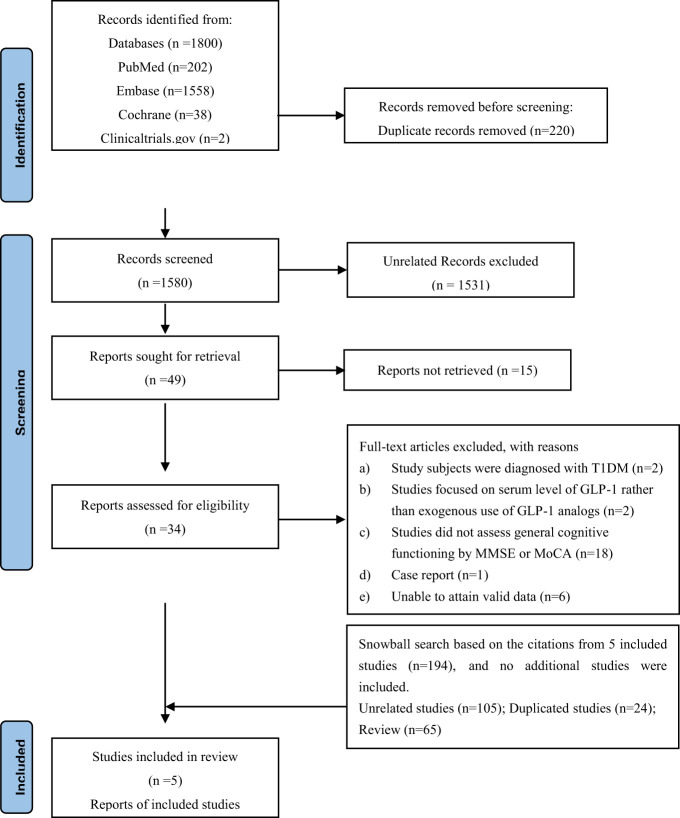
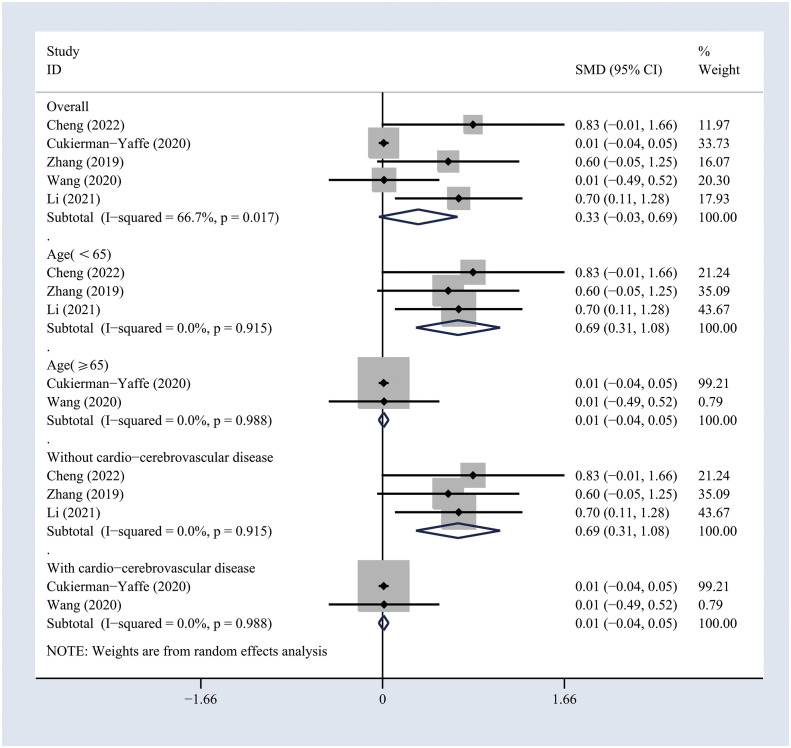
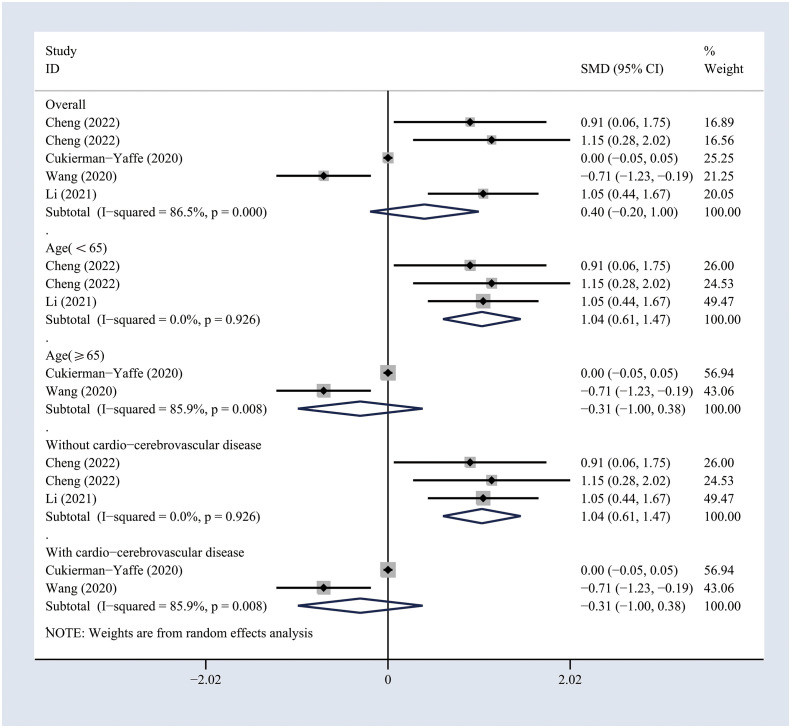
Background: Diabetes is an independent risk factor for cognitive impairment. However, little is known about the neuroprotective effects of glucagon-like peptide 1 (GLP-1) analogs on type 2 diabetes mellitus (T2DM). Herein, we assessed the impact of GLP-1 analogs on the general cognitive functioning among patients with T2DM. Methods: Relevant studies were retrieved from PubMed, Embase, Cochrane Central Register of Controlled Trials (CENTRAL), and ClinicalTrials.gov databases from their inception till June 30, 2022, without any language restrictions. For continuous variables, the mean and standard deviation (SD) were extracted. Considering the heterogeneity in general cognitive functioning assessments among the pooled studies, the standardized mean differences (SMDs) with corresponding 95% confidence intervals (CIs), were calculated. Results: Five studies including 7,732 individuals with T2DM were selected for the meta-analysis. The use of GLP-1 analogs exerted no significant effects on the general cognitive functioning in self-controlled studies (SMD 0.33, 95% CI -0.03 to 0.69). Subgroup analyses among the self-controlled studies based on age and history of cardio-cerebrovascular disease showed that GLP-1 analogs significantly improved the general cognitive functioning in T2DM patients younger than 65 years (SMD 0.69, 95% CI 0.31 to 1.08) or those without cardio-cerebrovascular diseases (SMD 0.69, 95% CI 0.31 to 1.08). Similarly, differences in the general cognitive functioning for GLP-1 analogs between treated and non-treated patients with T2DM were significant in subgroups with patients younger than 65 years (SMD 1.04, 95% CI 0.61 to 1.47) or those with no history of cardio-cerebrovascular diseases (SMD 1.04, 95% CI 0.61 to 1.47). Conclusion: Limited evidence suggests that the use of GLP-1 analogs exerts no significant effects on general cognitive functioning but may be beneficial for patients with T2DM younger than 65 years or those without a history of cardio-cerebrovascular diseases. Further prospective clinical studies with large sample sizes are needed to validate these findings. Systematic Review Registration: www.inplasy.com, identifier 202260015.
Overview
The claims and statistics of this paper haven’t been checked yet.
Free: it reads the open-access text and checks the first 5 claims that cite a source we can check. Create a free account to check every claim.
Integrity signals
Registry
Cites
Statistics
Figures
Verification
Claims the paper makes
The claims and statistics of this paper haven’t been checked yet.
Free: it reads the open-access text and checks the first 5 claims that cite a source we can check. Create a free account to check every claim.
Claims other papers make about this one
Each is checked against this paper’s own text: does it say what the citing paper says it does?
The source backs part of the claim, not all of it — or backs it for a different population, condition or comparison.
In the citing paper
“However, to date, the association of cardioprotective classes of glucose-lowering therapies with risk of dementia has been inconsistent, prompting the need for an updated meta-analysis of randomized clinical trials.10,11”
From Cardioprotective Glucose-Lowering Agents and Dementia Risk: A Systematic Review and Meta-Analysis (2025) · cites this paper as [11]
Experimental — accuracy not yet measured
Self-check
Percentages, sums and reported differences re-computed from the paper’s own numbers.
The self-check needs the paper’s full text.
Citations
Cites
The PRISMA 2020 statement: An updated guideline for reporting systematic reviews
Page, M. J., McKenzie, J. E., Bossuyt, P. M., Boutron, I., Hoffmann, T. C., Mulrow, C. D., Shamseer, L., Tetzlaff, J. M., Akl, E. A., Brennan, S. E., et al. (2021) · BMJ · doi:10.1136/bmj.n71 · Cited by 108,283
RoB 2: a revised tool for assessing risk of bias in randomised trials
Sterne, J. A. C., Savović, J., Page, M. J., Elbers, R. G., Blencowe, N. S., Boutron, I., Cates, C. J., Cheng, H.-Y., Corbett, M. S., Eldridge, S. M., et al. (2019) · BMJ · doi:10.1136/bmj.l4898 · Cited by 34,787
Stang, A. (2010) · European Journal of Epidemiology · doi:10.1007/s10654-010-9491-z · Cited by 17,396 · cited 2×
“Two reviewers (SS-L and WK-C) independently assessed the risk of bias in the included cohort studies by awarding stars in each domain following the guidelines of the Newcastle-Ottawa Quality Assessment Scale criteria (NOS) (15).”
MethodMechanisms of Action and Therapeutic Application of Glucagon-like Peptide-1
Drucker, D. J. (2018) · Cell Metabolism · doi:10.1016/j.cmet.2018.03.001 · Cited by 2,170
Kristensen, S. L., Rørth, R., Jhund, P. S., Docherty, K. F., Sattar, N., Preiss, D., Køber, L., Petrie, M. C., & McMurray, J. J. V. (2019) · The Lancet Diabetes & Endocrinology · doi:10.1016/s2213-8587(19)30249-9 · Cited by 1,663
Cognitive decline and dementia in diabetes mellitus: mechanisms and clinical implications
Biessels, G. J., & Despa, F. (2018) · Nature Reviews Endocrinology · doi:10.1038/s41574-018-0048-7 · Cited by 1,454
GLP-1 receptor agonists for individualized treatment of type 2 diabetes mellitus
Meier, J. J. (2012) · Nature Reviews Endocrinology · doi:10.1038/nrendo.2012.140 · Cited by 1,311 · cited 1×
“Native GLP-1 is degraded within 2-3 min in the circulation; various GLP-1 analogs have been developed to exert prolonged in vivo activity for the treatment of T2DM and obesity (8).”
BackgroundRajan, K. B., Weuve, J., Barnes, L. L., McAninch, E. A., Wilson, R. S., & Evans, D. A. (2021) · Alzheimer's & Dementia · doi:10.1002/alz.12362 · Cited by 1,268 · cited 3×
“Inclusion criteria were as follows: (1) the population comprised adult subjects diagnosed with T2DM at the baseline; (2) GLP-1 analogs of single formulation rather than a combination at fixed doses; (3) GLP-1 analogs compared with no use of GLP-1 analogs, placebo, or self-control before treatment; (4) the duration of…”
BackgroundDiabetes and cognitive dysfunction
McCrimmon, R. J., Ryan, C. M., & Frier, B. M. (2012) · The Lancet · doi:10.1016/s0140-6736(12)60360-2 · Cited by 880 · cited 3×
“Inclusion criteria were as follows: (1) the population comprised adult subjects diagnosed with T2DM at the baseline; (2) GLP-1 analogs of single formulation rather than a combination at fixed doses; (3) GLP-1 analogs compared with no use of GLP-1 analogs, placebo, or self-control before treatment; (4) the duration of…”
BackgroundArevalo-Rodriguez, I., Smailagic, N., Roqué i Figuls, M., Ciapponi, A., Sanchez-Perez, E., Giannakou, A., Pedraza, O. L., Bonfill Cosp, X., & Cullum, S. (2015) · Cochrane Database of Systematic Reviews · doi:10.1002/14651858.cd010783.pub2 · Cited by 831 · cited 1×
“Another possibility is that the MMSE and MoCA scores are not sensitive enough to detect the improvement in certain aspects of cognitive functions in T2DM patients following treatment with GLP-1 analogs, and additional and extensive tests are needed (28, 29).”
Background
Research works printed but not linked: 1
- Wang Q Wang D Cheng A Sun FY Li Z. Comparison between the effects of sitagliptin and liraglutide on blood glucose and cognitive function of patients with both type 2 diabetes mellitus and post-stroke mild cognitive impairment. Int J Clin Exp Med (2020) 13(2): 1219–27.
Cited by
Cardioprotective Glucose-Lowering Agents and Dementia Risk: A Systematic Review and Meta-Analysis
Seminer, A., Mulihano, A., O’Brien, C., Krewer, F., Costello, M., Judge, C., O’Donnell, M., & Reddin, C. (2025) · JAMA Neurology · doi:10.1001/jamaneurol.2025.0360 · Cited by 91
De Giorgi, R., Ghenciulescu, A., Dziwisz, O., Taquet, M., Adler, A. I., Koychev, I., Upthegrove, R., Solmi, M., McCutcheon, R., Pillinger, T., et al. (2025) · Nature Mental Health · doi:10.1038/s44220-025-00390-x · Cited by 77
Kuate Defo, A., Bakula, V., Pisaturo, A., Labos, C., Wing, S. S., & Daskalopoulou, S. S. (2024) · Diabetes, Obesity and Metabolism · doi:10.1111/dom.15331 · Cited by 75
Youn, Y. J., Kim, S. Y., Jeong, H., Ah, Y., & Yu, Y. M. (2024) · Frontiers in Neuroendocrinology · doi:10.1016/j.yfrne.2024.101131 · Cited by 76
A review of type 2 diabetes mellitus and cognitive impairment
Kan, W., Qu, M., Wang, Y., Zhang, X., & Xu, L. (2025) · Frontiers in Endocrinology · doi:10.3389/fendo.2025.1624472 · Cited by 71
Glucagon-like peptide-1 receptor agonists for major neurocognitive disorders
Giorgi, R. D., Ghenciulescu, A., Yotter, C. N., Taquet, M., & Koychev, I. G. (2025) · Journal of Neurology Neurosurgery & Psychiatry · doi:10.1136/jnnp-2024-335593 · Cited by 48
Kalaria, R. N., Akinyemi, R., Paddick, S., & Ihara, M. (2023) · Expert Review of Neurotherapeutics · doi:10.1080/14737175.2023.2273393 · Cited by 30
Massussi, M., Bellicini, M. G., Adamo, M., Pilotto, A., Metra, M., Padovani, A., & Proietti, R. (2024) · ESC Heart Failure · doi:10.1002/ehf2.15144 · Cited by 29
Chai, S., Liu, F., Yu, S., Yang, Z., & Sun, F. (2023) · Journal of Diabetes Investigation · doi:10.1111/jdi.14015 · Cited by 19
Stefanou, M., Chatziralli, I., Lambadiari, V., Mengel, A., Foska, A., Chondrogianni, M., Bakola, E., Tsalouchidou, P., Mitsikostas, D. D., Siasos, G., et al. (2025) · European Journal of Neurology · doi:10.1111/ene.70358 · Cited by 12
“…effects with GLP-1 RA use, including in IIH cohorts, these agents are increasingly regarded as an attractive alternative to first-line IIH treatments (e.g., acetazolamide and topiramate), both of which are associated with cognitive side effects and impairment, even in young patients [34, 35].”
Llach, C.-D., Badulescu, S., Tabassum, A., Shah, H., Gill, H., Le, G. H., Vieta, E., McIntyre, R. S., Rosenblat, J. D., & Mansur, R. B. (2025) · Molecular Psychiatry · doi:10.1038/s41380-025-03261-0 · Cited by 21
“A recent meta-analysis of fi ve RCTs involving over 7700 patients with T2DM reported no overall cognitive bene fi t from GLP-1RA treatment [162].”
Ballum, H., Dri, C. E., Liao, S., Yu, M., Le, G. H., Wong, S., Teopiz, K. M., Kwan, A. T. H., Ho, R., Choi, H., et al. (2026) · Journal of Affective Disorders · doi:10.1016/j.jad.2026.121310 · Cited by 14
McIntyre, R. S. (2025) · American Journal of Psychiatry · doi:10.1176/appi.ajp.20241087 · Cited by 12
GLP‐1 at the Metabolic–Cognitive Interface: Reward, Affect, and Memory
Gao, S., Décarie-Spain, L., Gu, C., Mazzini, G., Kanoski, S. E., & Borner, T. (2026) · Comprehensive physiology · doi:10.1002/cph4.70129 · Cited by 17
“Early evidence from clinical trials suggested that GLP-1RAs exert no significant effect on general cognitive performance, although potential benefits were observed in patients with T2DM younger than 65 years or those without cardiocerebrovascular disease history (Luan et al. 2022).”
Cognitive impairment in type 2 diabetes mellitus: prospects for the use of metformin
Pashkovska, N. V. (2023) · INTERNATIONAL JOURNAL OF ENDOCRINOLOGY (Ukraine) · doi:10.22141/2224-0721.19.3.2023.1274 · Cited by 11
Tian, A., Sun, L., Zheng, Y., Du, L., Huang, X., & Wu, H. (2024) · Journal of Functional Foods · doi:10.1016/j.jff.2024.106064 · Cited by 8
The Gut Nexus: Unraveling Microbiota-Mediated Links Between Type 2 Diabetes and Colorectal Cancer
Mahboob, A., Shin, C., Almughanni, S., Horňáková, Ľ., Kubatka, P., & Büsselberg, D. (2025) · Nutrients · doi:10.3390/nu17233803 · Cited by 11
“These microbial patterns have been reported in human studies and explored in experimental models, although translational and causal implications remain under investigation [43–45].”
Effects of Semaglutide on Cognitive Function in People With HIV: A Randomized, Controlled Trial
Atieh, O., Daher, J., Abboud, M., Wu, Q., Sattar, A., Baissary, J., Koberssy, Z., Labbato, D. E., Eckard, A. R., & McComsey, G. A. (2025) · Clinical Infectious Diseases · doi:10.1093/cid/ciaf577 · Cited by 10
Bath, P. M., Phan, E. P., Clay, G., Dawson, J., Malhotra, P., Howard, R. J., Pal, S., Wardlaw, J. M., Quinn, T., & Macleod, M. R. (2024) · F1000Research · doi:10.12688/f1000research.157890.1 · Cited by 4
Pathogenetic aspects of dementia in patients with type 2 diabetes mellitus
Romashevsky, B. V., Салухов, В. В., Maksim, O. V., & Duganova, A. V. (2025) · Bulletin of the Russian Military Medical Academy · doi:10.17816/brmma630664 · Cited by 1
An Update on GLP ‐1 Receptor Agonists
Bloomgarden, Z. T. (2025) · Journal of Diabetes · doi:10.1111/1753-0407.70147 · Cited by 2
“Emerging research suggests GLP-1RAs may protect against neurodegenerative diseases, including Alzheimer's Disease [15] and Parkinson's Disease [16], with beneficial impacts on cognitive function [17]; although some of this may simply reflect GLP- 1RA-related reduction in stroke.”
Marano, G., Rossi, S., Lisci, F. M., Traversi, G., Mazza, O., Claro, A. E., Pola, R., Pitocco, D., Sani, G., Gaetani, E., et al. (2025) · Aging advances. · doi:10.4103/agingadv.agingadv-d-25-00027 · Cited by 2
Helal, M. M., Almosilhy, N. A., Abo‐elnour, D. E., Jaffal, R., Allam, E. G., Almosilhy, M. A., Batarseh, S. F., & Meshref, M. M. (2026) · Amyotrophic Lateral Sclerosis and Frontotemporal Degeneration · doi:10.1080/21678421.2026.2627901 · Cited by 3
“…with GLP-1 analogs did not significantly affect overall cognitive performance in self-controlled analyses (SMD ¼ 0.33; 95% CI: − 0.03 to 0.69) (268,269), although treat-ment may be beneficial for patients with T2DM younger than 65 years or those without a history of cardio-cerebrovascular…”
InfluentialElghanam, Y., & Kim, E. (2026) · Archives of Pharmacal Research · doi:10.1007/s12272-026-01615-y · Cited by 3
“Prior research on GLP-1RAs has largely focused on the diabetic population, where cognitive impairment is closely intertwined with hypoglycemia, insulin resistance, and diabetes-related complications (Luan et al. 2022; Tang et al. 2023; García-Casares et al. 2023; Kuate Defo et al. 2024).”
Targeting insulin resistance to treat cognitive impairment
Miraj, S. S., Benson, R., Malakapogu, P., Shyma, Z., Kurian, S. J., Baral, T., & Shetty, S. (2025) · Elsevier eBooks · doi:10.1016/b978-0-443-33355-2.00018-9
Metadata
- Authors
- Luan, S., Cheng, W., Wang, C., Gong, J., & Zhou, J.
- Affiliations
- Beijing Tongren Hospital (CN)
- Leipzig University (DE)
- Chinese Academy of Medical Sciences & Peking Union Medical College (CN)
- Corresponding author
- Zhou, Jianbo
- Venue
- Frontiers in Endocrinology
- Publisher
- Frontiers Media SA
- Published
- 2022-10-28
- Volume
- 13
- Pages
- 1047883-1047883
- ISSN
- 1664-2392 (ISSN-L)
- PMC
- PMC9650490
- OpenAlex
- W4307704054
- Cited by
- 25
- References
- 33
- Citations by year
- 2026: 4 · 2025: 13 · 2024: 4 · 2023: 4
- FWCI
- 0.75
- Type
- journal article
- Language
- en
- Open access
- gold
- doi.org
- Licence
- Locations
- Frontiers in Endocrinology (publishedVersion, cc-by)
- PubMed Central (publishedVersion, cc-by)
- PubMed (publishedVersion)
- DOAJ (DOAJ: Directory of Open Access Journals) (submittedVersion, cc-by-sa)
- Qucosa (Saxon State and University Library Dresden) (submittedVersion, cc-by)
- Funders
- National Natural Science Foundation of China (82270866, 82100828)
- Topics
- Health Sciences › Medicine › Endocrinology, Diabetes and Metabolism › Diabetes Treatment and Management
- Health Sciences › Medicine › Psychiatry and Mental health › Dementia and Cognitive Impairment Research
- Health Sciences › Medicine › Endocrinology, Diabetes and Metabolism › Diabetes Management and Research
- Keywords
- glucagon-like peptide-1 analogues, type 2 diabetes, cognitive function, cognitive impairment, neuroprotection, cardio-cerebrovascular disease, age, self-controlled study, GLP-1 receptor agonists, older adults, young adults, standardized mean difference, meta-regression
- MeSH terms
- Cognition, Diabetes Mellitus, Type 2, Humans, Risk Factors, Glucagon-Like Peptide 1
About these checks
Registry, retraction, Cites and statistics results are computed, not judged, with one exception: a printed reference that no index lists is read once by a model before it counts as a citation error. Claims are extracted by a model and kept only when their quote appears verbatim in the text; each cited source is then checked, with a model’s help, for whether it says what the claim relies on. Those verdicts can be wrong — read the claim’s quote and the cited source before relying on one.
Statistics and arithmetic are recomputed, not judged.
Confidence bands are shown only for fields calibrated on our annotated test set. None is calibrated yet, so no band is shown.
What counts as a claim ›How we measure confidence ›How we check this ›
Are you an author, or do you see a problem with this page? Request a review
Data sources
Bibliographic data: Semantic Scholar, OpenAlex, Crossref.
Contains information from the Semantic Scholar Academic Graph Datasets, made available under the ODC Attribution License (ODC-BY 1.0).
Semantic Scholar’s data is described in: Kinney, R., et al. (2023). The Semantic Scholar Open Data Platform. arXiv:2301.10140.
