

Performance of artificial intelligence in diabetic retinopathy screening: a systematic review and meta-analysis of prospective studies
Open accessThe DOI matches its Crossref record; 57 of the 57 references it cites were found in a registry or an index.
Abstract
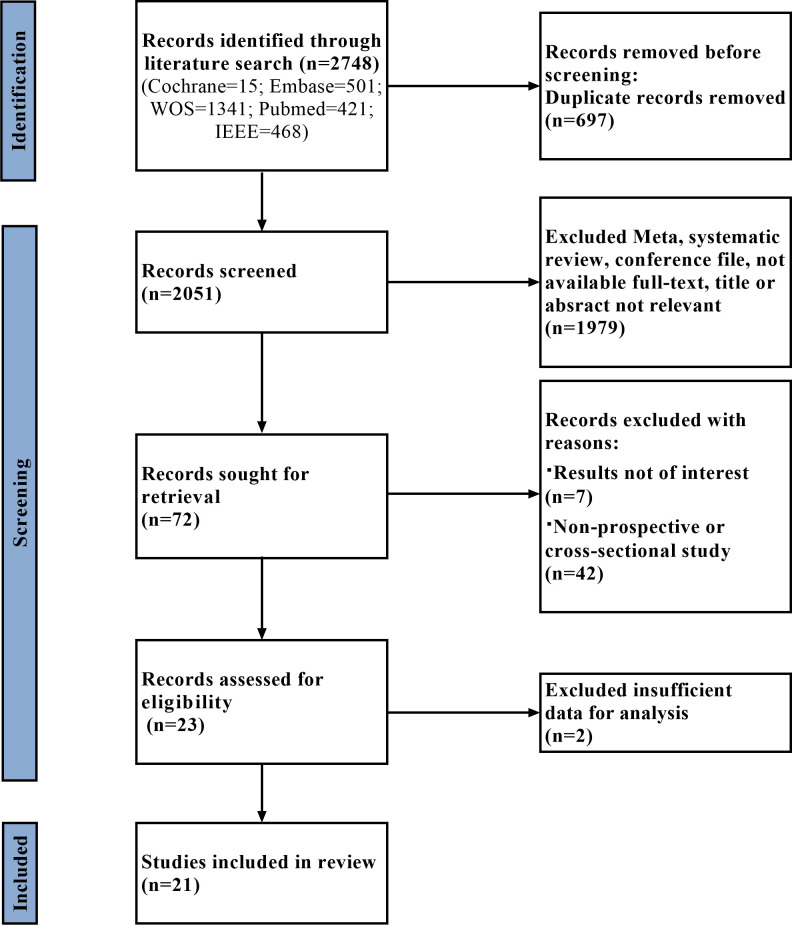
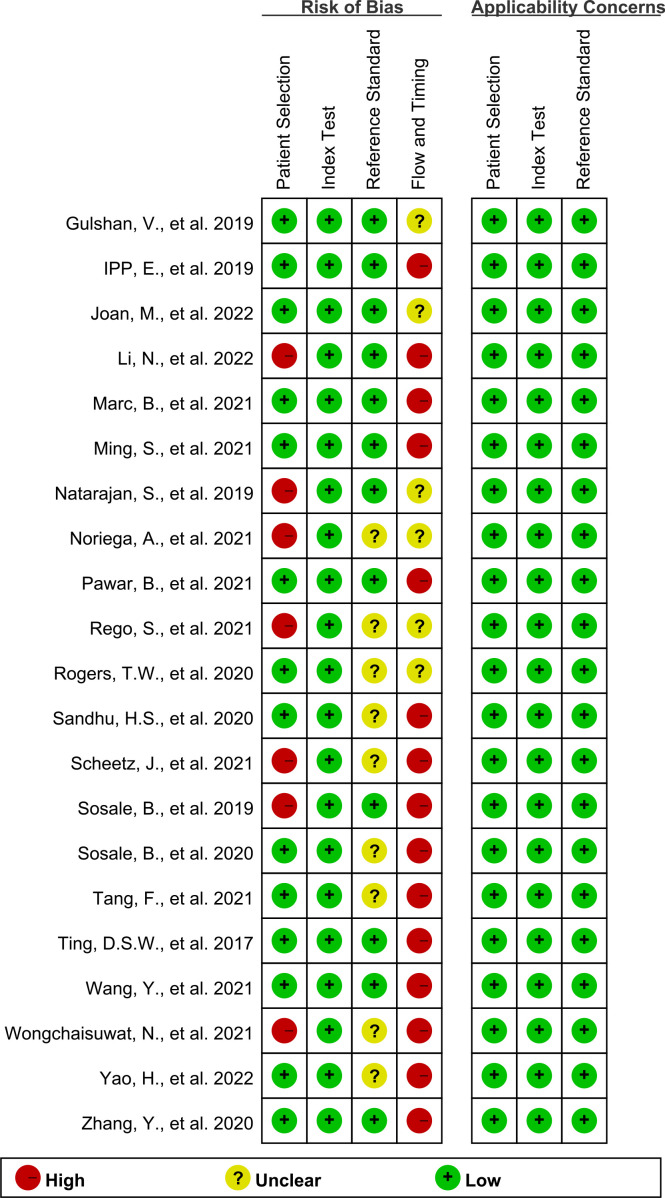
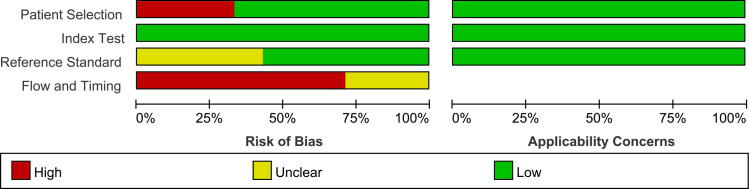
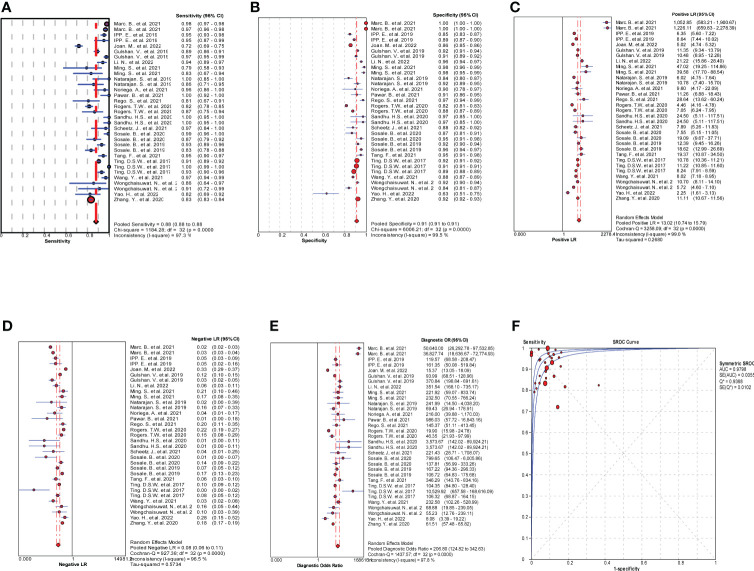
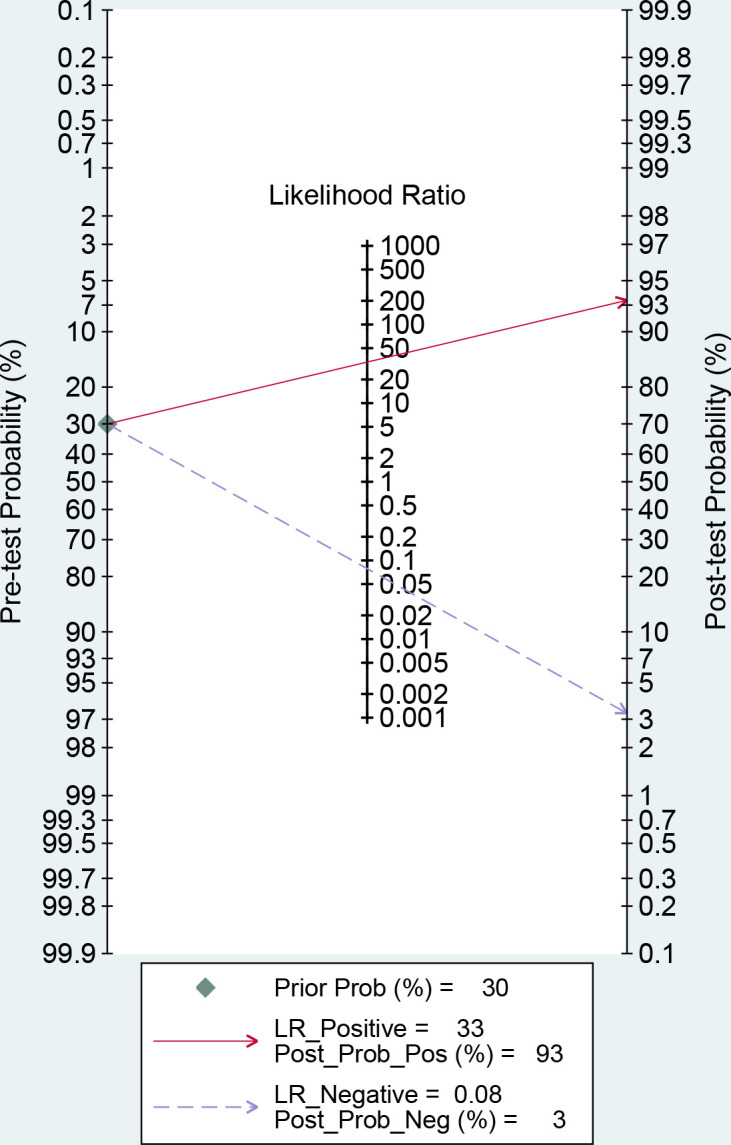
Aims: To systematically evaluate the diagnostic value of an artificial intelligence (AI) algorithm model for various types of diabetic retinopathy (DR) in prospective studies over the previous five years, and to explore the factors affecting its diagnostic effectiveness. Materials and methods: A search was conducted in Cochrane Library, Embase, Web of Science, PubMed, and IEEE databases to collect prospective studies on AI models for the diagnosis of DR from January 2017 to December 2022. We used QUADAS-2 to evaluate the risk of bias in the included studies. Meta-analysis was performed using MetaDiSc and STATA 14.0 software to calculate the combined sensitivity, specificity, positive likelihood ratio, and negative likelihood ratio of various types of DR. Diagnostic odds ratios, summary receiver operating characteristic (SROC) plots, coupled forest plots, and subgroup analysis were performed according to the DR categories, patient source, region of study, and quality of literature, image, and algorithm. Results: Finally, 21 studies were included. Meta-analysis showed that the pooled sensitivity, specificity, pooled positive likelihood ratio, pooled negative likelihood ratio, area under the curve, Cochrane Q index, and pooled diagnostic odds ratio of AI model for the diagnosis of DR were 0.880 (0.875-0.884), 0.912 (0.99-0.913), 13.021 (10.738-15.789), 0.083 (0.061-0.112), 0.9798, 0.9388, and 206.80 (124.82-342.63), respectively. The DR categories, patient source, region of study, sample size, quality of literature, image, and algorithm may affect the diagnostic efficiency of AI for DR. Conclusion: AI model has a clear diagnostic value for DR, but it is influenced by many factors that deserve further study. Systematic review registration: https://www.crd.york.ac.uk/prospero/, identifier CRD42023389687.
Overview
The claims and statistics of this paper haven’t been checked yet.
Free: it reads the open-access text and checks the first 5 claims that cite a source we can check. Create a free account to check every claim.
Integrity signals
Registry
Cites
Statistics
Figures
Verification
Claims the paper makes
The claims and statistics of this paper haven’t been checked yet.
Free: it reads the open-access text and checks the first 5 claims that cite a source we can check. Create a free account to check every claim.
Self-check
Percentages, sums and reported differences re-computed from the paper’s own numbers.
The self-check needs the paper’s full text.
Citations
Cites
1 retracted
RETRACTED ARTICLE: Artificial intelligence and machine learning in precision and genomic medicine
Quazi, S. (2022) · Medical Oncology · doi:10.1007/s12032-022-01711-1 · Cited by 432 · cited 1×
“Meanwhile, the application of AI in the medical fi eld is being continuously developed and subdivided (39).”
RetractedThe PRISMA 2020 statement: An updated guideline for reporting systematic reviews
Page, M. J., McKenzie, J. E., Bossuyt, P. M., Boutron, I., Hoffmann, T. C., Mulrow, C. D., Shamseer, L., Tetzlaff, J. M., Akl, E. A., Brennan, S. E., et al. (2021) · BMJ · doi:10.1136/bmj.n71 · Cited by 108,283
QUADAS-2: a revised tool for the quality assessment of diagnostic accuracy studies
Whiting, P. F., Rutjes, A. W. S., Westwood, M. E., Mallett, S., Deeks, J. J., Reitsma, J. B., Leeflang, M. M. G., Sterne, J. A. C., Bossuyt, P. M. M., & the QUADAS-2 Group* (2011) · Annals of Internal Medicine · doi:10.7326/0003-4819-155-8-201110180-00009 · Cited by 14,199
Ting, D. S. W., Cheung, C. Y.-L., Lim, G., Tan, G. S. W., Quang, N. D., Gan, A., Hamzah, H., Garcia-Franco, R., San Yeo, I. Y., Lee, S. Y., et al. (2017) · JAMA · doi:10.1001/jama.2017.18152 · Cited by 2,402 · cited 1×
“(34) 2017 China a retinal specialist(>10 years’ experience) RDR 976 2929 102 31941 35948”
Abràmoff, M. D., Lavin, P. T., Birch, M., Shah, N., & Folk, J. C. (2018) · npj Digital Medicine · doi:10.1038/s41746-018-0040-6 · Cited by 1,638 · cited 2×
“Since the researchers did not clarify the pre-training degree and learning amount of each model, we could not include these factors in the analysis; (7) there are problems with direct comparison of diagnostic accuracy.”
Artificial intelligence and deep learning in ophthalmology
Ting, D. S. W., Pasquale, L. R., Peng, L., Campbell, J. P., Lee, A. Y., Raman, R., Tan, G. S. W., Schmetterer, L., Keane, P. A., & Wong, T. Y. (2019) · British Journal of Ophthalmology · doi:10.1136/bjophthalmol-2018-313173 · Cited by 1,554 · cited 1×
“However, due to the different image quality of fundus color photos, algorithms used by AI models, and performance of cameras used in different studies, the AI diagnostic effect varies signi fi cantly among different studies (40, 41).”
Artificial Intelligence and Deep Learning in Ophthalmology
Wang, Z., Keane, P. A., Chiang, M., Cheung, C. Y., Wong, T. Y., & Ting, D. S. W. (2022) · Artificial Intelligence in Medicine · doi:10.1007/978-3-030-64573-1_200 · Cited by 1,524
A deep learning system for detecting diabetic retinopathy across the disease spectrum
Dai, L., Wu, L., Li, H., Cai, C., Wu, Q., Kong, H., Liu, R., Wang, X., Hou, X., Liu, Y., et al. (2021) · Nature Communications · doi:10.1038/s41467-021-23458-5 · Cited by 620
Diabetic retinopathy: Looking forward to 2030
Tan, T.-E., & Wong, T. Y. (2023) · Frontiers in Endocrinology · doi:10.3389/fendo.2022.1077669 · Cited by 511
Wong, T. Y., & Sabanayagam, C. (2020) · Ophthalmologica · doi:10.1159/000502387 · Cited by 310
Cited by
Zhang, Z., Deng, C., & Paulus, Y. M. (2024) · Biomedicines · doi:10.3390/biomedicines12071405 · Cited by 100
“Concomitantly, Gargeya et al. developed a customized CNN for detecting DR and validated it against a larger dataset of color fundus photos from multiple independent sources, emphasizing the generalizability of their model.”
MethodS.Rajarajeshwari, G. K. P., & Selvi, G. C. (2024) · IEEE Access · doi:10.1109/access.2024.3494840 · Cited by 71
“…tools, TL experimentation and have highlighted the recent developments in automated-based DR classification techniques in ML and DL. Reference [18] have shed light on the selection and characteristics of eligible studies, quality assessment, threshold analysis, and heterogeneity test,…”
Kong, M., & Song, S. J. (2024) · Endocrinology and Metabolism · doi:10.3803/enm.2023.1913 · Cited by 52
“The performance of AI in diagnosing DR was found to be promising, with the sensitivity, specificity, and AUC reported as 0.880, 0.912, and 0.9798, respectively [23].”
BackgroundInfluentialChen, K.-S., Chan, H.-C., & Chan, C.-M. (2025) · Diabetes Research and Clinical Practice · doi:10.1016/j.diabres.2025.112379 · Cited by 44
Alqahtani, A. S., Alshareef, W. M., Aljadani, H. T., Hawsawi, W. O., & Shaheen, M. H. (2025) · International Journal of Retina and Vitreous · doi:10.1186/s40942-025-00670-9 · Cited by 47
“These differences in AI training create a varying diagnostic effect leading to high heterogeneity levels [28].”
Diabetic retinopathy disease detection using shapley additive ensembled densenet-121 resnet-50 model
Mary, A. R., & Kavitha, P. (2024) · Multimedia Tools and Applications · doi:10.1007/s11042-024-18309-6 · Cited by 24
Moannaei, M., Jadidian, F., Doustmohammadi, T., Kiapasha, A. M., Bayani, R., Rahmani, M., Jahanbazy, M. R., Sohrabivafa, F., Asadi Anar, M., Magsudy, A., et al. (2025) · BioMedical Engineering OnLine · doi:10.1186/s12938-025-01336-1 · Cited by 18
“With the emergence of machine learning and AI, the approach to DR screening and diagnosis has undergone a transformative shift, capitalizing on these technologies’ immense potential to bolster accuracy, efficiency, and accessibility in healthcare [10, 18].”
InfluentialDiabetic retinopathy screening model in low and middle-income countries: a scoping review
Lestari, Y. D., Sitompul, R., Widyahening, I. S., Tahapary, D. L., Yusuf, P. A., Sasongko, M. B., Riono, P., Nursakina, Y., & Alexandra, G. (2025) · BMC Public Health · doi:10.1186/s12889-025-25543-6 · Cited by 11
“…to protect patient information and ensure compliance with international standards Semi-automated models that combine AI with human graders have shown high accuracy at lower cost, while also reducing long-term healthcare expenditures through earlier detection and intervention [34, 46, 51, 52].”
Rahmati, M., Smith, L., Piyasena, M. P., Bowen, M., Boyer, L., Fond, G., Kazemi, A., Yon, D. K., Lee, H., Sehmbi, T., et al. (2025) · Eye · doi:10.1038/s41433-025-03849-4 · Cited by 11
“AI based DR screening systems can be effectively utilized to improve the efficiency of a screening program and relieves the pressure on eye health systems with regard to training and retention of skilled human graders [32].”
Autonomous artificial intelligence versus teleophthalmology for diabetic retinopathy
Musetti, D., Cutolo, C. A., Bonetto, M., Giacomini, M. L., Maggi, D. C., Viviani, G. L., Gandin, I., Traverso, C. E., & Nicolò, M. (2024) · European Journal of Ophthalmology · doi:10.1177/11206721241248856 · Cited by 11
Optimal Convolutional Networks for Staging and Detecting of Diabetic Retinopathy
Hidri, M. S., Hidri, A., Alsaif, S. A., Alahmari, M., & Alshehri, E. (2025) · Information · doi:10.3390/info16030221 · Cited by 8
Purohit, N., Gupta, P. C., Buttan, S., Chauhan, A. S., Choudhury, R. K., Gupta, V., Kotwal, A., & Prinja, S. (2025) · PharmacoEconomics - Open · doi:10.1007/s41669-025-00572-4 · Cited by 8
“The sensitivity and specificity of each DR screening strategy in the diabetic population was based on published studies (Table S2, see ESM) [25–27].”
Yudistira, Y., Hendrawan, K. A., Andayani, A., Suryathi, N. M. A., Ernawati, T., Gunawan, A. C. V., & Daradila, N. P. K. M. (2025) · Turkish Journal of Ophthalmology · doi:10.4274/tjo.galenos.2025.32916 · Cited by 5
“15,16,17 Our results are also comparable to those of meta-analyses on AI-based detection for other eye disease such as glaucoma, pathologic myopia, and dry eye disease.”
Najafi, A., Babaei, S., Sadoughi, M.-M., Kalantarion, M., & Sadatmoosavi, A. (2025) · Journal of Ophthalmic and Vision Research · doi:10.18502/jovr.v20.17029 · Cited by 5
Ke, G.-Q., Fu, Y., Huang, Z., Dai, S., Wen, Y.-H., & Lv, H.-X. (2025) · Frontiers in Medicine · doi:10.3389/fmed.2025.1644456 · Cited by 4
Kabunga, R. R., Asasira, J., Njuki, S., Atwine, D., Morley, K., Morley, M. G., Kaggwa, F., Cikomola, J. C., & Simon, A. (2025) · Journal of Medical Systems · doi:10.1007/s10916-025-02280-2 · Cited by 2
“Embedded systems were incorporated in a tabletop fundus camera system (IDx-DR) or a portable or smartphone-based fundus camera (Bosch AI DR [ 26 ], PhelmonNet [ 15 , 55 ], and Medios AI [28, 38 , 55 ] systems).”
Onyeze, N. S., Sartawi, S., & Nayyer, Z. (2025) · Cureus · doi:10.7759/cureus.96554 · Cited by 2
Economic Evaluation of Diabetic Retinopathy Screening in Developing Countries: A Systematic Review
Andayani, A., Hendrawan, K. A., Yudistira, Y., Suryathi, N. M. A., & Ernawati, T. (2025) · Korean Journal of Ophthalmology · doi:10.3341/kjo.2025.0047 · Cited by 2
Smartphone-based offline AI for multi-disease retinal screening: Real-world accuracy
Kelkar, A. S., Kelkar, J. A., Garg, Y., Jain, H. H., & Sengupta, S. (2026) · European Journal of Ophthalmology · doi:10.1177/11206721261462321 · Cited by 1
Medicina de precisão na oftalmologia: inovações, desafios e estratégias
Nicolau, Z. F. M., & Angelocci, M. A. (2024) · Even3 Publicações eBooks · doi:10.29327/5453355.1-7
González, J. M., García, T. M., Alonso-Moro, D., García‐Criado, F. J., & Corchado, J. M. (2025) · Lecture notes in educational technology · doi:10.1007/978-981-96-5658-5_24
Overview of Artificial Intelligence Systems in Ophthalmology
Kaothanthong, N., Arjkongharn, N., Vongsa, N., Ruamviboonsuk, V., & Ruamviboonsuk, P. (2025) · Springer eBooks · doi:10.1007/978-3-031-83756-2_3
Ripatti, A.-R. (2025) · Theseus (Ammattikorkeakoulujen) · Cited by 3
Prabowo, E. D., & Dewi, N. A. (2025) · Jurnal kedokteran dan kesehatan Indonesia · doi:10.20885/jkki.vol16.iss3.art9
“34,35 Both doctors and patients currently maintain a favourable perspective on the diagnostic efficacy of AI, potentially facilitating future collaboration.”
Pawłowska, J., Szyszka, K., Baranowska, A., Cieślak, M., Kurczoba, L., Oparcik, A., Orłowa, A., Pakuła, A., Patrzykąt, K. M., & Turlej, K. (2025) · International Journal of Innovative Technologies in Social Science · doi:10.31435/ijitss.4(48).2025.4513
Shar, A., Dhaliwal, B. K., & Bhardwaj, V. (2025) · International Conference on Artificial Intelligence for Innovations in Healthcare Industries (ICAIIHI) · doi:10.1109/icaiihi67124.2025.11403463
“Wang et al. [11] utilized a meta-analysis of AI DR screening models across prospective screening studies, and reported an average accuracy of 92% and a sensitivity of 94% and specificity rate of 90%, better than compared to the standard of care.”
Semnani, F., Aarabi, S. S., Hassanpour, K., Kabiri, P., Sedaghat, M., & Takian, A. (2026) · International Journal of Health Policy and Management · doi:10.34172/ijhpm.9345
Jena, S. S., & Rayguru, M. M. (2026) · Cureus · doi:10.7759/cureus.108630
“These AUC values are lower than those reported in landmark benchmark studies [2,3] and reflect the well-documented gap between retrospective performance and prospective deployment [11].”
InfluentialKarmakar, R., Kandalkar, A., Gawali, M., & Mukundan, A. (2026) · World Journal of Psychiatry · doi:10.5498/wjp.119201
Trofin, I.-D., & Giurgiu, M. (2026) · doi:10.3390/engproc2026148016
Hariobulesu, P., & Shaik, F. (2026) · International Research Journal of Multidisciplinary Scope · doi:10.47857/irjms.2026.v07i03.09496
Chen, W., Li, S., Wu, Z., Tan, H., Yu, F., Wang, D., Lin, X., & Chen, Z. (2026) · World Journal of Surgical Oncology · doi:10.1186/s12957-025-03898-9
“Although research on CAD involvement in CPs diagnosis is expanding, the accuracy of CAD varies significantly across studies, which is attributable to differing algorithmic approaches and diagnostic criteria [14, 15].”
Gandhi, S. (2026) · USF Scholarship Repository (University of San Francisco)
Vassallo, A. L., Delfino, A., Ghizzardi, G., Carbone, A., Groppelli, G., Boselli, G., Busca, N., Cerutti, M., Lodigiani, S., Golinelli, C., et al. (2026) · Diagnostics · doi:10.3390/diagnostics16203422
DIABETIC RETINOPATHY: CURRENT APPROACHES TO SCREENING, DIAGNOSIS, AND PERSONALIZED MANAGEMENT
Abuov, S., Mussay, N., Daurenov, U., & Bazarbay, B. (2026) · doi:10.70286/isu-28.10.2026.028
Koltakova, A. N., Raminskaya, A. A., Grebenyuk, A. I., Bagomedova, Z. R., Plotko, A. I., Gubadova, G. C., Gnezdilova, M. V., Gartvikh, E. V., Kikova, A. A., Klycheva, A. R., et al. (2026) · Ophthalmology Reports · doi:10.17816/ov706112
Alshehri, Y. A. S., Alshehri, S., Alziyad, Y. A., Alshabab, S. Q. A., Alshehri, A. A. G., Alshmrani, L. S., Alqahtani, R. E. M., Alsharif, R. A. S., Alnami, A. A. A., Alghamdi, T. A. A., et al. (2026) · Acta Innovations · doi:10.62441/actainnovations.vi.3202
Metadata
- Authors
- Wang, Z., Li, Z., Li, K., Mu, S., Zhou, X., & Di, Y.
- Affiliations
- Sheng Jing Hospital (CN)
- Corresponding author
- Di, Yu
- Venue
- Frontiers in Endocrinology
- Publisher
- Frontiers Media SA
- Published
- 2023-06-13
- Volume
- 14
- Pages
- 1197783-1197783
- ISSN
- 1664-2392 (ISSN-L)
- PMC
- PMC10296189
- OpenAlex
- W4380626653
- Cited by
- 27
- References
- 55
- Citations by year
- 2026: 6 · 2025: 15 · 2024: 6
- FWCI
- 1.14
- Type
- journal article
- Language
- en
- Open access
- gold
- doi.org
- Licence
- Locations
- Frontiers in Endocrinology (publishedVersion, cc-by)
- PubMed Central (publishedVersion, cc-by)
- PubMed (publishedVersion)
- DOAJ (DOAJ: Directory of Open Access Journals) (submittedVersion, cc-by-sa)
- Funders
- National Natural Science Foundation of China
- Foundation of Liaoning Province Education Administration
- Topics
- Health Sciences › Medicine › Radiology, Nuclear Medicine and Imaging › Retinal Imaging and Analysis
- Health Sciences › Medicine › Ophthalmology › Retinal Diseases and Treatments
- Health Sciences › Medicine › Health Informatics › Artificial Intelligence in Healthcare and Education
- Keywords
- diabetic retinopathy, artificial intelligence, automated retinal analysis, diagnostic accuracy, sensitivity and specificity, likelihood ratios, diagnostic odds ratio
- MeSH terms
- Algorithms, Artificial Intelligence, Diabetes Mellitus, Diabetic Retinopathy, Humans, Prospective Studies, Software
About these checks
Registry, retraction, Cites and statistics results are computed, not judged, with one exception: a printed reference that no index lists is read once by a model before it counts as a citation error. Claims are extracted by a model and kept only when their quote appears verbatim in the text; each cited source is then checked, with a model’s help, for whether it says what the claim relies on. Those verdicts can be wrong — read the claim’s quote and the cited source before relying on one.
Statistics and arithmetic are recomputed, not judged.
Confidence bands are shown only for fields calibrated on our annotated test set. None is calibrated yet, so no band is shown.
What counts as a claim ›How we measure confidence ›How we check this ›
Are you an author, or do you see a problem with this page? Request a review
Data sources
Bibliographic data: Semantic Scholar, OpenAlex, Crossref.
Contains information from the Semantic Scholar Academic Graph Datasets, made available under the ODC Attribution License (ODC-BY 1.0).
Semantic Scholar’s data is described in: Kinney, R., et al. (2023). The Semantic Scholar Open Data Platform. arXiv:2301.10140.
