

The waist-to-height ratio is a good predictor for insulin resistance in women with polycystic ovary syndrome
Open accessThe DOI matches its Crossref record; 44 of the 44 references it cites were found in a registry or an index; 12 of the 21 sources its claims cite were checked for support.
Abstract
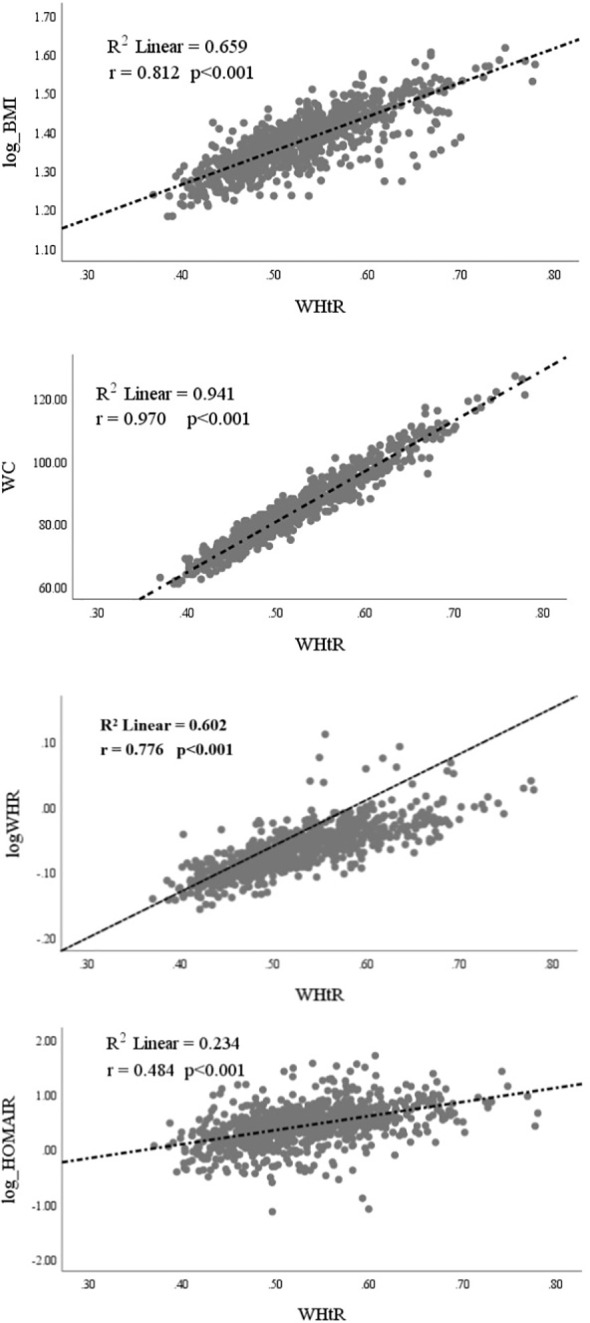
Objective: This study aimed to explore the role of the waist-to-height ratio (WHtR) in assessing insulin resistance (IR) in patients with polycystic ovary syndrome (PCOS). Materials and methods: We enrolled 882 PCOS-afflicted women in a cross-sectional analysis to evaluate the association of the WHtR with IR. Their demographic characteristics, anthropometric parameters, and fasting blood samples were collected and measured. Moreover, IR was evaluated by homeostatic model assessment of insulin resistance (HOMA-IR). We estimated the relationship between the WHtR and IR and the cut-off thresholds of the WHtR for IR using multivariable linear regression and logistic regression models, respectively. Result(s): The prevalence rate of IR was 51.9%. The patients with PCOS and IR displayed significantly increased values for body mass index (BMI), waist circumference (WC), WHtR, systolic blood pressure (SBP), diastolic blood pressure (DBP), free androgen index (FAI), HOMA-IR, total cholesterol (TC), triglyceride (TG), low-density lipoprotein cholesterol (LDL-C), and apolipoprotein B (ApoB). However, the patients with PCOS and IR showed a reduction in estradiol (E2), luteinizing hormone (LH), LH/FSH ratio, sex hormone binding globulin (SHBG), and high-density lipoprotein (HDL-C) values than those without IR. Moreover, BMI (log-transformed), WC, and HOMA-IR (log-transformed) were positively correlated with the WHtR. When adjusting for potential confounding variables, the WHtR was significantly associated with HOMA-IR (log-transformed), with a standardized regression coefficient of 0.271. Furthermore, the WHtR was significantly associated with an increased risk of IR, with the adjusted odds ratio (OR) of 3.15 (WHtR multiplied by 10). Additionally, the WHtR helped to identify IR in women with PCOS with an optimal cut-off point of 0.519 (Youden index = 0.433). Conclusion(s): The WHtR had a positive association with IR in women with PCOS. Hence, we suggest that the WHtR, as a simple, practical, and reliable anthropometric measure, can be used to predict the risk of IR in patients with PCOS.
Overview
CoChat Summary
TL;DR
In a cross-sectional analysis of 882 Chinese women with PCOS, waist-to-height ratio (WHtR) was positively associated with insulin resistance (IR) and predicted IR with an optimal cut-off of 0.519. The authors conclude WHtR is a simple, practical anthropometric marker for early IR risk identification in PCOS.
Key findings
- IR prevalence was 51.9% (458/882). Women with IR had significantly higher BMI, WC, WHtR, SBP, DBP, FAI, HOMA-IR, TC, TG, LDL-C, and ApoB, but lower E2, LH, LH/FSH ratio, SHBG, and HDL-C than those without IR.
- WHtR was positively correlated with HOMA-IR (r=0.484, p<0.001), BMI (r=0.812), WC (r=0.970), and WHR (r=0.776).
- In adjusted linear regression, WHtR was associated with log-transformed HOMA-IR (standardized coefficient 0.271, p<0.001); in adjusted logistic regression, the OR for IR was 3.15 (95% CI 2.27–4.37) per WHtR×10, i.e., per 0.1-unit increase.
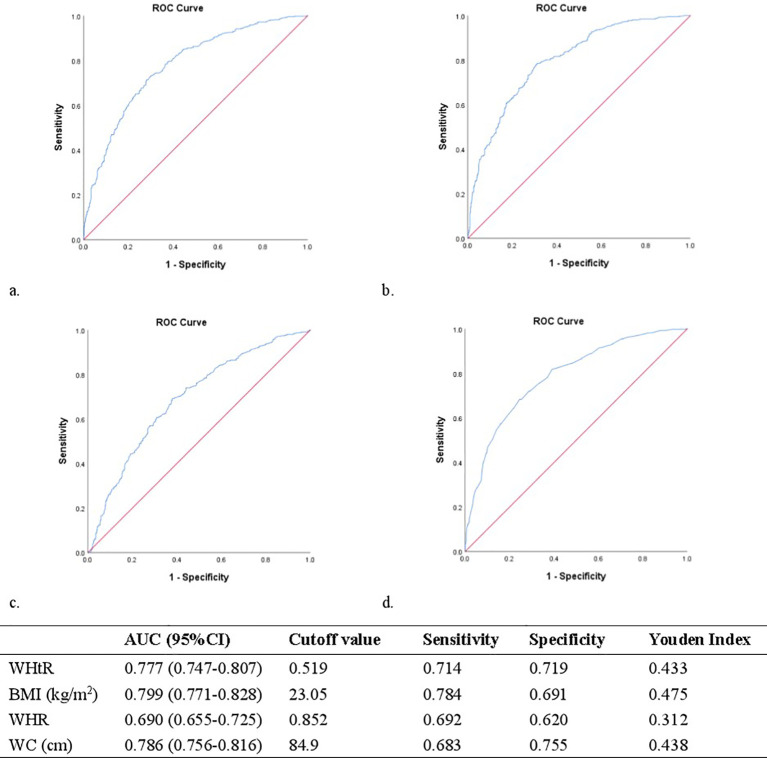
- ROC analysis gave an optimal WHtR cut-off of 0.519 (Youden index = 0.433), with WHtR AUC 0.777 (95% CI 0.747–0.807), comparable to BMI (0.799) and WC (0.786).
Methods
- Cross-sectional secondary analysis of 882 PCOS-afflicted women from the PCOSAct randomized controlled trial across 21 centers in China; PCOS defined by modified Rotterdam criteria.
- Collected demographic, anthropometric, and fasting blood measurements; IR was assessed by HOMA-IR, with the paper reporting an IR threshold of >2.6 in the discussion.
- Used Pearson correlation, multivariable linear regression, multivariable logistic regression across three adjustment models, and ROC analysis to assess WHtR–IR association and cut-off.
Limitations
- Stated by the authors: IR was diagnosed by HOMA-IR rather than hyperinsulinemic-euglycemic clamp; the cross-sectional design precludes causal interpretation; social/lifestyle factors were not included because this was a secondary analysis; body composition analysis was unavailable; and the predominantly Han Chinese sample may limit generalizability across racial/ethnic groups.
- Evident from the text: the study is a secondary analysis of an RCT cohort, so findings may not represent all PCOS women, and the reported HOMA-IR threshold/units in the methods are inconsistently described.
Model-written summary. Check it against the paper before relying on it.
Integrity signals
Registry
Cites
Statistics
Figures
Verification
Claims the paper makes
10 Valid · 0 Not valid · 5 Not checked · 45 Own results and interpretations
Every source the paper cites for this claim was checked and supports it.
In the paper
“We collected data from the Polycystic Ovary Syndrome Acupuncture plus Clomiphene Trial (PCOSAct), a large-sample, randomized controlled trial in China (25).”
§ The waist-to-height ratio is a good predictor for insulin resistance in women with polycystic ovary syndrome > Materials and methods > Participants
What the sources say
- Supportedcites [25] Kuang H Li Y Wu X Hou L Wu T Liu J. Acupuncture and clomiphene citrate for live birth in polycystic ovary syndrome: study design of a randomized controlled trial. Evid Based Complement Alternat Med. (2013) 2013. doi: 10.1155/2013/527303 PMC3762180 24023577 source
The Study Design section (§2.2; page unavailable) describes a multicenter randomized trial for women with PCOS in China. Sample Size Calculations (§2.11; page unavailable) specify 1,000 participants across four arms, supporting the description of a large-sample trial. The citing authors’ statement that they collected data is their own, not a claim attributed to this source. (LLM, conf=0.92)
plain- Asserted: passes — The authors put it forward as true.
- Checkable: passes — It can be checked against evidence.
- Load-bearing: passes — The paper’s conclusions depend on it.
- Based: passes — The paper gives a reason why it holds.
- Supported
A result the paper reports from its own data — it cites no other source for it, so there is none to check. The quote shows it is in the paper.
In the paper
“We showed that the WHtR was independently associated with IR in patients with PCOS.”
§ The waist-to-height ratio is a good predictor for insulin resistance in women with polycystic ovary syndrome > Discussion
plainstates an association- Asserted: passes — The authors put it forward as true.
- Checkable: passes — It can be checked against evidence.
- Load-bearing: passes — The paper’s conclusions depend on it.
- Based: passes — The paper gives a reason why it holds.
- Rests on 2 assumptions not shown here.
A result the paper reports from its own data — it cites no other source for it, so there is none to check. The quote shows it is in the paper.
In the paper
“In our study, we found that the prevalence rate of IR diagnosed using the HOMA-IR >2.6 was 51.9% in the patients with PCOS; this value was smaller than 74.9%, the prevalence assessed by hyperinsulinemic-euglycemic clamp (28).”
§ The waist-to-height ratio is a good predictor for insulin resistance in women with polycystic ovary syndrome > Discussion
plain- Asserted: passes — The authors put it forward as true.
- Checkable: passes — It can be checked against evidence.
- Load-bearing: unclear — It is unclear whether the paper’s conclusions depend on it.
- Based: passes — The paper gives a reason why it holds.
- Rests on an assumption not shown here.
A result the paper reports from its own data — it cites no other source for it, so there is none to check. The quote shows it is in the paper.
In the paper
“and similar results were also found in patients with PCOS with a normal WC (16.6% vs. 7.5%; p=0.003)”
§ The waist-to-height ratio is a good predictor for insulin resistance in women with polycystic ovary syndrome > Results > Comparison of IR condition based on the WHtR of patients with PCOS with a normal BMI, normal WC, or concurrent normal BMI and WC
plainstates an association- Asserted: passes — The authors put it forward as true.
- Checkable: passes — It can be checked against evidence.
- Load-bearing: passes — The paper’s conclusions depend on it.
- Based: passes — The paper gives a reason why it holds.
- Rests on an assumption not shown here.
A result the paper reports from its own data — it cites no other source for it, so there is none to check. The quote shows it is in the paper.
In the paper
“The AUC [95% CI] for the WHtR was 0.777 (0.747-0.807; p<0.001), comparable to BMI and WC, which had AUCs (95% CI) of 0.799 (0.771-0.828; p<0.001) and 0.786 (0.756-0.816; p<0.001), respectively.”
§ The waist-to-height ratio is a good predictor for insulin resistance in women with polycystic ovary syndrome > Results > Association of the WHtR with IR
plainstates an association- Asserted: passes — The authors put it forward as true.
- Checkable: passes — It can be checked against evidence.
- Load-bearing: passes — The paper’s conclusions depend on it.
- Based: passes — The paper gives a reason why it holds.
- Rests on an assumption not shown here.
22 more claims
Create a free account to see all 60 claims and every source verdict.
- Probably not a substantial claim. 24
- It may state two separate claims as one. 15
Self-check
Percentages, sums and reported differences re-computed from the paper’s own numbers.
Each contradiction between two passages listed here was confirmed by an independent check.
Rated minor: it would not touch a result — a value no result rests on, a p-value that stays on the same side of the significance level, or a conflict that is clerical, resolved elsewhere in the paper, or outside its own findings.
In the paper
§ The waist-to-height ratio is a good predictor for insulin resistance in women with polycystic ovary syndrome > Materials and methods > Anthropometric and laboratory measurements
“The HOMA-IR levels (fasting insulin[mIU/mL]×fasting glucose[mmol/L])/22.5)”
§ The waist-to-height ratio is a good predictor for insulin resistance in women with polycystic ovary syndrome > Results > Anthropometric and biochemical characteristics of the patients with PCOS
“| Fasting insulin (µIU/mL) | 7.59 (4.56) | 18.62 (11.85) | <0.001 |”
Rated minor: it would not touch a result — a value no result rests on, a p-value that stays on the same side of the significance level, or a conflict that is clerical, resolved elsewhere in the paper, or outside its own findings.
In the paper
§ The waist-to-height ratio is a good predictor for insulin resistance in women with polycystic ovary syndrome > Materials and methods > Statistical analyses
“E2, LH, LH/FSH ratio, FAI, SHBG, HDL-C, LDL-C, cholesterol, and ApoB levels were adjusted for in model 3.”
§ The waist-to-height ratio is a good predictor for insulin resistance in women with polycystic ovary syndrome > Results > Correlations of the WHtR with the anthropometric and HOMA-IR data
“Model 3: adjustments for age, SBP, DBP, E2, LH, LH/FSH ratio, FAI, SHBG, TC, TG, LDL-C, HDL-C, and ApoB.”
Citations
Cites
The Rotterdam ESHRE/ASRM-sponsored PCOS consensus workshop group (2004) · Human Reproduction · doi:10.1093/humrep/deh098 · Cited by 6,138
Criteria, Prevalence, and Phenotypes of Polycystic Ovary Syndrome
Lizneva, D., Suturina, L., Walker, W., Brakta, S., Gavrilova-Jordan, L., & Azziz, R. (2016) · Fertility and Sterility · doi:10.1016/j.fertnstert.2016.05.003 · Cited by 1,358
Insulin Resistance: From Mechanisms to Therapeutic Strategies
Lee, S.-H., Park, S.-Y., & Choi, C. S. (2022) · Diabetes & Metabolism Journal · doi:10.4093/dmj.2021.0280 · Cited by 1,092
Trends in insulin resistance: insights into mechanisms and therapeutic strategy
Li, M., Chi, X., Wang, Y., Setrerrahmane, S., Xie, W., & Xu, H. (2022) · Signal Transduction and Targeted Therapy · doi:10.1038/s41392-022-01073-0 · Cited by 939
Self-citationInsulin resistance: review of the underlying molecular mechanisms
Yaribeygi, H., Farrokhi, F. R., Butler, A. E., & Sahebkar, A. (2019) · Journal of Cellular Physiology · doi:10.1002/jcp.27603 · Cited by 929
Sanchez-Garrido, M. A., & Tena-Sempere, M. (2020) · Molecular Metabolism · doi:10.1016/j.molmet.2020.01.001 · Cited by 557
Osibogun, O., Ogunmoroti, O., & Michos, E. D. (2020) · Trends in Cardiovascular Medicine · doi:10.1016/j.tcm.2019.08.010 · Cited by 423
Zhao, H., Zhang, J., Cheng, X., Nie, X., & He, B. (2023) · Journal of Ovarian Research · doi:10.1186/s13048-022-01091-0 · Cited by 408 · cited 1×
“For women with PCOS, IR could also selectively affect certain tissues ’ metabolic or mitotic pathways, including their ovaries (8).”
Armanini, D., Boscaro, M., Bordin, L., & Sabbadin, C. (2022) · International Journal of Molecular Sciences · doi:10.3390/ijms23084110 · Cited by 324
Dapas, M., Lin, F. T. J., Nadkarni, G. N., Sisk, R., Legro, R. S., Urbanek, M., Hayes, M. G., & Dunaif, A. (2020) · PLOS Medicine · doi:10.1371/journal.pmed.1003132 · Cited by 297
New markers of insulin resistance in polycystic ovary syndrome
Polak, K., Czyzyk, A., Simoncini, T., & Meczekalski, B. (2017) · Journal of Endocrinological Investigation · doi:10.1007/s40618-016-0523-8 · Cited by 256 · cited 1×
“Since the hyperinsulinemic-euglycemic clamp, the “ gold standard ” detection method for IR, is complicated, additional methods and techniques to detect IR are now being explored (11).”
Lo, K., Wong, M., Khalechelvam, P., & Tam, W. (2016) · Obesity Reviews · doi:10.1111/obr.12456 · Cited by 254 · cited 1×
“This was consistent with previous studies (30, 31).”
Duan, M., Zhao, X., Li, S., Miao, G., Bai, L., Zhang, Q., Yang, W., & Zhao, X. (2024) · Cardiovascular Diabetology · doi:10.1186/s12933-024-02334-8 · Cited by 236
Insulin resistance and PCOS: chicken or egg?
Moghetti, P., & Tosi, F. (2021) · Journal of Endocrinological Investigation · doi:10.1007/s40618-020-01351-0 · Cited by 209 · cited 1×
“Though IR develops independently from PCOS, it was found to induce the endocrine and reproductive traits of PCOS (32); this result was similar to our fi ndings.”
Yang, J., & Chen, C. (2024) · Journal of Endocrinology · doi:10.1530/joe-23-0342 · Cited by 169 · cited 1×
“High androgen and low estrogen levels in PCOS are linked to infertility (33).”
Zhang, F.-L., Ren, J.-X., Zhang, P., Jin, H., Qu, Y., Yu, Y., Guo, Z.-N., & Yang, Y. (2021) · Journal of Diabetes Research · doi:10.1155/2021/8812431 · Cited by 144
Indirect insulin resistance detection: Current clinical trends and laboratory limitations
Płaczkowska, S., Pawlik-Sobecka, L., Kokot, I., & Piwowar, A. (2019) · Biomedical Papers · doi:10.5507/bp.2019.021 · Cited by 125
Wu, L., Zhu, W., Qiao, Q., Huang, L., Li, Y., & Chen, L. (2021) · Nutrition & Metabolism · doi:10.1186/s12986-020-00536-x · Cited by 108
Zhang, H., Wang, W., Zhao, J., Jiao, P., Zeng, L., Zhang, H., Zhao, Y., Shi, L., Hu, H., Luo, L., et al. (2023) · Frontiers in Endocrinology · doi:10.3389/fendo.2022.1085656 · Cited by 100
Zhang, H. Y., Guo, C. X., Zhu, F. F., Qu, P. P., Lin, W. J., & Xiong, J. (2013) · Archives of Gynecology and Obstetrics · doi:10.1007/s00404-012-2568-z · Cited by 94 · cited 1×
“A 2013 study showed that the IR prevalence was lower in Chinese patients with PCOS (29).”
Perona, J. S., Schmidt Rio‐Valle, J., Ramírez‐Vélez, R., Correa‐Rodríguez, M., Fernández‐Aparicio, Á., & González‐Jiménez, E. (2019) · European Journal of Clinical Investigation · doi:10.1111/eci.13060 · Cited by 90
Waist-to-height ratio index for predicting incidences of hypertension: the ARIRANG study
Choi, J. R., Koh, S. B., & Choi, E. (2018) · BMC Public Health · doi:10.1186/s12889-018-5662-8 · Cited by 77
Feng, Q., Bešević, J., Conroy, M., Omiyale, W., Woodward, M., Lacey, B., & Allen, N. (2024) · The American Journal of Clinical Nutrition · doi:10.1016/j.ajcnut.2024.03.018 · Cited by 77
Dezfouli, R. A., Khonsari, N. M., Hosseinpour, A., Asadi, S., Ejtahed, H., & Qorbani, M. (2023) · International Journal of Obesity · doi:10.1038/s41366-023-01388-0 · Cited by 70
Kuang, H., Li, Y., Wu, X., Hou, L., Wu, T., Liu, J., Ng, E. H. Y., Stener-Victorin, E., Legro, R. S., & Zhang, H. (2013) · Evidence-Based Complementary and Alternative Medicine · doi:10.1155/2013/527303 · Cited by 67
Self-citationAlptekin, H., Çizmecioğlu, A., Işık, H., Cengiz, T., Yildiz, M., & Iyisoy, M. S. (2016) · Journal of Endocrinological Investigation · doi:10.1007/s40618-015-0427-z · Cited by 67
A new waist-to-height ratio predicts abdominal adiposity in adults
Nevill, A. M., Stewart, A. D., Olds, T., & Duncan, M. J. (2018) · Research in Sports Medicine · doi:10.1080/15438627.2018.1502183 · Cited by 64 · cited 1×
“This was consistent with previous studies (30, 31).”
Pasdar, Y., Moradi, S., Moludi, J., Saiedi, S., Moradinazar, M., Hamzeh, B., Jafarabadi, M. A., & Najafi, F. (2020) · Scientific Reports · doi:10.1038/s41598-020-73224-8 · Cited by 64
Nutritional guidelines for the management of insulin resistance
Muscogiuri, G., Barrea, L., Caprio, M., Ceriani, F., Chavez, A. O., El Ghoch, M., Frias-Toral, E., Mehta, R. J., Mendez, V., Paschou, S. A., et al. (2022) · Critical Reviews in Food Science and Nutrition · doi:10.1080/10408398.2021.1908223 · Cited by 63
Behboudi-Gandevani, S., Ramezani Tehrani, F., Cheraghi, L., & Azizi, F. (2016) · European Journal of Obstetrics & Gynecology and Reproductive Biology · doi:10.1016/j.ejogrb.2016.08.011 · Cited by 58 · cited 1×
“This fi nding suggests that the WHtR might become a promising PCOS screening tool (22).”
Insulin resistance in polycystic ovary syndrome: concept versus cutoff
Greenwood, E. A., & Huddleston, H. G. (2019) · Fertility and Sterility · doi:10.1016/j.fertnstert.2019.08.100 · Cited by 46
Lechner, K., Lechner, B., Crispin, A., Schwarz, P. E. H., & von Bibra, H. (2021) · Scientific Reports · doi:10.1038/s41598-021-87266-z · Cited by 46
Bhattacharya, K., Sengupta, P., Dutta, S., Chaudhuri, P., Das Mukhopadhyay, L., & Syamal, A. K. (2021) · Endocrine · doi:10.1007/s12020-020-02555-3 · Cited by 45 · cited 1×
“Additionally, a cross-sectional study on 66 Indian patients with PCOS suggested that the WHtR might be a bene fi cial screening tool for detecting IR early in the PCOS population (24).”
Anthropometric and metabolic indices in assessment of type and severity of dyslipidemia
Zaid, M., Ameer, F., Munir, R., Rashid, R., Farooq, N., Hasnain, S., & Zaidi, N. (2017) · Journal of Physiological Anthropology · doi:10.1186/s40101-017-0134-x · Cited by 40
Rahmatnezhad, L., Moghaddam‐Banaem, L., Behroozi-Lak, T., Shiva, A., & Rasouli, J. (2023) · Reproductive Biology and Endocrinology · doi:10.1186/s12958-023-01160-z · Cited by 39
Jamar, G., Almeida, F. R. D., Gagliardi, A., Sobral, M. R., Ping, C. T., Sperandio, E., Romiti, M., Arantes, R., & Dourado, V. Z. (2017) · Sao Paulo Medical Journal · doi:10.1590/1516-3180.2016.0358280417 · Cited by 38
Chen, Y., Zheng, X., Ma, D., Zheng, S., Han, Y., Su, W., Liu, W., Xiao, F., Lin, M., Yan, X., et al. (2021) · Fertility and Sterility · doi:10.1016/j.fertnstert.2020.07.027 · Cited by 37 · cited 1×
“IR is prevalent in PCOS-af fl icted women and affects approximately 12% to 60% of them (9).”
Huang, X., Wang, Q., Liu, T., Pei, T., Liu, D., Zhu, H., & Huang, W. (2019) · Endocrine · doi:10.1007/s12020-019-01912-1 · Cited by 34
Kałużna, M., Czlapka-Matyasik, M., Kompf, P., Moczko, J., Wachowiak-Ochmańska, K., Janicki, A., Samarzewska, K., Ruchała, M., & Ziemnicka, K. (2022) · Therapeutic Advances in Endocrinology and Metabolism · doi:10.1177/20420188211066699 · Cited by 32
Yu, J., Zhou, Y., Ding, J., Zhang, D., Yu, C., & Huang, H. (2023) · Frontiers in Endocrinology · doi:10.3389/fendo.2022.970733 · Cited by 31
Barreto Silva, M. I., Lemos, C. C. D. S., Torres, M. R. S. G., & Bregman, R. (2014) · Nutrition · doi:10.1016/j.nut.2013.08.004 · Cited by 27
Severeyn, E., Wong, S., Herrera, H., & Altuve, M. (2015) · 2015 37th Annual International Conference of the IEEE Engineering in Medicine and Biology Society (EMBC) · doi:10.1109/embc.2015.7319376 · Cited by 13
Association of waist-to-height ratio with hypertension and its subtypes in southern China
Lu, P., Zhu, L., Hu, L., Bao, H., Huang, X., Zhou, W., Wang, T., Liu, X., Li, J., Li, P., et al. (2022) · Journal of Human Hypertension · doi:10.1038/s41371-021-00566-9 · Cited by 7 · cited 1×
“Another WHtR analysis suggested that it could be a better index of prevalent cardiac events than BMI, waist-to-hip ratio (WHR), and WC (20, 21 ).”
Lins, P. R. M., Neta, A. D. C. P. D. A., & Vianna, R. P. D. T. (2022) · British Journal Of Nutrition · doi:10.1017/s0007114522000769 · Cited by 5
Research works printed but not linked: 1
- Wang S. Characteristics and influence factors of LH and LH/FSH in patients with phlegm-dampness type/non phlegm-dampness type polycystic ovary syndrome. Clin J Chin Med. (2021) 13: 21–5.
Cited by
Zhang, P., Mo, D.-G., Zeng, W., & Dai, H. (2025) · Cardiovascular Diabetology · doi:10.1186/s12933-025-02642-7 · Cited by 154
“WHtR and WC are equally proficient in identifying IR [45, 46], and the integration of TyG with these obesity indices provides a more precise evaluation of IR compared to TyG in isolation [23, 47, 48].”
A machine learning approach for non-invasive PCOS diagnosis from ultrasound and clinical features
Agirsoy, M., & Oehlschlaeger, M. A. (2025) · Scientific Reports · doi:10.1038/s41598-025-10453-9 · Cited by 52
Vasudevan, S., Gautam, R., Maan, P., Arora, A., Ganie, M. A., Jabbar, P. K., & Arora, T. K. (2025) · Frontiers in Reproductive Health · doi:10.3389/frph.2025.1627670 · Cited by 14
Yang, Y., Zhang, Y., & Tian, Z. (2025) · Journal of Multidisciplinary Healthcare · doi:10.2147/jmdh.s521758 · Cited by 6
Lan, Y., Zhong, C., Li, D., Chen, H., & Dai, X. (2025) · Frontiers in Endocrinology · doi:10.3389/fendo.2025.1567787 · Cited by 7
“The prevailing gold standard for insulin resistance detection, the high insulin-glucose clamp test, is intricate and expensive (5).”
Influential
Metadata
- Authors
- Zhu, M., Wang, K., Feng, J., Liu, Y., Guan, M., Wang, Y., & Wu, X.
- Affiliations
- Heilongjiang University of Chinese Medicine (CN)
- Corresponding author
- Wu, Xiaoke
- Venue
- Frontiers in Endocrinology
- Publisher
- Frontiers Media SA
- Published
- 2024-12-09
- Volume
- 15
- Pages
- 1502321-1502321
- ISSN
- 1664-2392 (ISSN-L)
- PMC
- PMC11664359
- OpenAlex
- W4405193466
- Cited by
- 14
- References
- 44
- Citations by year
- 2026: 6 · 2025: 8
- FWCI
- 5.49
- Type
- journal article
- Language
- en
- Open access
- gold
- doi.org
- Licence
- Locations
- Frontiers in Endocrinology (publishedVersion, cc-by)
- PubMed Central (publishedVersion, cc-by)
- PubMed (publishedVersion)
- DOAJ (DOAJ: Directory of Open Access Journals) (submittedVersion)
- Funders
- Department of Education, Heilongjiang Province
- Topics
- Health Sciences › Medicine › Reproductive Medicine › Ovarian function and disorders
- Health Sciences › Medicine › Endocrinology, Diabetes and Metabolism › Diabetes, Cardiovascular Risks, and Lipoproteins
- Life Sciences › Biochemistry, Genetics and Molecular Biology › Genetics › Genetic and Kidney Cyst Diseases
- Keywords
- waist-to-height ratio, insulin resistance, polycystic ovary syndrome, anthropometric markers, HOMA-IR, risk prediction, cut-off values
- MeSH terms
- Adult, Cross-Sectional Studies, Female, Humans, Insulin Resistance, Polycystic Ovary Syndrome, Body Mass Index, Waist Circumference, Young Adult, Waist-Height Ratio
About these checks
Registry, retraction, Cites and statistics results are computed, not judged, with one exception: a printed reference that no index lists is read once by a model before it counts as a citation error. Claims are extracted by a model and kept only when their quote appears verbatim in the text; each cited source is then checked, with a model’s help, for whether it says what the claim relies on. Those verdicts can be wrong — read the claim’s quote and the cited source before relying on one.
The claim verdicts this report counts are experimental: their accuracy is not yet measured.
A language model drew the claims from the paper on 2026-10-10, under version 3 of the claim definition (model deepseek-v4.1-flash, prompt extract-v3).
A second model labelled each claim on 2026-10-10 (model jev-1.13-20260917, definition revision gold-guideline-v0.2).
Cited sources are checked with a language model’s help (gpt-6-sol).
Statistics and arithmetic are recomputed, not judged.
Confidence bands are shown only for fields calibrated on our annotated test set. None is calibrated yet, so no band is shown.
What counts as a claim ›How we measure confidence ›How we check this ›
Are you an author, or do you see a problem with this page? Request a review
Data sources
Bibliographic data: Semantic Scholar, OpenAlex, Crossref.
Contains information from the Semantic Scholar Academic Graph Datasets, made available under the ODC Attribution License (ODC-BY 1.0).
Semantic Scholar’s data is described in: Kinney, R., et al. (2023). The Semantic Scholar Open Data Platform. arXiv:2301.10140.
