

The efficacy and safety of danuglipron and orforglipron in patients with type 2 diabetes and obesity: a systematic review and meta-analysis
Open accessThe DOI matches its Crossref record; 34 of the 34 references it cites were found in a registry or an index.
Abstract
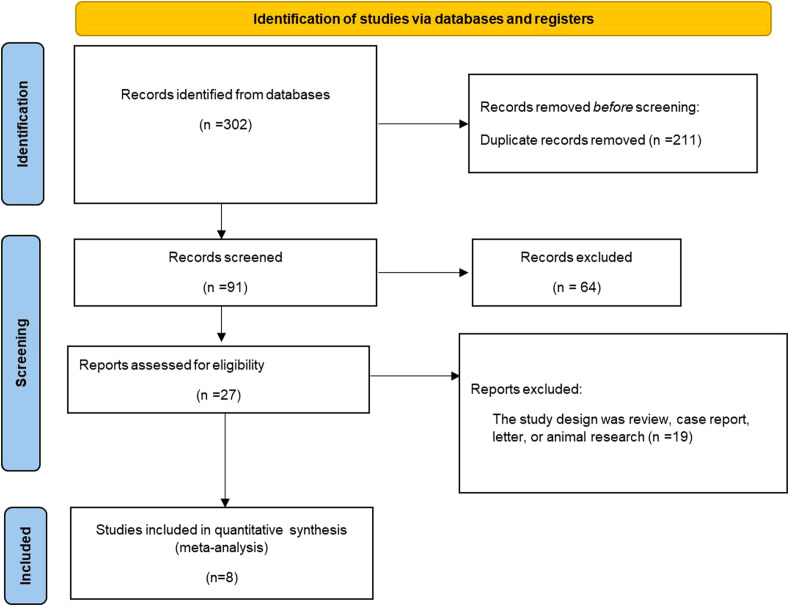
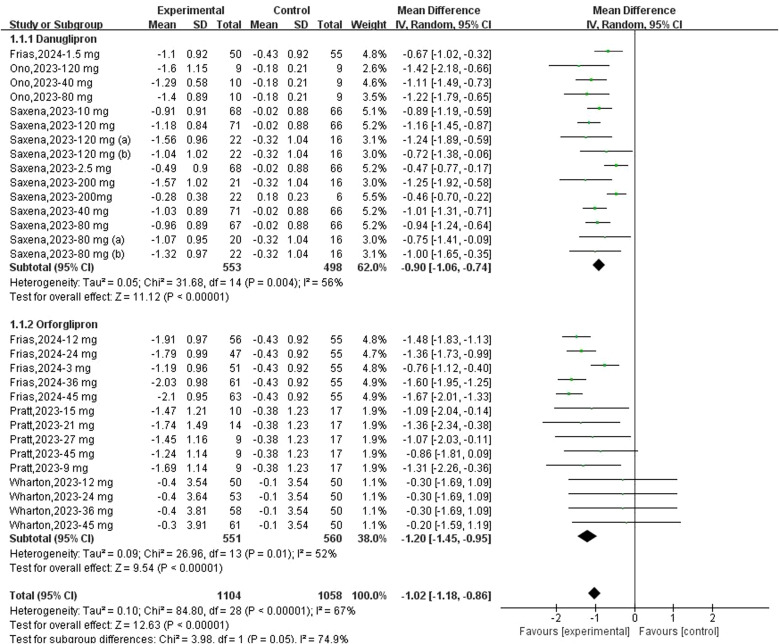
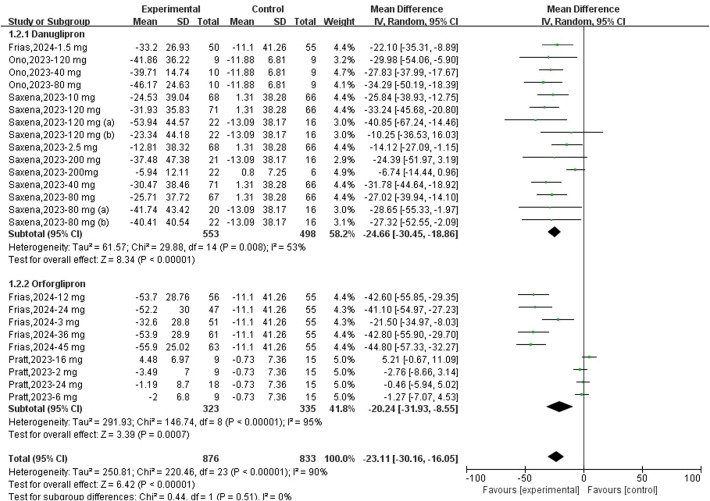
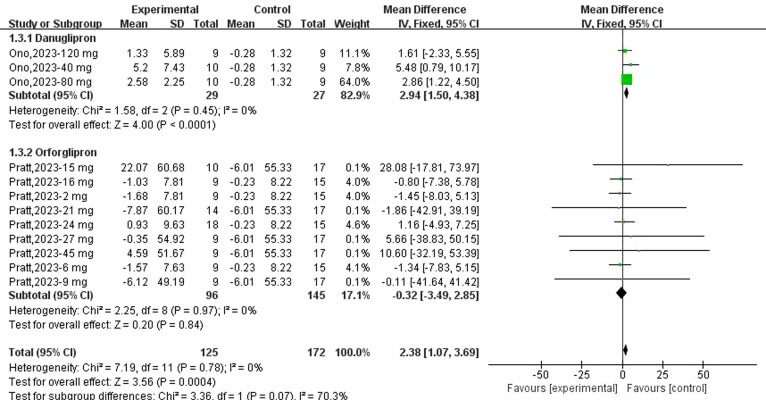
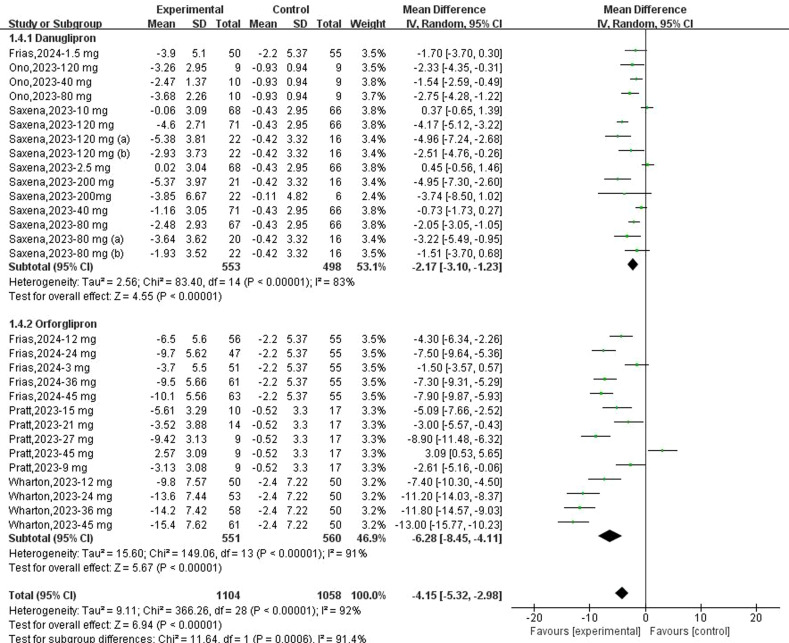
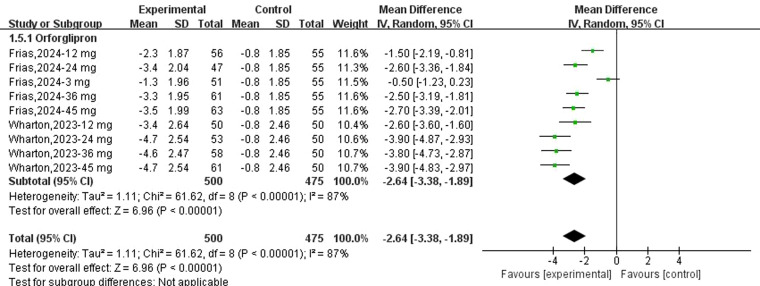
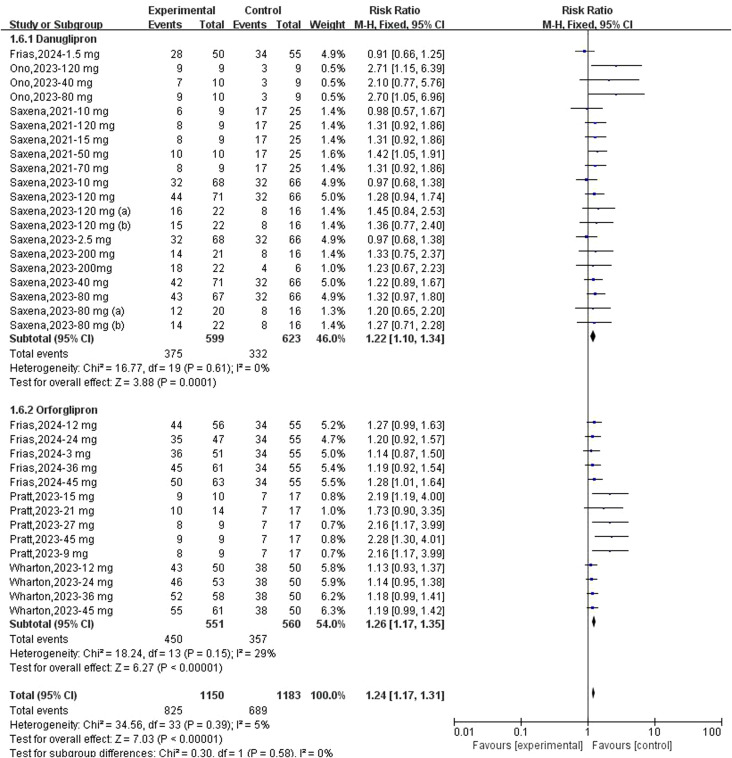
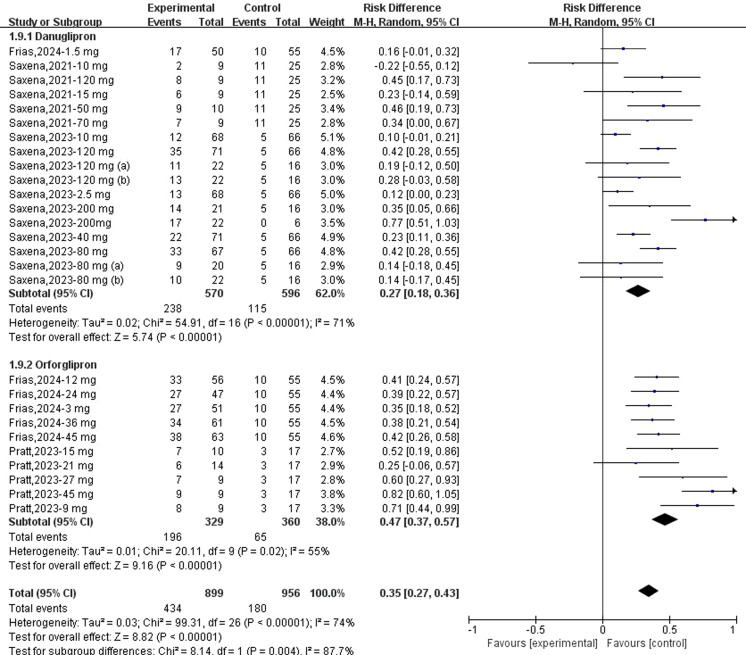
Objective: This study assesses the efficacy and safety of the novel oral small molecule glucagon-like peptide-1 receptor agonists (GLP-1 RAs) danuglipron and orforglipron in the treatment of type 2 diabetes (T2DM) and obesity through systematic review and meta-analysis. Methods: Electronic databases (PubMed, Web of Science, Cochrane Library and Embase) were systematically searched up to 20 May 2025 to include randomised controlled trials evaluating danuglipron/orforglipron in patients with T2DM and/or obesity. Changes in glycated haemoglobin (HbA1c), fasting plasma glucose (FPG), fasting plasma insulin (FPI), weight and body mass index (BMI) compared with baseline post-treatment were evaluated using random-/fixed-effects models, alongside safety outcomes. Results: Eight studies with low bias risk involving 1,454 participants were analysed. Meta-analysis results demonstrated that danuglipron significantly decreased HbA1c (mean difference [MD]: −0.90; 95% CI: −1.06, −0.74), FPG (MD: −24.66; 95% CI: −30.45, −18.86) and weight (MD: −2.17; 95% CI: −3.10, −1.23) and improved FPI (MD: 2.94; 95% CI: 1.50, 4.38). Orforglipron also showed significant positive effects on HbA1c (MD: −1.02; 95% CI: −1.18, −0.86), FPG (MD: −26.91; 95% CI: −31.05, −22.78), weight (MD: −6.28; 95% CI: −8.45, −4.11) and BMI (MD: −2.64; 95% CI: −3.38, −1.89). However, both danuglipron and orforglipron were associated with the occurrence of treatment-related adverse events and gastrointestinal adverse events (AEs). Conclusion: The oral GLP-1 RAs danuglipron and orforglipron are capable of improving blood glucose levels and reducing weight; however, they also pose an increased risk of gastrointestinal AEs. Further longitudinal studies are warranted to gain a deeper understanding of their efficacy, safety and tolerability.
Overview
The claims and statistics of this paper haven’t been checked yet.
Free: it reads the open-access text and checks the first 5 claims that cite a source we can check. Create a free account to check every claim.
Integrity signals
Registry
Cites
Statistics
Figures
Verification
Claims the paper makes
The claims and statistics of this paper haven’t been checked yet.
Free: it reads the open-access text and checks the first 5 claims that cite a source we can check. Create a free account to check every claim.
Claims other papers make about this one
Each is checked against this paper’s own text: does it say what the citing paper says it does?
In the citing paper
“Early mechanistic and clinical studies suggest additive or synergistic effects on glycemic control and weight loss when GLP-1 receptor agonists are combined with SGLT2 inhibition, without a proportional increase in hypoglycemia risk [85,99,100].”
From Orforglipron: A Comprehensive Review of an Oral Small-Molecule GLP-1 Receptor Agonist for Obesity and Type 2 Diabetes (2026) · cites this paper as [85]
In the citing paper
“So, available evidence indicates that orforglipron achieves a safety profile that is at least comparable to injectable GLP-1 RAs while offering additional advantages related to route of administration and lack of immunogenicity [47,84,85].”
From Orforglipron: A Comprehensive Review of an Oral Small-Molecule GLP-1 Receptor Agonist for Obesity and Type 2 Diabetes (2026) · cites this paper as [85]
Self-check
Percentages, sums and reported differences re-computed from the paper’s own numbers.
The self-check needs the paper’s full text.
Citations
Cites
The PRISMA 2020 statement: An updated guideline for reporting systematic reviews
Page, M. J., McKenzie, J. E., Bossuyt, P. M., Boutron, I., Hoffmann, T. C., Mulrow, C. D., Shamseer, L., Tetzlaff, J. M., Akl, E. A., Brennan, S. E., et al. (2021) · BMJ · doi:10.1136/bmj.n71 · Cited by 108,283
IDF Diabetes Atlas: Global estimates for the prevalence of diabetes for 2015 and 2040
Ogurtsova, K., da Rocha Fernandes, J. D., Huang, Y., Linnenkamp, U., Guariguata, L., Cho, N. H., Cavan, D., Shaw, J. E., & Makaroff, L. E. (2017) · Diabetes Research and Clinical Practice · doi:10.1016/j.diabres.2017.03.024 · Cited by 6,966
Use and Abuse of HOMA Modeling
Wallace, T. M., Levy, J. C., & Matthews, D. R. (2004) · Diabetes Care · doi:10.2337/diacare.27.6.1487 · Cited by 5,114
Assessing Risk of Bias in Included Studies
Higgins, J. P., & Altman, D. G. (2008) · Cochrane Handbook for Systematic Reviews of Interventions · doi:10.1002/9780470712184.ch8 · Cited by 3,396
The worldwide epidemiology of type 2 diabetes mellitus—present and future perspectives
Chen, L., Magliano, D. J., & Zimmet, P. Z. (2012) · Nature Reviews Endocrinology · doi:10.1038/nrendo.2011.183 · Cited by 2,227
Wilding, J. P. H., Batterham, R. L., Davies, M., Van Gaal, L. F., Kandler, K., Konakli, K., Lingvay, I., McGowan, B. M., Oral, T. K., Rosenstock, J., et al. (2022) · Diabetes, Obesity and Metabolism · doi:10.1111/dom.14725 · Cited by 1,128 · cited 1×
“Clinicians should therefore balance the bene fi ts of weight reduction against potential metabolic trade-offs, particularly in patients with comorbid cardiovascular disease (27).”
Diabetes: a 21st century challenge
Zimmet, P. Z., Magliano, D. J., Herman, W. H., & Shaw, J. E. (2014) · The Lancet Diabetes & Endocrinology · doi:10.1016/s2213-8587(13)70112-8 · Cited by 1,062
Glucagon-like peptide-1 receptor: mechanisms and advances in therapy
Zheng, Z., Zong, Y., Ma, Y., Tian, Y., Pang, Y., Zhang, C., & Gao, J. (2024) · Signal Transduction and Targeted Therapy · doi:10.1038/s41392-024-01931-z · Cited by 1,036
KANALEY, J. A., COLBERG, S. R., CORCORAN, M. H., MALIN, S. K., RODRIGUEZ, N. R., CRESPO, C. J., KIRWAN, J. P., & ZIERATH, J. R. (2022) · Medicine & Science in Sports & Exercise · doi:10.1249/mss.0000000000002800 · Cited by 931
Yao, H., Zhang, A., Li, D., Wu, Y., Wang, C.-Z., Wan, J.-Y., & Yuan, C.-S. (2024) · BMJ · doi:10.1136/bmj-2023-076410 · Cited by 558
Japanese clinical practice guideline for diabetes 2019
Araki, E., Goto, A., Kondo, T., Noda, M., Noto, H., Origasa, H., Osawa, H., Taguchi, A., Tanizawa, Y., Tobe, K., et al. (2020) · Diabetology International · doi:10.1007/s13340-020-00439-5 · Cited by 545 · cited 1×
“If target blood glucose levels are not achieved, escalation to oral hypoglycaemic agents such as metformin or dipeptidyl peptidase-4 inhibitors is typically initiated (7).”
Daily Oral GLP-1 Receptor Agonist Orforglipron for Adults with Obesity
Wharton, S., Blevins, T., Connery, L., Rosenstock, J., Raha, S., Liu, R., Ma, X., Mather, K. J., Haupt, A., Robins, D., et al. (2023) · New England Journal of Medicine · doi:10.1056/nejmoa2302392 · Cited by 478
A clinical review of GLP-1 receptor agonists: efficacy and safety in diabetes and beyond
Prasad-Reddy, L., & Isaacs, D. (2015) · Drugs in Context · doi:10.7573/dic.212283 · Cited by 365 · cited 1×
“%) and FPG (danuglipron: MD: − 24.66 mg/dL; orforglipron: MD: − 26.91 mg/dL) are consistent with the established pharmacodynamic actions of GLP-1 RAs, which enhance glucose-dependent insulin secretion via cAMP signalling pathways and suppress a -cell glucagon release (24, 25).”
InfluentialTamayo, T., Rosenbauer, J., Wild, S. H., Spijkerman, A. M. W., Baan, C., Forouhi, N. G., Herder, C., & Rathmann, W. (2014) · Diabetes Research and Clinical Practice · doi:10.1016/j.diabres.2013.11.007 · Cited by 247 · cited 1×
“Among these factors, being overweight (body mass index [BMI] ≥ 25 kg/m 2 ) and obesity (BMI ≥ 30 kg/m 2 ) are the major in fl uencers (3, 4).”
Structural basis for GLP-1 receptor activation by LY3502970, an orally active nonpeptide agonist
Kawai, T., Sun, B., Yoshino, H., Feng, D., Suzuki, Y., Fukazawa, M., Nagao, S., Wainscott, D. B., Showalter, A. D., Droz, B. A., et al. (2020) · Proceedings of the National Academy of Sciences · doi:10.1073/pnas.2014879117 · Cited by 231 · cited 1×
“Due to orforglipron ’ s stronger impact on cyclic adenosine monophosphate (cAMP) signalling compared with beta ( b )-cell recruitment, its lower risk of receptor desensitisation distinguishes it from other GLP-1 RAs (10).”
Frias, J. P., Hsia, S., Eyde, S., Liu, R., Ma, X., Konig, M., Kazda, C., Mather, K. J., Haupt, A., Pratt, E., et al. (2023) · The Lancet · doi:10.1016/s0140-6736(23)01302-8 · Cited by 184
Saxena, A. R., Gorman, D. N., Esquejo, R. M., Bergman, A., Chidsey, K., Buckeridge, C., Griffith, D. A., & Kim, A. M. (2021) · Nature Medicine · doi:10.1038/s41591-021-01391-w · Cited by 156
Saxena, A. R., Frias, J. P., Brown, L. S., Gorman, D. N., Vasas, S., Tsamandouras, N., & Birnbaum, M. J. (2023) · JAMA Network Open · doi:10.1001/jamanetworkopen.2023.14493 · Cited by 149
A proposed framework to guide evidence synthesis practice for meta-analysis with zero-events studies
Xu, C., Furuya-Kanamori, L., Zorzela, L., Lin, L., & Vohra, S. (2021) · Journal of Clinical Epidemiology · doi:10.1016/j.jclinepi.2021.02.012 · Cited by 117
Meier, J. J., Holst, J. J., Schmidt, W. E., & Nauck, M. A. (2007) · American Journal of Physiology-Endocrinology and Metabolism · doi:10.1152/ajpendo.00289.2007 · Cited by 77
Karakasis, P., Patoulias, D., Pamporis, K., Stachteas, P., Bougioukas, K. I., Klisic, A., Fragakis, N., & Rizzo, M. (2023) · Metabolism · doi:10.1016/j.metabol.2023.155710 · Cited by 66
Pratt, E., Ma, X., Liu, R., Robins, D., Haupt, A., Coskun, T., Sloop, K. W., & Benson, C. (2023) · Diabetes, Obesity and Metabolism · doi:10.1111/dom.15184 · Cited by 62
Pratt, E., Ma, X., Liu, R., Robins, D., Coskun, T., Sloop, K. W., Haupt, A., & Benson, C. (2023) · Diabetes, Obesity and Metabolism · doi:10.1111/dom.15150 · Cited by 60
Li, A., Su, X., Hu, S., & Wang, Y. (2023) · Diabetes Research and Clinical Practice · doi:10.1016/j.diabres.2023.110605 · Cited by 49
Saxena, A. R., Frias, J. P., Gorman, D. N., Lopez, R. N., Andrawis, N., Tsamandouras, N., & Birnbaum, M. J. (2023) · Diabetes, Obesity and Metabolism · doi:10.1111/dom.15168 · Cited by 45
Ono, R., Furihata, K., Ichikawa, Y., Nakazuru, Y., Bergman, A., Gorman, D. N., & Saxena, A. R. (2023) · Diabetes, Obesity and Metabolism · doi:10.1111/dom.14928 · Cited by 36
Yuan, S., Xue, H., Yu, H., Huang, Y. H., Tang, B.-W., Yang, X., Li, Q.-X., & He, Q. (2018) · Journal of Public Health · doi:10.1093/pubmed/fdy106 · Cited by 36
Marre, M., & Penfornis, A. (2011) · Diabetes Research and Clinical Practice · doi:10.1016/j.diabres.2011.01.004 · Cited by 25 · cited 1×
“%) and FPG (danuglipron: MD: − 24.66 mg/dL; orforglipron: MD: − 26.91 mg/dL) are consistent with the established pharmacodynamic actions of GLP-1 RAs, which enhance glucose-dependent insulin secretion via cAMP signalling pathways and suppress a -cell glucagon release (24, 25).”
InfluentialPrystupa, K., Renklint, R., Chninou, Y., Otten, J., Fritsche, L., Hörber, S., Peter, A., Birkenfeld, A. L., Fritsche, A., Heni, M., et al. (2022) · BMJ Open Diabetes Research & Care · doi:10.1136/bmjdrc-2022-002909 · Cited by 24
Michałowska, J., Miller‐Kasprzak, E., Seraszek‐Jaros, A., Mostowska, A., & Bogdański, P. (2022) · Frontiers in Endocrinology · doi:10.3389/fendo.2022.1000185 · Cited by 22
Eghbali, M., Alaei-Shahmiri, F., Hashemi‐Madani, N., Emami, Z., Mostafavi, L., Malek, M., & Khamseh, M. E. (2024) · Advances in Therapy · doi:10.1007/s12325-023-02761-1 · Cited by 21
Fatima, H., Rangwala, H. S., Mustafa, M. S., Shafique, M. A., Abbas, S. R., Rizwan, A., Ahmad, T. K. F., & Arshad, A. (2023) · Diabetes Metabolic Syndrome and Obesity · doi:10.2147/dmso.s439587 · Cited by 17
Wang, X., Yun, Y., Chen, L., Guo, S., Niu, B., Fang, J., Yuan, Q., Shen, J., Xie, X., & Wang, K. (2024) · Bioorganic & Medicinal Chemistry · doi:10.1016/j.bmc.2024.117761 · Cited by 12
Lütkemeyer, C., Pasqualotto, E., Ferreira, R. O. M., Chavez, M. P., Petris, I., Santos, H. V. D., Wille, J. M., Hohl, A., Ronsoni, M. F., & Sande-Lee, S. V. D. (2024) · Archives of Endocrinology and Metabolism · doi:10.20945/2359-4292-2023-0469 · Cited by 10
Cited by
Kansakar, U., Jankauskas, S. S., Pande, S., Mone, P., Varzideh, F., & Santulli, G. (2026) · International Journal of Molecular Sciences · doi:10.3390/ijms27031409 · Cited by 22
“So, available evidence indicates that orforglipron achieves a safety profile that is at least comparable to injectable GLP-1 RAs while offering additional advantages related to route of administration and lack of immunogenicity [47,84,85].”
Castro-Gamboa, J. A., Mora-Jiménez, J., Arguedas‐Chacón, S., & Zavaleta‐Monestel, E. (2026) · Cureus · doi:10.7759/cureus.110178
Oral small-molecule GLP-1 receptor agonists: a new Frontier in cardiometabolic medicine
Guo, J., & Chen, H. (2026) · Frontiers in Pharmacology · doi:10.3389/fphar.2026.1933018
Metadata
- Authors
- Zhou, J., Wang, F., & Li, S.
- Affiliations
- Shanxi University of Medicine (CN)
- Shanxi Fenyang Hospital (CN)
- Corresponding author
- Zhou, Jingjing
- Venue
- Frontiers in Endocrinology
- Publisher
- Frontiers Media SA
- Published
- 2025-12-10
- Volume
- 16
- Pages
- 1646956-1646956
- ISSN
- 1664-2392 (ISSN-L)
- PMC
- PMC12727569
- OpenAlex
- W7113901679
- Cited by
- 3
- References
- 33
- Citations by year
- 2026: 3
- FWCI
- 0.41
- Type
- journal article
- Language
- en
- Open access
- gold
- doi.org
- Licence
- Locations
- Frontiers in Endocrinology (publishedVersion, cc-by)
- PubMed (publishedVersion)
- PubMed Central (publishedVersion, cc-by)
- DOAJ (DOAJ: Directory of Open Access Journals) (submittedVersion, cc-by-sa)
- Funders
- Shanxi Medical University
- Topics
- Health Sciences › Medicine › Endocrinology, Diabetes and Metabolism › Diabetes Treatment and Management
- Health Sciences › Medicine › Pharmacology (medical) › Pharmacology and Obesity Treatment
- Health Sciences › Medicine › Endocrinology, Diabetes and Metabolism › Diabetes, Cardiovascular Risks, and Lipoproteins
- Keywords
- orforglipron, GLP-1 receptor agonists, type 2 diabetes, obesity, HbA1c, fasting blood glucose, insulin, weight loss, body mass index, gastrointestinal adverse effects, drug safety, antidiabetic efficacy, GLP-1 receptor antagonists
- MeSH terms
- Glucagon-Like Peptide-1 Receptor Agonists, Benzimidazoles, Blood Glucose, Diabetes Mellitus, Type 2, Glycated Hemoglobin, Humans, Hypoglycemic Agents, Obesity, Oxadiazoles, Piperidines, Randomized Controlled Trials as Topic, Treatment Outcome, Fluorine Compounds
About these checks
Registry, retraction, Cites and statistics results are computed, not judged, with one exception: a printed reference that no index lists is read once by a model before it counts as a citation error. Claims are extracted by a model and kept only when their quote appears verbatim in the text; each cited source is then checked, with a model’s help, for whether it says what the claim relies on. Those verdicts can be wrong — read the claim’s quote and the cited source before relying on one.
Statistics and arithmetic are recomputed, not judged.
Confidence bands are shown only for fields calibrated on our annotated test set. None is calibrated yet, so no band is shown.
What counts as a claim ›How we measure confidence ›How we check this ›
Are you an author, or do you see a problem with this page? Request a review
Data sources
Bibliographic data: Semantic Scholar, OpenAlex, Crossref.
Contains information from the Semantic Scholar Academic Graph Datasets, made available under the ODC Attribution License (ODC-BY 1.0).
Semantic Scholar’s data is described in: Kinney, R., et al. (2023). The Semantic Scholar Open Data Platform. arXiv:2301.10140.
