

The DOI matches its Crossref record; 1 of the 1 references it cites were found in a registry or an index.
Rapid evolution of silver nanoparticle resistance in Escherichia coli
Overview
The claims and statistics of this paper haven’t been checked yet.
Run the check — free, no account needed. It reads the open-access text and checks the sources it cites.
Integrity signals
Registry
Cites
Statistics
Figures
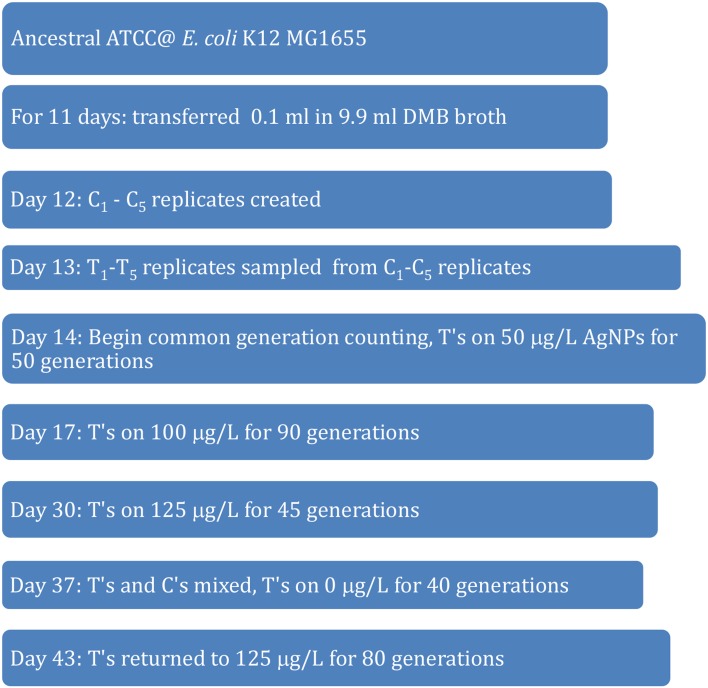
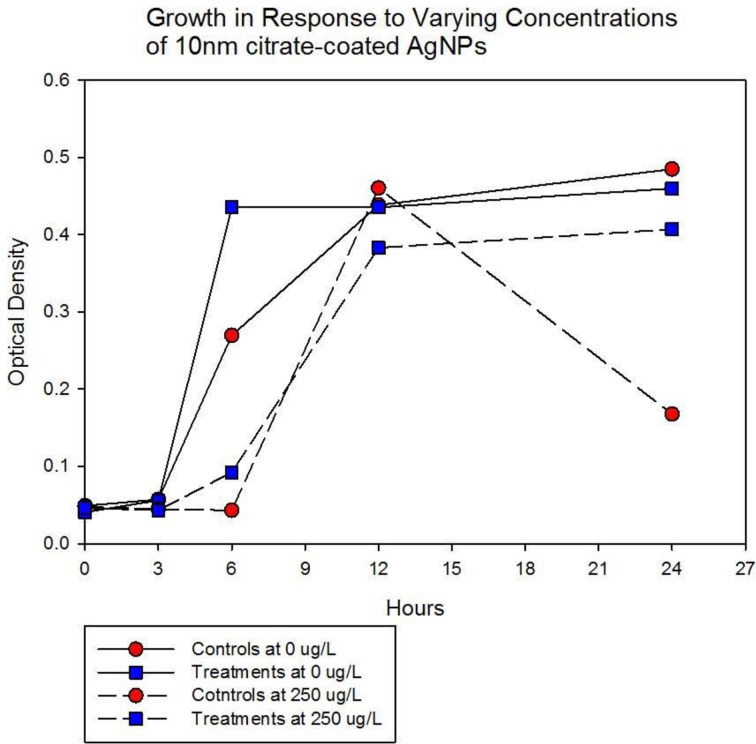
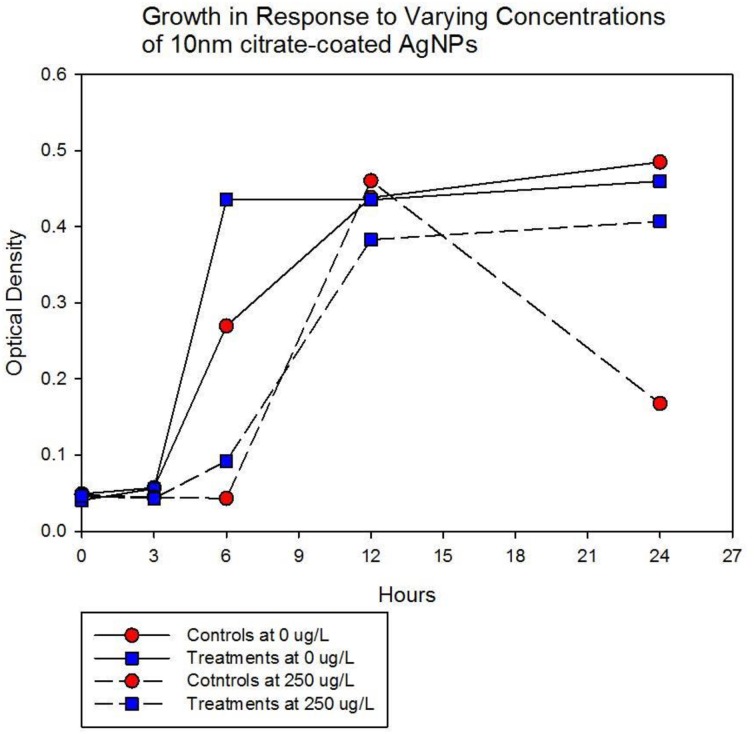
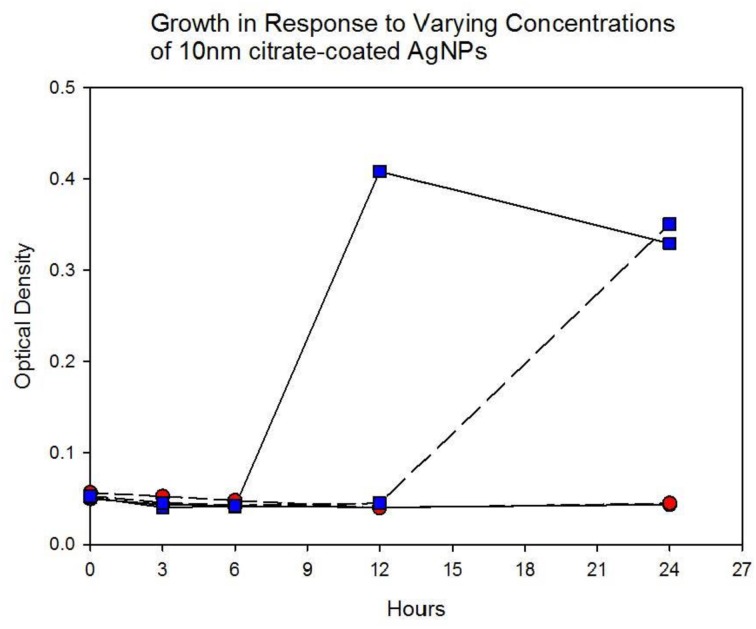
Verification
Claims the paper makes
The claims and statistics of this paper haven’t been checked yet.
Run the check — free, no account needed. It reads the open-access text and checks the sources it cites.
Claims other papers make about this one
Each is checked against this paper’s own text: does it say what the citing paper says it does?
In the citing paper
“The evolution of resistance to engineered NPs has also been recently demonstrated in the microbe, E. coli exposed to silver NPs [243].”
From Particle toxicology and health - where are we? (2019) · cites this paper as [243]
Self-check
Percentages, sums and reported differences re-computed from the paper’s own numbers.
The self-check needs the paper’s full text.
Citations
Cites
Structural Basis of Transcription: RNA Polymerase II at 2.8 Ångstrom Resolution
Cramer, P., Bushnell, D. A., & Kornberg, R. D. (2001) · Science · doi:10.1126/science.1059493 · Cited by 1,247
Research works printed but not linked: 39
- Barrick, 2009, Genome evolution and adaptation in a long-term experiment with Escherichia coli, Nature, 461, 1243, 10.1038/nature08480 · DOI · Paper page
- Conrad, 2010, RNA polymerase mutants found through adaptive evolution reprogram Escherichia coli for optimal growth in minimal media, Proc. Natl. Acad. Sci. U.S.A, 107, 20500, 10.1073/pnas.0911253107 · DOI · Paper page
- Conrad, 2011, Microbial laboratory evolution in the era of genome-scale science, Mol. Syst. Biol, 7, 509, 10.1038/msb.2011.42 · DOI
- Deatherage, 2014, Identification of mutations in laboratory-evolved microbes from next-generation sequencing data using breseq, Methods Mol. Biol, 1151, 165, 10.1007/978-1-4939-0554-6_12 · DOI
- Duncan, 2011, Application of nanotechnology in food packaging and food safety: barrier materials, antimicrobials, and sensors, J. Colloid. Interface Sci, 363, 1, 10.1016/j.jcis.2011.07.017 · DOI
- El Badawy, 2011, Surface charge dependent toxicity of silver nanoparticles, Environ. Sci. Technol, 45, 283, 10.1021/es1034188 · DOI
- Feng, 2000, A mechanistic study of the antibacterial effect of silver ions on Escherichia coli and Staphylococcus aureus, J. Biomed. Mater. Res, 52, 662, 10.1002/1097-4636(20001215)52:4662::AID-JBM103.0.CO;2-3 · DOI
- Franke, 2001, The product of the ybdE gene of the Escherichia coli chromosome is involved in detoxification of silver ions, Microbiology, 147, 965, 10.1099/00221287-147-4-965 · DOI
- Gottschalk, 2009, Modeled environmental concentrations of engineered nanomaterials (TiO2, ZnO, Ag, CNT, Fullerenes) for different regions, Environ. Sci. Technol, 43, 9216, 10.1021/es9015553 · DOI
- Graves, 2014, A grain of salt: metallic and metallic oxide nanoparticles as the new antimicrobials, JSM Nanotechnol. Nanomed, 2, 1026
- Gudipathy, 2014, The histidine kinase CusS senses silver ions through direct binding by its sensor domain, Biochimica et Biophysica Acta, 1844, 1656, 10.1016/j.bbapap.2014.06.001 · DOI
- Gupta, 2001, Diversity of resistance genes in IncH incompatibility group plasmids, Microbiology, 147, 3393, 10.1099/00221287-147-12-3393 · DOI
- Gupta, 1998, Silver as a biocide: will resistance become a problem?, Nat. Biotechnol, 16, 868, 10.1038/nbt1098-888 · DOI
- Kedziora, 2013, Use of the materials based on partially reduced graphene-oxide with silver nanoparticle as bacteriostatic and bactericidal agent, Polim. Med, 43, 129
- Klasen, 2000, A historical review of the use of silver in the treatment of burns. Part I early uses, Burns, 30, 1
- Li, 2008, Crystal structure of a novel non-Pfam protein AF1514 from Archeoglogus fulgidus DSM 4304 solved by S-SAD using a Cr X-ray source, Proteins, 71, 2109, 10.1002/prot.22025 · DOI
- Li, 1999, X-ray crystal structure of aminoimidazole ribonucleotide synthetase (PurM), from Escherichia coli purine biosynthetic pathway at 2.5 A resolution, Struct. Fold Des, 7, 1155, 10.1016/S0969-2126(99)80182-8 · DOI
- Li, 1997, Silver-resistant mutants of Escherichia coli display active efflux of Ag+ and are deficient in porins, Bacteriol, 179, 6127, 10.1128/jb.179.19.6127-6132.1997 · DOI
- Li, 2006, Antimicrobial effect of surgical masks coated with nanoparticles, J. Hosp. Infect, 62, 58, 10.1016/j.jhin.2005.04.015 · DOI · Paper page
- Liau, 1997, Interaction of silver nitrate with readily identifiable groups: relationship to the antibacterial action of silver ions, Lett. Appl. Microbiol, 25, 279, 10.1046/j.1472-765X.1997.00219.x · DOI
- Lok, 2008, Proteomic identification of the Cus system as a major determinant of constitutive Escherichia coli silver resistance of chromosomal origin, J. Proteome Res, 7, 2351, 10.1021/pr700646b · DOI
- McHugh, 1975, Salmonella typhimurium resistant to silver nitrate, chloramphenicol, and ampicillin, Lancet, 1, 235, 10.1016/S0140-6736(75)91138-1 · DOI
- Mijnendonckx, 2013, Antimicrobial silver: uses, toxicity, and the potential for resistance, Biometals, 26, 609, 10.1007/s10534-9645-z · DOI
- Momtaz, 2012, Shiga toxin-producing Escherichia coli isolated from bovine mastitic milk: serogroups, virulence factors, and antibiotic resistance properties, ScientificWorld Journal, 2012, 618709, 10.1100/2012/618709 · DOI
- Nahku, 2011, Stock culture heterogeneity rather than new mutational variation complicates short-term cell physiology studies of Escherichia coli K-12 MG1655 in continuous culture, Microbiology, 157, 2604, 10.1099/mic.0.050658-0 · DOI
- Quinn, 2014, Bacterial regulon evolution: distinct responses and roles for the identical OmpR proteins of Salmonella Typhimurium and Escherichia coli in the acid stress response, PLoS Genetics, 10, e1004215, 10.1371/journal.pgen.1004215 · DOI
- Rai, 2009, Silver nanoparticles as a new generation of antimicrobials, Biotechnol. Adv, 27, 76, 10.1016/j.biotechadv.2008.09.002 · DOI
- Rai, 2012, Silver nanoparticles: the powerful nanoweapon against multi-drug resistant bacteria, J. Appl. Microbiol, 112, 841, 10.1111/j.1365-2672.2012.05253.x · DOI
- Rhee, 2008, Amino acids important for DNA recognition by the response regulator OmpR, J. Biol. Chem, 13, 8864, 10.1074/jbc.M705550200 · DOI
- Riley, 2006, Escherichia coli K-12: a cooperatively developed annotation snapshot—2005, Nucleic Acids Res, 34, 1, 10.1093/nar/gkj405 · DOI
- Sampei, 1989, The organization of the purl gene encoding 5′-Phosphoribosylformylglycinamide aminotransferase of Escherichia coli, J. Biol. Chem, 264, 21230, 10.1016/S0021-9258(19)30071-7 · DOI
- Scheutz, 2005, Genus I. Escherichia, castellani and chalmers 1919, 607
- Silver, 2003, Bacterial silver resistance: molecular biology and uses and misuses of silver compounds, FEMS Microbiol. Rev, 27, 341, 10.1016/S0168-6445(03)00047-0 · DOI · Paper page
- Siqueira, 2014, Evaluation of antimicrobial activity of silver nanoparticles for carboxymethylcellulose film applications in food packaging, J. Nanosci. Nanotechnol, 14, 5512, 10.1166/jnn.2014.8991 · DOI
- Tadesse, 2012, Antimicrobial drug resistance in Escherichia coli from humans and food animals, United States, 1950–2002, Emerg. Infect. Dis, 18, 741, 10.3201/eid1805.111153 · DOI
- Tajkarimi, 2014, The effect of silver nanoparticle size and coating on Escherichia coli, JSM Nanotechnol. Nanomed, 2, 1025
- Xia, 2011, A survey of β-lactamase and 16S rRNA methylase genes among fluoroquinolone-resistant Escherichia coli isolates and their horizontal transmission in Shandong, China, Foodborne Pathog Dis, 8, 1241, 10.1089/fpd.2011.0868 · DOI
- Xiu, 2012, Negligible particle-specific antibacterial activity of silver nanoparticles, Nano Lett, 12, 4271, 10.1021/nl301934w · DOI
- Yamanaka, 2005, Bactericidal actions of a silver ion solution on Escherichia coli, studied by energy-filtering transmission electron microscopy and proteomic analysis, Appl. Environ. Microbiol, 71, 7589, 10.1128/AEM.71.11.7589-7593.2005 · DOI
Cited by
Sorted by citations
Particle toxicology and health - where are we?
Riediker, M., Zink, D., Kreyling, W., Oberdörster, G., Elder, A., Graham, U., Lynch, I., Duschl, A., Ichihara, G., Ichihara, S., et al. (2019) · Particle and Fibre Toxicology · doi:10.1186/s12989-019-0302-8 · Cited by 237
Metadata
- Authors
- Graves, J. L., Tajkarimi, M., Cunningham, Q., Campbell, A., Nonga, H., Harrison, S. H., & Barrick, J. E.
- Venue
- Frontiers in Genetics
- Publisher
- Frontiers Media SA
- Published
- 2015-02-17
- Volume
- 6
- ISSN
- 1664-8021
- PMC
- PMC4330922
- Cited by
- 250
- References
- 1
About these checks
Registry, retraction, Cites and statistics results are computed, not judged, with one exception: a printed reference that no index lists is read once by a model before it counts as a citation error. Claims are extracted by a model and kept only when their quote appears verbatim in the text; each cited source is then checked, with a model’s help, for whether it says what the claim relies on. Those verdicts can be wrong — read the claim’s quote and the cited source before relying on one.
Statistics and arithmetic are recomputed, not judged.
Confidence bands are shown only for fields calibrated on our annotated test set. None is calibrated yet, so no band is shown.
What counts as a claim ›How we measure confidence ›How we check this ›
Are you an author, or do you see a problem with this page? Request a review
How to cite
Cite CoChat for the checks on this page, and the paper for its own findings.
- This page
- CoChat. (2026). Citation check: Rapid evolution of silver nanoparticle resistance in Escherichia coli. https://app.cochat.ai/papers/10.3389/fgene.2015.00042
- The paper
- Graves, J. L., Tajkarimi, M., Cunningham, Q., Campbell, A., Nonga, H., Harrison, S. H., & Barrick, J. E. (2015). Rapid evolution of silver nanoparticle resistance in Escherichia coli. Frontiers in Genetics. https://doi.org/10.3389/fgene.2015.00042
