

The DOI matches its Crossref record; 228 of the 229 references it cites were found in a registry or an index.
Age-related vascular stiffening: causes and consequences
Open accessAbstract
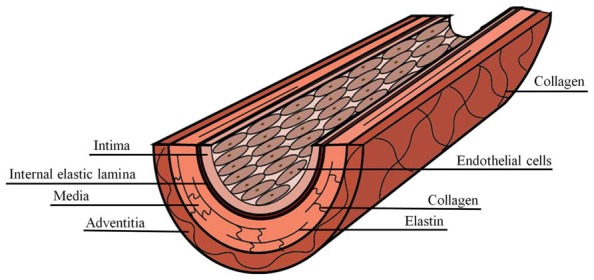
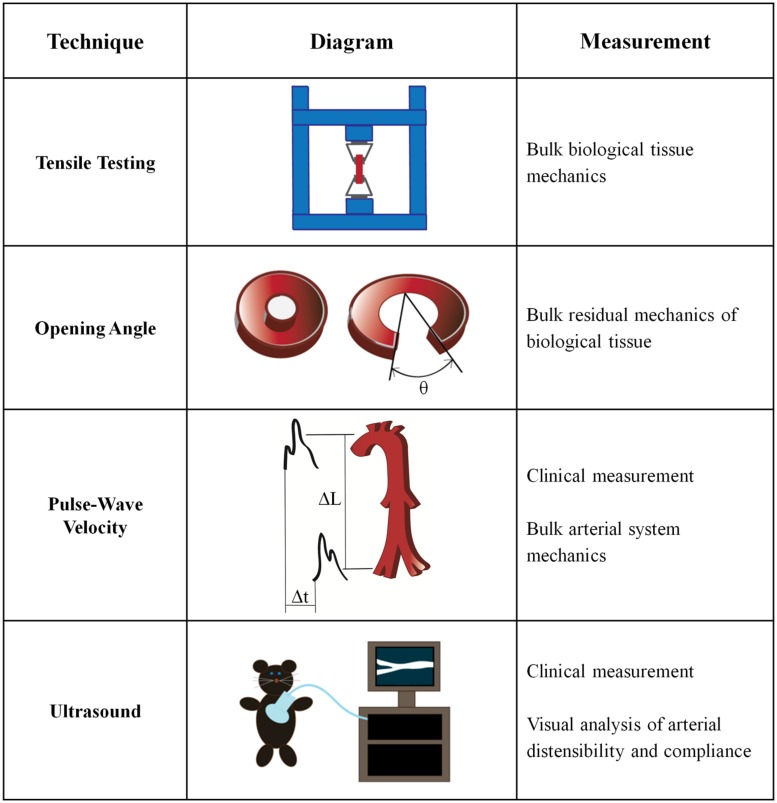
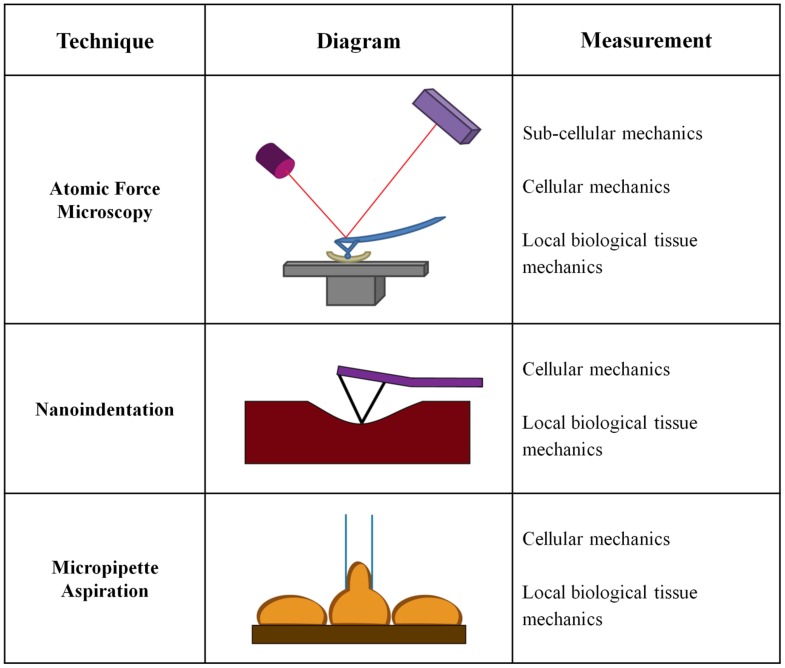
Arterial stiffening occurs with age and is closely associated with the progression of cardiovascular disease. Stiffening is most often studied at the level of the whole vessel because increased stiffness of the large arteries can impose increased strain on the heart leading to heart failure. Interestingly, however, recent evidence suggests that the impact of increased vessel stiffening extends beyond the tissue scale and can also have deleterious microscale effects on cellular function. Altered extracellular matrix (ECM) architecture has been recognized as a key component of the pre-atherogenic state. Here, the underlying causes of age-related vessel stiffening are discussed, focusing on age-related crosslinking of the ECM proteins as well as through increased matrix deposition. Methods to measure vessel stiffening at both the macro- and microscale are described, spanning from the pulse wave velocity measurements performed clinically to microscale measurements performed largely in research laboratories. Additionally, recent work investigating how arterial stiffness and the changes in the ECM associated with stiffening contributed to endothelial dysfunction will be reviewed. We will highlight how changes in ECM protein composition contribute to atherosclerosis in the vessel wall. Lastly, we will discuss very recent work that demonstrates endothelial cells (ECs) are mechano-sensitive to arterial stiffening, where changes in stiffness can directly impact EC health. Overall, recent studies suggest that stiffening is an important clinical target not only because of potential deleterious effects on the heart but also because it promotes cellular level dysfunction in the vessel wall, contributing to a pathological atherosclerotic state.
Overview
The claims and statistics of this paper haven’t been checked yet.
Run the check — free, no account needed. It reads the open-access text and checks the sources it cites.
Integrity signals
Registry
Cites
Statistics
Figures
Verification
Claims the paper makes
The claims and statistics of this paper haven’t been checked yet.
Run the check — free, no account needed. It reads the open-access text and checks the sources it cites.
Claims other papers make about this one
Each is checked against this paper’s own text: does it say what the citing paper says it does?
In the citing paper
“EC dysfunction has been shown to strongly affect arterial stiffness via cellular adhesion molecules (CAMs), matrix metalloproteinases (MMPs) and collagen molecules (COLs)67–71.”
From An inflammatory aging clock (iAge) based on deep learning tracks multimorbidity, immunosenescence, frailty and cardiovascular aging (2021) · cites this paper as [68]
Self-check
Percentages, sums and reported differences re-computed from the paper’s own numbers.
The self-check needs the paper’s full text.
Citations
Cites
Oliver, W. C., & Pharr, G. M. (1992) · Journal of materials research/Pratt's guide to venture capital sources · doi:10.1557/jmr.1992.1564 · Cited by 26,941 · cited 2×
“Different mathematical models are used to fit nanoindentation data and include the Hertz model (Hertz, 1881; Johnson, 1982), the Oliver-Pharr model (Oliver and Pharr, 1992, 2004), and the Johnson–Kendall–Roberts (JKR) adhesion model (Johnson et al., 1971).”
BackgroundMethodBinnig, G. K., Quate, C. F., & Gerber, C. (1986) · Physical Review Letters · doi:10.1103/physrevlett.56.930 · Cited by 14,795
Matrix elasticity directs stem cell lineage specification
Engler, A. J., Sen, S., Sweeney, H. L., & Discher, D. E. (2006) · Cell · doi:10.1016/j.cell.2006.06.044 · Cited by 13,915 · cited 2×
“Unlike AFM which records cantilever displacements, in nanoindentation, an external load is applied to the indenter tip to push the tip into the surface (Mann, 2007).”
BackgroundMethodOliver, W. C., & Pharr, G. M. (2004) · Journal of materials research/Pratt's guide to venture capital sources · doi:10.1557/jmr.2004.19.1.3 · Cited by 8,377 · cited 4×
“Different mathematical models are used to fit nanoindentation data and include the Hertz model (Hertz, 1881; Johnson, 1982), the Oliver-Pharr model (Oliver and Pharr, 1992, 2004), and the Johnson–Kendall–Roberts (JKR) adhesion model (Johnson et al., 1971).”
BackgroundMethodInfluentialInflammation in atherosclerosis
Libby, P. (2002) · Nature · doi:10.1038/nature01323 · Cited by 8,315
Surface energy and the contact of elastic solids
Johnson, K. L., Kendall, K., & Roberts, A. D. (1971) · Proceedings of the Royal Society of London A Mathematical and Physical Sciences · doi:10.1098/rspa.1971.0141 · Cited by 8,109 · cited 1×
“Different mathematical models are used to fit nanoindentation data and include the Hertz model (Hertz, 1881; Johnson, 1982), the Oliver-Pharr model (Oliver and Pharr, 1992, 2004), and the Johnson–Kendall–Roberts (JKR) adhesion model (Johnson et al., 1971).”
MethodExpert consensus document on arterial stiffness: methodological issues and clinical applications
Laurent, S., Cockcroft, J., Van Bortel, L., Boutouyrie, P., Giannattasio, C., Hayoz, D., Pannier, B., Vlachopoulos, C., Wilkinson, I., Struijker-Boudier, H., et al. (2006) · European Heart Journal · doi:10.1093/eurheartj/ehl254 · Cited by 6,077 · cited 4×
“Pulse wave velocity (PWV) measurements are the primary clinical method used to assess arterial stiffening and to help predict CVD events (Laurent et al., 2006; Van Bortel et al., 2012; Protogerou et al., 2014).”
BackgroundMethodInfluentialTensional homeostasis and the malignant phenotype
Paszek, M. J., Zahir, N., Johnson, K. R., Lakins, J. N., Rozenberg, G. I., Gefen, A., Reinhart-King, C. A., Margulies, S. S., Dembo, M., Boettiger, D., et al. (2005) · Cancer Cell · doi:10.1016/j.ccr.2005.08.010 · Cited by 3,941 · cited 2×
“Unlike AFM which records cantilever displacements, in nanoindentation, an external load is applied to the indenter tip to push the tip into the surface (Mann, 2007).”
BackgroundMethodSelf-citationLaurent, S., Boutouyrie, P., Asmar, R., Gautier, I., Laloux, B., Guize, L., Ducimetiere, P., & Benetos, A. (2001) · Hypertension · doi:10.1161/01.hyp.37.5.1236 · Cited by 3,856 · cited 1×
“Furthermore, in hypertensive patients, increased arterial stiffness is associated with increased mortality rates (Laurent et al., 2001).”
BackgroundInflammation in Atherosclerosis
Libby, P. (2012) · Arteriosclerosis Thrombosis and Vascular Biology · doi:10.1161/atvbaha.108.179705 · Cited by 3,796 · cited 2×
“During atherosclerosis, cholesterol permeates into the blood vessel wall and must be retained there to elicit the inflammatory reaction resulting in plaque formation (Libby, 2002).”
Background
Research works printed but not linked: 6
- Hertz, 1881, Tiber die beriihrung fester elastischer korper (On the contact of elastic solids)., J. Reine Angew Mathematik, 95, 156
- Hurley, 2009, “Contact resonance force microscopy techniques for nanomechanical measurements: introduction,†in, Applied Scanning Probe Methods XI: Scanning Probe Microscopy Techniques, 99
- Kohn, 2015, Effects of matrix stiffness on endothelial cell response to fluid shear stress., Biophys. J., 108, 471, 10.1016/j.bpj.201412.023 · DOI
- Quevedo, 2012, Aortic stiffness, blood pressure progression, and incident hypertension., Cardiol. Rev., 28, 875, 10.1001/2012.jama.10503 · DOI
- Sacks, 2000, Biaxial mechanical evaluation of planar biological materials., J. Elasticity, 61, 199, 10.1023/A:1010917028671 · DOI
- Santos-Parker, 2014, Aerobic exercise and other healthy lifestyle factors that influence vascular aging., Adv. Physiol. Educ., 38, 296, 10.1152/advan.00088.2014 · DOI
Cited by
Sorted by citations
Items 401–439 of 439
SULEA, P. A., Ţilea, I., Stoica, F., Cristescu, L., Moldovan, D.-A., Tătar, R., Tilinca, R.-M., Mareş, R. G., & Varga, A. (2025) · Journal of Cardiovascular Development and Disease · doi:10.3390/jcdd12060208
“AS is clinically relevant not only for its impact on cardiac function but also for its role in vascular wall dysfunction and atherogenesis [43].”
Association between inflammatory cytokines and carotid plaque in young and middle-aged adults
Dai, Z., Chen, R., Duan, J., Zhou, Y., & Yuan, W. (2025) · Biochemistry and Biophysics Reports · doi:10.1016/j.bbrep.2025.102321
“While younger patients typically exhibit superior vascular elasticity and compliance [31], potentially buffering the effects of blood pressure fluctuations, suboptimal adherence to antihypertensive therapies may occur, as the absence of overt symptoms can lead to the neglect of blood pressure…”
Instability of vascular bilayer reveals the protective role of connective tissue
Wu, D., Guo, B., Yin, Y., Zuo, S., Lei, H., Zhao, Z., & Fang, D. (2025) · Journal of the Mechanics and Physics of Solids · doi:10.1016/j.jmps.2025.106466
Liu, J., Hu, S., Wang, Y., & Yang, C. (2025) · Annual International Conference of the IEEE Engineering in Medicine and Biology Society (EMBC) · doi:10.1109/embc58623.2025.11254800
“Studies indicate that vascular age is closely linked to cardiovascular disease (CVD) risk, and its assessment provides a more accurate risk prediction beyond chronological age [2].”
van der Laan, K. W. F., Pencheva, M. G., Spronck, P. J. M., Neutel, C. H. G., Guns, P., Schalkwijk, C. G., Delhaas, T., Reesink, K. D., & Spronck, B. (2025) · bioRxiv (Cold Spring Harbor Laboratory) · doi:10.64898/2025.12.11.692024
Sharafi, M., Dehghan, A., Mouseli, A., Fatemian, H., Jamali, L., Afrashteh, S., Chijan, M. R., Mastaneh, Z., Zakeri, A., & Alkamel, A. (2024) · Figshare · doi:10.6084/m9.figshare.25357905
Engel, A., Rauschenbach, L., Rexhepi, A., Gümüs, M., Rieß, C., Rodemerk, J., Song, L., Li, Y., Schmidt, B., Ahmadipour, Y., et al. (2025) · Journal of Clinical Medicine · doi:10.3390/jcm15010168
“This protective effect of CSC against CV could be caused by the increasing arterial stiffness in patients with a higher level of atherosclerosis [10,11].”
A New Approach to Measure Heart-Carotid Pulse Wave Velocity by Using an Ultrasound-Based Method
Pessana, F., Sanchez, R. A., Ramirez, A. J., Miranda, A. S., Ruisi, E., Yelsi, F. D., & Fischer, E. I. C. (2026) · Current Hypertension Reviews · doi:10.2174/0115734021415023251126112646
Arterial Stiffness, Smoking Status, and Cardiovascular Mortality in Asymptomatic U.S. AdultsPreprint
Cheon, P., Mostafa, M. A., Grdzelishvili, A. V., Cornea, D., Liu, J., & Kazibwe, R. (2026) · medRxiv · doi:10.64898/2026.02.09.26345932
Taheri, R., & Haut, B. (2026) · Annals of Biomedical Engineering · doi:10.1007/s10439-026-03976-3
“Interaction terms indicate that morphology-to-CO relationships are contingent on vascular state and cardiac timing, reinforcing the value of an interpretable model that integrates waveform physics with demographic modifiers rather than relying on opaque mappings [38, 39, 51–53].”
Pabi, S., Raj, A., & Khan, M. K. (2026) · Physics of Fluids · doi:10.1063/5.0314137
Tan, S. S., Teng, T. S., Prasad, S. C., Zhan, S. J., Fan, Q., Boh, K., George, R. J., Baskaran, M., Wong, T. T., Perera, S., et al. (2026) · Scientific Reports · doi:10.1038/s41598-026-44049-8
“The association of longer AL, wider angles, and male predominance among fast progressors suggests that non-angle dependent mechanisms such as age-related trabecular or optic nerve changes may contribute to progression in this stage 32–34 .”
Teissier, T. (2019) · theses.fr (ABES) · doi:10.70675/f49bc069z5ee6z4c49zb46fz0a1413dbba95
Detection of Mesenchymal Stem Cell Aging Using an Integrin Mechano‐Probe
Liu, A., Liu, X., Li, J., Li, J., Wang, X., Dong, Y., Shao, F., Bi, M., Deng, X., Wang, G., et al. (2026) · Annals of the New York Academy of Sciences · doi:10.1111/nyas.70247
“In certain age-related pathological conditions, arterial elasticity and residual wall stress decrease, increasing the risk of cardiovascular disease among the elderly [ 6 ].”
Hamda, F. H., Puteri, N. J., Najah, M., Laili, F., Sujana, S. P., Irzal, M. A. S. M., Safitri, Y., Asyary, A., & Rahmah, S. P. (2026) · Malque Health · doi:10.31893/health.2026008
“As an individual becomes older, arterial stiffness increases due to collagen accumulation and a decrease in elasticity in the walls of large blood vessels, which leads to an increase in systolic blood pressure and a decrease in the elasticity of blood vessels (Kohn et al., 2015).”
Experimental Models for Studying Cardiovascular Dysfunction in Metabolic Syndrome
Taylor, J. L., da Silva, E. A. P., Voorhees, H. M., Ferrara, M. K., Salbato, S., Daghbouche-Rubio, N., Baudel, M. A. S. M., & Nieves‐Cintrón, M. (2026) · Handbook of experimental pharmacology · doi:10.1007/164_2026_800
Sex-Based Insights into Aortic Valve Disease and Scaffold Design
Suresh, J., Ibrahim, N., & Masters, K. S. B. (2026) · Springer eBooks · doi:10.1007/978-3-032-10745-9_17
Talmor‐Barkan, Y., Shapira, M., Shilo, S., Gorodetski, M., Azouri, D., Aviv, Y., Reisner, Y., Godneva, A., Weinberger, A., Skaat, A., et al. (2026) · JACC Basic to Translational Science · doi:10.1016/j.jacbts.2026.101596
Hadfield, L., McNeill, M. C., Sekar, V., Ebrahimighaei, R., Newby, A. C., & Bond, M. (2026) · Biochimica et Biophysica Acta (BBA) - Molecular Cell Research · doi:10.1016/j.bbamcr.2026.120175
Garcia, S., Tsang, E., Chen, J., & Fleming, N. (2026) · BMC Cardiovascular Disorders · doi:10.1186/s12872-026-06159-z
“The absence of any improvement in correlation following valve deployment may be explained by the decrease in vascular compliance which is often seen in elderly patients and in those with cardiovascular disease [22, 23].”
Exercise as a regulator of glymphatic function
Broatch, J. R., Saner, N. J., JACKSON, M., Syeda, W. T., Bishop, D. J., & Brodtmann, A. (2026) · Trends in Neurosciences · doi:10.1016/j.tins.2026.06.002
Kim, B. O., Cho, H., Kim, S. E., Doh, J., Kim, Y., Lee, B., Yoo, S.-Y., Lee, S. Y., Kim, C. J., Jin, H., et al. (2026) · Heart Lung and Circulation · doi:10.1016/j.hlc.2026.02.013
Physiologic Changes in the Aging Lung
Manning, E. P. (2026) · Respiratory medicine · doi:10.1007/978-3-032-29861-4_1
Monu, S. R. (2026) · Healthy ageing and longevity · doi:10.1007/978-3-032-24097-2_13
Demaree, I. S., Munjuluri, S., Boyapalli, S., Beaty, R. E., Wilkerson, D. A., Velavan, S. S., White, F. A., & Obukhov, A. G. (2026) · Frontiers in Physiology · doi:10.3389/fphys.2026.1884753
“Both are factors in the development of atherosclerotic disease, but there is evidence that atherosclerosis is related to extracellular matrix (ECM) changes that happen with aging, and these changes can happen independently of diet (Kohn et al., 2015).”
Clinical Modifiers of Salt Sensitivity: A Meta-Regression and Risk Translation Study
Chen, S.-H., Yeh, C.-Y., Chiang-Lin, Y.-P., Huang, C., Chuang, S., Wu, C., Wh, P., Ma, Y., Liang, L., & Cheng, H. (2026) · Hypertension · doi:10.1161/hypertensionaha.126.27410
Dol, A., Ivanov, D., & Fomkina, O. (2026) · Journal of Biomechanics · doi:10.1016/j.jbiomech.2026.113487
Hou, Y., Singal, S., Swiatlowska, P., & Sanchez‐Alonso, J. L. (2026) · Current Issues in Molecular Biology · doi:10.3390/cimb48080823
“…medial layer, where vascular smooth muscle cells (VSMCs) are embedded within an elastin-and collagen-rich extracellular matrix (ECM), as well as biomechanical stimuli such as wall shear stress from intraluminal blood flow, transmural pressure, and cyclic mechanical stretch of the vessel wall [1,2].”
Maroz, D., Aharonov, A., Hoenig, H., & Sharabi, M. (2026) · Biomimetics · doi:10.3390/biomimetics11080591
“These age-dependent differences emphasize that the mechanical target for a vascular graft is not a single universal arterial response, but rather a physiological range that may vary with the patient and vascular condition [12,14,15].”
InfluentialUtrera, A., Navarrete, Á., Celentano, D. J., & García-Herrera, C. (2026) · Materials & Design · doi:10.1016/j.matdes.2026.116890
Impact of aging on neck vasculature and brain biochemistry in female mice
Jones, A. W., Jarrahi, A., Karpowich, K., Moody, E., Renner, L., Brown, L. P., Tressler, C. M., & Crouch, A. C. (2026) · Physiological Reports · doi:10.14814/phy2.71059
“A hallmark of age-related vascular stiffening is an increase in the ratio between collagen and elastin (Kohn et al., 2015).”
An Integrated Multiphoton Imaging Workflow for Quantitative Analysis of Aortic Tissue Microstructure
Baig, M. M. J., Vargas, A. I., Jennings, T., Amini, R., & Bellini, C. (2026) · Journal of Biomechanical Engineering · doi:10.1115/1.4072688
Sun, W., Pang, M., Zhou, Y., Yin, B., Lin, Z., Zhou, H., Chen, X., & Chen, Y. (2026) · Physics of Fluids · doi:10.1063/5.0350002
Pressure–Pressure Loop: A Novel Method for Biophysical Characterization of Blood Vessels
Ovadia‐Blechman, Z., Halak, M., Ishay, D. B., Cohen, E. R., Maman, S., Aviv, M., & Rabin, N. (2026) · Annals of Biomedical Engineering · doi:10.1007/s10439-026-04422-0
Öztürk, T., Şahin, T., Çildağ, M. B., & Tanyeri, A. (2026) · Journal of Ultrasound · doi:10.1007/s40477-026-01243-8
The Aging Extracellular Matrix as a Driver of Vascular Reprogramming
Shalash, R., Tsitsipatis, D., & Herman, A. B. (2026) · Artery Research · doi:10.1007/s44200-026-00144-9
“Therefore, aged arteries are more rigid, with lower compliance and ability to adjust to blood flow pulsations [79].”
Metadata
- Authors
- Kohn, J. C., Lampi, M. C., & Reinhart-King, C. A.
- Affiliations
- Cornell University (US)
- Venue
- Frontiers in Genetics
- Publisher
- Frontiers Media SA
- Published
- 2015-03-30
- Volume
- 06
- Pages
- 112-112
- ISSN
- 1664-8021 (ISSN-L)
- PMC
- PMC4396535
- OpenAlex
- W2048903244
- Cited by
- 440
- References
- 229
- Citations by year
- 2026: 45 · 2025: 36 · 2024: 58 · 2023: 60 · 2022: 46 · 2021: 51 · 2020: 36 · 2019: 29 · 2018: 40 · 2017: 26 · 2016: 11 · 2015: 1
- FWCI
- 4.48
- Type
- journal article
- Language
- en
- Open access
- gold
- doi.org
- Licence
- cc-by
- Locations
- Frontiers in Genetics (publishedVersion, cc-by)
- PubMed Central (publishedVersion, cc-by)
- PubMed (publishedVersion)
- DOAJ (DOAJ: Directory of Open Access Journals) (submittedVersion, cc-by-sa)
- Funders
- National Science Foundation (1435755, 2013165170, 2013155462)
- National Heart, Lung, and Blood Institute (R21HL097296, HL097296)
- Topics
- Health Sciences › Medicine › Cardiology and Cardiovascular Medicine › Cardiovascular Health and Disease Prevention
- Physical Sciences › Engineering › Biomedical Engineering › Elasticity and Material Modeling
- Life Sciences › Biochemistry, Genetics and Molecular Biology › Cell Biology › Cellular Mechanics and Interactions
- Keywords
- arterial stiffening, aging, extracellular matrix, matrix deposition, pulse wave velocity, endothelial dysfunction, atherosclerosis, cardiovascular disease, heart failure
About these checks
Registry, retraction, Cites and statistics results are computed, not judged, with one exception: a printed reference that no index lists is read once by a model before it counts as a citation error. Claims are extracted by a model and kept only when their quote appears verbatim in the text; each cited source is then checked, with a model’s help, for whether it says what the claim relies on. Those verdicts can be wrong — read the claim’s quote and the cited source before relying on one.
Statistics and arithmetic are recomputed, not judged.
Confidence bands are shown only for fields calibrated on our annotated test set. None is calibrated yet, so no band is shown.
What counts as a claim ›How we measure confidence ›How we check this ›
Are you an author, or do you see a problem with this page? Request a review
