

The DOI matches its Crossref record; 55 of the 55 references it cites were found in a registry or an index.
deepDriver: Predicting Cancer Driver Genes Based on Somatic Mutations Using Deep Convolutional Neural Networks
Open accessAbstract
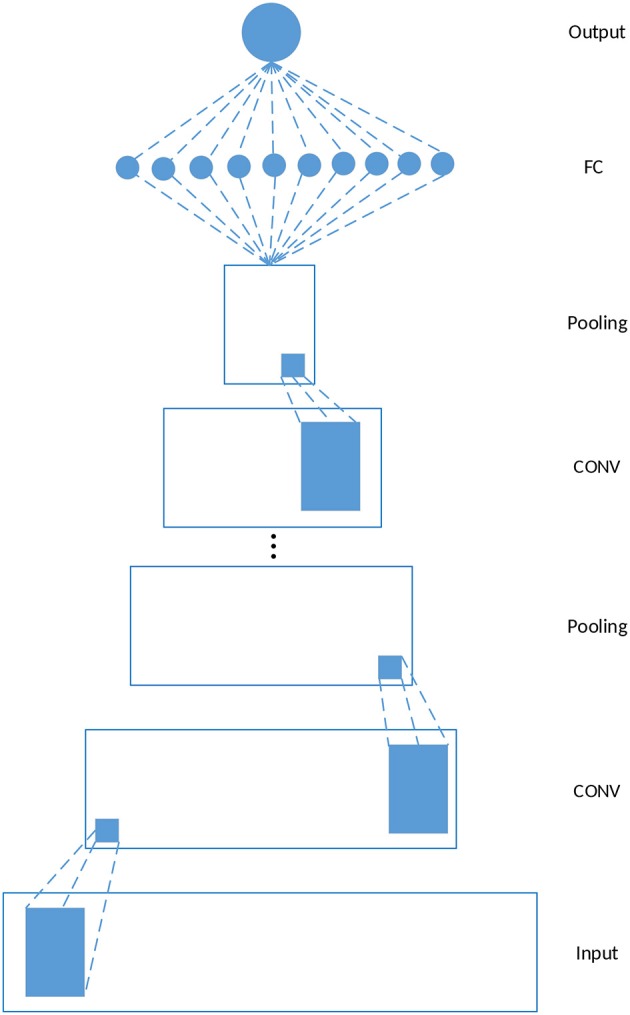
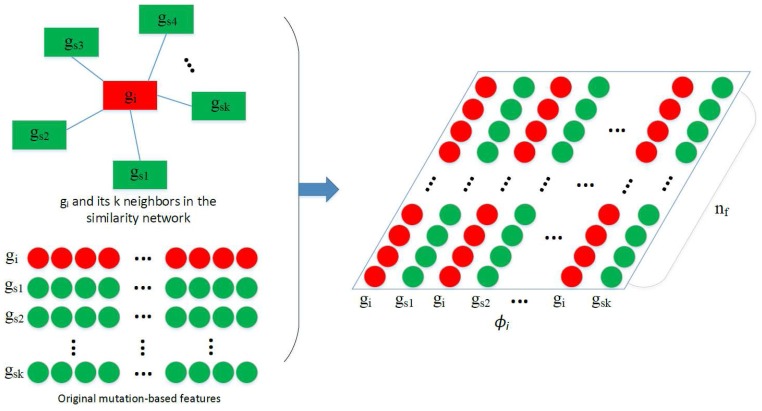
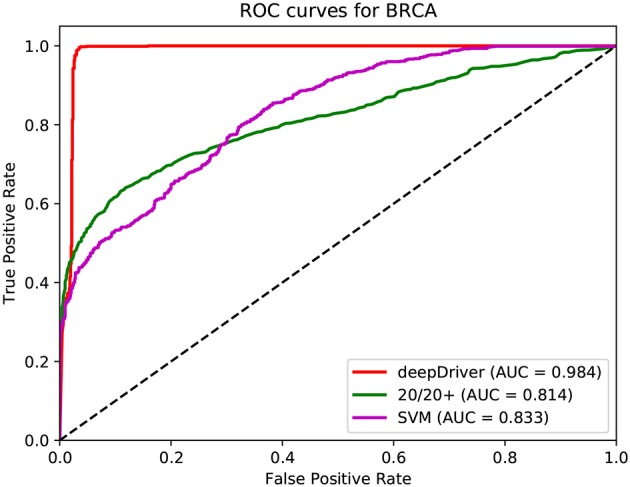
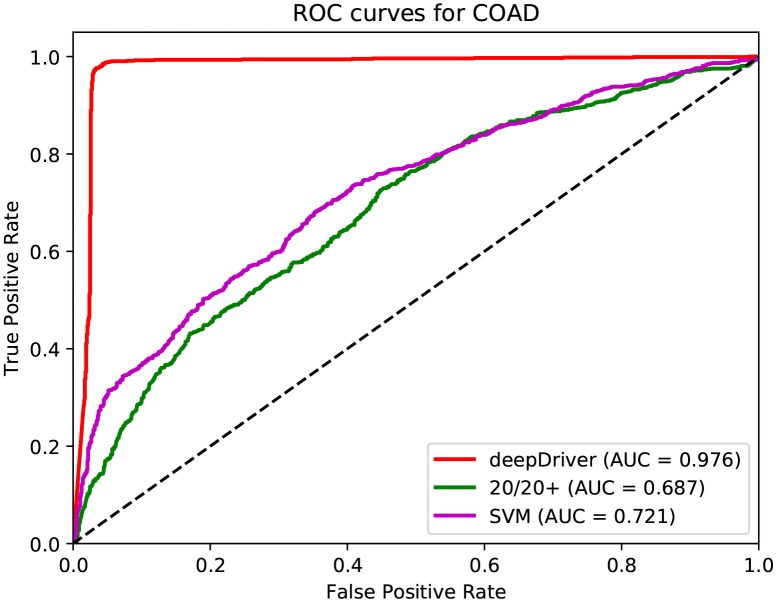
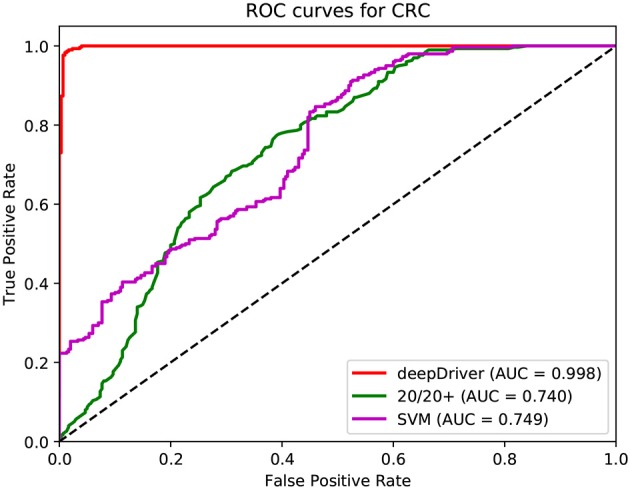
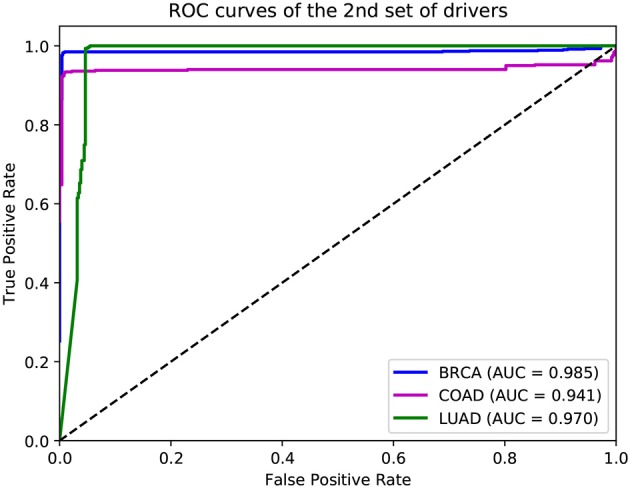
With the advances in high-throughput technologies, millions of somatic mutations have been reported in the past decade. Identifying driver genes with oncogenic mutations from these data is a critical and challenging problem. Many computational methods have been proposed to predict driver genes. Among them, machine learning-based methods usually train a classifier with representations that concatenate various types of features extracted from different kinds of data. Although successful, simply concatenating different types of features may not be the best way to fuse these data. We notice that a few types of data characterize the similarities of genes, to better integrate them with other data and improve the accuracy of driver gene prediction, in this study, a deep learning-based method (deepDriver) is proposed by performing convolution on mutation-based features of genes and their neighbors in the similarity networks. The method allows the convolutional neural network to learn information within mutation data and similarity networks simultaneously, which enhances the prediction of driver genes. deepDriver achieves AUC scores of 0.984 and 0.976 on breast cancer and colorectal cancer, which are superior to the competing algorithms. Further evaluations of the top 10 predictions also demonstrate that deepDriver is valuable for predicting new driver genes.
Overview
The claims and statistics of this paper haven’t been checked yet.
Run the check — free, no account needed. It reads the open-access text and checks the sources it cites.
Integrity signals
Registry
Cites
Statistics
Figures
Verification
Claims the paper makes
The claims and statistics of this paper haven’t been checked yet.
Run the check — free, no account needed. It reads the open-access text and checks the sources it cites.
Claims other papers make about this one
Each is checked against this paper’s own text: does it say what the citing paper says it does?
In the citing paper
“This includes the use of AI in nearly every step of next-generation sequencing (NGS) processing and interpretation, including mutation identification (122, 123), artifact filtering (124), and driver gene identification (125).”
From Artificial Intelligence in Oncology: Current Landscape, Challenges, and Future Directions (2024) · cites this paper as [125]
Self-check
Percentages, sums and reported differences re-computed from the paper’s own numbers.
The self-check needs the paper’s full text.
Citations
Cites
Nearest neighbor pattern classification
Cover, T., & Hart, P. (1967) · IEEE Transactions on Information Theory · doi:10.1109/tit.1967.1053964 · Cited by 16,936 · cited 1×
“An undirected network N is constructed by k -nearest neighbors (kNN) algorithm (Cover and Hart, 1967) in which every gene is connected to genes that have the k largest PCC scores with itself.”
MethodVogelstein, B., Papadopoulos, N., Velculescu, V. E., Zhou, S., Diaz, L. A., & Kinzler, K. W. (2013) · Science · doi:10.1126/science.1235122 · Cited by 7,863 · cited 2×
“These 12 features have been used in many machining learning-based methods (Vogelstein et al., 2013; Tokheim et al., 2016).”
MethodKumar, P., Henikoff, S., & Ng, P. C. (2009) · Nature Protocols · doi:10.1038/nprot.2009.86 · Cited by 6,521 · cited 1×
“CanDrA trains an SVM with 95 features obtained from 10 functional impact-based algorithms, such as SIFT (Kumar et al., 2009) and CHASM.”
MethodHuman Protein Reference Database--2009 update
Prasad, T. S. K., Goel, R., Kandasamy, K., Keerthikumar, S., Kumar, S., Mathivanan, S., Telikicherla, D., Raju, R., Shafreen, R. B., Venugopal, A., et al. (2008) · Nucleic Acids Research · doi:10.1093/nar/gkn892 · Cited by 3,252 · cited 1×
“Considering that GINs are downloaded from online databases, such as BioGrid (Chatr-Aryamontri et al., 2017) and HPRD (Keshava Prasad et al., 2008), which contain many false positives, network-based methods need more accurate GIN to improve their prediction accuracy.”
MethodDiscovery and saturation analysis of cancer genes across 21 tumour types
Lawrence, M. S., Stojanov, P., Mermel, C. H., Robinson, J. T., Garraway, L. A., Golub, T. R., Meyerson, M., Gabriel, S. B., Lander, E. S., & Getz, G. (2014) · Nature · doi:10.1038/nature12912 · Cited by 3,096 · cited 3×
“Tokheim et al. propose a random forest algorithm (known as 20/20+) and compare it with seven classical driver gene prediction algorithms [ActiveDriver (Reimand and Bader, 2013), MuSiC (Dees et al., 2012), MutsigCV (Lawrence et al., 2014), OncodriveCLUST (Tamborero et al., 2013), OncodriveFM (Gonzalez-Perez and Lopez-B…”
MethodResultA systematic study of the class imbalance problem in convolutional neural networks
Buda, M., Maki, A., & Mazurowski, M. A. (2018) · Neural Networks · doi:10.1016/j.neunet.2018.07.011 · Cited by 3,088 · cited 1×
“Currently, two types of methods can be used to solve the imbalanced problem: data level methods and classifier level methods (Buda et al., 2018).”
MethodComprehensive Characterization of Cancer Driver Genes and Mutations
Bailey, M. H., Tokheim, C., Porta-Pardo, E., Sengupta, S., Bertrand, D., Weerasinghe, A., Colaprico, A., Wendl, M. C., Kim, J., Reardon, B., et al. (2018) · Cell · doi:10.1016/j.cell.2018.02.060 · Cited by 2,256
COSMIC: somatic cancer genetics at high-resolution
Forbes, S. A., Beare, D., Boutselakis, H., Bamford, S., Bindal, N., Tate, J., Cole, C. G., Ward, S., Dawson, E., Ponting, L., et al. (2017) · Nucleic Acids Research · doi:10.1093/nar/gkw1121 · Cited by 1,922 · cited 5×
“In addition to the driver genes collected from CGC, our deepDriver was also validated using the driver genes published in Bailey et al. (2018).”
MethodInfluentialToward a Shared Vision for Cancer Genomic Data
Grossman, R. L., Heath, A. P., Ferretti, V., Varmus, H. E., Lowy, D. R., Kibbe, W. A., & Staudt, L. M. (2016) · New England Journal of Medicine · doi:10.1056/nejmp1607591 · Cited by 1,680 · cited 1×
“The mutation data and gene expression data of these three diseases were downloaded from the NCI Genomic Data Commons (GDC) (Grossman et al., 2016).”
MethodThe BioGRID interaction database: 2017 update
Chatr‐aryamontri, A., Oughtred, R., Boucher, L., Rust, J., Chang, C., Kolas, N. K., O’Donnell, L., Oster, S. K., Theesfeld, C. L., Sellam, A., et al. (2016) · Nucleic Acids Research · doi:10.1093/nar/gkw1102 · Cited by 985
Cited by
Sorted by citations
Items 101–122 of 122
Zhang, S., Wang, Z., Li, Y., & Guo, W.-F. (2022) · Figshare · doi:10.6084/m9.figshare.20499897
Zhang, S., Wang, Z., Li, Y., & Guo, W.-F. (2022) · Figshare · doi:10.6084/m9.figshare.20499888
Zhang, S., Wang, Z., Li, Y., & Guo, W.-F. (2022) · Figshare · doi:10.6084/m9.figshare.20499891
Zhang, L., Deng, T., Liufu, Z., Liu, X., Chen, B., Hu, Z., Liu, C., Tracy, M. E., Lu, X., Wen, H., et al. (2024) · eLife · doi:10.7554/elife.99340.3
Zhang, L., Deng, T., Liufu, Z., Liu, X., Chen, B., Hu, Z., Liu, C., Lü, X., Wen, H., & Wu, C. (2024) · eLife · doi:10.7554/elife.99340.1
Chu, X., Guan, B., Dai, L., Liu, J.-X., Li, F., & Shang, J. (2024) · Figshare · doi:10.6084/m9.figshare.26607364
Zhang, S., Wang, Z.-N., Li, Y., & Guo, W.-F. (2022) · Figshare · doi:10.6084/m9.figshare.20499885
Jubran, J., Slutsky, R., Rozenblum, N., Rokach, L., Ben‐David, U., & Yeger‐Lotem, E. (2024) · Figshare · doi:10.6084/m9.figshare.26707017
Jubran, J., Slutsky, R., Rozenblum, N., Rokach, L., Ben‐David, U., & Yeger‐Lotem, E. (2024) · Figshare · doi:10.6084/m9.figshare.26707011
Jubran, J., Slutsky, R., Rozenblum, N., Rokach, L., Ben‐David, U., & Yeger‐Lotem, E. (2024) · Figshare · doi:10.6084/m9.figshare.25608725
Chu, X., Guan, B., Dai, L., Liu, J.-X., Li, F., & Shang, J. (2024) · Figshare · doi:10.6084/m9.figshare.26607361
Jubran, J., Slutsky, R., Rozenblum, N., Rokach, L., Ben‐David, U., & Yeger‐Lotem, E. (2024) · Figshare · doi:10.6084/m9.figshare.26707005
Jubran, J., Slutsky, R., Rozenblum, N., Rokach, L., Ben‐David, U., & Yeger‐Lotem, E. (2024) · Figshare · doi:10.6084/m9.figshare.26707008
Chu, X., Guan, B., Dai, L., Liu, J.-X., Li, F., & Shang, J. (2024) · Figshare · doi:10.6084/m9.figshare.26607358
Peng, W., Wu, R., Dai, W., & Yu, N. (2023) · Figshare · doi:10.6084/m9.figshare.22600045
Chu, X., Guan, B., Dai, L., Liu, J.-X., Li, F., & Shang, J. (2024) · Figshare · doi:10.6084/m9.figshare.26607370
Jubran, J., Slutsky, R., Rozenblum, N., Rokach, L., Ben‐David, U., & Yeger‐Lotem, E. (2024) · Figshare · doi:10.6084/m9.figshare.26707014
Chu, X., Guan, B., Dai, L., Liu, J., Li, F., & Shang, J. (2024) · Figshare · doi:10.6084/m9.figshare.26607367
Jubran, J., Slutsky, R., Rozenblum, N., Rokach, L., Ben‐David, U., & Yeger‐Lotem, E. (2024) · Figshare · doi:10.6084/m9.figshare.26707002
Jubran, J., Slutsky, R., Rozenblum, N., Rokach, L., Ben‐David, U., & Yeger‐Lotem, E. (2024) · Figshare · doi:10.6084/m9.figshare.25608861
Pandey, M., Paruchuri, A., & Gromiha, M. M. (2026) · Bioinformatics Advances · doi:10.1093/bioadv/vbag068
“Recently, deep learning has gained attention for its ability to handle large datasets and to provide more accurate predictions (Angermueller et al. 2016, Luo et al. 2019, Rogers et al. 2020, Liao et al. 2021, Ko et al. 2022).”
Wei, P.-J., Guo, X., Li, W., Ding, Y., Cao, R.-F., Yue, Z., Wang, K., & Zheng, C.-H. (2026) · Interdisciplinary Sciences Computational Life Sciences · doi:10.1007/s12539-026-00866-z
“DeepDriver [30] employs a machine learning classifier to learn an integrated feature matrix through merging mutation-based attributes of genes with features of neighboring genes as defined by a similarity network, for the purpose of driver gene identification.”
Influential
Metadata
- Authors
- Luo, P., Ding, Y., Lei, X., & Wu, F.-X.
- Affiliations
- University of Saskatchewan (CA)
- Shaanxi Normal University (CN)
- Hainan Normal University (CN)
- Corresponding author
- Wu, Fang-Xiang
- Venue
- Frontiers in Genetics
- Publisher
- Frontiers Media SA
- Published
- 2019-01-29
- Volume
- 10
- Pages
- 13-13
- ISSN
- 1664-8021 (ISSN-L)
- PMC
- PMC6361806
- OpenAlex
- W2913030342
- Cited by
- 107
- References
- 54
- Citations by year
- 2026: 4 · 2025: 6 · 2024: 19 · 2023: 30 · 2022: 17 · 2021: 17 · 2020: 9 · 2019: 5
- FWCI
- 4.19
- Type
- journal article
- Language
- en
- Open access
- gold
- doi.org
- Licence
- Locations
- Frontiers in Genetics (publishedVersion, cc-by)
- Europe PMC (PubMed Central) (publishedVersion, cc-by)
- PubMed Central (publishedVersion, cc-by)
- PubMed (publishedVersion)
- DOAJ (DOAJ: Directory of Open Access Journals) (submittedVersion, cc-by-sa)
- Funders
- China Scholarship Council
- Natural Sciences and Engineering Research Council of Canada
- Topics
- Life Sciences › Biochemistry, Genetics and Molecular Biology › Cancer Research › Cancer Genomics and Diagnostics
- Life Sciences › Biochemistry, Genetics and Molecular Biology › Genetics › Genomics and Rare Diseases
- Life Sciences › Biochemistry, Genetics and Molecular Biology › Molecular Biology › Bioinformatics and Genomic Networks
- Keywords
- cancer driver genes, somatic mutations, deep convolutional neural networks, similarity networks, multi-omics integration, breast cancer, colorectal cancer, oncogenic mutations
About these checks
Registry, retraction, Cites and statistics results are computed, not judged, with one exception: a printed reference that no index lists is read once by a model before it counts as a citation error. Claims are extracted by a model and kept only when their quote appears verbatim in the text; each cited source is then checked, with a model’s help, for whether it says what the claim relies on. Those verdicts can be wrong — read the claim’s quote and the cited source before relying on one.
Statistics and arithmetic are recomputed, not judged.
Confidence bands are shown only for fields calibrated on our annotated test set. None is calibrated yet, so no band is shown.
What counts as a claim ›How we measure confidence ›How we check this ›
Are you an author, or do you see a problem with this page? Request a review
