

The DOI matches its Crossref record; 78 of the 78 references it cites were found in a registry or an index.
Gradient Boosting Decision Tree-Based Method for Predicting Interactions Between Target Genes and Drugs
Open accessAbstract
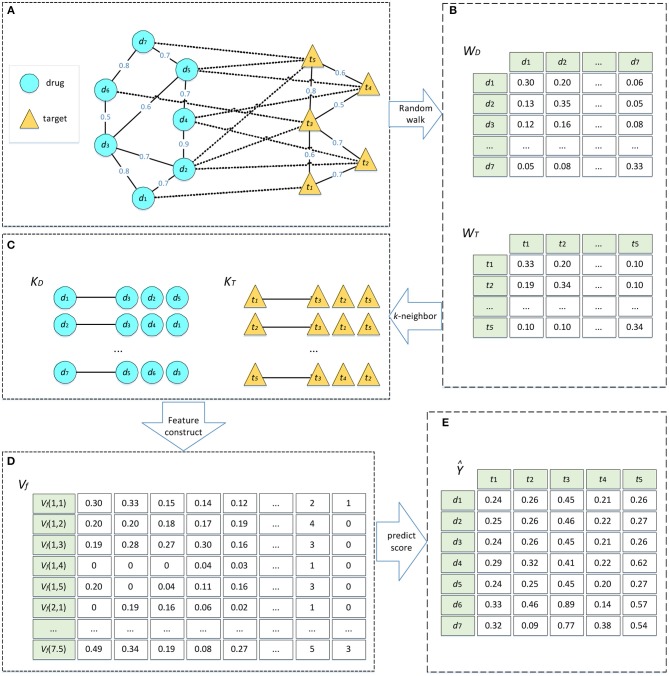
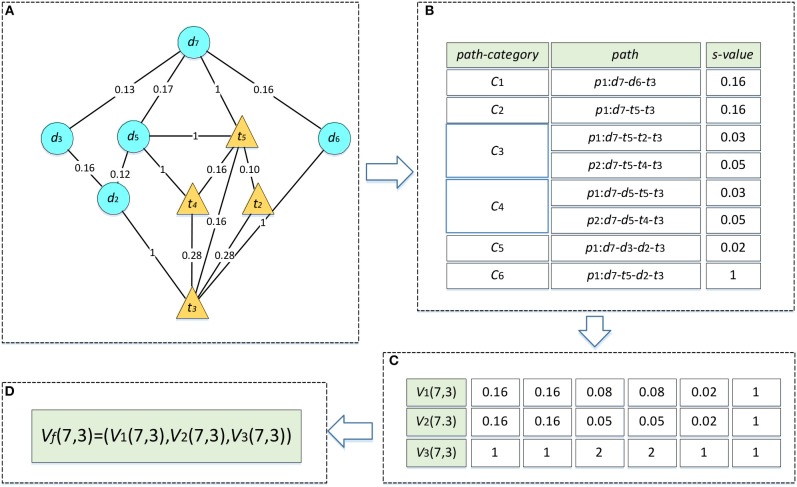
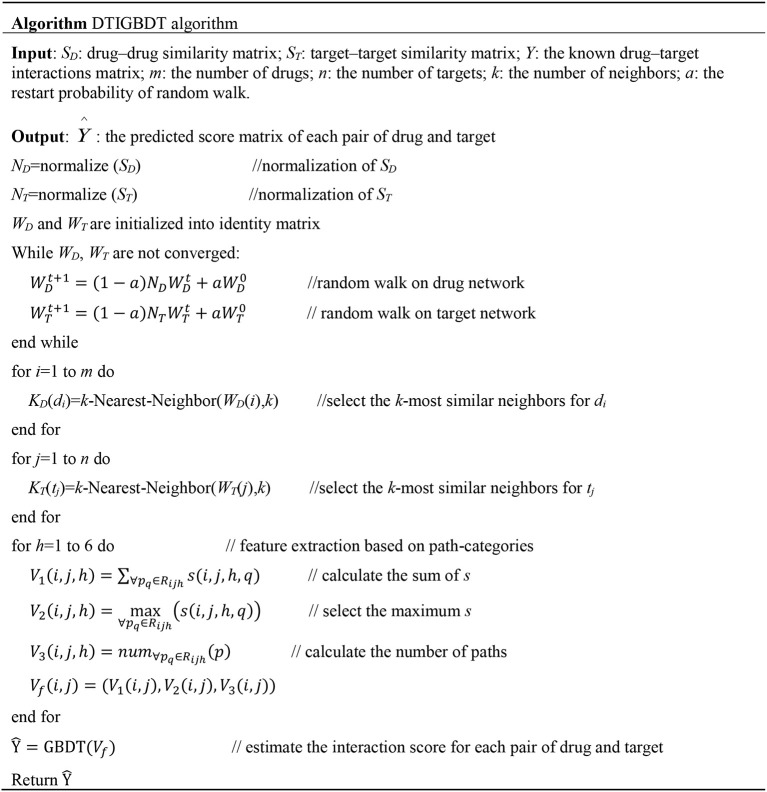
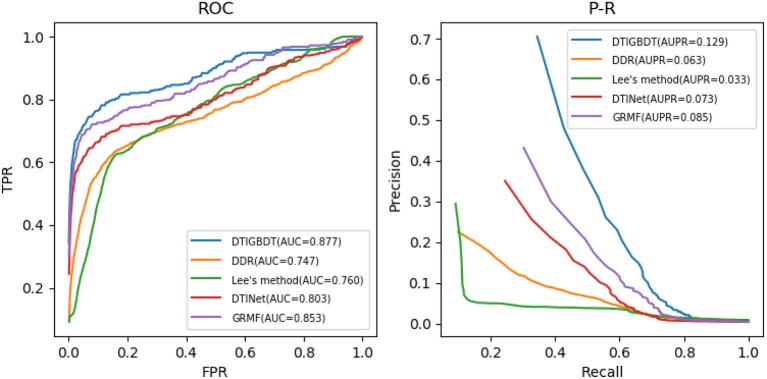
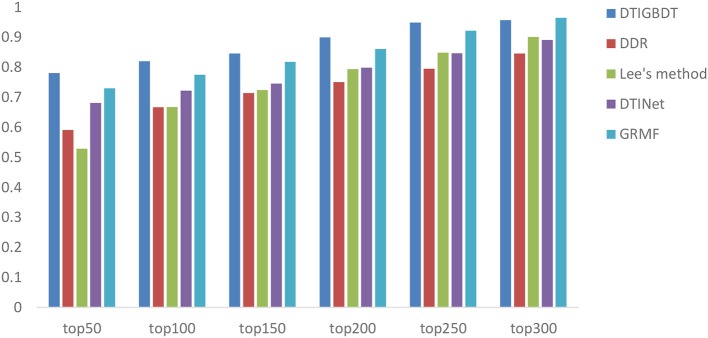
Determining the target genes that interact with drugs—drug–target interactions—plays an important role in drug discovery. Identification of drug–target interactions through biological experiments is time consuming, laborious, and costly. Therefore, using computational approaches to predict candidate targets is a good way to reduce the cost of wet-lab experiments. However, the known interactions (positive samples) and the unknown interactions (negative samples) display a serious class imbalance, which has an adverse effect on the accuracy of the prediction results. To mitigate the impact of class imbalance and completely exploit the negative samples, we proposed a new method, named DTIGBDT, based on gradient boosting decision trees, for predicting candidate drug–target interactions. We constructed a drug–target heterogeneous network that contains the drug similarities based on the chemical structures of drugs, the target similarities based on target sequences, and the known drug–target interactions. The topological information of the network was captured by random walks to update the similarities between drugs or targets. The paths between drugs and targets could be divided into multiple categories, and the features of each category of paths were extracted. We constructed a prediction model based on gradient boosting decision trees. The model establishes multiple decision trees with the extracted features and obtains the interaction scores between drugs and targets. DTIGBDT is a method of ensemble learning, and it effectively reduces the impact of class imbalance. The experimental results indicate that DTIGBDT outperforms several state-of-the-art methods for drug–target interaction prediction. In addition, case studies on Quetiapine, Clozapine, Olanzapine, Aripiprazole, and Ziprasidone demonstrate the ability of DTIGBDT to discover potential drug–target interactions.
Overview
The claims and statistics of this paper haven’t been checked yet.
Run the check — free, no account needed. It reads the open-access text and checks the sources it cites.
Integrity signals
Registry
Cites
Statistics
Figures
Verification
Claims the paper makes
The claims and statistics of this paper haven’t been checked yet.
Run the check — free, no account needed. It reads the open-access text and checks the sources it cites.
Claims other papers make about this one
Each is checked against this paper’s own text: does it say what the citing paper says it does?
In the citing paper
“When compared to other GBM algorithms, XGBoost provides regularized boosting, helping to reduce overfitting with more generalizable results (Torlay et al., 2017; Xuan et al., 2019).”
From Multiclass characterization of frontotemporal dementia variants via multimodal brain network computational inference (2023) · cites this paper as Xuan et al., 2019
Self-check
Percentages, sums and reported differences re-computed from the paper’s own numbers.
The self-check needs the paper’s full text.
Citations
Cites
KEGG: Kyoto Encyclopedia of Genes and Genomes
Kanehisa, M. (2000) · Nucleic Acids Research · doi:10.1093/nar/28.1.27 · Cited by 37,077
KEGG: Kyoto Encyclopedia of Genes and Genomes
Ogata, H., Goto, S., Sato, K., Fujibuchi, W., Bono, H., & Kanehisa, M. (1999) · Nucleic Acids Research · doi:10.1093/nar/27.1.29 · Cited by 31,232
DrugBank 5.0: a major update to the DrugBank database for 2018
Wishart, D. S., Feunang, Y. D., Guo, A. C., Lo, E. J., Marcu, A., Grant, J. R., Sajed, T., Johnson, D., Li, C., Sayeeda, Z., et al. (2018) · Nucleic Acids Research · doi:10.1093/nar/gkx1037 · Cited by 8,404
Saito, T., & Rehmsmeier, M. (2015) · PLOS ONE · doi:10.1371/journal.pone.0118432 · Cited by 5,309
UniProt: a hub for protein information
The UniProt Consortium (2015) · Nucleic Acids Research · doi:10.1093/nar/gku989 · Cited by 5,106
How many drug targets are there?
Overington, J. P., Al-Lazikani, B., & Hopkins, A. L. (2006) · Nature Reviews Drug Discovery · doi:10.1038/nrd2199 · Cited by 3,505
AUC: A misleading measure of the performance of predictive distribution models
Lobo, J. M., Jiménez‐Valverde, A., & Real, R. (2008) · Global Ecology and Biogeography · doi:10.1111/j.1466-8238.2007.00358.x · Cited by 3,499
Human Protein Reference Database--2009 update
Prasad, T. S. K., Goel, R., Kandasamy, K., Keerthikumar, S., Kumar, S., Mathivanan, S., Telikicherla, D., Raju, R., Shafreen, R. B., Venugopal, A., et al. (2008) · Nucleic Acids Research · doi:10.1093/nar/gkn892 · Cited by 3,252
A comprehensive map of molecular drug targets
Santos, R., Ursu, O., Gaulton, A., Bento, A. P., Donadi, R. S., Bologa, C. G., Karlsson, A., Al-Lazikani, B., Hersey, A., Oprea, T. I., et al. (2017) · Nature Reviews Drug Discovery · doi:10.1038/nrd.2016.230 · Cited by 2,427
Gaulton, A., Hersey, A., Nowotka, M., Bento, A. P., Chambers, J. K., Méndez, D., Mutowo, P., Atkinson, F. L., Bellis, L. J., Cibrián–Uhalte, E., et al. (2016) · Nucleic Acids Research · doi:10.1093/nar/gkw1074 · Cited by 2,394
Cited by
Sorted by citations
Integration strategies of multi-omics data for machine learning analysis
Picard, M., Scott-Boyer, M.-P., Bodein, A., Périn, O., & Droit, A. (2021) · Computational and Structural Biotechnology Journal · doi:10.1016/j.csbj.2021.06.030 · Cited by 696
Chu, Y., Kaushik, A. C., Wang, X., Wang, W., Zhang, Y., Shan, X., Salahub, D. R., Xiong, Y., & Wei, D. (2019) · Briefings in Bioinformatics · doi:10.1093/bib/bbz152 · Cited by 206
Thafar, M. A., Olayan, R. S., Ashoor, H., Albaradei, S., Bajic, V. B., Gao, X., Gojobori, T., & Essack, M. (2020) · Journal of Cheminformatics · doi:10.1186/s13321-020-00447-2 · Cited by 143
Use of machine learning approach to predict depression in the elderly in China: A longitudinal study
Su, D., Zhang, X., He, K., & Chen, Y. (2020) · Journal of Affective Disorders · doi:10.1016/j.jad.2020.12.160 · Cited by 147
A Literature Review of Gene Function Prediction by Modeling Gene Ontology
Zhao, Y., Wang, J., Chen, J., Zhang, X., Guo, M., & Yu, G. (2020) · Frontiers in Genetics · doi:10.3389/fgene.2020.00400 · Cited by 105
Metadata
- Authors
- Xuan, P., Sun, C., Zhang, T., Ye, Y., Shen, T., & Dong, Y.
- Affiliations
- Heilongjiang University (CN)
- Corresponding author
- Sun, Chang
- Zhang, Tiangang
- Venue
- Frontiers in Genetics
- Publisher
- Frontiers Media SA
- Published
- 2019-05-31
- Volume
- 10
- Pages
- 459-459
- ISSN
- 1664-8021 (ISSN-L)
- PMC
- PMC6555260
- OpenAlex
- W2946853220
- Cited by
- 100
- References
- 78
- Citations by year
- 2026: 7 · 2025: 16 · 2024: 8 · 2023: 19 · 2022: 18 · 2021: 17 · 2020: 11 · 2019: 4
- FWCI
- 8.50
- Type
- journal article
- Language
- en
- Open access
- gold
- doi.org
- Licence
- Locations
- Frontiers in Genetics (publishedVersion, cc-by)
- Europe PMC (PubMed Central) (publishedVersion, cc-by)
- PubMed Central (publishedVersion, cc-by)
- PubMed (publishedVersion)
- DOAJ (DOAJ: Directory of Open Access Journals) (submittedVersion, cc-by-sa)
- Funders
- National Natural Science Foundation of China (61702296, 61302139)
- Natural Science Foundation of Heilongjiang Province (LH2019F049, LH2019A029)
- Topics
- Life Sciences › Pharmacology, Toxicology and Pharmaceutics › Drug Discovery › Computational Drug Discovery Methods
- Life Sciences › Biochemistry, Genetics and Molecular Biology › Molecular Biology › Bioinformatics and Genomic Networks
- Life Sciences › Biochemistry, Genetics and Molecular Biology › Molecular Biology › Machine Learning in Bioinformatics
- Keywords
- drug-target interaction prediction, gradient boosting decision tree, class imbalance, random walks, ensemble learning, antipsychotic drugs, drug discovery
About these checks
Registry, retraction, Cites and statistics results are computed, not judged, with one exception: a printed reference that no index lists is read once by a model before it counts as a citation error. Claims are extracted by a model and kept only when their quote appears verbatim in the text; each cited source is then checked, with a model’s help, for whether it says what the claim relies on. Those verdicts can be wrong — read the claim’s quote and the cited source before relying on one.
Statistics and arithmetic are recomputed, not judged.
Confidence bands are shown only for fields calibrated on our annotated test set. None is calibrated yet, so no band is shown.
What counts as a claim ›How we measure confidence ›How we check this ›
Are you an author, or do you see a problem with this page? Request a review
