

The DOI matches its Crossref record; 129 of the 138 references it cites were found in a registry or an index.
CD22: A Regulator of Innate and Adaptive B Cell Responses and Autoimmunity
Open accessAbstract
CD22 (Siglec 2) is a receptor predominantly restricted to B cells. It was initially characterized over 30 years ago and named "CD22" in 1984 at the 2nd International workshop in Boston (1). Several excellent reviews have detailed CD22 functions, CD22-regulated signaling pathways and B cell subsets regulated by CD22 or Siglec G (2-4). This review is an attempt to highlight recent and possibly forgotten findings. We also describe the role of CD22 in autoimmunity and the great potential for CD22-based immunotherapeutics for the treatment of autoimmune diseases such as systemic lupus erythematosus (SLE).
Overview
The claims and statistics of this paper haven’t been checked yet.
Run the check — free, no account needed. It reads the open-access text and checks the sources it cites.
Integrity signals
Registry
Cites
Statistics
Figures
Verification
Claims the paper makes
The claims and statistics of this paper haven’t been checked yet.
Run the check — free, no account needed. It reads the open-access text and checks the sources it cites.
Claims other papers make about this one
Each is checked against this paper’s own text: does it say what the citing paper says it does?
The source backs part of the claim, not all of it — or backs it for a different population, condition or comparison.
In the citing paper
“In addition, SYK has been identified as the central kinase that instructs signaling and effector functions downstream of TREM2, CD33, and CD22 receptors (Clark and Giltiay, 2018; Wissfeld et al., 2021; Yao et al., 2019).”
From SYK coordinates neuroprotective microglial responses in neurodegenerative disease (2022) · cites this paper as Clark and Giltiay, 2018
Experimental — accuracy not yet measured
Self-check
Percentages, sums and reported differences re-computed from the paper’s own numbers.
The self-check needs the paper’s full text.
Citations
Cites
Fry, T. J., Shah, N. N., Orentas, R. J., Stetler‐Stevenson, M., Yuan, C. M., Ramakrishna, S., Wolters, P. L., Martin, S. C., Delbrook, C., Yates, B., et al. (2017) · Nature Medicine · doi:10.1038/nm.4441 · Cited by 1,363 · cited 1×
“Recently, the use of chimeric antigen receptor (CAR) T-cell therapy, specific for CD22 was reported to provide high response rates for patients with B-cell acute lymphoblastic leukemia (B-ALL) who had failed chemotherapy and/or a CD19-targeted CAR T-cell treatment (119).”
BackgroundSiglec-mediated regulation of immune cell function in disease
Macauley, M. S., Crocker, P. R., & Paulson, J. C. (2014) · Nature Reviews Immunology · doi:10.1038/nri3737 · Cited by 1,122 · cited 1×
“The enzyme α 2,6 sialyltransferase 1 (ST6Gal1) synthesizes this ligand, and ST6Gal1 mice phenocopy many but not all of the defects seen in CD22 mice (12, 13).”
BackgroundChristensen, S. R., Shupe, J., Nickerson, K., Kashgarian, M., Flavell, R. A., & Shlomchik, M. J. (2006) · Immunity · doi:10.1016/j.immuni.2006.07.013 · Cited by 1,090 · cited 1×
“TLR7 and TLR9 in particular have been implicated in the activation of autoreactive cells and antinuclear auto-Ab production inmouse models of lupus (78, 79, 102, 103).”
BackgroundAutoreactive B Cell Responses to RNA-Related Antigens Due to TLR7 Gene Duplication
Pisitkun, P., Deane, J. A., Difilippantonio, M. J., Tarasenko, T., Satterthwaite, A. B., & Bolland, S. M. (2006) · Science · doi:10.1126/science.1124978 · Cited by 922 · cited 2×
“Similar egress of MZ B cells can be found in other autoimmune models, particularly those associated with TLR7 overexpression (78, 79).”
BackgroundEvolutionary considerations in relating oligosaccharide diversity to biological function
Gagneux, P., & Varki, A. (1999) · Glycobiology · doi:10.1093/glycob/9.8.747 · Cited by 495 · cited 1×
“Thus, they can be regarded as “self-structures” (100).”
BackgroundCD22 is a negative regulator of B-cell receptor signalling.
Nitschke, L., Carsetti, R., Ocker, B., Köhler, G., & Lamers, M. (1997) · Current Biology · doi:10.1016/s0960-9822(06)00057-1 · Cited by 473 · cited 3×
“Other studies show that CD22 mice generated using C57BL/6 ES cells do not develop an autoimmune phenotype spontaneously (9).”
BackgroundCornall, R., Cyster, J., Hibbs, M., Dunn, A., Otipoby, K., Clark, E., & Goodnow, C. (1998) · Immunity · doi:10.1016/s1074-7613(00)80554-3 · Cited by 472 · cited 1×
“Mice with a combination of half doses of Lyn, CD22 and SHP-1 have a defective phenotype found in homozygous parents (16).”
BackgroundSelf-citationSato, S., Miller, A. S., Inaoki, M., Bock, C., Jansen, P. J., Tang, M., & Tedder, T. F. (1996) · Immunity · doi:10.1016/s1074-7613(00)80270-8 · Cited by 470
CD22 regulates thymus-independent responses and the lifespan of B cells
Otipoby, K., Andersson, K., Draves, K. E., Klaus, S. J., Farr, A., Kerner, J. D., Perlmutter, R., Law, C., & Clark, E. (1996) · Nature · doi:10.1038/384634a0 · Cited by 421 · cited 9×
“Although B cell development in the BM is not affected in CD22 mice, numbers of recirculating B220hisIgMlo B cells (or IgDhi B cells) are reduced in CD22 mice (9, 10) as well as CD22L deficient ST6Gal1 mice (58).”
BackgroundInfluentialSelf-citationImmune regulation by the ST6Gal sialyltransferase.
Hennet, T., Chui, D., Paulson, J., & Marth, J. (1998) · Proceedings of the National Academy of Sciences of the United States of America · doi:10.1073/pnas.95.8.4504 · Cited by 366 · cited 2×
“The enzyme α 2,6 sialyltransferase 1 (ST6Gal1) synthesizes this ligand, and ST6Gal1 mice phenocopy many but not all of the defects seen in CD22 mice (12, 13).”
Background
Research works printed but not linked: 8
- Fujimoto, 2006, B cell antigen receptor and CD40 differentially regulate CD22 tyrosine phosphorylation, J Immunol., 176, 873, 10.4049/jimmunol.176.2.873 · DOI
- Han, 2005, Homomultimeric complexes of CD22 in B cells revealed by protein-glycan cross-linking, Nat Chem Biol., 1, 93, 10.1038/nchembio713 · DOI
- Zeng, 2009, The generation of influenza-specific humoral responses is impaired in ST6Gal I-deficient mice, J Immunol., 182, 4721, 10.4049/jimmunol.0802833 · DOI
- Lee, 2014, Transcriptional programs of lymphoid tissue capillary and high endothelium reveal control mechanisms for lymphocyte homing, Nat Immunol., 15, 982, 10.1038/ni.2983 · DOI
- Bygrave, 2004, Spontaneous autoimmunity in 129 and C57BL/6 mice-implications for autoimmunity described in gene-targeted mice, PLoS Biol., 2, E243, 10.1371/journal.pbio.0020243 · DOI
- Dawidowicz, 2011, Association study of B-cell marker gene polymorphisms in European Caucasian patients with systemic sclerosis, Clin Exp Rheumatol., 29, 839
- El-Sayed, 2009, Altered CD19/CD22 balance in Egyptian children and adolescents with systemic lupus erythematosus, Egypt J Immunol., 16, 27
- Lanoue, 2002, Interaction of CD22 with alpha2,6-linked sialoglycoconjugates: innate recognition of self to dampen B cell autoreactivity?, Eur J Immunol, 32, 348, 10.1002/1521-4141(200202)32:2<348::AID-IMMU348>3.0.CO;2-5 · DOI
Cited by
Sorted by citations
Glycosylation in health and disease
Reily, C., Stewart, T. J., Renfrow, M. B., & Novak, J. (2019) · Nature Reviews Nephrology · doi:10.1038/s41581-019-0129-4 · Cited by 2,075
Siglecs as Immune Cell Checkpoints in Disease
Duan, S., & Paulson, J. C. (2020) · Annual Review of Immunology · doi:10.1146/annurev-immunol-102419-035900 · Cited by 452
SYK coordinates neuroprotective microglial responses in neurodegenerative disease
Ennerfelt, H., Frost, E. L., Shapiro, D. A., Holliday, C., Zengeler, K. E., Voithofer, G., Bolte, A. C., Lammert, C. R., Kulas, J. A., Ulland, T. K., et al. (2022) · Cell · doi:10.1016/j.cell.2022.09.030 · Cited by 297
Xu, X., Sun, Q., Liang, X., Chen, Z., Zhang, X., Zhou, X., Li, M., Tu, H., Liu, Y., Tu, S., et al. (2019) · Frontiers in Immunology · doi:10.3389/fimmu.2019.02664 · Cited by 360
Xist ribonucleoproteins promote female sex-biased autoimmunity
Dou, D. R., Zhao, Y., Belk, J. A., Zhao, Y., Casey, K. M., Chen, D. C., Li, R., Yu, B., Srinivasan, S., Abe, B. T., et al. (2024) · Cell · doi:10.1016/j.cell.2023.12.037 · Cited by 233
Glycoconjugates: Synthesis, Functional Studies, and Therapeutic Developments
Shivatare, S. S., Shivatare, V. S., & Wong, C. (2022) · Chemical Reviews · doi:10.1021/acs.chemrev.1c01032 · Cited by 266
Xist ribonucleoproteins promote female sex-biased autoimmunity
Dou, D. R., Zhao, Y.-D., Belk, J. A., Zhao, Y., Casey, K. M., Chen, D. C., Li, R., Yu, B.-F., Srinivasan, S., Abe, B., et al. (2023) · bioRxiv · doi:10.1101/2022.11.05.515306 · Cited by 206
Chimeric antigen receptor-engineered natural killer cells for cancer immunotherapy
Yilmaz, A., Cui, H., Caligiuri, M. A., & Yu, J. (2020) · Journal of Hematology & Oncology · doi:10.1186/s13045-020-00998-9 · Cited by 171
N-Glycosylation and Inflammation; the Not-So-Sweet Relation
Radovani, B., & Gudelj, I. (2022) · Frontiers in Immunology · doi:10.3389/fimmu.2022.893365 · Cited by 150
The structural variation landscape in 492 Atlantic salmon genomes
Bertolotti, A. C., Layer, R. M., Gundappa, M. K., Gallagher, M. D., Pehlivanoglu, E., Nome, T., Robledo, D., Kent, M., Røsæg, L. L., Holen, M. M., et al. (2020) · Nature Communications · doi:10.1038/s41467-020-18972-x · Cited by 112
Zhao, J., Song, Y., & Liu, D. (2019) · Journal of Hematology & Oncology · doi:10.1186/s13045-019-0705-x · Cited by 111
Merino‐Vico, A., Frazzei, G., van Hamburg, J. P., & Tas, S. W. (2022) · European Journal of Immunology · doi:10.1002/eji.202149675 · Cited by 93
Aberrant protein glycosylation: Implications on diagnosis and Immunotherapy
Bangarh, R., Khatana, C., Kaur, S., Sharma, A., Kaushal, A., Siwal, S. S., Tuli, H. S., Dhama, K., Thakur, V. K., Saini, R. V., et al. (2023) · Biotechnology Advances · doi:10.1016/j.biotechadv.2023.108149 · Cited by 87
Advancing CAR T-Cell Therapy for Solid Tumors: Lessons Learned from Lymphoma Treatment
Titov, A., Valiullina, A., Zmievskaya, E., Zaikova, E. K., Petukhov, A., Рифкатовна, М. Р., Bulatov, E., & Rizvanov, A. A. (2020) · Cancers · doi:10.3390/cancers12010125 · Cited by 89
Wang, Y., Lloyd, K. A., Melas, I. N., Zhou, D., Thyagarajan, R., Lindqvist, J., Hansson, M., Svärd, A., Mathsson‐Alm, L., Kastbom, A., et al. (2019) · Scientific Reports · doi:10.1038/s41598-019-56279-0 · Cited by 80
Single-cell RNA-seq reveals different subsets of non-specific cytotoxic cells in teleost.
Niu, J., Huang, Y., Liu, X.-C., Zhang, Z., Tang, J., Wang, B., Lu, Y.-S., Cai, J., & Jian, J. (2020) · Genomics · doi:10.1016/j.ygeno.2020.09.031 · Cited by 70
Wang, L., Li, J., He, S., Liu, Y., Chen, H., He, S., Yin, M., Zou, D., Chen, S., Luo, T., et al. (2021) · Cell Death and Disease · doi:10.1038/s41419-021-03878-3 · Cited by 78
Li, J., Yin, W., Jing, Y., Kang, D., Yang, L., Cheng, J., Yu, Z., Peng, Z., Li, X., Wen, Y., et al. (2019) · Frontiers in Immunology · doi:10.3389/fimmu.2018.03096 · Cited by 70
CD20+CD22+ADAM28+ B Cells in Tertiary Lymphoid Structures Promote Immunotherapy Response
Wu, Z., Zhou, J., Xiao, Y., Ming, J., Zhou, J., Dong, F., Zhou, X., Xu, Z., Zhao, X., Lei, P., et al. (2022) · Frontiers in Immunology · doi:10.3389/fimmu.2022.865596 · Cited by 65
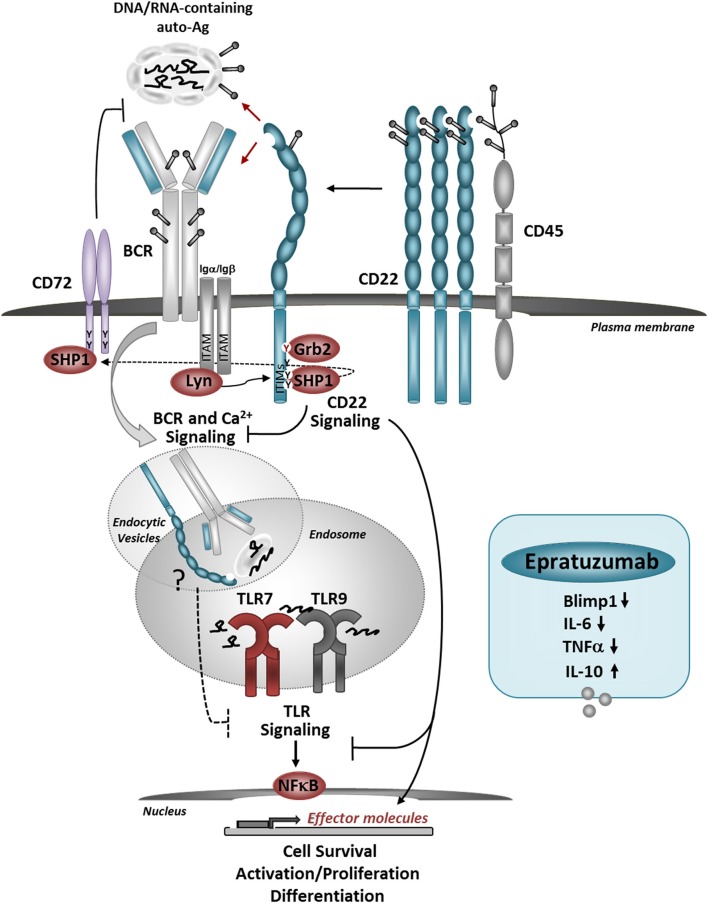
“In contrast, CD22 (Siglec 2) is a regulatory receptor predominantly restricted to B cells, which inhibits both BCR and TLR signaling through four ITIMs (41).”
BackgroundAntibody–drug conjugates in cancer therapy: mechanisms and clinical studies
He, J., Zeng, X., Wang, C., Wang, E., & Li, Y. (2024) · MedComm · doi:10.1002/mco2.671 · Cited by 60
Trzos, S., Link‐Lenczowski, P., & Pocheć, E. (2023) · Frontiers in Immunology · doi:10.3389/fimmu.2023.1188838 · Cited by 50
Gianchecchi, E., Arena, A., & Fierabracci, A. (2021) · International Journal of Molecular Sciences · doi:10.3390/ijms22115774 · Cited by 62
Production of monoclonal antibodies for therapeutic purposes: A review.
Alejandra, W.-P., Irene, J.-P. M., Antonio, G.-S. F., Patricia, R., Elizabeth, T., Pablo, A.-A. J., & Rebeca, G.-V. (2023) · International Immunopharmacology · doi:10.1016/j.intimp.2023.110376 · Cited by 50
The Functions and Phenotypes of Microglia in Alzheimer’s Disease
Fujikawa, R., & Tsuda, M. (2023) · Cells · doi:10.3390/cells12081207 · Cited by 58
Pregnancy enables antibody protection against intracellular infection
Erickson, J. J., Archer‐Hartmann, S. A., Yarawsky, A. E., Miller, J. L. C., Seveau, S. M., Shao, T., Severance, A. L., Miller‐Handley, H., Wu, Y., Pham, G. H., et al. (2022) · Nature · doi:10.1038/s41586-022-04816-9 · Cited by 53
Bispecific Chimeric Antigen Receptor T Cell Therapy for B Cell Malignancies and Multiple Myeloma
Cronk, R. J., Zurko, J. C., & Shah, N. N. (2020) · Cancers · doi:10.3390/cancers12092523 · Cited by 53
Pérez, C. A., Carmona-Luque, M. D., Benabdellah, K., & Herrera, C. (2023) · Frontiers in Immunology · doi:10.3389/fimmu.2023.1165870 · Cited by 69
A human gut Faecalibacterium prausnitzii fatty acid amide hydrolase
Cheng, J., Venkatesh, S., Ke, K., Barratt, M. J., & Gordon, J. I. (2024) · Science · doi:10.1126/science.ado6828 · Cited by 47
Innate Immunity and Biological Therapies for the Treatment of Sjögren’s Syndrome
Srivastava, A., & Makarenkova, H. P. (2020) · International Journal of Molecular Sciences · doi:10.3390/ijms21239172 · Cited by 61
Mendez, M. E., Sebastian, A., Murugesh, D., Hum, N., McCool, J. L., Hsia, A. W., Christiansen, B., & Loots, G. (2020) · Journal of Bone and Mineral Research · doi:10.1002/jbmr.4117 · Cited by 41
“Future studies will have to also survey the contribution of other immune cell types to the development of PTOA since genes associated with B-cell activation, such as Blk,(64) Blnk, (65) Cd22,(66) Cd79a,(67) and Cd79b,(68) were downregulated in the injured joints tread with LPS in both male and female cohorts.”
BackgroundRoles for Siglec-glycan interactions in regulating immune cells
Lin, S.-Y., Schmidt, E. N., Takahashi, K., & Macauley, M. S. (2024) · Seminars in Immunology · doi:10.1016/j.smim.2024.101925 · Cited by 40
Ren, H., Yan, P., Wang, D., Hao, H., Han, R., Qi, C., Zhang, W., He, W., Shi, F., & Liu, Q. (2023) · Pharmacological Research · doi:10.1016/j.phrs.2023.106912 · Cited by 39
Peñaranda, M., Jensen, I., Tollersrud, L. G., Bruun, J., & Jørgensen, J. B. (2019) · Frontiers in Immunology · doi:10.3389/fimmu.2019.00037 · Cited by 34
CD22 Blockage Restores Age-Related Impairments of Microglia Surveillance Capacity
Aires, V., Coulon-Bainier, C., Pavlovic, A., Ebeling, M., Schmucki, R., Schweitzer, C., Kueng, E., Gutbier, S., & Harde, E. (2021) · Frontiers in Immunology · doi:10.3389/fimmu.2021.684430 · Cited by 48
Upregulation of CD22 by Chidamide promotes CAR T cells functionality
Yang, X., Yu, Q., Xu, H., & Zhou, J. (2021) · Scientific Reports · doi:10.1038/s41598-021-00227-4 · Cited by 32
Targeting CD22 for B-cell hematologic malignancies
Xu, J., Luo, W., Li, C., & Mei, H. (2023) · Experimental Hematology and Oncology · doi:10.1186/s40164-023-00454-7 · Cited by 31
“It consists of seven extracellular IgG-like domains and a 141-amino acid-long cytoplasmic tail [32, 33] (Fig.”
BackgroundImpact of Siglecs on autoimmune diseases
Brzezicka, K., & Paulson, J. C. (2022) · Molecular Aspects of Medicine · doi:10.1016/j.mam.2022.101140 · Cited by 36
Systemic lupus erythematosus (SLE): emerging therapeutic targets
Mathias, L. M., & Stohl, W. (2020) · Expert Opinion on Therapeutic Targets · doi:10.1080/14728222.2020.1832464 · Cited by 39
Neuroimmunology of rabies: New insights into an ancient disease
Bastos, V. A. F., da Silva, V. P., Rodrigues, É. D. L., Moraes, C. N. D. S., Nóbile, A. L., Fonseca, D. L. M., Souza, K., do Vale, F. Y. N., Filgueiras, I. S., Schimke, L. F., et al. (2023) · Journal of Medical Virology · doi:10.1002/jmv.29042 · Cited by 37
“It has been shown that CD22 coordinates its inhibitory regulation 126 of B cells by cooperating with calcium pumps and reducing the stores of Ca 2+ , turning the PMCAs into a transient regulator of lymphocyte activation.”
BackgroundOral obeldesivir provides postexposure protection against Marburg virus in nonhuman primates
Cross, R. W., Woolsey, C. B., Prasad, A. N., Borisevich, V., Agans, K. N., Deer, D. J., Harrison, M. B., Dobias, N. S., Fenton, K. A., Cihlář, T., et al. (2025) · Nature Medicine · doi:10.1038/s41591-025-03496-y · Cited by 36
“Notably, BTLA and CD22 are genes whose protein products are key regulators of B cell activity 27,28 , helping to prevent excessive immune responses and autoimmunity.”
Systemic lupus erythematosus: pathogenesis and targeted therapy
Su, X., Yu, H. M., Lei, Q., Chen, X., Tong, Y., Zhang, Z., Yang, W., Guo, Y., & Lin, L. (2024) · Molecular Biomedicine · doi:10.1186/s43556-024-00217-8 · Cited by 84
“Variations and polymorphisms in the CD22 gene have been correlated with an increased susceptibility to autoimmune conditions, such as SLE [175].”
Benamar, M., Chen, Q., Chou, J., Julé, A. M., Boudra, R., Contini, P., Crestani, E., Lai, P. S., Wang, M.-Y., Fong, J., et al. (2022) · Journal of Clinical Investigation · doi:10.1172/jci163235 · Cited by 27
“We found upregulation of CD22, a member of the Siglec family of lectins normally found in B cells, where it acts to regulate B cell receptor signaling (45).”
Zhu, H.-B., Deng, H., Mu, J., Lyu, C., Jiang, Y.-Y., & Deng, Q. (2021) · OncoTargets and Therapy · doi:10.2147/ott.s312904 · Cited by 26
“Anti-CD22 CAR-T cell therapy provides a potential treatment strategy in addition to antiCD19 CAR-T cell therapy.(8,10,11) A study reported that anti-CD22 CAR-T cell therapy induced high response rates in R/R B-ALL patients whom had failed or relapsed again after a previous CD19 CAR-T cell therapy.”
BackgroundDevelopment of Recombinant Immunotoxins for Hairy Cell Leukemia
Kreitman, R., & Pastan, I. (2020) · Biomolecules · doi:10.3390/biom10081140 · Cited by 25
Targeted Approaches to Inhibit Sialylation of Multiple Myeloma in the Bone Marrow Microenvironment
Natoni, A., Bohara, R., Pandit, A., & O'Dwyer, M. (2019) · Frontiers in Bioengineering and Biotechnology · doi:10.3389/fbioe.2019.00252 · Cited by 25
“Physiologically, ST6GAL1 is involved in the generation of CD22 ligands that control B cell functions (Clark and Giltiay, 2018).”
BackgroundWang, X., Nissen, M. D., Gracias, D., Kusakabe, M., Simkin, G. O., Jiang, A., Duns, G., Sarkozy, C., Hilton, L. K., Chavez, E. A., et al. (2022) · Nature Communications · doi:10.1038/s41467-022-34408-0 · Cited by 36
Karmakar, J., Mukherjee, K., & Mandal, C. (2021) · Frontiers in Immunology · doi:10.3389/fimmu.2021.758588 · Cited by 24
Huang, L.-X., Qiao, Y., Xu, W., Gong, L., He, R., Qi, W.-L., Gao, Q.-C., Cai, H., Grossart, H., & Yan, Q.-P. (2021) · Frontiers in Immunology · doi:10.3389/fimmu.2021.737332 · Cited by 24
Transcriptomic Signatures and Immunomodulatory Treatments for COVID-19 Patients
Li, G., Ruan, S., Zhao, X., Liu, Q., Dou, Y., & Mao, F. (2020) · Computational and Structural Biotechnology Journal · doi:10.1016/j.csbj.2020.11.056 · Cited by 26
“On the other hand, CD22, CCR6 and IL19 were found to be the top 3 hub genes in the turquoise module, and all these three genes are anti-inflammation genes and functionally important for preventing over-activation of the immune system and the development of autoimmune diseases [35-37] (Fig.”
Siglecs as modulators of macrophage phenotype and function
Kukan, E. N., Fabiano, G. L., & Cobb, B. A. (2024) · Seminars in Immunology · doi:10.1016/j.smim.2024.101887 · Cited by 24
Therapeutic Targets of Monoclonal Antibodies Used in the Treatment of Cancer: Current and Emerging
Effer, B. R., Perez, I., Ulloa, D., Mayer, C., Muñoz, F., Bustos, D., Rojas, C., Manterola, C., Vergara-Gómez, L., Dappolonnio, C., et al. (2023) · Biomedicines · doi:10.3390/biomedicines11072086 · Cited by 28
“It is known to be an inhibitory receptor [126,127], and it is present exclusively on B cells, predominantly on mature B cells, where it regulates proliferation and function [128].”
BackgroundBispecific CAR T-cells for B-cell Malignancies
Furqan, F., & Shah, N. N. (2022) · Expert Opinion on Biological Therapy · doi:10.1080/14712598.2022.2086043 · Cited by 27
“● Targeting multiple agents may provide a benefit in preventing relapse due to antigen loss and treating CD19– relapse by simultaneously targeting two antigens expressed by B-cells.”
BackgroundInfluentialKantarjian, H., Boissel, N., Papayannidis, C., Luskin, M. R., Stelljes, M., Advani, A., Jabbour, E., Ribera, J., & Marks, D. I. (2024) · Cancer · doi:10.1002/cncr.35505 · Cited by 22
Satitsuksanoa, P., van de Veen, W., Tan, G., López, J.-F., Wirz, O., Jansen, K., Sokolowska, M., Mirer, D., Głobińska, A., Boonpiyathad, T., et al. (2024) · Allergy. European Journal of Allergy and Clinical Immunology · doi:10.1111/all.16220 · Cited by 21
Masnikosa, R., Cvetković, Z., & Pirić, D. (2024) · International Journal of Molecular Sciences · doi:10.3390/ijms252111384 · Cited by 22
Acker, N. V., Frénois, F.-X., Gravelle, P., Tosolini, M., Syrykh, C., Laurent, C., & Brousset, P. (2025) · Nature Communications · doi:10.1038/s41467-025-59811-1 · Cited by 21
“What the impact of B cell interactions might be in the thymus is not clear to us since we barely detected them in the studied fragments, but it is well known that CD22 signaling affects innate immune signals and might assure self-recognition in the thymus 119 .”
Meetze, K. A., Mehta, N. K., Li, B., Findlay, H. M., London, T. B. C., Patakas, A., Michaelson, J. S., & Baeuerle, P. A. (2023) · Journal for ImmunoTherapy of Cancer · doi:10.1136/jitc-2023-007398 · Cited by 26
“HIS consists of the same sequence as CLN-978 with a 10x Histidine tag at the C- terminal end and was produced in HEK-293 cells solely for initial characterization studies.”
Zhang, T., Wang, T., You, F., Li, Z., Chen, D., Zhang, K., Tian, S., Sheng, B., Wu, H., Jiang, L., et al. (2022) · Transplant Immunology · doi:10.1016/j.trim.2022.101538 · Cited by 20
The pink salmon genome: Uncovering the genomic consequences of a two-year life cycle
Christensen, K., Rondeau, E., Sakhrani, D., Biagi, C. A., Johnson, H. A., Joshi, J., Flores, A., Leelakumari, S., Moore, R. A., Pandoh, P., et al. (2021) · PLoS ONE · doi:10.1371/journal.pone.0255752 · Cited by 18
Improved Electrophile Design for Exquisite Covalent Molecule Selectivity.
Moñtano, J. L., Wang, B., Volk, R. F., Warrington, S. E., Garda, V. G., Hofmann, K. L., Chen, L. C., & Zaro, B. W. (2021) · ACS Chemical Biology · doi:10.26434/chemrxiv-2021-67z8j · Cited by 18
Amit, M., Xie, T.-X., Gleber-Netto, F., Hunt, P., Mehta, G. U., Bell, D., Silverman, D. A., Yaman, I., Ye, Y., Burks, J. K., et al. (2021) · Skull Base · doi:10.1186/s13046-022-02473-4 · Cited by 18
L’Estrange-Stranieri, E., Gottschalk, T. A., Wright, M. D., & Hibbs, M. L. (2024) · Frontiers in Immunology · doi:10.3389/fimmu.2024.1395427 · Cited by 19
“CD22 is expressed by B cells and is a member of the sialic-acid-binding immunoglobulin-type lectin (Siglec) family, which bind sialic acid on glycoproteins and lipids (122).”
BackgroundLong Non-Coding RNA Signatures in Lymphopoiesis and Lymphoid Malignancies
Baghdadi, H., Heidari, R., Zavvar, M., Ahmadi, N., Khomartash, M. S., Vahidi, M., Mohammadimehr, M., Bashash, D., & Ghorbani, M. (2023) · Non-Coding RNA · doi:10.3390/ncrna9040044 · Cited by 17
“LINC00926 lncRNA is linked wi h the CD22 B cell receptor, which is known for B c l sign ling and survival [36].”
BackgroundKang, J., Kim, M., Yoon, D., Kim, W., Choi, S. J., Kwon, Y. N., Kim, W., Park, S., Sung, J., Park, M., et al. (2023) · Clinical Immunology · doi:10.1016/j.clim.2023.109686 · Cited by 15
Weber, M. G., Walters-Laird, C. J., Kol, A., Rocha, C. S., Hirao, L. A., Mende, A., Balan, B., Arredondo, J., Elizaldi, S. R., Iyer, S. S., et al. (2021) · JCI Insight · doi:10.1172/jci.insight.149033 · Cited by 17
“MSC therapy has been extensively investigated in inflammatory diseases and cellular injury models, but its effects on the GALT microenvironment and mucosal immunity in SIV/HIV infection have not yet been investigated.”
BackgroundInfluentialWu, G., Yuan, Z., Chen, M., Tang, X., Wang, F., & Zhang, D. (2026) · Molecules · doi:10.3390/molecules31071180 · Cited by 17
“It is broadly expressed on normal B cells and is also present on differentiated B-cell populations in B-acute lymphoblastic leukemia (B-ALL), as well as on the majority of B-ALL progenitor cells [57,58].”
Advances in understanding and exploiting Siglec–glycan interactions
Jame-Chenarboo, Z., Gray, T. E., & Macauley, M. S. (2024) · Current Opinion in Chemical Biology · doi:10.1016/j.cbpa.2024.102454 · Cited by 17
Approaches for Controlling Antibody-Mediated Allograft Rejection Through Targeting B Cells
Matsuda, Y., Watanabe, T., & Li, X. (2021) · Frontiers in Immunology · doi:10.3389/fimmu.2021.682334 · Cited by 19
Yan, D., & Chen, Y. (2021) · Scientific Reports · doi:10.1038/s41598-021-88694-7 · Cited by 16
Aiming to IgE: Drug development in allergic diseases
Ling, X.-J., Wei, J., & Zhu, Y. (2023) · International Immunopharmacology · doi:10.1016/j.intimp.2023.110495 · Cited by 15
Flow cytometry for B-cell subset analysis in immunodeficiencies
Kumánovics, A., & Akha, A. A. S. (2022) · Journal of Immunological Methods · doi:10.1016/j.jim.2022.113327 · Cited by 18
B cells as target for immunotherapy in rheumatic diseases - current status.
Bryl, E. (2021) · Immunology Letters · doi:10.1016/j.imlet.2021.05.006 · Cited by 15
Benzene induces spleen injury through the B cell receptor signaling pathway.
Qiao, Y., Hu, H., Zhao, Y., Jin, M., Yang, D., Yin, J., Wu, P.-J., Liu, W., & Li, J.-W. (2023) · Ecotoxicology and Environmental Safety · doi:10.1016/j.ecoenv.2023.114924 · Cited by 14
Atypical phenotype and response of B cells in patients with seropositive rheumatoid arthritis
Rincón-Arévalo, H., Rojas, M., Vanegas-García, A. L., Muñoz‐Vahos, C. H., Orejuela-Erazo, J., Vásquez, G. M., & Castaño, D. (2021) · Clinical & Experimental Immunology · doi:10.1111/cei.13576 · Cited by 18
Meckler, J. F., Levis, D. J., Vang, D. P., & Tuscano, J. M. (2023) · Cancer Immunology Immunotherapy · doi:10.1007/s00262-023-03444-0 · Cited by 16
Transgenic mouse models to study the physiological and pathophysiological roles of human Siglecs
McCord, K. A., & Macauley, M. S. (2022) · Biochemical Society Transactions · doi:10.1042/bst20211203 · Cited by 12
Therapeutic Avenues to Modulate B-Cell Function in Patients With Cardiovascular Disease
O’Brien, J. W., Case, A. G., Kemper, C., Zhao, T. X., & Mallat, Z. (2024) · Arteriosclerosis Thrombosis and Vascular Biology · doi:10.1161/atvbaha.124.319844 · Cited by 11
“Inotuzumab, which targets CD22, a protein long considered an inhibitory receptor 21 on B cells, is linked to MZB cell development, with data showing that CD22 deficiency in mice results in reduced MZB numbers.”
BackgroundHou, D., Castro, B., Dapash, M., Zolp, A., Katz, J., Arrieta, V., Biermann, J., Melms, J., Kueckelhaus, J., Benotmane, J., et al. (2023) · Research Square · doi:10.21203/rs.3.rs-2399170/v1 · Cited by 12
Current Status of Novel Agents for the Treatment of B Cell Malignancies: What’s Coming Next?
Tannoury, M., Garnier, D., Susín, S. A., & Bauvois, B. (2022) · Cancers · doi:10.3390/cancers14246026 · Cited by 13
Sialic Acids: Sweet Modulators Fueling Cancer Cells and Domesticating the Tumor Microenvironment.
Bai, J., Xiao, R.-L., Jiang, D., Luo, X.-Y., Tang, Y., Cui, M., You, L., & Zhao, Y.-P. (2025) · Cancer Letters · doi:10.1016/j.canlet.2025.217773 · Cited by 11
Emerging trends in immunotoxin targeting cancer stem cells
Sibuh, B. Z., Gahtori, R., Al‐Dayan, N., Pant, K., Far, B. F., Malik, A. A., Gupta, A. K., Sadhu, S., Dohare, S., & Gupta, P. K. (2022) · Toxicology in Vitro · doi:10.1016/j.tiv.2022.105417 · Cited by 12
M2 ‐Like Macrophages Exhibit Sialic Acid‐Enhanced Efferocytosis via the Siglec CD22
Kukan, E. N., Fabiano, G. L., Glendenning, L. M., Zhou, J. Y., Telfer, K., Paulson, J. C., & Cobb, B. A. (2025) · The FASEB Journal · doi:10.1096/fj.202500146rr · Cited by 9
“CD22 is a well-characterized receptor in B cells, where it functions as an inhibitory co-receptor [16].”
Systemic lupus erythematosus therapeutic strategy: From immunotherapy to gut microbiota modulation
Chasov, V., Zmievskaya, E., Ganeeva, I., Gilyazova, E., Davletshin, D., Filimonova, M., Valiullina, A., Kudriaeva, A., & Bulatov, E. (2024) · Journal of Biomedical Research · doi:10.7555/jbr.38.20240009 · Cited by 10
Harley, I. T. W., Allison, K., & Scofield, R. H. (2022) · Frontiers in Immunology · doi:10.3389/fimmu.2022.953439 · Cited by 15
de Koning, W., Latifi, D., Li, Y.-L., van Eijck, C. V., Stubbs, A., & Mustafa, D. (2021) · Frontiers in Immunology · doi:10.3389/fimmu.2021.649061 · Cited by 10
B cell-targeted therapies in systemic lupus erythematosus: Current status and perspectives.
Chen, L.-L., Luo, X.-L., Yang, Y., Du, X., Zhang, X.-T., Luo, D., & Li, K.-Q. (2025) · Biochemical Pharmacology · doi:10.1016/j.bcp.2025.117018 · Cited by 9
Uehara, M., Inoue, T., Hase, S., Sasaki, E., Toyoda, A., & Sakakibara, Y. (2024) · mSystems · doi:10.1128/msystems.01405-23 · Cited by 10
“…coreceptor for the B cell antigen receptor complex and augments B cell activation (22); CD79A and CD79B , components of the B cell antigen receptor that generate signals upon antigen recognition (23); and CD22 and CD72 , which inhibit the signal transduction of the B cell antigen receptor (24, 25).”
BackgroundFinnegan, E., Ding, W., Ude, Z., Terer, S., McGivern, T., Blümel, A. M., Kirwan, G., Shao, X., Genua, F., Yin, X.-F., et al. (2023) · Cellular Oncology · doi:10.1007/s13402-023-00882-x · Cited by 9
“It has been reported that CD22 functions as a regulator of B-cell response and is associated with oxaliplatin resistance in colon cancer, while ZNF114 potentially promotes non-small cell lung cancer (NSCLC) metastasis [56–58].”
BackgroundCAR-T Cell Therapy in the Treatment of Pediatric Non-Hodgkin Lymphoma
Ostojska, M., Nowak, E., Twardowska, J., Lejman, M., & Zawitkowska, J. (2023) · Journal of Personalized Medicine · doi:10.3390/jpm13111595 · Cited by 10
“CD22 is highly expressed on B-cell lymphomas and leukemias, so it has become a therapeutic target of cell therapy [52].”
BackgroundMulti-targeted immunotherapeutics to treat B cell malignancies
Gambles, M. T., Yang, J., & Kopec̆ek, J. (2023) · Journal of Controlled Release · doi:10.1016/j.jconrel.2023.04.048 · Cited by 12
Acquired B-cell deficiency secondary to B-cell-depleting therapies
Blincoe, A., Labrosse, R., & Abraham, R. S. (2022) · Journal of Immunological Methods · doi:10.1016/j.jim.2022.113385 · Cited by 12
Assessment of some immune markers in typhoid-patients
Medhat, A., & Aljanabay, A. A. J. (2022) · International Journal of Health Sciences · doi:10.53730/ijhs.v6ns1.5592 · Cited by 9
Demmers, L. C., Wu, W., & Heck, A. (2021) · Molecular & Cellular Proteomics · doi:10.1016/j.mcpro.2021.100089 · Cited by 9
B cell modulation strategies in the improvement of transplantation outcomes
Afzali, S., Salehi, S., Shahi, A., & Amirzargar, A. (2020) · Molecular Immunology · doi:10.1016/j.molimm.2020.06.028 · Cited by 10
Bornhöfft, K. F., Ribera, J. M., Viergutz, T., Venuto, M. T., Gimsa, U., Galuska, S. P., & Rebl, A. (2020) · Cells · doi:10.3390/cells9040836 · Cited by 12
“The expression of mammalian CD22 has been described as being predominately located in B cells [47].”
BackgroundQelliny, M., Shimizu, T., Elsadek, N. E., Emam, S. E., Takata, H., Fathalla, Z. M., Hussein, A., Khaled, K., Ando, H., Ishima, Y., et al. (2021) · Molecular Pharmaceutics · doi:10.1021/acs.molpharmaceut.1c00255 · Cited by 8
Antibody–Drug Conjugates in Hematological Malignancies: Current Landscape and Future Perspectives
Montalbano, M. C., Micillo, M., Deaglio, S., & Vaisitti, T. (2026) · International Journal of Molecular Sciences · doi:10.3390/ijms27021025 · Cited by 7
“CD22 is a transmembrane receptor expressed on the B-cell surface and by most B-cell malignancies, playing an inhibitory role in B-cell receptor (BCR) signaling [63].”
CD22 modulation alleviates amyloid β-induced neuroinflammation
Mai, Y. D., Zhang, Q., Fung, C. L., Leung, S. O., & Chong, C. H. (2025) · Journal of Neuroinflammation · doi:10.1186/s12974-025-03361-2 · Cited by 7
CD22 blockade aggravates EAE and its role in microglia polarization
Xiang, W., Wang, K., Han, L., Wang, Z., Zhou, Z., Bai, S., Peng, J., Xie, C., & Guan, Y. (2024) · CNS Neuroscience & Therapeutics · doi:10.1111/cns.14736 · Cited by 8
Lim, B., Jang, M., Oh, S.-M., No, J.-G., Lee, J., Kim, S. E., Ock, S. A., Yun, I. J., Kim, J.-S., Chee, H. K., et al. (2023) · Animal Cells and Systems · doi:10.1080/19768354.2023.2265150 · Cited by 8
“In addition, CD22 plays a key role in B cell responses and innate immunity (Clark and Giltiay 2018).”
Background
Metadata
- Authors
- Clark, E. A., & Giltiay, N. V.
- Affiliations
- University of Washington (US)
- Corresponding author
- Clark, Edward A.
- Venue
- Frontiers in Immunology
- Publisher
- Frontiers Media SA
- Published
- 2018-09-28
- Volume
- 9
- Pages
- 2235-2235
- ISSN
- 1664-3224 (ISSN-L)
- PMC
- PMC6173129
- OpenAlex
- W2893525181
- Cited by
- 197
- References
- 138
- Citations by year
- 2026: 24 · 2025: 29 · 2024: 28 · 2023: 31 · 2022: 35 · 2021: 23 · 2020: 20 · 2019: 7
- FWCI
- 1.28
- Type
- journal article
- Language
- en
- Open access
- gold
- doi.org
- Locations
- Frontiers in Immunology (publishedVersion, cc-by)
- Europe PMC (PubMed Central) (publishedVersion, cc-by)
- PubMed Central (publishedVersion, cc-by)
- PubMed (publishedVersion)
- DOAJ (DOAJ: Directory of Open Access Journals) (submittedVersion)
- Funders
- National Institutes of Health
- Topics
- Life Sciences › Immunology and Microbiology › Immunology › T-cell and B-cell Immunology
- Life Sciences › Biochemistry, Genetics and Molecular Biology › Molecular Biology › Glycosylation and Glycoproteins Research
- Health Sciences › Medicine › Rheumatology › Systemic Lupus Erythematosus Research
- Keywords
- CD22, B cells, B cell signaling, innate immunity, adaptive immunity, autoimmunity, systemic lupus erythematosus, immunotherapeutics, Siglec-G
- MeSH terms
- Alleles, Animals, Autoantibodies, B-Lymphocytes, Humans, Receptors, Antigen, B-Cell, Autoimmunity, Polymorphism, Single Nucleotide, Toll-Like Receptor 7, Mice, Sialic Acid Binding Ig-like Lectin 2, Molecular Targeted Therapy
About these checks
Registry, retraction, Cites and statistics results are computed, not judged, with one exception: a printed reference that no index lists is read once by a model before it counts as a citation error. Claims are extracted by a model and kept only when their quote appears verbatim in the text; each cited source is then checked, with a model’s help, for whether it says what the claim relies on. Those verdicts can be wrong — read the claim’s quote and the cited source before relying on one.
Statistics and arithmetic are recomputed, not judged.
Confidence bands are shown only for fields calibrated on our annotated test set. None is calibrated yet, so no band is shown.
What counts as a claim ›How we measure confidence ›How we check this ›
Are you an author, or do you see a problem with this page? Request a review
