

The DOI matches its Crossref record; 153 of the 154 references it cites were found in a registry or an index, and 1 are not checked yet.
T cell Allorecognition Pathways in Solid Organ Transplantation
Open accessAbstract
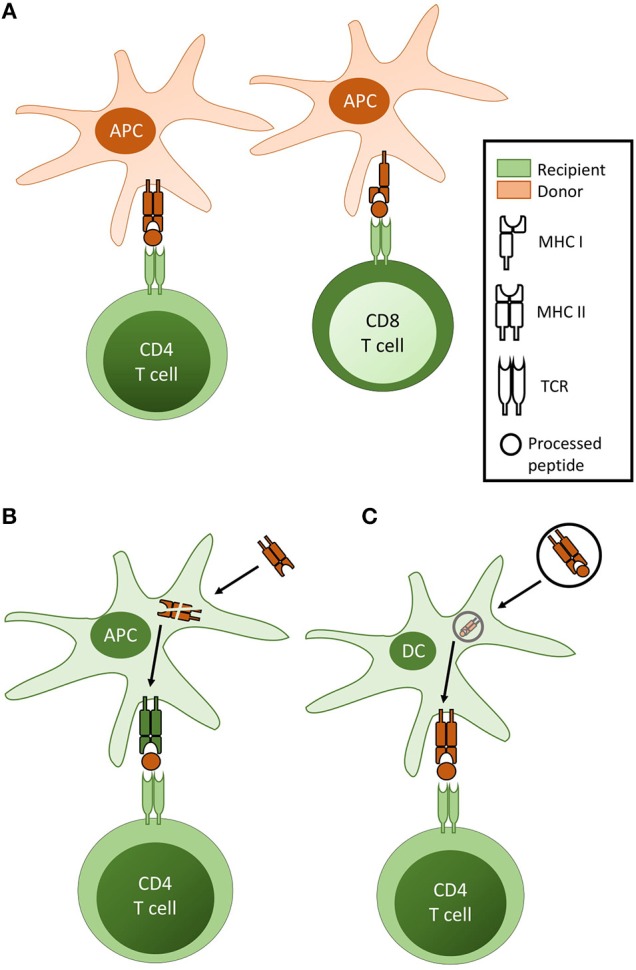
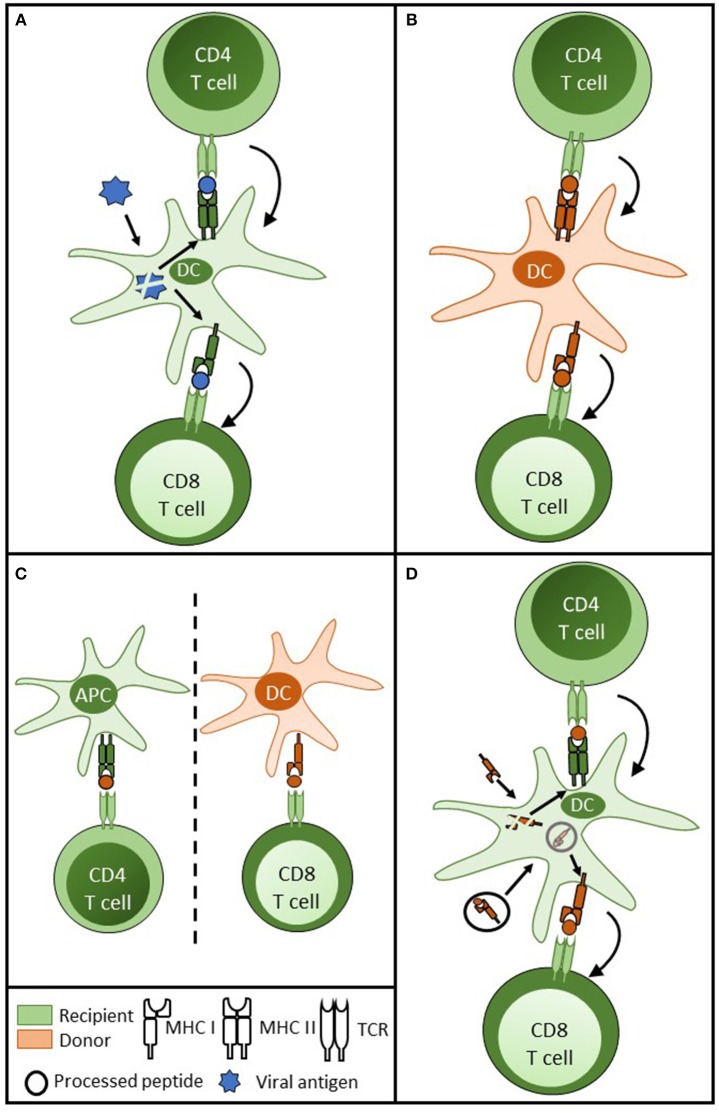
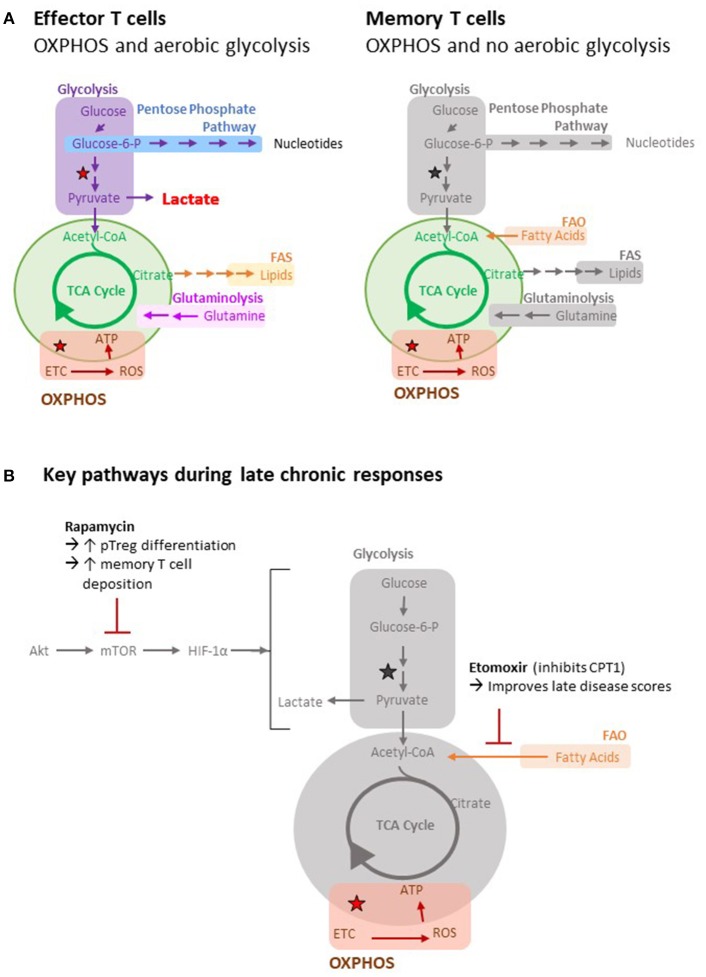
Transplantation is unusual in that T cells can recognize alloantigen by at least two distinct pathways: as intact MHC alloantigen on the surface of donor cells via the direct pathway; and as self-restricted processed alloantigen via the indirect pathway. Direct pathway responses are viewed as strong but short-lived and hence responsible for acute rejection, whereas indirect pathway responses are typically thought to be much longer lasting and mediate the progression of chronic rejection. However, this is based on surprisingly scant experimental evidence, and the recent demonstration that MHC alloantigen can be re-presented intact on recipient dendritic cells – the semi-direct pathway – suggests that the conventional view may be an oversimplification. We review recent advances in our understanding of how the different T cell allorecognition pathways are triggered, consider how this generates effector alloantibody and cytotoxic CD8 T cell alloresponses and assess how these responses contribute to early and late allograft rejection. We further discuss how this knowledge may inform development of cellular and pharmacological therapies that aim to improve transplant outcomes, with focus on the use of induced regulatory T cells with indirect allospecificity and on the development of immunometabolic strategies.
Overview
The claims and statistics of this paper haven’t been checked yet.
Run the check — free, no account needed. It reads the open-access text and checks the sources it cites.
Integrity signals
Registry
Cites
Statistics
Figures
Verification
Claims the paper makes
The claims and statistics of this paper haven’t been checked yet.
Run the check — free, no account needed. It reads the open-access text and checks the sources it cites.
Claims other papers make about this one
Each is checked against this paper’s own text: does it say what the citing paper says it does?
The source backs part of the claim, not all of it — or backs it for a different population, condition or comparison.
In the citing paper
“The direct pathway provokes the most vigorous immune response by directly representing MHC I and MHC II molecules of the donor’s APCs to recipient CD8 and CD4 T cells, respectively.”
From Immunogenicity of decellularized extracellular matrix scaffolds: a bottleneck in tissue engineering and regenerative medicine (2023) · cites this paper as [10]
Experimental — accuracy not yet measuredThe source backs part of the claim, not all of it — or backs it for a different population, condition or comparison.
In the citing paper
“Activated recipient T cells migrate to the graft site, directly recognize foreign antigens, and participate in acute rejection.”
From Immunogenicity of decellularized extracellular matrix scaffolds: a bottleneck in tissue engineering and regenerative medicine (2023) · cites this paper as [10]
Experimental — accuracy not yet measuredThe source backs part of the claim, not all of it — or backs it for a different population, condition or comparison.
In the citing paper
“Although this pathway invokes a less vigorous response, it lasts longer due to the available supply of host APCs and foreign antigens within the grafts.”
From Immunogenicity of decellularized extracellular matrix scaffolds: a bottleneck in tissue engineering and regenerative medicine (2023) · cites this paper as [10]
Experimental — accuracy not yet measuredThe source backs part of the claim, not all of it — or backs it for a different population, condition or comparison.
In the citing paper
“This response vanishes within a few weeks because of a limited number of donor APCs and their depletion over time [10].”
From Immunogenicity of decellularized extracellular matrix scaffolds: a bottleneck in tissue engineering and regenerative medicine (2023) · cites this paper as [10]
Experimental — accuracy not yet measuredThe cited source says what the claim attributes to it.
In the citing paper
“Moreover, CD4 T cells have a substantial role in regulating both humoral and cytotoxic T cell responses as the main elements of chronic rejection.”
From Immunogenicity of decellularized extracellular matrix scaffolds: a bottleneck in tissue engineering and regenerative medicine (2023) · cites this paper as [10]
The cited source says what the claim attributes to it.
In the citing paper
“Accordingly, indirect pathway activity is crucial to graft fate [10].”
From Immunogenicity of decellularized extracellular matrix scaffolds: a bottleneck in tissue engineering and regenerative medicine (2023) · cites this paper as [10]
Self-check
Percentages, sums and reported differences re-computed from the paper’s own numbers.
The self-check needs the paper’s full text.
Citations
Cites
Foxp3 programs the development and function of CD4+CD25+ regulatory T cells
Fontenot, J. D., Gavin, M. A., & Rudensky, A. Y. (2003) · Nature Immunology · doi:10.1038/ni904 · Cited by 7,745
mTOR Signaling in Growth, Metabolism, and Disease
Saxton, R. A., & Sabatini, D. M. (2017) · Cell · doi:10.1016/j.cell.2017.02.004 · Cited by 7,555
Park, J., Adoro, S., Guinter, T. I., Erman, B., Alag, A., Catálfamo, M., Kimura, M. Y., Cui, Y., Lucas, P. J., Gress, R. E., et al. (2010) · Nature Immunology · doi:10.1038/ni.1840 · Cited by 5,835
Sakaguchi, S., Sakaguchi, N., Asano, M., Itoh, M., & Toda, M. (1995) · The Journal of Immunology · doi:10.4049/jimmunol.155.3.1151 · Cited by 5,608 · cited 1×
“Here we focus on the classical CD25pos CD4T regulatory cell (T-reg) (98, 99).”
Molecular and cellular insights into T cell exhaustion
Wherry, E. J., & Kurachi, M. (2015) · Nature Reviews Immunology · doi:10.1038/nri3862 · Cited by 4,652
An essential role for Scurfin in CD4+CD25+ T regulatory cells
Khattri, R., Cox, T., Yasayko, S.-A., & Ramsdell, F. (2003) · Nature Immunology · doi:10.1038/ni909 · Cited by 2,860
T-cell help for cytotoxic T lymphocytes is mediated by CD40–CD40L interactions
Schoenberger, S. P., Toes, R. E. M., van der Voort, E. I. H., Offringa, R., & Melief, C. J. M. (1998) · Nature · doi:10.1038/31002 · Cited by 2,615
A conditioned dendritic cell can be a temporal bridge between a CD4+ T-helper and a T-killer cell
Ridge, J. P., Rosa, F. D., & Matzinger, P. (1998) · Nature · doi:10.1038/30989 · Cited by 2,360
Help for cytotoxic-T-cell responses is mediated by CD40 signalling
Bennett, S. R. M., Carbone, F., Karamalis, F., Flavell, R. A., Miller, J. F. A. P., & Heath, W. R. (1998) · Nature · doi:10.1038/30996 · Cited by 2,091
Michalek, R. D., Gerriets, V. A., Jacobs, S. R., Macintyre, A. N., MacIver, N. J., Mason, E. F., Sullivan, S. A., Nichols, A. G., & Rathmell, J. C. (2011) · The Journal of Immunology · doi:10.4049/jimmunol.1003613 · Cited by 2,091
Cited by
Sorted by citations
Kasravi, M., Ahmadi, A., Babajani, A., Mazloomnejad, R., Hatamnejad, M. R., Shariatzadeh, S., Bahrami, S., & Niknejad, H. (2023) · Biomaterials Research · doi:10.1186/s40824-023-00348-z · Cited by 316
“Accordingly, indirect pathway activity is crucial to graft fate [10].”
BackgroundAllorecognition and the spectrum of kidney transplant rejection
Callemeyn, J., Lamarthée, B., Koenig, A., Koshy, P., Thaunat, O., & Naesens, M. (2022) · Kidney International · doi:10.1016/j.kint.2021.11.029 · Cited by 189
Kidney dendritic cells: fundamental biology and functional roles in health and disease
Kurts, C., Ginhoux, F., & Panzer, U. (2020) · Nature Reviews Nephrology · doi:10.1038/s41581-020-0272-y · Cited by 121
Graft IL-33 regulates infiltrating macrophages to protect against chronic rejection
Li, T., Zhang, Z., Bartolacci, J. G., Dwyer, G. K., Liu, Q., Mathews, L. R., Velayutham, M., Roessing, A., Lee, Y. C., Dai, H., et al. (2020) · Journal of Clinical Investigation · doi:10.1172/jci133008 · Cited by 73
Current status and future perspectives of HLA-edited induced pluripotent stem cells
Koga, K., Wang, B., & Kaneko, S. (2020) · Inflammation and Regeneration · doi:10.1186/s41232-020-00132-9 · Cited by 70
Metadata
- Authors
- Siu, J. H. Y., Surendrakumar, V., Richards, J. A., & Pettigrew, G. J.
- Affiliations
- University of Cambridge (GB)
- Corresponding author
- Pettigrew, Gavin J.
- Venue
- Frontiers in Immunology
- Publisher
- Frontiers Media SA
- Published
- 2018-11-05
- Volume
- 9
- Pages
- 2548-2548
- ISSN
- 1664-3224 (ISSN-L)
- PMC
- PMC6230624
- OpenAlex
- W2900406950
- Cited by
- 223
- References
- 153
- Citations by year
- 2026: 9 · 2025: 29 · 2024: 34 · 2023: 48 · 2022: 34 · 2021: 42 · 2020: 25 · 2019: 2
- FWCI
- 1.76
- Type
- journal article
- Language
- en
- Open access
- gold
- doi.org
- Locations
- Frontiers in Immunology (publishedVersion, cc-by)
- Europe PMC (PubMed Central) (publishedVersion, cc-by)
- PubMed Central (publishedVersion, cc-by)
- PubMed (publishedVersion)
- Apollo (University of Cambridge) (submittedVersion, cc-by)
- DOAJ (DOAJ: Directory of Open Access Journals) (submittedVersion, cc-by-sa)
- Apollo (cc-by)
- Funders
- National Institute for Health and Care Research (CL-2015-14-002)
- British Heart Foundation (FS/12/87/29899)
- Cambridge Trust
- Evelyn Trust
- Gates Cambridge Trust
- Mason Medical Research Trust
- NIHR Cambridge Biomedical Research Centre
- Topics
- Life Sciences › Immunology and Microbiology › Immunology › T-cell and B-cell Immunology
- Health Sciences › Medicine › Surgery › Transplantation: Methods and Outcomes
- Health Sciences › Medicine › Transplantation › Renal Transplantation Outcomes and Treatments
- Keywords
- solid organ transplantation, dendritic cell antigen presentation, acute rejection, chronic rejection, alloantibodies, CD8+ cytotoxic T lymphocytes, regulatory T cells, allograft rejection
- MeSH terms
- Histocompatibility Antigens Class II, Dendritic Cells, Graft Rejection, T-Lymphocytes, Helper-Inducer, Humans, Isoantibodies, Isoantigens, T-Lymphocytes, Cytotoxic, Transplantation, Homologous, Organ Transplantation, T-Lymphocytes, Regulatory
About these checks
Registry, retraction, Cites and statistics results are computed, not judged, with one exception: a printed reference that no index lists is read once by a model before it counts as a citation error. Claims are extracted by a model and kept only when their quote appears verbatim in the text; each cited source is then checked, with a model’s help, for whether it says what the claim relies on. Those verdicts can be wrong — read the claim’s quote and the cited source before relying on one.
Statistics and arithmetic are recomputed, not judged.
Confidence bands are shown only for fields calibrated on our annotated test set. None is calibrated yet, so no band is shown.
What counts as a claim ›How we measure confidence ›How we check this ›
Are you an author, or do you see a problem with this page? Request a review
