

The DOI matches its Crossref record; 70 of the 100 references it cites were found in a registry or an index.
Functional Heterogeneity of CD4+ Tumor-Infiltrating Lymphocytes With a Resident Memory Phenotype in NSCLC
Open accessAbstract
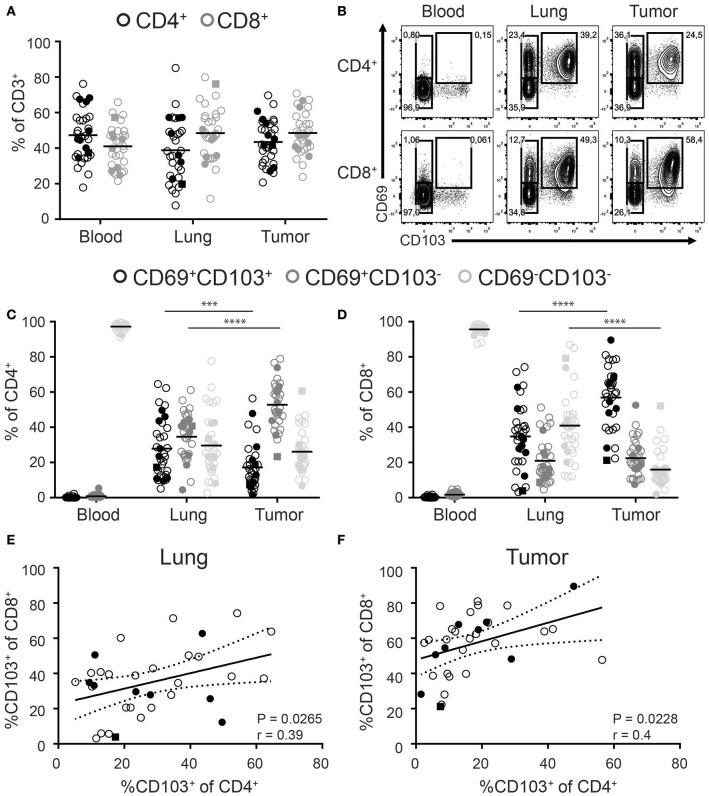
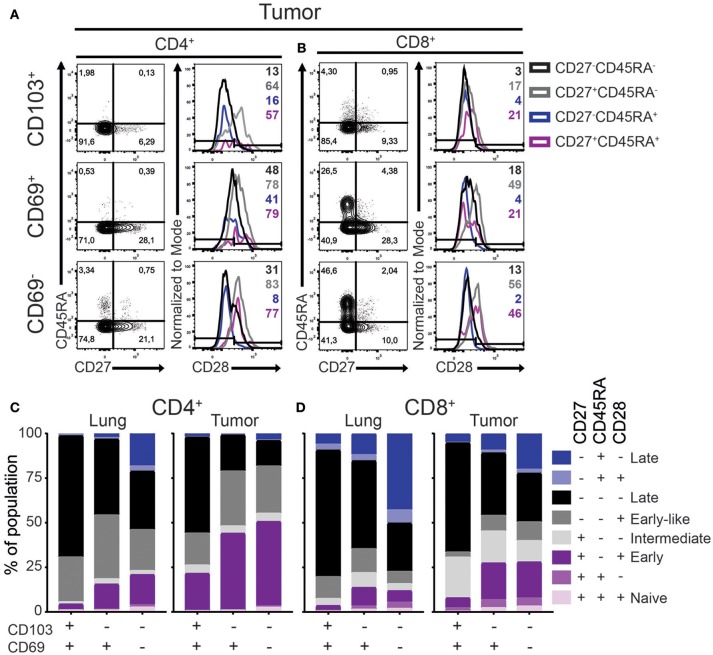
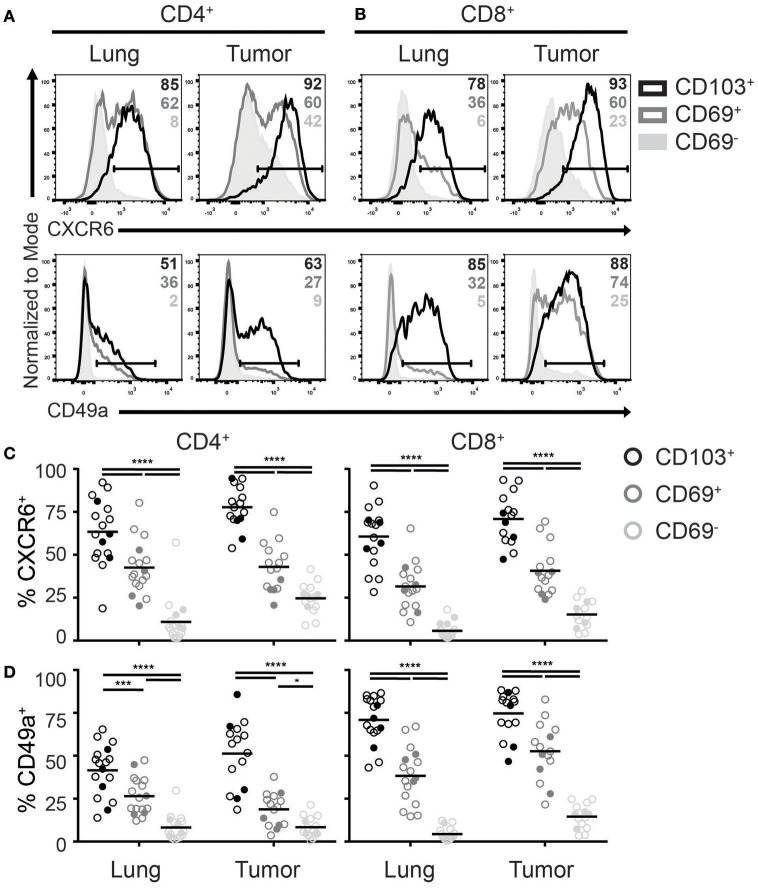
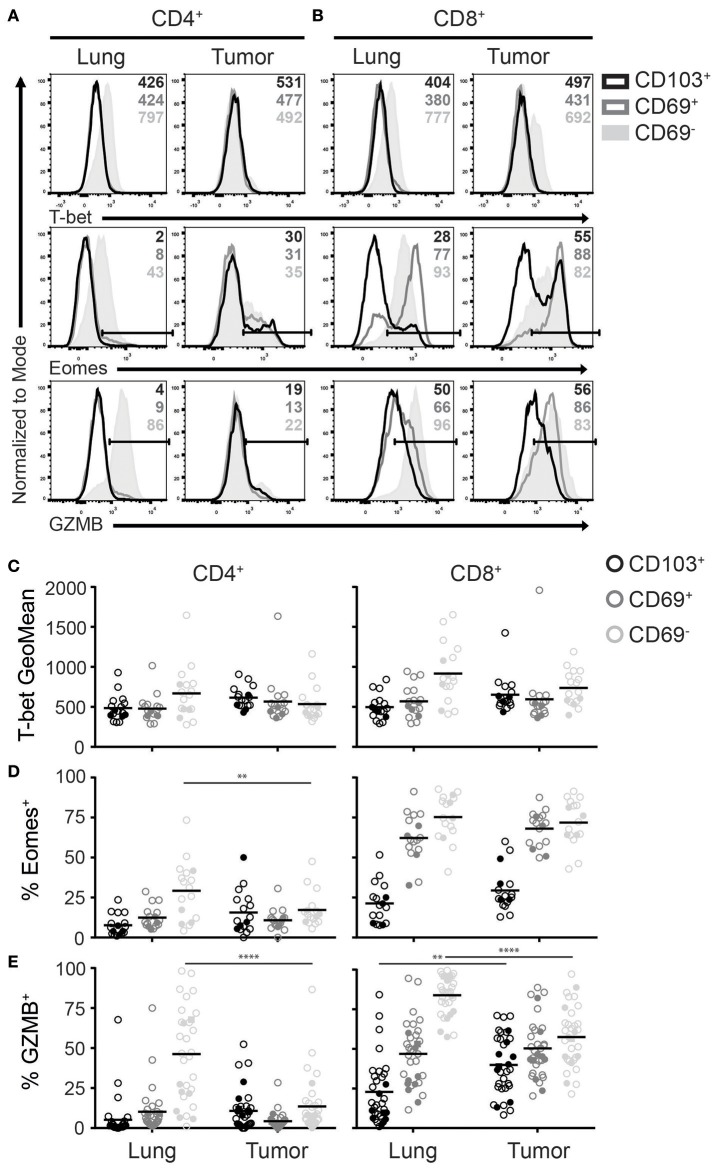
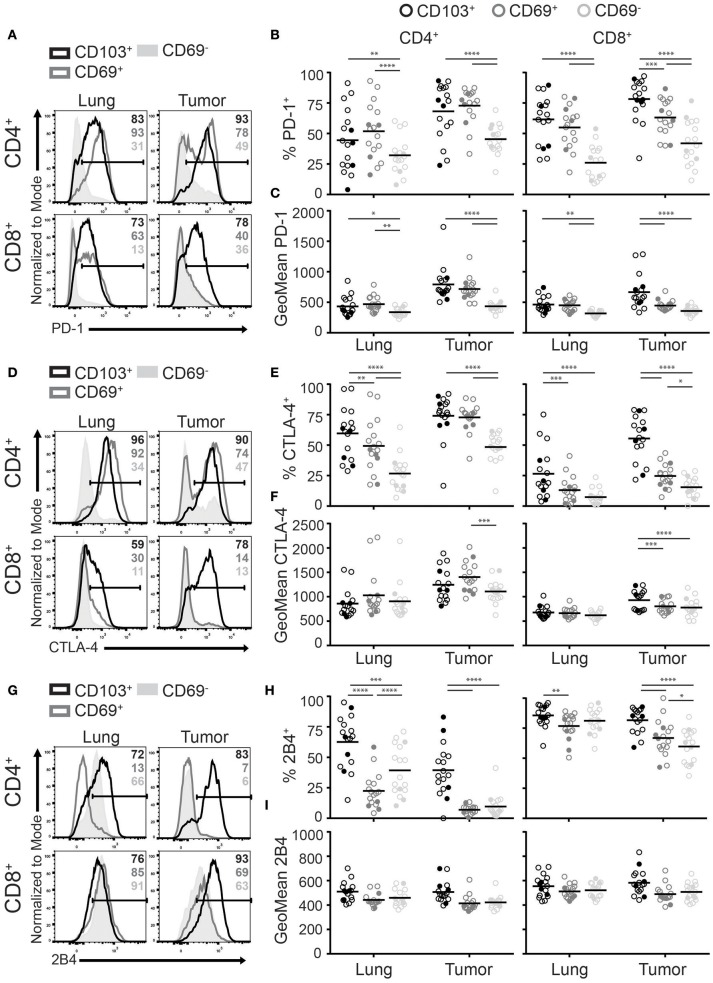
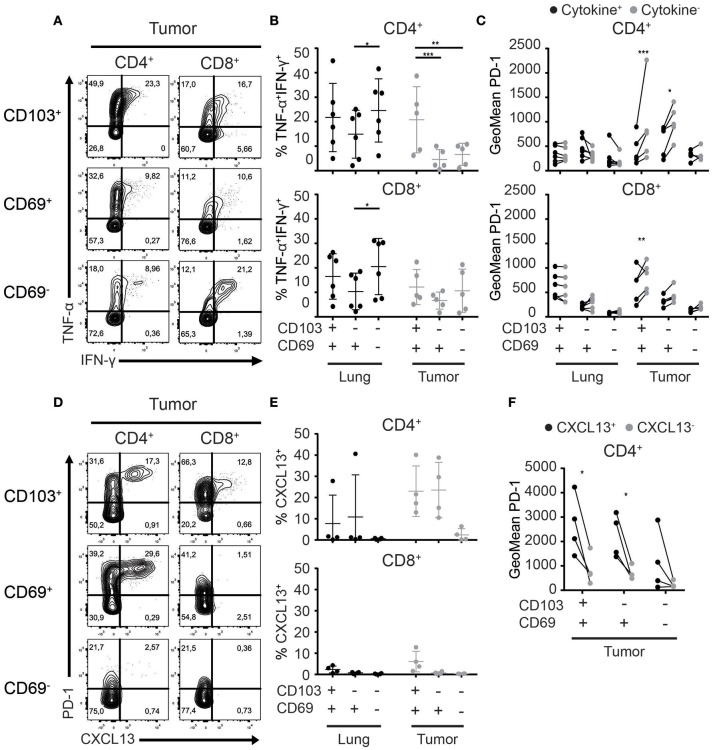
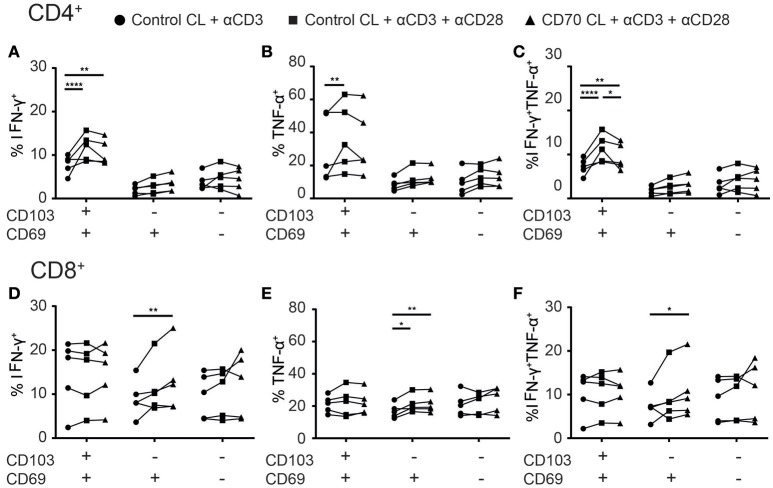
Resident memory T cells (TRM) inhabit peripheral tissues and are critical for protection against localized infections. Recently, it has become evident that CD103+ TRM are not only important in combating secondary infections, but also for the elimination of tumor cells. In several solid cancers, intratumoral CD103+CD8+ tumor infiltrating lymphocytes (TILs), with TRM properties, are a positive prognostic marker. To better understand the role of TRM in tumors, we performed a detailed characterization of CD8+ and CD4+ TIL phenotype and functional properties in non-small cell lung cancer (NSCLC). Frequencies of CD8+ and CD4+ T cell infiltrates in tumors were comparable, but we observed a sharp contrast in TRM ratios compared to surrounding lung tissue. The majority of both CD4+ and CD8+ TILs expressed CD69 and a subset also expressed CD103, both hallmarks of TRM. While CD103+CD8+ T cells were enriched in tumors, CD103+CD4+ T cell frequencies were decreased compared to surrounding lung tissue. Furthermore, CD103+CD4+ and CD103+CD8+ TILs showed multiple characteristics of TRM, such as elevated expression of CXCR6 and CD49a, and decreased expression of T-bet and Eomes. In line with the immunomodulatory role of the tumor microenvironment, CD8+ and CD4+ TILs expressed high levels of inhibitory receptors 2B4, CTLA-4, and PD-1, with the highest levels found on CD103+ TILs. Strikingly, CD103+CD4+ TILs were the most potent producers of TNF- and IFN-, while other TIL subsets lacked such cytokine production. Whereas CD103+CD4+PD-1low TILs produced the most effector cytokines, CD103+CD4+PD-1++ and CD69+CD4+PD-1++ TILs produced CXCL13. Furthermore, a large proportion of TILs expressed co-stimulatory receptors CD27 and CD28, unlike lung TRM, suggesting a less differentiated phenotype. Agonistic triggering of these receptors improved cytokine production of CD103+CD4+ and CD69+CD8+ TILs. Our findings thus provide a rationale to target CD103+CD4+ TILs and add co-stimulation to current therapies to improve the efficacy of immunotherapies and cancer vaccines.
Overview
The claims and statistics of this paper haven’t been checked yet.
Run the check — free, no account needed. It reads the open-access text and checks the sources it cites.
Integrity signals
Registry
Cites
Statistics
Figures
Verification
Claims the paper makes
The claims and statistics of this paper haven’t been checked yet.
Run the check — free, no account needed. It reads the open-access text and checks the sources it cites.
Claims other papers make about this one
Each is checked against this paper’s own text: does it say what the citing paper says it does?
The cited source says what the claim attributes to it.
In the citing paper
“A proportion of PD-1++ TILs with a Trm phenotype also express CXCL13, the ligand of CXCR5 [273-275].”
From Guidelines for the use of flow cytometry and cell sorting in immunological studies (third edition) (2021) · cites this paper as [273]
The cited source says what the claim attributes to it.
In the citing paper
“A subset of TILs in tumors of NSCLC shares the phenotype of Trm in adjacent lung tissue (expression of CD103, CD69, CXCR6, CD49a) [272, 273].”
From Guidelines for the use of flow cytometry and cell sorting in immunological studies (third edition) (2021) · cites this paper as [273]
Self-check
Percentages, sums and reported differences re-computed from the paper’s own numbers.
The self-check needs the paper’s full text.
Citations
Cites
The immune contexture in human tumours: impact on clinical outcome
Fridman, W. H., Pagès, F., Sautès-Fridman, C., & Galon, J. (2012) · Nature reviews. Cancer · doi:10.1038/nrc3245 · Cited by 4,981
Immune checkpoint targeting in cancer therapy: toward combination strategies with curative potential
Sharma, P., & Allison, J. P. (2015) · Cell · doi:10.1016/j.cell.2015.03.030 · Cited by 2,345
The immune contexture in cancer prognosis and treatment
Fridman, W. H., Zitvogel, L., Sautès–Fridman, C., & Kroemer, G. (2017) · Nature Reviews Clinical Oncology · doi:10.1038/nrclinonc.2017.101 · Cited by 2,263
Molecular Signature of CD8+ T Cell Exhaustion during Chronic Viral Infection
Wherry, E. J., Ha, S.-J., Kaech, S. M., Haining, W. N., Sarkar, S., Kalia, V., Subramaniam, S., Blattman, J. N., Barber, D. L., & Ahmed, R. (2007) · Immunity · doi:10.1016/j.immuni.2007.09.006 · Cited by 2,103
Cancer Immunotherapy Based on Mutation-Specific CD4+ T Cells in a Patient with Epithelial Cancer
Tran, E., Turcotte, S., Gros, A., Robbins, P. F., Lu, Y., Dudley, M. E., Wunderlich, J. R., Somerville, R. P. T., Hogan, K., Hinrichs, C. S., et al. (2014) · Science · doi:10.1126/science.1251102 · Cited by 1,737
CD4+ T cell help in cancer immunology and immunotherapy
Borst, J., Ahrends, T., Bąbała, N., Melief, C. J. M., & Kastenmüller, W. (2018) · Nature Reviews Immunology · doi:10.1038/s41577-018-0044-0 · Cited by 1,585
Self-citationMemory CD8+ T cells vary in differentiation phenotype in different persistent virus infections
Appay, V., Dunbar, P. R., Callan, M. F. C., Klenerman, P., Gillespie, G. M. A., Papagno, L., Ogg, G. S., King, A., Lechner, F., Spina, C. A., et al. (2002) · Nature Medicine · doi:10.1038/nm0402-379 · Cited by 1,556
Molecular Signature of CD8+ T Cell Exhaustion during Chronic Viral Infection
Wherry, E. J., Ha, S., Kaech, S. M., Haining, W. N., Sarkar, S., Kalia, V., Subramaniam, S., Blattman, J. N., Barber, D. L., & Ahmed, R. (2007) · Immunity · doi:10.1016/j.immuni.2007.11.006 · Cited by 1,355
Fourcade, J., Sun, Z., Benallaoua, M., Guillaume, P., Luescher, I. F., Sander, C., Kirkwood, J. M., Kuchroo, V., & Zarour, H. M. (2010) · Journal of Experimental Medicine · doi:10.1084/jem.20100637 · Cited by 1,307
Adhesion between epithelial cells and T lymphocytes mediated by E-cadherin and the αEβ7 integrin
Cepek, K. L., Shaw, S. K., Parker, C. M., Russell, G. J., Morrow, J. S., Rimm, D. L., & Brenner, M. B. (1994) · Nature · doi:10.1038/372190a0 · Cited by 1,178
Research works printed but not linked: 1
- Arnon, 2015, GRK2-dependent S1PR1 desensitization, 1898
Cited by
Sorted by citations
Items 101–130 of 130
Zuo, A., Lv, J., Jia, W., Ba, Y., Liu, S., Zhang, Y., Weng, S., Xu, H., Liu, L., Wang, L., et al. (2024) · BMC Cancer · doi:10.1186/s12885-024-12916-0 · Cited by 3
Weeden, C. E., Gayevskiy, V., Trussart, M., Marceaux, C., Ribera, N. T., Batey, D., Teh, C. E., Mitchell, A. J., Antippa, P. N., Leong, T. L., et al. (2021) · bioRxiv (Cold Spring Harbor Laboratory) · doi:10.1101/2021.04.20.440373 · Cited by 3
Li, Z., Tian, M. L., Yang, Y., Wang, Y., Zhang, L., Huang, F., Xiao, W., Yin, X., Lin, X., & Tian, Y. (2025) · Frontiers in Immunology · doi:10.3389/fimmu.2025.1600863 · Cited by 2
Development of therapeutic cancer vaccines based on cancer immunity cycle
Zhang, J., Zheng, Y., Xu, L., Gao, J., Ou, Z., Zhu, M., & Wang, W. (2025) · Frontiers of Medicine · doi:10.1007/s11684-025-1134-6 · Cited by 2
PD‐1 Inhibits CD4+ TRM‐Mediated cDC1 Mobilization via Suppressing JAML in Human NSCLC
Shao, Z., Liu, Q., Xin, Z., Zhou, Z., Lin, M., Chen, D., Hao, Z., Chen, Y., Wu, W., Zhang, S., et al. (2026) · Advanced Science · doi:10.1002/advs.202507647 · Cited by 2
(2021) · Frontiers research topics · doi:10.3389/978-2-88966-718-5 · Cited by 3
Polyfunctional pathogen-specific CD4 + T cells reside in the lungs and tumors of NSCLC patientsPreprint
Oja, A. E., Morgana, F., Hagen, R. R., Ghandour, C. A., Nolte, M. A., Rooijakkers, S. H. M., van Lier, R. A. W., Bardoel, B. W., & Hombrink, P. (2022) · bioRxiv (Cold Spring Harbor Laboratory) · doi:10.1101/2022.02.16.479923 · Cited by 2
Self-citationSystemic inflammation, TNM staging and survival in patients with lung cancer
Erhan, I., Dumitrache‐Rujinski, S., Toma, C., & Bogdan, M. A. (2020) · Pneumologia · doi:10.2478/pneum-2020-0016 · Cited by 1
Evaluation of T memory cells in knee osteoarthritis patients
Mohamed, R. S., Hashim, A. M., Moshrif, A., & Sobhy, A. (2024) · Al-Azhar Assiut Medical Journal · doi:10.4103/azmj.azmj_15_24 · Cited by 1
Li, H., Liu, S., Xiang, S., Guo, W., Huang, J., Yu, L., Chen, Z., lin, Y., Lin, L., & Chen, H. (2025) · BMC Complementary Medicine and Therapies · doi:10.1186/s12906-025-04848-4 · Cited by 1
Marceaux, C., Tarasova, I., Batey, D., Yokote, K., Gayevskiy, V., Jain, R., Leiwe, M., Choux, L., Riley, L., Ribera, N. T., et al. (2026) · Cell Reports Medicine · doi:10.1016/j.xcrm.2026.102593 · Cited by 1
Xie, D., Tian, Y., Zhang, J., He, M., & Lu, L. W. A. G. (2026) · IntechOpen eBooks · doi:10.5772/intechopen.1014806 · Cited by 1
Exercise and tissue-resident memory T cells: from circulating numbers to spatial immune remodeling
Xie, E., He, Y., Cao, T., Li, C., & Wang, Z. (2026) · Frontiers in Immunology · doi:10.3389/fimmu.2026.1822561 · Cited by 1
Hasan, N., Hasani, N. A. H., Omar, E., Sham, F. R., Fuad, S. B. S. A., Karim, M. K. A., & Ibahim, M. J. (2023) · Cancer Biomarkers · doi:10.3233/cbm-220268 · Cited by 1
Probabilistic migration events drive transient tissue residency of lymphocytes during homeostasisPreprint
Gergelits, V., Burton, O. T., Dooley, J., Roca, C. P., Bricard, O., Ghodsinia, A., Pasciuto, E., Sunkara, V., & Liston, A. (2025) · bioRxiv (Cold Spring Harbor Laboratory) · doi:10.1101/2025.07.04.663225 · Cited by 1
Yang, M., Wu, S., Zhou, W., He, C., Sun, R., Ying, Y.-Y., Zhou, Y., Li, S., Zhai, W., Chen, B., et al. (2020) · doi:10.21203/rs.3.rs-38445/v1
Tumor immunology and the application of immunotherapy in ovarian carcinoma
Paijens, S. T. (2021) · University of Groningen research database (University of Groningen / Centre for Information Technology) · doi:10.33612/diss.182133606
Weeden, C. E., Gayevskiy, V., Marceaux, C., Batey, D., Tan, T., Yokote, K., Ribera, N. T., Clatch, A., Christo, S. N., Teh, C. E., et al. (2022) · SSRN Electronic Journal · doi:10.2139/ssrn.4187262
Tumor Microenvironment as a Key Target for Immunotherapy in Lung Cancer Patients
Ganina, A., Doskali, M., Zaripova, L., Askarov, M., Muhamedzhanova, P., Brimova, A., Kozina, L., Karimova, M., Berikbol, D., Chuvakova, E., et al. (2025) · Russian Open Medical Journal · doi:10.15275/rusomj.2025.0303
Unger, P. A., Oja, A. E., Khemai-Mehraban, T., Ouwendijk, W. J. D., Hombrink, P., & Verjans, G. M. G. M. (2022) · Figshare · doi:10.6084/m9.figshare.21293472
Self-citationShen, K., Wei, Y., Lv, T., Song, Y., Jiang, X., Lu, Z., Zhan, P., Wang, X., Fan, M., & Lu, W. (2021) · Figshare · doi:10.6084/m9.figshare.16703200
Unger, P. A., Oja, A. E., Khemai-Mehraban, T., Ouwendijk, W. J. D., Hombrink, P., & Verjans, G. M. G. M. (2022) · Figshare · doi:10.6084/m9.figshare.21293475
Self-citationLindenstrøm, T., Panagiotopoulou, N., Cohen, S. B., Rodríguez, P. F., Woodworth, J. S., Morikawa, M., Halima, M., Maymann, C. M., Hu, T., Stull, S. M., et al. (2026) · Mucosal Immunology · doi:10.1016/j.mucimm.2026.02.001 · Cited by 1
Toma, B., Tanasa, M. P., & Danciu, M. (2026) · Biochimica et Biophysica Acta (BBA) - Reviews on Cancer · doi:10.1016/j.bbcan.2026.189580
HAMIDI, M., Love, J. E., Minoo, P., & Shameli, A. (2026) · Journal of Clinical Pathology · doi:10.1136/jcp-2026-210641
Mechanisms of T cell-mediated antitumor immunity within tertiary lymphoid structures
Wang, Y., Cao, W., Wu, M., & Wang, H. N. (2026) · Frontiers in Immunology · doi:10.3389/fimmu.2026.1883563
Proteomics of human cancer-associated T cells identifies regulators of T cell functionalityPreprint
Bresser, K., Hozjan, Ž., Servaas, N. H., Stelloo, S., Spruijt, C. G., Martin, M. N., Guislain, A., Kanagasabesan, N., Kneefel, S. F. K., Hoogendijk, A. J., et al. (2026) · bioRxiv (Cold Spring Harbor Laboratory) · doi:10.64898/2026.08.18.745433
Rietdijk, M. H., Kuhnen, L. C., van den Braber, M., Paul, A., Pascutti, M. F., & García-Vallejo, J. J. (2026) · Frontiers in Immunology · doi:10.3389/fimmu.2026.1894779
Metadata
- Authors
- Oja, A. E., Piet, B., van der Zwan, D., Blaauwgeers, H., Mensink, M., de Kivit, S., Borst, J., Nolte, M. A., van Lier, R. A. W., Stark, R., & Hombrink, P.
- Affiliations
- Sanquin (NL)
- OLVG (NL)
- The Netherlands Cancer Institute (NL)
- Corresponding author
- Oja, Anna E.
- Hombrink, Pleun
- ORCID
- Venue
- Frontiers in Immunology
- Publisher
- Frontiers Media SA
- Published
- 2018-11-16
- Volume
- 9
- Pages
- 2654-2654
- ISSN
- 1664-3224 (ISSN-L)
- PMC
- PMC6250821
- OpenAlex
- W2901131610
- Cited by
- 130
- References
- 100
- Citations by year
- 2026: 12 · 2025: 15 · 2024: 15 · 2023: 13 · 2022: 25 · 2021: 22 · 2020: 23 · 2019: 5
- FWCI
- 5.37
- Type
- journal article
- Language
- en
- Open access
- gold
- doi.org
- Locations
- Frontiers in Immunology (publishedVersion, cc-by)
- Europe PMC (PubMed Central) (publishedVersion, cc-by)
- PubMed Central (publishedVersion, cc-by)
- PubMed (publishedVersion)
- Data Archiving and Networked Services (DANS) (submittedVersion, other-oa)
- DOAJ (DOAJ: Directory of Open Access Journals) (submittedVersion, cc-by-sa)
- Pure Amsterdam UMC (submittedVersion, cc-by)
- Radboud Repository (Radboud University) (submittedVersion)
- Radboud Repository (Radboud University) (submittedVersion, other-oa)
- Funders
- Nederlandse Organisatie voor Wetenschappelijk Onderzoek
- Topics
- Life Sciences › Immunology and Microbiology › Immunology › T-cell and B-cell Immunology
- Health Sciences › Medicine › Oncology › Cancer Immunotherapy and Biomarkers
- Life Sciences › Immunology and Microbiology › Immunology › Immunotherapy and Immune Responses
- Keywords
- tissue-resident memory T cells, CD4+ T cells, CD8+ T cells, tumor-infiltrating lymphocytes, non-small cell lung cancer, CD103, CD69, CXCR6, CD49a, PD-1, CTLA-4, 2B4, inhibitory receptors, T cell differentiation, costimulatory receptors, CXCL13, TNF-α, interferon-gamma, tumor microenvironment, T cell heterogeneity, adoptive T cell therapy
- MeSH terms
- Receptors, CXCR6, Aged, Carcinoma, Non-Small-Cell Lung, Female, Humans, Immunologic Memory, Lung, Lung Neoplasms, Male, Middle Aged, Phenotype, Prognosis, CD4-Positive T-Lymphocytes, Antigens, CD, Cytokines, Lymphocytes, Tumor-Infiltrating, CD8-Positive T-Lymphocytes, Integrin alpha Chains, Integrin alpha1, Granzymes, Tumor Microenvironment, Programmed Cell Death 1 Receptor
About these checks
Registry, retraction, Cites and statistics results are computed, not judged, with one exception: a printed reference that no index lists is read once by a model before it counts as a citation error. Claims are extracted by a model and kept only when their quote appears verbatim in the text; each cited source is then checked, with a model’s help, for whether it says what the claim relies on. Those verdicts can be wrong — read the claim’s quote and the cited source before relying on one.
Statistics and arithmetic are recomputed, not judged.
Confidence bands are shown only for fields calibrated on our annotated test set. None is calibrated yet, so no band is shown.
What counts as a claim ›How we measure confidence ›How we check this ›
Are you an author, or do you see a problem with this page? Request a review
