

The DOI matches its Crossref record; 296 of the 297 references it cites were found in a registry or an index, and 1 are not checked yet.
A Path Toward Precision Medicine for Neuroinflammatory Mechanisms in Alzheimer's Disease
Open accessAbstract
Neuroinflammation commences decades before Alzheimer’s disease (AD) clinical onset and represents one of the earliest pathomechanistic alterations throughout AD its continuum. Large-scale genome-wide association studies point out several genetic variants - TREM2, CD33, PILRA, CR1, MS4A, CLU, ABCA7, EPHA1, and HLA-DRB5-HLA-DRB1 - potentially linked to neuroinflammation. Most of these genes are involved in proinflammatory intracellular signaling, cytokines/interleukins cell turn-over, synaptic activity, lipid metabolism, and vesicle trafficking. Proteomic studies indicate that a plethora of interconnected aberrant molecular pathways, set off and perpetuated by TNF-α, TGF-β, IL-1β, and the receptor protein TREM2, are involved in neuroinflammation. Microglia and astrocytes are key cellular drivers and regulators of neuroinflammation. Under physiological conditions, they are important for neurotransmission and synaptic homeostasis. In AD, there is a turning point throughout its pathophysiological evolution where glial cells sustain an overexpressed inflammatory response that synergizes with amyloid-β and tau accumulation, and drives synaptotoxicity and neurodegeneration in a self-reinforcing manner. Despite a strong therapeutic rationale, previous clinical trials investigating compounds with anti-inflammatory properties, including non-steroidal anti-inflammatory drugs (NSAIDs) did not achieve primary efficacy endpoints. It is conceivable that study design issues, including the lack of diagnostic accuracy and biomarkers for target population identification and proof-of-mechanism may partially explain the negative outcomes. However, a recent meta-analysis indicates a potential biological effect of NSAIDs. In this regard, candidate fluid biomarkers of neuroinflammation are under analytical/clinical validation, i.e. TREM2, IL-1β, MCP-1, IL-6, TNF-α receptor complexes, TGF-β, YKL-40. PET radio-ligands are investigated to accomplish in-vivo and longitudinal regional exploration of neuroinflammation. Biomarkers tracking different molecular pathways (body fluid matrixes) along with brain neuroinflammatory endophenotypes (neuroimaging markers), can untangle temporal-spatial dynamics between neuroinflammation and other AD pathophysiological mechanisms. Robust biomarker-drug co-development pipelines are expected to enrich large-scale clinical trials testing new-generation compounds active, directly or indirectly, on neuroinflammatory targets and displaying putative disease-modifying effects: novel NSAIDs, AL002 (anti-TREM2 antibody), anti-Aβ protofibrils (BAN2401), and AL003 (anti-CD33 antibody). As a next step, taking advantage of breakthrough and multimodal techniques coupled with a systems biology approach is the path to pursue for developing individualized therapeutic strategies targeting neuroinflammation under the framework of precision medicine.
Overview
The claims and statistics of this paper haven’t been checked yet.
Run the check — free, no account needed. It reads the open-access text and checks the sources it cites.
Integrity signals
Registry
Cites
Statistics
Figures
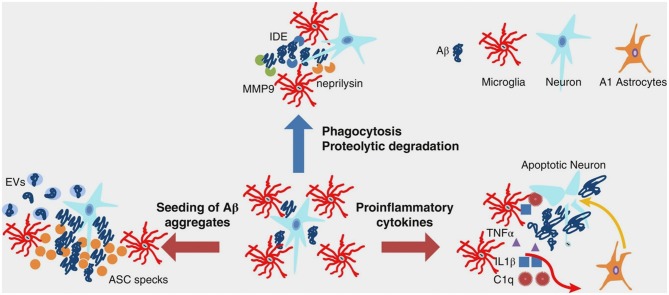
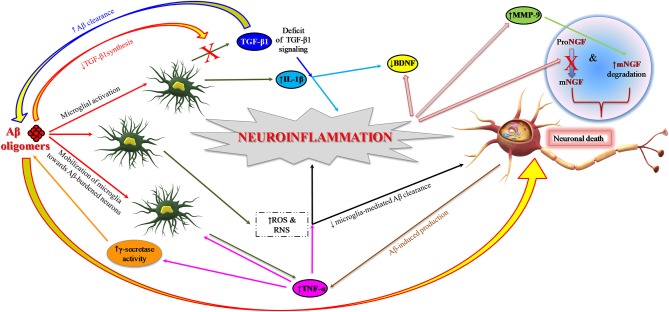
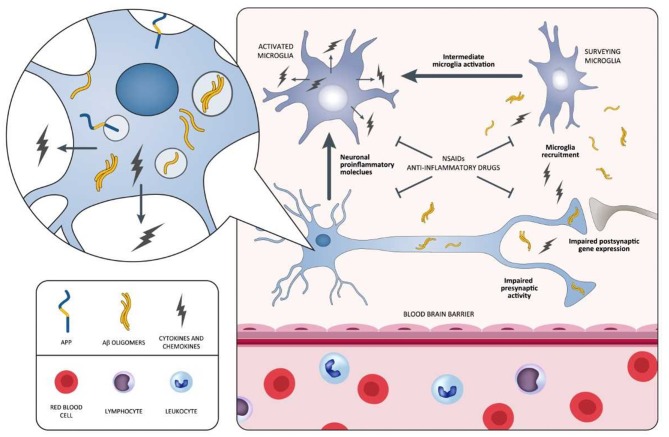
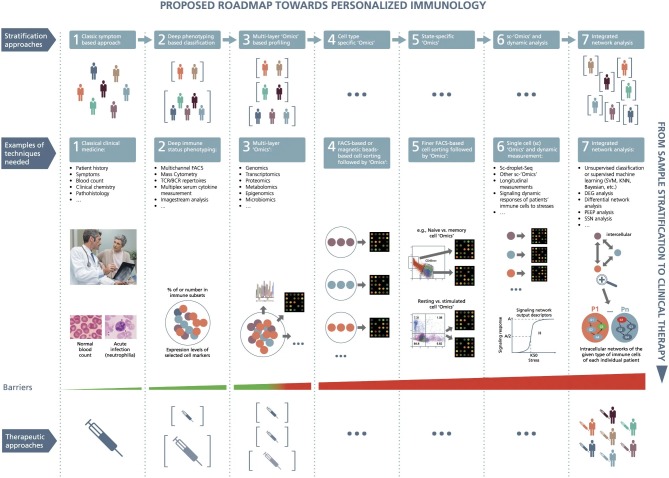
Verification
Claims the paper makes
The claims and statistics of this paper haven’t been checked yet.
Run the check — free, no account needed. It reads the open-access text and checks the sources it cites.
Claims other papers make about this one
Each is checked against this paper’s own text: does it say what the citing paper says it does?
The source backs part of the claim, not all of it — or backs it for a different population, condition or comparison.
In the citing paper
“mitochondrial dysfunction—with reactive oxygen species (ROS) accumulation and neuroinflammation driving microglial activation—plays a central role in AD pathogenesis [56]”
From Theranostic Nanoplatforms for Alzheimer's Disease: A Critical Analysis of Conceptual Contradictions (2026) · cites this paper as [56]
Experimental — accuracy not yet measured
Self-check
Percentages, sums and reported differences re-computed from the paper’s own numbers.
The self-check needs the paper’s full text.
Citations
Cites
1 retracted
RETRACTED AND REPLACED: Nerve growth factor metabolic dysfunction in Down’s syndrome brains
Iulita, M. F., Carmo, S. D., Ower, A. K., Fortress, A. M., Aguilar, L. F., Hanna, M., Wısnıewskı, T., Granholm, A., Buhusi, M. C., Busciglio, J. A., et al. (2014) · Brain · doi:10.1093/brain/awt372 · Cited by 94
Self-citationRetractedMcKhann, G. M., Knopman, D. S., Chertkow, H., Hyman, B. T., Jack, C. R., Kawas, C. H., Klunk, W. E., Koroshetz, W. J., Manly, J. J., Mayeux, R., et al. (2011) · Alzheimer's & Dementia · doi:10.1016/j.jalz.2011.03.005 · Cited by 18,657
NIA‐AA Research Framework: Toward a biological definition of Alzheimer's disease
Jack, C. R., Bennett, D. A., Blennow, K., Carrillo, M. C., Dunn, B., Haeberlein, S. B., Holtzman, D. M., Jagust, W., Jessen, F., Karlawish, J., et al. (2018) · Alzheimer's & Dementia · doi:10.1016/j.jalz.2018.02.018 · Cited by 10,537
Albert, M. S., DeKosky, S. T., Dickson, D., Dubois, B., Feldman, H. H., Fox, N. C., Gamst, A., Holtzman, D. M., Jagust, W. J., Petersen, R. C., et al. (2011) · Alzheimer's & Dementia · doi:10.1016/j.jalz.2011.03.008 · Cited by 10,152 · cited 1×
“, amnestic or non-amnestic), which significantly impacts clinical outcome (8, 179, 180), is inadequately specified in most of the studies.”
BackgroundInflammation in atherosclerosis
Libby, P. (2002) · Nature · doi:10.1038/nature01323 · Cited by 8,315
Neurotoxic reactive astrocytes are induced by activated microglia
Liddelow, S. A., Guttenplan, K. A., Clarke, L. E., Bennett, F. C., Bohlen, C. J., Schirmer, L., Bennett, M. L., Münch, A. E., Chung, W.-S., Peterson, T. C., et al. (2017) · Nature · doi:10.1038/nature21029 · Cited by 7,971
Sperling, R. A., Aisen, P. S., Beckett, L. A., Bennett, D. A., Craft, S., Fagan, A. M., Iwatsubo, T., Jack, C. R., Kaye, J., Montine, T. J., et al. (2011) · Alzheimer's & Dementia · doi:10.1016/j.jalz.2011.03.003 · Cited by 7,155
Neuroinflammation in Alzheimer's disease
Heneka, M. T., Carson, M. J., Khoury, J. E., Landreth, G. E., Brosseron, F., Feinstein, D. L., Jacobs, A. H., Wyss-Coray, T., Vitorica, J., Ransohoff, R. M., et al. (2015) · The Lancet Neurology · doi:10.1016/s1474-4422(15)70016-5 · Cited by 6,226 · cited 5×
“The pathophysiological mechanisms of multifactorial and polygenic AD are not limited to the neuronal tissue; they are related to cerebral immunological responses (12).”
BackgroundInfluentialA New Initiative on Precision Medicine
Collins, F. S., & Varmus, H. (2015) · New England Journal of Medicine · doi:10.1056/nejmp1500523 · Cited by 5,202
Astrocytes: Biology and pathology
Sofroniew, M. V., & Vinters, H. V. (2010) · Acta Neuropathologica · doi:10.1007/s00401-009-0619-8 · Cited by 5,196 · cited 1×
“Moreover, remodeling of astrocytes promotes neuroprotection and recovery of injured neural tissue (80, 81).”
Background
Research works printed but not linked: 1
- Presented at the 11thClinical Trials on Alzheimer's Disease (CTAD) Conference October 24–272018
Cited by
Sorted by citations
Shen, X.-N., Niu, L.-D., Wang, Y.-J., Cao, X.-P., Liu, Q., Tan, L., Zhang, C., & Yu, J.-T. (2019) · Journal of Neurology, Neurosurgery & Psychiatry · doi:10.1136/jnnp-2018-319148 · Cited by 388
Economic burden of Alzheimer disease and managed care considerations
Winston Wong, P. (2020) · The American Journal of Managed Care · doi:10.37765/ajmc.2020.88482 · Cited by 436
The Role of NLRP3 Inflammasome in Alzheimer’s Disease and Potential Therapeutic Targets
Liang, T., Zhang, Y., Wu, S., Chen, Q., & Wang, L. (2022) · Frontiers in Pharmacology · doi:10.3389/fphar.2022.845185 · Cited by 230
Role of Inflammatory Processes in Hemorrhagic Stroke
Ohashi, S. N., DeLong, J. H., Kozberg, M. G., Mazur-Hart, D. J., van Veluw, S. J., Alkayed, N. J., & Sansing, L. H. (2023) · Stroke · doi:10.1161/strokeaha.122.037155 · Cited by 224
The role of innate immune genes in Alzheimer's disease
Griciuc, A., & Tanzi, R. E. (2021) · Current Opinion in Neurology · doi:10.1097/wco.0000000000000911 · Cited by 192
“Neuroinflammation is as an innate immunological response of the central nervous system that is characterized by the activation of microglia and astrocytes, which play a central role in Alzheimer’s disease pathogenesis [24].”
Background
Metadata
- Authors
- Hampel, H., Caraci, F., Cuello, A. C., Caruso, G., Nisticò, R., Corbo, M., Baldacci, F., Toschi, N., Garaci, F., Chiesa, P. A., Verdooner, S. R., Akman-Anderson, L., Hernández, F., Ávila, J., Emanuele, E., Valenzuela, P. L., Lucía, A., Watling, M., Imbimbo, B. P., Vergallo, A., & Lista, S.
- Affiliations
- Sorbonne Université (FR)
- University of Catania (IT)
- University of Oxford (GB)
- I.R.C.C.S. Oasi Maria SS (IT)
- University of Rome Tor Vergata (IT)
- University of Pisa (IT)
- Centre National de la Recherche Scientifique (FR)
- Consejo Superior de Investigaciones Científicas (ES)
- Universidad de Alcalá (ES)
- Research Institute Hospital 12 de Octubre (ES)
- Chiesi (Italy) (IT)
- Corresponding author
- Hampel, Harald
- ORCID
- Venue
- Frontiers in Immunology
- Publisher
- Frontiers Media SA
- Published
- 2020-03-31
- Volume
- 11
- Pages
- 456-456
- ISSN
- 1664-3224 (ISSN-L)
- PMC
- PMC7137904
- OpenAlex
- W3014540555
- Cited by
- 360
- References
- 297
- Citations by year
- 2026: 43 · 2025: 53 · 2024: 53 · 2023: 66 · 2022: 69 · 2021: 49 · 2020: 22
- FWCI
- 5.13
- Type
- journal article
- Language
- en
- Open access
- gold
- doi.org
- Licence
- Locations
- Frontiers in Immunology (publishedVersion, cc-by)
- PubMed Central (publishedVersion, cc-by)
- PubMed (publishedVersion)
- HAL (submittedVersion, cc-by)
- Cineca Institutional Research Information System (Tor Vergata University) (submittedVersion, cc-by)
- Biblos-e Archivo (Universidad Autónoma de Madrid) (submittedVersion, cc-by)
- ABACUS. Repositorio de Producción Científica (Universidad Europea) (submittedVersion, cc-by-nc-nd)
- CINECA IRIS Institutial research information system (University of Pisa) (submittedVersion, other-oa)
- DIGITAL.CSIC (Spanish National Research Council (CSIC)) (submittedVersion, cc-by)
- LA Referencia (Red Federada de Repositorios Institucionales de Publicaciones Científicas) (submittedVersion, other-oa)
- DOAJ (DOAJ: Directory of Open Access Journals) (submittedVersion, cc-by-sa)
- Hispana (submittedVersion)
- Funders
- AXA Research Fund
- Eisai
- Sorbonne Université
- Fondation pour la Recherche sur Alzheimer
- Topics
- Life Sciences › Neuroscience › Neurology › Neuroinflammation and Neurodegeneration Mechanisms
- Life Sciences › Neuroscience › Cellular and Molecular Neuroscience › Alzheimer's disease research and treatments
- Health Sciences › Medicine › Psychiatry and Mental health › Dementia and Cognitive Impairment Research
- Keywords
- Alzheimer's disease, neuroinflammation, TREM2, microglia, astrocytes, amyloid-beta, tau protein, synaptotoxicity, neurodegeneration, genetic risk variants, cytokines, TNF-α, IL-1β, TGF-beta, biomarkers, positron emission tomography, nonsteroidal anti-inflammatory drugs, disease-modifying therapy, precision medicine
- MeSH terms
- Cell Self Renewal, Alzheimer Disease, Animals, Humans, Signal Transduction, Cytokines, Neurogenic Inflammation, Proteomics, Systems Biology, Lipid Metabolism, Genome-Wide Association Study, Precision Medicine
About these checks
Registry, retraction, Cites and statistics results are computed, not judged, with one exception: a printed reference that no index lists is read once by a model before it counts as a citation error. Claims are extracted by a model and kept only when their quote appears verbatim in the text; each cited source is then checked, with a model’s help, for whether it says what the claim relies on. Those verdicts can be wrong — read the claim’s quote and the cited source before relying on one.
Statistics and arithmetic are recomputed, not judged.
Confidence bands are shown only for fields calibrated on our annotated test set. None is calibrated yet, so no band is shown.
What counts as a claim ›How we measure confidence ›How we check this ›
Are you an author, or do you see a problem with this page? Request a review
