

The DOI matches its Crossref record; 603 of the 603 references it cites were found in a registry or an index.
Cancer Stem Cells—Origins and Biomarkers: Perspectives for Targeted Personalized Therapies
Open accessAbstract
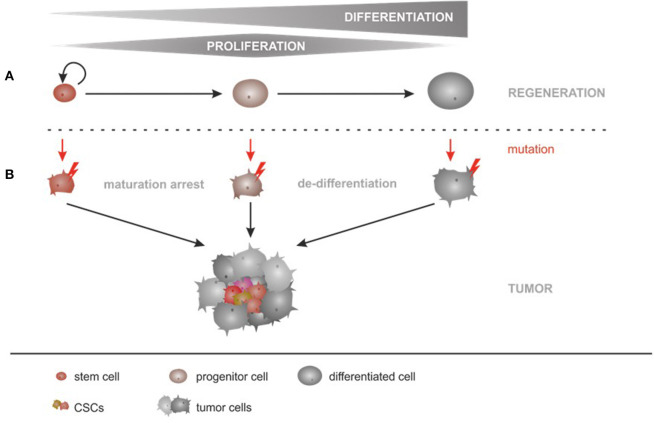
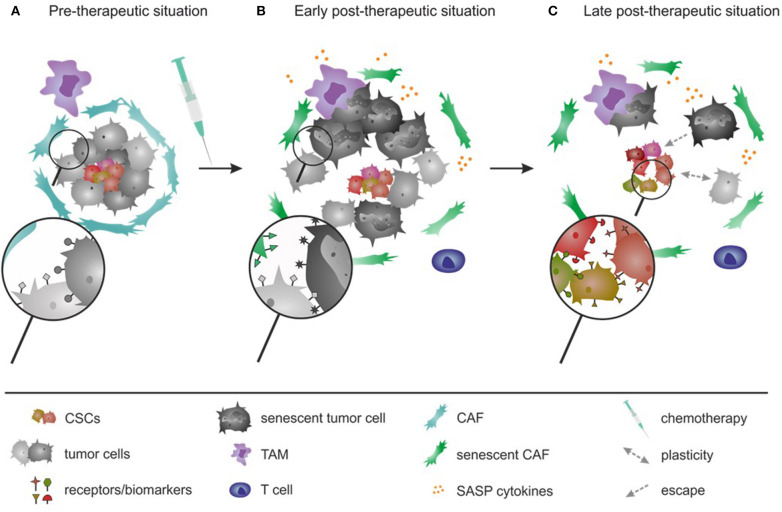
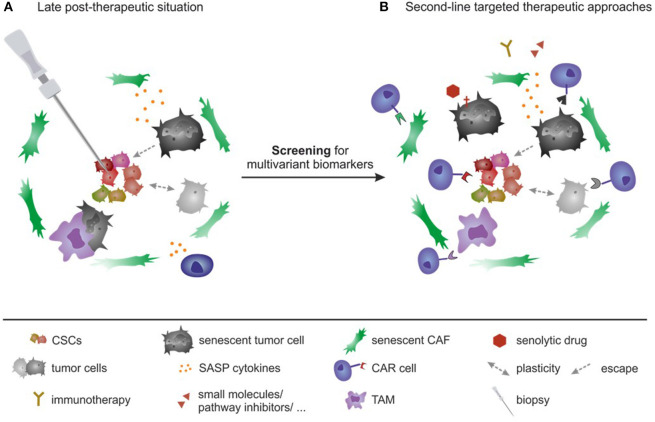
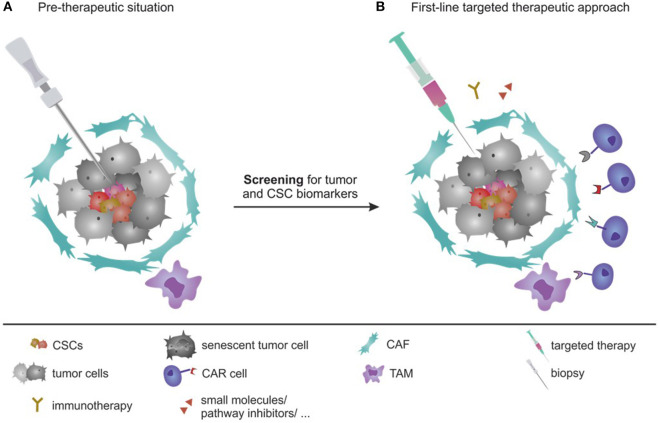
The use of biomarkers in diagnosis, therapy and prognosis has gained increasing interest over the last decades. In particular, the analysis of biomarkers in cancer patients within the pre- and post-therapeutic period is required to identify several types of cells, which carry a risk for a disease progression and subsequent post-therapeutic relapse. Cancer stem cells (CSCs) are a subpopulation of tumor cells that can drive tumor initiation and can cause relapses. At the time point of tumor initiation, CSCs originate from either differentiated cells or adult tissue resident stem cells. Due to their importance, several biomarkers that characterize CSCs have been identified and correlated to diagnosis, therapy and prognosis. However, CSCs have been shown to display a high plasticity, which changes their phenotypic and functional appearance. Such changes are induced by chemo- and radiotherapeutics as well as senescent tumor cells, which cause alterations in the tumor microenvironment. Induction of senescence causes tumor shrinkage by modulating an anti-tumorigenic environment in which tumor cells undergo growth arrest and immune cells are attracted. Besides these positive effects after therapy, senescence can also have negative effects displayed post-therapeutically. These unfavorable effects can directly promote cancer stemness by increasing CSC plasticity phenotypes, by activating stemness pathways in non-CSCs, as well as by promoting senescence escape and subsequent activation of stemness pathways. At the end, all these effects can lead to tumor relapse and metastasis. This review provides an overview of the most frequently used CSC markers and their implementation as biomarkers by focussing on deadliest solid (lung, stomach, liver, breast and colorectal cancers) and hematological (acute myeloid leukemia, chronic myeloid leukemia) cancers. Furthermore, it gives examples on how the CSC markers might be influenced by therapeutics, such as chemo- and radiotherapy, and the tumor microenvironment. It points out, that it is crucial to identify and monitor residual CSCs, senescent tumor cells, and the pro-tumorigenic senescence-associated secretory phenotype in a therapy follow-up using specific biomarkers. As a future perspective, a targeted immune-mediated strategy using chimeric antigen receptor based approaches for the removal of remaining chemotherapy-resistant cells as well as CSCs in a personalized therapeutic approach are discussed.
Overview
The claims and statistics of this paper haven’t been checked yet.
Run the check — free, no account needed. It reads the open-access text and checks the sources it cites.
Integrity signals
Registry
Cites
Statistics
Figures
Verification
Claims the paper makes
The claims and statistics of this paper haven’t been checked yet.
Run the check — free, no account needed. It reads the open-access text and checks the sources it cites.
Claims other papers make about this one
Each is checked against this paper’s own text: does it say what the citing paper says it does?
In the citing paper
“CSCs are a subpopulation of tumor cells with the capacity for sustained self-renewal that, in turn, can not only drive tumor initiation but can also cause relapses, metastasis, and resistance to therapy [82,83].”
From 20-Hydroxyecdysone Confers Antioxidant and Antineoplastic Properties in Human Non-Small Cell Lung Cancer Cells (2023) · cites this paper as [82]
Self-check
Percentages, sums and reported differences re-computed from the paper’s own numbers.
The self-check needs the paper’s full text.
Citations
Cites
3 retracted
Yoon, C., Park, D. J., Schmidt, B. H., Thomas, N. J., Lee, H., Kim, T. S., Janjigian, Y. Y., Cohen, D. J., & Yoon, S. S. (2014) · Clinical Cancer Research · doi:10.1158/1078-0432.ccr-14-0011 · Cited by 188
RetractedChen, Y., Zhang, F., Tsai, Y., Yang, X., Li, Y., Duan, S., Wang, X., Keng, P., & Lee, S. O. (2015) · Radiation Oncology · doi:10.1186/s13014-015-0534-1 · Cited by 79
RetractedThe prognosis and clinicopathology of CXCR4 in gastric cancer patients: a meta-analysis
Han, M., Lv, S., Zhang, Y., et al. (2014) · Tumor Biology · doi:10.1007/s13277-013-1603-4 · Cited by 20
RetractedBray, F., Ferlay, J., Soerjomataram, I., Siegel, R. L., Torre, L. A., & Jemal, A. (2018) · CA: A Cancer Journal for Clinicians · doi:10.3322/caac.21492 · Cited by 84,109
Hallmarks of Cancer: The Next Generation
Hanahan, D., & Weinberg, R. A. (2011) · Cell · doi:10.1016/j.cell.2011.02.013 · Cited by 66,590
PD-1 and PD-L1 Immune Checkpoint Blockade to Treat Breast Cancer
Hartkopf, A. D., Taran, F., Wallwiener, M., Walter, C. B., Krämer, B., Grischke, E., & Brucker, S. Y. (2016) · Breast Care · doi:10.1159/000453569 · Cited by 30,989
Nishimura, R., Osako, T., Nishiyama, Y., Tashima, R., Nakano, M., Fujisue, M., Toyozumi, Y., & Arima, N. (2013) · Oncology · doi:10.1159/000353099 · Cited by 13,239
Comprehensive molecular portraits of human breast tumours
The Cancer Genome Atlas Network (2012) · Nature · doi:10.1038/nature11412 · Cited by 12,129
Stem cells, cancer, and cancer stem cells
Reya, T., Morrison, S. J., Clarke, M. F., & Weissman, I. L. (2001) · Nature · doi:10.1038/35102167 · Cited by 9,738
Bonnet, D. A., & Dick, J. E. (1997) · Nature Medicine · doi:10.1038/nm0797-730 · Cited by 7,197
Research works printed but not linked: 1
- Berger, 2017, Das Rote Buch: Hämatologie und Internistische Onkologie, 1400
Cited by
Sorted by citations
Hypoxia-induced cancer cell reprogramming: a review on how cancer stem cells arise
Abd, G. M., Laird, M. C., Ku, J. C., & Li, Y. (2023) · Frontiers in Oncology · doi:10.3389/fonc.2023.1227884 · Cited by 41
CD166-specific CAR-T cells potently target colorectal cancer cells
He, S., Li, S., Guo, J., Zeng, X., Liang, D., Zhu, Y., Li, Y., Yang, D., & Zhao, X. (2023) · Translational Oncology · doi:10.1016/j.tranon.2022.101575 · Cited by 30
Shuvalov, O., Kirdeeva, Y., Fefilova, E., Netsvetay, S., Zorin, M., Vlasova, Y., Fedorova, O., Daks, A., Parfenyev, S., & Barlev, N. (2023) · Metabolites · doi:10.3390/metabo13050656 · Cited by 21
Metadata
- Authors
- Walcher, L., Kistenmacher, A.-K., Suo, H., Kitte, R., Dluczek, S., Strauß, A., Blaudszun, A.-R., Yevsa, T., Fricke, S., & Kossatz-Boehlert, U.
- Affiliations
- Fraunhofer Institute for Cell Therapy and Immunology (DE)
- Medizinische Hochschule Hannover (DE)
- Corresponding author
- Yevsa, Tetyana
- Kossatz-Boehlert, Uta
- ORCID
- Venue
- Frontiers in Immunology
- Publisher
- Frontiers Media SA
- Published
- 2020-08-07
- Volume
- 11
- Pages
- 1280-1280
- ISSN
- 1664-3224 (ISSN-L)
- PMC
- PMC7426526
- OpenAlex
- W3047693299
- Cited by
- 1,007
- References
- 603
- Citations by year
- 2026: 75 · 2025: 177 · 2024: 284 · 2023: 244 · 2022: 170 · 2021: 52 · 2020: 5
- FWCI
- 12.67
- Type
- journal article
- Language
- en
- Open access
- gold
- doi.org
- Licence
- Locations
- Frontiers in Immunology (publishedVersion, cc-by)
- PubMed Central (publishedVersion, cc-by)
- PubMed (publishedVersion)
- DOAJ (DOAJ: Directory of Open Access Journals) (submittedVersion, cc-by-sa)
- Publikationsdatenbank der Fraunhofer-Gesellschaft (Fraunhofer-Gesellschaft) (submittedVersion, other-oa)
- Fraunhofer-Publica (Fraunhofer-Gesellschaft) (submittedVersion)
- Funders
- Deutsche Forschungsgemeinschaft (YE 151/2-1, AOBJ: 618426)
- Fraunhofer-Gesellschaft
- Fritz Thyssen Stiftung (REF.10.16.1.031MN)
- Sächsische Aufbaubank
- Topics
- Health Sciences › Medicine › Oncology › Cancer Cells and Metastasis
- Life Sciences › Biochemistry, Genetics and Molecular Biology › Cell Biology › Mesenchymal stem cell research
- Life Sciences › Biochemistry, Genetics and Molecular Biology › Cell Biology › Telomeres, Telomerase, and Senescence
- Keywords
- cancer stem cells, tumor recurrence, senescence-associated secretory phenotype, senescence escape, tumor microenvironment, chemoresistance, radiotherapy, chimeric antigen receptor T cells, precision oncology, acute myeloid leukemia, chronic myeloid leukemia, solid tumors, hematologic cancer
- MeSH terms
- Animals, Combined Modality Therapy, Disease Susceptibility, Humans, Neoplasms, Organ Specificity, Prognosis, Biomarkers, Tumor, Neoplastic Stem Cells, Biomarkers, Immunotherapy, Adoptive, Cellular Senescence, Disease Progression, Drug Resistance, Neoplasm, Disease Management, Molecular Diagnostic Techniques, Precision Medicine, Molecular Targeted Therapy
About these checks
Registry, retraction, Cites and statistics results are computed, not judged, with one exception: a printed reference that no index lists is read once by a model before it counts as a citation error. Claims are extracted by a model and kept only when their quote appears verbatim in the text; each cited source is then checked, with a model’s help, for whether it says what the claim relies on. Those verdicts can be wrong — read the claim’s quote and the cited source before relying on one.
Statistics and arithmetic are recomputed, not judged.
Confidence bands are shown only for fields calibrated on our annotated test set. None is calibrated yet, so no band is shown.
What counts as a claim ›How we measure confidence ›How we check this ›
Are you an author, or do you see a problem with this page? Request a review
