

The DOI matches its Crossref record; 445 of the 446 references it cites were found in a registry or an index, and 1 are not checked yet.
Immunomodulatory Role of the Extracellular Matrix Within the Liver Disease Microenvironment
Open accessAbstract
Chronic liver disease when accompanied by underlying fibrosis, is characterised by an accumulation of extracellular matrix (ECM) proteins and chronic inflammation. Although traditionally considered as a passive and largely architectural structure, the ECM is now being recognised as a source of potent DAMPs with immune-active peptides and domains. In parallel, the ECM anchors a range of cytokines, chemokines and growth factors, all of which are capable of modulating the immune responses. A growing body of evidence shows that ECM proteins themselves are capable of interacting both directly, via a wide range of receptors including integrins and TLRs, and indirectly with immune cells. ECM deposition and remodelling during fibrosis can result in release or formation of ECM-DAMPs, which can drive immune cellular infiltration and sterile inflammation. Both the ECM and immune response are interlinked and integral in driving fibrosis, although their precise interactions in the context of chronic liver disease are poorly understood. This review aims to shed light on the ECM-immune interactions underlying liver disease, in particular fibrosis of different aetiologies, by describing the main ECM intact proteins and ECM-DAMPs with known immune regulatory activity. We also discuss how tissue engineering could provide new opportunities to explore ECM-immune cell interactions in bioreactor-based dynamic 3D models containing intact decellularized ECM scaffolds. A better understanding of these interactions would aid in the identification of new antifibrotic and immunomodulatory targets for treatment and biomarkers in liver disease.
Overview
The claims and statistics of this paper haven’t been checked yet.
Run the check — free, no account needed. It reads the open-access text and checks the sources it cites.
Integrity signals
Registry
Cites
Statistics
Figures
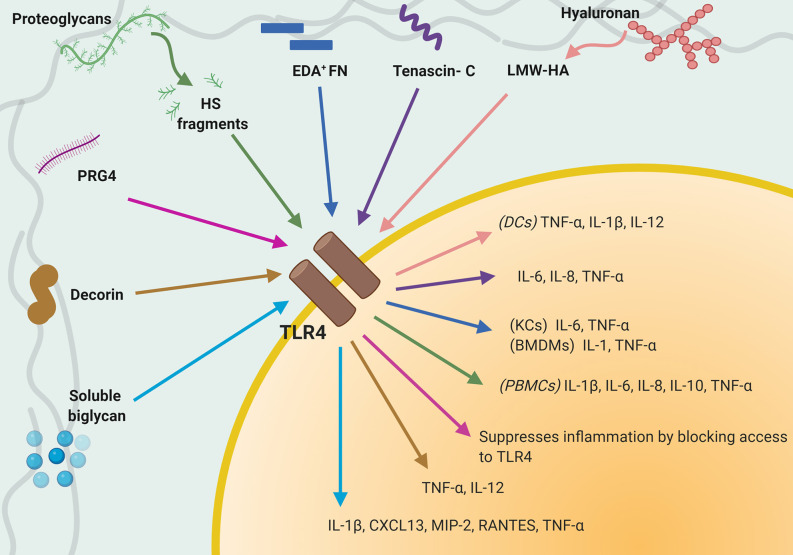
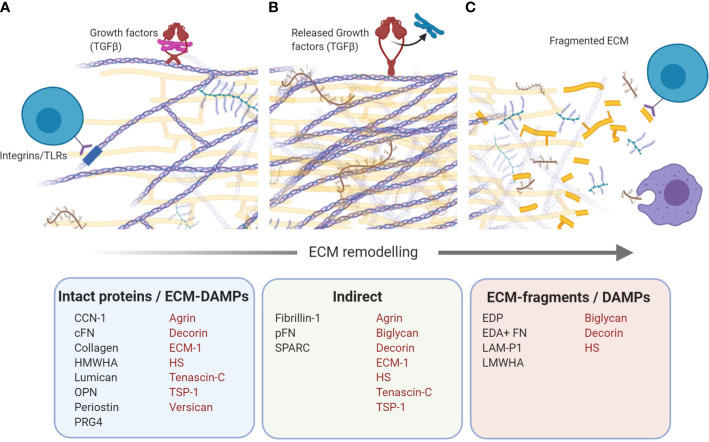
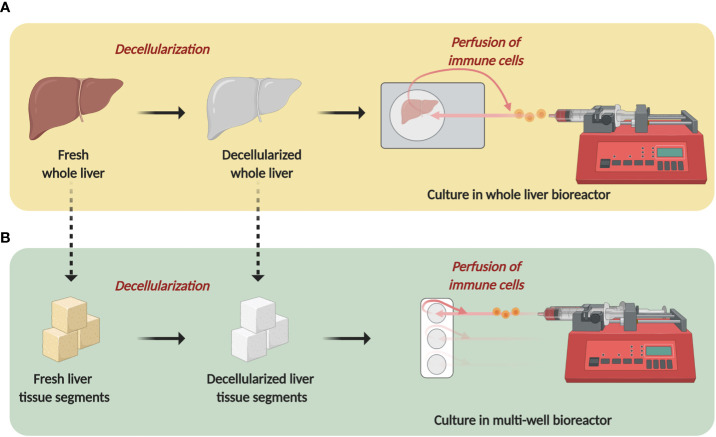
Verification
Claims the paper makes
The claims and statistics of this paper haven’t been checked yet.
Run the check — free, no account needed. It reads the open-access text and checks the sources it cites.
Claims other papers make about this one
Each is checked against this paper’s own text: does it say what the citing paper says it does?
The source backs part of the claim, not all of it — or backs it for a different population, condition or comparison.
In the citing paper
“In contrast to HMWHAs, low molecular weight hyaluronic acids (LMWHAs) are released during ECM damage or degradation, which act as DAMPs and drive inflammatory responses such as enhancing immune cells chemotaxis, DCs maturation, and M1 polarization of macrophages via the same receptors (CD44 and TLRs) [63, 100].”
From Immunogenicity of decellularized extracellular matrix scaffolds: a bottleneck in tissue engineering and regenerative medicine (2023) · cites this paper as [100]
Experimental — accuracy not yet measuredThe source backs part of the claim, not all of it — or backs it for a different population, condition or comparison.
In the citing paper
“Activation of these receptors accompanies a decrease in DC maturation and promotion in the polarization of macrophages toward M2 phenotype besides differentiation of T cells into regulatory phenotype and induction of apoptosis in activated T cells.”
From Immunogenicity of decellularized extracellular matrix scaffolds: a bottleneck in tissue engineering and regenerative medicine (2023) · cites this paper as [100]
Experimental — accuracy not yet measuredThe source backs part of the claim, not all of it — or backs it for a different population, condition or comparison.
In the citing paper
“Immunomodulatory traits of dECM scaffolds are largely attributed to the ability of their collagens to trigger leukocyte-associated immunoglobulin-like receptors-1 (LAIR-1) of immune cells and consequently downregulation of immune cell activity [100].”
From Immunogenicity of decellularized extracellular matrix scaffolds: a bottleneck in tissue engineering and regenerative medicine (2023) · cites this paper as [100]
Experimental — accuracy not yet measuredThe source backs part of the claim, not all of it — or backs it for a different population, condition or comparison.
In the citing paper
“In another example, high molecular weight hyaluronic acids (HMWHAs), well-known GAGs of dECM, exert anti-inflammatory effects by impeding antigen-antibody interaction and triggering toll-like receptors (TLRs), a subgroup of PRRs, and CD44 receptors of innate and adaptive immune cells.”
From Immunogenicity of decellularized extracellular matrix scaffolds: a bottleneck in tissue engineering and regenerative medicine (2023) · cites this paper as [100]
Experimental — accuracy not yet measuredThe cited source says what the claim attributes to it.
In the citing paper
“ECM is a reservoir for the cryptic particles that activate or suppress inflammation and orchestrates innate and adaptive immune responses [100, 101].”
From Immunogenicity of decellularized extracellular matrix scaffolds: a bottleneck in tissue engineering and regenerative medicine (2023) · cites this paper as [100]
The check wasn’t confident either way, so it gives no verdict — never disputed.
In the citing paper
“For instance, harsh decellularization procedures may unveil certain cryptic helical and terminal antigenic sites of collagen, prompting the initiation of antibody production against the ECM [73].”
From Liver tissue engineering using decellularized scaffolds: Current progress, challenges, and opportunities (2024) · cites this paper as [73]
Experimental — accuracy not yet measured
Self-check
Percentages, sums and reported differences re-computed from the paper’s own numbers.
The self-check needs the paper’s full text.
Citations
Cites
Molecular Mechanisms of Stress-Responsive Changes in Collagen and Elastin Networks in Skin
Aziz, J., Shezali, H., Radzi, Z., Yahya, N. A., Abu Kassim, N. H., Czernuszka, J., & Rahman, M. T. (2016) · Skin Pharmacology and Physiology · doi:10.1159/000447017 · Cited by 7,323
Cellular senescence: when bad things happen to good cells
Campisi, J., & d'Adda di Fagagna, F. (2007) · Nature Reviews Molecular Cell Biology · doi:10.1038/nrm2233 · Cited by 4,441
Mechanisms of hepatic stellate cell activation
Tsuchida, T., & Friedman, S. L. (2017) · Nature Reviews Gastroenterology & Hepatology · doi:10.1038/nrgastro.2017.38 · Cited by 2,909
A complex secretory program orchestrated by the inflammasome controls paracrine senescence
Acosta, J. C., Banito, A., Wuestefeld, T., Georgilis, A., Janich, P., Morton, J. P., Athineos, D., Kang, T.-W., Lasitschka, F., Andrulis, M., et al. (2013) · Nature Cell Biology · doi:10.1038/ncb2784 · Cited by 2,278
Munger, J. S., Huang, X., Kawakatsu, H., Griffiths, M. J. D., Dalton, S. L., Wu, J., Pittet, J.-F., Kaminski, N., Garat, C., Matthay, M. A., et al. (1999) · Cell · doi:10.1016/s0092-8674(00)80545-0 · Cited by 2,076
Senescence of Activated Stellate Cells Limits Liver Fibrosis
Krizhanovsky, V., Yon, M., Dickins, R. A., Hearn, S., Simon, J., Miething, C., Yee, H., Zender, L., & Lowe, S. W. (2008) · Cell · doi:10.1016/j.cell.2008.09.015 · Cited by 2,027
T-helper Type 2–driven Inflammation Defines Major Subphenotypes of Asthma
Woodruff, P. G., Modrek, B., Choy, D. F., Jia, G., Abbas, A. R., Ellwanger, A., Arron, J. R., Koth, L. L., & Fahy, J. V. (2009) · American Journal of Respiratory and Critical Care Medicine · doi:10.1164/rccm.200903-0392oc · Cited by 1,832
Pathogenesis of Liver Fibrosis
Hernandez-Gea, V., & Friedman, S. L. (2011) · Annual Review of Pathology: Mechanisms of Disease · doi:10.1146/annurev-pathol-011110-130246 · Cited by 1,809
Making sense of latent TGFβ activation
Annes, J. P., Munger, J. S., & Rifkin, D. B. (2002) · Journal of Cell Science · doi:10.1242/jcs.00229 · Cited by 1,624
Mechanobiology of YAP and TAZ in physiology and disease
Panciera, T., Azzolin, L., Cordenonsi, M., & Piccolo, S. (2017) · Nature Reviews Molecular Cell Biology · doi:10.1038/nrm.2017.87 · Cited by 1,461
Cited by
Sorted by citations
Fibroblasts: Origins, definitions, and functions in health and disease
Plikus, M. V., Wang, X., Sinha, S., Forte, E., Thompson, S. M., Herzog, E. L., Driskell, R. R., Rosenthal, N. A., Biernaskie, J. A., & Horsley, V. (2021) · Cell · doi:10.1016/j.cell.2021.06.024 · Cited by 1,247
The extracellular matrix and the immune system: A mutually dependent relationship
Sutherland, T. E., Dyer, D. P., & Allen, J. E. (2023) · Science · doi:10.1126/science.abp8964 · Cited by 519
Kasravi, M., Ahmadi, A., Babajani, A., Mazloomnejad, R., Hatamnejad, M. R., Shariatzadeh, S., Bahrami, S., & Niknejad, H. (2023) · Biomaterials Research · doi:10.1186/s40824-023-00348-z · Cited by 316
Bhattacharya, M., & Ramachandran, P. (2023) · Nature Immunology · doi:10.1038/s41590-023-01551-9 · Cited by 148
The Role of Epithelial Damage in the Pulmonary Immune Response
Burgoyne, R. A., Fisher, A. J., & Borthwick, L. A. (2021) · Cells · doi:10.3390/cells10102763 · Cited by 153
Pathophysiology and Treatment Options for Hepatic Fibrosis: Can It Be Completely Cured?
Khanam, A., Saleeb, P. G., & Kottilil, S. (2021) · Cells · doi:10.3390/cells10051097 · Cited by 139
Damage-associated molecular patterns (DAMPs) in diseases: implications for therapy
Lin, H., Xiong, W. G., Fu, L., Yi, J., & Yang, J. (2025) · Molecular Biomedicine · doi:10.1186/s43556-025-00305-3 · Cited by 137
The extracellular matrix in hepatocellular carcinoma: Mechanisms and therapeutic vulnerability
Roy, A. M., Iyer, R. V., & Chakraborty, S. (2023) · Cell Reports Medicine · doi:10.1016/j.xcrm.2023.101170 · Cited by 115
Rodríguez, M. J., Sabaj, M., Tolosa, G., Vielma, F. H., Zúñiga, M. J., González, D. R., & Zúñiga‐Hernández, J. (2021) · Cells · doi:10.3390/cells10123406 · Cited by 83
Tissue CD14+CD8+ T cells reprogrammed by myeloid cells and modulated by LPS
Pallett, L. J., Swadling, L., Diniz, M. O., Maini, A. A. N., Schwabenland, M., Gasull, A. D., Davies, J. E., Kucykowicz, S., Skelton, J. K., Thomas, N., et al. (2023) · Nature · doi:10.1038/s41586-022-05645-6 · Cited by 76
Regulation of tumor immunity and immunotherapy by the tumor collagen extracellular matrix
Flies, D. B., Langermann, S., Jensen, C., Karsdal, M. A., & Willumsen, N. (2023) · Frontiers in Immunology · doi:10.3389/fimmu.2023.1199513 · Cited by 79
Mechanical homeostasis imbalance in hepatic stellate cells activation and hepatic fibrosis
Zhao, Y.-Q., Deng, X.-W., Xu, G.-Q., Lin, J., Lu, H.-Z., & Chen, J. (2023) · Frontiers in Molecular Biosciences · doi:10.3389/fmolb.2023.1183808 · Cited by 71
Lamb, C. A., Saifuddin, A., Powell, N., & Rieder, F. (2022) · Gastroenterology · doi:10.1053/j.gastro.2021.09.077 · Cited by 71
Extracellular matrix scaffold-immune microenvironment modulates tissue regeneration
Yu, Y., Zhang, W., Liu, X., Wang, H., Shen, J., Xiao, H., Mei, J., Chai, Y., & Wen, G. (2021) · Composites Part B Engineering · doi:10.1016/j.compositesb.2021.109524 · Cited by 63
Recent advances in liver engineering with decellularized scaffold
Dai, Q., Jiang, W., Huang, F., Song, F., Zhang, J., & Zhao, H. (2022) · Frontiers in Bioengineering and Biotechnology · doi:10.3389/fbioe.2022.831477 · Cited by 57
The extracellular matrix in cancer: from understanding to targeting
Chitty, J. L., & Cox, T. R. (2025) · Trends in cancer · doi:10.1016/j.trecan.2025.05.003 · Cited by 56
Guo, S., Feng, Y., Zhu, X., Zhang, X., Wang, H., Wang, R., Zhang, Q., Li, Y., Ren, Y., Gao, X., et al. (2023) · Nature Communications · doi:10.1038/s41467-023-41832-3 · Cited by 51
Recent Advancements in Antifibrotic Therapies for Regression of Liver Fibrosis
Jangra, A., Kothari, A., Sarma, P., Medhi, B., Omar, B. J., & Kaushal, K. (2022) · Cells · doi:10.3390/cells11091500 · Cited by 48
Inflammation and Fibrogenesis in MAFLD: Role of the Hepatic Immune System
Torre, P., Motta, B. M., Sciorio, R., Masarone, M., & Persico, M. (2021) · Frontiers in Medicine · doi:10.3389/fmed.2021.781567 · Cited by 49
Constructing biomimetic liver models through biomaterials and vasculature engineering
Lv, W., Zhou, H., Aazmi, A., Yu, M., Xu, X., Yang, H., Huang, Y. Y. S., & Ma, L. (2022) · Regenerative Biomaterials · doi:10.1093/rb/rbac079 · Cited by 45
Trussoni, C. E., O’Hara, S. P., & LaRusso, N. F. (2022) · Seminars in Immunopathology · doi:10.1007/s00281-022-00909-9 · Cited by 43
Vascular Derived ECM Improves Therapeutic Index of BMP‐2 and Drives Vascularized Bone Regeneration
Chen, J., Zhou, X., Sun, W., Zhang, Z., Teng, W., Wang, F., Sun, H., Zhang, W., Wang, J., Yu, X., et al. (2022) · Small · doi:10.1002/smll.202107991 · Cited by 43
Nanodrug removes physical barrier to promote T-cell infiltration for enhanced cancer immunotherapy
Xiao, Z., Tan, Y., Cai, Y., Huang, J., Wang, X., Li, B., Lin, L., Wang, Y., Shuai, X., & Zhu, K. (2023) · Journal of Controlled Release · doi:10.1016/j.jconrel.2023.02.029 · Cited by 42
H3K18 lactylation accelerates liver fibrosis progression through facilitating SOX9 transcription
Wu, S., Li, J., & Zhan, Y. (2024) · Experimental Cell Research · doi:10.1016/j.yexcr.2024.114135 · Cited by 43
The Material World of 3D‐Bioprinted and Microfluidic‐Chip Models of Human Liver Fibrosis
Carvalho, A. M., Bansal, R., Barrias, C. C., & Sarmento, B. F. C. C. (2023) · Advanced Materials · doi:10.1002/adma.202307673 · Cited by 36
In vitro modelling of the physiological and diseased female reproductive system
Stejskalová, A., Vankelecom, H. E. J., Sourouni, M., Ho, M. Y., Götte, M., & Almquist, B. D. (2021) · Acta Biomaterialia · doi:10.1016/j.actbio.2021.04.032 · Cited by 36
Long, J., Qin, Z., Chen, G., Song, B., & Zhang, Z. (2022) · Biomaterials Science · doi:10.1039/d2bm01204a · Cited by 36
Liver fibrosis: pathological features, clinical treatment and application of therapeutic nanoagents
Chen, L., Guo, W., Mao, C., Shen, J., & Wan, M. (2024) · Journal of Materials Chemistry B · doi:10.1039/d3tb02790b · Cited by 33
Liu, Z., Chen, J., Jo, M., Viola Vogel, B., Chen, J., Rogers, J. A., & Li, S. (2026) · Nature Reviews Bioengineering · doi:10.1038/s44222-025-00391-6 · Cited by 37
Human Three-Dimensional Hepatic Models: Cell Type Variety and Corresponding Applications
Xu, Q. (2021) · Frontiers in Bioengineering and Biotechnology · doi:10.3389/fbioe.2021.730008 · Cited by 37
3D printed tissue models: From hydrogels to biomedical applications
Cadamuro, F., Nicotra, F., & Russo, L. (2023) · Journal of Controlled Release · doi:10.1016/j.jconrel.2023.01.048 · Cited by 35
Poulis, N., Martin, M., Hoerstrup, S. P., Emmert, M. Y., & Fioretta, E. S. (2022) · Frontiers in Cardiovascular Medicine · doi:10.3389/fcvm.2022.952178 · Cited by 33
Sukei, T., Palma, E., & Urbani, L. (2021) · Cancers · doi:10.3390/cancers13215586 · Cited by 29
Self-citationExamination of the role of necroptotic damage-associated molecular patterns in tissue fibrosis
Liu, X., Lu, F., & Chen, X. (2022) · Frontiers in Immunology · doi:10.3389/fimmu.2022.886374 · Cited by 29
Hussein, K. H., Ahmadzada, B., Correa, J. C., Sultan, A., Wilken, S., Amiot, B., & Nyberg, S. L. (2024) · Bioactive Materials · doi:10.1016/j.bioactmat.2024.06.001 · Cited by 28
“ECM contains different cryptic peptides that can either stimulate or inhibit the host immune response [73].”
BackgroundA Perfusion Bioreactor for Longitudinal Monitoring of Bioengineered Liver Constructs
Sassi, L., Ajayi, O., Campinoti, S., Natarajan, D., McQuitty, C., Siena, R. R., Mantero, S., Coppi, P. D., Pellegata, A. F., Chokshi, S., et al. (2021) · Nanomaterials · doi:10.3390/nano11020275 · Cited by 27
Self-citationTenascin-C induction exacerbates post-stroke brain damage
Chelluboina, B., Chokkalla, A. K., Mehta, S. L., Morris-Blanco, K. C., Bathula, S., Sankar, S., Park, J. S., & Vemuganti, R. (2021) · Journal of Cerebral Blood Flow & Metabolism · doi:10.1177/0271678x211056392 · Cited by 27
The Prospect of Hepatic Decellularized Extracellular Matrix as a Bioink for Liver 3D Bioprinting
Shi, W. T., Zhang, Z., & Wang, X. (2024) · Biomolecules · doi:10.3390/biom14081019 · Cited by 26
Liver scaffolds obtained by decellularization: A transplant perspective in liver bioengineering
Dias, M. L., Paranhos, B. A., & Goldenberg, R. C. D. S. (2022) · Journal of Tissue Engineering · doi:10.1177/20417314221105305 · Cited by 23
Melaibari, M., Alkreathy, H. M., Esmat, A., Rajeh, N. A., Shaik, R. A., Alghamdi, A. A., & Ahmad, A. (2023) · Biomedicines · doi:10.3390/biomedicines11051342 · Cited by 24
Advances in the Insulin–Heart Axis: Current Therapies and Future Directions
Caturano, A., Vetrano, E., Galiero, R., Sardu, C., Rinaldi, L., Russo, V., Monda, M., Marfella, R., & Sasso, F. C. (2024) · International Journal of Molecular Sciences · doi:10.3390/ijms251810173 · Cited by 24
The extracellular matrix in inflammation and cancer
Zhang, W., Xiang, Y., Lu, C., Wang, F., Ren, H., Wu, H., & Yan, M. (2026) · Molecular Biomedicine · doi:10.1186/s43556-026-00415-6 · Cited by 33
Maghin, E., Carraro, E., Boso, D., Dedja, A., Giagante, M., Caccin, P., Barna, R.-A.-M., Bresolin, S., Cani, A., Borile, G., et al. (2022) · npj Regenerative Medicine · doi:10.1038/s41536-022-00222-x · Cited by 19
Model of Liver Fibrosis Induction by Thioacetamide in Rats for Regenerative Therapy Studies
Enciso, N., Amiel-Pérez, J., Domínguez, F. F., Pando, J., Rojas, N., Cisneros-Huamaní, C., Nava, E., & Enciso, J. (2022) · Analytical Cellular Pathology · doi:10.1155/2022/2841894 · Cited by 19
Bhattacharya, T., Kumari, M., Kaur, K., Kaity, S., Arumugam, S., Ravichandiran, V., & Roy, S. (2024) · Journal of Materials Chemistry B · doi:10.1039/d4tb00680a · Cited by 18
Cao, L. L., Zhou, Y., Lin, S., Yang, C., Guan, Z., Li, X., Yang, S., Gao, T., Zhao, J., Fan, N., et al. (2024) · Journal of Extracellular Vesicles · doi:10.1002/jev2.12499 · Cited by 18
Waugh, S., Ranasinghe, A., Gomez, A., Houston, S., Lithgow, K., Eshghi, A., Fleetwood, J., Conway, K. M. E., Reynolds, L. A., & Cameron, C. E. (2023) · Frontiers in Microbiology · doi:10.3389/fmicb.2023.1254342 · Cited by 16
Effect of Uncaria rhynchophylla against Thioacetamide‐Induced Acute Liver Injury in Rat
Shin, M.-R., Kim, M. J., Lee, J. A., & Roh, S. (2021) · Canadian Journal of Gastroenterology and Hepatology · doi:10.1155/2021/5581816 · Cited by 16
Liver Extracellular Matrix in Colorectal Liver Metastasis
Morabito, M., Thibodot, P., Gigandet, A., Compagnon, P., Toso, C., Berishvili, E., Lacotte, S., & Peloso, A. (2025) · Cancers · doi:10.3390/cancers17060953 · Cited by 17
The role of matrix metalloproteinases in liver function and disease
Mitropoulou, G., Kompoura, V., Saffioti, F., & Mavroeidis, V. K. (2025) · Frontiers in Bioscience-Landmark · doi:10.31083/fbl27127 · Cited by 14
Blackman, S. A., Miles, D., Suresh, J., Calve, S., & Bryant, S. J. (2024) · ACS Biomaterials Science & Engineering · doi:10.1021/acsbiomaterials.3c01393 · Cited by 14
Matricellular proteins in intrahepatic cholangiocarcinoma
Sirica, A. E. (2022) · Advances in cancer research · doi:10.1016/bs.acr.2022.01.010 · Cited by 14
Preliminary Study on the Antigen-Removal from Extracellular Matrix via Different Decellularization
Wu, H. C., Yin, G., Pu, X., Wang, J., Liao, X., & Huang, Z. (2022) · Tissue Engineering Part C Methods · doi:10.1089/ten.tec.2022.0025 · Cited by 15
Bahcivanci, B., Shafiha, R., Gkoutos, G. V., & Acharjee, A. (2022) · Cancer Medicine · doi:10.1002/cam4.4941 · Cited by 13
Maddali, P., Ambesi, A., & McKeown‐Longo, P. J. (2023) · PLoS ONE · doi:10.1371/journal.pone.0286390 · Cited by 14
Decellularized Green and Brown Macroalgae as Cellulose Matrices for Tissue Engineering
Berry-Kilgour, C., Oey, I., Cabral, J. D., Dowd, G. C., & Wise, L. M. (2024) · Journal of Functional Biomaterials · doi:10.3390/jfb15120390 · Cited by 12
Xu, M., Xu, K., Yin, S., Chang, C., Sun, W., Wang, G., Zhang, K., Mu, J., Wu, M., Xing, B., et al. (2023) · Molecular & Cellular Proteomics · doi:10.1016/j.mcpro.2023.100574 · Cited by 12
Bate, T. S. R., Shanahan, W. R., Casillo, J. P., Grant, R., Forbes, S. J., & Callanan, A. (2022) · Journal of Biomedical Materials Research Part B Applied Biomaterials · doi:10.1002/jbm.b.35115 · Cited by 11
Lin, S., Wang, J., Mukherjee, P. K., Veisman, I., Massey, W. J., Mao, R., Chandra, J., Fiocchi, C., & Rieder, F. (2025) · Matrix Biology · doi:10.1016/j.matbio.2025.05.001 · Cited by 15
Multiscale analysis of human tissue engineered matrices for next generation heart valve applications
Poulis, N., Breitenstein, P., Hofstede, S., Hoerstrup, S. P., Emmert, M. Y., & Fioretta, E. S. (2023) · Acta Biomaterialia · doi:10.1016/j.actbio.2023.01.007 · Cited by 11
Carnazzo, V., Pignalosa, S., Tagliaferro, M., Gragnani, L., Zignego, A. L., Racco, C., Biase, L. D., Basile, V., Rapaccini, G. L., Santo, R. D., et al. (2024) · Clinical Biochemistry · doi:10.1016/j.clinbiochem.2024.110861 · Cited by 10
Mir, T. A., Alzhrani, A., Nakamura, M., Iwanaga, S., Wani, S. I., Altuhami, A., Kazmi, S., Arai, K., Shamma, T., Obeid, D. A., et al. (2023) · Bioengineering · doi:10.3390/bioengineering10101126 · Cited by 9
Deng, L., Cheng, S., Jiang, L., Xu, X., Hao, X., Fan, Y., & Mu, S. (2021) · European Journal of Medicinal Chemistry · doi:10.1016/j.ejmech.2021.113919 · Cited by 10
Radosavljević, T. S., Vukićević, D., Djuretić, J., Gopčević, K., Labudović‐Borović, M., Stankovic, S. D., Samardžić, J., Radosavljević, M., Vučević, D. B., & Jakovljevic, V. L. (2024) · Biomedicines · doi:10.3390/biomedicines12061337 · Cited by 10
Ock, S. A., Kim, S.-Y., Kim, Y.-I., Ju, W. S., & Lee, P. (2024) · Cells · doi:10.3390/cells13151303 · Cited by 9
Setayesh, T., Hu, Y., Vaziri, F., Wei, D., & Wan, Y. Y. (2024) · Biomarker Research · doi:10.1186/s40364-024-00660-3 · Cited by 9
Chaulagain, R. P., Padder, A. M., Shrestha, H., Gupta, R., Bhandari, R., Shrestha, Y., Moqbel, A. Q., Gautam, S., Lal, N., & Jin, S. (2025) · Cureus · doi:10.7759/cureus.82171 · Cited by 10
Farzaneh, Z., Khojastehpour, F., Keivan, M., & Farzaneh, M. (2022) · Current Stem Cell Research & Therapy · doi:10.2174/1574888x17666220614160957 · Cited by 9
Jeon, H. J., Chun, H. J., Choi, H. S., Keum, B., Kim, H. B., & Kim, J. H. (2024) · Cancers · doi:10.3390/cancers16071389 · Cited by 8
Ryu, Y., Seo, J. H., Kim, H. S., Nam, Y. J., Noh, K. B., Oh, S., Hwang, J. S., & Shin, Y. J. (2024) · Matrix Biology · doi:10.1016/j.matbio.2024.10.001 · Cited by 8
Dressed in Collagen: 2D and 3D Cardiac Fibrosis Models
Cardona-Timoner, M., Gomes, R. N., & Nascimento, D. S. (2025) · International Journal of Molecular Sciences · doi:10.3390/ijms26073038 · Cited by 9
Research progress on damage-associated molecular patterns in acute kidney injury
Li, J., & Hu, Z. (2025) · Frontiers in Immunology · doi:10.3389/fimmu.2025.1590822 · Cited by 7
Xie, H., Lu, Y., Zhang, A., Zheng, A., Rao, B., Yang, C., Li, A., Guo, W., Hu, L., Huang, X., et al. (2025) · Clinical and Translational Medicine · doi:10.1002/ctm2.70541 · Cited by 7
Decellularized diseased tissues: current state‐of‐the‐art and future directions
Li, X., Shan, J., Chen, X., Cui, H., Wen, G., & Yu, Y. (2023) · MedComm · doi:10.1002/mco2.399 · Cited by 8
Salmonella ‐driven intestinal edema in mice is characterized by tensed fibronectin fibers
Rappold, R., Kalogeropoulos, K., Keller, U. A. D., Viola Vogel, B., & Slack, E. M. C. (2024) · FEBS Journal · doi:10.1111/febs.17120 · Cited by 6
Fan, Y., Xue, M., Shan, T., Bai, Y., Zhang, H., Liu, M., Wang, P., Liang, X., & Liang, H. (2023) · Food Bioscience · doi:10.1016/j.fbio.2023.103454 · Cited by 6
Kim, H. J., Lee, K., Park, K. H., Choi, B. Y., Cho, I., & Lee, M. J. (2024) · American Journal of Reproductive Immunology · doi:10.1111/aji.13913 · Cited by 6
Kołakowski, A., Dziemitko, S., Chmielecka, A., Żywno, H., Bzdęga, W., Charytoniuk, T., Chabowski, A., & Konstantynowicz-Nowicka, K. (2022) · International Journal of Molecular Sciences · doi:10.3390/ijms231911380 · Cited by 6
Froghi, S., de Andrade, M. O., Mohammad-Hadi, L., Gélat, P., Rashidi, H., Quaglia, A., Fuller, B. J., Saffari, N., & Davidson, B. R. (2023) · Bioengineering · doi:10.3390/bioengineering10020276 · Cited by 6
Li, F., Yan, T., Wang, S., & Wen, X. (2023) · Clinical and Experimental Medicine · doi:10.1007/s10238-023-01122-0 · Cited by 8
Liver fibrosis pathologies and potentials of RNA based therapeutics modalities
Diwan, R., Gaytan, S. L., Bhatt, H. N., Pena‐Zacarias, J., & Nurunnabi, M. (2024) · Drug Delivery and Translational Research · doi:10.1007/s13346-024-01551-8 · Cited by 6
Liver Stiffness Values to Predict Occurrence and Recurrence of Hepatocellular Carcinoma
Stasi, C., & Brillanti, S. (2024) · Life · doi:10.3390/life14030342 · Cited by 6
Application of pulsed electric field technology to skin engineering
Berry-Kilgour, C., Wise, L., King, J., & Oey, I. (2024) · Frontiers in Bioengineering and Biotechnology · doi:10.3389/fbioe.2024.1386725 · Cited by 6
The native liver as inspiration to create superior in vitro hepatic models
Carpentier, N., Urbani, L., Dubruel, P., & Vlierberghe, S. V. (2023) · Biomaterials Science · doi:10.1039/d2bm01646j · Cited by 6
Self-citationChen, M., Wu, Z., Du, Z., Sun, S., Wu, J., & Luo, J. (2021) · Gastroenterología y Hepatología · doi:10.1016/j.gastrohep.2021.10.001 · Cited by 5
The construction and validation of ECM-related prognosis model in laryngeal squamous cell carcinoma
Jiang, X., & Jiang, W. (2023) · Heliyon · doi:10.1016/j.heliyon.2023.e19907 · Cited by 5
Utilising an in silico model to predict outcomes in senescence-driven acute liver injury
Ashmore‐Harris, C., Antonopoulou, E., Aird, R. E., Man, T. Y., Finney, S. M., Speel, A. M., Lu, W., Forbes, S. J., Gadd, V. L., & Waters, S. L. (2024) · npj Regenerative Medicine · doi:10.1038/s41536-024-00371-1 · Cited by 5
Andreeva, E. R., Zhidkova, O., Константиновна, М. Д., Gornostaeva, A. N., Lobanova, M. V., & Buravkova, L. B. (2025) · International Journal of Molecular Sciences · doi:10.3390/ijms26136301 · Cited by 4
El‐Fakharany, E. M., El-Sayed, M. H., Ali, H. M., Omar, S. M., Sayed, A. M., Atwa, A. M., Alfaifi, M. Y., Shati, A. A., Elbehairi, S. E. I., Alrayes, Z. R., et al. (2025) · Medical Oncology · doi:10.1007/s12032-025-03100-w · Cited by 4
Heydarifard, Z., Shokri, S., Mahmoudvand, S., Heydarifard, F., Parnian, R., & Mirzaei, H. (2026) · Reviews in Medical Virology · doi:10.1002/rmv.70178 · Cited by 6
Dias, M. L., Wajsenzon, I. J. R., Alves, G. B. N., Paranhos, B. A., de Andrade, C. B. V., Monteiro, V. R. D. S., de Sousa, R. M. R., Pereira, E. N. G. D. S., Rodrigues, K. L., Daliry, A., et al. (2023) · Cells · doi:10.3390/cells12070976 · Cited by 3
Ghobrial, D. K., El-Nikhely, N. A., Sheta, E., Ragab, H. M., Rostom, S. A. F., Saeed, H. M. S., & Wahid, A. M. (2023) · Antioxidants · doi:10.3390/antiox12030637 · Cited by 5
Murphy, S. L., Balzer, N. R., Ranheim, T., Sagen, E. L., Huse, C., Bjerkeli, V., Michelsen, A. E., Finbråten, A., Heggelund, L., Dyrhol‐Riise, A. M., et al. (2024) · Frontiers in Immunology · doi:10.3389/fimmu.2024.1379570 · Cited by 4
Parkinson, J. E., Bryant, M., Ghafoor, M., Dodd, R. J., Tompkins, H. E., Fergie, M., Burgess, M. O., Rattray, M., & Sutherland, T. E. (2026) · Molecular Systems Biology · doi:10.1038/s44320-026-00234-5 · Cited by 4
Mirosław, P., Kosowska, K., Serafin, W., Piwowar, R., Romanik-Chruścielewska, A., Westphal, K., Wszola, M., & Klak, M. (2025) · Frontiers in Bioengineering and Biotechnology · doi:10.3389/fbioe.2025.1680938 · Cited by 3
Natural medicines for treating liver fibrosis by modulating post-translational modifications
Niu, Q., Mou, Y., Wang, K., Dong, H., Zeng, Z., & Li, H. (2025) · Frontiers in Pharmacology · doi:10.3389/fphar.2025.1660908 · Cited by 4
Yuri, G., Sanhueza, S., Paredes, A., Morales, G., Cifuentes, M., & Ormazabal, P. (2023) · Molecular and Cellular Endocrinology · doi:10.1016/j.mce.2023.111882 · Cited by 3
Sun, A., Sheng, X., Tang, J., Yu, Z., & Zhang, J. (2021) · Journal of Immunology Research · doi:10.1155/2021/7876489 · Cited by 3
Xu, S.-J., Ye, L., Wang, W., Chen, Y., Dong, J. W., Mao, X., & Li, S.-W. (2021) · Stem Cells International · doi:10.1155/2021/5513309 · Cited by 3
Tang, L. Y., Yu, X., Zou, L., Li, S., Cheng, Y., Wu, Y., Xing, L., & Fang, H. (2023) · Evidence-based Complementary and Alternative Medicine · doi:10.1155/2023/5642713 · Cited by 3
Metadata
- Authors
- McQuitty, C. E., Williams, R., Chokshi, S., & Urbani, L.
- Affiliations
- King's College London (GB)
- Corresponding author
- Urbani, Luca
- Venue
- Frontiers in Immunology
- Publisher
- Frontiers Media SA
- Published
- 2020-11-11
- Volume
- 11
- Pages
- 574276-574276
- ISSN
- 1664-3224 (ISSN-L)
- PMC
- PMC7686550
- OpenAlex
- W3098031338
- Cited by
- 146
- References
- 446
- Citations by year
- 2026: 23 · 2025: 22 · 2024: 34 · 2023: 31 · 2022: 19 · 2021: 17
- FWCI
- 2.23
- Type
- journal article
- Language
- en
- Open access
- gold
- doi.org
- Licence
- Locations
- Frontiers in Immunology (publishedVersion, cc-by)
- PubMed Central (publishedVersion, cc-by)
- PubMed (publishedVersion)
- DOAJ (DOAJ: Directory of Open Access Journals) (submittedVersion, cc-by-sa)
- Topics
- Health Sciences › Medicine › Hepatology › Liver physiology and pathology
- Health Sciences › Medicine › Hepatology › Liver Diseases and Immunity
- Health Sciences › Medicine › Surgery › Tissue Engineering and Regenerative Medicine
- Keywords
- extracellular matrix, chronic liver disease, liver fibrosis, damage-associated molecular patterns, sterile inflammation, integrins, TLRs, immune cell infiltration, tissue engineering, biomarkers
- MeSH terms
- Anti-Inflammatory Agents, Extracellular Matrix, Humans, Inflammation, Liver, Liver Cirrhosis, Liver Diseases, Cytokines, Extracellular Matrix Proteins, Immunomodulation
About these checks
Registry, retraction, Cites and statistics results are computed, not judged, with one exception: a printed reference that no index lists is read once by a model before it counts as a citation error. Claims are extracted by a model and kept only when their quote appears verbatim in the text; each cited source is then checked, with a model’s help, for whether it says what the claim relies on. Those verdicts can be wrong — read the claim’s quote and the cited source before relying on one.
Statistics and arithmetic are recomputed, not judged.
Confidence bands are shown only for fields calibrated on our annotated test set. None is calibrated yet, so no band is shown.
What counts as a claim ›How we measure confidence ›How we check this ›
Are you an author, or do you see a problem with this page? Request a review
