

The DOI matches its Crossref record; 149 of the 150 references it cites were found in a registry or an index.
The Alterations in and the Role of the Th17/Treg Balance in Metabolic Diseases
Open accessAbstract
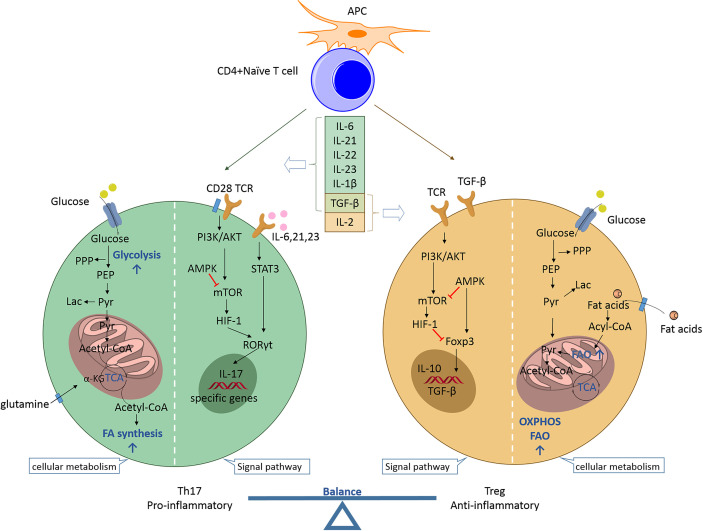
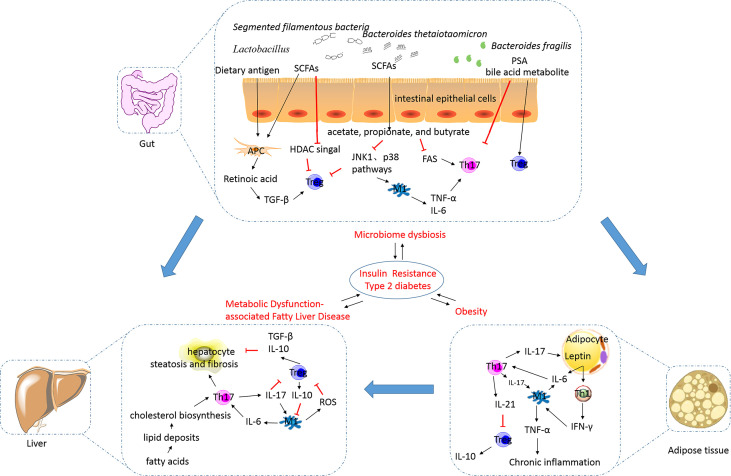
Chronic inflammation plays an important role in the development of metabolic diseases. These include obesity, type 2 diabetes mellitus, and metabolic dysfunction-associated fatty liver disease. The proinflammatory environment maintained by the innate immunity, including macrophages and related cytokines, can be influenced by adaptive immunity. The function of T helper 17 (Th17) and regulatory T (Treg) cells in this process has attracted attention. The Th17/Treg balance is regulated by inflammatory cytokines and various metabolic factors, including those associated with cellular energy metabolism. The possible underlying mechanisms include metabolism-related signaling pathways and epigenetic regulation. Several studies conducted on human and animal models have shown marked differences in and the important roles of Th17/Treg in chronic inflammation associated with obesity and metabolic diseases. Moreover, Th17/Treg seems to be a bridge linking the gut microbiota to host metabolic disorders. In this review, we have provided an overview of the alterations in and the functions of the Th17/Treg balance in metabolic diseases and its role in regulating immune response-related glucose and lipid metabolism.
Overview
The claims and statistics of this paper haven’t been checked yet.
Run the check — free, no account needed. It reads the open-access text and checks the sources it cites.
Integrity signals
Registry
Cites
Statistics
Figures
Verification
Claims the paper makes
The claims and statistics of this paper haven’t been checked yet.
Run the check — free, no account needed. It reads the open-access text and checks the sources it cites.
Claims other papers make about this one
Each is checked against this paper’s own text: does it say what the citing paper says it does?
The source backs part of the claim, not all of it — or backs it for a different population, condition or comparison.
In the citing paper
“The hepatic microenvironment in MASLD favors Th17 differentiation by upregulating retinoic acid-related orphan receptor gamma t (RORγt) expression while concurrently destabilizing FOXP3 in Tregs, leading to their phenotypic conversion into pro-inflammatory subsets (Zhang et al. 2021).”
From The double-edged sword of regulatory T cells in MASLD: from inflammation control to fibrosis promotion (2026) · cites this paper as Zhang et al. 2021
Experimental — accuracy not yet measuredThe source backs part of the claim, not all of it — or backs it for a different population, condition or comparison.
In the citing paper
“Since Tregs are immunoregulatory cells capable of suppressing pro-inflammatory cytokine production by effector T cells, such as Th1 and Th17 cells (Workman et al. 2009), a reduction in Treg numbers under sustained disease conditions leads to an increased Th17/Treg imbalance and aberrant activation of pro-inflammatory T cell subsets, ultimately resulting in hepatocyte injury and exacerbation of”
From The double-edged sword of regulatory T cells in MASLD: from inflammation control to fibrosis promotion (2026) · cites this paper as Zhang et al. 2021
Experimental — accuracy not yet measured
Self-check
Percentages, sums and reported differences re-computed from the paper’s own numbers.
The self-check needs the paper’s full text.
Citations
Cites
1 retracted
Gong, Y., Liu, H., & Tao, L. (2019) · Bioscience Reports · doi:10.1042/bsr20181716 · Cited by 4
RetractedBettelli, E., Carrier, Y., Gao, W., Korn, T., Strom, T. B., Oukka, M., Weiner, H. L., & Kuchroo, V. K. (2006) · Nature · doi:10.1038/nature04753 · Cited by 6,992
Commensal microbe-derived butyrate induces the differentiation of colonic regulatory T cells
Furusawa, Y., Obata, Y., Fukuda, S., Endo, T. A., Nakato, G., Takahashi, D., Nakanishi, Y., Uetake, C., Kato, K., Kato, T., et al. (2013) · Nature · doi:10.1038/nature12721 · Cited by 5,549
Neutrophil recruitment and function in health and inflammation
Kolaczkowska, E., & Kubes, P. (2013) · Nature Reviews Immunology · doi:10.1038/nri3399 · Cited by 5,472
The Microbial Metabolites, Short-Chain Fatty Acids, Regulate Colonic T reg Cell Homeostasis
Smith, P. M., Howitt, M. R., Panikov, N., Michaud, M., Gallini, C. A., Bohlooly-Y, M., Glickman, J. N., & Garrett, W. S. (2013) · Science · doi:10.1126/science.1241165 · Cited by 5,413
Metabolites produced by commensal bacteria promote peripheral regulatory T-cell generation
Arpaia, N., Campbell, C., Fan, X., Dikiy, S., van der Veeken, J., deRoos, P., Liu, H., Cross, J. R., Pfeffer, K., Coffer, P. J., et al. (2013) · Nature · doi:10.1038/nature12726 · Cited by 4,838
Harrington, L. E., Hatton, R. D., Mangan, P. R., Turner, H., Murphy, T. L., Murphy, K. M., & Weaver, C. T. (2005) · Nature Immunology · doi:10.1038/ni1254 · Cited by 4,742
Richness of human gut microbiome correlates with metabolic markers
Le Chatelier, E., Nielsen, T., Qin, J., Prifti, E., Hildebrand, F., Falony, G., Almeida, M., Arumugam, M., Batto, J.-M., Kennedy, S., et al. (2013) · Nature · doi:10.1038/nature12506 · Cited by 4,662
Differentiation of Effector CD4 T Cell Populations
Zhu, J., Yamane, H., & Paul, W. E. (2010) · Annual Review of Immunology · doi:10.1146/annurev-immunol-030409-101212 · Cited by 3,452
Inflammatory links between obesity and metabolic disease
Lumeng, C. N., & Saltiel, A. R. (2011) · Journal of Clinical Investigation · doi:10.1172/jci57132 · Cited by 2,319
Cited by
Sorted by citations
Items 101–200 of 263
Dysregulated immunometabolism in gut inflammation
Zheng, M., Tian, Q., Shen, J., & Li, S. (2025) · Acta Biochimica et Biophysica Sinica · doi:10.3724/abbs.2025192 · Cited by 11
The oral-gut axis in chronic atrophic gastritis: current perspectives and integrated strategies
Zha, T., Ding, Y., Xu, X., Zhang, Y., Guo, J., Ge, H., & Xu, L. (2026) · Frontiers in Immunology · doi:10.3389/fimmu.2025.1699501 · Cited by 8
Role of Nox4 in Mitigating Inflammation and Fibrosis in Dextran Sulfate Sodium–Induced Colitis
Lee, Y., Kim, S., Jeong, H., Kim, K. H., Jeon, D., Cho, Y., Lee, D., & Nam, K. T. (2023) · Cellular and Molecular Gastroenterology and Hepatology · doi:10.1016/j.jcmgh.2023.05.002 · Cited by 8
Higher IL-9 Level is Associated with Psoriasis Vulgaris Complicated by Metabolic Syndrome
Yan, L., Yu, C., Zhao, Z., Zhang, Y., Wang, R., & Li, C. (2023) · Clinical Cosmetic and Investigational Dermatology · doi:10.2147/ccid.s422355 · Cited by 8
Bisphenol A, T H 17 cells, and allergy: A commentary
Kimber, I., Woeffen, N., & Sondenheimer, K. (2022) · Journal of Immunotoxicology · doi:10.1080/1547691x.2022.2113842 · Cited by 8
Adipose Tissue Immunometabolism: Unveiling the Intersection of Metabolic and Immune Regulation
Medina-Urrutia, A. X., Torre-Villalvazo, I., & Juárez-Rojas, J. G. (2024) · Revista de investigaci�n Cl�nica · doi:10.24875/ric.23000231 · Cited by 7
Yang, F., Li, J., Wei, L., Qin, S., Shi, Q., Lu, S., & Chu, S. (2024) · Frontiers in Microbiology · doi:10.3389/fmicb.2024.1443743 · Cited by 7
Yang, Y., Zhang, Y., Fu, J., & Yin, X. (2024) · Molecular Medicine · doi:10.1186/s10020-024-01004-5 · Cited by 7
Lobato, T. B., Santos, E. S. D. S., Iser‐Bem, P. N., Falcão, H. D. S., Gimenes, G. M., Pauferro, J. R. B., Rodrigues, G. T., Correa, I. S., Pereira, A. C. G., Passos, M. E. P., et al. (2024) · Nutrients · doi:10.3390/nu16234106 · Cited by 7
Xu, Y., Li, Q., & Jiao, X. (2025) · Frontiers in Cell and Developmental Biology · doi:10.3389/fcell.2025.1650677 · Cited by 7
Ajith, T. A., & Sreejith, J. K. (2025) · Nutritional Neuroscience · doi:10.1080/1028415x.2025.2567429 · Cited by 7
Seal, S. V., Henry, M., Pajot, C., Holuka, C., Bailbé, D., Movassat, J., Darnaudéry, M., & Turner, J. D. (2022) · Frontiers in Immunology · doi:10.3389/fimmu.2022.896179 · Cited by 7
Wang, X., Liu, Z., Zhang, S., Yang, Y., Wu, X. S., & Liu, X. (2023) · Hereditas · doi:10.1186/s41065-023-00264-1 · Cited by 7
Self-citationPu, Y., Cheng, R., Zhang, Q., Huang, T., Lu, C., Tang, Z., Zhong, Y., Wu, L., Hammock, B. D., Hashimoto, K., et al. (2023) · Clinical Immunology · doi:10.1016/j.clim.2023.109850 · Cited by 7
Peng, D., Wang, Y., Yao, Y., Yang, Z., Wu, S., Zeng, K., Hu, X., & Zhao, Y. D. (2024) · Molecular and Cellular Biochemistry · doi:10.1007/s11010-023-04904-y · Cited by 8
Wang, Y., Miao, Y., & Wan, Q. (2024) · BMC Endocrine Disorders · doi:10.1186/s12902-024-01644-y · Cited by 7
Catlett, I. M., Gao, L., Hu, Y., Banerjee, S., & Krueger, J. G. (2024) · Dermatology and Therapy · doi:10.1007/s13555-024-01262-5 · Cited by 7
Inhibition of inflammation by IL-6 blockade in xenotransplantation
Iwanczyk, Z., Hara, H., Cooper, D. K. C., & Maenaka, A. (2025) · Cytokine · doi:10.1016/j.cyto.2025.156897 · Cited by 7
Barrios, V., Campillo-Calatayud, A., Guerra-Cantera, S., Canelles, S., Martín‐Rivada, Á., Frago, L. M., Chowen, J. A., & Argente, J. (2021) · Biomolecules · doi:10.3390/biom11111734 · Cited by 9
He, W., Sun, X., Luo, B., Liu, M., Li, L., Fan, X., Ye, J., & Zhou, B. (2022) · Frontiers in Microbiology · doi:10.3389/fmicb.2022.1019810 · Cited by 7
Artesunate targets cellular metabolism to regulate the Th17/Treg cell balance
Chen, K., Tang, L., & Nong, X. (2023) · Inflammation Research · doi:10.1007/s00011-023-01729-9 · Cited by 7
Yuan, B., Li, J., Shu, Q., Wang, X., Luo, G., & Ma, R. (2025) · The Journal of Headache and Pain · doi:10.1186/s10194-025-02090-4 · Cited by 6
SGLT2 inhibitors in autoimmune diseases: emerging therapeutic potential and clinical challenges
Luo, T., Zhang, L., Tu, K., Li, G. L., Su, H., Gong, G., Huang, Y., Li, M., & Yang, X. (2025) · Frontiers in Immunology · doi:10.3389/fimmu.2025.1589341 · Cited by 6
Zhang, X., Jia, L., Lin, X., & Zhou, L. (2025) · Autoimmunity Reviews · doi:10.1016/j.autrev.2025.103878 · Cited by 6
Interplay between gut microbiota and intestinal lipid metabolism: mechanisms and implications
Hang, B., & Wang, Y. (2025) · Journal of Zhejiang University SCIENCE B · doi:10.1631/jzus.b2500102 · Cited by 7
A shared stress-inflammation signalling architecture underlying chronic disease and multimorbidity
Kopp, W. (2026) · Frontiers in Immunology · doi:10.3389/fimmu.2026.1813984 · Cited by 7
Wu, Y., Li, J., Liu, M., Gao, R., Li, H., Xie, Y., Hu, Q., Wei, J., Zhao, L., & Li, L. (2025) · Drug Design Development and Therapy · doi:10.2147/dddt.s494066 · Cited by 6
Hosseini, S. A., Ajorlou, P., Mousavi, P., & Shekari, M. (2025) · Clinical and Experimental Medicine · doi:10.1007/s10238-025-01802-z · Cited by 6
Chang, W., Li, X., Ma, Y., Bai, T., & Jia, L. (2025) · Diabetes, Metabolic Syndrome and Obesity : Targets and Therapy · doi:10.2147/dmso.s534724 · Cited by 6
Bosnić, Z., Babič, F., Anderková, V., Štefanić, M., Wittlinger, T., & Majnarić, L. T. (2023) · International Journal of Environmental Research and Public Health · doi:10.3390/ijerph20043695 · Cited by 7
Bosnić, Z., Babič, F., Wittlinger, T., Anderková, V., Šahinović, I., & Majnarić, L. T. (2023) · Medical Science Monitor · doi:10.12659/msm.940128 · Cited by 6
Mendoza-Pérez, A., Vitales‐Noyola, M., González-Baranda, L., Álvarez-Quiroga, C., Hernández-Castro, B., Monsiváis-Urenda, A. E., Baranda, L., Niño-Moreno, P., Hurtado, G., Sánchez-Gutiérrez, R., et al. (2022) · Clinical & Experimental Immunology · doi:10.1093/cei/uxac051 · Cited by 6
Muralikrishnan, A. S., Biasin, V., Zabini, D., & Osto, E. (2025) · Acta Physiologica · doi:10.1111/apha.70091 · Cited by 5
CD4 + T lymphocyte and cytokine profiles in depressive disorders
Zhang, W., Wang, C., Fu, T., Zhang, S., & Tian, F. (2025) · BMC Psychiatry · doi:10.1186/s12888-025-07344-8 · Cited by 6
Self-citationLin, J., Cheng, Y., Ling, Y., Gu, S., Zhu, H., Li, M., Yu, H., Li, J., Luo, Q., Li, W., et al. (2025) · Frontiers in Cellular and Infection Microbiology · doi:10.3389/fcimb.2025.1681943 · Cited by 5
Lamponi, S. (2026) · Life · doi:10.3390/life16040538 · Cited by 6
Khalaf, S. E., Abdelfattah, S. N., & Hasona, N. A. (2024) · Indian Journal of Clinical Biochemistry · doi:10.1007/s12291-024-01203-1 · Cited by 5
The potential therapeutic role of IL-35 in pathophysiological processes in type 1 diabetes mellitus
Bakery, H. H., Hussein, H. A. A., Ahmed, O. M., Abuelsaad, A. S. A., & Khalil, R. G. (2024) · Cytokine · doi:10.1016/j.cyto.2024.156732 · Cited by 6
Macrophage Notch1 signaling modulates regulatory T cells via the TGFB axis in early MASLD
Zhang, M., Li, K., Huang, X., Xu, D., Zong, R., Hu, Q., Dong, X., Zhang, Q., Jiang, C., Ge, Y., et al. (2024) · JHEP Reports · doi:10.1016/j.jhepr.2024.101242 · Cited by 5
Sun, W., Liu, G., Shen, F., Wu, D., Yan, L., Zhang, R., Che, L., Feng, B., Zhuo, Y., Xu, S., et al. (2025) · Journal of Animal Science · doi:10.1093/jas/skaf050 · Cited by 5
Interferon regulatory factor 3 beyond innate immunity: Regulation in obesity and metabolic disorders
Li, H., Zhang, Y., & Peh, H. Y. (2025) · Seminars in Immunology · doi:10.1016/j.smim.2025.101948 · Cited by 5
Liu, M., & Qiao, H. (2025) · Molecular Medicine Reports · doi:10.3892/mmr.2025.13523 · Cited by 5
Khokhar, M., Purohit, P., Gadwal, A., Bajpai, N. K., & Shukla, R. K. G. (2025) · International Reviews of Immunology · doi:10.1080/08830185.2025.2515836 · Cited by 5
Purin Metabolism Is Crucial for Regulatory T Cell Stability and Function
Lee, Y. S., Shirkey, M. W., Saxena, V., Kong, D., Ma, B., Abdi, R., & Bromberg, J. S. (2025) · European Journal of Immunology · doi:10.1002/eji.70070 · Cited by 6
Zhou, X., Dai, H., Jiang, H., Rui, H., Liu, W., Dong, Z., Zhang, N., Zhao, Q., Feng, Z., Hu, Y., et al. (2022) · Frontiers in Pharmacology · doi:10.3389/fphar.2022.968256 · Cited by 5
Li, L., Chen, J., Wang, Z., Xu, Y., Yao, H., Lei, W., Zhou, X., & Zheng, M. (2024) · Frontiers in Immunology · doi:10.3389/fimmu.2024.1415004 · Cited by 5
Tom, V. V., José, A. D. L. F. H., Mallick, S., Sasidharan, A., Pawar, R., Somayaji, Y., & Fernandes, R. (2025) · Naunyn-Schmiedeberg s Archives of Pharmacology · doi:10.1007/s00210-025-03985-4 · Cited by 5
Pathogenesis of NAFLD-Related Hepatocellular Carcinoma: An Up-to-Date Review
Gao, Y., Zhu, R., Dong, J., & Li, Z. (2023) · Journal of Hepatocellular Carcinoma · doi:10.2147/jhc.s400231 · Cited by 7
Self-citationChoudhary, S., Khan, N. S., Verma, R., Saxena, P., Singh, H., Jain, A. K., Thomas, G., Pradhan, D., & Kumar, N. (2023) · 3 Biotech · doi:10.1007/s13205-023-03533-y · Cited by 5
Sun, Y., Liu, Z., Yang, J., Jia, Q., Sun, J., Wang, L., Liang, F., Song, S., Wang, K., & Zhou, X. (2024) · Frontiers in Neurology · doi:10.3389/fneur.2024.1375615 · Cited by 4
Implications of gut microbiota in hepatic and pancreatic diseases: Gut-liver-pancreas axis
Abdelwahab, M. M., Ghattas, A. S., & Tawheed, A. (2025) · World Journal of Hepatology · doi:10.4254/wjh.v17.i9.109965 · Cited by 4
Almusallam, D., & Alhabardi, S. A. (2025) · Future Journal of Pharmaceutical Sciences · doi:10.1186/s43094-025-00891-7 · Cited by 4
Liang, H., & Xu, J. Y. (2025) · Frontiers in Psychiatry · doi:10.3389/fpsyt.2025.1675129 · Cited by 4
Guardians within: Cross-talk between the gut microbiome and host immune system
Ghosh, N., & Sinha, K. (2025) · World Journal of Gastrointestinal Pathophysiology · doi:10.4291/wjgp.v16.i4.111245 · Cited by 7
Jaswal, A., Kumar, A., Patel, P., & Kurmi, B. D. (2026) · Immunological Investigations · doi:10.1080/08820139.2026.2645963 · Cited by 4
Fu, T., Zhang, W., Zhang, S., & Tian, F. (2025) · Neuroscience Research · doi:10.1016/j.neures.2025.104927 · Cited by 4
Self-citationFrom model to man: Understanding Tregs' dual role in MASLD
Dywicki, J., Buitrago‐Molina, L. E., Baumann, A., Davalos-Misslitz, A., Hendriks, C. M., Hupa-Breier, K., Lieber, M., Schlué, J., Blüher, M., Bantel, H., et al. (2025) · JHEP Reports · doi:10.1016/j.jhepr.2025.101619 · Cited by 6
Zhao, W., Jia, Y., Li, R., Li, J., Zou, X., & Dong, X. (2024) · Poultry Science · doi:10.1016/j.psj.2024.104088 · Cited by 4
Sawahata, M., Uchida, K., Furukawa, A., Eishi, Y., & Maemondo, M. (2025) · Frontiers in Medicine · doi:10.3389/fmed.2025.1625915 · Cited by 4
Mass cytometry reveals the corneal immune cell changes at single cell level in diabetic mice
Qin, L., Li, Q., Wang, L., & Huang, Y. (2023) · Frontiers in Endocrinology · doi:10.3389/fendo.2023.1253188 · Cited by 4
Jin, J., & Liu, X. (2023) · Frontiers in Immunology · doi:10.3389/fimmu.2023.1164761 · Cited by 4
Amino acid metabolism-mediated immune cell fate and function in pigs
He, L., Jin, S., Li, Y., & Yin, Y. (2025) · Animal Nutriomics · doi:10.1017/anr.2025.5 · Cited by 3
Targeting CD4+ T Cell Glucose Metabolism: A Novel Immunotherapeutic Approach for Type 1 Diabetes
Niu, Y., Wang, N., Qiao, L., Huang, Z., Jing, G., Fu, S., & Tang, X. (2025) · Biomolecules · doi:10.3390/biom15060770 · Cited by 3
Microbiome Mediated Immune Crosstalk on the Gut-Thyroid Axis in Autoimmune Thyroid Disease
Arawker, M. H., Habibullah, F., Baral, S., Fu, L., Sun, N., Li, H., Ji, F., & Qiu, X. (2025) · Immunological Investigations · doi:10.1080/08820139.2025.2593335 · Cited by 3
The Ketogenic Diet: An Anti-Inflammatory Treatment for Schizophrenia?
Hung, A., Krycer, J. R., Sarnyai, Z., Palmer, C., & Navarro, S. (2025) · Journal of Inflammation Research · doi:10.2147/jir.s540859 · Cited by 3
Menn, G. L., Pikkarainen, K., Mennerich, D., Miroszewska, D., Kietzmann, T., & Chen, Z. J. (2024) · Frontiers in Immunology · doi:10.3389/fimmu.2024.1401949 · Cited by 3
Zong, R., Liu, Y., Zhang, M., Liu, B., Zhang, W., Hu, H., & Li, C. (2024) · JCI Insight · doi:10.1172/jci.insight.182515 · Cited by 3
Hasegawa, Y., Noll, A. L., Lang, D. J., Akfaly, E. M., Liu, Z., & Bolling, B. W. (2024) · Nutrition Research · doi:10.1016/j.nutres.2024.07.005 · Cited by 3
Acsbg1 regulates differentiation and inflammatory properties of CD4+ T cells
Palatella, M., Kruse, F., Glage, S., Bleich, A., Greweling‐Pils, M. C., & Huehn, J. (2025) · European Journal of Microbiology and Immunology · doi:10.1556/1886.2025.00003 · Cited by 3
Interleukin-33 and Obesity-Related Inflammation and Cancer
Kowitt, C., & Zhang, Q. (2024) · Encyclopedia · doi:10.3390/encyclopedia4040117 · Cited by 3
Zhen, L., Chen, Y., Gao, J., Li, B., & Jia, Y. (2023) · Critical Reviews in Immunology · doi:10.1615/critrevimmunol.2023050312 · Cited by 2
Zhang, B., Wang, J., Li, M., Wen, J., Loor, J. J., Wang, S., Ji, Z., Lv, X., Wang, G., Xia, C., et al. (2025) · Animals · doi:10.3390/ani15030388 · Cited by 2
Self-citationSuratkal, J. P., D'Silva, T., & AlHilli, M. M. (2025) · Gynecologic Oncology Reports · doi:10.1016/j.gore.2025.101718 · Cited by 2
Zaragoza, B. G., Ruiz-Rodríguez, M., Gómez, P. R. D. V., Bardasz, D. D., & Martínez‐Brocca, M. A. (2025) · Diabetes & Metabolism · doi:10.1016/j.diabet.2025.101643 · Cited by 2
T lymphocytes linking autoimmunity and cardiovascular disease in aging
Ortega‐Sollero, E., Ruiz‐Fernández, I., & Martı́n, P. (2025) · The Journal of Cardiovascular Aging · doi:10.20517/jca.2024.40 · Cited by 2
Bagaev, A., Sur, D., Agranyoni, O., Pe'er, N., Savita, B. K., Rocha, B. G. S., Thanos, P. K., Navon‐Venezia, S., & Pinhasov, A. (2025) · Translational Psychiatry · doi:10.1038/s41398-025-03436-x · Cited by 2
Wang, Z., Du, H., Wang, Z., Qin, X., Xie, Y., Tang, B., Lv, X., Liang, C.-Z., & Zhang, C. (2025) · Ultrasound in Medicine & Biology · doi:10.1016/j.ultrasmedbio.2025.10.017 · Cited by 2
Bao, J., Wen, Y., Wu, B., Li, Y., Li, S., Lei, F., Tian, L., Chen, X., & Jie, Y. (2025) · Journal of Translational Medicine · doi:10.1186/s12967-025-07460-9 · Cited by 2
Garza‐Martinez, L., & Fitzgerald-Bocarsly, P. A. (2025) · Cell Communication and Signaling · doi:10.1186/s12964-025-02525-0 · Cited by 2
Wang, X., & Li, L. (2026) · Frontiers in Pharmacology · doi:10.3389/fphar.2025.1685072 · Cited by 3
Cho, S.-Y., Jang, S., Ryu, S. S., & Park, S. (2022) · EXPLORE · doi:10.1016/j.explore.2022.10.001 · Cited by 2
Lin, C., Lin, Y., Guo, M., Xiao, R., Wang, S., Zhou, Y., Zhao, J., Zhang, H., Chen, W., & Wang, G. (2024) · Food Science and Human Wellness · doi:10.26599/fshw.2024.9250209 · Cited by 2
Self-citationLuo, J., Chen, K., & Nong, X. (2025) · Immunopharmacology and Immunotoxicology · doi:10.1080/08923973.2024.2444953 · Cited by 3
Sun, P., Xiao, Y., Dong, Y., Feng, Y., Zheng, H., & Liao, X. (2025) · Diabetes Metabolic Syndrome and Obesity · doi:10.2147/dmso.s509866 · Cited by 2
Kan, Y., Liu, Y., Huang, Y., Zhao, L., Chang, J., Pang, W., Lin, W., & Hu, J. (2025) · Molecular Medicine Reports · doi:10.3892/mmr.2025.13682 · Cited by 2
RETRACTED: Explore the genetic exposure to alopecia areata
Peng, S., Yang, Y., Man, Y., Long, D., Wang, L., Li, K., & Liu, P. (2024) · Skin Research and Technology · doi:10.1111/srt.13874 · Cited by 2
RetractedLee, S. E., Jo, M. G., Park, S. W., Kim, H. J., Yun, S. P., & Kim, J.-W. (2026) · Animal Cells and Systems · doi:10.1080/19768354.2026.2630463 · Cited by 2
“…al. 2009), a reduction in Treg numbers under sustained disease conditions leads to an increased Th17/Treg imbalance and aberrant activation of pro-inflammatory T cell subsets, ultimately resulting in hepatocyte injury and exacerbation of liver inflammation (Komatsu et al. 2014; Zhang et al. 2021).”
Frequency of infiltrating regulatory T-cells in the portal tract of biliary atresia
Oita, S., Saito, T., Hashimoto, R., Fumita, T., Katsumata, Y., Terui, K., Komatsu, S., Takenouchi, A., Ikeda, J., & Hishiki, T. (2023) · Pediatric Surgery International · doi:10.1007/s00383-023-05547-2 · Cited by 1
Lymphocyte metabolism and the level of circulatory cytokines in children with autoimmune disease
Радыгина, Т. В., Курбатова, О. В., Купцова, Д. Г., Петричук, С. В., Fisenko, А. P., Movsisyan, G. B., Abdullaeva, L. М., Потапов, А. С., Murashkin, N. N., & Parakhina, D. V. (2024) · Medical Immunology (Russia) · doi:10.15789/1563-0625-lma-16773 · Cited by 1
Crosstalk between microRNA and inflammation; critical regulator of diabetes
El‐Sehrawy, A. A. M. A., Mohammed, M. H., Salahdin, O. D., Uthirapathy, S., Ballal, S., Kalia, R., Arya, R., Joshi, K. K., Kadim, A. S., & KADHIM, A. J. (2025) · Experimental Cell Research · doi:10.1016/j.yexcr.2025.114507 · Cited by 1
Du, J., Wang, T., Xue, C., Zheng, G., & Wang, Y. (2025) · Journal of Medical Biochemistry · doi:10.5937/jomb0-58100 · Cited by 1
Wu, M., Yang, H., Wu, Y., Yin, Y., Li, J., Ge, Y., Sun, C., Cao, J., Wang, D., Zheng, Y., et al. (2025) · Food Frontiers · doi:10.1002/fft2.70053 · Cited by 2
Mai, M., Wang, Y., Wang, D., Ruan, Y., Mo, B., Li, Z., & Guo, H. (2025) · Hepatitis Monthly · doi:10.5812/hepatmon-157416 · Cited by 1
Self-citationDabkeviciute, G. M., & Kriaučiūnas, A. (2025) · Cureus · doi:10.7759/cureus.95609 · Cited by 1
Beyond Energy Fuel: Ketone Bodies as Multifaceted Modulators of T Cell and Anti‐Tumour Immunity
Gu, Z., Zhang, M., & Xia, S. (2025) · Scandinavian Journal of Immunology · doi:10.1111/sji.70067 · Cited by 1
Zhu, M., & Liu, J. (2025) · Frontiers in Pediatrics · doi:10.3389/fped.2025.1725402 · Cited by 1
Wang, R., Goruk, S., Chan, C. B., & Field, C. J. (2026) · Molecular Nutrition & Food Research · doi:10.1002/mnfr.70391 · Cited by 1
Mukherjee, K., & Bhattacharyya, S. N. (2026) · Frontiers in Immunology · doi:10.3389/fimmu.2026.1708031 · Cited by 1
Su, H., Zhang, L., Zhang, Q., Liu, L., Zhai, L., Chen, X., Yang, C., An, N., & Liu, H.-F. (2026) · Frontiers in Immunology · doi:10.3389/fimmu.2026.1799232 · Cited by 1
Tian, W., Peng, S., Xu, F., Kong, X., Li, Y., Zhang, W., Liu, Z., Zhang, H., Wang, J., & Wang, L. (2026) · Frontiers in Cellular and Infection Microbiology · doi:10.3389/fcimb.2026.1726788 · Cited by 1
Metadata
- Authors
- Zhang, S., Gang, X., Yang, S., Cui, M., Sun, L., Li, Z., & Wang, G.
- Affiliations
- First Hospital of Jilin University (CN)
- Corresponding author
- Li, Zhuo
- Wang, Guixia
- Venue
- Frontiers in Immunology
- Publisher
- Frontiers Media SA
- Published
- 2021-07-12
- Volume
- 12
- Pages
- 678355-678355
- ISSN
- 1664-3224 (ISSN-L)
- PMC
- PMC8311559
- OpenAlex
- W3178963741
- Cited by
- 263
- References
- 150
- Citations by year
- 2026: 49 · 2025: 97 · 2024: 46 · 2023: 43 · 2022: 26 · 2021: 2
- FWCI
- 4.48
- Type
- journal article
- Language
- en
- Open access
- gold
- doi.org
- Licence
- Locations
- Frontiers in Immunology (publishedVersion, cc-by)
- PubMed Central (publishedVersion, cc-by)
- PubMed (publishedVersion)
- DOAJ (DOAJ: Directory of Open Access Journals) (submittedVersion, cc-by-sa)
- Funders
- People's Government of Jilin Province
- Department of Science and Technology of Jilin Province (20170623005TC)
- Topics
- Health Sciences › Medicine › Endocrinology, Diabetes and Metabolism › Adipokines, Inflammation, and Metabolic Diseases
- Life Sciences › Immunology and Microbiology › Immunology › Psoriasis: Treatment and Pathogenesis
- Life Sciences › Immunology and Microbiology › Immunology › T-cell and B-cell Immunology
- Keywords
- Th17/Treg balance, regulatory T cells, Th17 cells, chronic inflammation, metabolic disorders, obesity, type 2 diabetes, non-alcoholic fatty liver disease, innate immunity, macrophages, inflammatory cytokines, energy metabolism, epigenetic regulation, gut microbiota, glucose metabolism, lipid metabolism
- MeSH terms
- Animals, Disease Susceptibility, Humans, Inflammation, Lymphocyte Activation, Metabolic Diseases, Signal Transduction, Biomarkers, Cytokines, Lymphocyte Count, Adipogenesis, T-Lymphocytes, Regulatory, Th17 Cells, Cellular Microenvironment
About these checks
Registry, retraction, Cites and statistics results are computed, not judged, with one exception: a printed reference that no index lists is read once by a model before it counts as a citation error. Claims are extracted by a model and kept only when their quote appears verbatim in the text; each cited source is then checked, with a model’s help, for whether it says what the claim relies on. Those verdicts can be wrong — read the claim’s quote and the cited source before relying on one.
Statistics and arithmetic are recomputed, not judged.
Confidence bands are shown only for fields calibrated on our annotated test set. None is calibrated yet, so no band is shown.
What counts as a claim ›How we measure confidence ›How we check this ›
Are you an author, or do you see a problem with this page? Request a review
