

The DOI matches its Crossref record; 1 of the 1 references it cites were found in a registry or an index.
The clinical significance of allergen-specific IgG4 in allergic diseases
Abstract
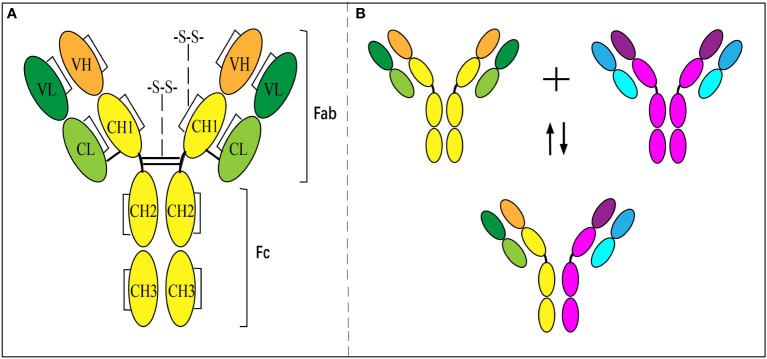
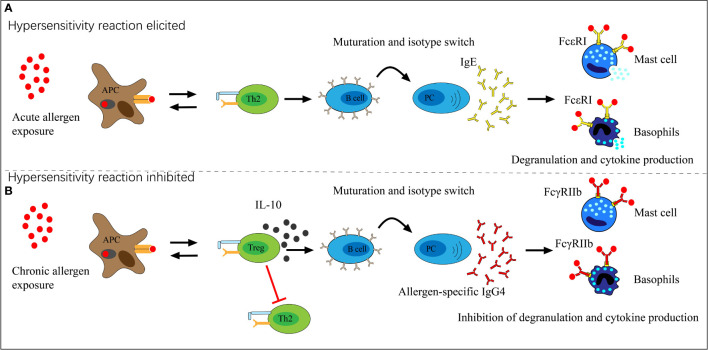
IgG4 is a subclass of IgG antibody with a unique molecular feature of (Fragment antigen- binding) Fab-arm exchange, allowing bi specific antigen binding in a mono -valent manner. With low binding affinity to C1q and Fcγreceptors, IgG4 is incapable of forming immune complexes and activating the complement pathway, exhibiting a non-inflammatory feature. IgG4 is produced similarly to IgE and is considered a modified reaction to IgE class-switching response under certain conditions. It could also counteract IgE-activated inflammation. However, the clinical significance of IgG4 in allergic diseases is complex and controversial. Three viewpoints have been suggested to describe the role of IgG4. IgG4 can act as a tolerance–inducer to play a protective role under repeated and rapid incremental dosing of allergen exposure in allergen immunotherapy (AIT), supported by allergies in cat raisers and venom desensitization in beekeepers. Another viewpoint accepted by mainstream specialists and guidelines of Food Allergy and Management in different countries points out that food-specific IgG4 is a bystander in food allergy and should not be used as a diagnostic tool in clinical work. However, eosinophilic esophagitis (EoE) investigation revealed a direct clinical relevance between physiopathology and serum IgG4 in cow milk and wheat. These factors indicate that allergen-specific IgG4 plays a multifaceted role in allergic diseases that is protective or pathogenic depending on different allergens or exposure conditions.
Overview
The claims and statistics of this paper haven’t been checked yet.
Run the check — free, no account needed. It reads the open-access text and checks the sources it cites.
Integrity signals
Registry
Cites
Statistics
Figures
Verification
Claims the paper makes
The claims and statistics of this paper haven’t been checked yet.
Run the check — free, no account needed. It reads the open-access text and checks the sources it cites.
Claims other papers make about this one
Each is checked against this paper’s own text: does it say what the citing paper says it does?
In the citing paper
“For example, IgG 4 can also be a bystander product of allergen exposure without directly contributing to desensitization [222,227].”
From Pollen–Food Allergy Syndrome: Allergens, Clinical Insights, Diagnostic and Therapeutic Challenges (2024) · cites this paper as [222]
In the citing paper
“Increased levels of allergen-specific IgG 4 observed during successful OIT indicate a shift toward tolerance, with patients often experiencing reduced symptoms or complete desensitization [222,223].”
From Pollen–Food Allergy Syndrome: Allergens, Clinical Insights, Diagnostic and Therapeutic Challenges (2024) · cites this paper as [222]
Self-check
Percentages, sums and reported differences re-computed from the paper’s own numbers.
The self-check needs the paper’s full text.
Citations
Cites
Fcγ receptors as regulators of immune responses
Nimmerjahn, F., & Ravetch, J. V. (2008) · Nature Reviews Immunology · doi:10.1038/nri2206 · Cited by 2,947
Research works printed but not linked: 105
- Schur, 1988, IgG subclasses, A historical perspective Monogr Allergy, 23, 1
- Vidarsson, 2014, IgG subclasses and allotypes: from structure to effector functions, Front Immunol, 5, 10.3389/fimmu.2014.00520 · DOI · Paper page
- Trampert, 2018, On the role of IgG4 in inflammatory conditions: lessons for IgG4-related disease, Biochim Biophys Acta Mol Basis Dis, 1864, 10.1016/j.bbadis.2017.07.038 · DOI
- Lefranc, 2009, IMGT, the international ImMunoGeneTics information system, Nucleic Acids Res, 37, 10.1093/nar/gkn838 · DOI
- Feldmann, 1998, Biological insights from clinical trials with anti-TNF therapy, Springer Semin Immunopathol, 20, 10.1007/BF00832008 · DOI
- Miller, 2003, A controlled trial of natalizumab for relapsing multiple sclerosis, N Engl J Med, 348, 15, 10.1056/NEJMoa020696 · DOI
- Chan, 2010, Therapeutic antibodies for autoimmunity and inflammation, Nat Rev Immunol, 10, 10.1038/nri2761 · DOI
- von Mehren, 2014, A phase 1, open-label, dose-escalation study of BIIB022 (anti-IGF-1R monoclonal antibody) in subjects with relapsed or refractory solid tumors, Invest New Drugs, 32, 10.1007/s10637-014-0064-y · DOI
- Newman, 2001, Modification of the fc region of a primatized IgG antibody to human CD4 retains its ability to modulate CD4 receptors but does not deplete CD4(+) T cells in chimpanzees, Clin Immunol, 98, 10.1006/clim.2000.4975 · DOI
- Labrijn, 2009, Therapeutic IgG4 antibodies engage in fab-arm exchange with endogenous human IgG4, In vivo Nat Biotechnol, 27, 10.1038/nbt.1553 · DOI
- Turner, 2005, Allergen-specific IgE and IgG4 are markers of resistance and susceptibility in a human intestinal nematode infection, Microbes Infect, 7, 10.1016/j.micinf.2005.03.036 · DOI
- Tang, 2020, Malignancy and IgG4-related disease: the incidence, related factors and prognosis from a prospective cohort study in China, Sci Rep, 10, 4910, 10.1038/s41598-020-61585-z · DOI
- Della-Torre, 2021, Serum IgG4 level predicts COVID-19 related mortality, Eur J Intern Med, 93, 10.1016/j.ejim.2021.09.012 · DOI
- Ruiter, 2007, Maintenance of tolerance to cow's milk in atopic individuals is characterized by high levels of specific immunoglobulin G4, Clin Exp Allergy, 37, 10.1111/j.1365-2222.2007.02749.x · DOI
- Custovic, 2011, Allergen-specific IgG antibody levels modify the relationship between allergen-specific IgE and wheezing in childhood, J Allergy Clin Immunol, 127, 10.1016/j.jaci.2011.03.014 · DOI
- Santos, 2015, IgG4 inhibits peanut-induced basophil and mast cell activation in peanut-tolerant children sensitized to peanut major allergens, J Allergy Clin Immunol, 135, 10.1016/j.jaci.2015.01.012 · DOI
- Germano, 1993, Specific humoral response to cows' milk proteins and ovalbumin in children with atopic dermatitis, Int J Clin Lab Res, 23, 10.1007/BF02592310 · DOI
- Jenmalm, 1998, Exposure to cow's milk during the first 3 months of life is associated with increased levels of IgG subclass antibodies to beta-lactoglobulin to 8 years, J Allergy Clin Immunol, 102, 10.1016/s0091-6749(98)70286-6 · DOI
- Batard, 1993, Isotypic analysis of grass pollen-specific immunoglobulins in human plasma. 1. specialization of certain classes and subclasses in the immune response, Int Arch Allergy Immunol, 100, 68, 10.1159/000236390 · DOI
- Scott-Taylor, 2010, Correlation of allergen-specific IgG subclass antibodies and T lymphocyte cytokine responses in children with multiple food allergies, Pediatr Allergy Immunol, 21, 10.1111/j.1399-3038.2010.01025.x · DOI
- Vance, 2004, Ovalbumin-specific immunoglobulin G and subclass responses through the first 5 years of life in relation to duration of egg sensitization and the development of asthma, Clin Exp Allergy, 34, 10.1111/j.1365-2222.2004.02058.x · DOI
- Gwynn, 1982, Bronchial provocation tests in atopic patients with allergen-specific IgG4 antibodies, Lancet, 1, 10.1016/s0140-6736(82)90978-3 · DOI
- Liu, 2018, Specific immunoglobulin G4 and immunoglobulin e titers to common food antigens in sera of children with allergic rhinitis, Altern Ther Health Med, 24, 38
- Nirula, 2011, What is IgG4? a review of the biology of a unique immunoglobulin subtype, Curr Opin Rheumatol, 23, 10.1097/BOR.0b013e3283412fd4 · DOI
- Schuurman, 2001, The inter-heavy chain disulfide bonds of IgG4 are in equilibrium with intra-chain disulfide bonds, Mol Immunol, 38, 1, 10.1016/s0161-5890(01)00050-5 · DOI
- Angal, 1993, A single amino acid substitution abolishes the heterogeneity of chimeric mouse/human (IgG4) antibody, Mol Immunol, 30, 10.1016/0161-5890(93)90432-b · DOI
- Labrijn, 2011, Species-specific determinants in the IgG CH3 domain enable fab-arm exchange by affecting the noncovalent CH3-CH3 interaction strength, J Immunol, 187, 10.4049/jimmunol.1003336 · DOI
- van der Neut Kolfschoten, 2007, Anti-inflammatory activity of human IgG4 antibodies by dynamic fab arm exchange, Science, 317, 10.1126/science.1144603 · DOI
- Koneczny, 2018, A new classification system for IgG4 autoantibodies, Front Immunol, 9, 10.3389/fimmu.2018.00097 · DOI
- King, 1992, Expression, purification and characterization of a mouse-human chimeric antibody and chimeric fab' fragment, Biochem J, 281, 10.1042/bj2810317 · DOI
- Grey, 1964, H chain subgroups of myeloma proteins and normal 7S gamma-globulin, J Exp Med, 120, 10.1084/jem.120.2.253 · DOI
- Schuurman, 1997, Mouse/human chimeric IgG1 and IgG4 antibodies directed to the house dust mite allergen der p 2: use in quantification of allergen specific IgG, Clin Exp Allergy, 27, 10.1111/j.1365-2222.1997.tb01262.x · DOI
- Tao, 1993, Structural features of human immunoglobulin G that determine isotype-specific differences in complement activation, J Exp Med, 178, 10.1084/jem.178.2.661 · DOI
- Ben Mkaddem, 2019, Understanding fc receptor involvement in inflammatory diseases: From mechanisms to new therapeutic tools, Front Immunol, 10, 10.3389/fimmu.2019.00811 · DOI
- Jeannin, 1998, IgE versus IgG4 production can be differentially regulated by IL-10, J Immunol, 160, 10.4049/jimmunol.160.7.3555 · DOI
- Robinson, 2004, Tregs and allergic disease, J Clin Invest, 114, 10.1172/JCI23595 · DOI
- Wood, 2004, IL-21 effects on human IgE production in response to IL-4 or IL-13, Cell Immunol, 231, 10.1016/j.cellimm.2005.01.001 · DOI
- Platts-Mills, 2001, Sensitisation, asthma, and a modified Th2 response in children exposed to cat allergen: a population-based cross-sectional study, Lancet, 357, 10.1016/S0140-6736(00)04168-4 · DOI
- Aalberse, 1983, IgG4 as a blocking antibody, Clin Rev Allergy, 1, 289, 10.1007/BF02991163 · DOI
- Van Milligen, 1995, Differences between specificities of IgE and IgG4 antibodies: studies using recombinant chain 1 and chain 2 of the major cat allergen felis domesticus (Fel d) I, Clin Exp Allergy, 25, 10.1111/j.1365-2222.1995.tb01036.x · DOI
- Martínez-Botas, 2013, Mapping of the IgE and IgG4 sequential epitopes of ovomucoid with a peptide microarray immunoassay, Int Arch Allergy Immunol, 161, 11, 10.1159/000343040 · DOI · Paper page
- Sackesen, 2019, A new luminex-based peptide assay to identify reactivity to baked, fermented, and whole milk, Allergy, 74, 10.1111/all.13581 · DOI
- Shreffler, 2005, IgE and IgG4 epitope mapping by microarray immunoassay reveals the diversity of immune response to the peanut allergen, ara h 2, J Allergy Clin Immunol, 116, 10.1016/j.jaci.2005.06.033 · DOI
- Sackesen, 2020, IgE and IgG4 binding to lentil epitopes in children with red and green lentil allergy, Pediatr Allergy Immunol, 31, 10.1111/pai.13136 · DOI
- James, 2011, Long-term tolerance after allergen immunotherapy is accompanied by selective persistence of blocking antibodies, J Allergy Clin Immunol, 127, 509, 10.1016/j.jaci.2010.12.1080 · DOI
- Wilcock, 2006, IgE-facilitated antigen presentation: role in allergy and the influence of allergen immunotherapy, Immunol Allergy Clin North Am, 26, 10.1016/j.iac.2006.02.004 · DOI
- Daëron, 1995, Regulation of high-affinity IgE receptor-mediated mast cell activation by murine low-affinity IgG receptors, J Clin Invest, 95, 10.1172/JCI117701 · DOI
- Strait, 2006, IgG-blocking antibodies inhibit IgE-mediated anaphylaxis in vivo through both antigen interception and fc gamma RIIb cross-linking, J Clin Invest, 116, 10.1172/JCI25575 · DOI · Paper page
- Burton, 2014, Oral immunotherapy induces IgG antibodies that act through FcγRIIb to suppress IgE-mediated hypersensitivity, J Allergy Clin Immunol, 134, 1310, 10.1016/j.jaci.2014.05.042 · DOI
- Collins, 2013, Enhanced cell-binding by allergen multimers: how complex is it, Immunol Cell Biol, 91, 10.1038/icb.2013.5 · DOI
- Jenmalm, 2000, Cord blood levels of immunoglobulin G subclass antibodies to food and inhalant allergens in relation to maternal atopy and the development of atopic disease during the first 8 years of life, Clin Exp Allergy, 30, 34, 10.1046/j.1365-2222.2000.00771.x · DOI
- de Martino, 1988, Occurrence and subclass distribution of IgG antibodies to dietary antigens in children with atopic dermatitis and in their mothers, Ann Allergy, 61
- Duchén, 1997, Development of IgG1 and IgG4 antibodies against beta-lactoglobulin and ovalbumin in healthy and atopic children, Ann Allergy Asthma Immunol, 78, 10.1016/S1081-1206(10)63197-3 · DOI
- Zar, 2005, Food-specific serum IgG4 and IgE titers to common food antigens in irritable bowel syndrome, Am J Gastroenterol, 100, 10.1111/j.1572-0241.2005.41348.x · DOI
- Rowntree, 1987, A subclass IgG4-specific antigen-binding radioimmunoassay (RIA): comparison between IgG and IgG4 antibodies to food and inhaled antigens in adult atopic dermatitis after desensitization treatment and during development of antibody responses in children, J Allergy Clin Immunol, 80, 10.1016/0091-6749(87)90017-0 · DOI
- Schwarz, 2016, IgG and IgG4 to 91 allergenic molecules in early childhood by route of exposure and current and future IgE sensitization: Results from the multicentre allergy study birth cohort, J Allergy Clin Immunol, 138, 1426, 10.1016/j.jaci.2016.01.057 · DOI
- Wilson, 2018, Allergen sensitization in a birth cohort at midchildhood: Focus on food component IgE and IgG4 responses, J Allergy Clin Immunol, 141, 419, 10.1016/j.jaci.2017.07.029 · DOI
- Devey, 1976, The IgG subclasses of antibodies to grass pollen allergens produced in hay fever patients during hyposensitization, Clin Allergy, 6, 10.1111/j.1365-2222.1976.tb01901.x · DOI
- van der Giessen, 1976, Subclass typing of IgG antibodies formed by grass pollen-allergic patients during immunotherapy, Int Arch Allergy Appl Immunol, 50, 10.1159/000231566 · DOI
- Wisniewski, 2013, Mechanisms of tolerance induction in allergic disease: integrating current and emerging concepts, Clin Exp Allergy, 43, 10.1111/cea.12016 · DOI
- Nowak-Węgrzyn, 2015, Non-IgE-mediated gastrointestinal food allergy, J Allergy Clin Immunol, 135, 10.1016/j.jaci.2015.03.025 · DOI
- Jones, 2009, Clinical efficacy and immune regulation with peanut oral immunotherapy, J Allergy Clin Immunol, 124, 292, 10.1016/j.jaci.2009.05.022 · DOI
- Kim, 2011, Sublingual immunotherapy for peanut allergy: Clinical and immunologic evidence of desensitization, J Allergy Clin Immunol, 127, 640, 10.1016/j.jaci.2010.12.1083 · DOI
- Vickery, 2013, Peanut oral immunotherapy modifies IgE and IgG4 responses to major peanut allergens, J Allergy Clin Immunol, 131, 128, 10.1016/j.jaci.2012.10.048 · DOI
- Jarkvist, 2020, Venom immunotherapy in patients with clonal mast cell disorders: IgG4 correlates with protection, Allergy, 75, 10.1111/all.13980 · DOI
- Hesselmar, 1999, Does early exposure to cat or dog protect against later allergy development, Clin Exp Allergy, 29, 10.1046/j.1365-2222.1999.00534.x · DOI
- Renand, 2015, Chronic cat allergen exposure induces a TH2 cell-dependent IgG4 response related to low sensitization, J Allergy Clin Immunol, 136, 1627, 10.1016/j.jaci.2015.07.031 · DOI
- Akdis, 1997, Induction and differential regulation of bee venom phospholipase A2-specific human IgE and IgG4 antibodies in vitro requires allergen-specific and nonspecific activation of T and b cells, J Allergy Clin Immunol, 99, 10.1016/s0091-6749(97)70052-6 · DOI
- Matsui, 2005, Mouse allergen-specific immunoglobulin G and immunoglobulin G4 and allergic symptoms in immunoglobulin e-sensitized laboratory animal workers, Clin Exp Allergy, 35, 10.1111/j.1365-2222.2005.02331.x · DOI
- Jones, 2014, Rat-specific IgG and IgG₄ antibodies associated with inhibition of IgE-allergen complex binding in laboratory animal workers, Occup Environ Med, 71, 10.1136/oemed-2014-102119 · DOI
- Stapel, 2008, Testing for IgG4 against foods is not recommended as a diagnostic tool: EAACI task force report, Allergy, 63, 10.1111/j.1398-9995.2008.01705.x · DOI · Paper page
- 1995, Measurement of specific and nonspecific IgG4 levels as diagnostic and prognostic tests for clinical allergy. AAAI board of directors, J Allergy Clin Immunol, 95
- Wüthrich, 2005, Unproven techniques in allergy diagnosis, J Investig Allergol Clin Immunol, 15, 86
- Bahna, 1987, The dilemma of pathogenesis and diagnosis of food allergy, Immunol All Clin N Am, 7, 299, 10.1016/S0889-8561(22)00474-X · DOI
- Morgan, 1990, The relationships among shrimp-specific IgG subclass antibodies and immediate adverse reactions to shrimp challenge, J Allergy Clin Immunol, 86, 10.1016/s0091-6749(05)80102-2 · DOI
- Wüthrich, 1996, Specific IgG antibodies as markers of adverse reactions to food, Contra! Monogr Allergy, 32
- Lichtenstein, 1992, Anti-human IgG causes basophil histamine release by acting on IgG-IgE complexes bound to IgE receptors, J Immunol, 148, 10.4049/jimmunol.148.12.3929 · DOI
- Dannaeus, 1981, A follow-up study of children with food allergy. clinical course in relation to serum IgE- and IgG-antibody levels to milk, egg and fish, Clin Allergy, 11, 10.1111/j.1365-2222.1981.tb02171.x · DOI
- Antico, 2011, Food-specific IgG4 lack diagnostic value in adult patients with chronic urticaria and other suspected allergy skin symptoms, Int Arch Allergy Immunol, 155, 10.1159/000318736 · DOI
- Calkhoven, 1991, Relationship between IgG1 and IgG4 antibodies to foods and the development of IgE antibodies to inhalant allergens. II. Increased levels of IgG antibodies to foods in children who subsequently develop IgE antibodies to inhalant allergens, Clin Exp Allergy, 21, 99, 10.1111/j.1365-2222.1991.tb00810.x · DOI
- Eysink, 1999, Relation between IgG antibodies to foods and IgE antibodies to milk, egg, cat, dog and/or mite in a cross-sectional study, Clin Exp Allergy, 29, 10.1046/j.1365-2222.1999.00554.x · DOI
- Wang, 2019, Sonic hedgehog (Shh) and CC chemokine ligand 2 signaling pathways in asthma, J Chin Med Assoc, 82, 10.1097/JCMA.0000000000000094 · DOI
- Engelhart, 2017, Disease associations with isolated elevations of each of the four IgG subclasses, Semin Arthritis Rheumatol, 47, 10.1016/j.semarthrit.2017.03.021 · DOI
- Oka, 2020, Serum IgG4 as a biomarker reflecting pathophysiology and post-operative recurrence in chronic rhinosinusitis, Allergol Int, 69, 10.1016/j.alit.2019.12.004 · DOI
- Koyama, 2019, Significance of IgG4-positive cells in severe eosinophilic chronic rhinosinusitis, Allergol Int, 68, 10.1016/j.alit.2018.09.002 · DOI
- Brouwer, 1986, Respiratory symptoms, lung function, and IgG4 levels against pig antigens in a sample of Dutch pig farmers, Am J Ind Med, 10, 10.1002/ajim.4700100314 · DOI
- Yamashita, 1987, IgG and IgE antibodies to chironomidae in asthmatic patients, Clin Exp Immunol, 68
- Halpern, 1987, Non-IgE antibody mediated mechanisms in food allergy, Ann Allergy, 58, 14
- Kwiatkowski, 2016, Resolution of allergic rhinitis and reactive bronchospasm with supplements and food-specific immunoglobulin G elimination: A case report, Altern Ther Health Med, 22
- Platts-Mills, 2021, An overview of the relevance of IgG4 antibodies in allergic disease with a focus on food allergens, Children (Basel), 8, 10.3390/children8050418 · DOI
- Clayton, 2014, Eosinophilic esophagitis in adults is associated with IgG4 and not mediated by IgE, Gastroenterology, 147, 10.1053/j.gastro.2014.05.036 · DOI
- Peiris, 2019, Eosinophilic esophagitis, JAMA, 321, 1418, 10.1001/jama.2019.1992 · DOI
- Reed, 2019, Eosinophilic esophagitis, Med Clin North Am, 103, 29, 10.1016/j.mcna.2018.08.009 · DOI
- Lucendo, 2017, Guidelines on eosinophilic esophagitis: Evidence-based statements and recommendations for diagnosis and management in children and adults, United Eur Gastroenterol J, 5, 10.1177/2050640616689525 · DOI
- Kelly, 1995, Eosinophilic esophagitis attributed to gastroesophageal reflux: Improvement with an amino acid-based formula, Gastroenterology, 109, 10.1016/0016-5085(95)90637-1 · DOI
- Bullock, 2007, Interplay of adaptive th2 immunity with eotaxin-3/c-C chemokine receptor 3 in eosinophilic esophagitis, J Pediatr Gastroenterol Nutr, 45, 22, 10.1097/MPG.0b013e318043c097 · DOI
- Lucendo, 2010, An update on the immunopathogenesis of eosinophilic esophagitis, Expert Rev Gastroenterol Hepatol, 4, 10.1586/egh.10.9 · DOI
- Lucendo, 2014, Cellular and molecular immunological mechanisms in eosinophilic esophagitis: an updated overview of their clinical implications, Expert Rev Gastroenterol Hepatol, 8, 10.1586/17474124.2014.909727 · DOI
- Wright, 2016, Food-specific IgG4 is associated with eosinophilic esophagitis, J Allergy Clin Immunol, 138, 1190, 10.1016/j.jaci.2016.02.024 · DOI
- Peterson, 2020, Food-specific antibodies in oesophageal secretions: association with trigger foods in eosinophilic oesophagitis, Aliment Pharmacol Ther, 52, 997, 10.1111/apt.15879 · DOI
- Schuyler, 2018, Specific IgG4 antibodies to cow's milk proteins in pediatric patients with eosinophilic esophagitis, J Allergy Clin Immunol, 142, 139, 10.1016/j.jaci.2018.02.049 · DOI
- Burk, 2017, Eosinophilic esophagitis during peanut oral immunotherapy with omalizumab, J Allergy Clin Immunol Pract, 5, 498, 10.1016/j.jaip.2016.11.010 · DOI
- Anagusko, 2019, Specific IgG4 to milk proteins during oral immunotherapy for milk allergy: Relationship to eosinophilic esophagitis. J, Allergy Clin Immunol, 143, Ab138, 10.1016/j.jaci.2018.12.419 · DOI
- Kleine-Tebbe, 2016, Nahrungsmittelallergien und andere -unverträglichkeiten: Bedeutung, begriffe und begrenzung [Food allergy and intolerance: Distinction, definitions and delimitation], Bundesgesundheitsblatt Gesundheitsforschung Gesundheitsschutz, 59, 10.1007/s00103-016-2356-1 · DOI
- Fagan, 1982, Monoclonal antibodies to immunoglobulin G4 induce histamine release from human basophils, In vitro J Allergy Clin Immunol, 70, 399, 10.1016/0091-6749(82)90031-8 · DOI
Cited by
Sorted by citations
Pollen–Food Allergy Syndrome: Allergens, Clinical Insights, Diagnostic and Therapeutic Challenges
Haidar, L., Bănărescu, C. F., Uța, C., Moldovan, S. I., Zimbru, E.-L., Zimbru, R.-I., Ciurariu, E., Georgescu, M., & Panaitescu, C. (2024) · Applied Sciences · doi:10.3390/app15010066 · Cited by 21
Metadata
- Authors
- Qin, L., Tang, L.-F., Cheng, L., & Wang, H.-Y.
- Venue
- Frontiers in Immunology
- Publisher
- Frontiers Media SA
- Published
- 2022-10-25
- Volume
- 13
- ISSN
- 1664-3224
- PMC
- PMC9648126
- Cited by
- 71
- References
- 1
- Funders
- National Natural Science Foundation of China
- Zhejiang Provincial Program for the Cultivation of High-Level Innovative Health Talents
About these checks
Registry, retraction, Cites and statistics results are computed, not judged, with one exception: a printed reference that no index lists is read once by a model before it counts as a citation error. Claims are extracted by a model and kept only when their quote appears verbatim in the text; each cited source is then checked, with a model’s help, for whether it says what the claim relies on. Those verdicts can be wrong — read the claim’s quote and the cited source before relying on one.
Statistics and arithmetic are recomputed, not judged.
Confidence bands are shown only for fields calibrated on our annotated test set. None is calibrated yet, so no band is shown.
What counts as a claim ›How we measure confidence ›How we check this ›
Are you an author, or do you see a problem with this page? Request a review
How to cite
Cite CoChat for the checks on this page, and the paper for its own findings.
- This page
- CoChat. (2026). Citation check: The clinical significance of allergen-specific IgG4 in allergic diseases. https://app.cochat.ai/papers/10.3389/fimmu.2022.1032909
- The paper
- Qin, L., Tang, L.-F., Cheng, L., & Wang, H.-Y. (2022). The clinical significance of allergen-specific IgG4 in allergic diseases. Frontiers in Immunology. https://doi.org/10.3389/fimmu.2022.1032909
